What is Probate?
Probate is the legal process for settling a deceased person's estate. This includes distributing assets, paying debts, and validating wills. Explore state-specific templates to assist in this process.
Probate involves managing deceased estates in Colorado. Our attorney-drafted templates are quick and easy to complete.

Request a copy of a deceased person's will, ensuring proper estate management and probate process.
Required for foreign personal representatives confirming no pending administration in Colorado, ensuring legal recognition of authority.
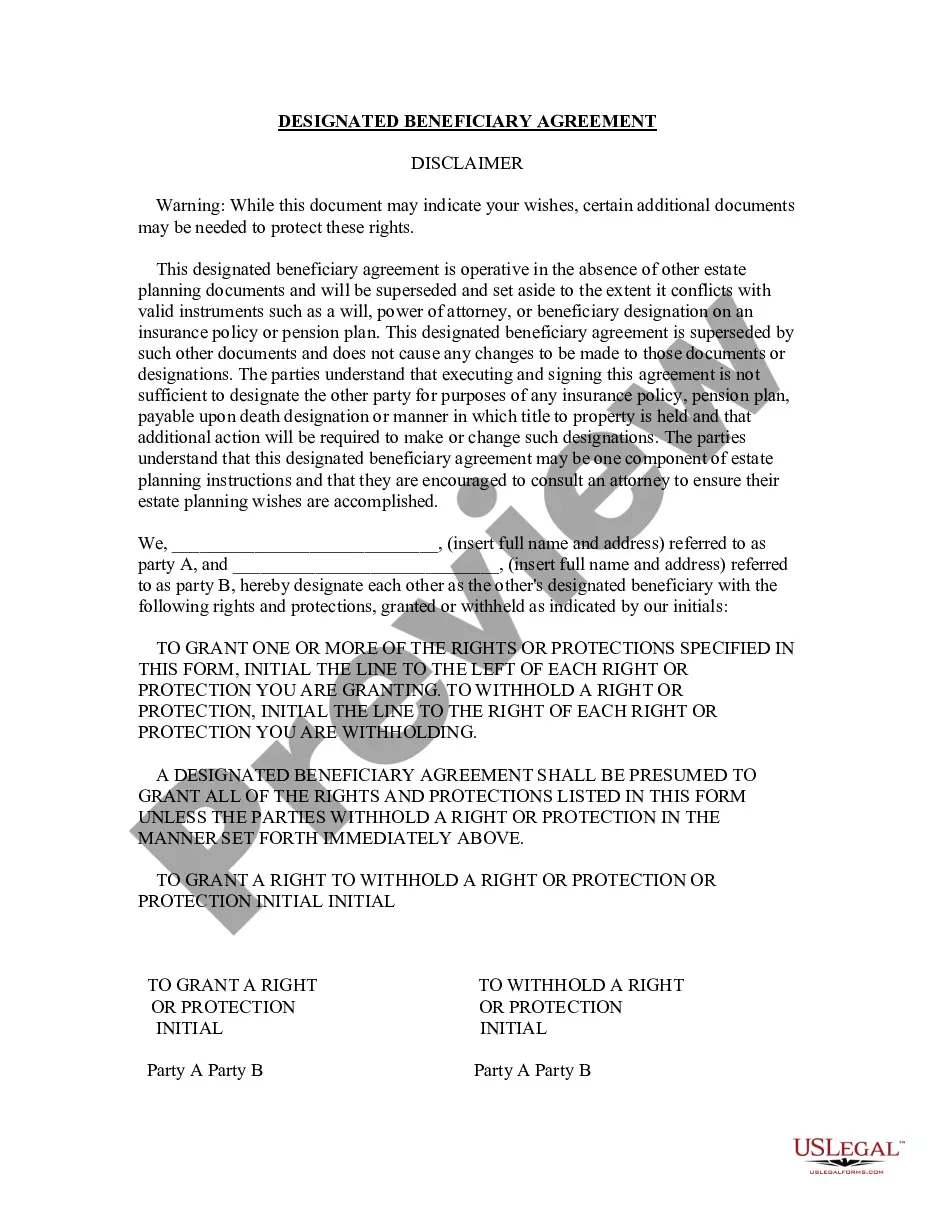
Designate beneficiaries for various legal and financial matters, ensuring your wishes are honored without conflicting estate documents.
Use this affidavit to collect personal property from a decedent’s estate without needing a personal representative.
Notify beneficiaries named in a Will about the passing of the testator and the probate process.
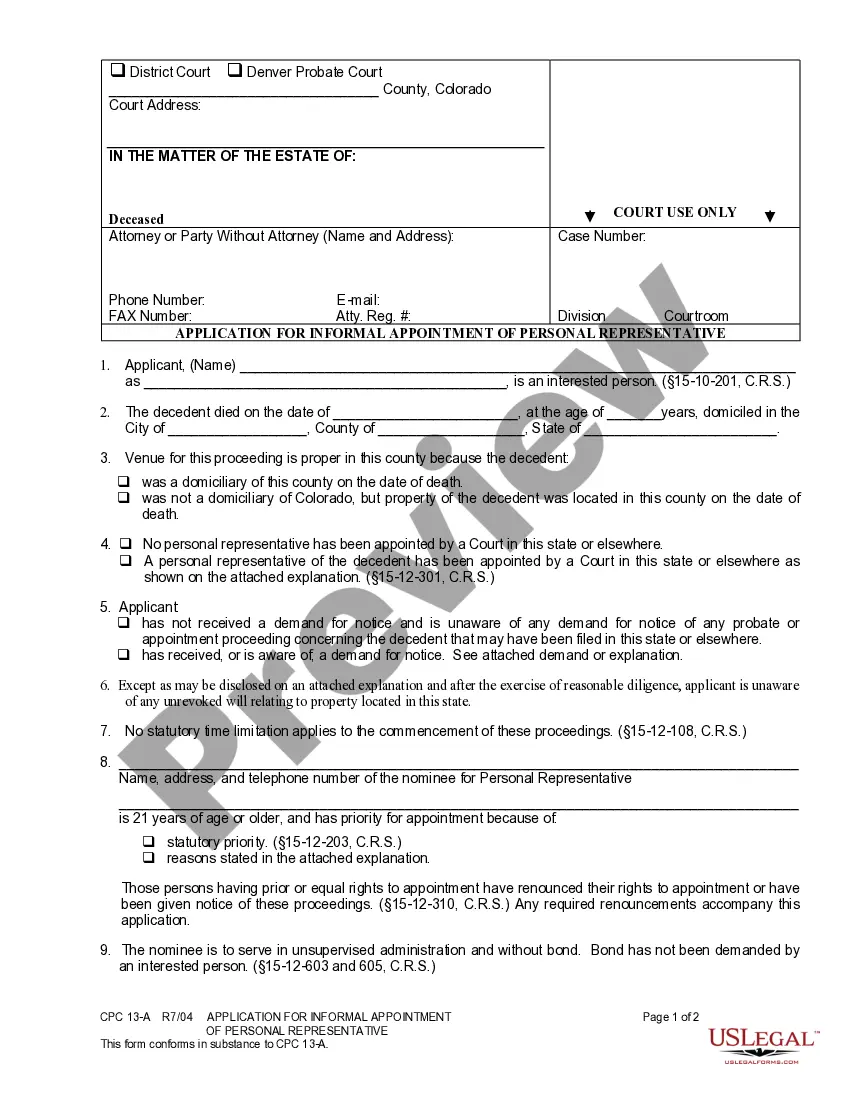
Use this application to request an informal appointment of a personal representative for estate administration, ensuring a smoother probate process.
Use this form to submit a decedent's will to the court for safekeeping, ensuring its validity and compliance with Colorado law.
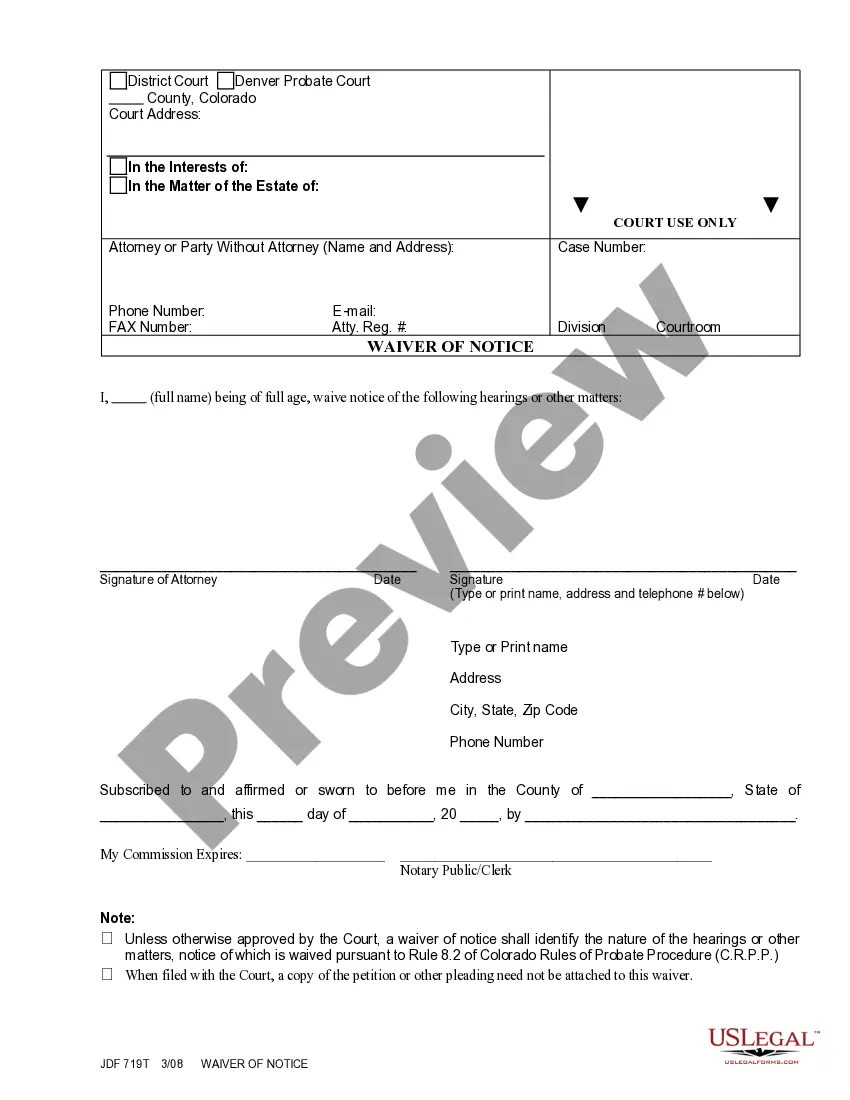
Provide clear consent in writing to waive your right to receive notice about certain legal proceedings.
Used for official court orders regarding estate matters, this form is crucial for facilitating probate proceedings.
Confirm that all interested parties received necessary documents during probate proceedings.
Probate is required to validate a will in court.
Not all assets require probate; some pass directly to beneficiaries.
Creditors must be notified during the probate process.
The probate process can take several months to complete.
Heirs are notified of the probate proceedings.
Probate records are generally public documents.
An estate can be settled without probate in certain circumstances.
Begin the process with these straightforward steps.
A trust can provide additional management of assets, while a will dictates distribution after death.
If no action is taken, the estate may go through intestate succession, which is dictated by state law.
It's advisable to review your estate plan every few years or after significant life changes.
Beneficiary designations can override will instructions for certain assets like life insurance.
Yes, you can appoint different individuals for financial and healthcare decisions in your estate plan.