Oregon Power of Attorney
Power of Attorney documents allow individuals to designate someone to act on their behalf. Attorney-drafted templates are quick and easy to complete.


Similar documents: key differences
- Durable Power of Attorney vs. General Power of Attorney — Durable remains effective if you become incapacitated; General does not.
- Medical Power of Attorney vs. Healthcare Proxy — both designate someone for health decisions, but may vary in terminology across states.
- Limited Power of Attorney vs. General Power of Attorney — Limited grants specific powers, while General gives broad authority.
- Springing Power of Attorney vs. Durable Power of Attorney — Springing activates under certain conditions; Durable is always effective.
Search for more forms
Types of Power of attorney forms
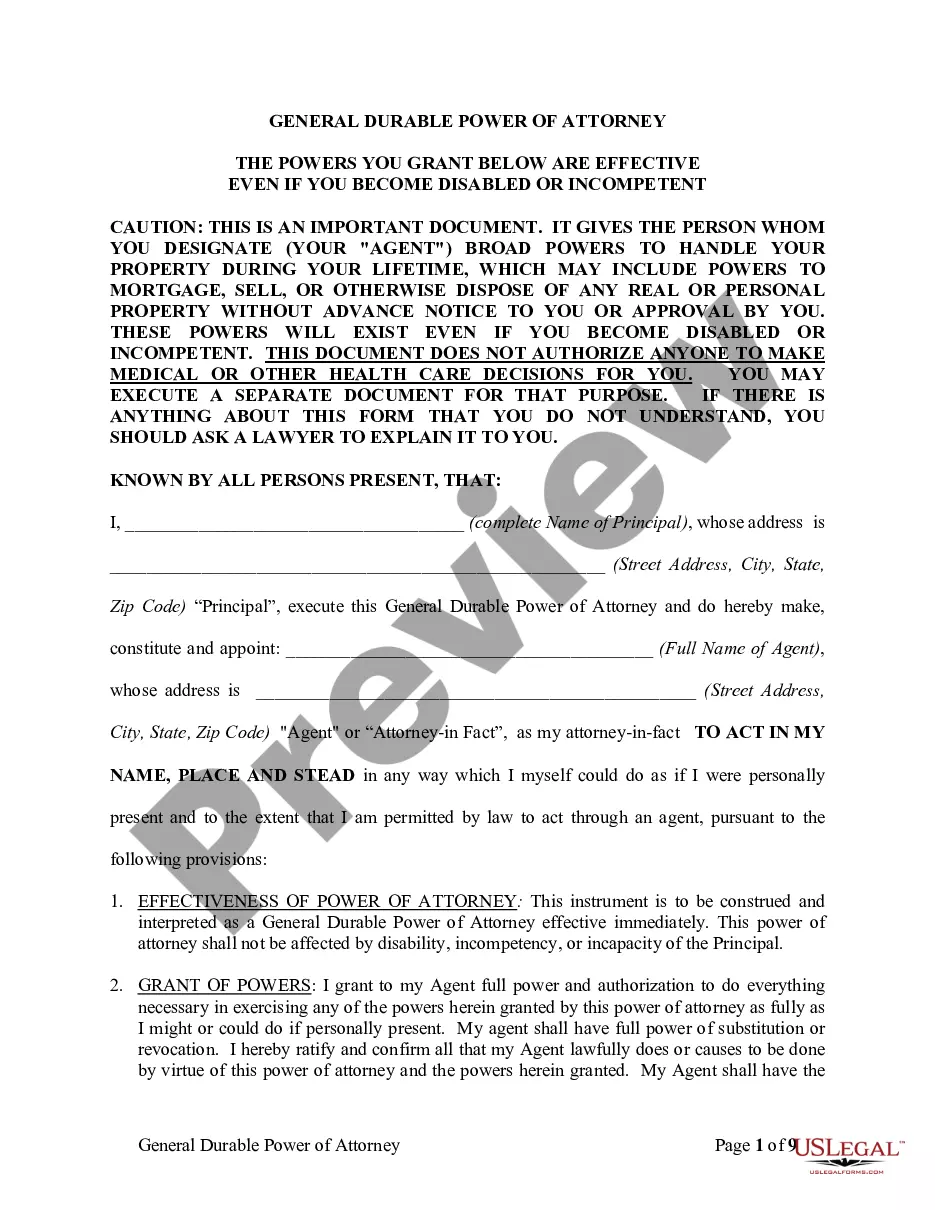
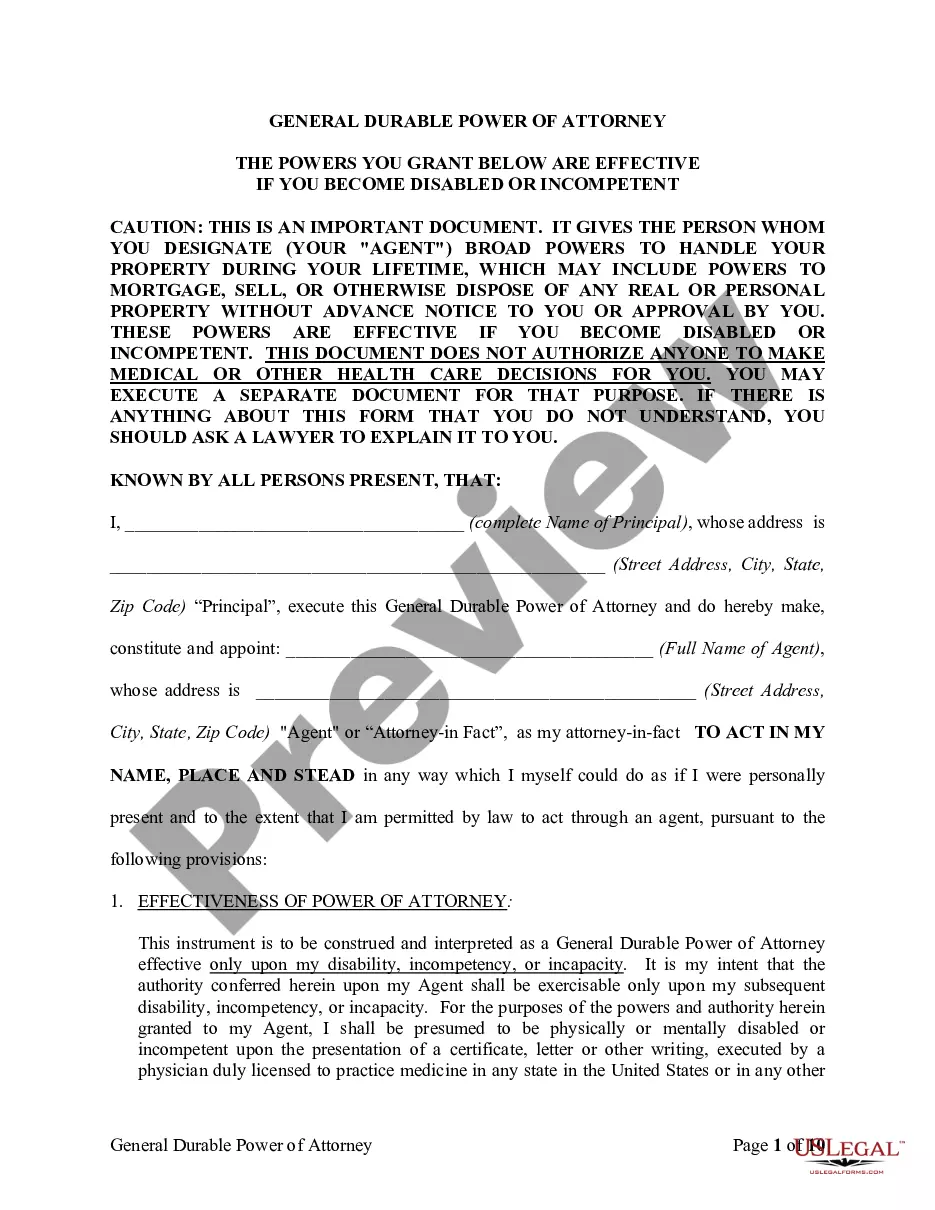
General Durable POA for Property and Finances
Assign someone to manage your finances and property, even if you become unable to do so yourself.
General Durable POA for Property and Finances
Designate an agent to manage your finances even if you become incapacitated, ensuring your financial affairs continue smoothly.
Durable Special POA
Designate an agent to manage your financial and legal affairs, even if you become incapacitated. Ensure your wishes are upheld when you can't speak for yourself.
Limited POA Where You Specify Powers with Sample Powers Included
Grant someone specific authority to manage your affairs while you're unavailable or incapacitated.
POA
Authorize someone to manage your property during your absence or incapacity, ensuring your interests are protected.
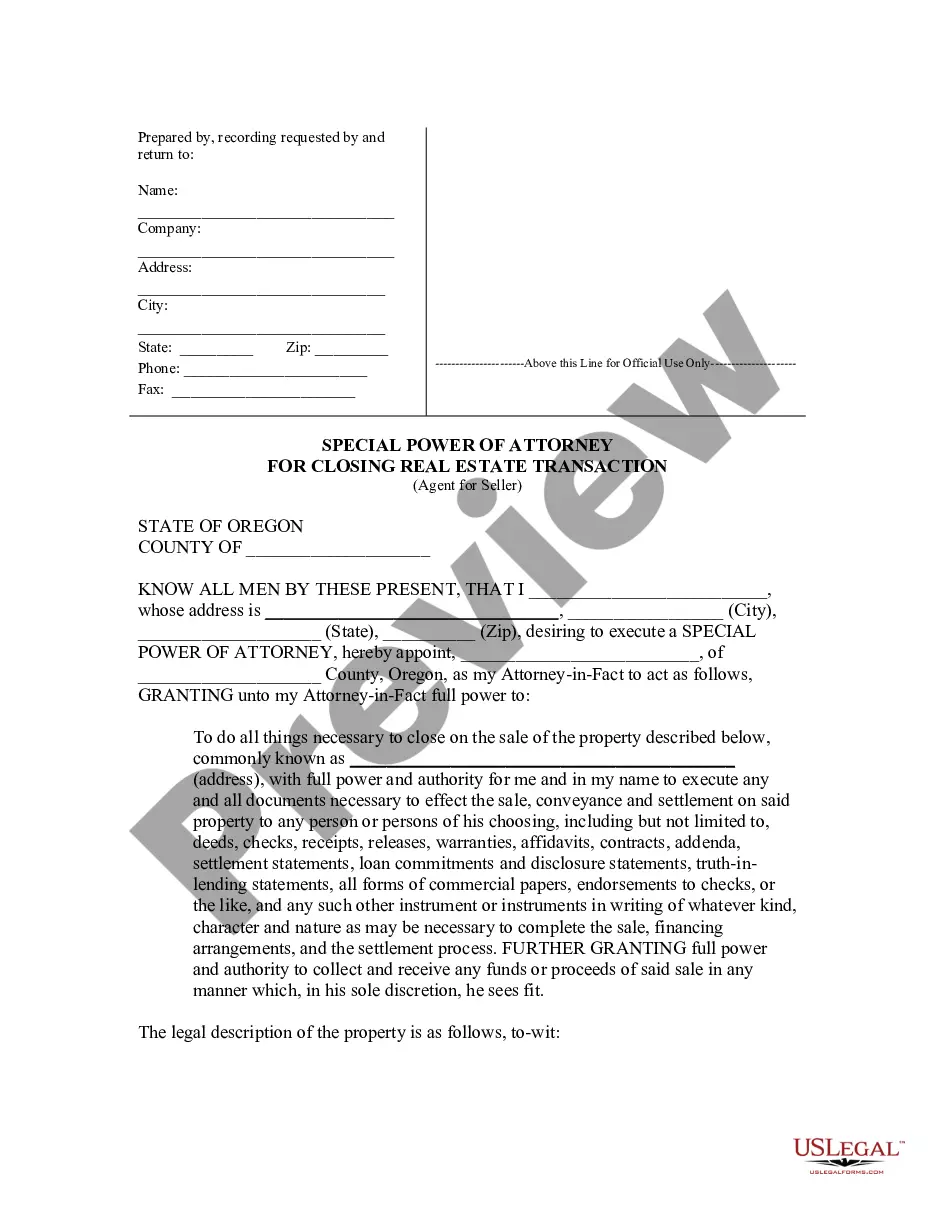
Special
Grant someone authority to complete real estate transactions on your behalf, ensuring a smooth sales process.
POA - Specific Real Estate
Authorize someone to handle specific real estate transactions on your behalf, even during incapacity.
Special
Grant someone the authority to manage your real estate purchase without your presence, ensuring a smooth transaction process.
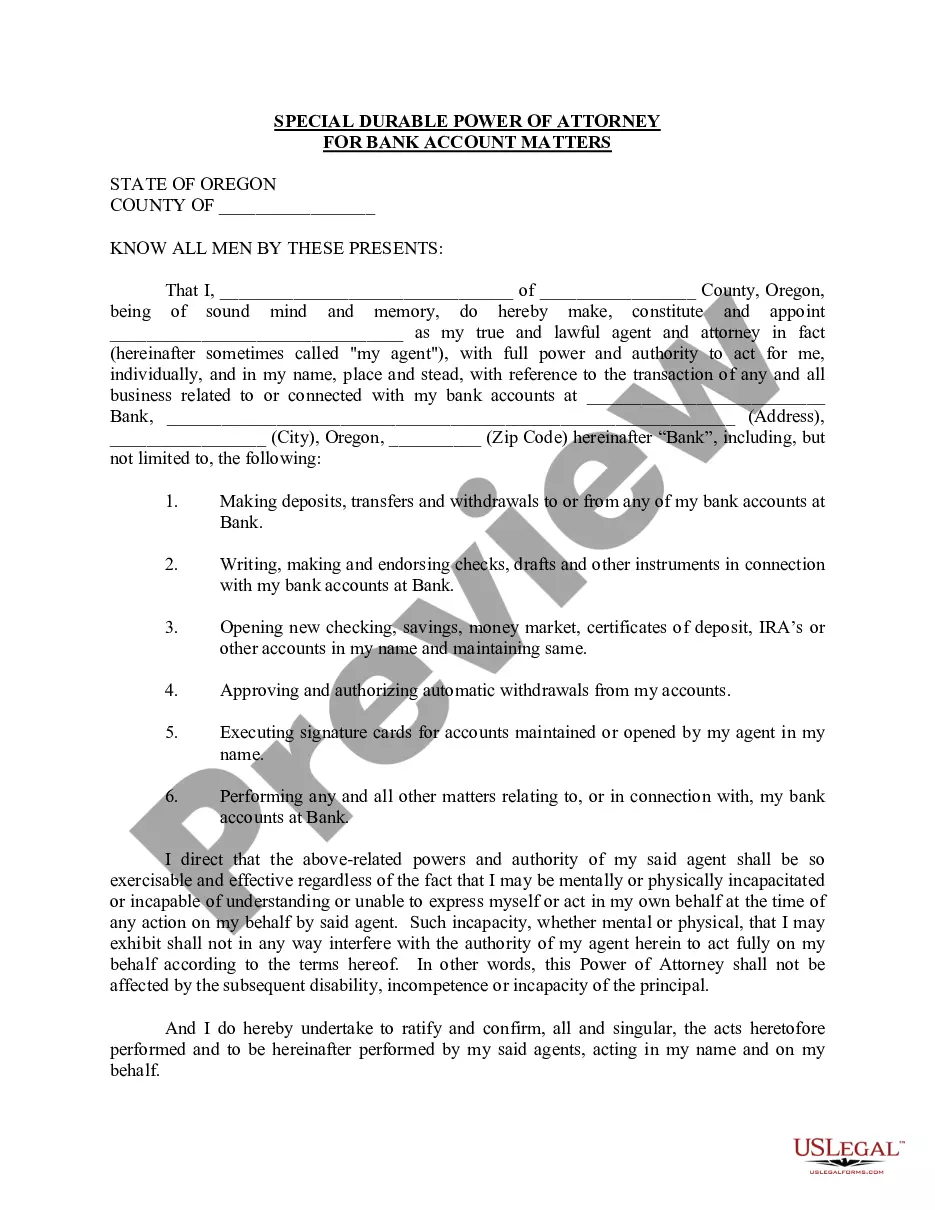
Special Durable POA for Bank Account Matters
Authorize someone to manage your bank account matters, even if you become incapacitated.
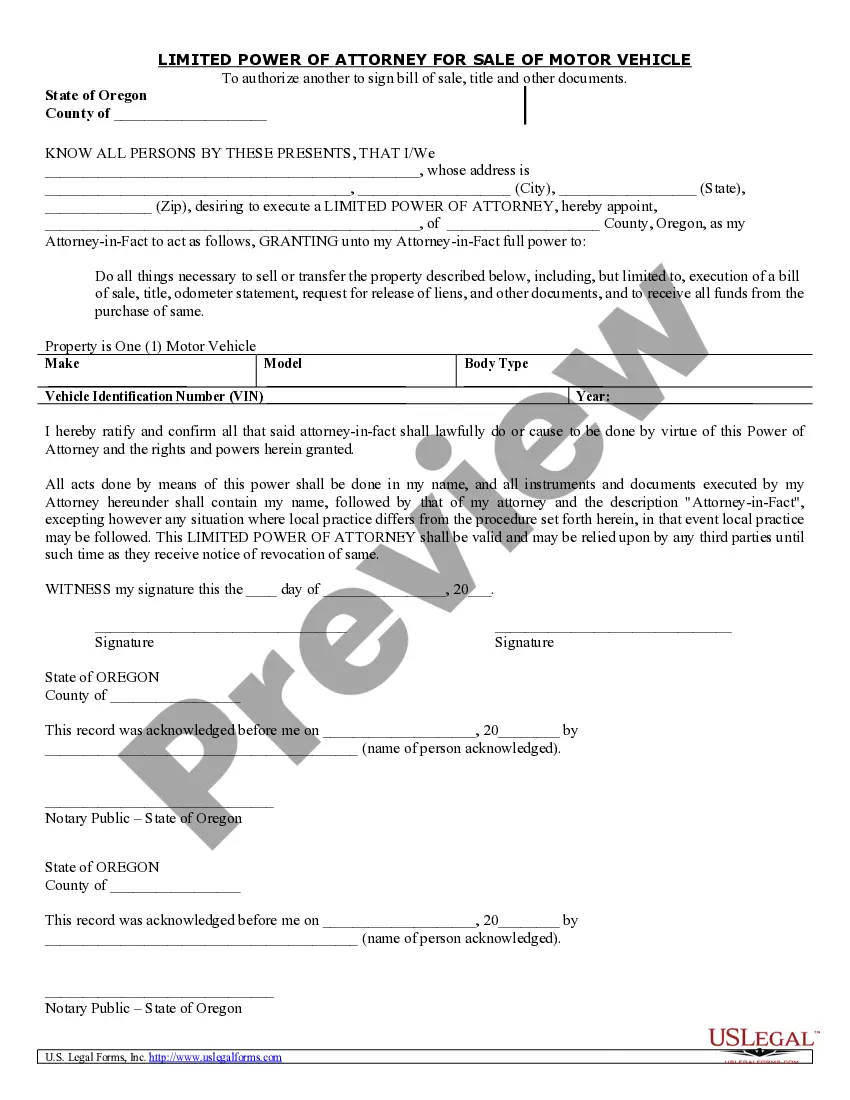
POA for Sale of Motor Vehicle
Authorize someone to handle the sale of your vehicle, including signing necessary documents and receiving payment.
Limited POA for Stock Transactions and Corporate Powers
Authorize someone to handle stock transactions and corporate duties on your behalf, streamlining your corporate actions.
Declaration for Mental Health Treatment
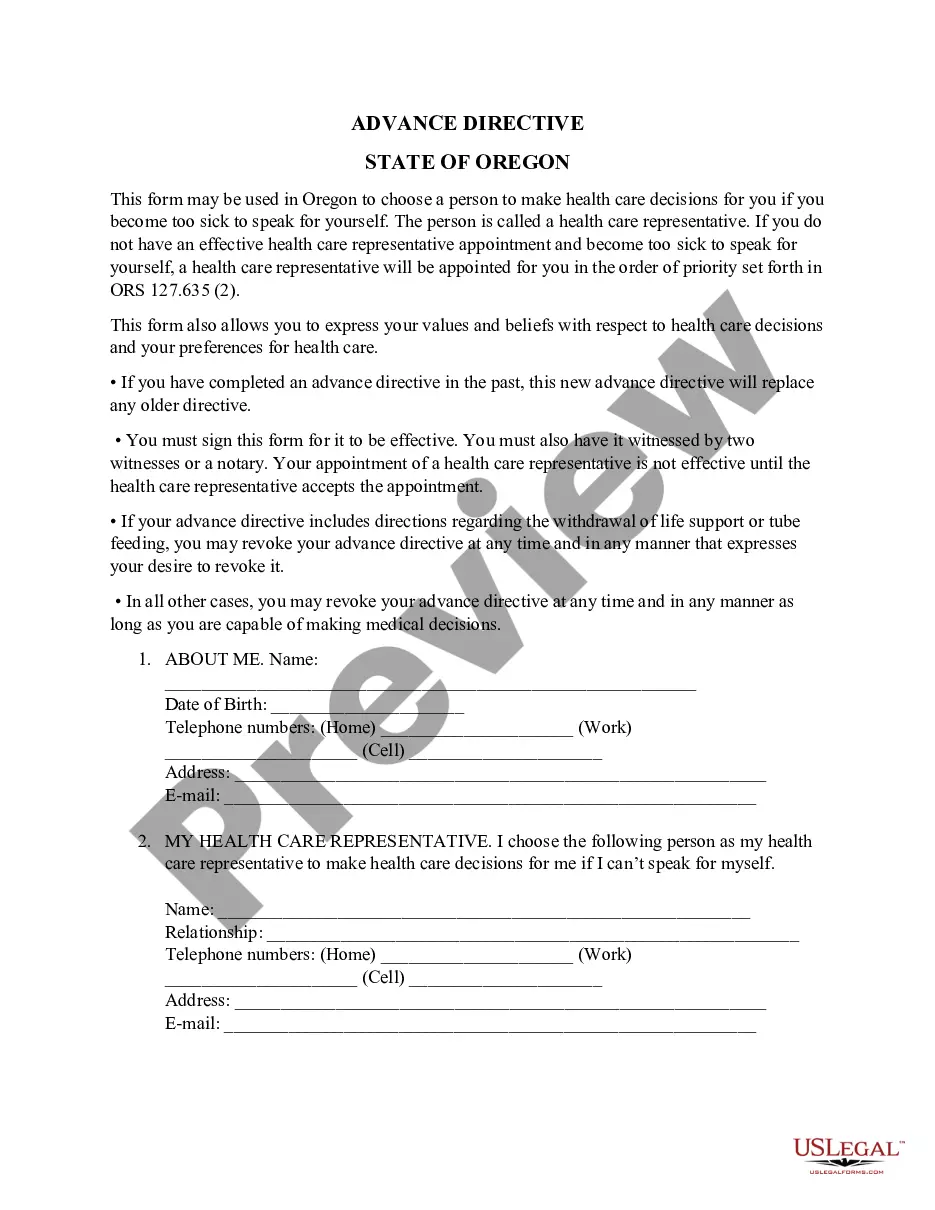
Advance Directive for Health Care
Complete this document to outline your medical preferences at the end of life, ensuring your wishes are respected when you can’t communicate them.
POA for Property and Finances
Appoint someone to manage your property and finances, ensuring your interests are protected even if you’re unable to act personally.
Revised Uniform Anatomical Gift Act Donation
Make a legally binding donation of your organs or tissues after death, ensuring your wishes are honored.
Health Care Directive - Advance Healthcare Directive - Includes Living Will and Health Care Decisions Statutory
Prepare for future health care decisions by designating a representative and outlining your preferences for medical treatment in case you are unable to communicate.
Statutory POA for Mental Health Care
Plan for your mental health treatment decisions in advance, appointing a representative to act on your behalf if you're unable to do so.
POA to Purchase Real Estate
Empower someone to purchase real estate on your behalf with this legal document.
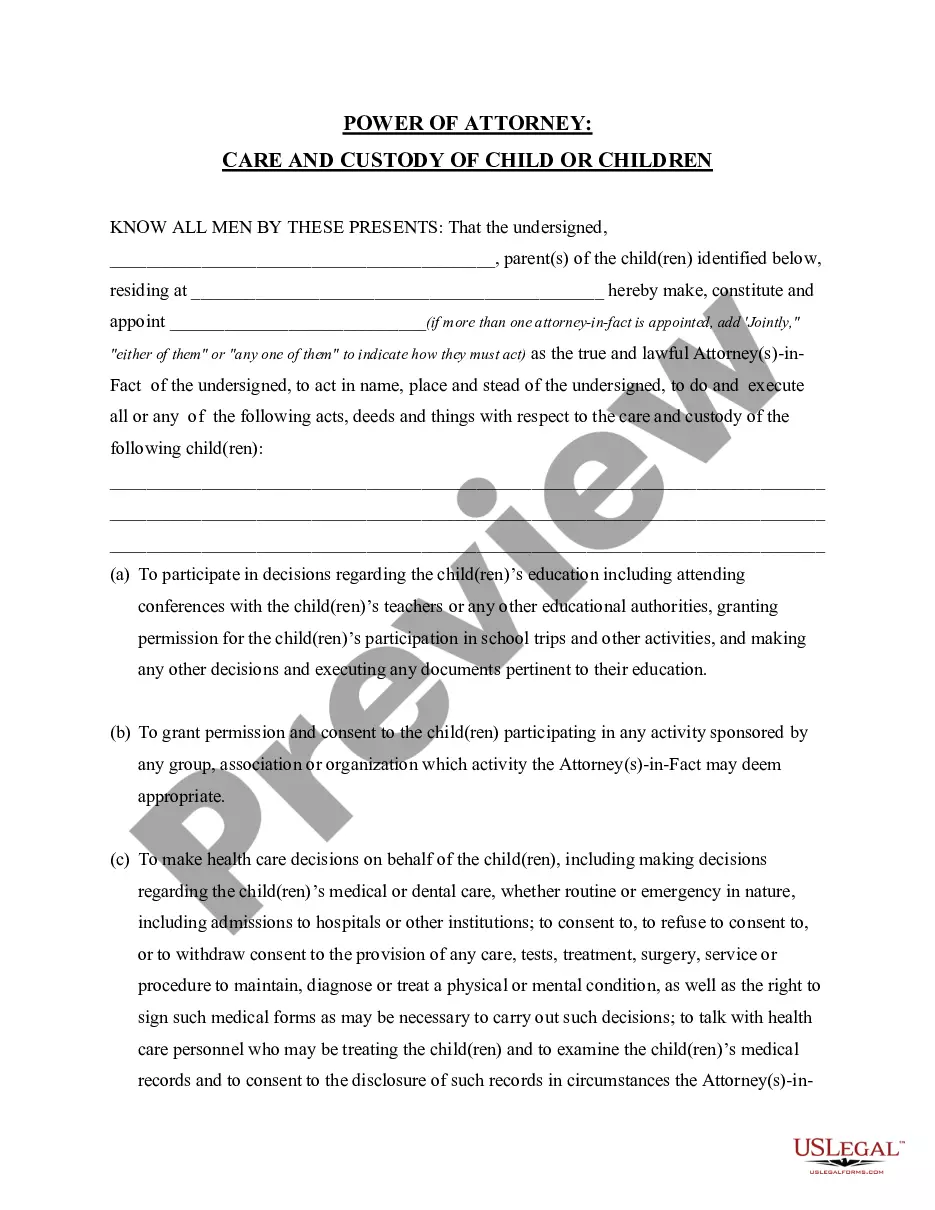
General POA for Care and Custody of Child
Grant authority for decision-making about your child's care and custody during your absence or incapacity.
POA Worksheet
Used to gather necessary information for creating a power of attorney, granting someone authority to act on your behalf.
Revocation of General Durable POA
Use this form to revoke a previously granted general durable power of attorney, ensuring your designated agent no longer has authority over your affairs.
Revocation of Anatomical Gift Donation
Revoking an anatomical gift donation is crucial when your wishes change. This form allows you to formally cancel a previous donation legally.
Revocation of Health Care Directive
Use this to formally revoke a previously issued advance directive regarding your health care preferences.
Revocation of POA for Care of Child
Revoke a previously granted Power of Attorney for child care to ensure your parental rights are maintained.
Revocation of Statutory Equivalent of Living Will
This document allows individuals to withdraw their request for assisted dying, ensuring their wishes are honored even if circumstances change.
Revocation of Statutory POA for Mental Health Care
Revoke your previous mental health treatment declaration anytime you're capable, ensuring your current wishes are respected.
Complaint for Rescission of POA Obtained by Fraud
Challenge an invalid Power of Attorney due to fraud and seek legal remedy effectively.
Common Oregon Power of Attorney documents
- Durable Power of Attorney — designates someone to manage your finances when needed.
- General Power of Attorney — grants broad authority to handle various matters.
- Limited Power of Attorney — restricts authority to specific tasks or time frames.
- Medical Power of Attorney — allows someone to make healthcare decisions for you.
- Financial Power of Attorney — focuses solely on managing financial affairs.
- Springing Power of Attorney — becomes effective only under certain conditions.
Complete Oregon Power of Attorney packages
Bundle every form you need for a complete situation — not just one document.

 8 forms
Oregon Life Documents Planning Package, including Will, Power of Attorney and Living Will
Get everything needed for health and financial planning in one package, including vital legal documents for emergencies and future decisions.
- Oregon General Durable Power of Attorney for Property and Finances or Financial Effective Immediately
- Oregon Statutory Power of Attorney for Mental Health Care
- Oregon Health Care Directive - Advance Healthcare directive - includes Living Will and Health Care Decisions Statutory form
- Oregon Advance Directive for Health Care
- Oregon Estate Planning Questionnaire and Worksheets
- Sample Letter for Request for Free Credit Report Allowed by Federal Law
- Personal Planning Information and Document Inventory Worksheets - A Legal Life Document
- Estate Planning Questionnaire
6 forms
Oregon Living Wills and Health Care Package
Access essential forms to ensure your medical treatment preferences are honored, providing peace of mind in critical situations.
- Oregon Health Care Directive - Advance Healthcare directive - includes Living Will and Health Care Decisions Statutory form
- Oregon Revocation of Health Care Directive
- Oregon Advance Directive for Health Care
- Oregon Revocation of Statutory Equivalent of Living Will or Declaration - Request for Medication to End Life
- Oregon Revised Uniform Anatomical Gift Act Donation
- Oregon Revocation of Anatomical Gift Donation
FAQs
A trust is not necessary if you have a will, but it offers additional benefits.
If you do nothing, your affairs may be managed according to state law.
Review your plan every few years, or when major life events occur.
Beneficiary designations can override your will or trust for specific assets.
Yes, you can appoint separate individuals for financial and healthcare decisions.
Key legal points
- A Power of Attorney can be tailored to fit specific needs.
- The appointed person is known as the Attorney-in-Fact.
- Documents often require notarization or witnesses to be valid.
- Powers can be limited to financial, medical, or general affairs.
- A Power of Attorney can be revoked at any time by the principal.
- Springing Powers activate only upon a specified event, like incapacity.
How to get started
Begin quickly with these simple steps.
- Find a template or package that fits your situation.
- Review the description, preview, and signing requirements.
- Get full access with a subscription.
- Complete it in the online editor.
- Export or send: download, email, USPS mail, notarize online, or send for e-signature.
Practical tip
Consider who you trust to make decisions; choose an agent carefully.