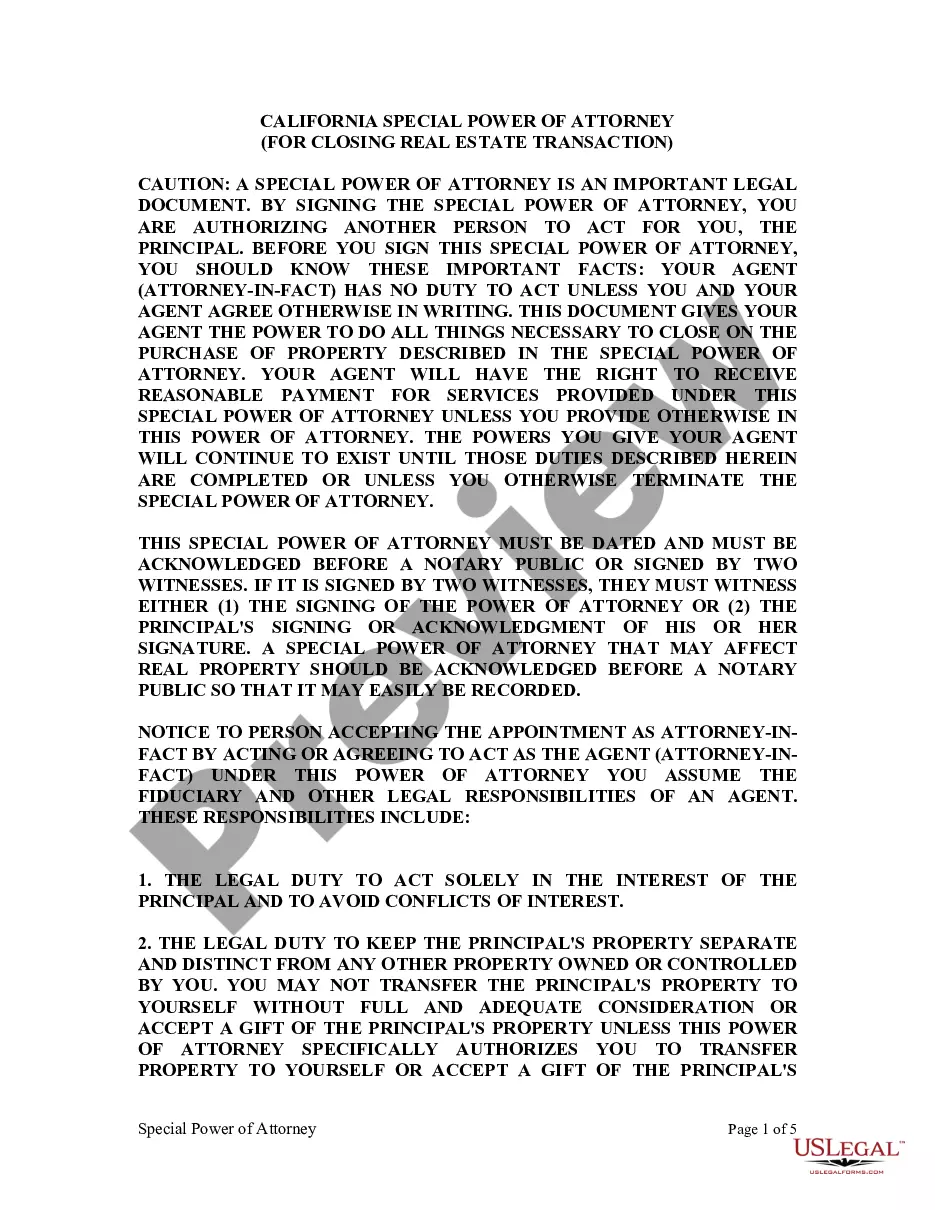
California Power of Attorney
Power of Attorney documents allow individuals to designate someone to act on their behalf. Attorney-drafted templates are quick and user-friendly.

Power of Attorney Package
PopularFour state-specific POA forms covering financial, health care, and child care — both immediate and disability-triggered authority.
Similar documents: key differences
- Durable vs. Non-Durable Power of Attorney — Durable continues when you're incapacitated; non-durable does not.
- General vs. Limited Power of Attorney — General provides broad powers; Limited restricts authority to specific tasks.
- Medical vs. Financial Power of Attorney — Medical focuses on health decisions; Financial handles financial matters.
- POA vs. Healthcare Proxy — POA can cover various matters; Healthcare Proxy specifically addresses health decisions.
Search for more forms
Types of Power of attorney forms
Statutory Notice Required for Printed Durable POA Forms
Understand important details about granting authority to someone else for managing your affairs through a durable power of attorney.
Uniform Statutory POA - Property - Finances - Section 4401
Grant broad financial powers to an agent for managing property and finances in California.
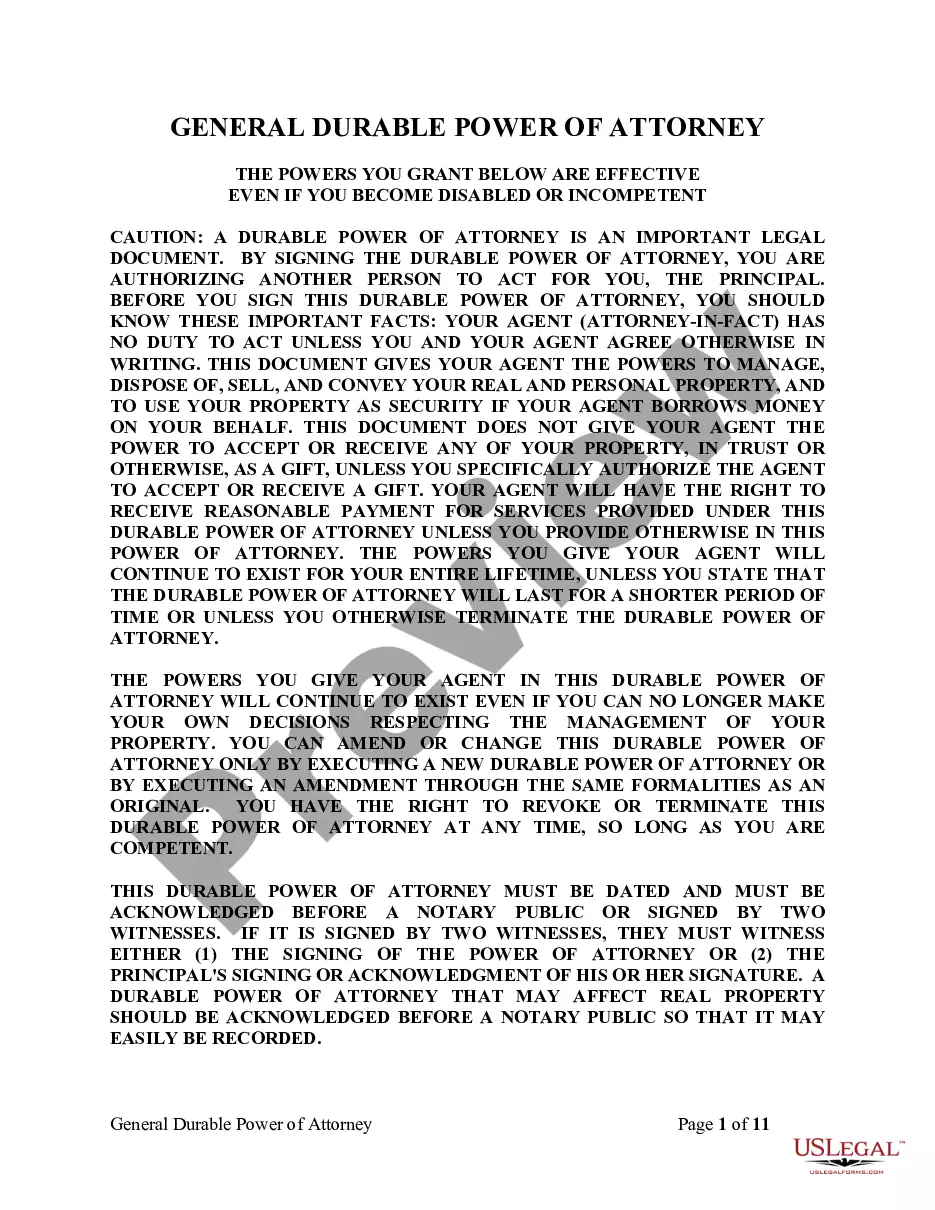
General Durable POA for Property and Finances
Authorize someone to manage your financial matters, even if you become unable to do so. This ensures your interests are protected without interruption.
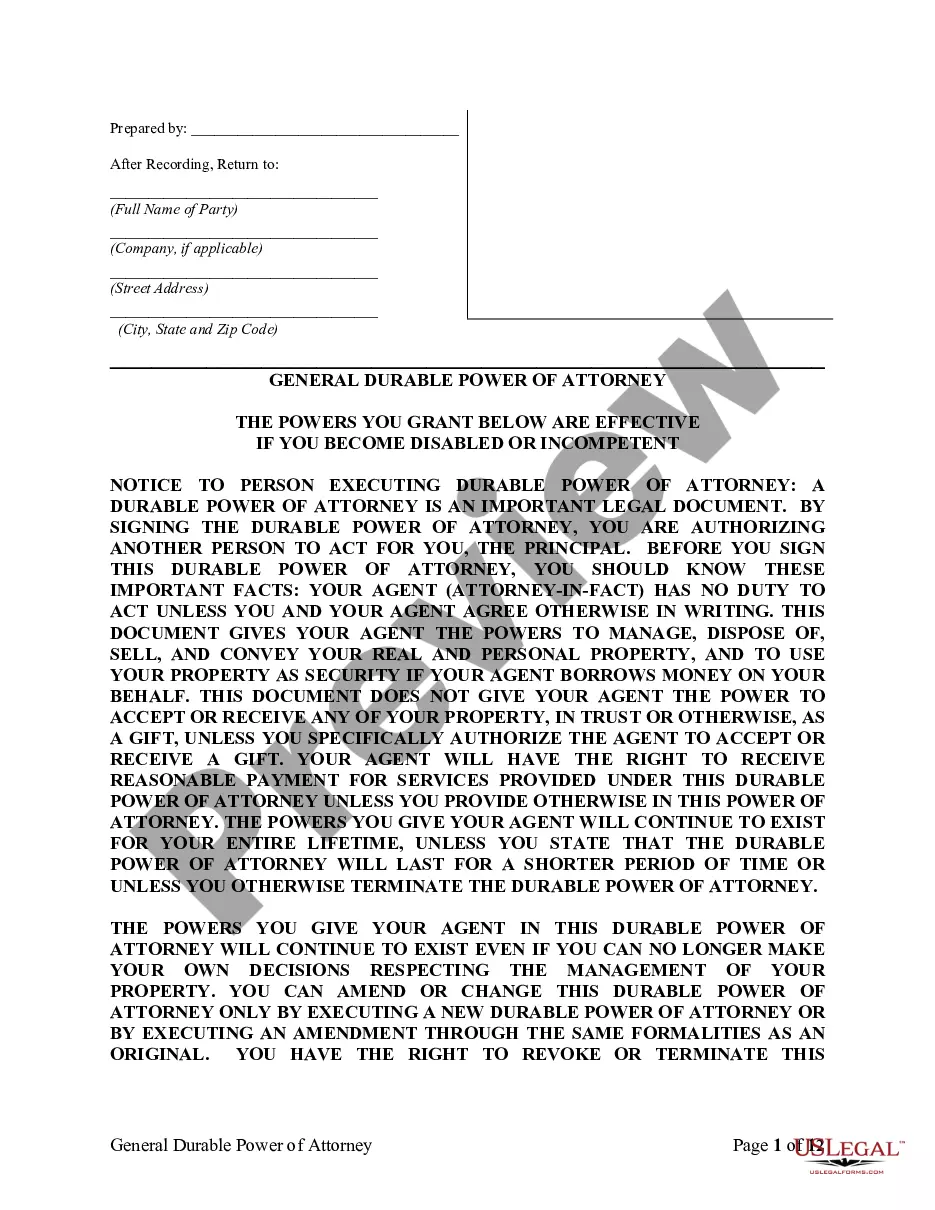
General Durable POA for Property and Finances
Authorize someone to manage your finances if you become unable to do so. This powerful document ensures your interests are protected even during challenging times.
Limited POA Where You Specify Powers with Sample Powers Included
This document allows you to designate an agent to manage specific powers, ensuring your assets are handled according to your wishes during your lifetime.
Special
Authorize someone to act on your behalf for closing a real estate purchase, ensuring seamless transactions.
Special
Authorize someone to handle your real estate sales, ensuring smooth transactions when you can't be present.
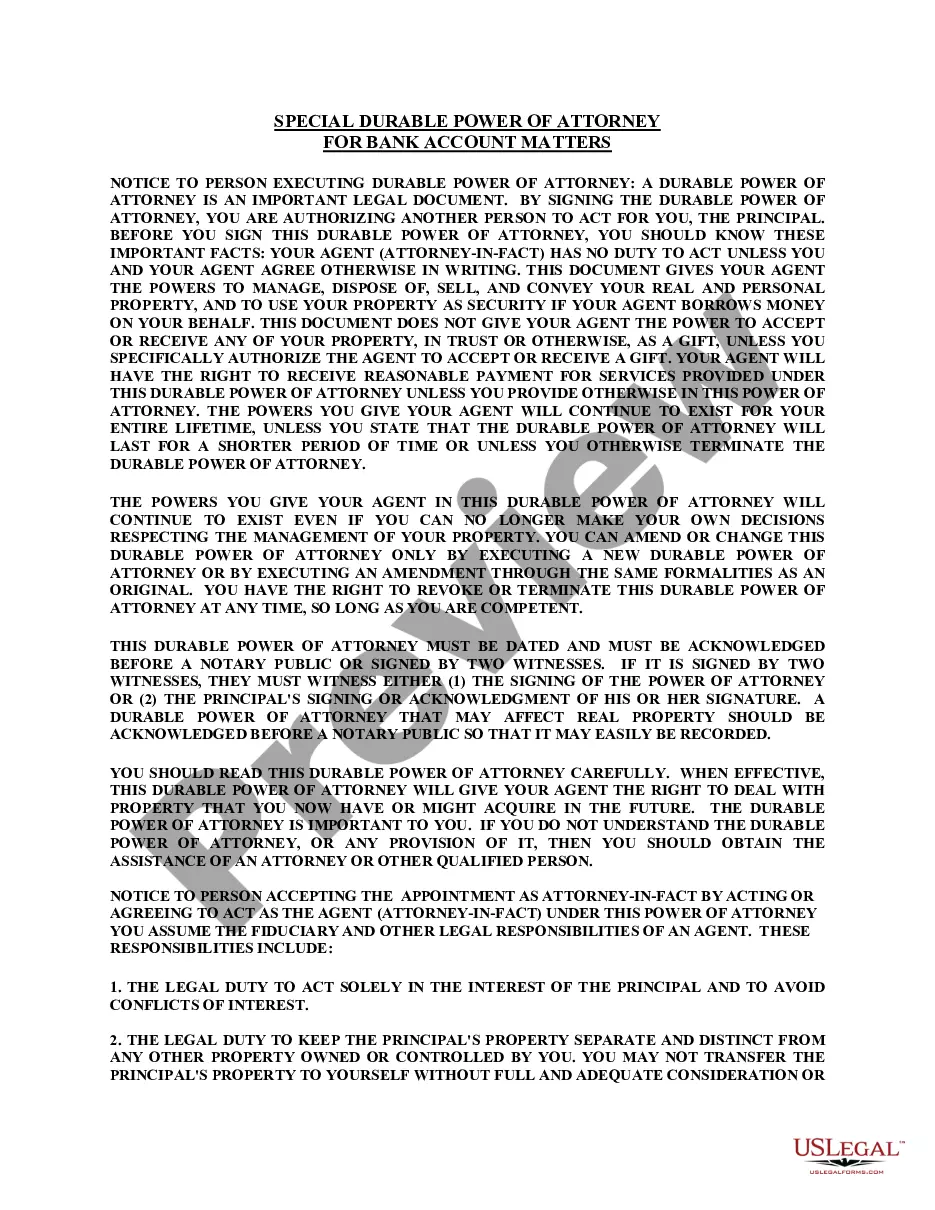
Special Durable POA for Bank Account Matters
Authorize someone to manage your bank accounts, even if you can't make decisions. This is crucial for ensuring your finances are handled when you need help.
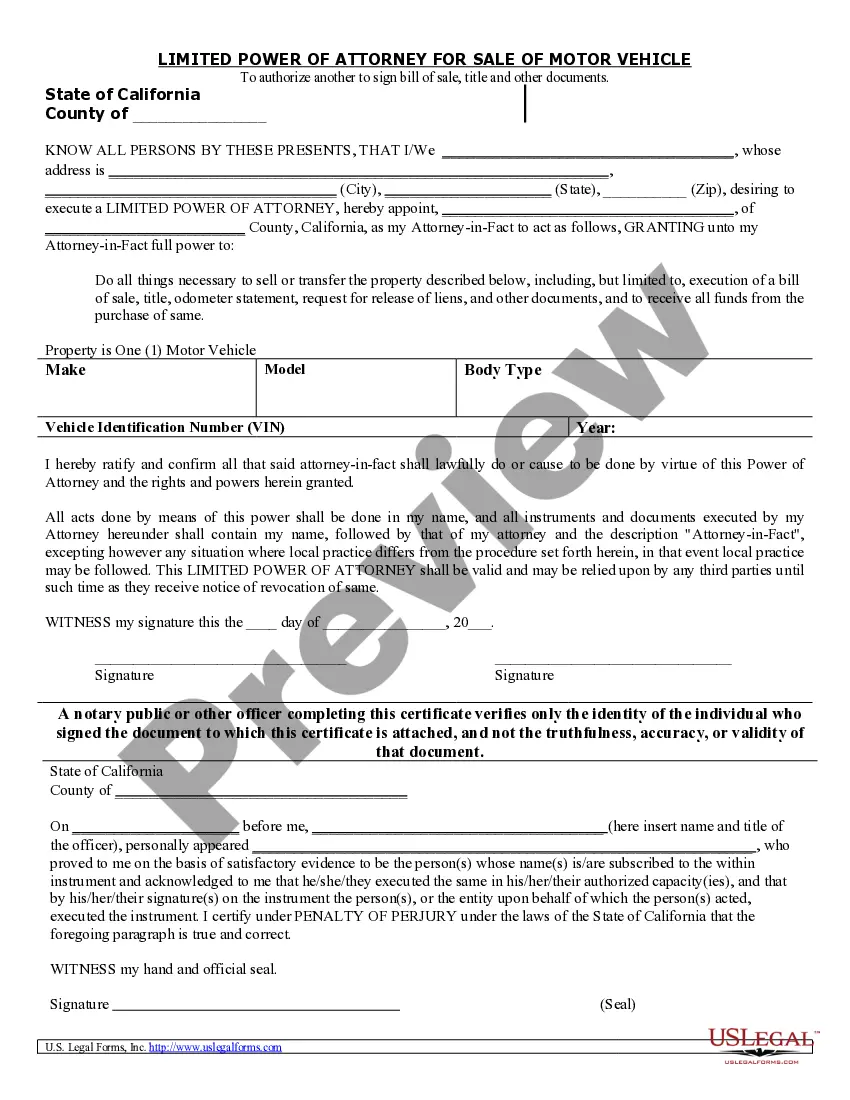
POA for Sale of Motor Vehicle
Authorize someone to handle the sale of your vehicle, ensuring legal compliance and smooth transactions.
Limited POA for Stock Transactions and Corporate Powers
Authorize someone to manage your stock transactions and corporate decisions, ensuring your financial interests are represented even if you can't act personally.
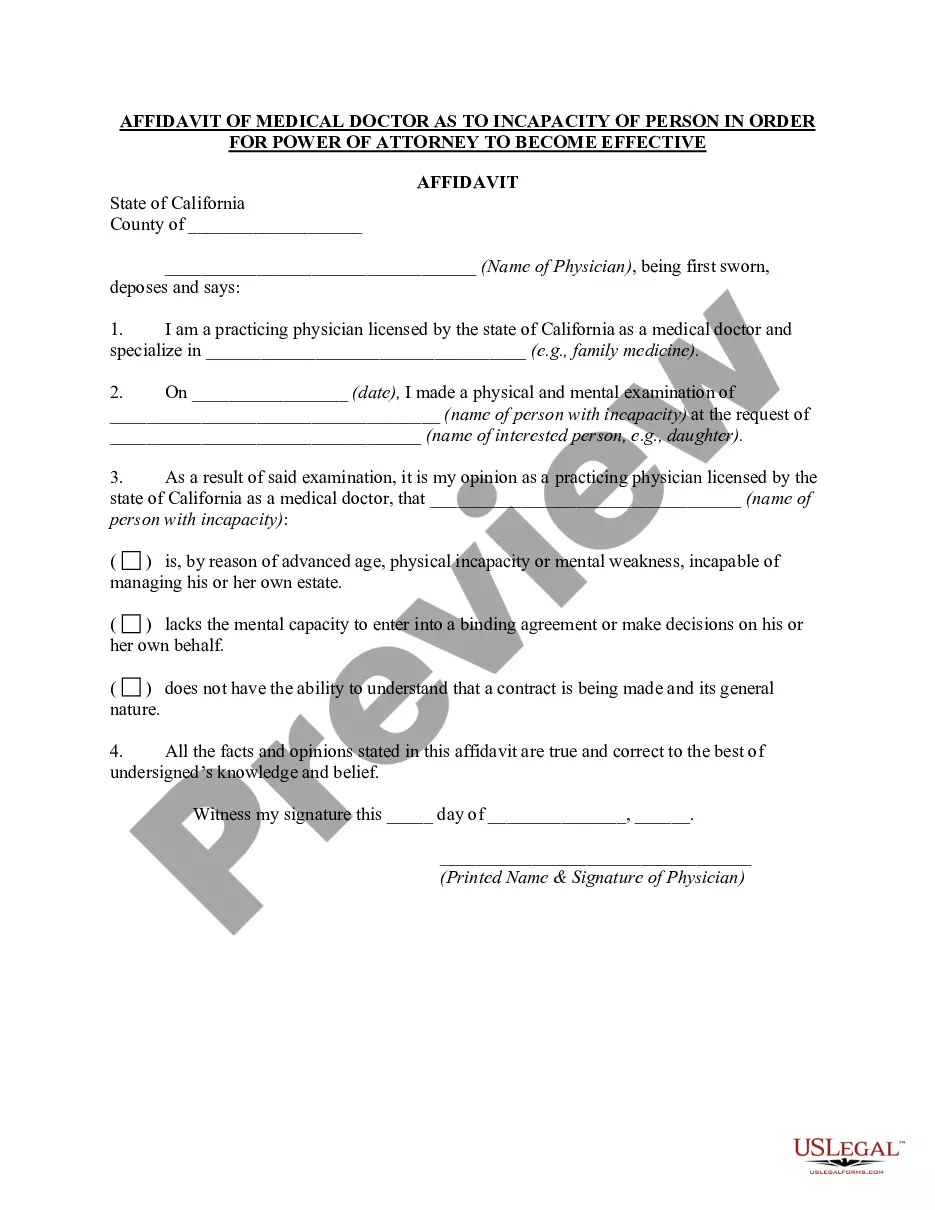
Affidavit of Medical Doctor as to Incapacity of Person
Verify a person's incapacity for power of attorney, ensuring their affairs are managed by a trusted individual.
Durable POA for Health Care
Designate a trusted person to make health care decisions on your behalf in emergencies or if you become unable to communicate.
Uniform Anatomical Gift Act Donation
This document facilitates organ and tissue donation after death, ensuring your wishes are honored under California law.
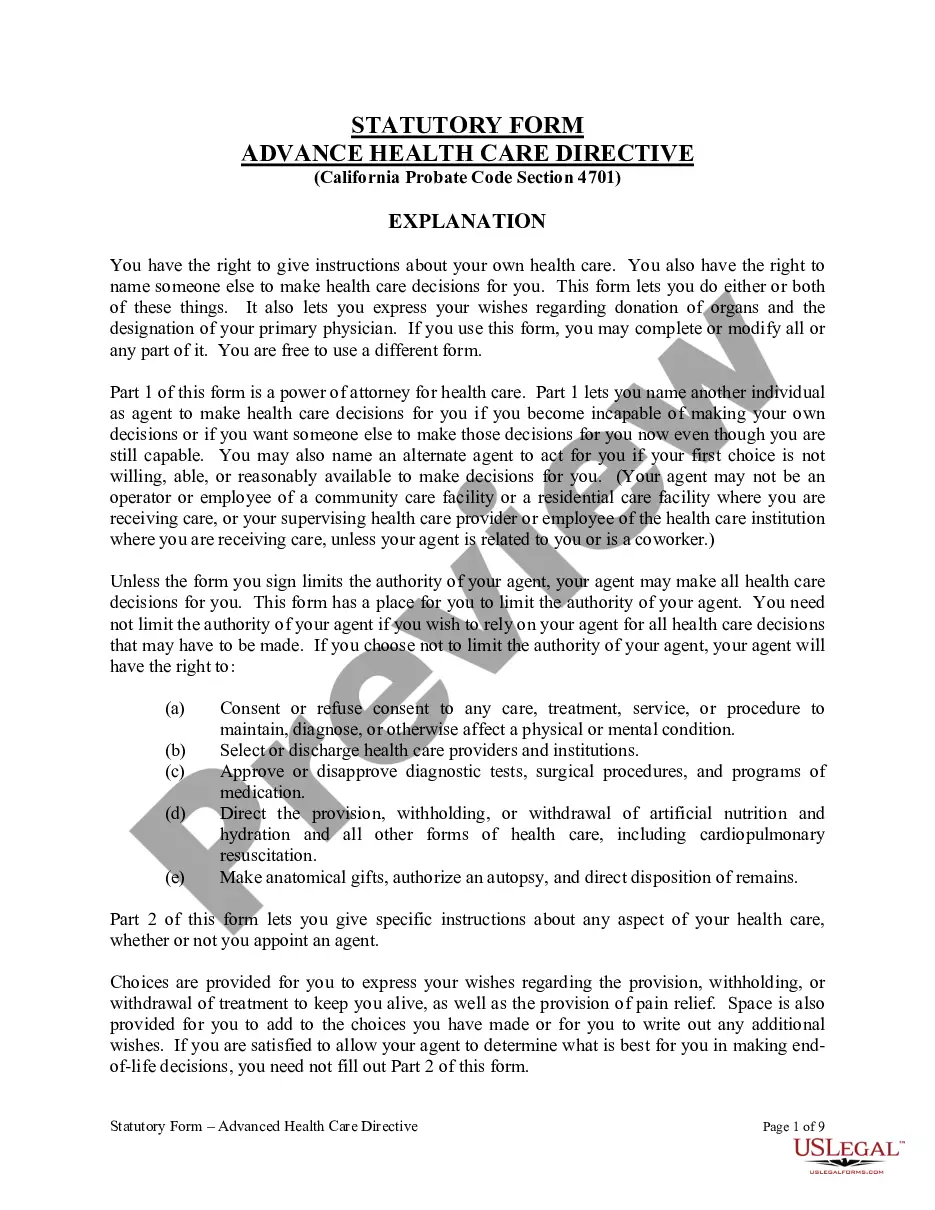
Statutory Health Care Directive
Designate someone to make health care decisions for you and provide your treatment preferences.
POA for Care of Minor Child
Assign someone to manage a minor child's health and education in your absence, ensuring they receive necessary care and supervision.
POA Worksheet
Used to gather necessary information for creating a power of attorney, granting someone authority to act on your behalf.
Revocation of General Durable POA
Revoking a power of attorney allows you to remove someone's authority to act on your behalf, ensuring your current wishes are respected.
Revocation Health Care Directive
Understand how to formally cancel a previously signed health care directive and ensure your medical preferences are up to date.
Revocation POA for Care and Custody of Child
Need to revoke a previously granted authority for child care? This document formalizes that decision clearly and effectively.
Revocation of Anatomical Gift Donation
Revoking an anatomical gift allows you to cancel a previously made donation of your organs or tissues.
Complaint for Rescission of POA Obtained by Fraud
Challenge an invalid Power of Attorney due to fraud and seek legal remedy effectively.
Common California Power of Attorney documents
- Durable Power of Attorney — for ongoing authority even if you become incapacitated.
- General Power of Attorney — grants broad authority for various matters.
- Limited Power of Attorney — restricts authority to specific tasks or timeframes.
- Financial Power of Attorney — focuses solely on financial decisions.
- Medical Power of Attorney — allows someone to make healthcare decisions on your behalf.
- Springing Power of Attorney — becomes effective only under certain conditions.
- Healthcare Proxy — designates someone to make medical decisions if you are unable.
Complete California Power of Attorney packages
Bundle every form you need for a complete situation — not just one document.

 9 forms
California Life Documents Planning Package, including Will, Power of Attorney and Living Will
Prepare for the future with essential legal documents, all conveniently packaged for your peace of mind.
- California General Durable Power of Attorney for Property and Finances or Financial Effective Immediately
- California Durable Power of Attorney for Health Care
- California Statutory Health Care Directive
- California Uniform Statutory Power of Attorney - Property - Finances - Section 4401
- California Statutory Notice Required for Printed Durable POA Forms
- California Estate Planning Questionnaire and Worksheets
- Sample Letter for Request for Free Credit Report Allowed by Federal Law
- Personal Planning Information and Document Inventory Worksheets - A Legal Life Document
- Estate Planning Questionnaire
5 forms
California Living Wills and Health Care Package
Get peace of mind with essential legal forms for outlining your medical treatment preferences and life support decisions—all in one convenient package.
FAQs
A trust can offer additional benefits, such as avoiding probate, which a will does not.
If no Power of Attorney is in place, decisions may require court intervention.
It's wise to review your plan every few years or after major life changes.
Beneficiary designations can override your will or trust, so it's important to keep them updated.
Yes, you can appoint separate agents for financial and healthcare decisions.
Key legal points
- A Power of Attorney can be revoked at any time by the principal.
- The appointed agent must act in the best interest of the principal.
- Powers can be broad or limited based on the document's language.
- POAs can be effective immediately or spring into effect under conditions.
- Many POA documents require notarization or witnesses for validity.
How to get started
Begin the process easily with these steps.
- Choose a template that suits your needs.
- Review the provided description and signing requirements.
- Access the full template with a subscription.
- Complete the document using the online editor.
- Export or send your document by downloading, emailing, mailing, or e-signing.
Practical tip
Consider who you trust for important decisions, like finances or health care.