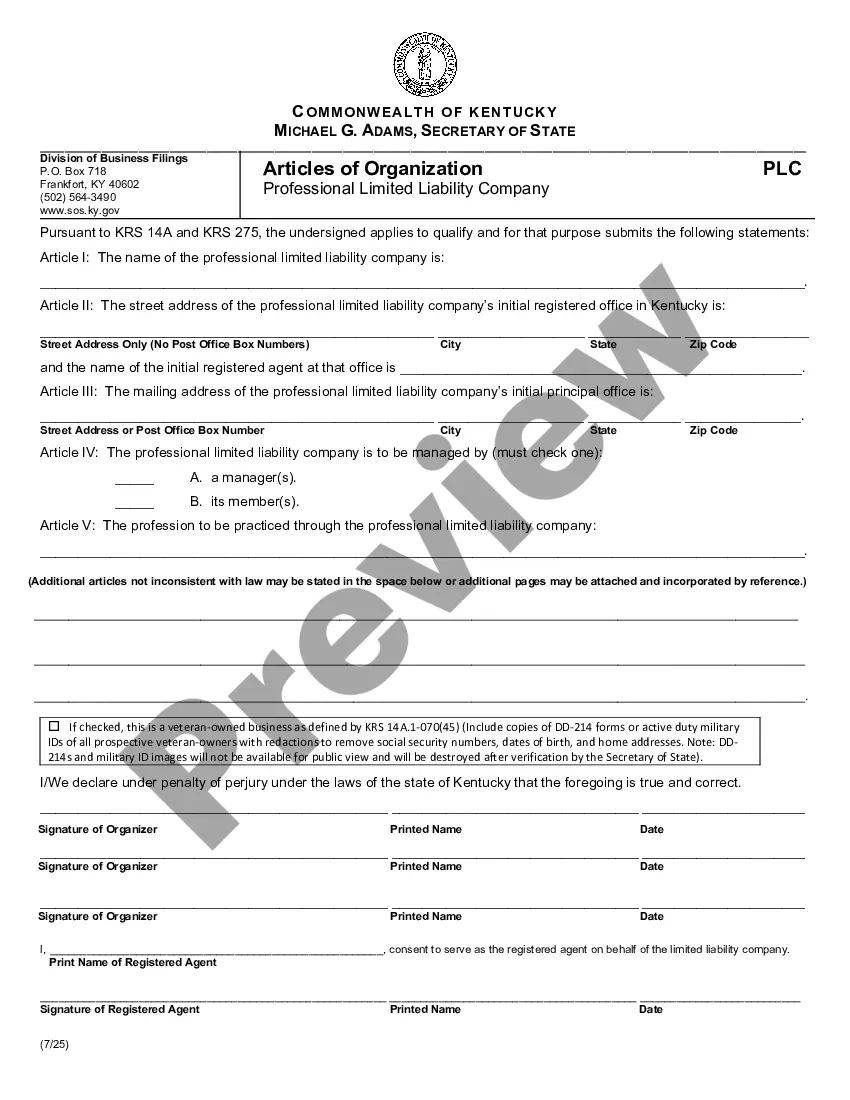
Kentucky Personal Planning Forms
Organize your Kentucky personal planning documents with confidence. Our attorney-drafted templates make it simple to protect what matters most.

Similar documents: key differences
- Last Will and Testament vs. Living Trust — a will takes effect after death and goes through probate; a living trust transfers assets immediately and privately.
- Healthcare Directive vs. Living Will — a healthcare directive names a decision-maker; a living will specifies your treatment preferences directly.
- Durable Power of Attorney vs. General Power of Attorney — a durable power of attorney remains valid if you become incapacitated; a general one typically does not.
- Living Trust vs. Testamentary Trust — a living trust is created and active during your lifetime; a testamentary trust is established through a will and only takes effect at death.
- Power of Attorney vs. Healthcare Proxy — a power of attorney covers financial and legal matters; a healthcare proxy covers medical decisions only.
- Will vs. Beneficiary Designation — a will distributes assets through probate; a beneficiary designation passes assets directly outside of probate.
Search for more forms
Common Kentucky Personal Planning Forms documents
- Last Will and Testament — directs how your property and assets are distributed after your death.
- Power of Attorney — authorizes a trusted person to manage your financial and legal affairs on your behalf.
- Healthcare Directive — records your medical treatment preferences if you cannot speak for yourself.
- Living Trust — transfers ownership of assets into a trust to simplify distribution and avoid probate.
- Living Will — states your wishes regarding life-sustaining treatment and end-of-life care.
- HIPAA Authorization Form — permits designated individuals to access your protected health information.
- Estate Planning Worksheet — organizes your assets, debts, and personal information for planning purposes.
FAQs
A solid personal planning package typically includes a last will and testament, a durable power of attorney, a healthcare directive, and a living will. You may also want a living trust if you have significant assets or want to avoid probate.
Requirements vary by document type. A durable power of attorney must be notarized in Kentucky. A last will and testament requires two witnesses but not necessarily a notary. It is always a good practice to have documents notarized for added validity.
Yes. You can revise or revoke most personal planning documents at any time while you are mentally competent. Life changes such as marriage, divorce, or the birth of a child are common reasons to update your documents.
Not necessarily, but a living trust can offer advantages a will cannot. Assets held in a trust pass directly to beneficiaries without going through probate, which saves time and keeps the transfer private.
Without a power of attorney in place, a Kentucky court may need to appoint a guardian or conservator to manage your affairs. This process can be time-consuming and costly for your family, which is why having these documents ready in advance matters.
Key legal points
- Kentucky requires a last will and testament to be signed by the testator and witnessed by two competent adults.
- A durable power of attorney in Kentucky must be signed before a notary public to be legally effective.
- Kentucky recognizes living wills and advance directives under the Kentucky Living Will Directive Act.
- A healthcare surrogate designated in a healthcare directive must be at least 18 years old.
- Living trusts in Kentucky are not required to be filed with any court, keeping your estate details private.
- Kentucky does not impose a state estate tax, but federal estate tax rules may still apply to larger estates.
- Handwritten (holographic) wills are recognized in Kentucky if entirely written, dated, and signed in the testator's handwriting.
- A power of attorney becomes void upon the principal's death; an executor or personal representative takes over at that point.
- Regularly reviewing and updating your personal planning documents is recommended after major life events such as marriage, divorce, or the birth of a child.
How to get started
Start organizing your Kentucky personal planning documents in minutes.
- Browse the library and select the personal planning template that fits your needs.
- Preview the document to review its structure, language, and required fields before proceeding.
- Subscribe to US Legal Forms to unlock full access to attorney-drafted templates.
- Complete your document using the built-in editor, filling in your details at your own pace.
- Download, print, or share your finished document in the format that works best for you.
Practical tip
Kentucky residents should store completed personal planning documents in a secure but accessible location, and let trusted family members or your attorney know where to find them.