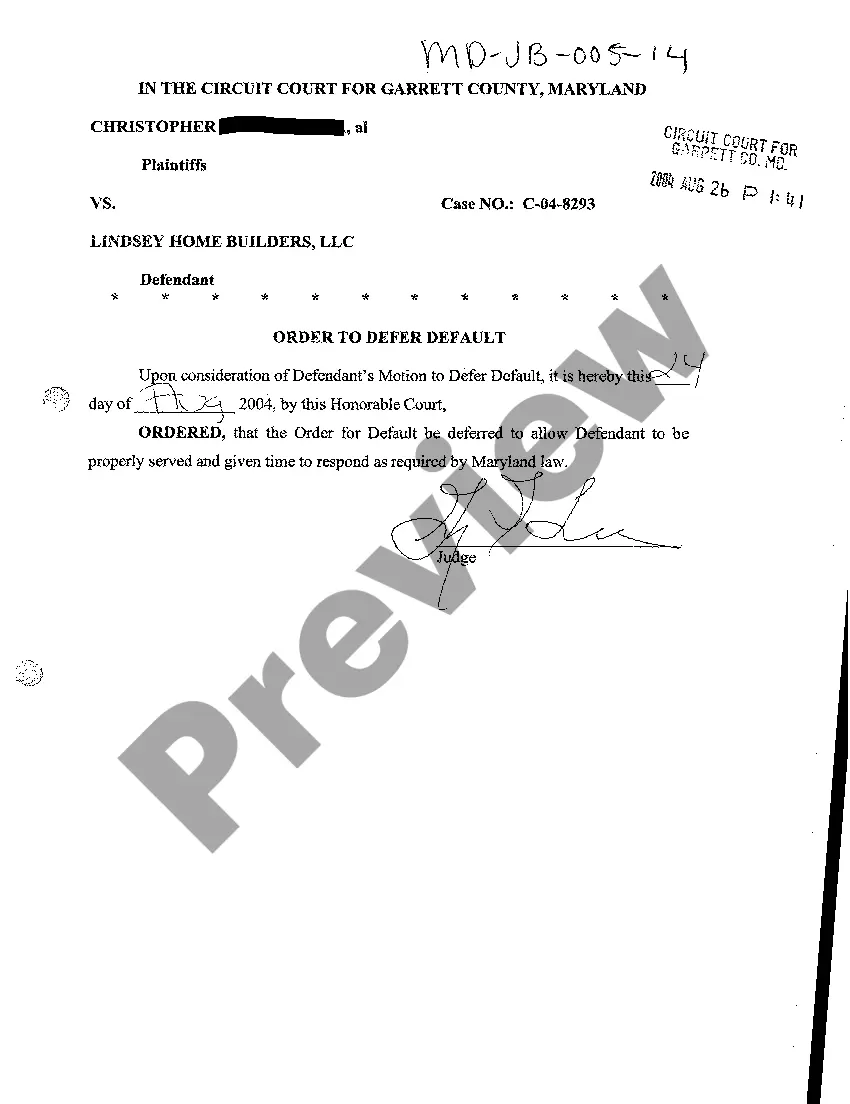
Pennsylvania Notice of Default in Payment of Rent as Warning Prior to Demand to Pay or Terminate for Nonresidential or Commercial Property
What this document covers
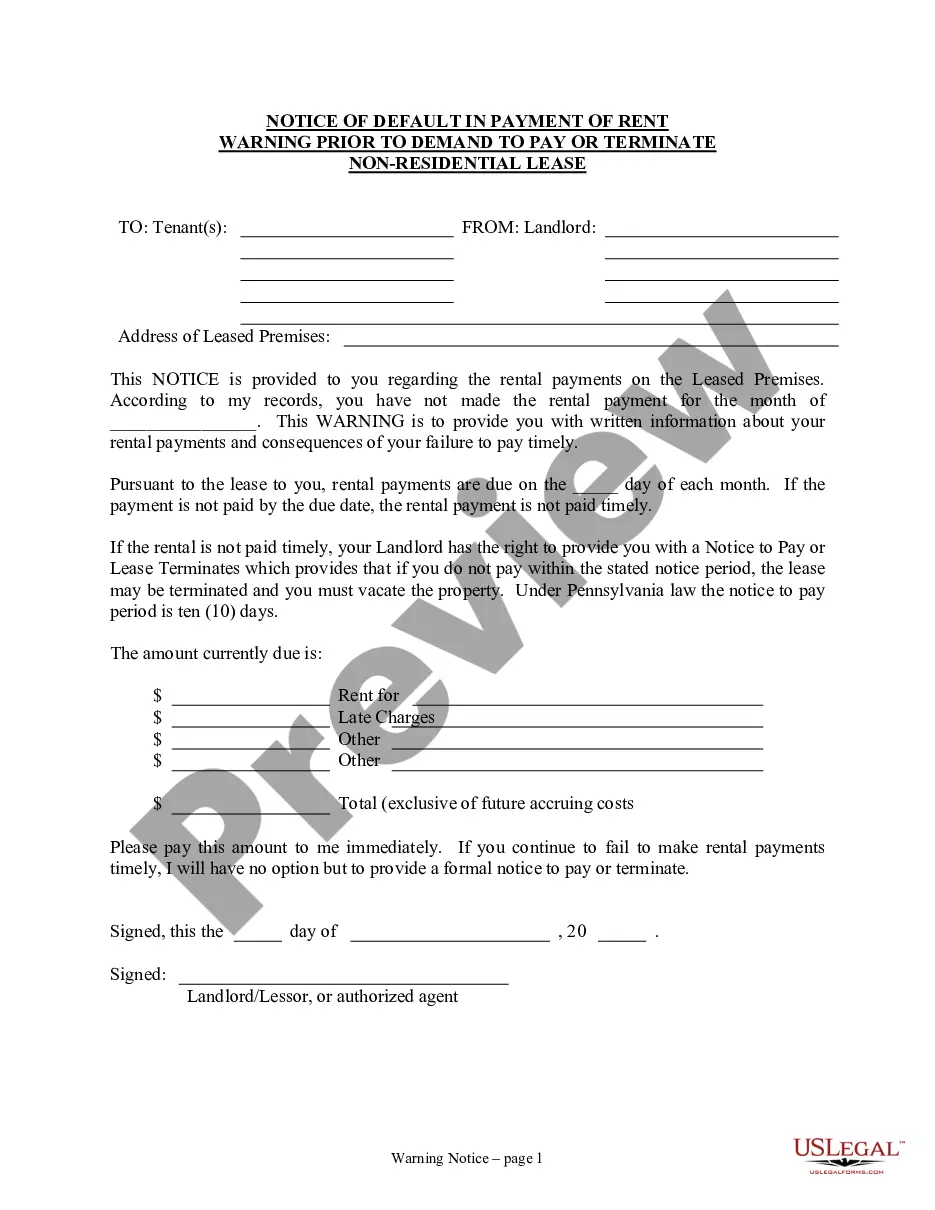
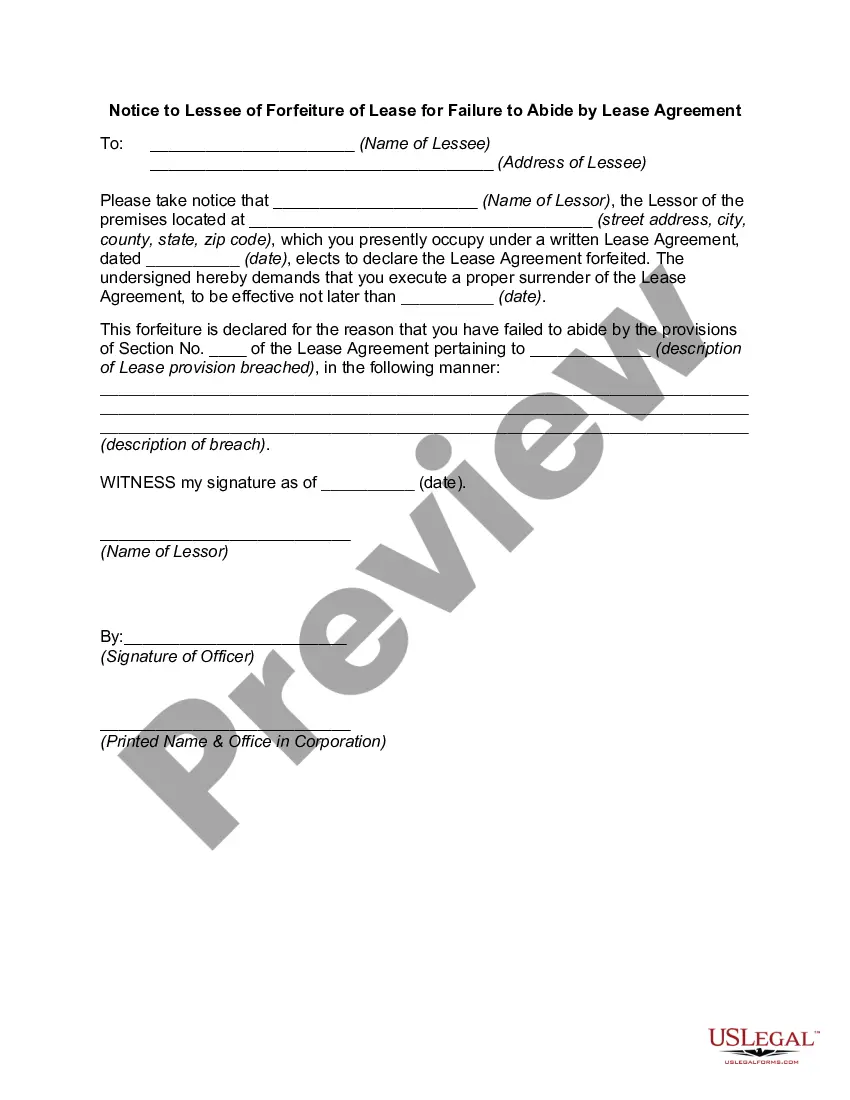
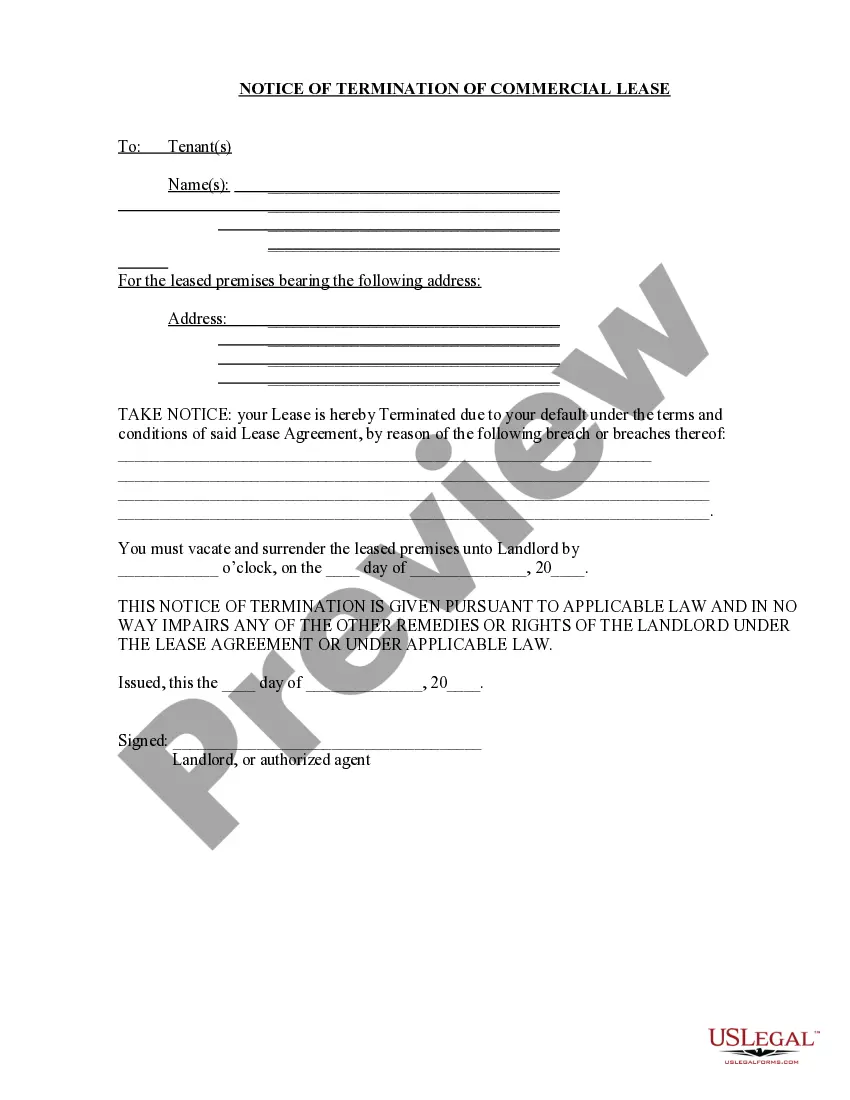
The Notice of Default in Payment of Rent as Warning Prior to Demand to Pay or Terminate for Nonresidential or Commercial Property is a legal document used by landlords to inform tenants of overdue rent payments. This form acts as a warning before any formal demand to pay or lease termination notices are issued. It helps landlords communicate the consequences of failing to pay rent on time, thereby maintaining a clear record of tenant obligations and providing an opportunity for tenants to remedy their default before further action is taken.
Form components explained
- Identification of tenant and landlord, including contact addresses.
- Details of the overdue rental payment and due date.
- An explanation of the consequences of failing to pay rent timely.
- Notice of the landlord's right to terminate the lease if payment is not received.
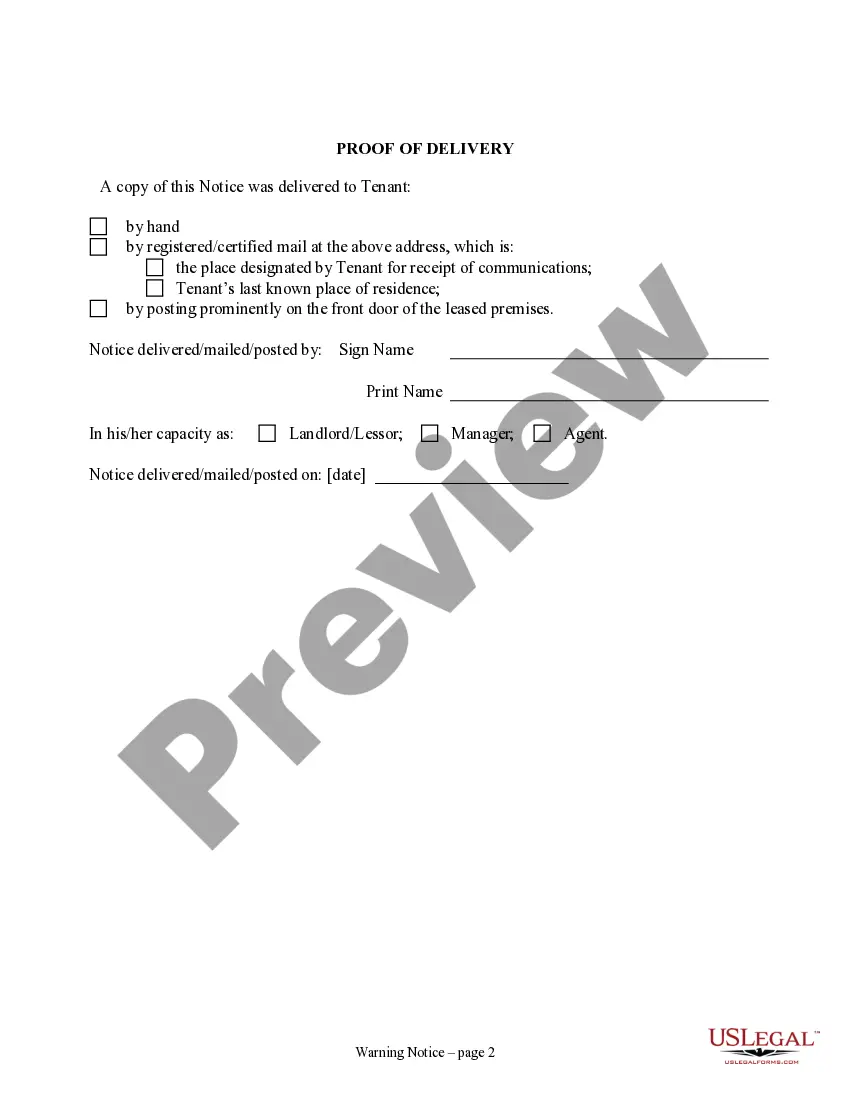
- Signature of the landlord and proof of delivery to the tenant.


Situations where this form applies
This form should be used when a landlord needs to formally notify a tenant of a default in rent payment for non-residential or commercial property. It serves as a proactive measure to remind tenants of their obligations under the lease agreement before issuing a termination notice or taking further legal action. It is useful in situations where the landlord wants to document their communication and provide the tenant with a chance to pay the overdue rent.
Intended users of this form
- Landlords of non-residential or commercial properties who are facing late rent payments.
- Property managers responsible for maintaining lease agreements and tenant relations.
- Real estate agents managing commercial leases on behalf of property owners.
How to prepare this document
- Identify and enter the names and addresses of both the landlord and tenant.
- Specify the property address where the lease is in effect.
- Fill in the month and details of the unpaid rent, including amounts due and any late charges.
- Sign and date the form to provide legal validity.
- Deliver the notice to the tenant using the methods specified, ensuring proof of delivery is documented.
Does this document require notarization?
Notarization is not commonly needed for this form. However, certain documents or local rules may make it necessary. Our notarization service, powered by Notarize, allows you to finalize it securely online anytime, day or night.
Get your form ready online
Our built-in tools help you complete, sign, share, and store your documents in one place.
Make edits, fill in missing information, and update formatting in US Legal Forms—just like you would in MS Word.
Download a copy, print it, send it by email, or mail it via USPS—whatever works best for your next step.
Sign and collect signatures with our SignNow integration. Send to multiple recipients, set reminders, and more. Go Premium to unlock E-Sign.
If this form requires notarization, complete it online through a secure video call—no need to meet a notary in person or wait for an appointment.
We protect your documents and personal data by following strict security and privacy standards.

Make edits, fill in missing information, and update formatting in US Legal Forms—just like you would in MS Word.

Download a copy, print it, send it by email, or mail it via USPS—whatever works best for your next step.

Sign and collect signatures with our SignNow integration. Send to multiple recipients, set reminders, and more. Go Premium to unlock E-Sign.

If this form requires notarization, complete it online through a secure video call—no need to meet a notary in person or wait for an appointment.

We protect your documents and personal data by following strict security and privacy standards.
Mistakes to watch out for
- Failing to deliver the notice to the correct address.
- Not including all required payment details or amounts owed.
- Omitting the date when the form is signed.
- Not keeping a copy of the notice for record-keeping purposes.
Advantages of online completion
- Immediate access to a standardized legal document drafted by licensed attorneys.
- Convenience of downloading and customizing the form based on specific needs.
- Ability to store and retrieve documents easily for future reference or legal needs.
Legal use & context
- The form acts as a prerequisite before taking more drastic measures like eviction.
- Using this notice can strengthen a landlord's position if further legal action is necessary.
- Maintaining communication through formal notices is essential for dispute resolution.
What to keep in mind
- The Notice of Default in Payment of Rent is critical for landlords to notify tenants of overdue payments.
- It serves as a formal warning before further action is taken under lease agreements.
- Proper completion and delivery of the form are essential for its enforceability.
Looking for another form?






Form popularity
FAQ
They don't have to give you any reasons why they want to evict you. They have to give you at least 28 days notice, but this could be longer depending on your agreement. If you don't leave by the time your notice ends, your landlord has to go to court to get a court order to make you leave.
Pennsylvania law requires that the tenant be given 10 days from the date of service of the Notice to Quit to either pay the rent due or move out of the property. This deadline can be changed if previously agreed to by the tenant in the lease or rental agreement.
No. Many Pennsylvania courts have said your landlord cannot evict you by self-help, meaning such things as padlocking your door, shutting off your utilities, using force to evict you, or using any eviction method other than going to court.
Tenant Rights to Withhold Rent in PennsylvaniaTenants may withhold rent or exercise the right to repair and deduct if a landlord fails to take care of important repairs, such as a broken heater. For specifics, see Pennsylvania Tenant Rights to Withhold Rent or Repair and Deduct.
Absent a rental agreement, the landlord is required to provide the tenant with at least 15 days' notice of any changes to the lease. Regarding a year-to-year or definite lease term, at least 30 days' notice is required if the landlord wants to make any changes to the lease or terminate the tenancy.
Answer. Tenants have the right to "quiet enjoyment" of their home. Unless there is an emergency, your landlord or their agent must give you at least 24 hours' notice if they intend to visit.Apart from genuine emergencies, landlords cannot enter a tenant's home without their consent unless they have a court order.
The Landlord/Tenant Act requires your landlord to give you a written eviction notice. This notice must be a 10-day notice if he/she is evicting you for nonpayment of rent, or 15 days if the eviction is for breach of the lease or end of lease term.
The Landlord/Tenant Act requires your landlord to give you a written eviction notice. This notice must be a 10-day notice if he/she is evicting you for nonpayment of rent, or 15 days if the eviction is for breach of the lease or end of lease term.
Landlord Right to Entry in PennsylvaniaPennsylvania does not have any laws regarding landlord right to entry. As such, landlords are legally allowed to enter units whenever they want, though most landlords and tenants have some kind of entry notification policy in the lease agreement.