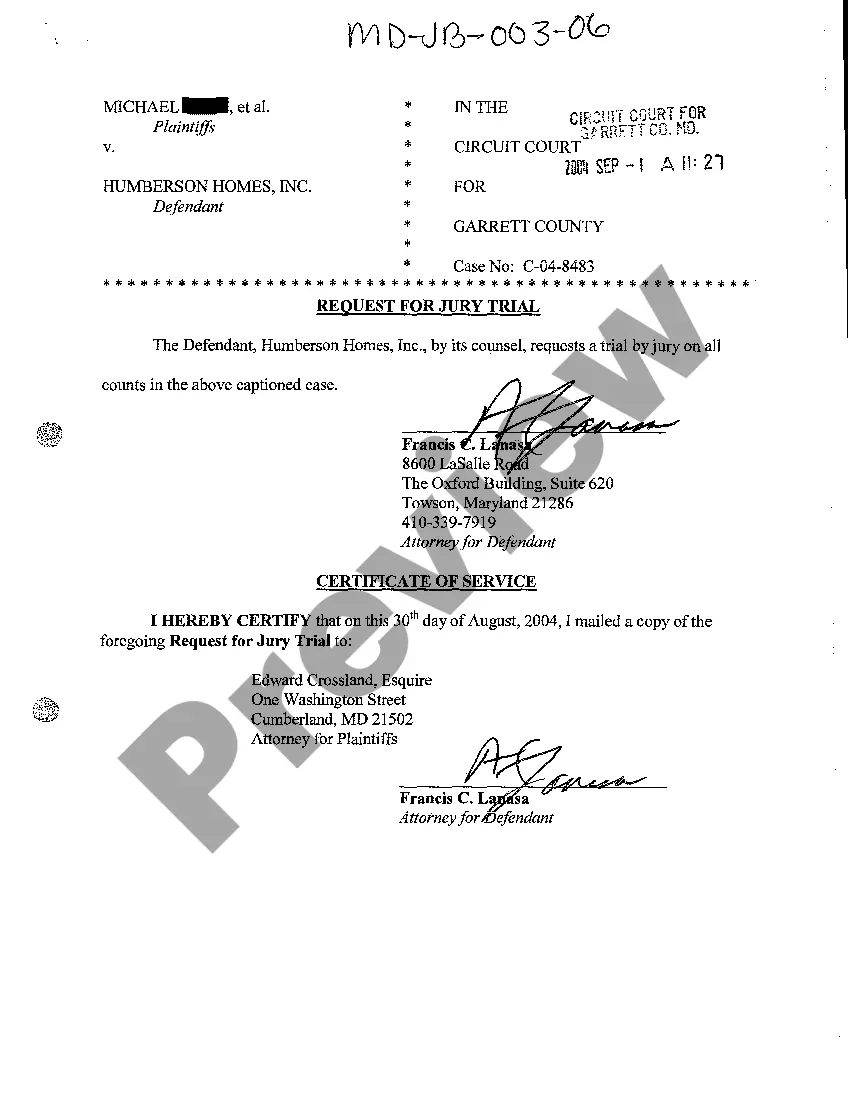
Pennsylvania Letter from Landlord to Tenant as Notice to remove unauthorized inhabitants
Overview of this form
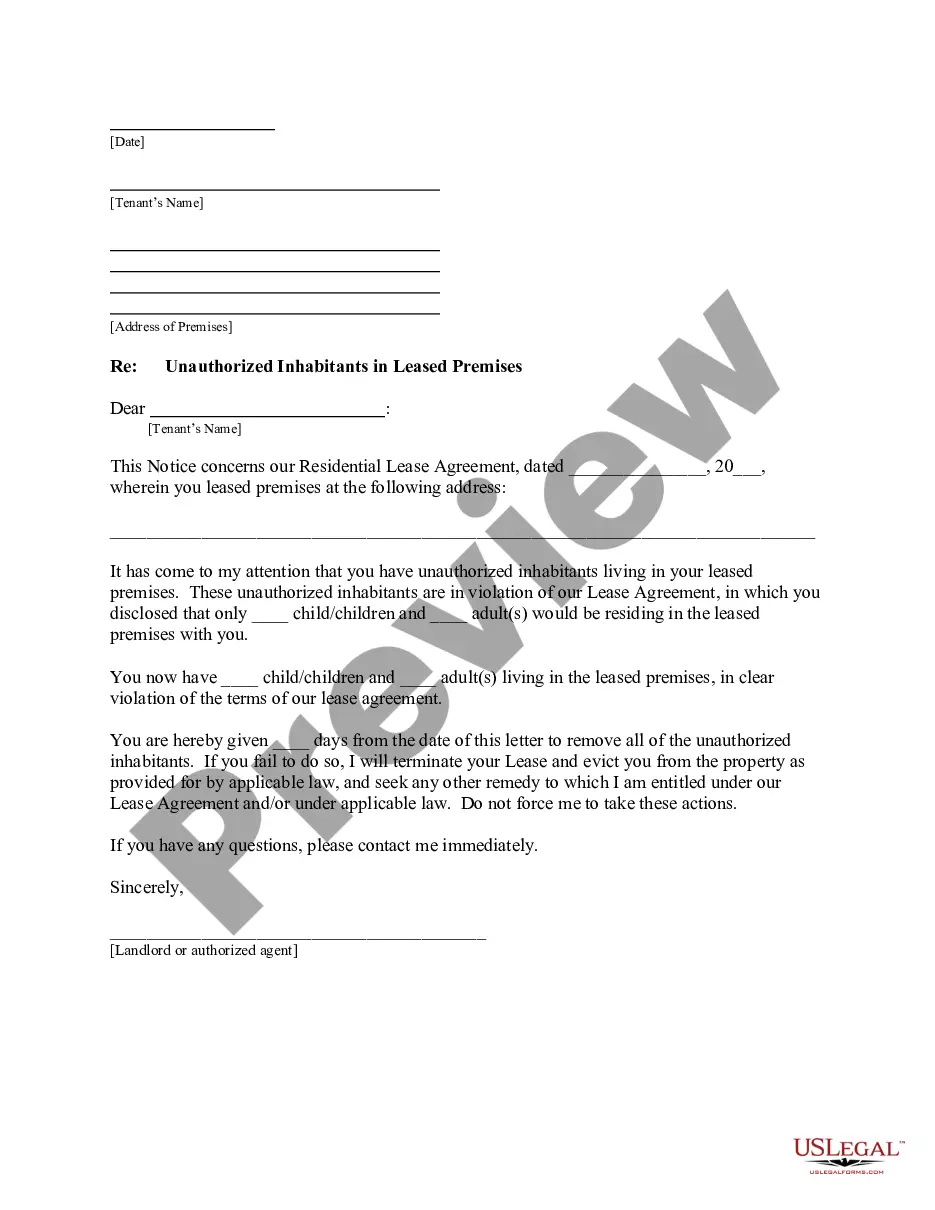
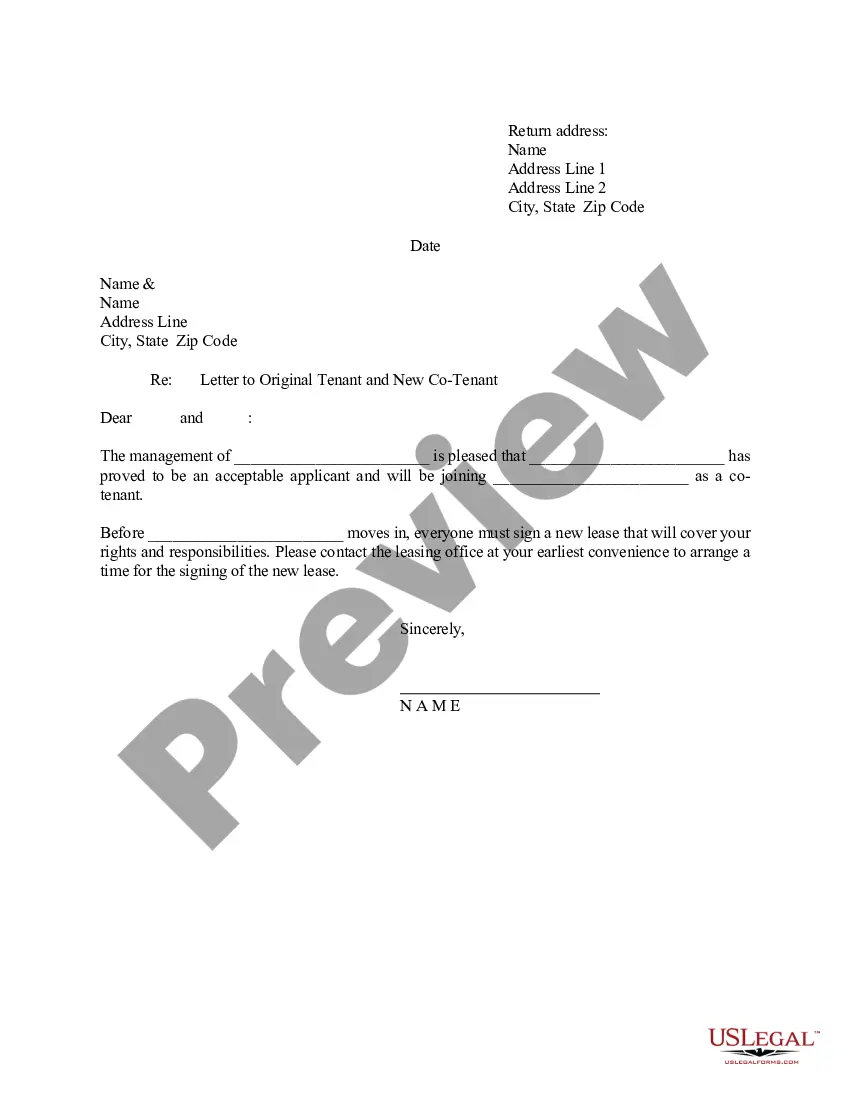
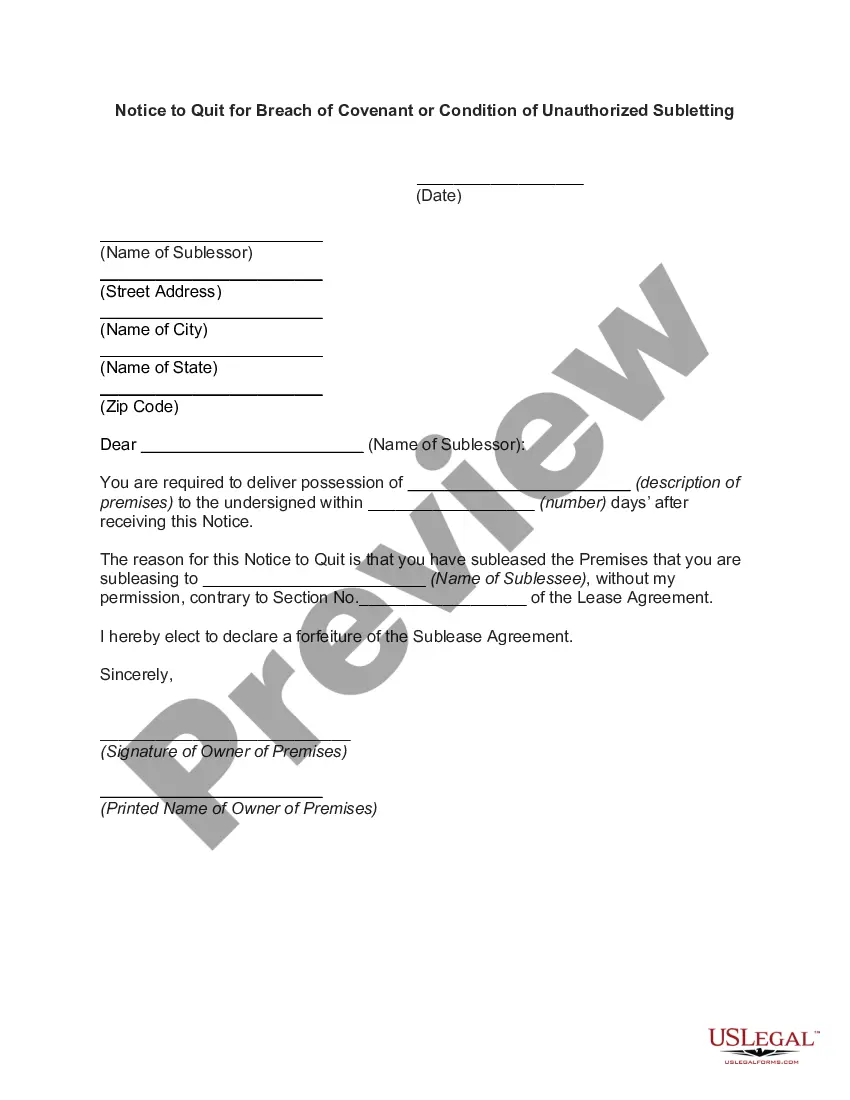
This document is a formal notice from a landlord to a tenant, requesting the removal of any unauthorized inhabitants residing in the leased premises. It outlines the consequences for failing to comply with this request, which may include termination of the lease and potential eviction. This form specifically serves as a notice of breach of the lease agreement regarding unauthorized occupants, distinguishing it from other landlord-tenant communications, such as general eviction notices or lease renewals.
Key parts of this document
- Identification of the residential lease agreement date and property address
- Details of unauthorized inhabitants currently living on the premises
- Request for the removal of these unauthorized inhabitants within a specified timeframe
- Warning regarding potential lease termination and eviction actions
- Landlord's contact information for inquiries


Common use cases
This form is needed when a landlord discovers that a tenant has allowed individuals to live in the rental property who were not disclosed in the lease agreement. If the landlord wants to address this violation and ensure compliance with the lease terms, issuing this notice is appropriate. It serves as a formal step before considering eviction or other legal actions.
Who this form is for
- Residential landlords who have tenants in violation of the lease agreement.
- Property managers acting on behalf of landlords who need to enforce lease terms.
- Landlords looking to resolve issues concerning unauthorized inhabitants in a legal manner.
How to prepare this document
- Identify the date of the lease agreement and the address of the rental property.
- List the names and details of the unauthorized inhabitants currently living in the property.
- Specify the timeframe for removal of the unauthorized inhabitants.
- Sign the letter, including your name as the landlord or an authorized agent.
- Choose the method of delivery to the tenant (personal delivery or certified mail).
Notarization requirements for this form
This form does not typically require notarization unless specified by local law. Always check your jurisdiction's requirements to ensure compliance.
Get your form ready online
Our built-in tools help you complete, sign, share, and store your documents in one place.
Make edits, fill in missing information, and update formatting in US Legal Forms—just like you would in MS Word.
Download a copy, print it, send it by email, or mail it via USPS—whatever works best for your next step.
Sign and collect signatures with our SignNow integration. Send to multiple recipients, set reminders, and more. Go Premium to unlock E-Sign.
If this form requires notarization, complete it online through a secure video call—no need to meet a notary in person or wait for an appointment.
We protect your documents and personal data by following strict security and privacy standards.

Make edits, fill in missing information, and update formatting in US Legal Forms—just like you would in MS Word.

Download a copy, print it, send it by email, or mail it via USPS—whatever works best for your next step.

Sign and collect signatures with our SignNow integration. Send to multiple recipients, set reminders, and more. Go Premium to unlock E-Sign.

If this form requires notarization, complete it online through a secure video call—no need to meet a notary in person or wait for an appointment.

We protect your documents and personal data by following strict security and privacy standards.
Avoid these common issues
- Failing to provide accurate information about the unauthorized inhabitants.
- Not specifying a clear deadline for removal, which can weaken the notice.
- Neglecting to sign the notice, which may result in it being ineffective.
Why complete this form online
- Convenience of instant download and access from any device.
- Editability to customize the form to your specific situation.
- Reliable legal language drafted by licensed attorneys, ensuring compliance.
Legal use & context
- This notice serves as a formal warning under the lease agreement terms.
- Failure to comply may initiate legal proceedings for eviction, making proper documentation essential.
- These forms are generally enforceable if they adhere to local tenant laws regarding housing.
Summary of main points
- This form is essential for landlords to formally address unauthorized inhabitants in a rental property.
- Clear communication and proper documentation are crucial in property management.
- Understanding local laws is important for the correct application of this notice.
Looking for another form?

Form popularity
FAQ
Any guest residing on the property for more than 14 days in a six-month period or spending more than 7 nights consecutively will be considered a tenant. Anyone living on the property must be listed and sign the lease agreement.
Address the Tenant(s) Named in the Residential Lease. List the Lease Information. Notify the Tenant of the Eviction. Give a Reason for the Eviction. Serve the Eviction Notice to the Tenant(s)
If there is no written lease, the reason for eviction can be simply that the landlord has decided not to renew the lease. 4. If the notice does not follow the law, you can ask the Magisterial District Judge, at the eviction hearing, to dismiss the Landlord/Tenant Complaint filed by the landlord.
A landlord can terminate a California tenancy early and evict the tenant for a variety of reasons, including failure to pay rent, violating the lease or rental agreement, or committing an illegal act. Before terminating the tenancy, the landlord must give the tenant written notice.
Notice is posted to correct the issue/vacate. If uncured and tenant remains, the complaint is filed and served. Hearing is held and judgment issued. If granted, writ of possession is posted. Possession of property is returned to landlord.
Send a 3-day notice to fix or quit. If the tenant doesn't follow through with a fix, visit your local courthouse and begin a filing for eviction. In some states, you can file to only evict the unauthorized tenant. In others, you'll have the option to evict your tenant as well as the unauthorized occupant.
There is no written agreement When your roommate has month-to-month tenancy, California state law says that you can evict them by serving 30 or 60 days' notice without any reasoning.
If your family member or friend fails to leave by the requested date, you can then file an eviction petition. Once you file your petition, you must request an unlawful detainer hearing. This is a short court hearing in which you explain the reason for the eviction and present evidence of the prior notices to vacate.