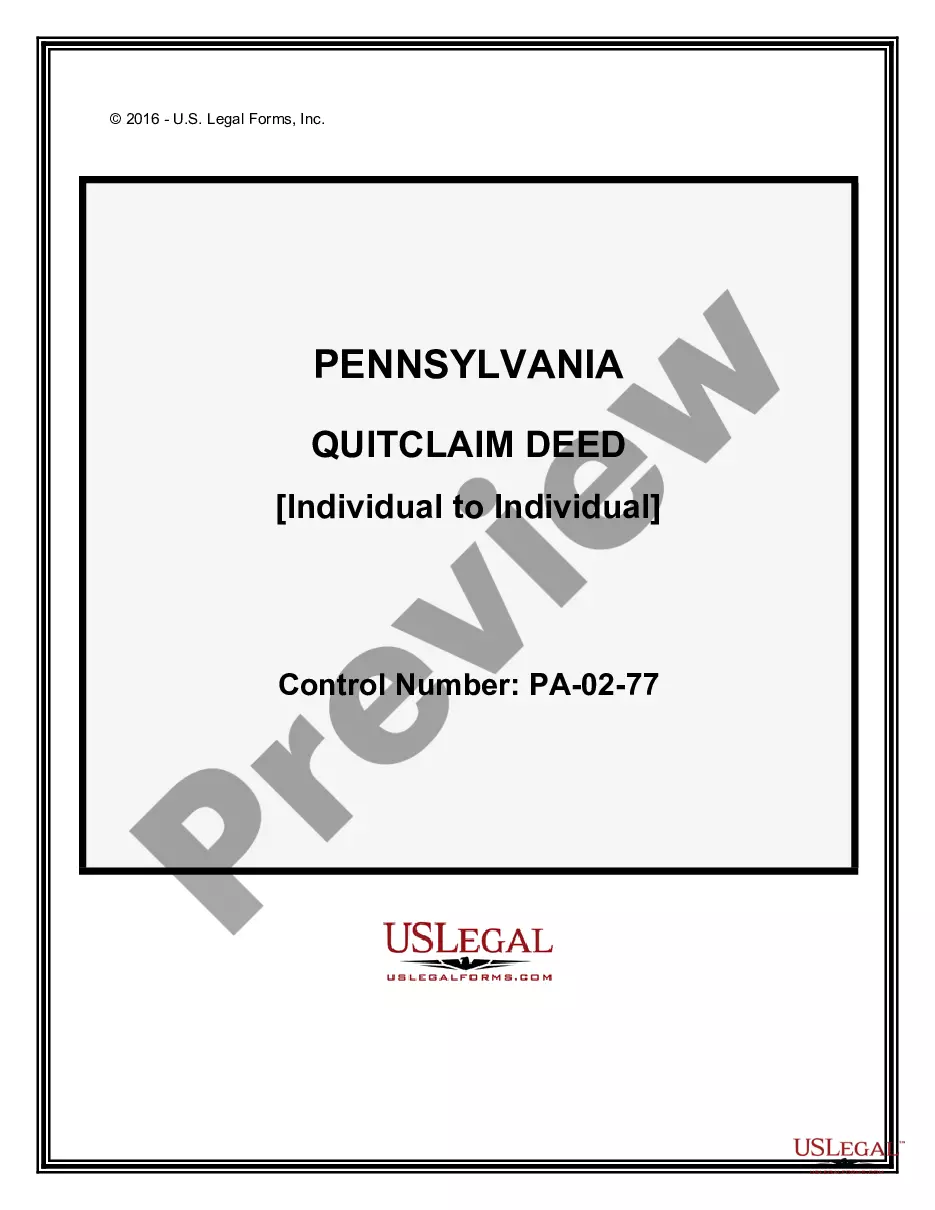
Pennsylvania Quitclaim Deed from Individual to Individual
Understanding this form
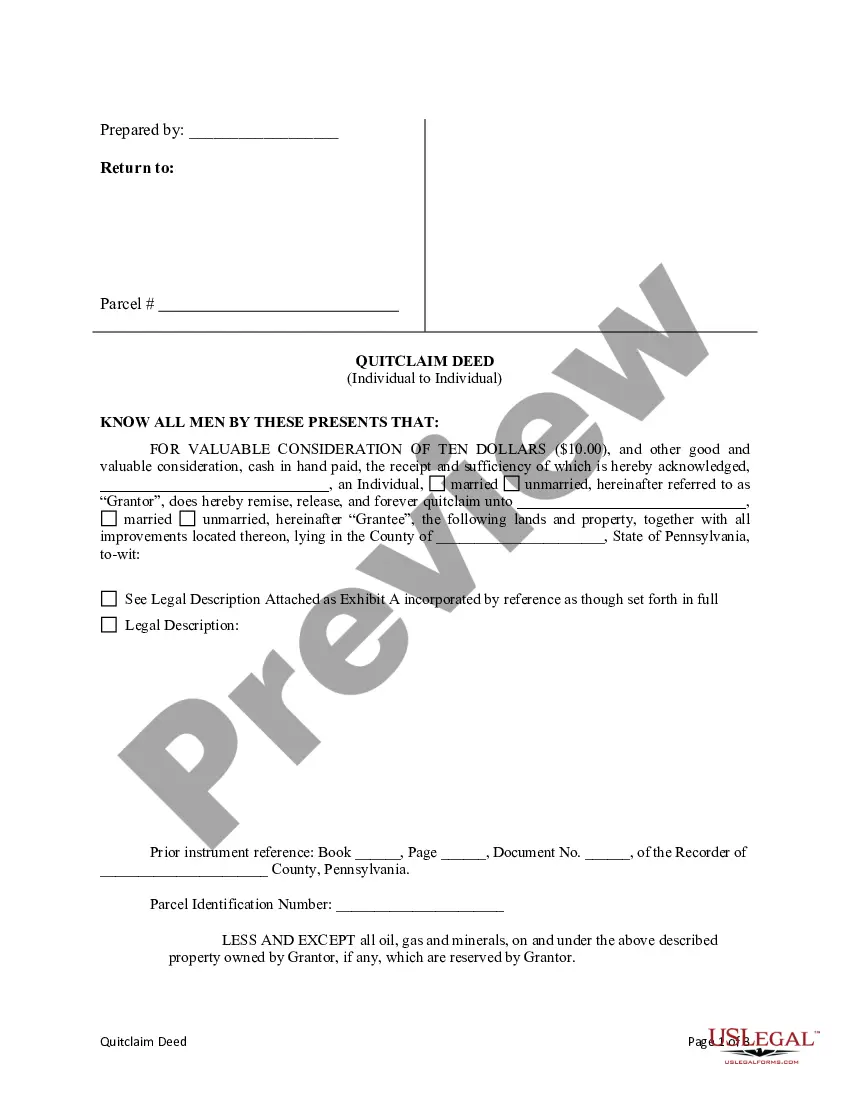
The Quitclaim Deed from Individual to Individual is a legal document that allows one individual (the Grantor) to transfer ownership of property to another individual (the Grantee) without any warranty regarding the title. This form specifically conveys the described property while reserving any oil, gas, and minerals. Unlike other types of deeds, a quitclaim deed offers no guarantees about the ownership, making it vital to understand the risks involved when using this form.
Key components of this form
- Identification of the Grantor and Grantee.
- Description of the property being transferred.
- Details about reserved rights for oil, gas, and minerals, if applicable.
- Legal language ensuring the transfer of ownership.
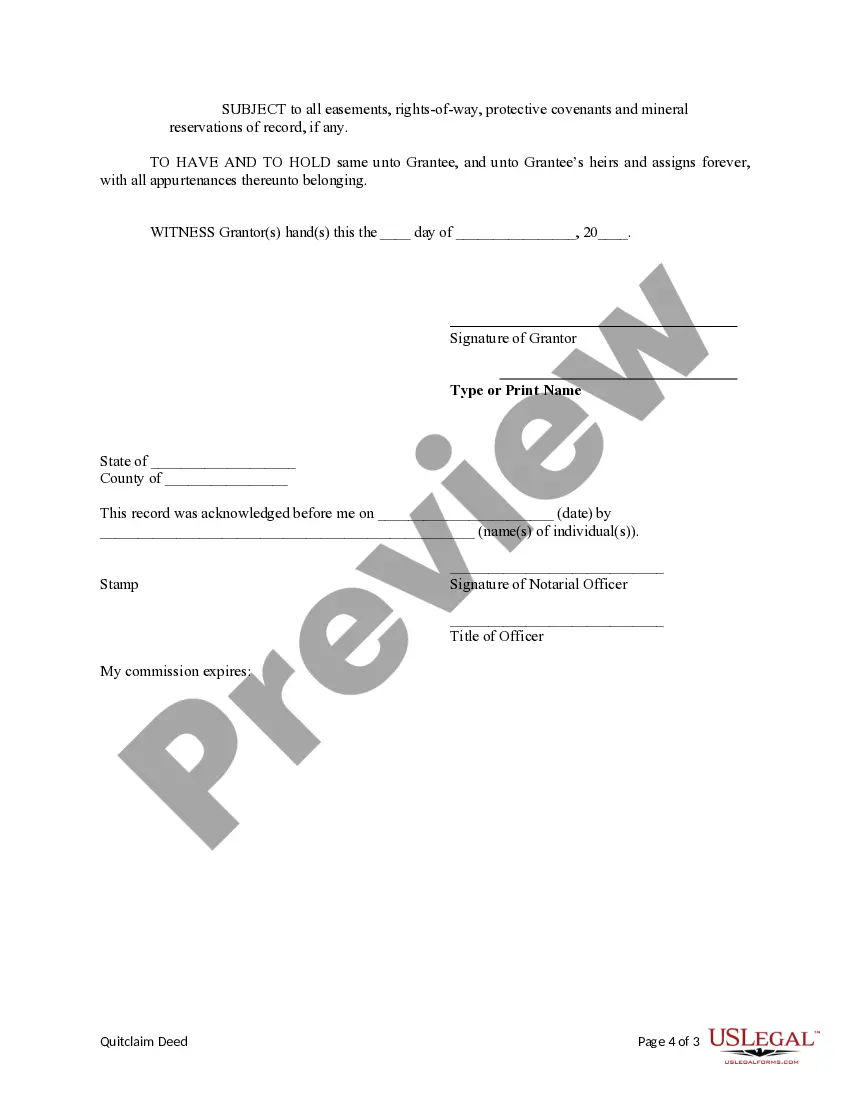
- Signatures of the Grantor and acknowledgment of the deed's execution.




Situations where this form applies
This form is commonly used in real estate transactions where an individual wishes to gift, transfer, or relinquish their interest in property to another individual, especially among family or friends. It may be suitable when there is a trusted relationship between parties and no concerns about the property's title. It is also useful in situations where the Grantor is uncertain about their ownership rights or when the property title is not fully clear.
Who should use this form
This quitclaim deed is intended for individuals who need to transfer property ownership between themselves without formal guarantees. It is suitable for:
- Individuals transferring property to family members.
- Friends or acquaintances sharing property.
- Anyone involved in informal property exchanges.
Steps to complete this form
- Identify the Grantor and Grantee by full legal names.
- Clearly describe the property being transferred, including boundary lines if necessary.
- Indicate any reservations, such as rights to oil, gas, and minerals.
- Have the Grantor sign the deed in the presence of a witness (if required).
- Ensure that the deed is recorded with the appropriate county clerk or registrar of deeds.
Does this form need to be notarized?
This form does not typically require notarization unless specified by local law. However, it is advisable to have it notarized to ensure its acceptance when recording the deed.
Get your form ready online
Our built-in tools help you complete, sign, share, and store your documents in one place.
Make edits, fill in missing information, and update formatting in US Legal Forms—just like you would in MS Word.
Download a copy, print it, send it by email, or mail it via USPS—whatever works best for your next step.
Sign and collect signatures with our SignNow integration. Send to multiple recipients, set reminders, and more. Go Premium to unlock E-Sign.
If this form requires notarization, complete it online through a secure video call—no need to meet a notary in person or wait for an appointment.
We protect your documents and personal data by following strict security and privacy standards.

Make edits, fill in missing information, and update formatting in US Legal Forms—just like you would in MS Word.

Download a copy, print it, send it by email, or mail it via USPS—whatever works best for your next step.

Sign and collect signatures with our SignNow integration. Send to multiple recipients, set reminders, and more. Go Premium to unlock E-Sign.

If this form requires notarization, complete it online through a secure video call—no need to meet a notary in person or wait for an appointment.

We protect your documents and personal data by following strict security and privacy standards.
Common mistakes to avoid
- Failing to accurately describe the property, which can lead to disputes.
- Omitting required signatures or witnesses, rendering the deed invalid.
- Not recording the deed with the appropriate local authority, which may cause legal complications later.
Benefits of completing this form online
- Convenient access to legal documents without the need for in-person meetings.
- Editability allows you to fill in form fields easily and accurately.
- Reliable legal templates created by licensed attorneys ensure compliance with state laws.
Quick recap
- The Quitclaim Deed from Individual to Individual is for transferring property ownership between individuals.
- This form offers no guarantee about the property title, making it essential to trust the other party.
- Complete the form carefully, ensuring all information is accurate and that it is properly recorded.
Looking for another form?






Form popularity
FAQ
You'll need to pay a fee, which varies from county to county. For example, in Montgomery County, near Philadelphia, the fee for recording a deed is $86.75 for up to four pages and up to four names, and $1 per additional name and $4 per additional page.
Quitclaim deeds are most often used to transfer property between family members. Examples include when an owner gets married and wants to add a spouse's name to the title or deed, or when the owners get divorced and one spouse's name is removed from the title or deed.
Fill in the deed form. Print it out. Have the grantor(s) and grantee(s) sign and get the signature(s) notarized. Fill out a Statement of Value form, if necessary. Get the Uniform Parcel Number (UPI) on the deed certified, if required by your county.
But you might be wondering if an owner can transfer a deed to another person without a real estate lawyer. The answer is yes. Parties to a transaction are always free to prepare their own deeds.A quitclaim deed, for example, is far simpler than a warranty deed.