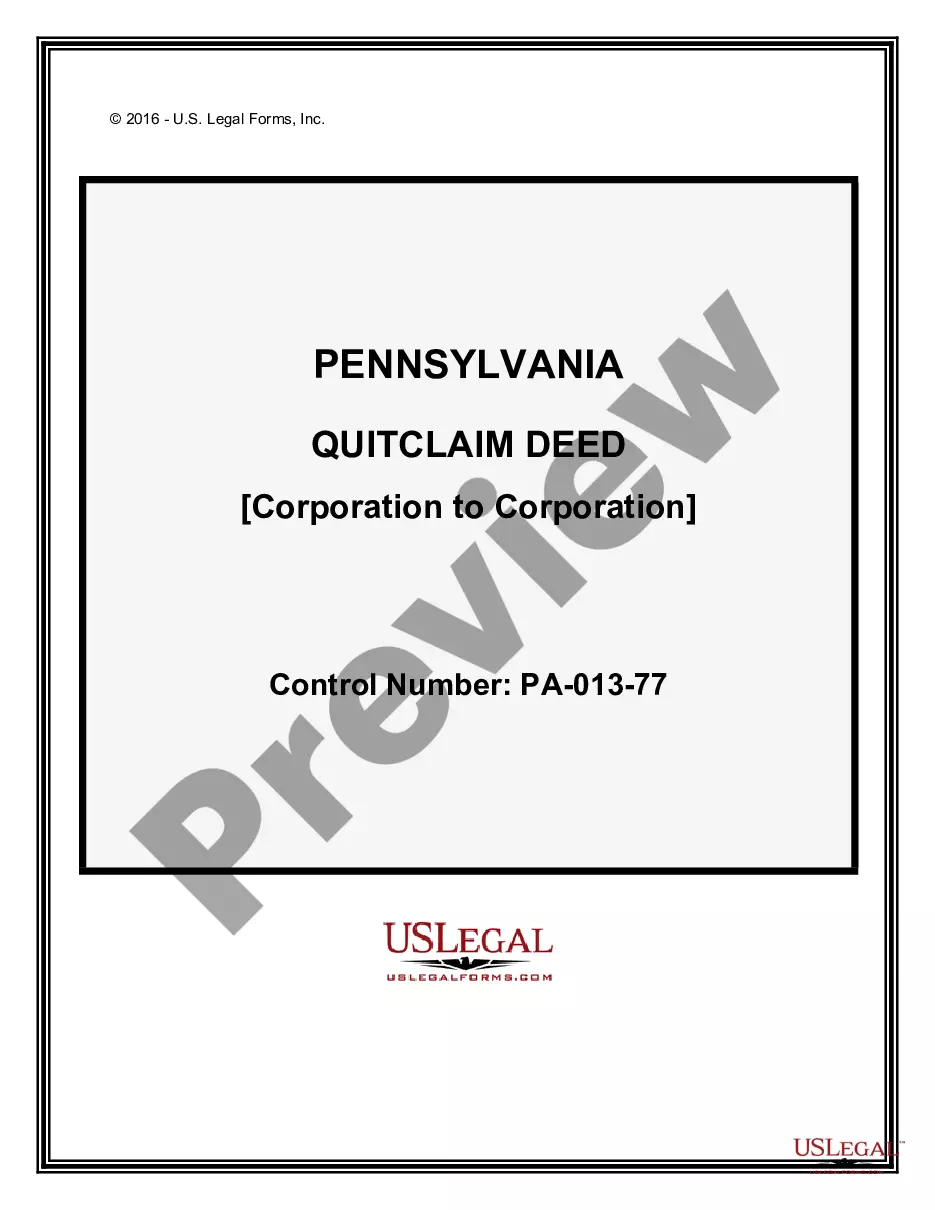
Pennsylvania Quitclaim Deed from Corporation to Corporation
Overview of this form
The Quitclaim Deed from Corporation to Corporation is a legal document used to transfer property ownership from one corporation to another without any guarantee of the title's validity. Unlike other deeds, this quitclaim deed conveys properties "as is," meaning the grantor does not guarantee that they hold clear title to the property being transferred. This document is essential for corporations looking to simplify property transfers, especially when the exact nature of the property rights is not in question.
Form components explained
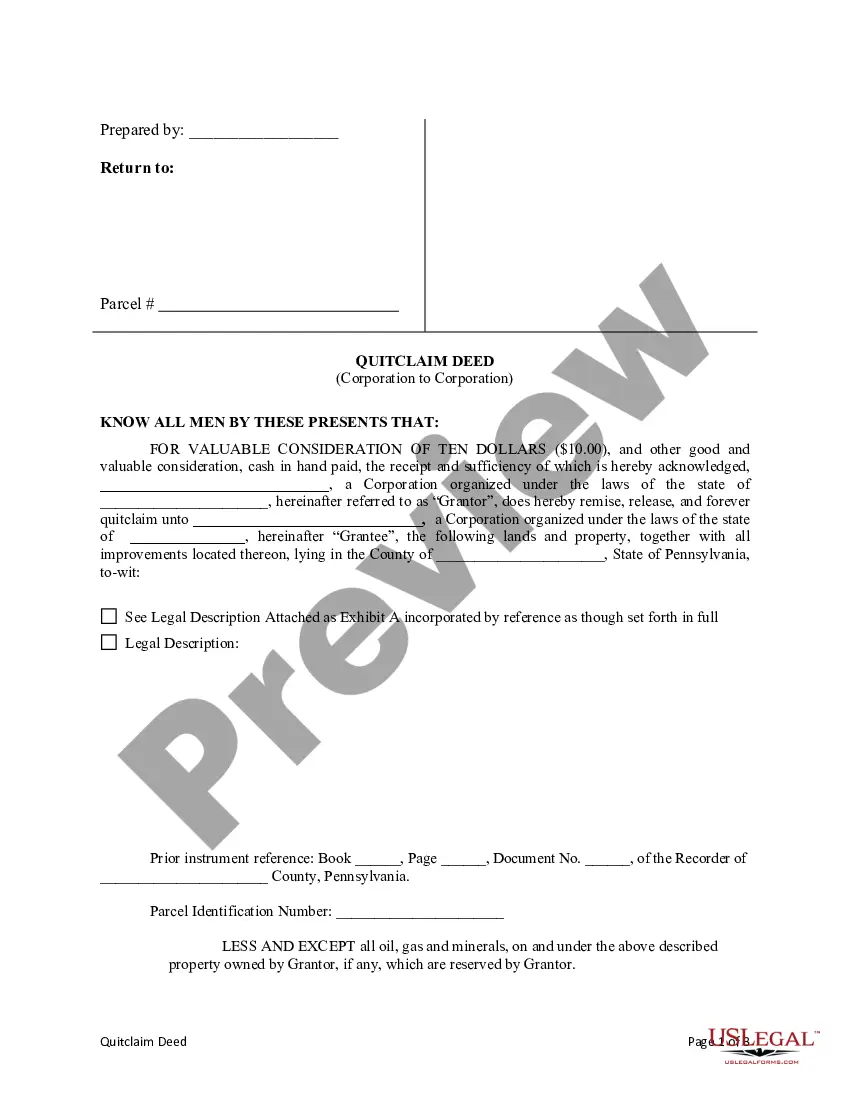
- Grantor and Grantee: Identifies the corporations involved in the property transfer.
- Property Description: Detailed description of the property being transferred.
- Reservation Clause: Specifies that any oil, gas, and minerals under the property are retained by the grantor.
- Easements and Rights-of-Way: Addresses any existing easements or rights affecting the property.
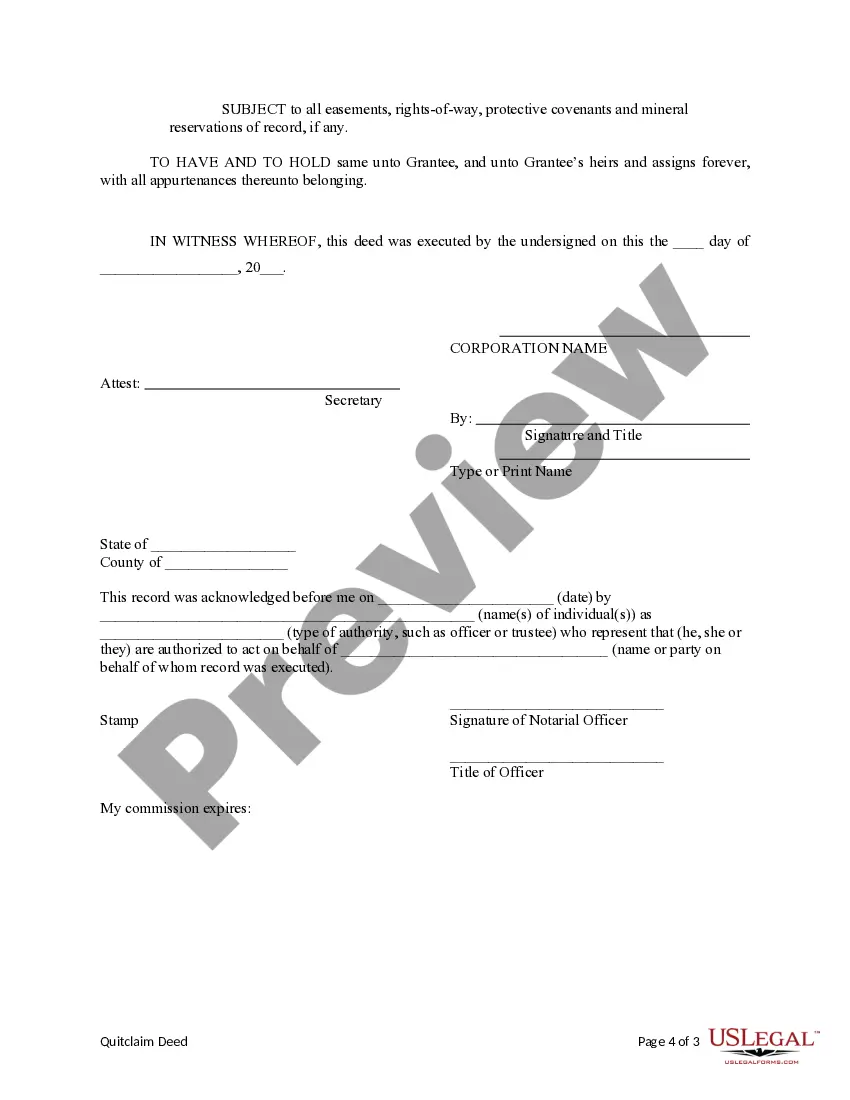
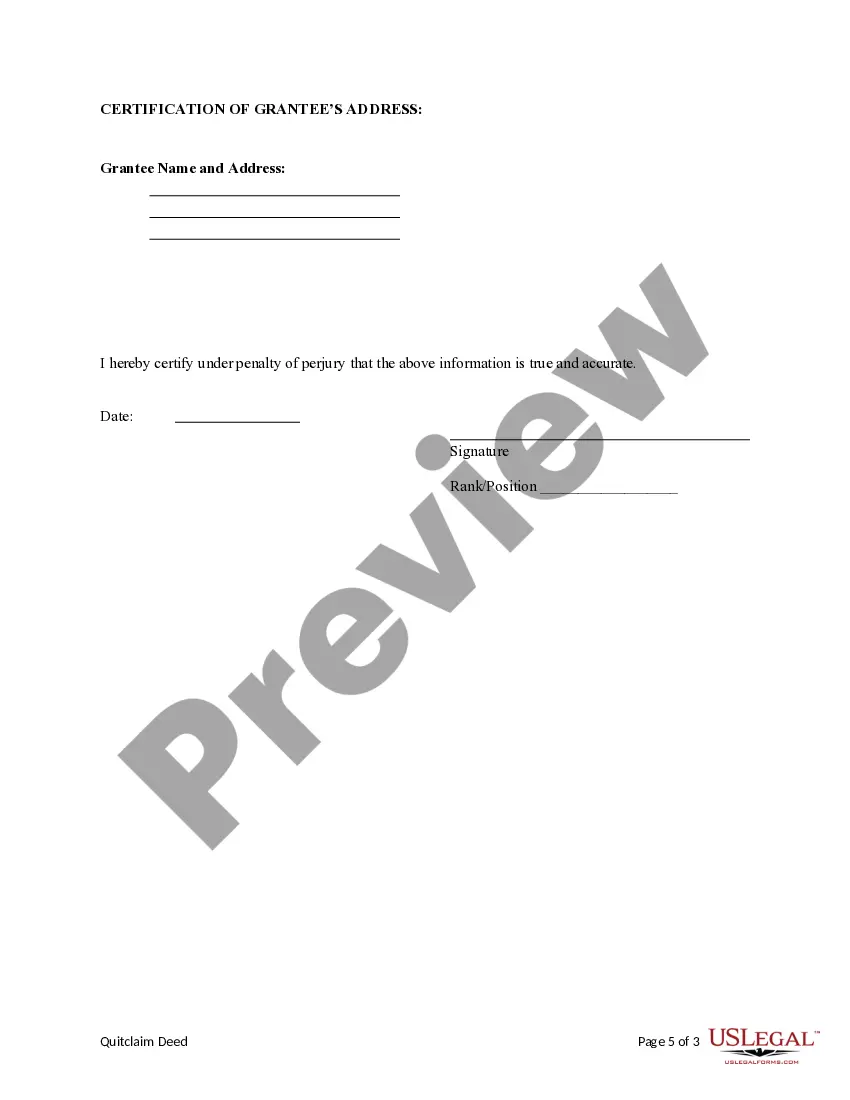
- Execution Section: Requires signatures from authorized representatives of both corporations to make the deed legally effective.



Common use cases
This form is typically used in situations where one corporation is transferring property to another corporation without the need for a warranty or affirmation of title. It is especially useful during corporate mergers, acquisitions, or when consolidating property holdings. This deed can also facilitate the transfer of certain assets as part of internal restructuring efforts.
Who can use this document
- Corporations engaged in property transactions, including real estate companies, manufacturers, and other entities with real property holdings.
- Corporate officers or appointed representatives responsible for managing property transfers.
- Legal departments or attorneys representing corporations in conveyancing processes.
Completing this form step by step
- Identify the parties: Enter the names and addresses of both the grantor and grantee corporations.
- Specify the property: Provide a detailed description of the property being conveyed, including any legal descriptions.
- Enter the reservation: Clearly outline any minerals, oil, or gas reserved by the grantor under the property.
- Sign the deed: Ensure that authorized representatives from both corporations sign the document.
- Notarize if required: Check local laws for any notarization requirements before execution.
Does this document require notarization?
This document requires notarization to meet legal standards. US Legal Forms provides secure online notarization powered by Notarize, allowing you to complete the process through a verified video call, available 24/7.
Get your form ready online
Our built-in tools help you complete, sign, share, and store your documents in one place.
Make edits, fill in missing information, and update formatting in US Legal Forms—just like you would in MS Word.
Download a copy, print it, send it by email, or mail it via USPS—whatever works best for your next step.
Sign and collect signatures with our SignNow integration. Send to multiple recipients, set reminders, and more. Go Premium to unlock E-Sign.
If this form requires notarization, complete it online through a secure video call—no need to meet a notary in person or wait for an appointment.
We protect your documents and personal data by following strict security and privacy standards.

Make edits, fill in missing information, and update formatting in US Legal Forms—just like you would in MS Word.

Download a copy, print it, send it by email, or mail it via USPS—whatever works best for your next step.

Sign and collect signatures with our SignNow integration. Send to multiple recipients, set reminders, and more. Go Premium to unlock E-Sign.

If this form requires notarization, complete it online through a secure video call—no need to meet a notary in person or wait for an appointment.

We protect your documents and personal data by following strict security and privacy standards.
Avoid these common issues
- Failing to include a complete and accurate legal description of the property.
- Not having the deed signed by authorized representatives of both corporations.
- Neglecting to verify the retention of rights, such as minerals or easements, leading to potential disputes.
Benefits of using this form online
- Convenience: Easily access and fill out the form from any device.
- Editability: Make changes quickly and securely without needing to start from scratch.
- Reliability: Receive a professionally drafted form that complies with state laws.
Legal use & context
- The quitclaim deed transfers only the interest the Grantor has in the property.
- This form provides no guarantees regarding the property's title or condition.
- It can be used across multiple states, but users should confirm compliance with local laws.
Quick recap
- A quitclaim deed is a straightforward way for corporations to transfer property.
- This form excludes any warranty of title, making it less secure than a warranty deed.
- Proper completion is crucial to avoid legal issues post-transfer.
Looking for another form?






Form popularity
FAQ
A Quitclaim Deed must be notarized by a notary public or attorney in order to be valid.Consideration in a Quitclaim Deed is what the Grantee will pay to the Grantor for the interest in the property.
You'll need to pay a fee, which varies from county to county. For example, in Montgomery County, near Philadelphia, the fee for recording a deed is $86.75 for up to four pages and up to four names, and $1 per additional name and $4 per additional page.
But you might be wondering if an owner can transfer a deed to another person without a real estate lawyer. The answer is yes. Parties to a transaction are always free to prepare their own deeds.A quitclaim deed, for example, is far simpler than a warranty deed.
Quitclaim Does Not Release Debts Signing a quitclaim deed and giving up all rights to the property doesn't release you from any financial obligations you may have. It only removes you from the title, not from the mortgage, and you are still responsible for making payments.
A quitclaim deed is a legal instrument that is used to transfer interest in real property.The owner/grantor terminates (quits) any right and claim to the property, thereby allowing the right or claim to transfer to the recipient/grantee.
Fill in the deed form. Print it out. Have the grantor(s) and grantee(s) sign and get the signature(s) notarized. Fill out a Statement of Value form, if necessary. Get the Uniform Parcel Number (UPI) on the deed certified, if required by your county.
Fill out the quit claim deed form, which can be obtained online, or write your own using the form as a guide. The person giving up the interest in the property is the grantor, and the person receiving the interest is the grantee.
How to Quitclaim Deed to LLC. A quitclaim deed to LLC is actually a very simple process. You will need a deed form and a copy of the existing deed to make sure you identify titles properly and get the legal description of the property.