Oregon Last Will and Testament for Married Person with Minor Children from Prior Marriage
About this form
This Last Will and Testament for Married Person with Minor Children from Prior Marriage is a legal document that outlines how a person wishes to distribute their property after their death. It is specifically designed for married individuals who have minor children from a previous marriage. This form differs from other wills by including provisions for appointed guardians, trustees for minor beneficiaries, and considerations for the spouse and children from previous relationships.
What’s included in this form
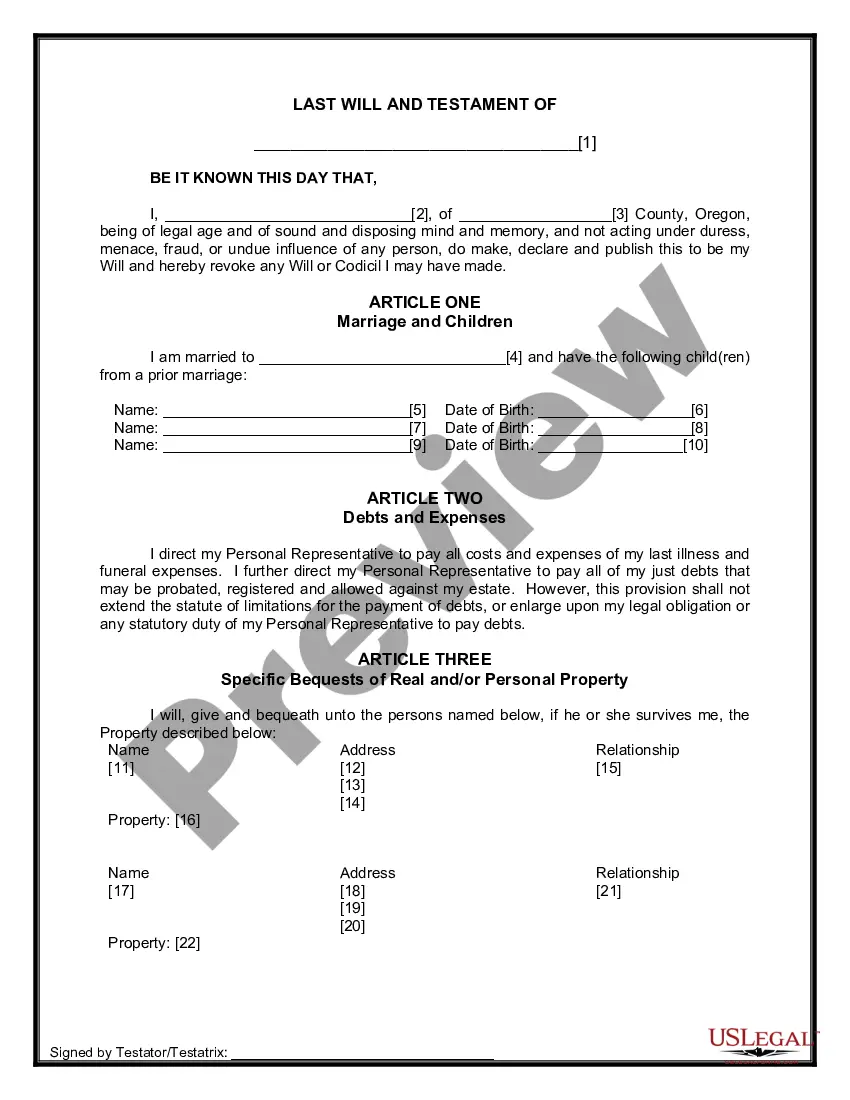
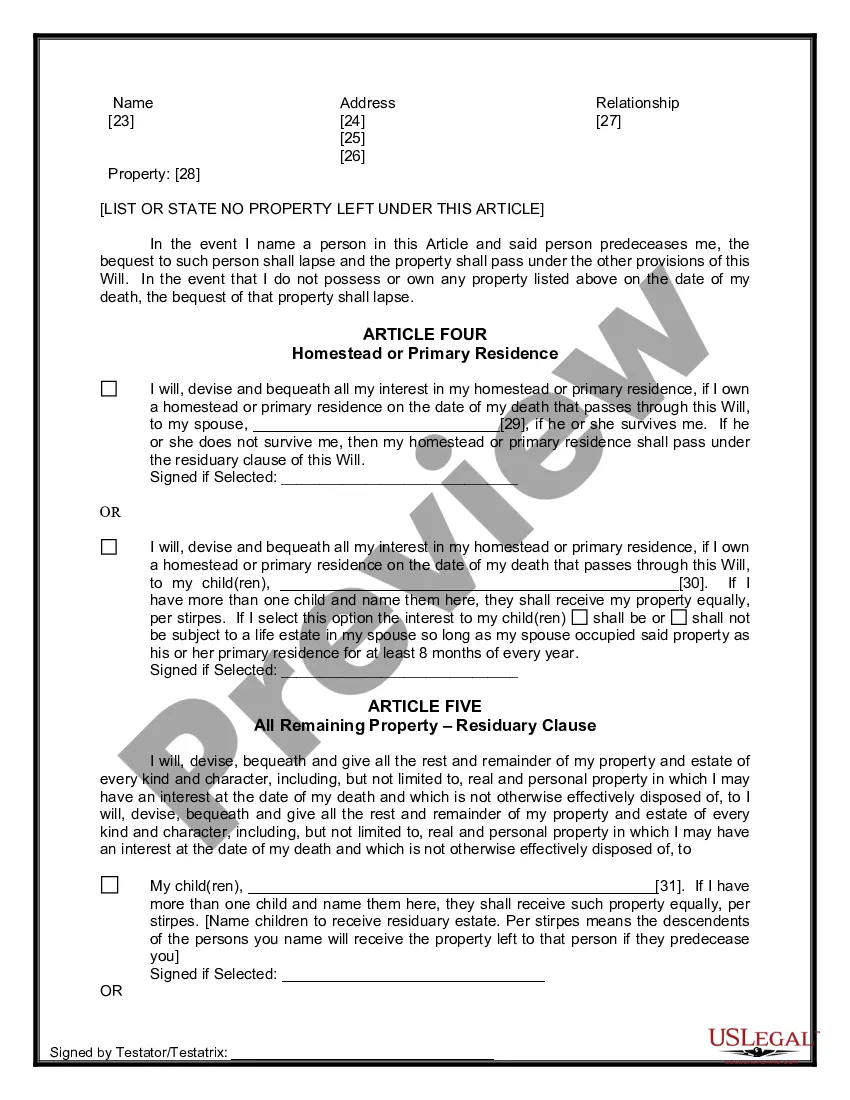
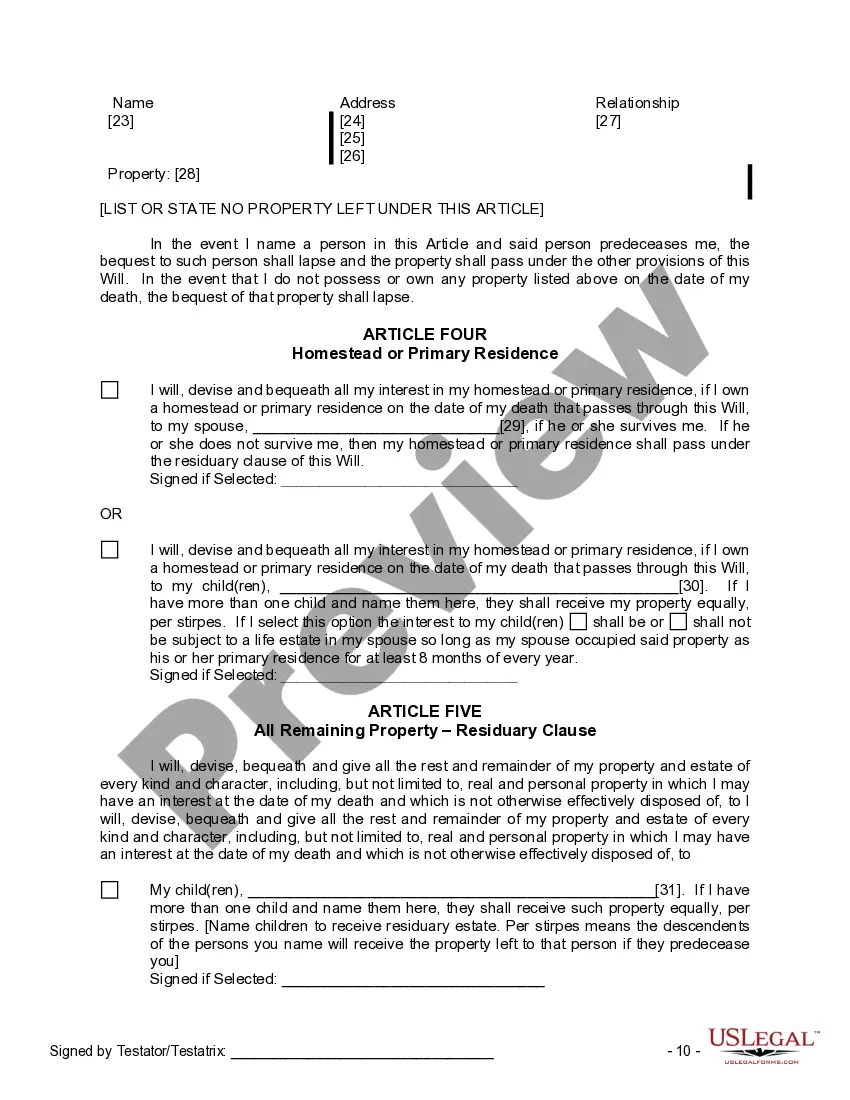
- Articles that detail the division of property, including specific bequests and a residuary clause.
- Appointment of a personal representative (executor) to manage the estate.
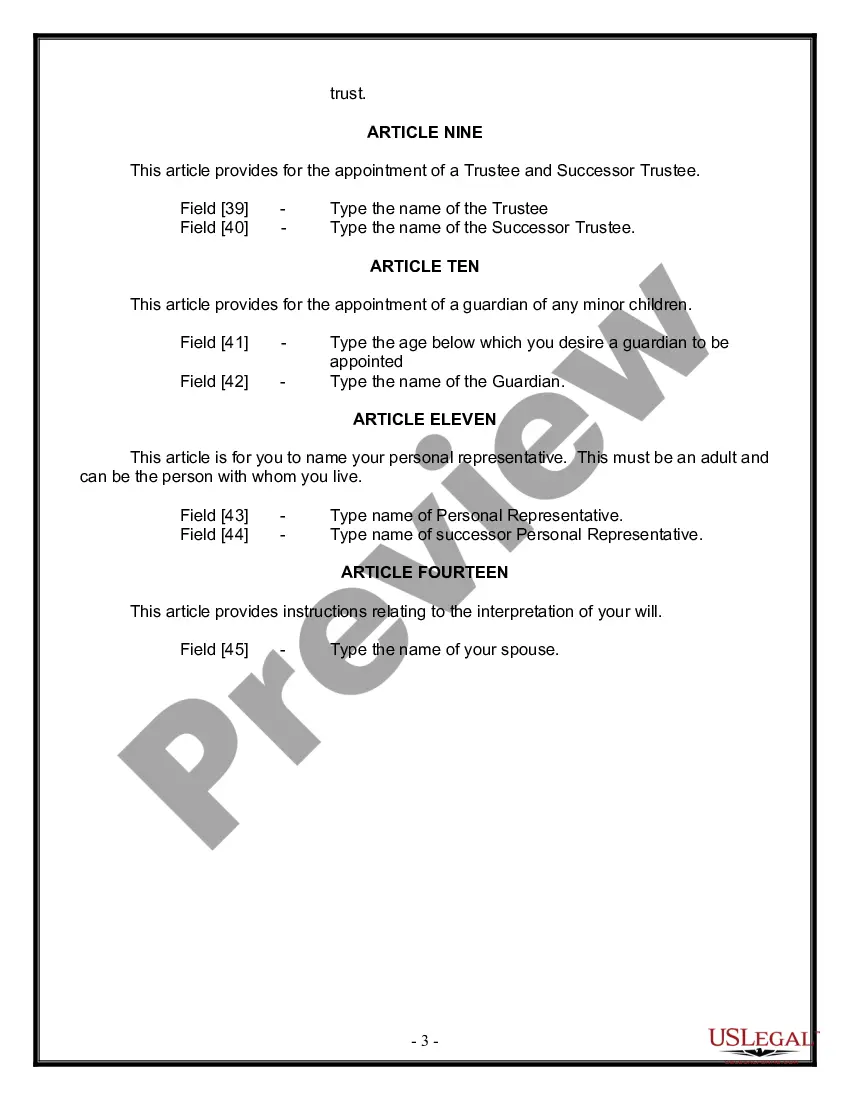
- Designation of a trustee to manage assets left to minor children.
- Provisions for appointing a guardian for minor children in case both parents pass away.
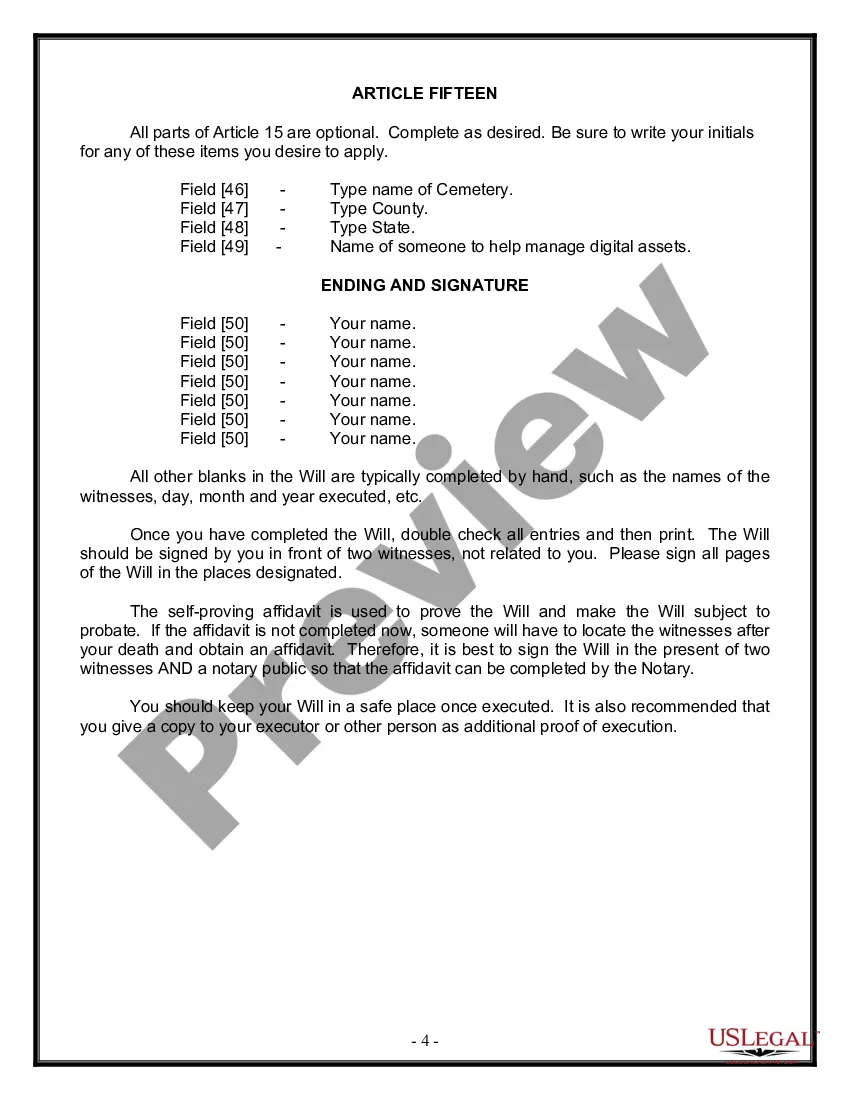
- Instructions for signing the will in the presence of witnesses.





When this form is needed
This form should be used when a married individual with minor children from a prior marriage wants to create a will that clearly states their wishes for property distribution. It is particularly necessary if they wish to ensure that their children from the previous marriage are provided for and that the spouse is acknowledged in the distribution plan. This will is crucial for anyone wanting to avoid potential family disputes or complications during the probate process.
Who can use this document
- Married individuals with minor children from a previous marriage.
- Those who want to ensure their estate is managed according to their specific wishes.
- Anyone seeking to appoint guardians and trustees for their children and assets.
How to complete this form
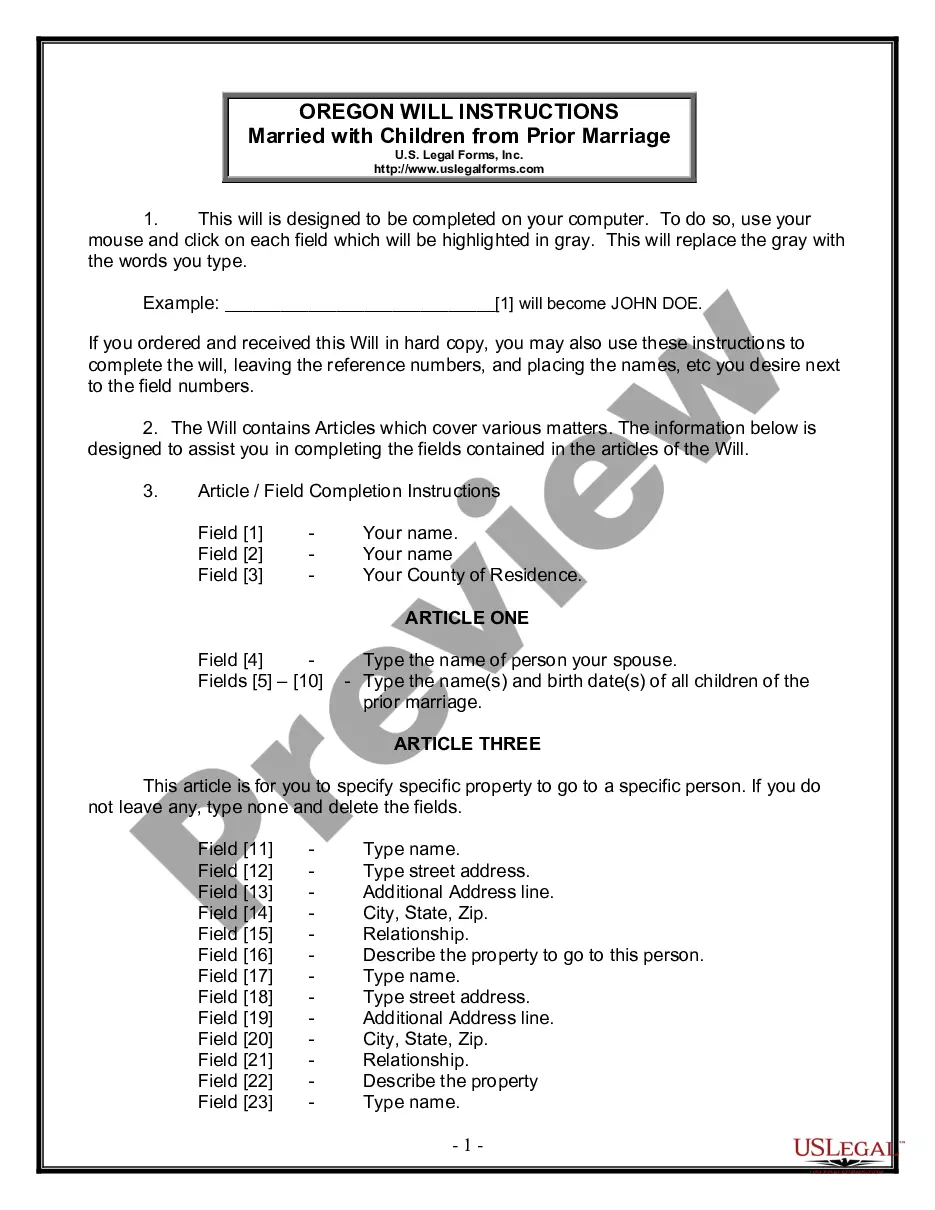
- Enter your full name and county of residence at the beginning of the document.
- List the name of your spouse and the names and birthdates of your children from the prior marriage.
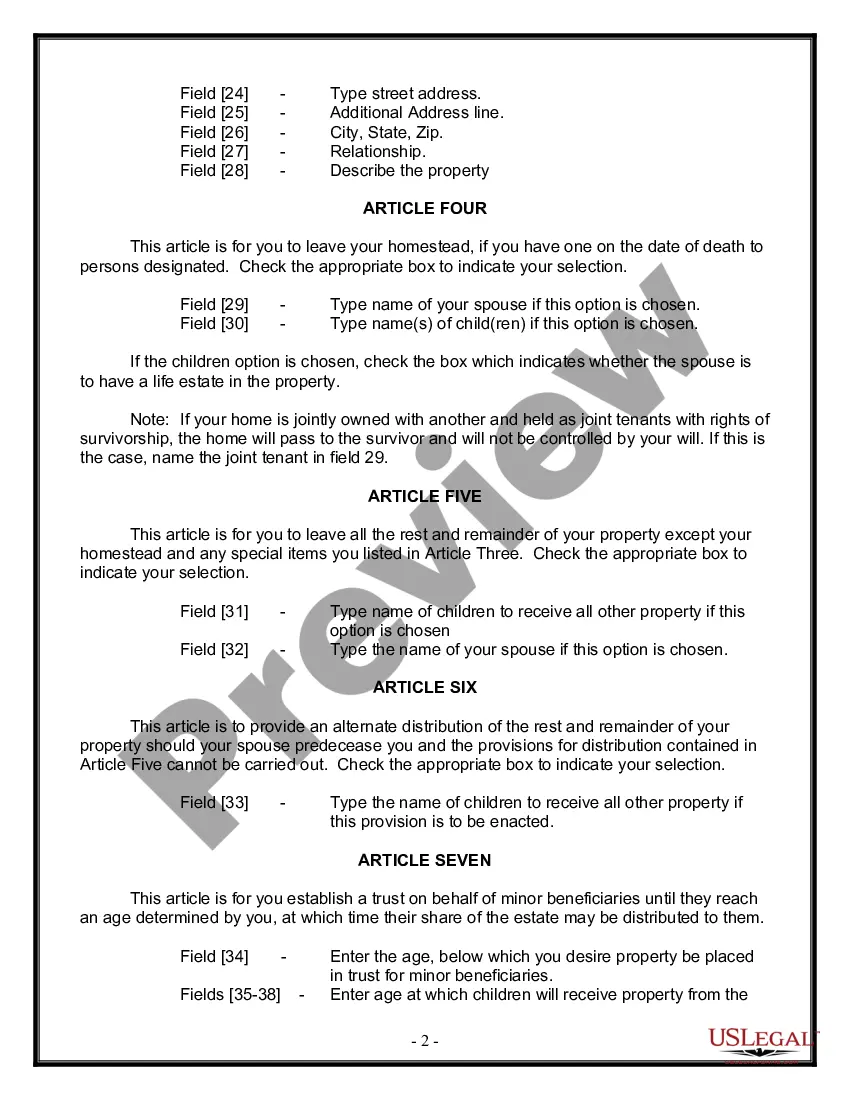
- Specify any specific property you wish to bequeath to individuals, along with their relationship to you.
- Choose beneficiaries for your homestead and all remaining property, ensuring clear instructions on distribution.
- Sign the will in the presence of two witnesses, who must also sign to validate the document.
Notarization guidance
This form must be notarized to be legally valid. US Legal Forms provides secure online notarization powered by Notarize, allowing you to complete the process through a verified video call.
Get your form ready online
Our built-in tools help you complete, sign, share, and store your documents in one place.
Make edits, fill in missing information, and update formatting in US Legal Forms—just like you would in MS Word.
Download a copy, print it, send it by email, or mail it via USPS—whatever works best for your next step.
Sign and collect signatures with our SignNow integration. Send to multiple recipients, set reminders, and more. Go Premium to unlock E-Sign.
If this form requires notarization, complete it online through a secure video call—no need to meet a notary in person or wait for an appointment.
We protect your documents and personal data by following strict security and privacy standards.

Make edits, fill in missing information, and update formatting in US Legal Forms—just like you would in MS Word.

Download a copy, print it, send it by email, or mail it via USPS—whatever works best for your next step.

Sign and collect signatures with our SignNow integration. Send to multiple recipients, set reminders, and more. Go Premium to unlock E-Sign.

If this form requires notarization, complete it online through a secure video call—no need to meet a notary in person or wait for an appointment.

We protect your documents and personal data by following strict security and privacy standards.
Avoid these common issues
- Failing to have the will signed by two unrelated witnesses.
- Not designating a backup executor in case the primary executor cannot serve.
- Omitting specific property bequests, leading to confusion over distribution.
- Neglecting to review and update the will after major life changes, such as marriage or the birth of children.
Why complete this form online
- Convenience of filling out the form at your own pace from any location.
- Easy editing capabilities to ensure all information is accurate before printing.
- Reliable templates drafted by licensed attorneys to ensure legal compliance.
Looking for another form?





Form popularity
FAQ
Witnesses: An Oregon will must be signed by at least two individuals who saw the testator sign the will or heard him acknowledge the signature. Writing: An Oregon will must be in writing. Beneficiaries: A testator can leave property to anyone.
A will typically must be properly witnessed to be valid. Unlike other legal documents, a will generally isn't valid unless two adult witnesses watch the will-maker sign it. The witnesses must know that the document is intended to be that person's will, and they must also sign the document themselves.
A witness must be an independent adult who isn't related to the testator and has no personal interest in the Will. A neighbour or family friend is ideal. Someone cannot be a witness if they are: The spouse or civil partner of the testator.
A stranger can be a witness.As the prior attorney noted, you should also be certain to get the full legal name, address and phone number of the witness.
A will is a set of instructions that explains how you want your property distributed after your death. In Oregon, you must be at least 18 years old and of sound mind to make a will.Your will must be in writing and must be signed by you and two witnesses. Some people cannot serve as witnesses to your will.
The short answer is no. Wills that are handwritten and not witnessed are not recognized as valid in Oregon. A handwritten will that is witnessed by two individuals will be considered valid.
Holographic wills can be alternatives to wills that lawyers create. Holographic wills do not require notarization or witnesses. This type of will can lead to problems in probate court.
No, in Oregon, you do not need to notarize your will to make it legal. However, Oregon allows you to make your will "self-proving" and you'll need to go to a notary if you want to do that. A self-proving will speeds up probate because the court can accept the will without contacting the witnesses who signed it.