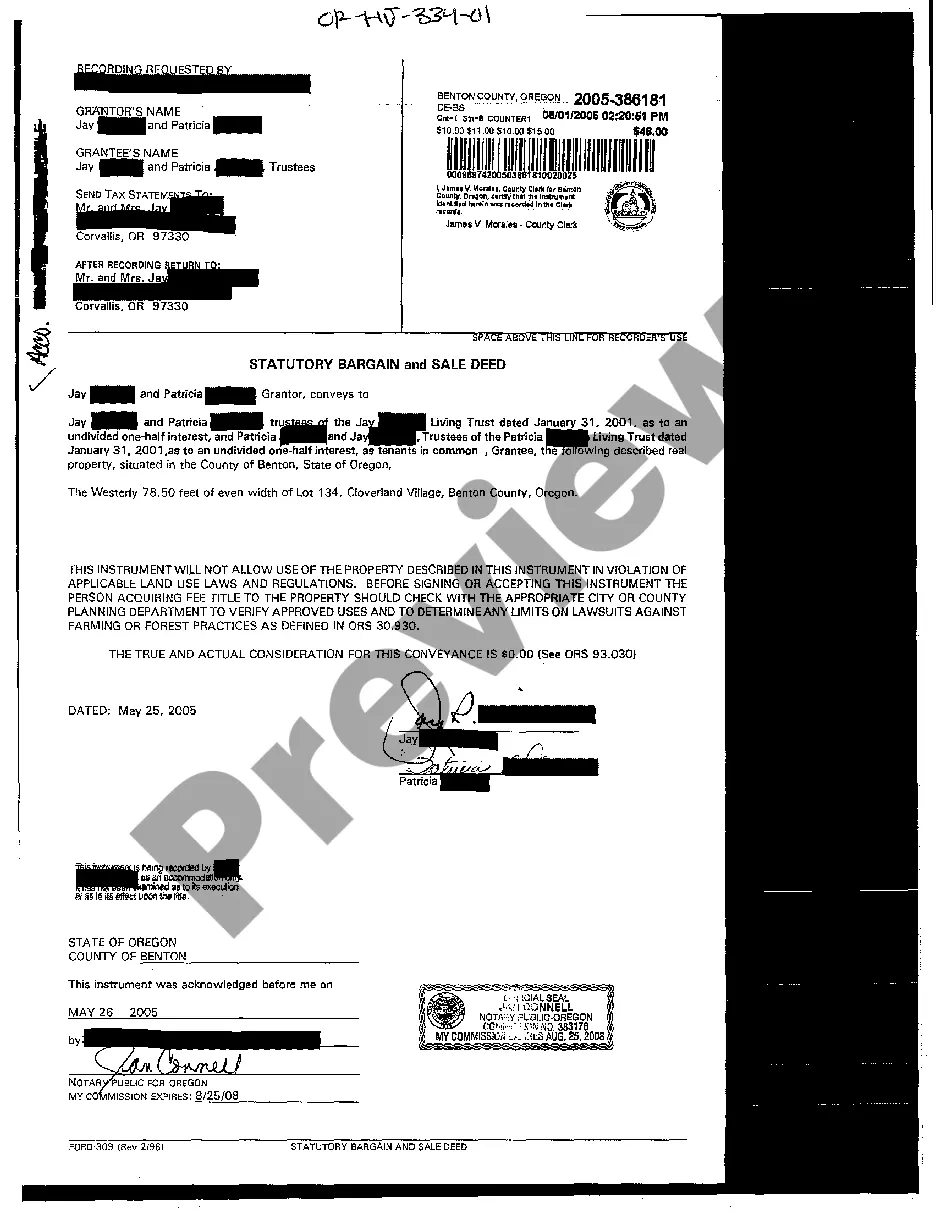
Oregon Statutory Bargain and Sale Deed
Is notarization required?
This form does not typically require notarization to be legally valid. However, some jurisdictions or document types may still require it. US Legal Forms provides secure online notarization powered by Notarize, available 24/7 for added convenience.
Form popularity
FAQ
Buying property with this type of deed is not necessarily a bad idea, but it is advisable to take some precautions. If possible, a title search should be conducted to look for any clouds on the title and to see how difficult it would be to release them.
The drawback, quite simply, is that quitclaim deeds offer the grantee/recipient no protection or guarantees whatsoever about the property or their ownership of it. Maybe the grantor did not own the property at all, or maybe they only had partial ownership.
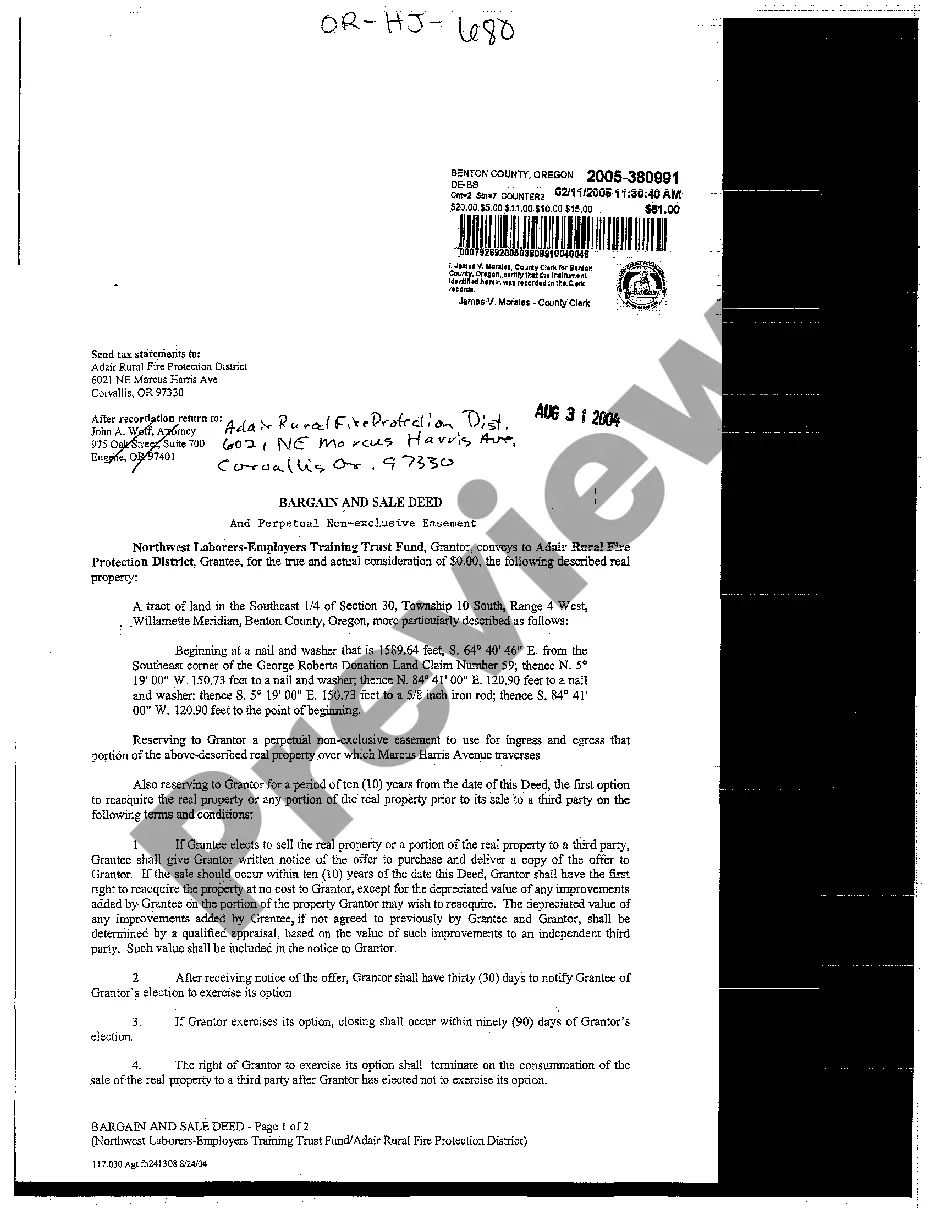
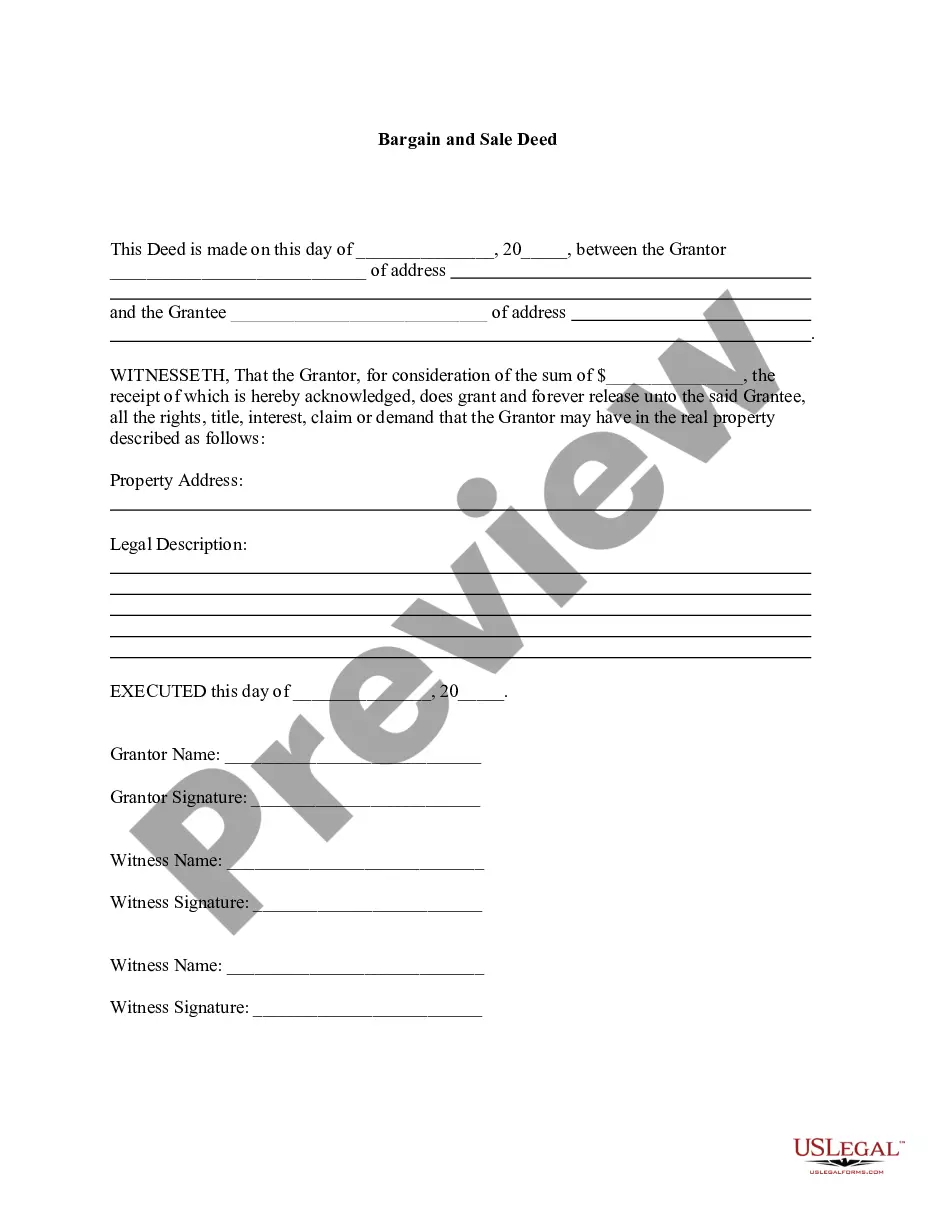
Bargain and sale deeds are most often used when property is transferred pursuant to a foreclosure, tax sale, or settlement of the estate of a deceased person. They may also be used in the same situations as a quitclaim deed, although they give the grantee a little more protection.
Sale deed can be challenged only if there are sound legal grounds. If it has been executed by fraud, co ertion etc it can be challenged but one need to prove to the court the grounds on which it is challenged.
The quitclaim deed provides no warranties; it conveys the interest the grantor had in the propertynothing more.The bargain and sale deed indicates that the grantor has title; but property might come with encumbrances and defects.
Signing - The selling party must sign the quit claim deed in front of a Notary Public (ORS 93.410). Recording - Once notarized, the quit claim deed must be filed with the County Court Clerk's Office in the jurisdiction in which the property is located, along with any adjoining fees.
Bargain and sale deeds, as the term suggests, is used in a sale. Unlike a quitclaim, the bargain and sale deed indicates that the grantor has the title and can convey it to a buyer.The bargain and sale deed indicates that the grantor has title; but property might come with encumbrances and defects.
A warranty deed conveys an interest in real property to the named grantee with full warranties of title. Warranty deeds are statutory in Oregon under ORS 93.850, and they convey real property in fee simple with the most assurance of title.Generally, real property is owned in either sole ownership or in co-ownership.
But you might be wondering if an owner can transfer a deed to another person without a real estate lawyer. The answer is yes. Parties to a transaction are always free to prepare their own deeds.A quitclaim deed, for example, is far simpler than a warranty deed.