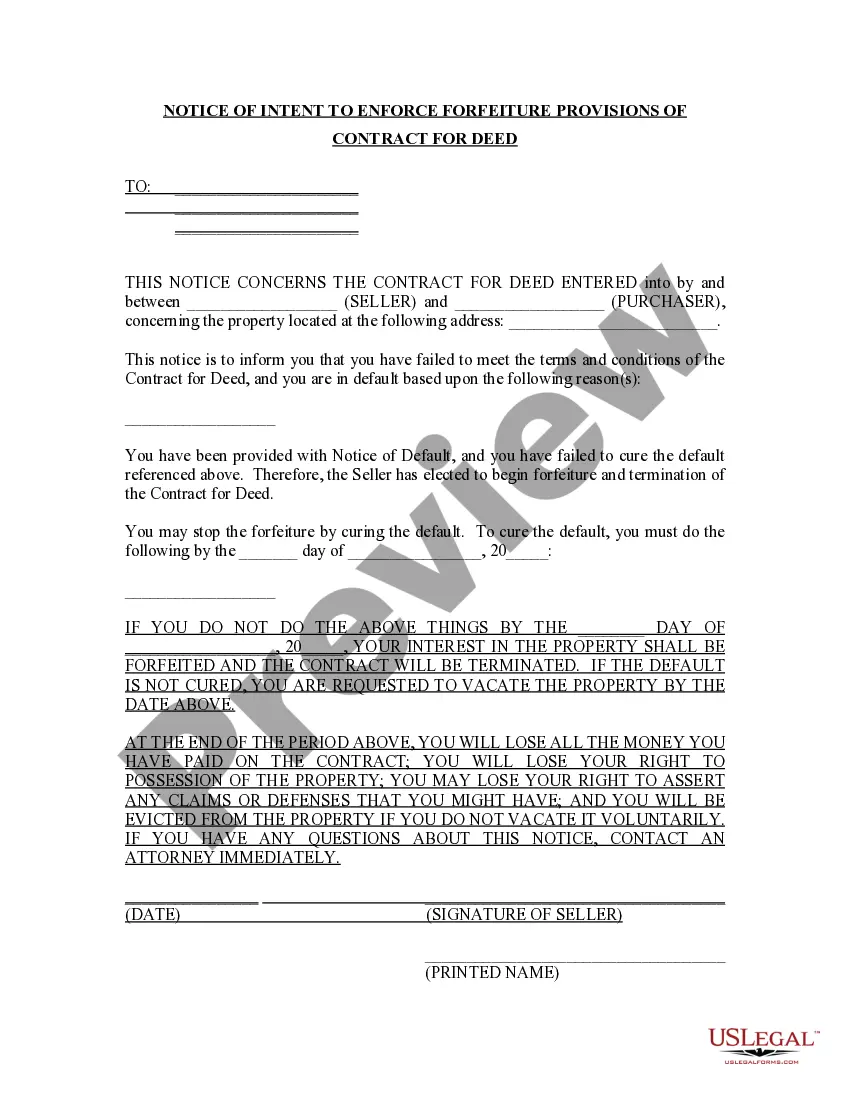
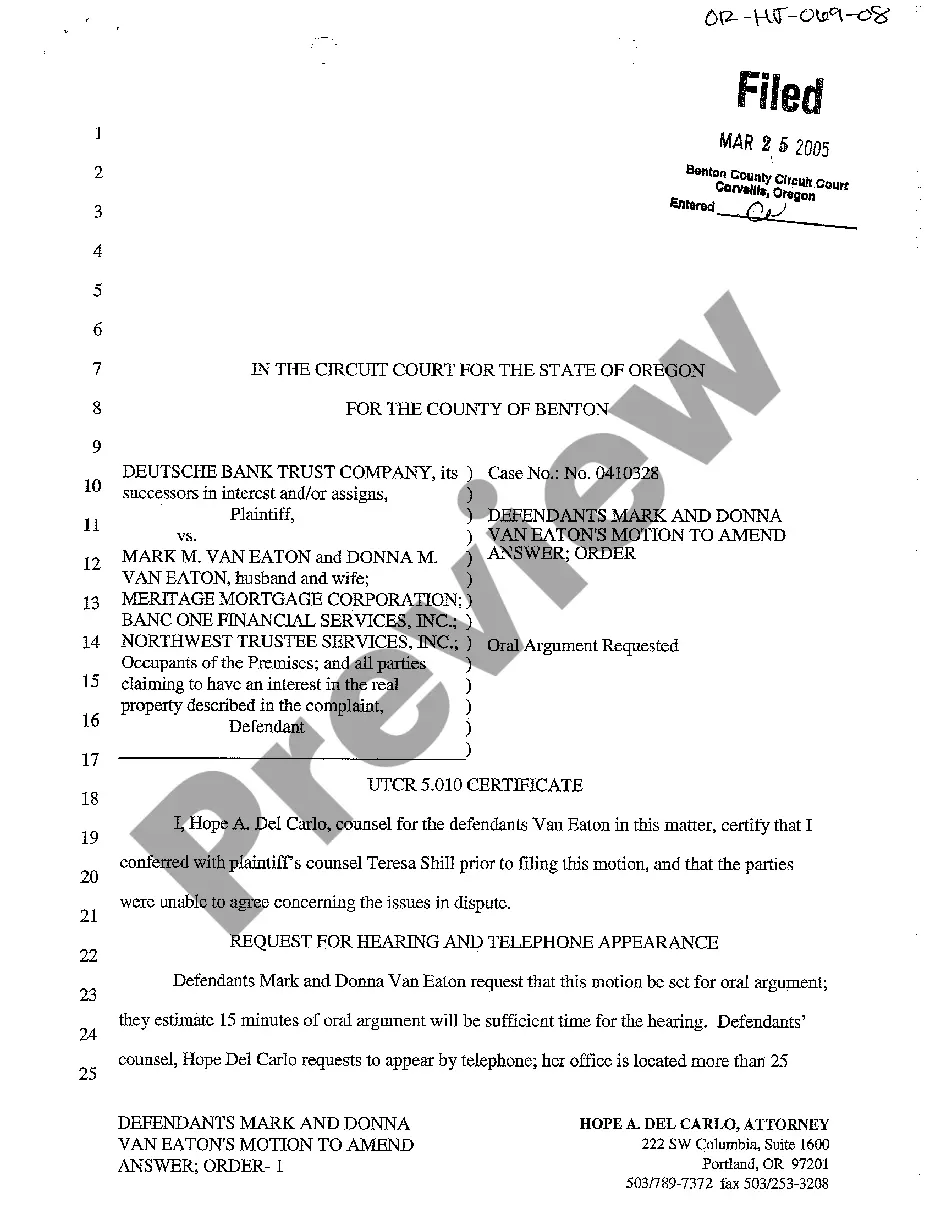
Oregon Order Granting Summary Judgment in Favor of Plaintiff and Denying Defendant's Motion to Amend Answer
Description
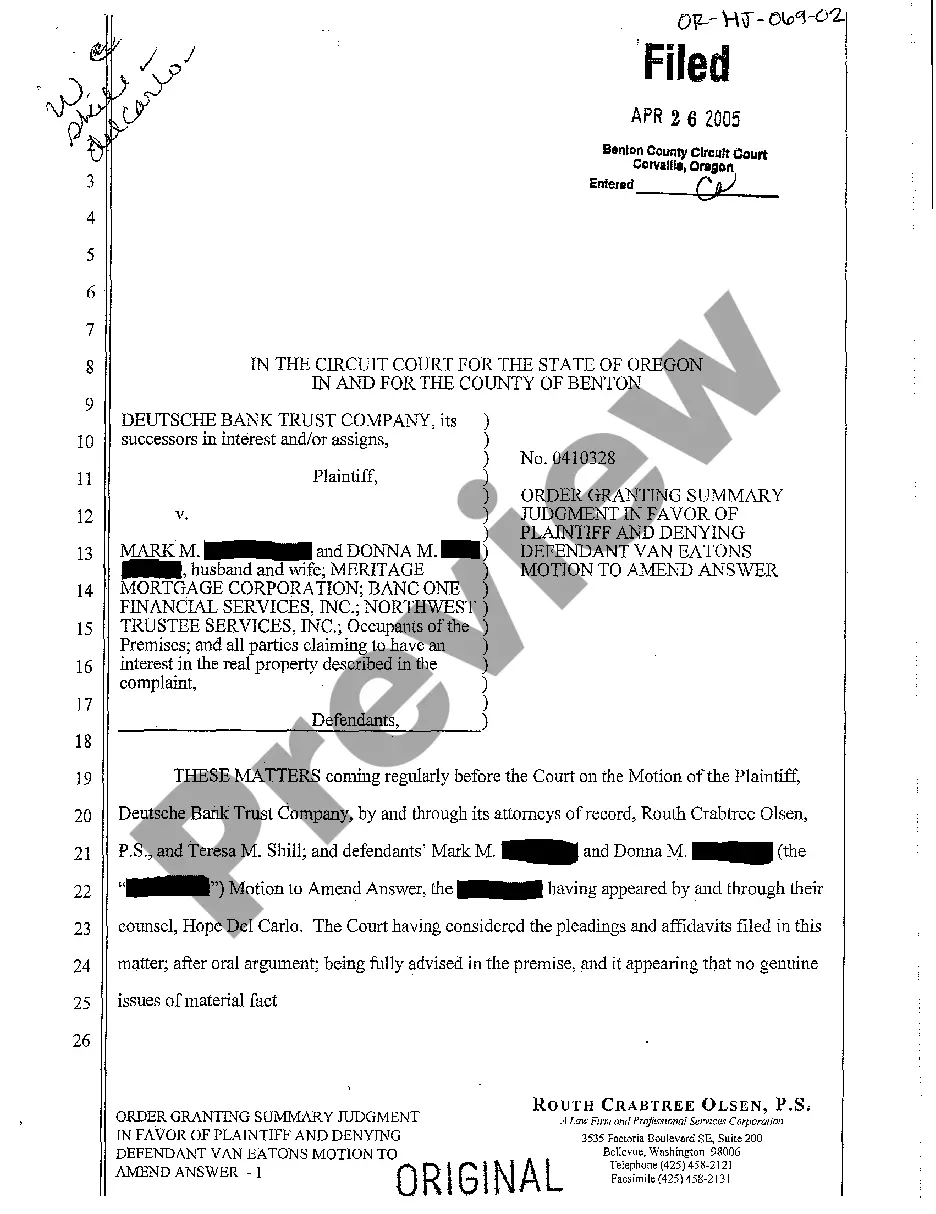
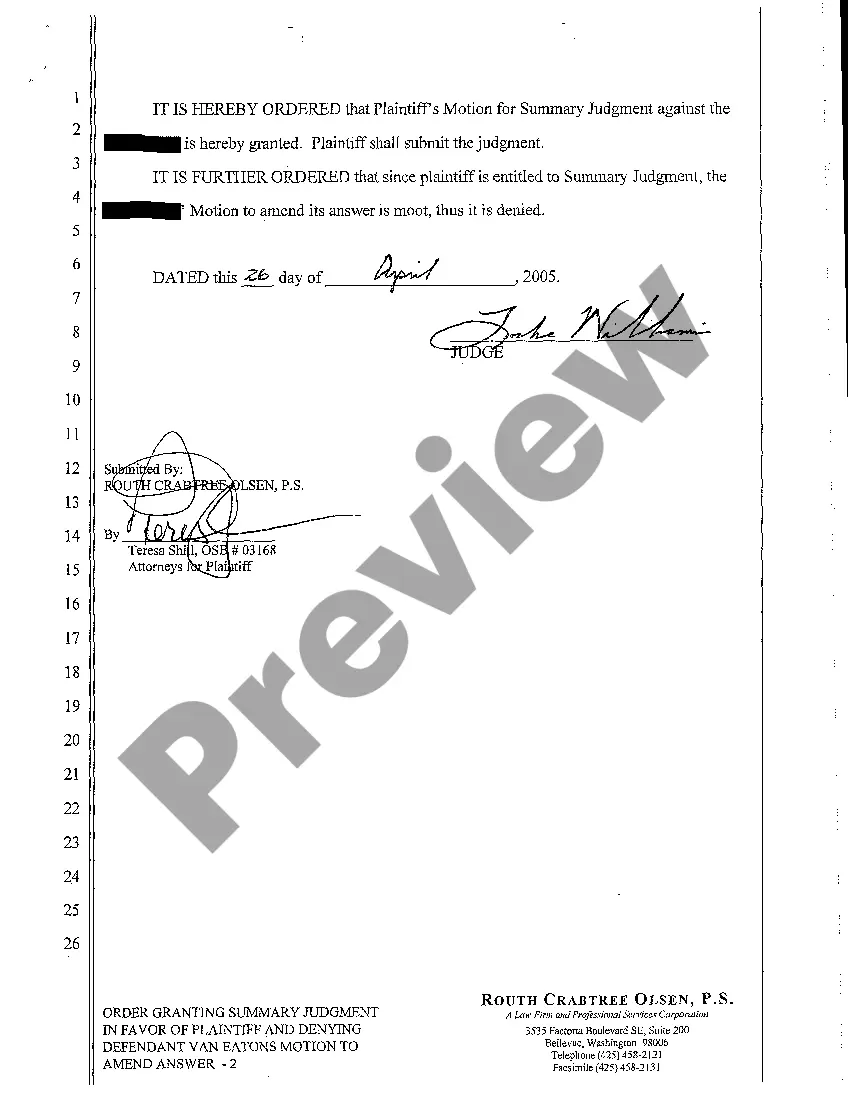


How to fill out Oregon Order Granting Summary Judgment In Favor Of Plaintiff And Denying Defendant's Motion To Amend Answer?
In terms of submitting Oregon Order Granting Summary Judgment in Favor of Plaintiff and Denying Defendant's Motion to Amend Answer, you probably visualize a long process that consists of finding a appropriate form among hundreds of similar ones after which needing to pay out a lawyer to fill it out for you. Generally speaking, that’s a slow and expensive option. Use US Legal Forms and choose the state-specific document in a matter of clicks.
For those who have a subscription, just log in and then click Download to find the Oregon Order Granting Summary Judgment in Favor of Plaintiff and Denying Defendant's Motion to Amend Answer sample.
If you don’t have an account yet but want one, follow the point-by-point manual listed below:
- Make sure the file you’re saving applies in your state (or the state it’s needed in).
- Do this by reading through the form’s description and also by clicking the Preview option (if available) to see the form’s information.
- Simply click Buy Now.
- Find the proper plan for your budget.
- Sign up for an account and select how you would like to pay: by PayPal or by credit card.
- Save the document in .pdf or .docx file format.
- Find the record on the device or in your My Forms folder.
Professional lawyers work on drawing up our templates so that after downloading, you don't need to worry about modifying content material outside of your personal details or your business’s info. Join US Legal Forms and receive your Oregon Order Granting Summary Judgment in Favor of Plaintiff and Denying Defendant's Motion to Amend Answer document now.
Form popularity
FAQ
A response must be in writing and include the same supporting documents as a motion for summary judgment. The opposition to the motion for summary judgment should also include a statement of facts showing the dispute and supporting documents.
The non-moving party is required to designate facts which demonstrate a genuine issue for trial and must avoid conclusory allegations unsupported by factual material. The non-moving party need only prove a material factual dispute. All reasonable inferences must be drawn in favor of the non-moving party.
Unless the requirements of Code of Civil Procedure 437c, subdivision (f)(2), are met a party may not file a second summary judgment motion. The pertinent provision provides: However, a party may not move for summary judgment...
Generally, you can amend a motion. You have to serve the amended motion to the other party, and the other party will get more time to answer.
When a motion for summary judgment is denied, the nonmoving party achieves a form of premium that enables a case to settle for an additional amount. Put simply, the settlement value of a case increases when a motion for summary judgment is denied.
In a non-precedential opinion addressing the issue of appellate jurisdiction, the U.S. Court of Appeals for the Federal Circuit dismissed an appeal of a lower court's denial of two of plaintiff's motions for summary judgment, finding that a denial of summary judgment is not a final judgment.
The key to defeating a motion for summary judgment is to show the court that there are still facts in dispute. Summary judgment is only appropriate if none of the facts are disputed.
If the motion is granted, the judgment on the issue or case is deemed to be a final judgment from which a party may seek an appeal. The court of appeal can reverse the grant of summary judgment and reinstate the claim in the lower court. However, this is rarely done and most summary judgments are upheld on appeal.
A summary judgement occurs when, in a civil case, one party wants to move to a court decision without a trial.When a motion for summary judgement is granted, it indicates there is sufficient evidence to declare one party the clear winner.