Oregon Letter from Tenant to Landlord containing Notice to Cease Unjustified Nonacceptance of Rent
What is this form?
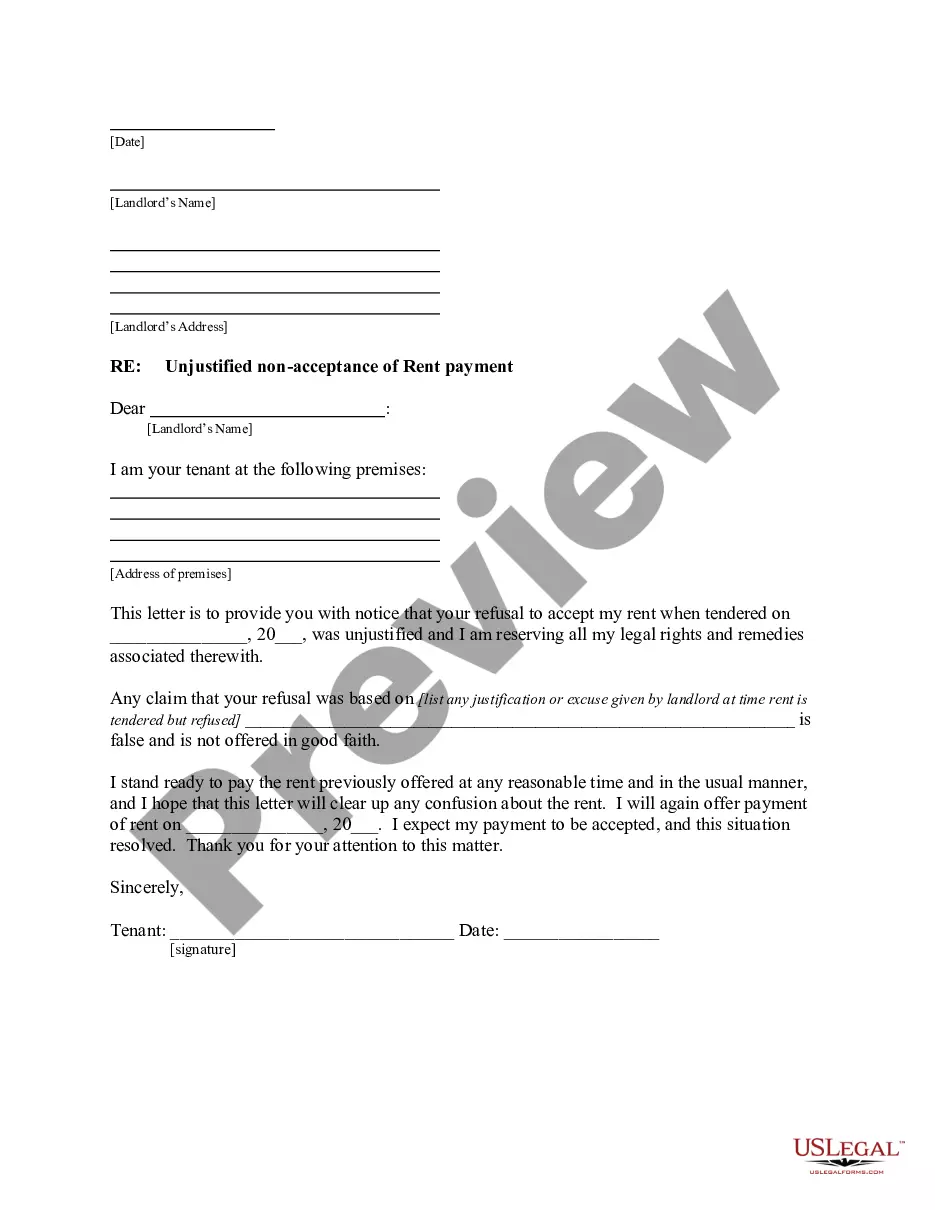
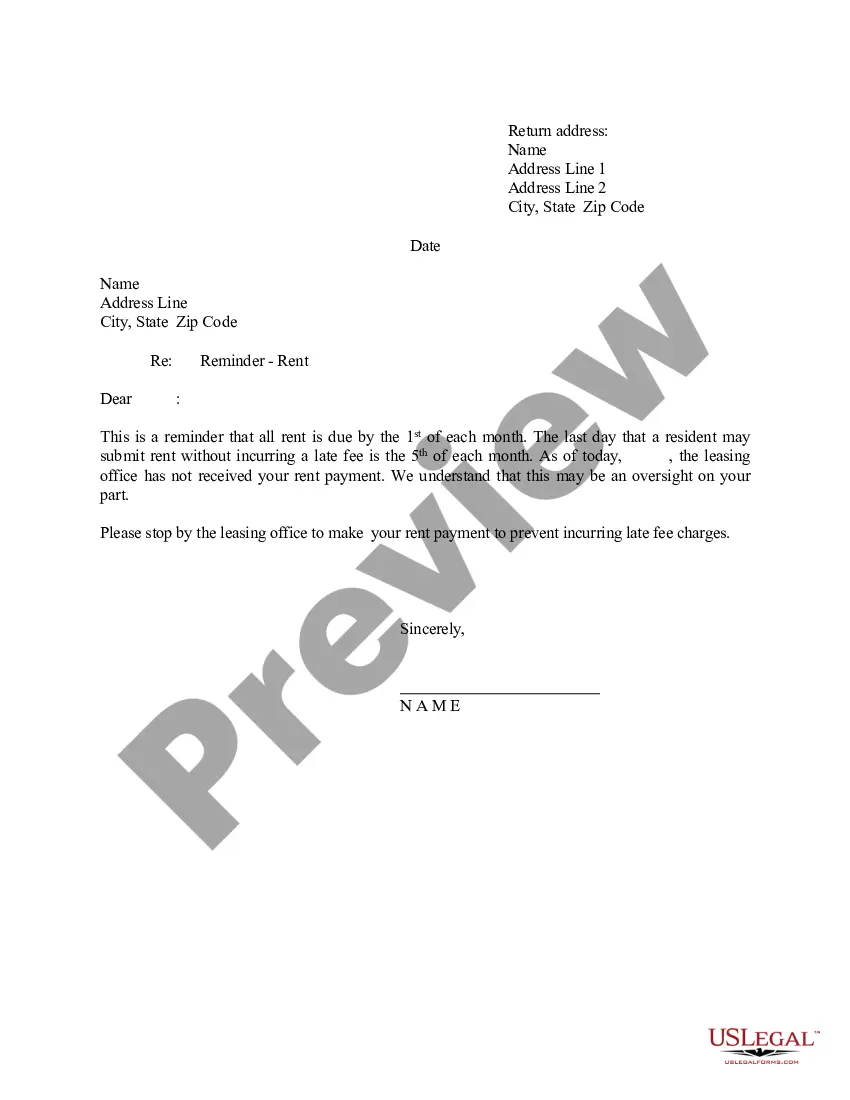
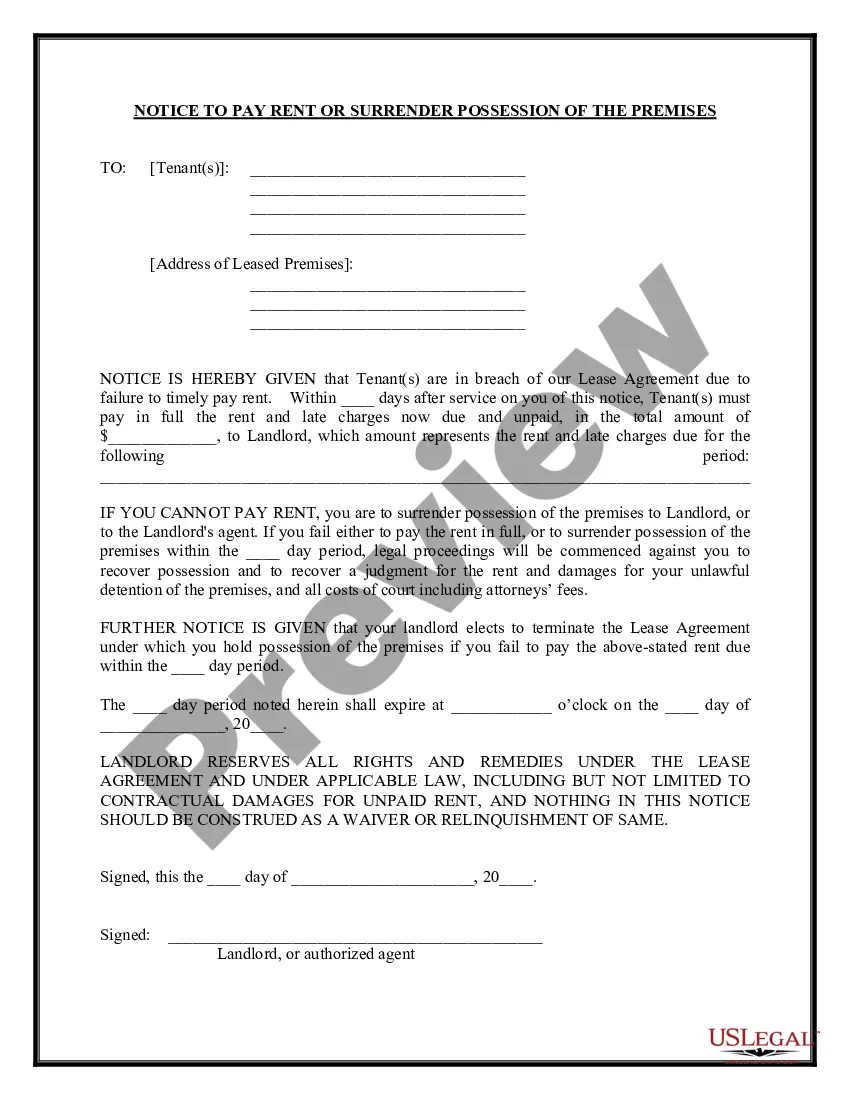
This Letter from Tenant to Landlord containing Notice to Cease Unjustified Nonacceptance of Rent is a formal communication where a tenant asserts that a landlord's refusal to accept rent is not justified. This letter serves to inform the landlord that the tenant is preserving their legal rights and remedies regarding the situation. Unlike other rental forms, this letter specifically addresses instances of unjustified rent nonacceptance, aiming to resolve misunderstandings before more serious actions may be needed.
Key components of this form
- Identification of the tenant and landlord involved.
- Statement refuting the landlord's justification for refusing rent.
- Offer to pay the rent at a specified date and time.
- Signature and date of the tenant.
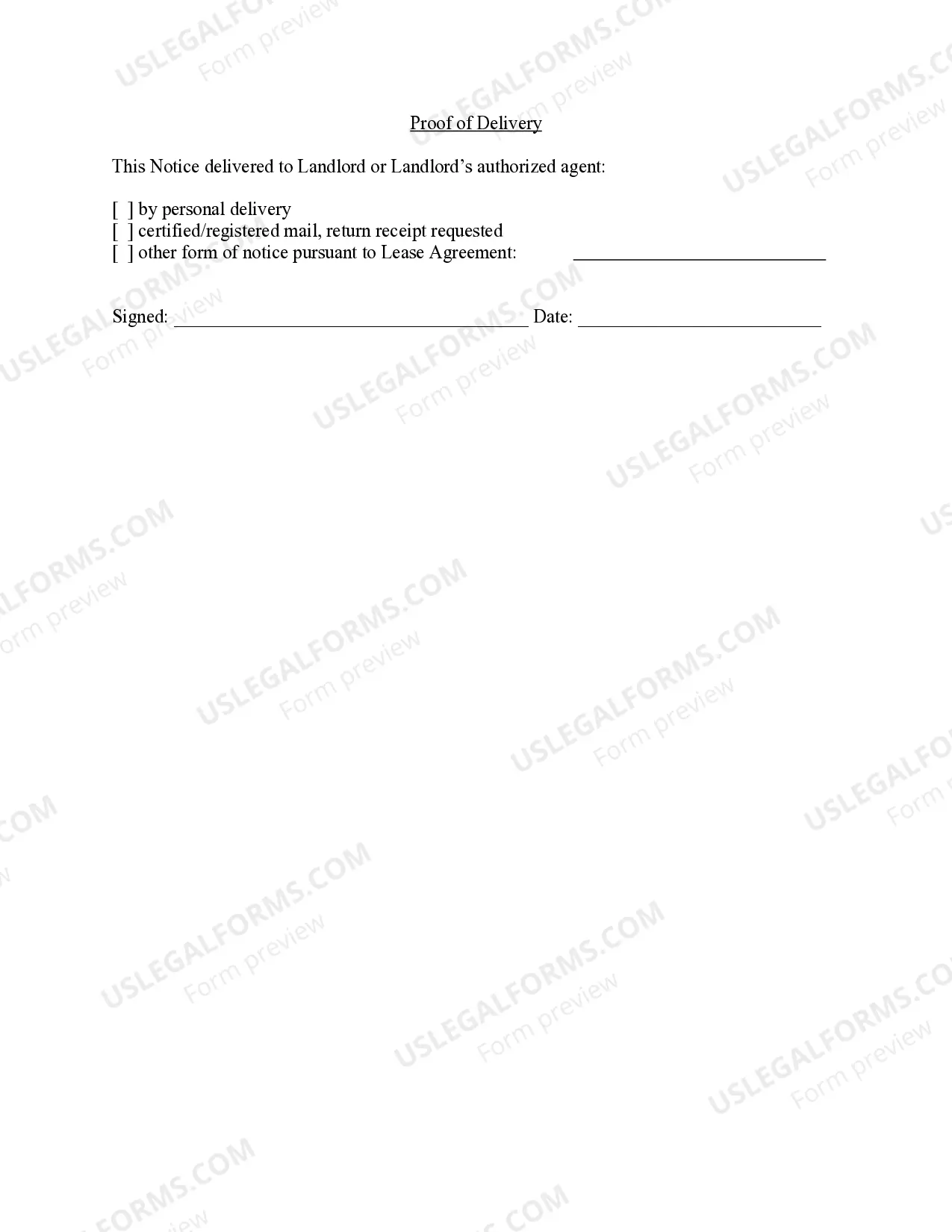
- Proof of delivery to ensure the landlord receives the notice.

Common use cases
This form is useful if you are a tenant whose landlord has unjustifiably refused to accept your rent payment. It can help clarify the situation, assert your rights, and potentially prevent further disputes. You may need this letter to formally document your attempts to pay rent, particularly if you're facing eviction or legal proceedings related to nonpayment of rent.
Intended users of this form
- Tenants experiencing issues with their landlords regarding rent payments.
- Individuals preparing to document their legal position before pursuing further action against their landlord.
- People looking to communicate formally with their landlord regarding payment disputes.
Instructions for completing this form
- Identify the parties by entering your name (tenant) and the landlord's name.
- Clearly state that the refusal to accept rent is unjustified, citing any specific reasons if applicable.
- Offer the rent payment again by specifying the date you will attempt to pay.
- Sign and date the letter to validate your claims.
- Document the delivery method to ensure the landlord receives the notice.
Notarization requirements for this form
In most cases, this form does not require notarization. However, some jurisdictions or signing circumstances might. US Legal Forms offers online notarization powered by Notarize, accessible 24/7 for a quick, remote process.
Get your form ready online
Our built-in tools help you complete, sign, share, and store your documents in one place.
Make edits, fill in missing information, and update formatting in US Legal Forms—just like you would in MS Word.
Download a copy, print it, send it by email, or mail it via USPS—whatever works best for your next step.
Sign and collect signatures with our SignNow integration. Send to multiple recipients, set reminders, and more. Go Premium to unlock E-Sign.
If this form requires notarization, complete it online through a secure video call—no need to meet a notary in person or wait for an appointment.
We protect your documents and personal data by following strict security and privacy standards.

Make edits, fill in missing information, and update formatting in US Legal Forms—just like you would in MS Word.

Download a copy, print it, send it by email, or mail it via USPS—whatever works best for your next step.

Sign and collect signatures with our SignNow integration. Send to multiple recipients, set reminders, and more. Go Premium to unlock E-Sign.

If this form requires notarization, complete it online through a secure video call—no need to meet a notary in person or wait for an appointment.

We protect your documents and personal data by following strict security and privacy standards.
Mistakes to watch out for
- Failing to provide a clear reason for stating the landlord's refusal is unjustified.
- Not specifying a date when rent will be offered again.
- Neglecting to proofread for accuracy in names and dates.
- Not keeping a copy of the letter for personal records.
- Omitting to document how the letter was delivered to the landlord.
Benefits of using this form online
- Convenience: Easily accessible and downloadable from any device.
- Editability: Fill in the necessary information quickly and accurately.
- Reliability: Developed by licensed attorneys to ensure legal compliance.
Legal use & context
- Submits a formal notice to the landlord regarding payment disputes
- Preserves the tenant's legal rights in the event of a dispute
- Provides evidence of intent to fulfill rental obligations
Main things to remember
- The form is crucial for tenants facing unjustified rent refusal.
- Clearly state your willingness to pay and document disputes.
- Always review state-specific requirements for compliance.
Looking for another form?





Form popularity
FAQ
In California, habitability includes the following specific warranties: A dwelling also may be considered uninhabitable (unlivable) if it substantially lacks any of the following: Effective waterproofing and weather protection of roof and exterior walls, including unbroken windows and doors.
Uninhabitable conditions can include dangerous ones, such as holes in the floor, unsafe or exposed wiring, or non-working air conditioning in dangerously hot summer months. Gross infestations of roaches, fleas or other pests are also uninhabitable conditions.
Review Your Lease Before You Sign. Research Local Laws. Keep Records. Pay Your Rent. Maintain Respectful Communication. Seek an Agreeable Solution. Request Repairs in Writing. What Do You Think?
If you think your landlord is violating the Fair Housing Act, you can get that landlord in trouble by filing a complaint at HUD.gov. Your remedy for breach of quiet enjoyment is to terminate the lease and move or sue in small claims court.
Health Issues When the environment in a unit becomes hazardous to one's health, the rental is considered to be uninhabitable.Other health risks such as mold and asbestos can make a unit uninhabitable, by causing respiratory problems and serious illnesses.
Dear (Name of landlord or manager), This letter constitutes my written (number of days' notice that you need to give based on your lease agreement)-day notice that I will be moving out of my apartment on (date), the end of my current lease. I am leaving because (new job, rent increase, etc.)
Contact us at (888) 700-9995.
When a home is condemned, the owner (and tenants, if any) are notified in writing that the building must be vacated. A sign is attached to the building stating that the dwelling is not fit for human habitation, and that it cannot be occupied.The owner of the building may be ordered to repair or demolish the building.
While some jurisdictions may have provisions that allow consumers to change their minds with no consequences, generally there is no cooling-off period for leasing real property. Once the landlord and tenant sign a lease and a copy is delivered to the both parties, it becomes a valid contract.