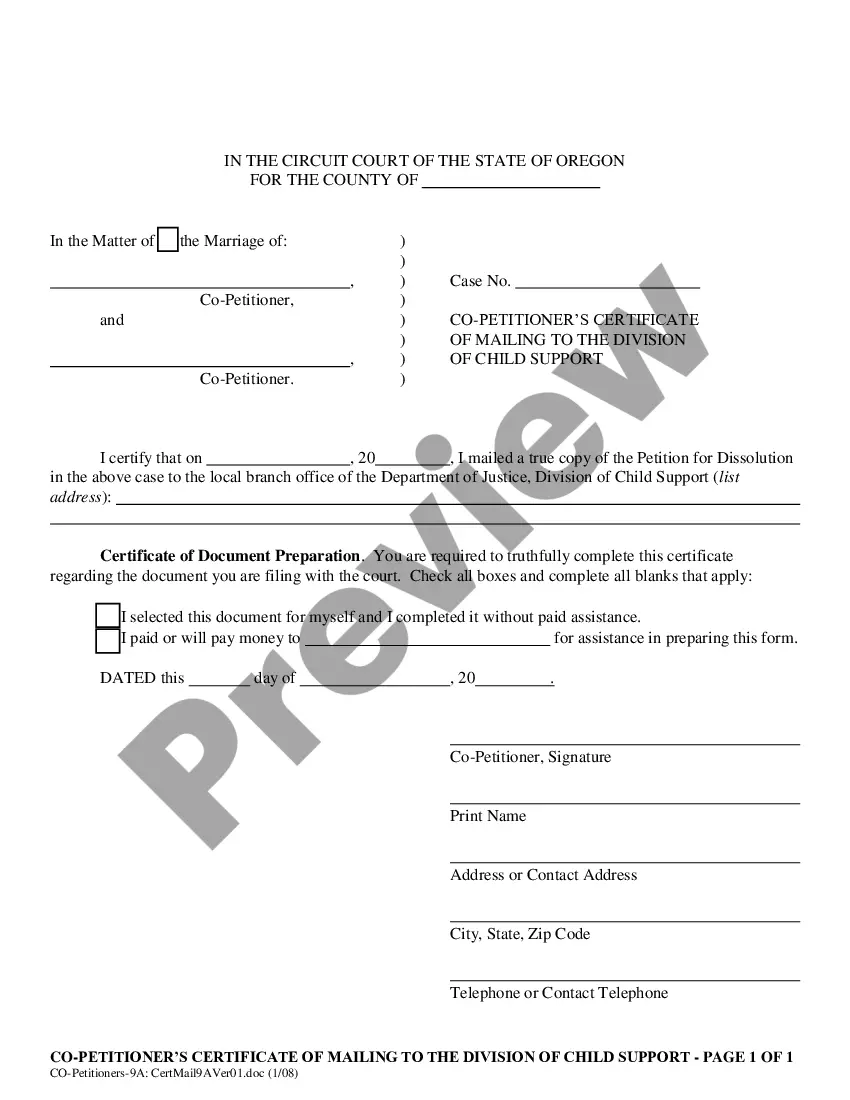
Oregon Co-Petitioners' Certificate of Mailing to the Division of Child Support
Overview of this form
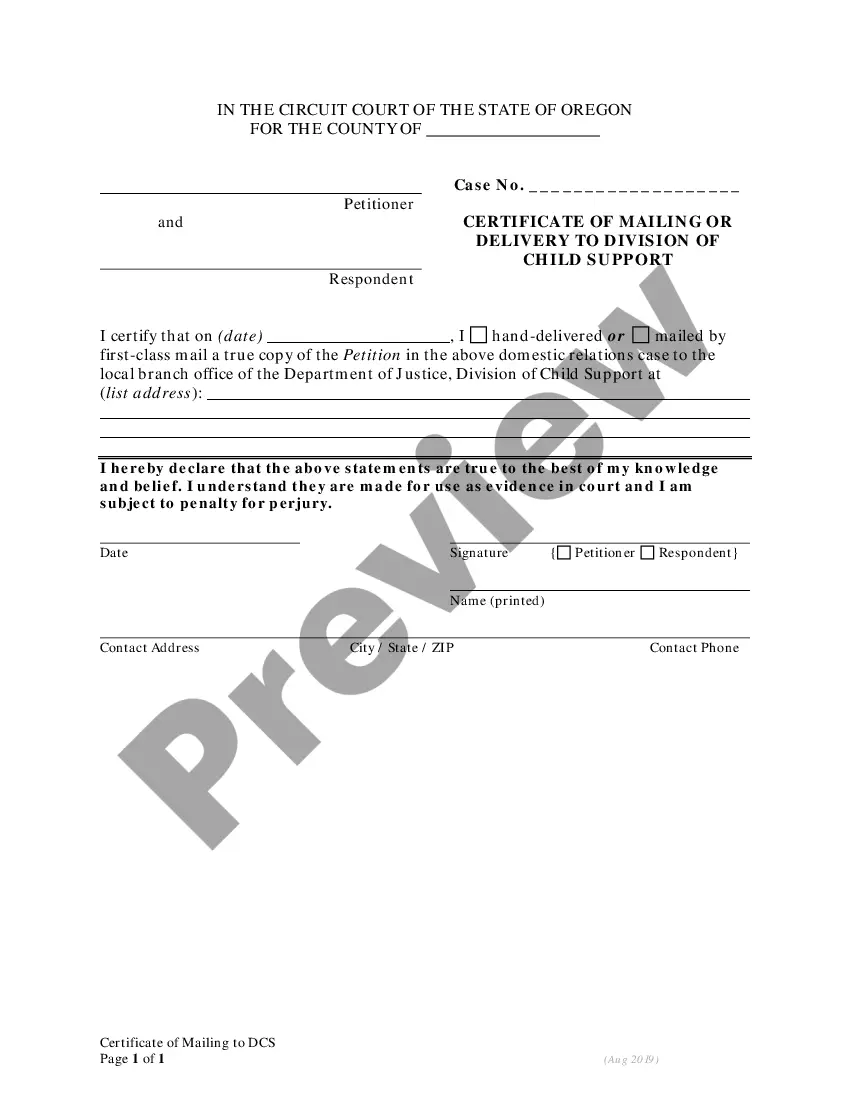
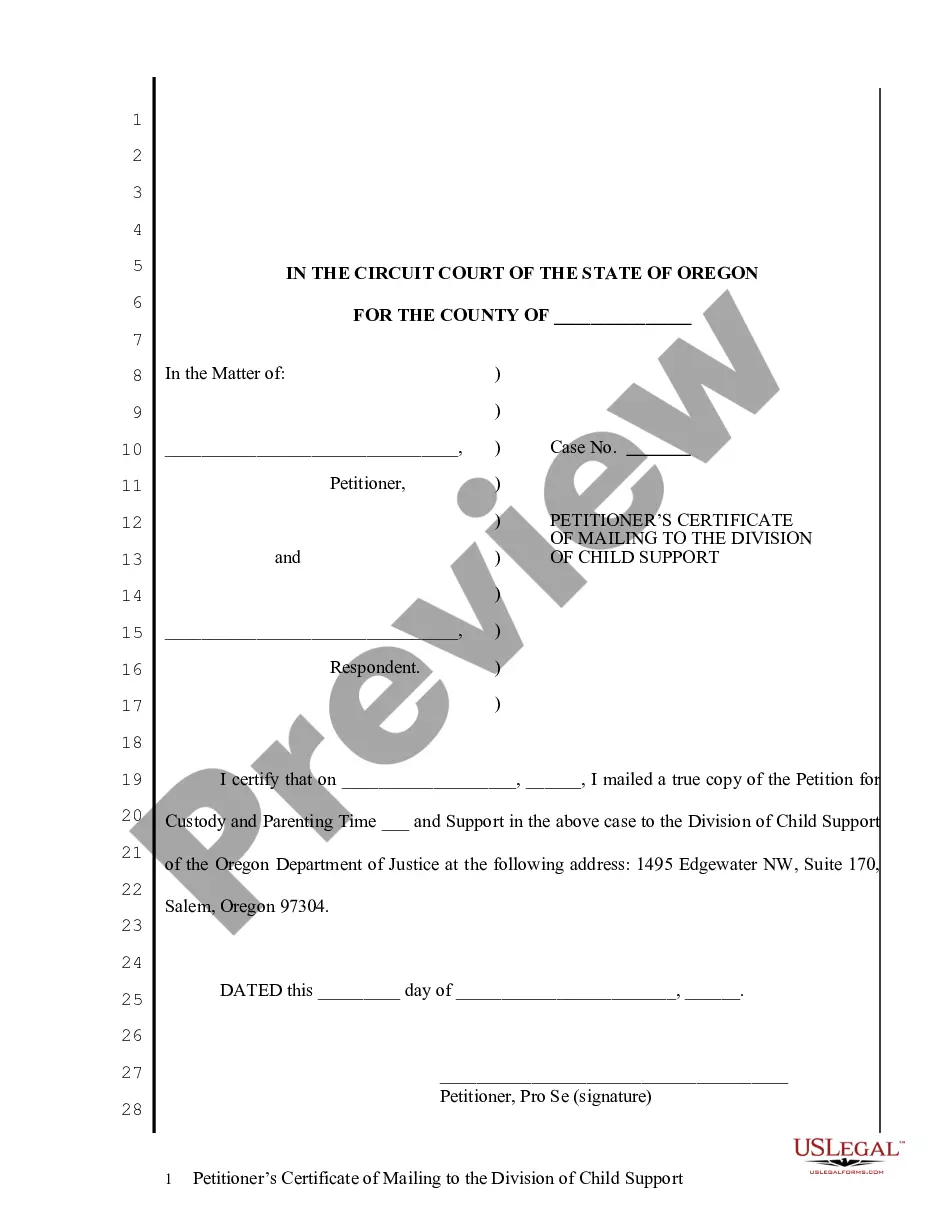
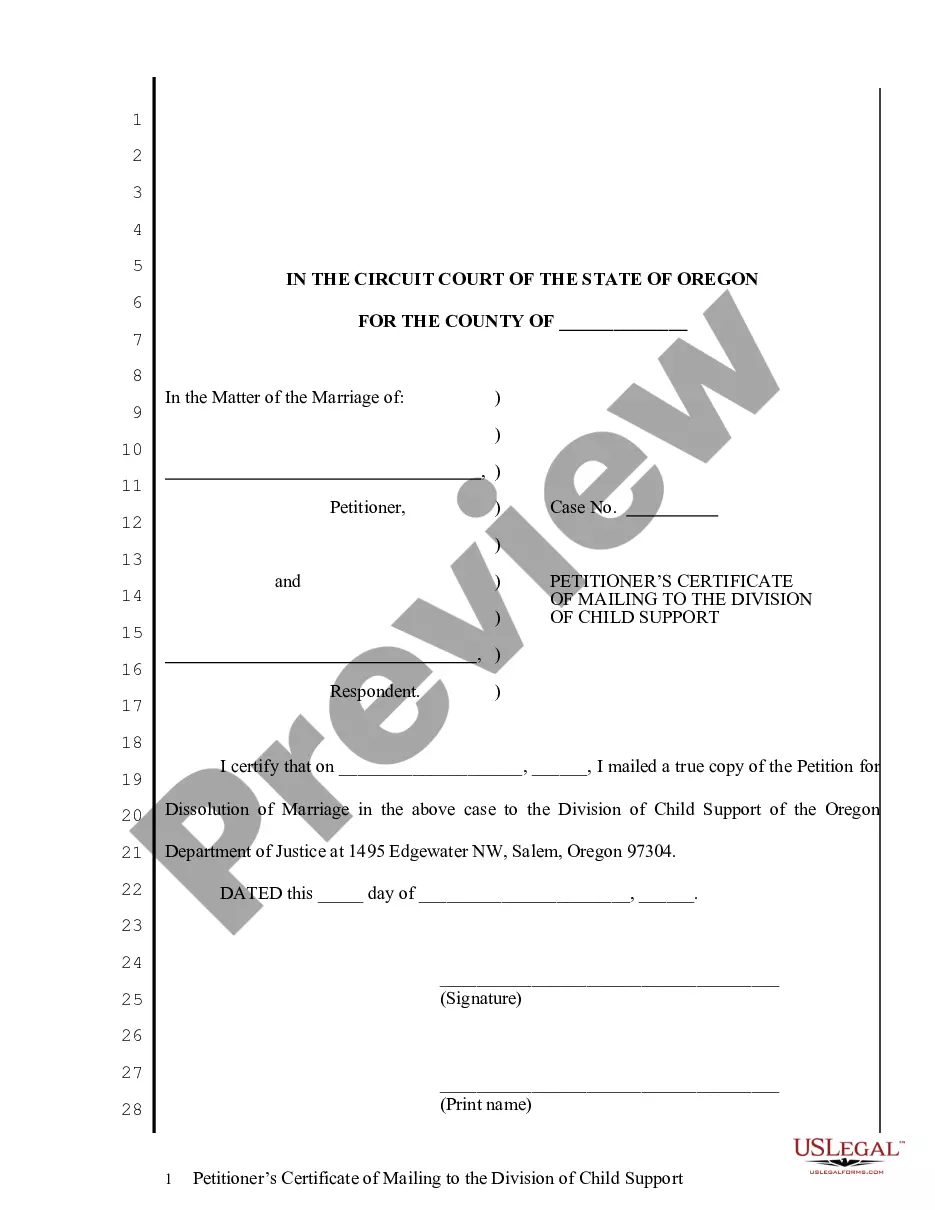
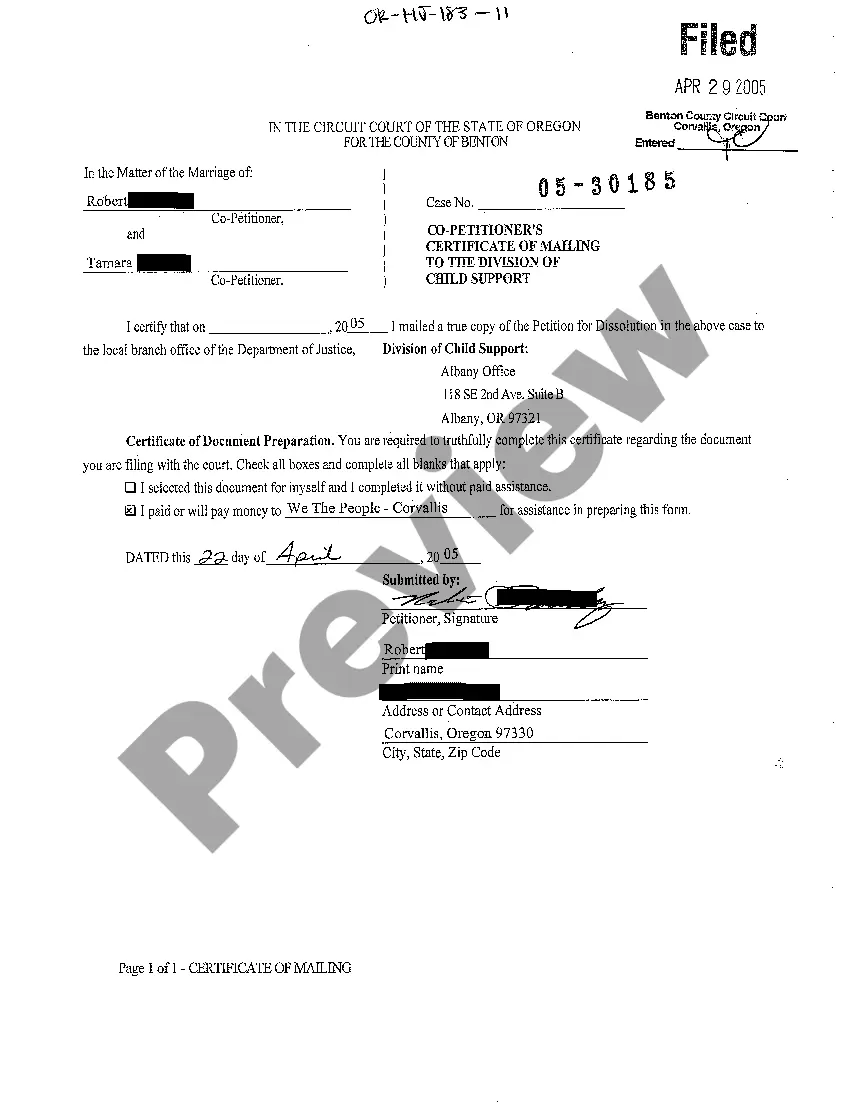
The Co-Petitioners' Certificate of Mailing to the Division of Child Support is a legal document used to confirm that a copy of the Petition for Dissolution of Marriage has been mailed to the local office of the Department of Justice, Division of Child Support. This form ensures that the Division of Child Support is informed of the ongoing divorce proceedings, which is crucial for determining child support obligations and related issues.
Key components of this form
- Case number to identify the specific court case.
- Co-Petitioner information, including names and signatures.
- Date of mailing confirmation to the Division of Child Support.
- Address of the local branch office where the petition was sent.
- Certificate of Document Preparation to affirm how the document was completed.
When to use this document
This form should be used when co-petitioners are filing for dissolution of marriage and are required to notify the Division of Child Support. It is typically needed when there are children involved in the marriage, ensuring that child support considerations are properly addressed during the divorce process.
Who needs this form
- Co-petitioners filing for dissolution of marriage in Oregon.
- Individuals involved in a divorce case where child support may be an issue.
- Those who have completed the petition for dissolution and need to inform the Division of Child Support.
Instructions for completing this form
- Enter the names of both co-petitioners and the case number at the top of the form.
- Complete the certification section by providing the date the petition was mailed.
- List the address of the local branch office of the Division of Child Support.
- Select the relevant document preparation option that describes how the form was completed.
- Sign and date the certificate to affirm its accuracy.
Does this document require notarization?
This form does not typically require notarization unless specified by local law. It is important to check any specific requirements that may apply based on the individual circumstances of your case.
Get your form ready online
Our built-in tools help you complete, sign, share, and store your documents in one place.
Make edits, fill in missing information, and update formatting in US Legal Forms—just like you would in MS Word.
Download a copy, print it, send it by email, or mail it via USPS—whatever works best for your next step.
Sign and collect signatures with our SignNow integration. Send to multiple recipients, set reminders, and more. Go Premium to unlock E-Sign.
If this form requires notarization, complete it online through a secure video call—no need to meet a notary in person or wait for an appointment.
We protect your documents and personal data by following strict security and privacy standards.

Make edits, fill in missing information, and update formatting in US Legal Forms—just like you would in MS Word.

Download a copy, print it, send it by email, or mail it via USPS—whatever works best for your next step.

Sign and collect signatures with our SignNow integration. Send to multiple recipients, set reminders, and more. Go Premium to unlock E-Sign.

If this form requires notarization, complete it online through a secure video call—no need to meet a notary in person or wait for an appointment.

We protect your documents and personal data by following strict security and privacy standards.
Common mistakes
- Failing to sign and date the form before submission.
- Not including the correct address of the Division of Child Support.
- Inaccurate information in the case number or co-petitioner details.
Benefits of using this form online
- Immediate access to the form for easy completion and filing.
- Editability allows for error correction before submission.
- Reduced time and effort compared to traditional paper forms.
Looking for another form?
Form popularity
FAQ
Statute Of Limitations It is 35 years from the date of the judgment that first establishes the child support obligation. See ORS 18.180(5).
The amount you receive can't be more than the current support due that month. On arrearages, DCS can keep an amount equal to the total amount of assistance that has been paid to the obligee's family. This includes assistance paid for children the obligor is not legally responsible to support.
Yes, Oregon law allows interest on retroactive support. The Oregon Child Support Program does not calculate or order interest on retroactive support.
The best course of action is to ask the court for an order modification (more below). The only guaranteed ways for support to end are if parents get back together or the child becomes legally independent based on age (usually 18) or via emancipation, marriage or joining the military.
Suspending recreational, driver, and occupational licenses. suspending a U.S. passport. reporting the names of parents who owe a certain amount of support to credit reporting agencies. pursuing an action for contempt of court for failure to pay child support to comply in the future.
Both parents may consent to child support. This means both parents agree to the amount of support each of them is responsible for based on the guidelines. If either parent does not agree on the amount of support payments, a hearing may be requested.
How long can back child support be collected? Unpaid child support from an Oregon child support order can generally be collected for 35 years after it was ordered.
Oregon. The Oregon Child Support Program/ Division of Child Support does not have a formal program, but forgiveness is used in appropriate situations.
In Oregon support is based on the combined income of the parents and what parents at that income level spend to support their children. Usually, child support is paid when the parents do not live in the same household. Child support includes money payments and providing health insurance coverage.