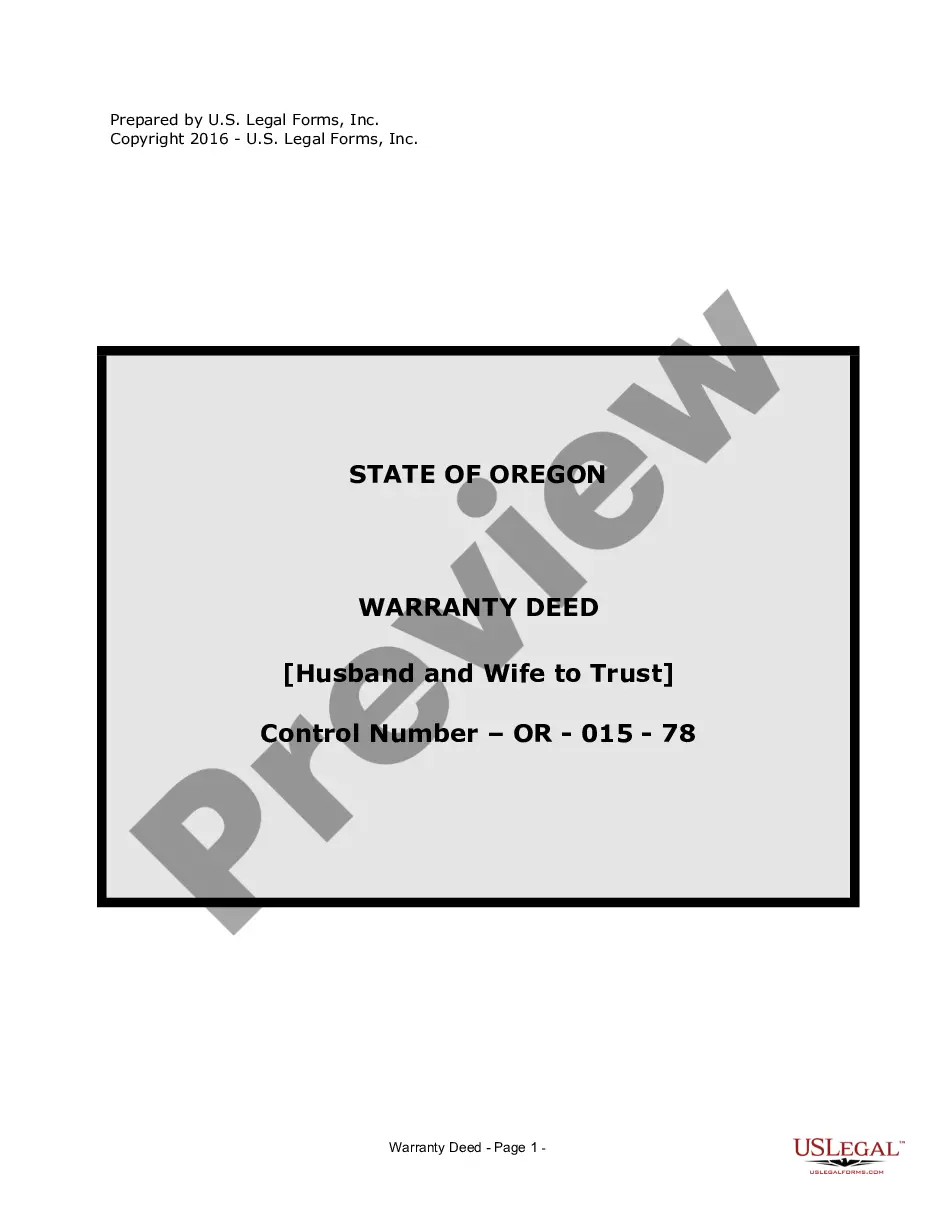
Oregon Warranty Deed from Husband and Wife to a Trust
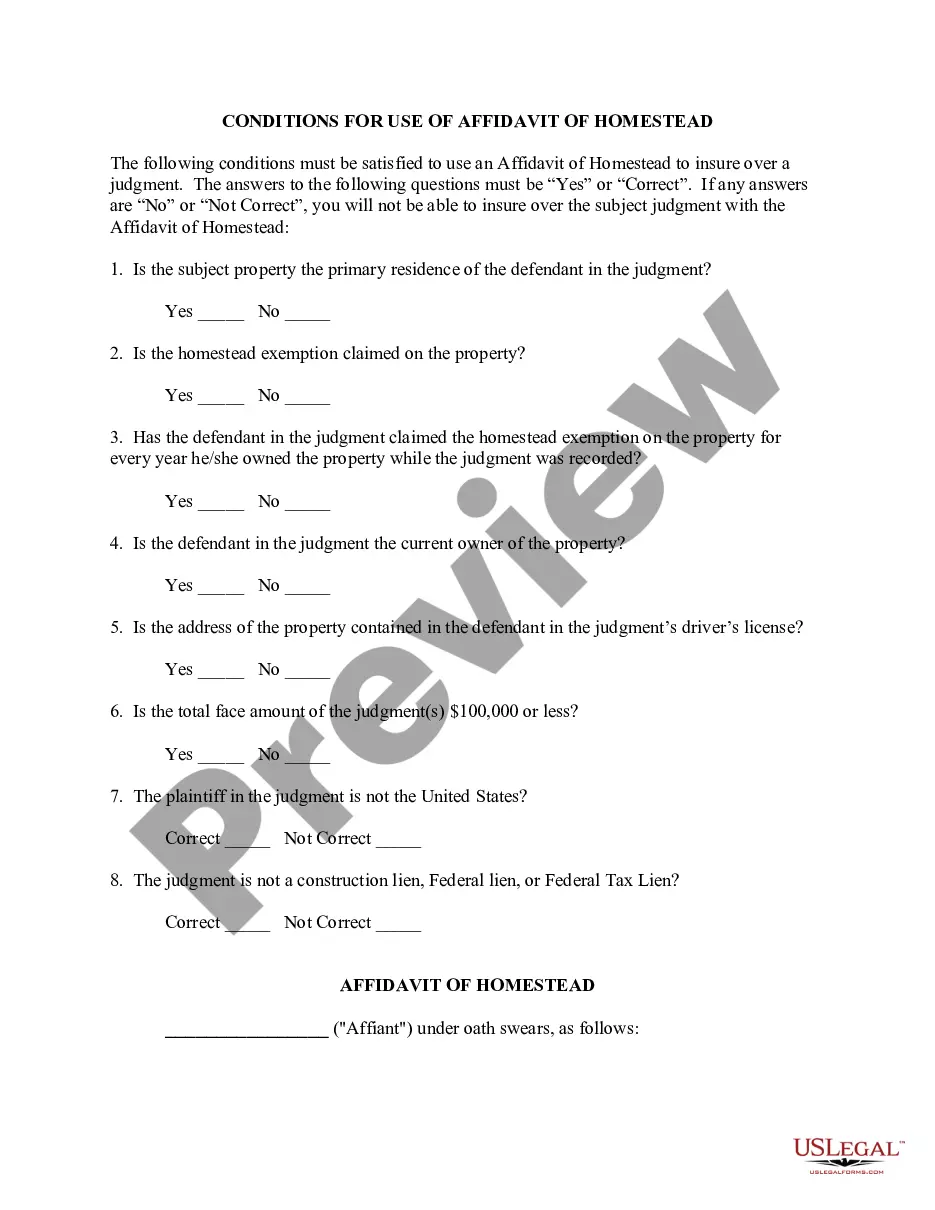
Understanding this form
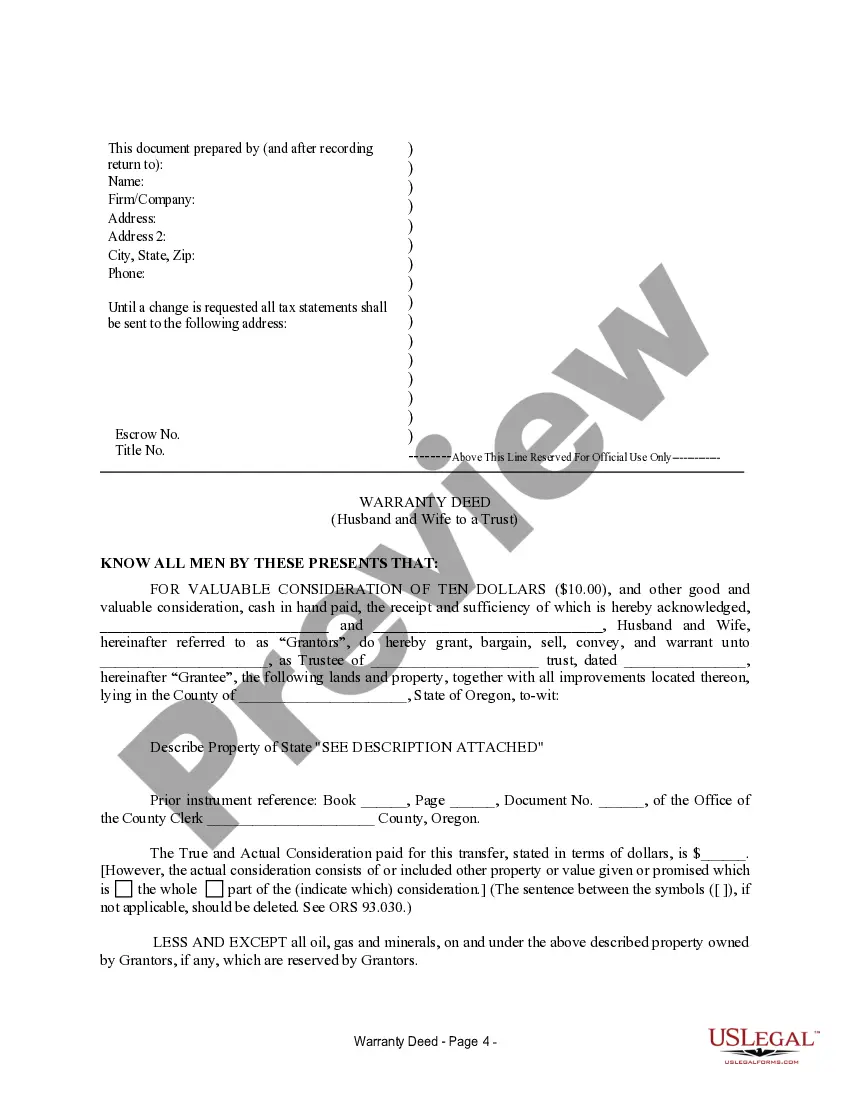
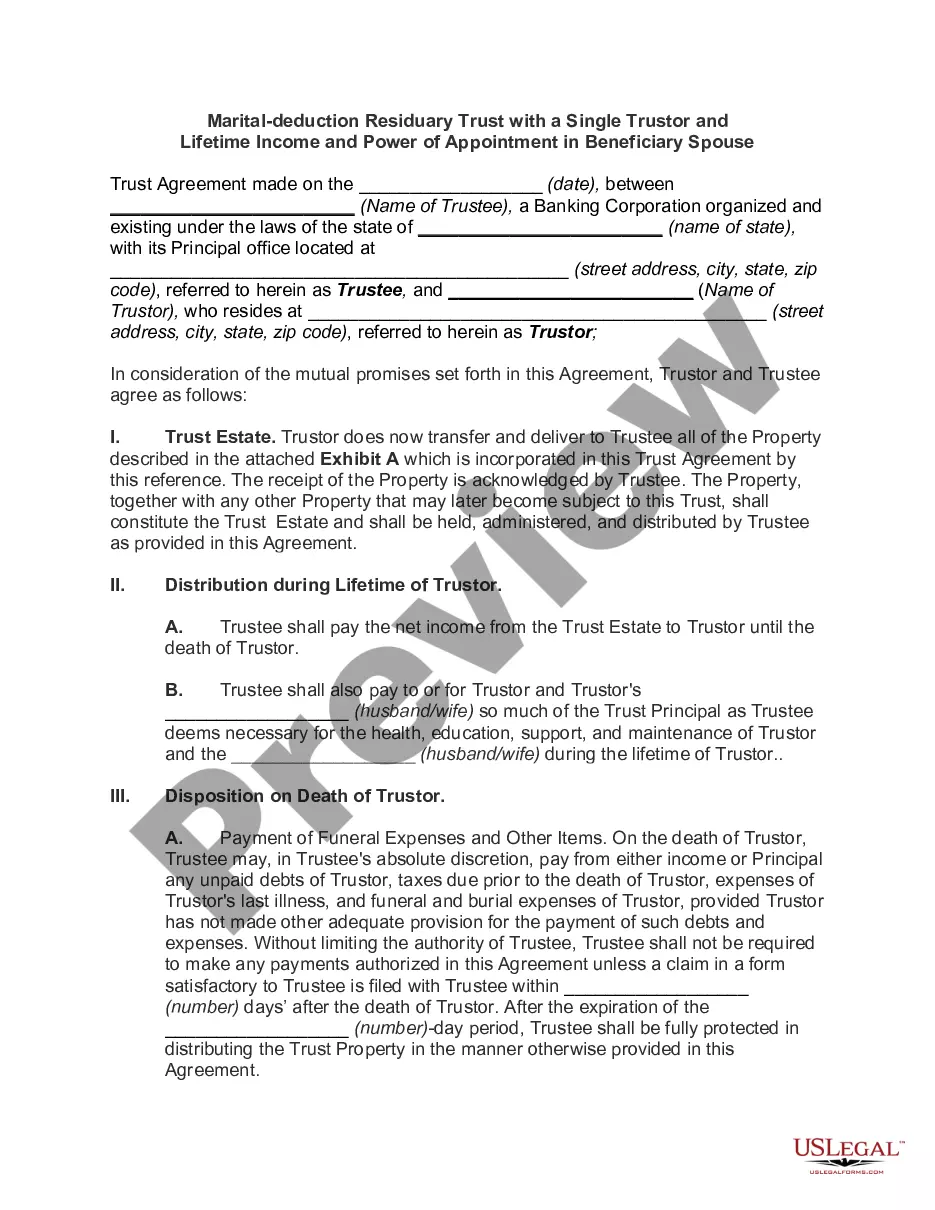
The Warranty Deed from Husband and Wife to a Trust is a legal document that allows a married couple to transfer property ownership to a trust. Unlike other deeds, this form ensures that the married grantors (husband and wife) convey their property rights while reserving any oil, gas, and minerals that may be associated with the property. This deed is compliant with state laws and provides a formalized way to manage property through a trust structure.
Key parts of this document
- Names of the grantors (husband and wife) and the grantee (trustee of the trust).
- Description of the property being transferred.
- Declaration of the consideration or payment made for the transfer.
- Reservation clause for oil, gas, and minerals.
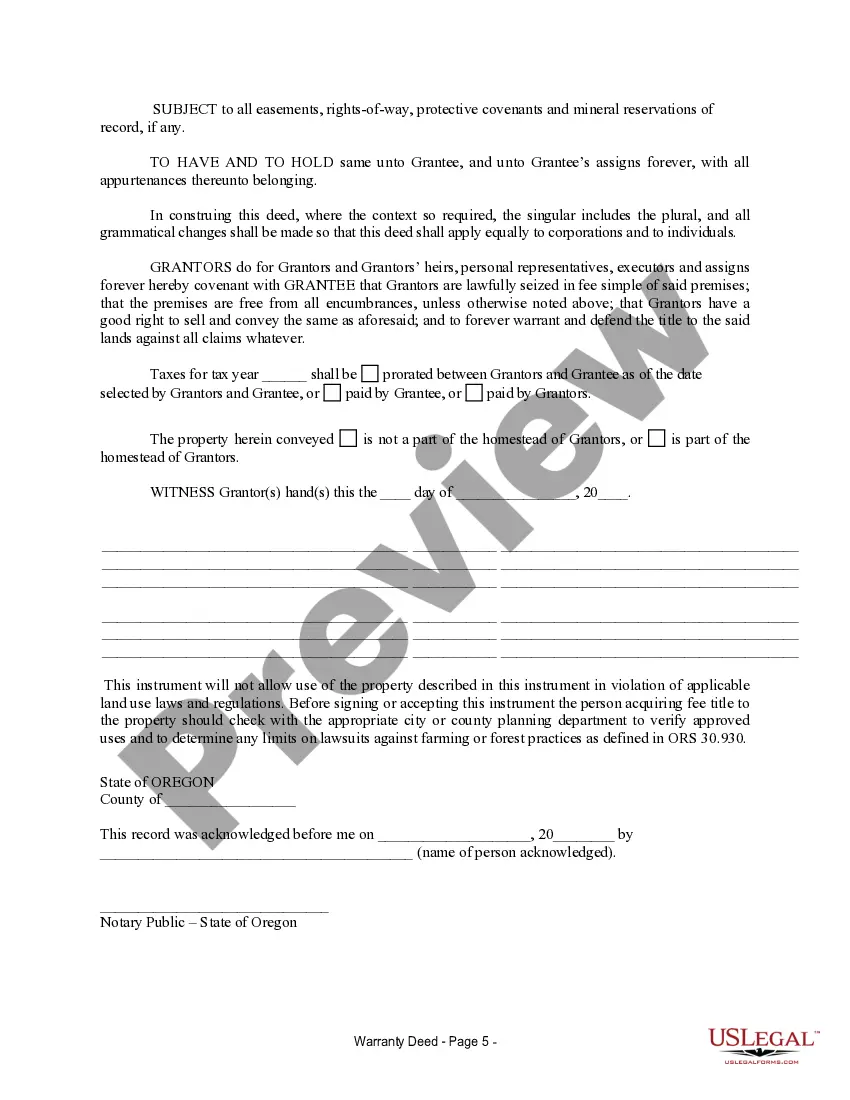
- Covenant assuring that the grantors hold clear title to the property.
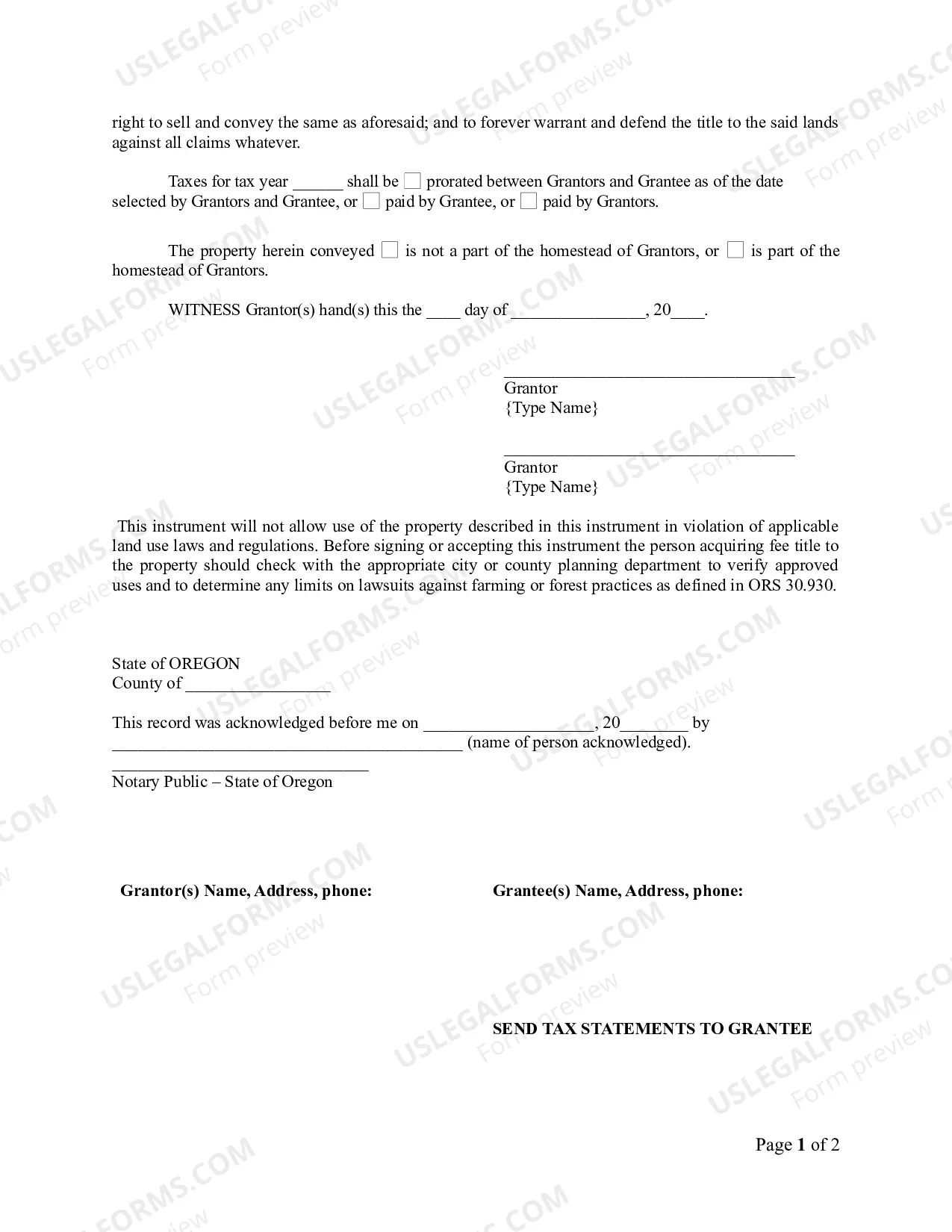
- Signature lines for grantors and notary acknowledgment.




Situations where this form applies
This form is typically used when a married couple wishes to place their property into a trust for organizational, estate planning, or asset protection purposes. It is also suited for situations where the couple wants to ensure smooth transfer of property rights while reserving certain mineral rights. Using this warranty deed helps protect both the grantors and the trust by clearly stating the terms of the ownership transfer.
Who needs this form
This form is intended for:
- Married couples looking to transfer their property to a trust.
- Individuals managing a family estate.
- Trustees who are receiving property from grantors in trust agreements.
- Homeowners wanting to secure assets through a trust for tax or legal benefits.
Completing this form step by step
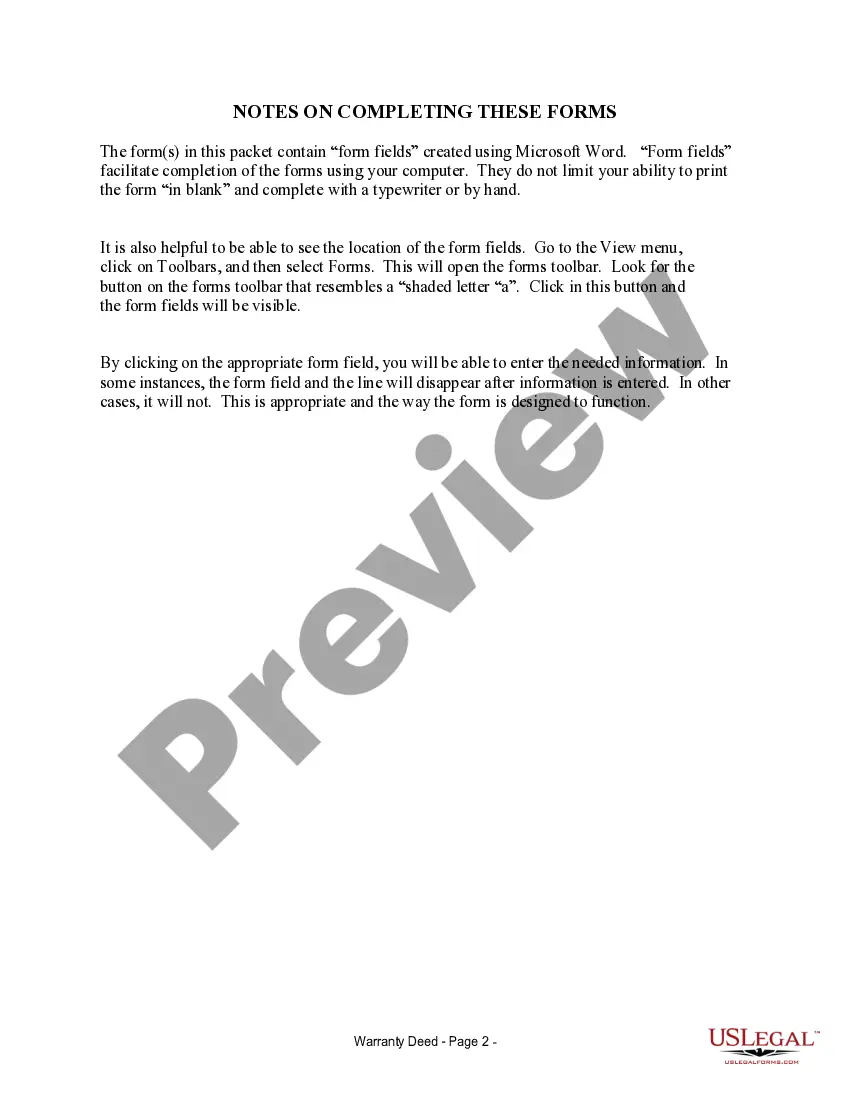
- Identify and enter the names of the grantors (husband and wife).
- Specify the name of the trustee and the trust.
- Clearly describe the property being transferred.
- Enter the amount of consideration for the property.
- Sign and date the form in the presence of a notary public.
Is notarization required?
To make this form legally binding, it must be notarized. Our online notarization service, powered by Notarize, lets you verify and sign documents remotely through an encrypted video session.
Get your form ready online
Our built-in tools help you complete, sign, share, and store your documents in one place.
Make edits, fill in missing information, and update formatting in US Legal Forms—just like you would in MS Word.
Download a copy, print it, send it by email, or mail it via USPS—whatever works best for your next step.
Sign and collect signatures with our SignNow integration. Send to multiple recipients, set reminders, and more. Go Premium to unlock E-Sign.
If this form requires notarization, complete it online through a secure video call—no need to meet a notary in person or wait for an appointment.
We protect your documents and personal data by following strict security and privacy standards.

Make edits, fill in missing information, and update formatting in US Legal Forms—just like you would in MS Word.

Download a copy, print it, send it by email, or mail it via USPS—whatever works best for your next step.

Sign and collect signatures with our SignNow integration. Send to multiple recipients, set reminders, and more. Go Premium to unlock E-Sign.

If this form requires notarization, complete it online through a secure video call—no need to meet a notary in person or wait for an appointment.

We protect your documents and personal data by following strict security and privacy standards.
Mistakes to watch out for
- Failing to accurately describe the property can lead to disputes later.
- Not including all necessary signatures may invalidate the deed.
- Omitting the reservation of mineral rights could affect future claims.
- Not ensuring notarization can result in legal issues with the deed's enforceability.
Why complete this form online
- Convenient access from anywhere at any time with modern devices.
- Editability allows for easy customization to meet specific needs.
- Reliable templates are prepared by licensed attorneys, ensuring compliance with state laws.
- Secure storage of completed forms and records for future reference.
Looking for another form?

Form popularity
FAQ
Determine the Current Title and Vesting to Your Property. Prepare a Deed. Be Aware of Your Lender and Title Insurance. Prepare a Preliminary Change of Ownership Report. Execute Your Deed. Record Your Deed. Wait for the Deed to be Returned. Keep the Property in the Trust.
In the context of a California mortgage transaction, a trust deed also transfer ownership. Only this time, the title is being placed in the hands of a third-party trustee, who holds the property on behalf of the lender and the homeowner-borrower until the mortgage is paid.
The act of transferring a property that is owned by an individual into a trust, will see the trust liable to pay stamp duty on acquisition of the asset. Additionally, the individual who is transferring ownership to the trust, will be liable to pay capital gains tax on the disposal of the asset.
Locate your current deed. Use the proper deed. Check with your title insurance company and lender. Prepare a new deed. Sign in the presence of a notary. Record the deed in the county clerk's office. Locate the deed that's in trust. Use the proper deed.
Giving the wrong legal address for the property or the wrong amount of the debt can render the deed unenforceable. In some cases, the error is easy to fix, and the court will rule the deed is enforceable.
No. And unless the deed identifies the trust as an owner, then father is the owner of an interest. It is a common mistake to set up a trust and then fail to deed property into the trust. However, you cannot force him to make the changes you are...
If you purchase a home with a revocable trust, the trust legally owns the home. If you're the grantor or writer of the trust, you own the home through the trust. You can assign beneficiaries for the trust so that in the event of your death, they will inherit the home.
Generally, a deed will override the will. However, which legal document prevails also depends on state property laws and whether the state has adopted the Uniform Probate Code.
Obtain a California grant deed from a local office supply store or your county recorder's office. Complete the top line of the deed. Indicate the grantee on the second line. Enter the trustees' names and addresses.