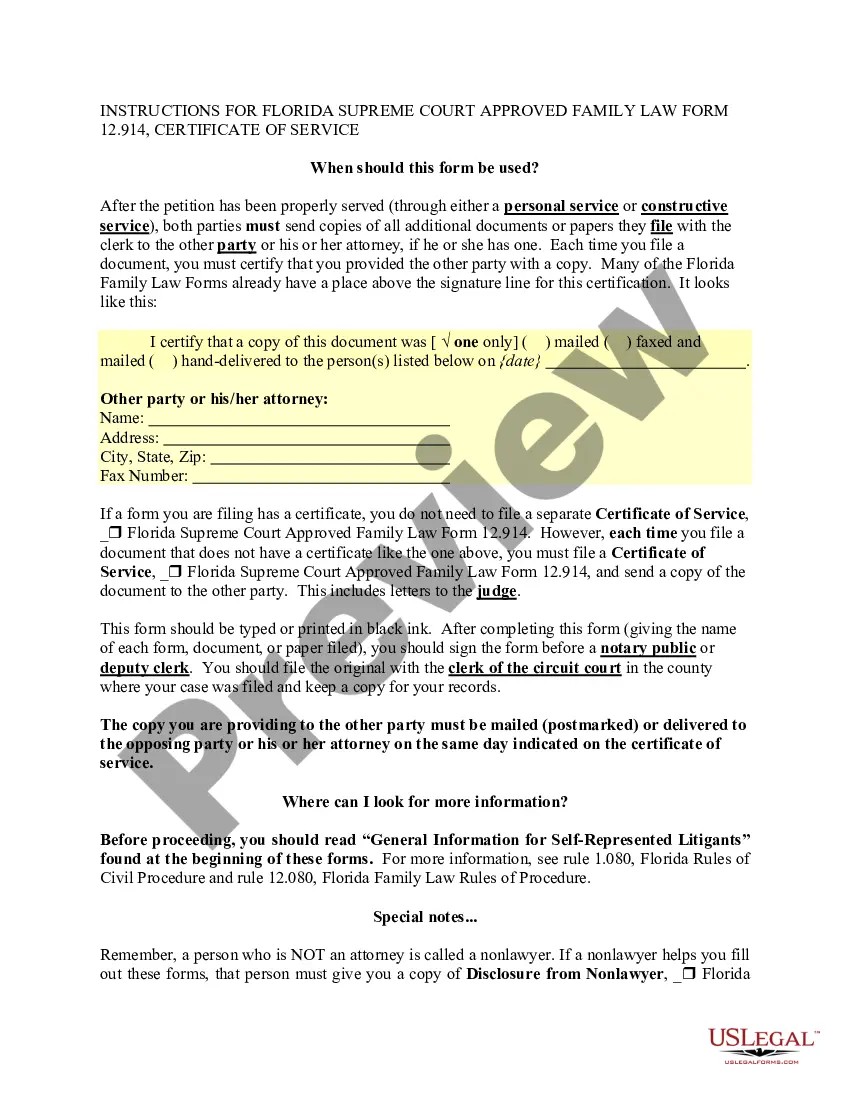
Oklahoma Last Will for a Widow or Widower with no Children
Overview of this form
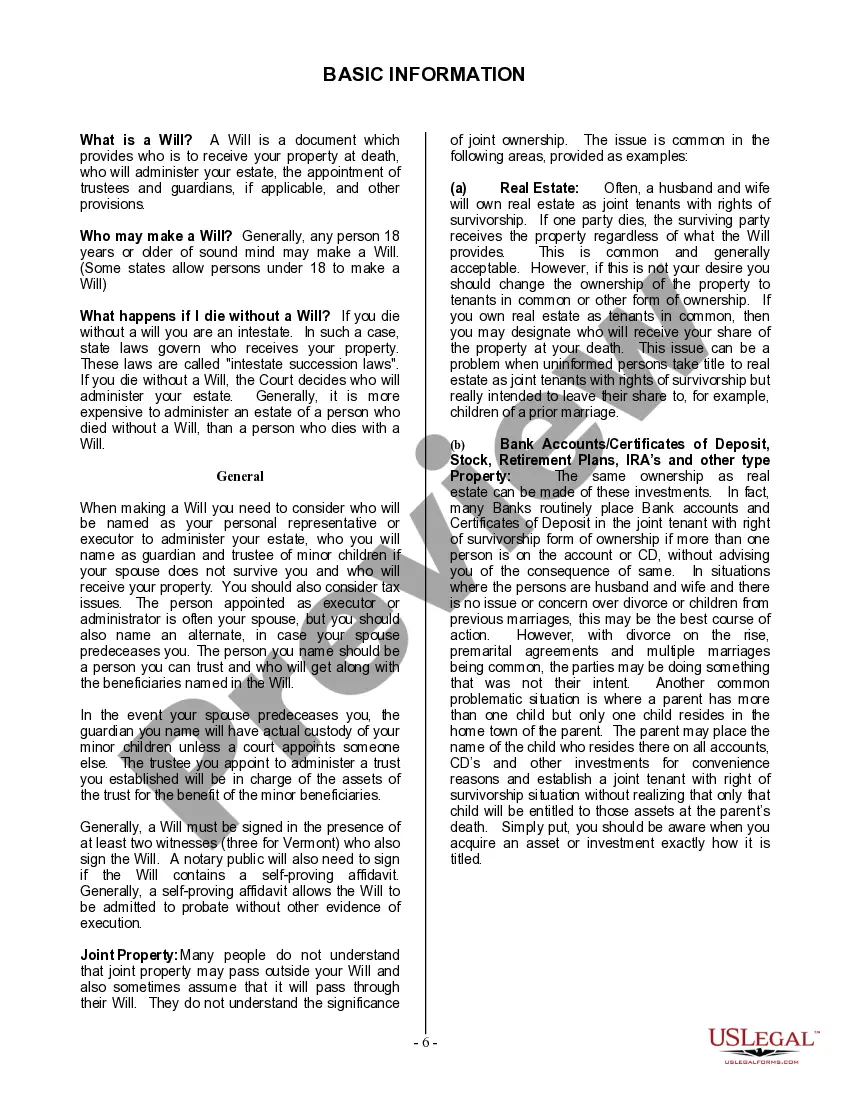
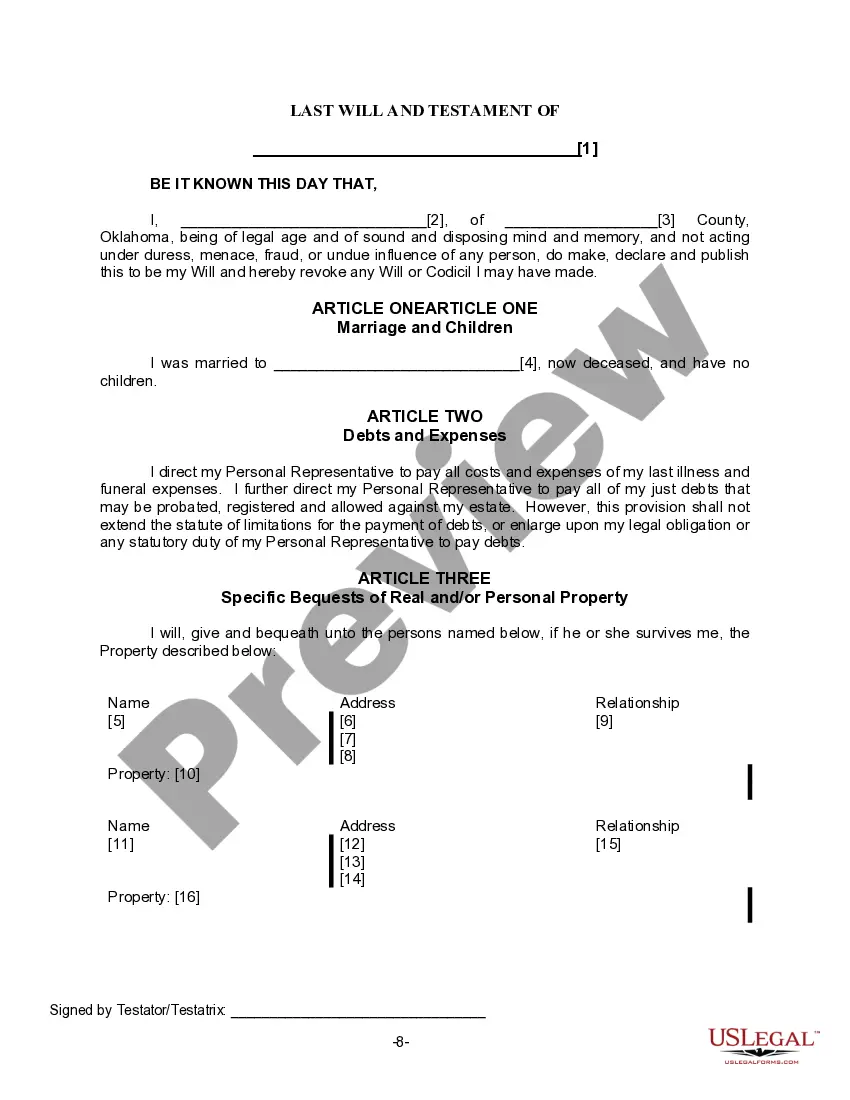
This Last Will for a Widow or Widower with No Children is a legal document that outlines how your property will be distributed after your death. Designed specifically for individuals who have lost a spouse and do not have children, this will allows you to appoint a personal representative, designate beneficiaries for your property, and include other important provisions. Unlike standard wills, this form caters to your unique situation as a widow or widower, ensuring your wishes are clearly articulated and legally binding.
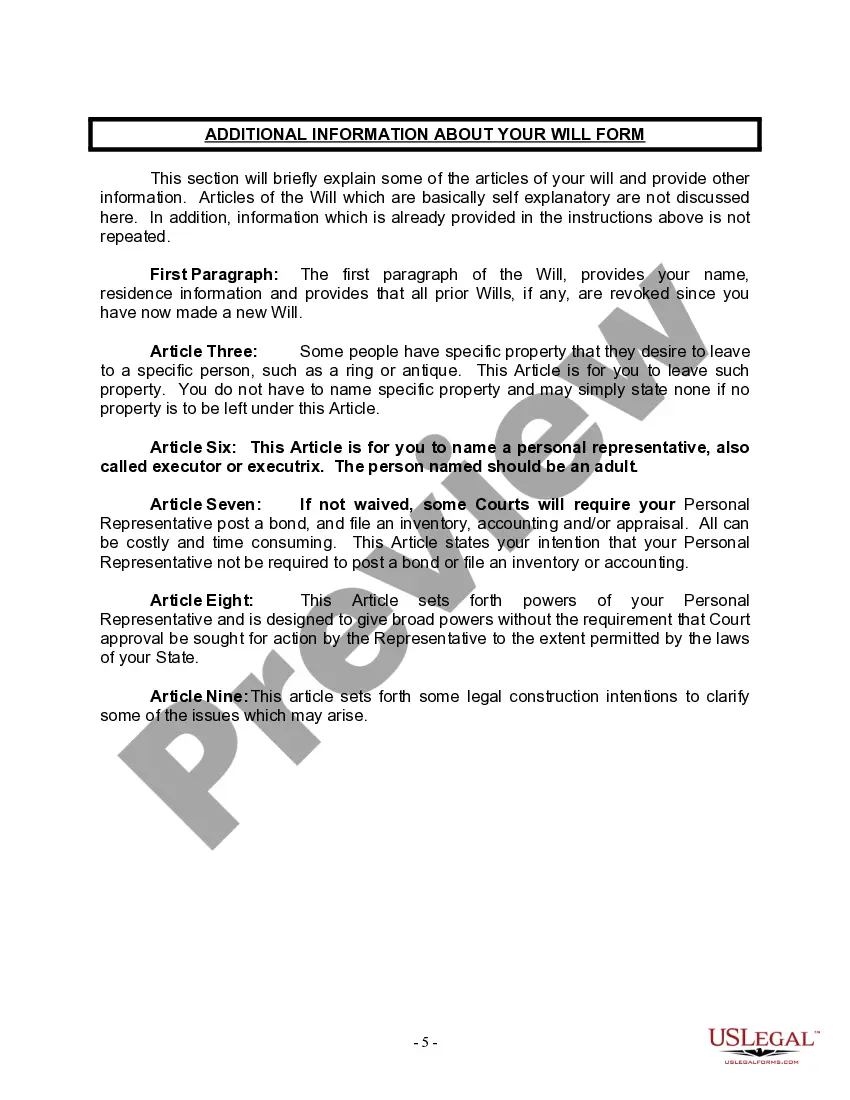
Key components of this form
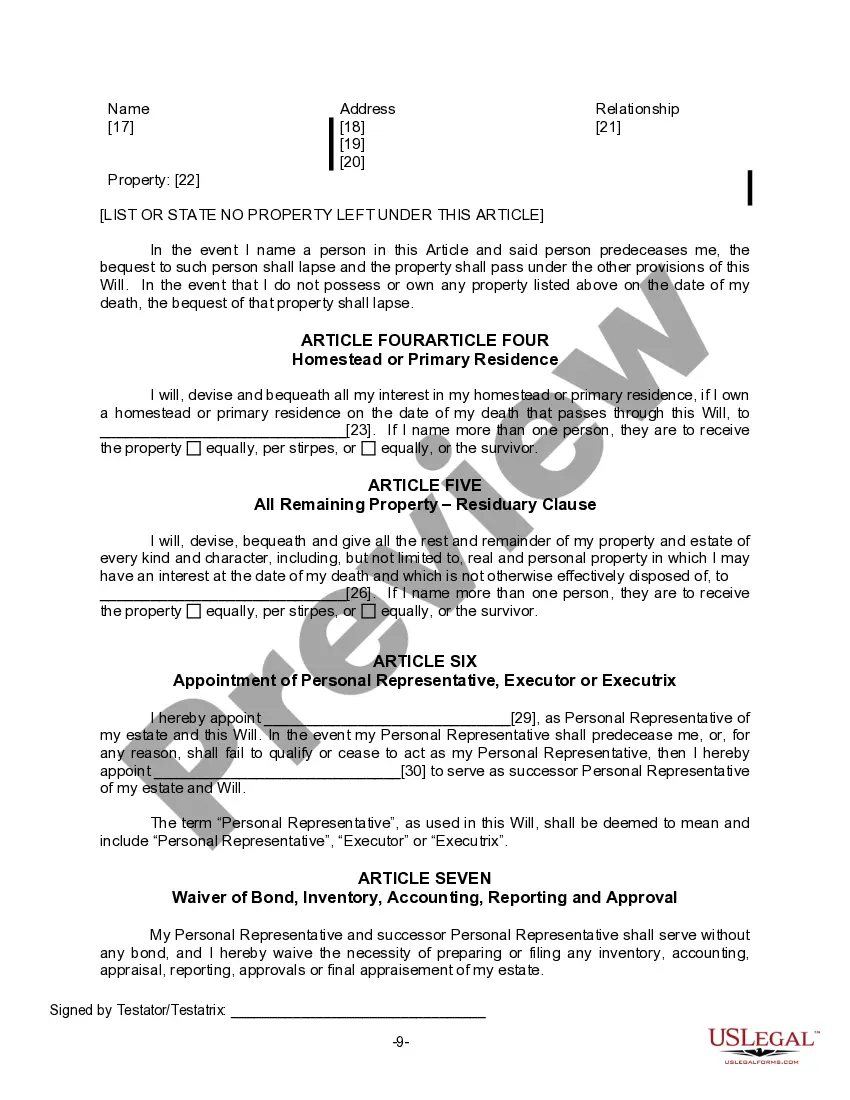
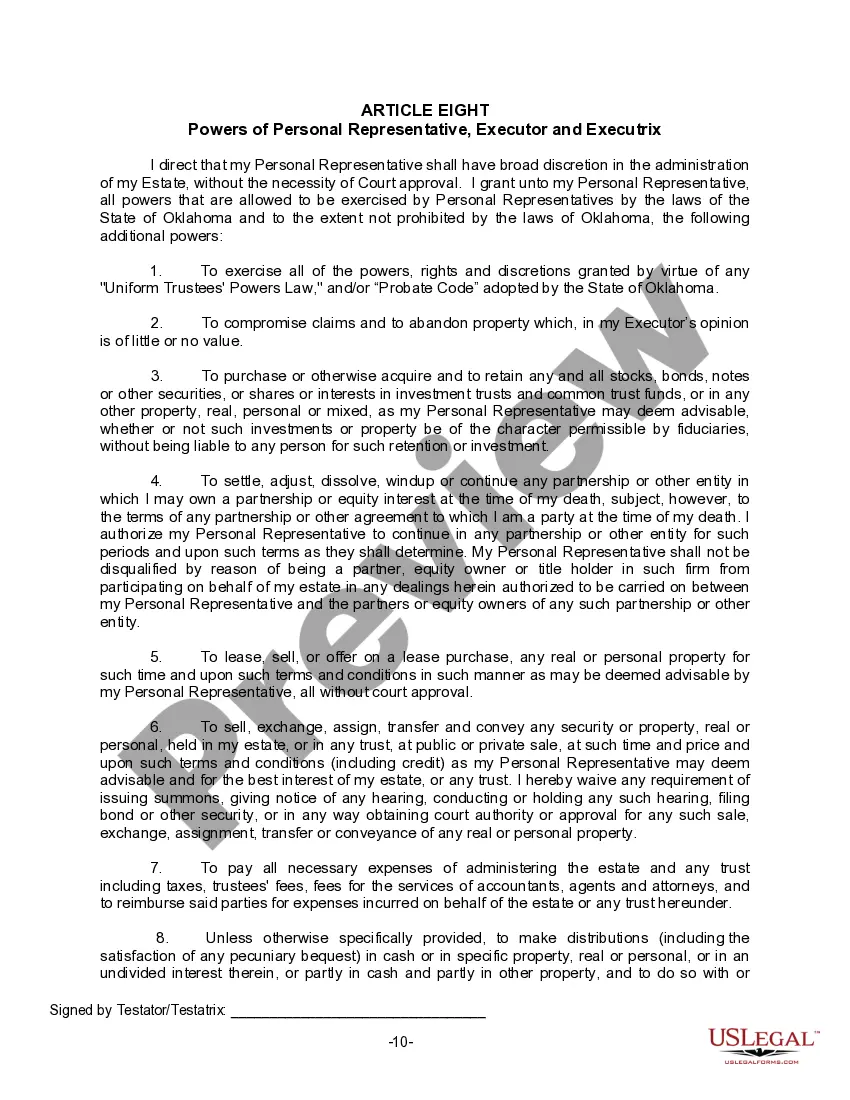
- Personal Representative: Designate an executor to manage your estate.
- Specific Bequests: Specify property you wish to leave to certain individuals.
- Homestead Designation: Identify who will receive your primary residence.
- Residuary Clause: State who receives the remainder of your assets after specific bequests.
- Witness Requirements: Sign in the presence of two unrelated witnesses.
- Self-Proving Affidavit: Includes an optional affidavit to streamline the probate process.


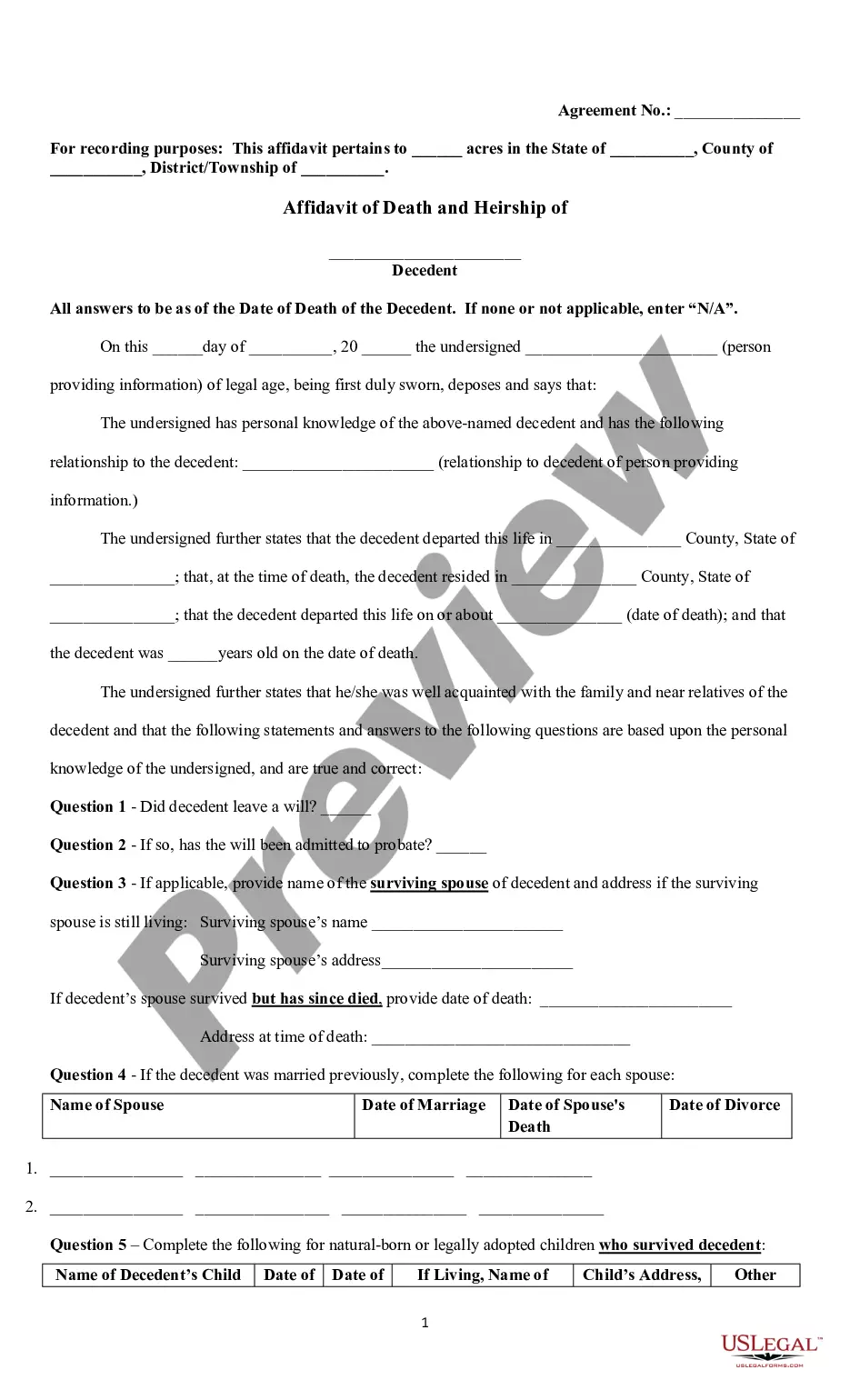


When to use this document
This form should be used if you are a widow or widower without children and wish to establish clear directives on how your assets should be distributed after your death. It is essential when you want to ensure that your property goes to specific individuals or organizations and to clarify your preferences regarding your homestead. Having a legally binding will can also prevent potential disputes among family members and streamline the probate process.
Who this form is for
- Widows or widowers without children seeking to create a will.
- Individuals who want to specify how their property should be distributed after death.
- Those looking to appoint a personal representative to manage their estate.
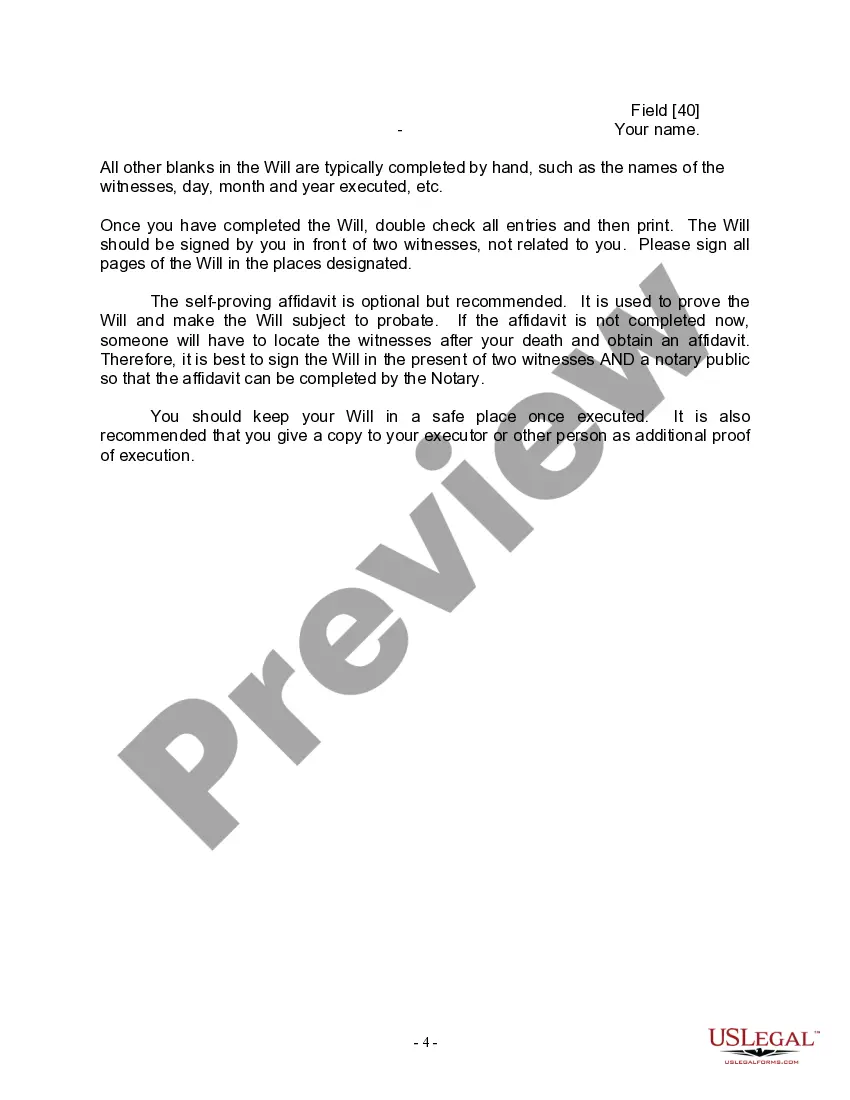
Instructions for completing this form
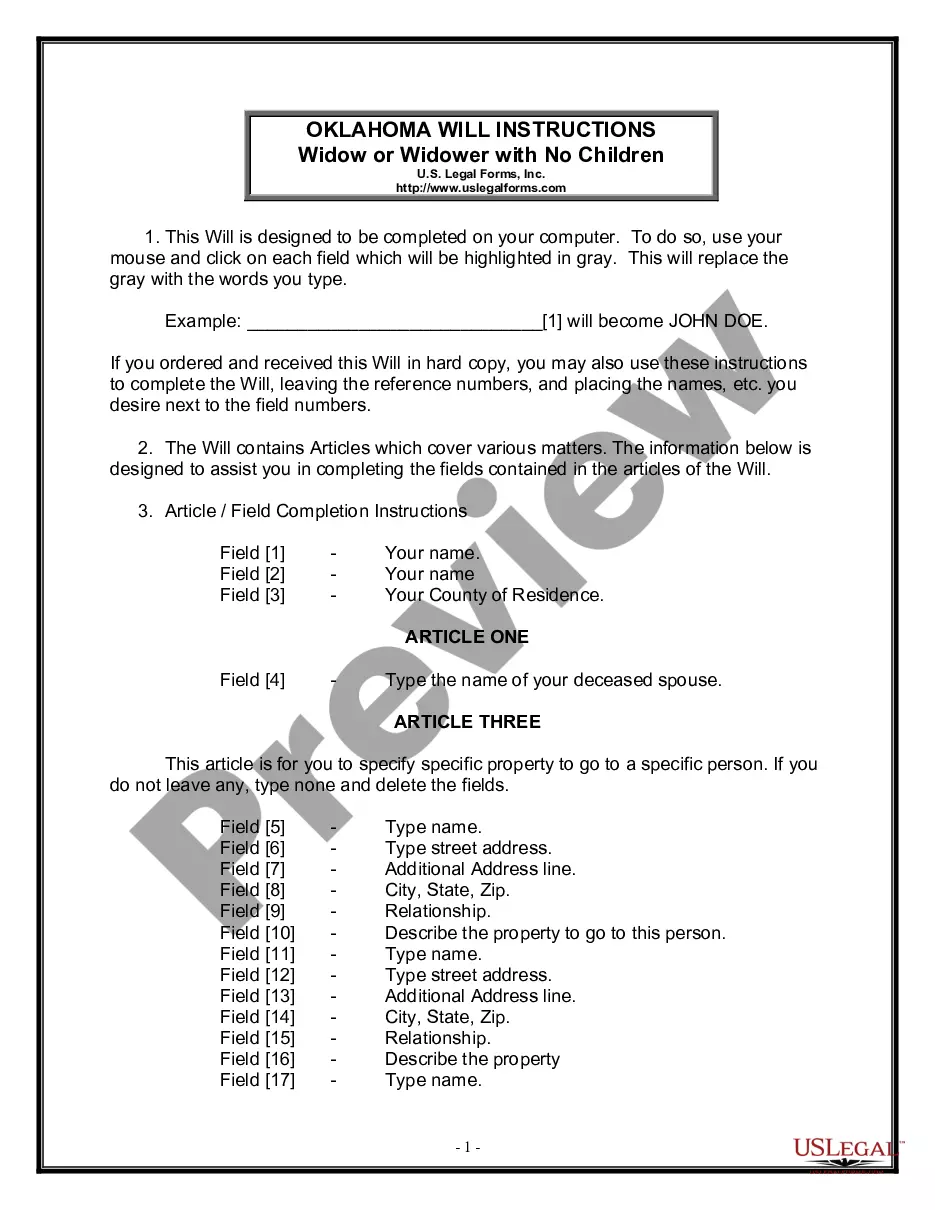
- Identify yourself by entering your name and county of residence in the designated fields.
- Specify the name of your deceased spouse in the appropriate section.
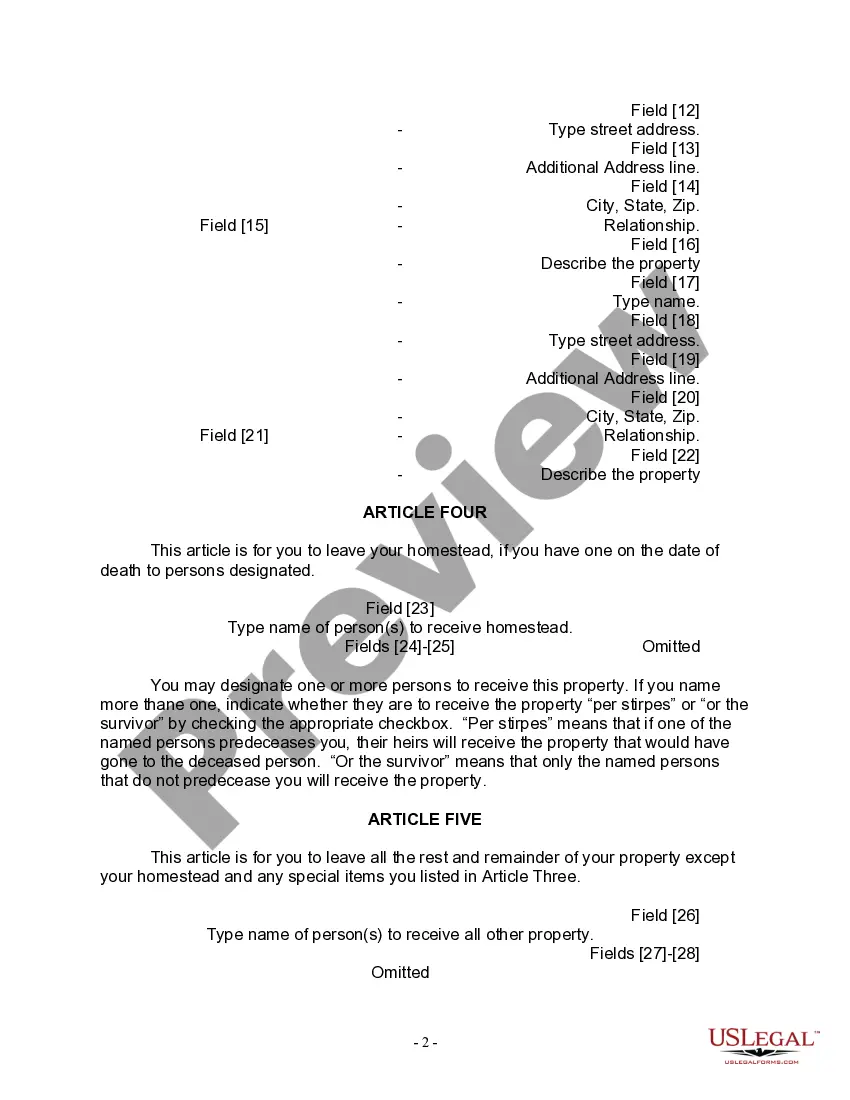
- List any specific property and the individuals you wish to bequeath it to.
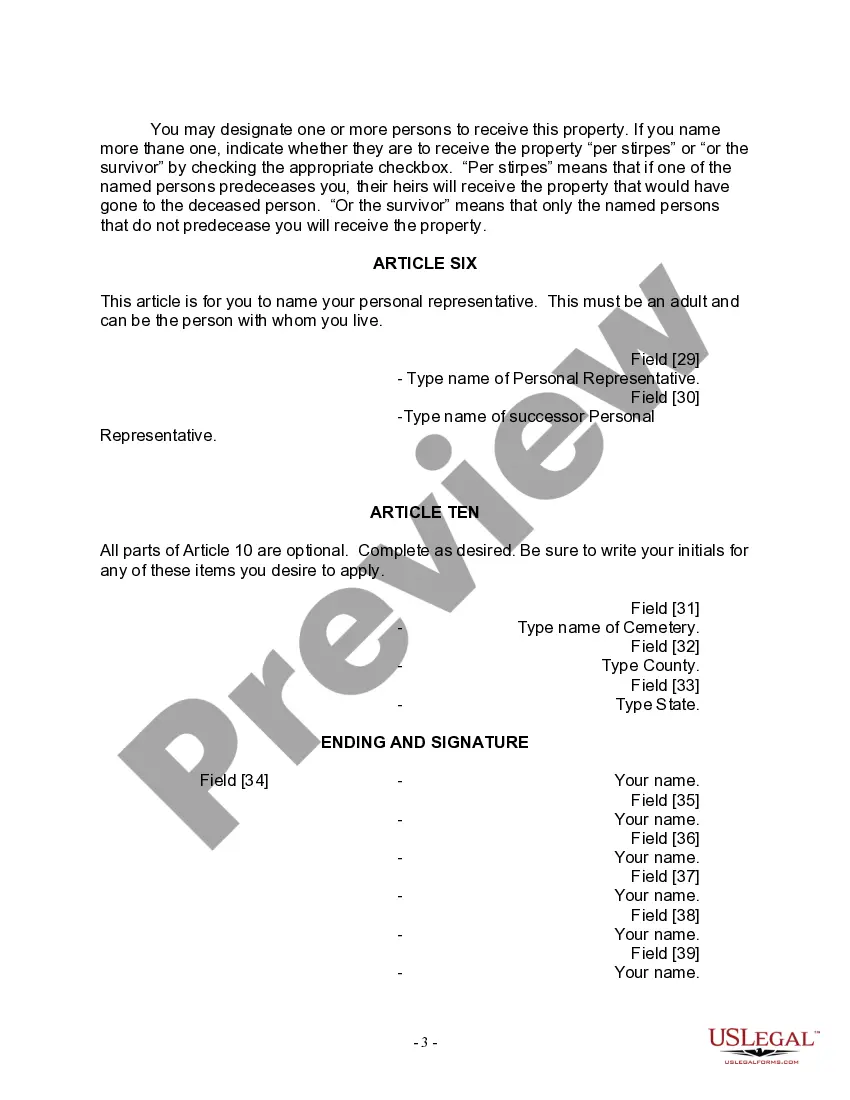
- Designate your personal representative and a successor if needed.
- Ensure to sign the will in the presence of two witnesses who are not beneficiaries.
Notarization guidance
Yes, this form must be notarized to be legally valid. The self-proving affidavit included in the will requires a notary public's signature. Notarization helps to streamline the probate process by confirming the authenticity of the will.
Get your form ready online
Our built-in tools help you complete, sign, share, and store your documents in one place.
Make edits, fill in missing information, and update formatting in US Legal Forms—just like you would in MS Word.
Download a copy, print it, send it by email, or mail it via USPS—whatever works best for your next step.
Sign and collect signatures with our SignNow integration. Send to multiple recipients, set reminders, and more. Go Premium to unlock E-Sign.
If this form requires notarization, complete it online through a secure video call—no need to meet a notary in person or wait for an appointment.
We protect your documents and personal data by following strict security and privacy standards.

Make edits, fill in missing information, and update formatting in US Legal Forms—just like you would in MS Word.

Download a copy, print it, send it by email, or mail it via USPS—whatever works best for your next step.

Sign and collect signatures with our SignNow integration. Send to multiple recipients, set reminders, and more. Go Premium to unlock E-Sign.

If this form requires notarization, complete it online through a secure video call—no need to meet a notary in person or wait for an appointment.

We protect your documents and personal data by following strict security and privacy standards.
Typical mistakes to avoid
- Failing to sign the will in front of required witnesses.
- Not specifying an alternate personal representative.
- Leaving out important details regarding property distribution.
- Not checking local laws for compliance or requirements.
Advantages of online completion
- Convenience: Complete the form from your own home at your own pace.
- Editability: Easily make changes as needed before finalizing the document.
- Access to legal expertise: Forms are drafted by licensed attorneys, ensuring they are legally sound.
What to keep in mind
- This will is tailored for widows or widowers with no children, focusing on property distribution.
- Ensure that all signatures and witness requirements are diligently met to maintain the will's legality.
- Utilizing online resources provides ease and assurance in completing your will.
- Consider the implications of your property ownership and how they align with your will's intentions.
Looking for another form?






Form popularity
FAQ
Create the initial document. Start by titling the document Last Will and Testament" and including your full legal name and address. Designate an executor. Appoint a guardian. Name the beneficiaries. Designate the assets. Ask witnesses to sign your will. Store your will in a safe place.
Q: Is a handwritten will valid? A: Under Oklahoma law a will that is entirely written, dated and signed in your own handwriting, and which contains no typed or printed portion, is valid.
As long as it was properly signed and witnessed by two adult independent witnesses who are present at the time you sign your will, it should be legally binding.Using the wrong wording could mean that your instructions aren't followed, or even that your will isn't valid.
In Oklahoma, you can make a living trust to avoid probate for virtually any asset you ownreal estate, bank accounts, vehicles, and so on. You need to create a trust document (it's similar to a will), naming someone to take over as trustee after your death (called a successor trustee).
How Long Does Probate in Oklahoma Take? In Oklahoma, most probates can be done in about four to six months. Any litigation or fighting could extend the timeline considerably.
Under Oklahoma law, a will must be filed with the court within 30 days after the death of the testator. 58 Okla. Stat.So, after you pass away, your will should be filed in your local probate court by the person named to be your personal representative (also called an executor or administrator).
You can make your own will in Oklahoma, using Nolo's do-it-yourself will software or online will programs. However, you may want to consult a lawyer in some situations. For example, if you think that your will might be contested or if you want to disinherit your spouse, you should talk with an attorney.
Write every word in the will in your own handwriting. Be sure to state whether or not you have children. 'Revoke' or write a sentence clearly stating this new handwritten will is how you want your property to be settled after your death. Make an entire document. Sign your name at the veryend of the will.
A typical probate can be completed in around 4-6 months, but could last much longer depending on the size of the estate, creditor claims and whether there is a challenge to the will or to appointment of the Personal Representative. For small estates, Oklahoma has procedures called summary administration.