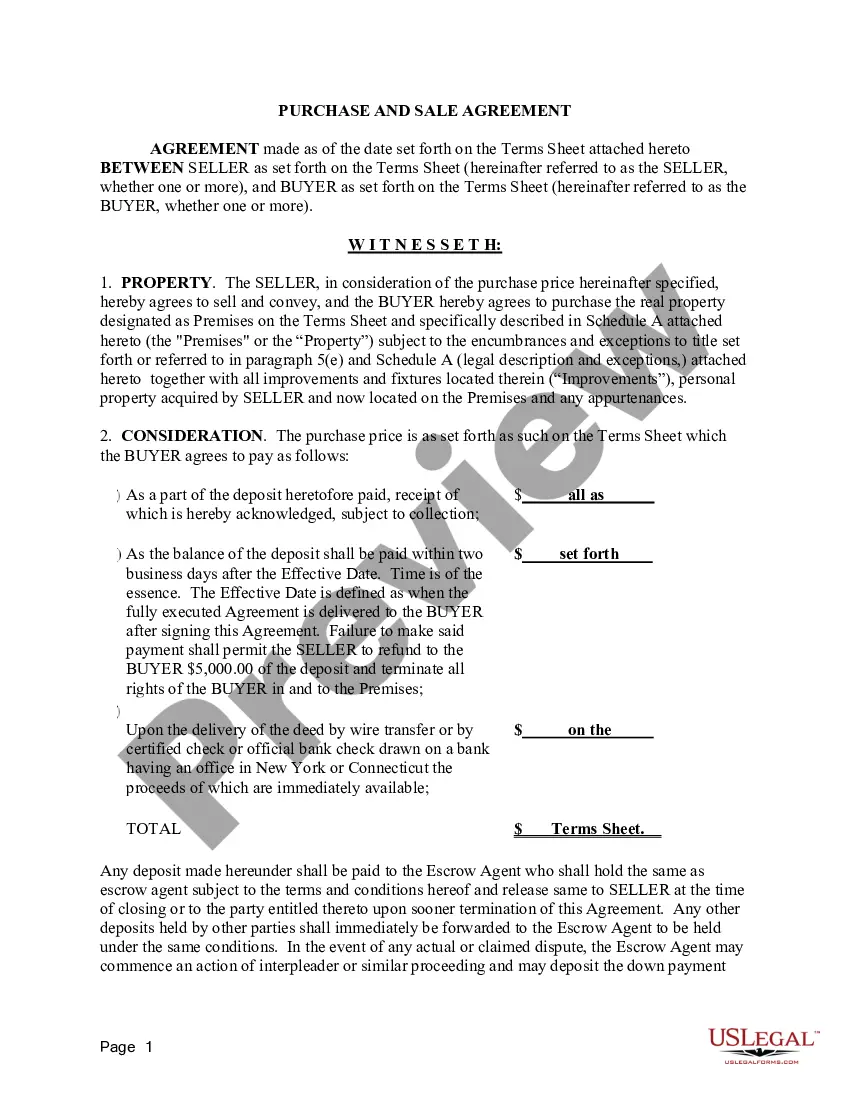
Oklahoma Warranty Deed for Parents to Child with Reservation of Life Estate
Understanding this form
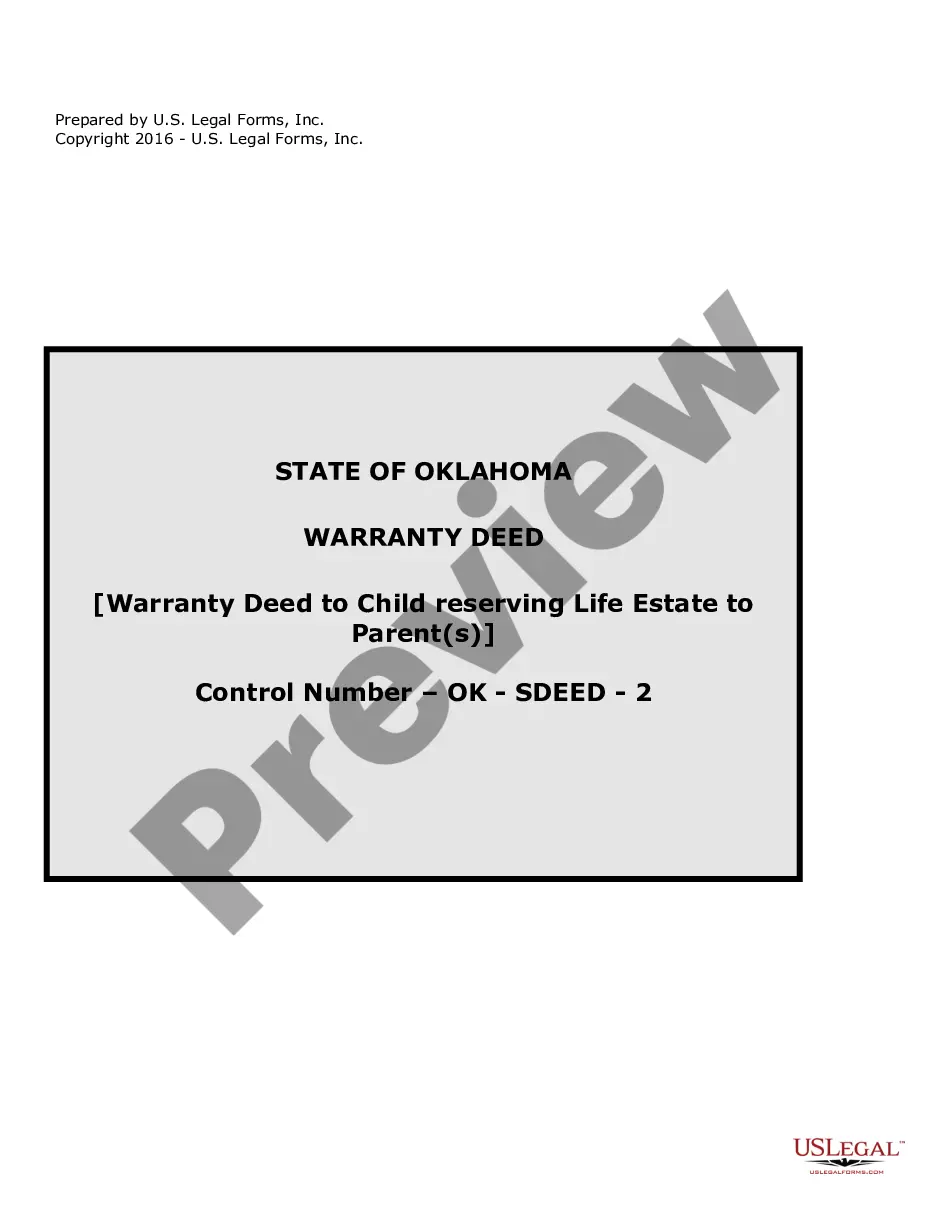
This Warranty Deed for Parents to Child with Reservation of Life Estate is a legal document used to transfer ownership of real property from parents (grantors) to their child (grantee), while allowing the parents to retain the right to live on the property for the rest of their lives. This form is distinct because it ensures the grantors can continue to reside on the property even after the title is transferred, providing them comfort and security while also facilitating an estate planning strategy for the transfer of assets.
What’s included in this form
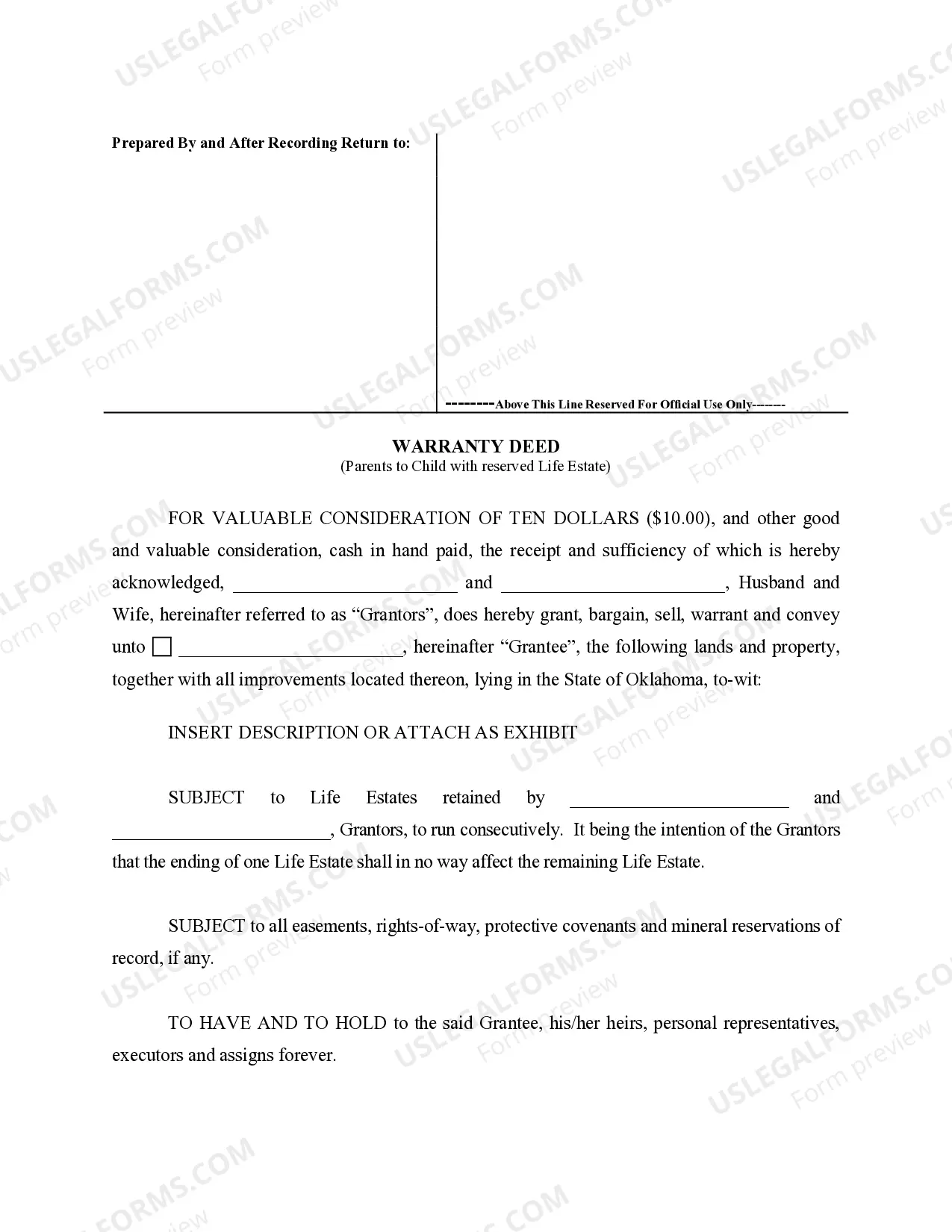
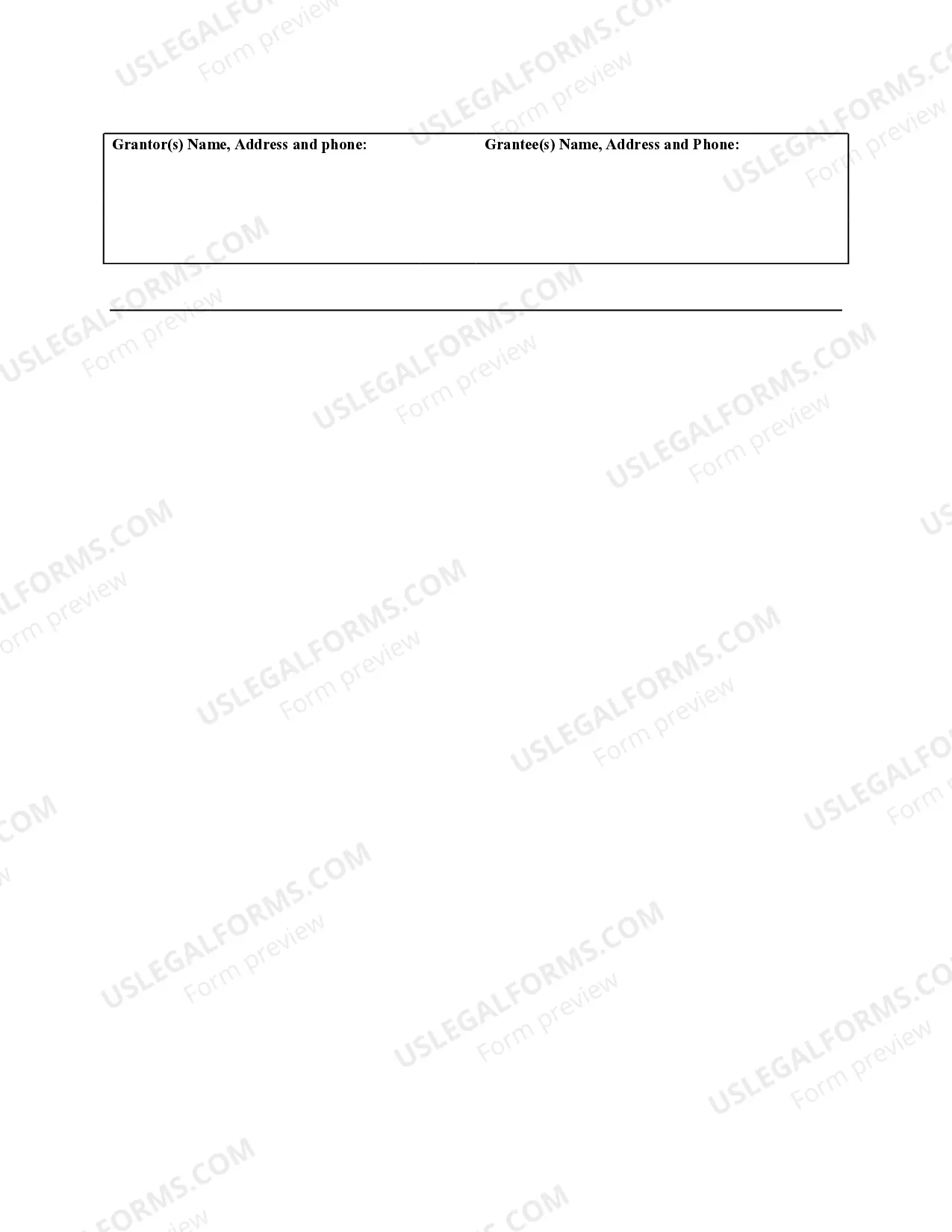
- Parties involved: Designation of the grantors (parents) and the grantee (child).
- Property description: Accurate identification of the property being transferred.
- Life estate clause: Specification of the life estate reserved for the grantors.
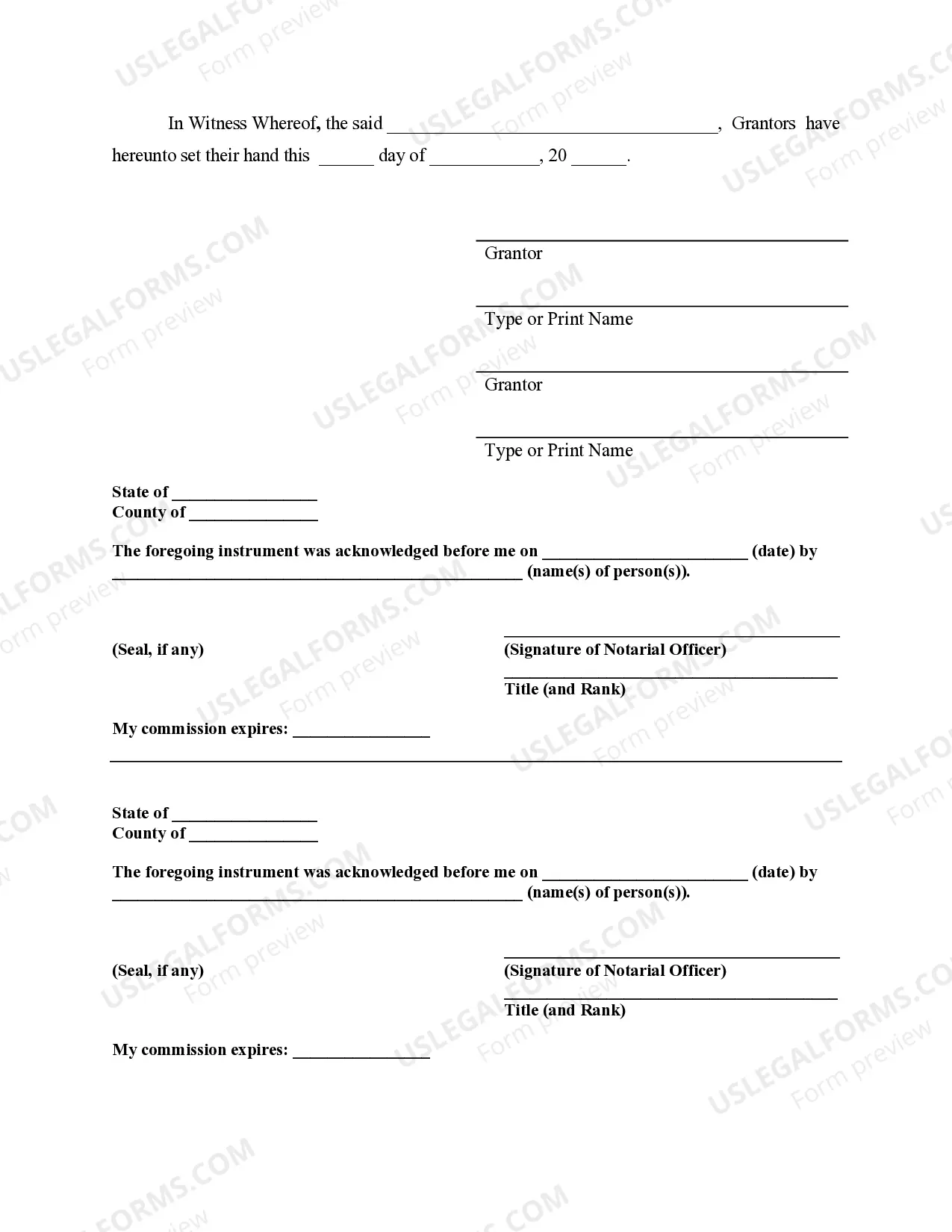
- Legal acknowledgments: Requirements for notarization and witnesses.
- Signatures: Spaces for the grantors' signatures and printed names.



When this form is needed
This form is useful in several scenarios, including when parents wish to ensure their child inherits property while still having the right to live there for their lifetime. It is often used as part of estate planning to minimize potential tax issues and facilitate the seamless transfer of property ownership while maintaining the grantors' residency rights.
Intended users of this form
This form is intended for:
- Parents who want to transfer property to their children while retaining the right to live there.
- Individuals involved in estate planning and property management.
- Real estate professionals assisting clients in property transfer situations.
Instructions for completing this form
- Identify the parties by entering the names of the grantors (parents) and the grantee (child).
- Describe the property being transferred, including its legal description.
- Specify the life estate reserved by the grantors to ensure their right to live on the property.
- Include the date of the transfer and the signatures of the grantors.
- Schedule notarization by signing in front of a notary public to validate the document.
Does this form need to be notarized?
Yes, this form must be notarized to be legally valid. Notarization ensures that the identities of the parties involved are verified, adding an extra layer of authenticity to the document. US Legal Forms offers integrated online notarization options, allowing you to complete this process securely via video call at any time.
Get your form ready online
Our built-in tools help you complete, sign, share, and store your documents in one place.
Make edits, fill in missing information, and update formatting in US Legal Forms—just like you would in MS Word.
Download a copy, print it, send it by email, or mail it via USPS—whatever works best for your next step.
Sign and collect signatures with our SignNow integration. Send to multiple recipients, set reminders, and more. Go Premium to unlock E-Sign.
If this form requires notarization, complete it online through a secure video call—no need to meet a notary in person or wait for an appointment.
We protect your documents and personal data by following strict security and privacy standards.

Make edits, fill in missing information, and update formatting in US Legal Forms—just like you would in MS Word.

Download a copy, print it, send it by email, or mail it via USPS—whatever works best for your next step.

Sign and collect signatures with our SignNow integration. Send to multiple recipients, set reminders, and more. Go Premium to unlock E-Sign.

If this form requires notarization, complete it online through a secure video call—no need to meet a notary in person or wait for an appointment.

We protect your documents and personal data by following strict security and privacy standards.
Avoid these common issues
- Failing to provide a complete and accurate legal description of the property.
- Not adding the life estate clause correctly, which can leave grantors without their intended rights.
- Neglecting to have the document notarized, impacting its legal validity.
- Overlooking necessary signatures or printed names on the form.
Why complete this form online
- Convenience: Obtain the form quickly from anywhere with internet access.
- Editability: Fill out the form digitally, making it easy to correct mistakes.
- Guidance: Access tips and instructions directly within the form.
- Cost-effective: Save on potential attorney fees by using professionally drafted templates.
Legal use & context
- This form legally transfers property while preserving the parentsâ right to live on the property.
- It minimizes the risks of family disputes regarding property ownership after the parents pass away.
- Proper completion and notarization are essential for enforceability.
Main things to remember
- The Warranty Deed transfers property from parents to child while preserving the parentsâ right to live on the property.
- This form helps avoid probate for the transferred property.
- Ensure accurate completion and notarization to maintain legal validity.
Looking for another form?
Form popularity
FAQ
The two types of life estates are the conventional and the legal life estate. the grantee, the life tenant. Following the termination of the estate, rights pass to a remainderman or revert to the previous owner.
The life tenant cannot change the remainder beneficiary without their consent. If the life tenant applies for any loans, they cannot use the life estate property as collateral. There's no creditor protection for the remainderman. You can't minimize estate tax.
A life estate deed permits the property owner to have full use of their property until their death, at which point the ownership of the property is automatically transferred to the beneficiary.
Possible tax breaks for the life tenant. Reduced capital gains taxes for remainderman after death of life tenant. Capital gains taxes for remainderman if property sold while life tenant still alive. Remainderman's financial problems can affect the life tenant.
The person holding the life estate -- the life tenant -- possesses the property during his or her life. The other owner -- the remainderman -- has a current ownership interest but cannot take possession until the death of the life estate holder.
A California Revocable Transfer-On-Death Deed does not take effect until the property owner dies.As long as the original owner is alive, he can revoke the transfer, sell the property, add or remove beneficiaries, and otherwise maintain complete control over the property.
What happens to a life estate after someone dies? Upon the life tenant's death, the property passes to the remainder owner outside of probate.They can sell the property or move into and claim it as their primary residence (homestead). Property taxes will not be reassessed.
A person owns property in a life estate only throughout their lifetime. Beneficiaries cannot sell property in a life estate before the beneficiary's death. One benefit of a life estate is that property can pass when the life tenant dies without being part of the tenant's estate.