Oklahoma Warning of Default on Residential Lease
Understanding this form
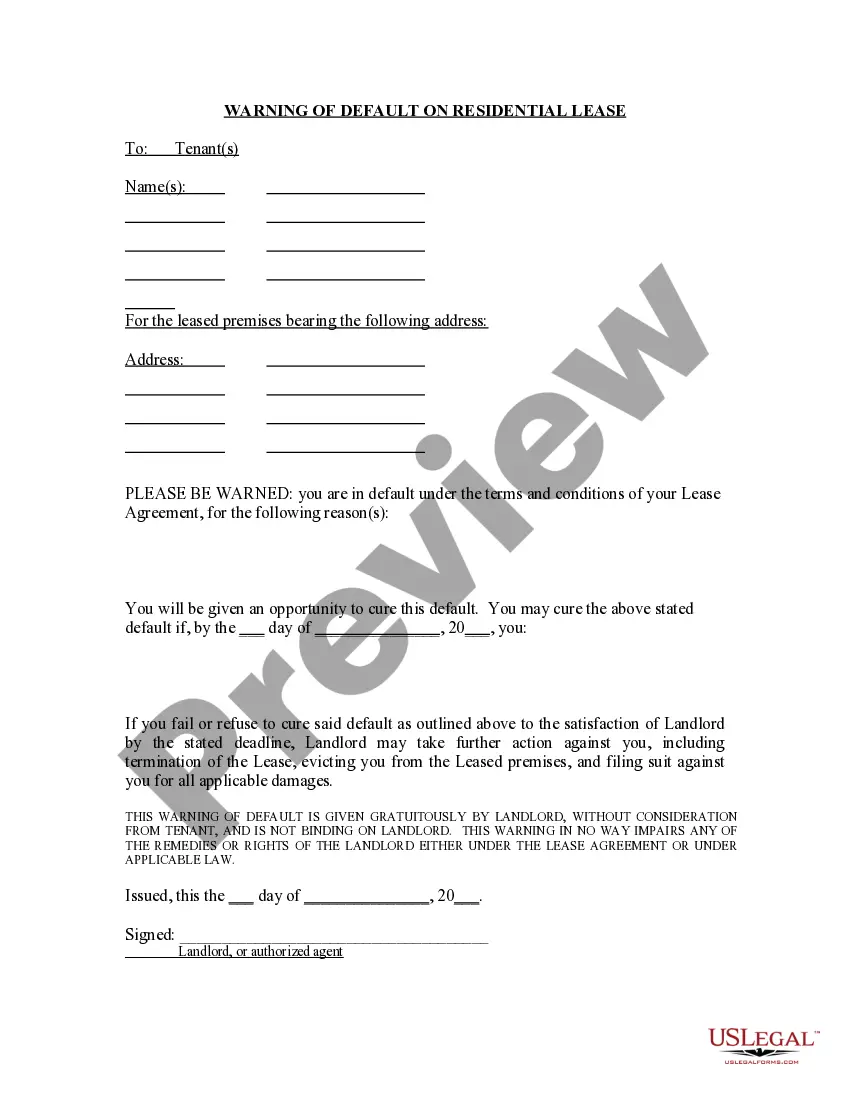
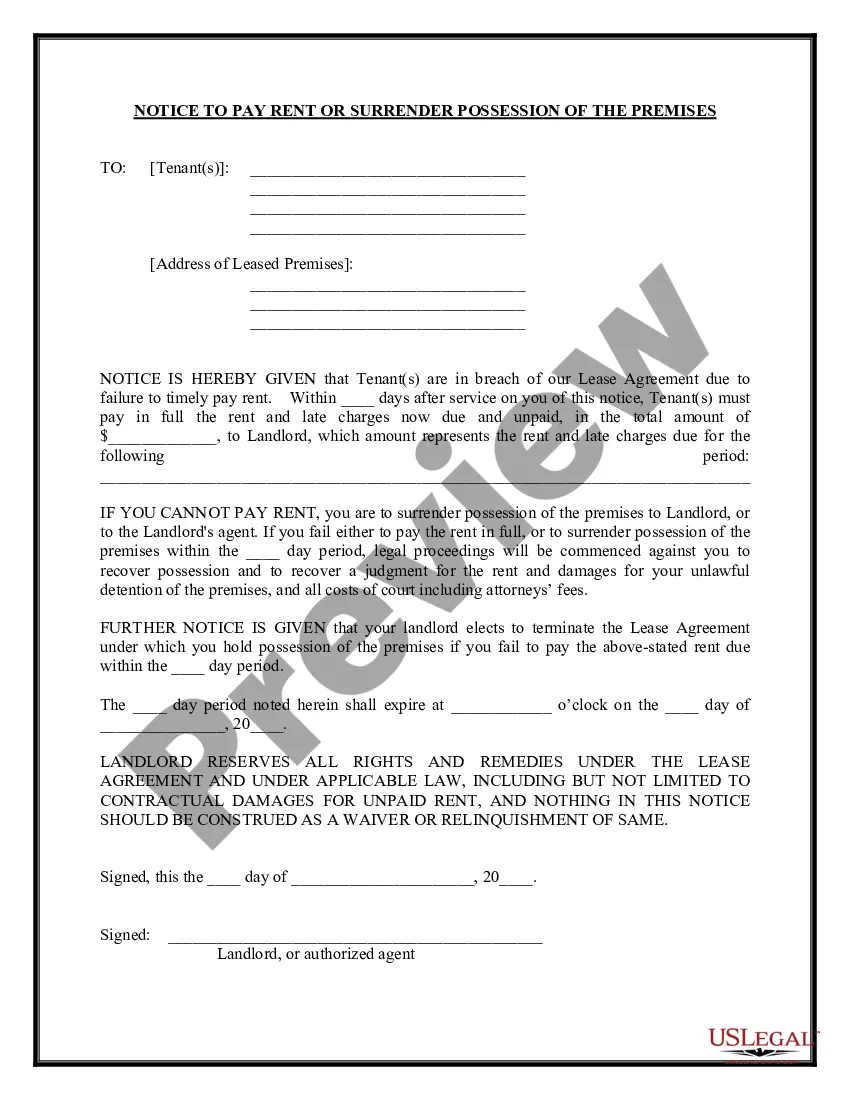
The Warning of Default on Residential Lease is a formal communication from a landlord to a tenant. It expresses the landlord's concerns about potential defaults on the lease agreement. This warning serves as a notice that if particular issues are not resolved, the tenant may be held in default. This form differs from an eviction notice, as it focuses on warning rather than action.
Main sections of this form
- Date of issuance
- Landlord's name and signature
- Details of the default conditions
- Statement of non-binding notice


Situations where this form applies
This form is typically used when a landlord identifies issues that may lead to a lease default by the tenant. Common scenarios include late rent payments, failure to maintain the property, or violations of lease terms. It allows the landlord to formally alert the tenant before taking further action, such as eviction proceedings.
Who needs this form
- Landlords who have tenants in a residential rental agreement
- Property managers representing landlords
- Real estate professionals handling lease agreements
Instructions for completing this form
- Identify and enter the date of issuance.
- Fill in the landlord's name or the name of the authorized agent.
- Specify the tenant's default conditions clearly.
- Include the property address if necessary.
- Sign the form to validate the warning.
Notarization guidance
This form does not typically require notarization unless specified by local law. However, it is advisable to check state regulations to ensure compliance.
Get your form ready online
Our built-in tools help you complete, sign, share, and store your documents in one place.
Make edits, fill in missing information, and update formatting in US Legal Forms—just like you would in MS Word.
Download a copy, print it, send it by email, or mail it via USPS—whatever works best for your next step.
Sign and collect signatures with our SignNow integration. Send to multiple recipients, set reminders, and more. Go Premium to unlock E-Sign.
If this form requires notarization, complete it online through a secure video call—no need to meet a notary in person or wait for an appointment.
We protect your documents and personal data by following strict security and privacy standards.

Make edits, fill in missing information, and update formatting in US Legal Forms—just like you would in MS Word.

Download a copy, print it, send it by email, or mail it via USPS—whatever works best for your next step.

Sign and collect signatures with our SignNow integration. Send to multiple recipients, set reminders, and more. Go Premium to unlock E-Sign.

If this form requires notarization, complete it online through a secure video call—no need to meet a notary in person or wait for an appointment.

We protect your documents and personal data by following strict security and privacy standards.
Common mistakes to avoid
- Failing to specify the conditions of default clearly.
- Not signing the form or improperly signing it.
- Missing the date of issuance.
- Using incorrect or unrecognized terminology.
Advantages of online completion
- Immediate access to a professionally drafted legal document.
- Edit the template to suit specific needs quickly.
- Downloadable format for easy printing and distribution.
- Legal assurance that the document complies with relevant laws.
Legal use & context
- This form serves as a preliminary notice to tenants, helping to document grievances before legal escalation.
- It does not constitute a formal eviction notice, but it is an essential legal step in the eviction process.
Key takeaways
- The Warning of Default on Residential Lease is crucial for addressing tenant lease violations.
- Proper completion and delivery of the form can help prevent escalation to eviction.
- Landlords must stay aware of state laws regarding notifications and lease enforcement.
Looking for another form?
Form popularity
FAQ
In landlord-tenant law, default refers to the failure of a tenant to timely pay rent due.In general, the landlord is required to give the tenant notice of the default before bringing eviction proceedings or applying security deposit proceeds to the payment in default.
If you are behind on rent due to COVID, the CDC has ordered an eviction moratorium extended through June 30, 2021 that may apply to your situation. The form to give your landlord is linked to this information.You can still be evicted for lease violations or criminal activity!
Tenant default occurs when a Tenant breaches one of the tenant's covenants in its lease. Tenant default can arise in a number of different ways but will typically be for one of the following: Non-payment of rent or other sums reserved under the lease.
Protect your rental income. Even the most reliable tenants sometimes struggle to pay their rent.Tenant default insurance from Simply Business provides vital back-up for landlords it can cover your rental income if your tenant fails to pay rent.
A: Except in the case of a single family residence, your landlord must keep all common areas used by more than one tenant safe and clean; keep your premises in a safe, livable condition; keep all electrical, plumbing, sanitary, heating, ventilation, air-conditioning and other facilities and appliances supplied by the
Tenants also have certain rights under federal, state, and some local laws. These include the right to not be discriminated against, the right to a habitable home, and the right to not be charged more for a security deposit than is allowed by state law, to name just a few.
Your lease agreement will state what constitutes a default of the lease as well as if there is any grace period in making lease payments. Not making a contractually required monthly payment will normally be a breach of the lease and the lessor can then repossess the vehicle from you.
The Tenant Doesn't Make Enough Income. The Tenant Smokes. The Tenant Has a Pet. The Tenant's Income Isn't Verified. The Tenant Has Been Convicted of a Crime. The Tenant Does Not Have Rental History. The Tenant Has a History of Damaging Property and Not Paying Rent. The Tenant Provides False Information.
Default by landlord The most common form of landlord default is failure to provide services and maintain the property condition. When a landlord defaults on the terms of the lease, tenants may sue for damages.