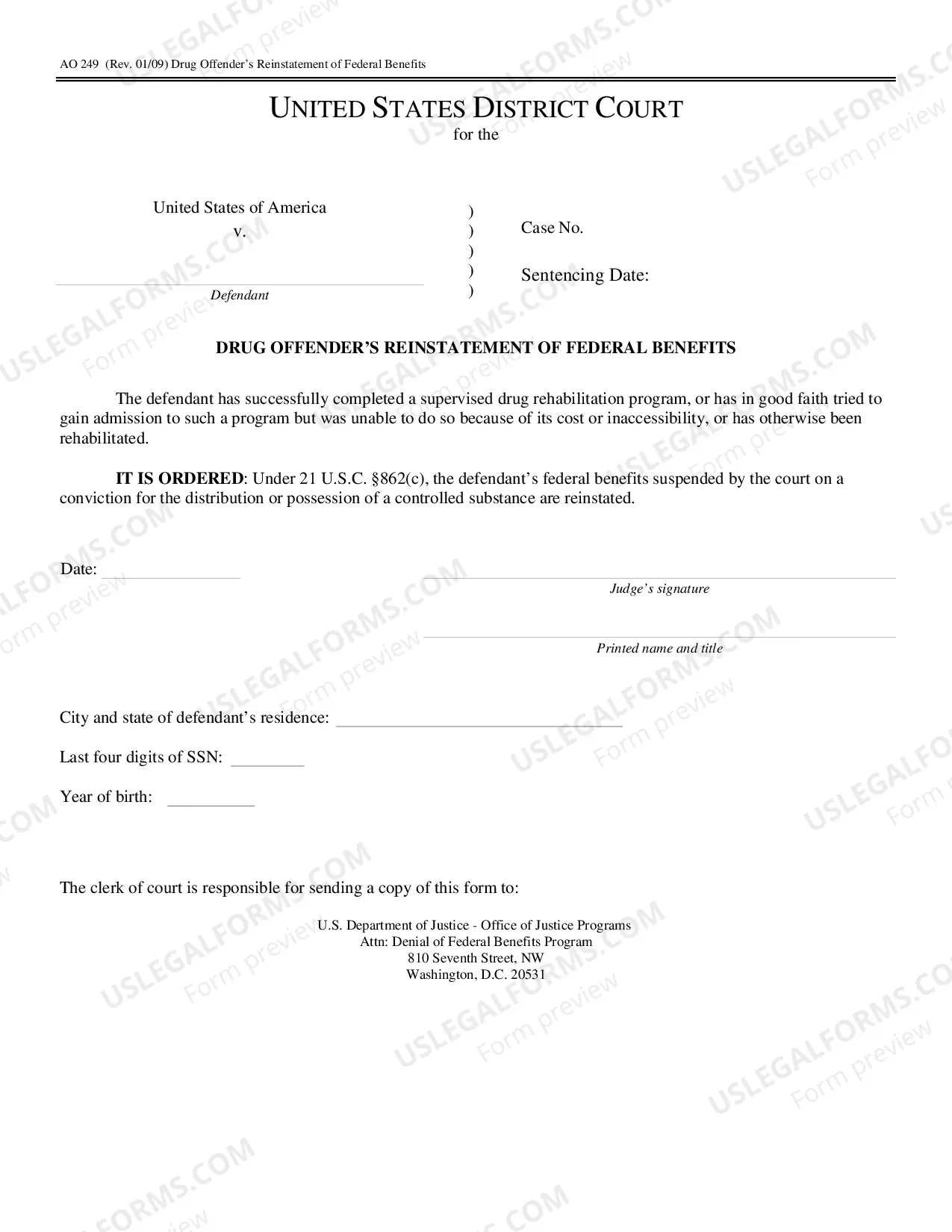
Oklahoma Letter from Landlord to Tenant about Tenant engaging in illegal activity in premises as documented by law enforcement and if repeated, lease terminates
About this form
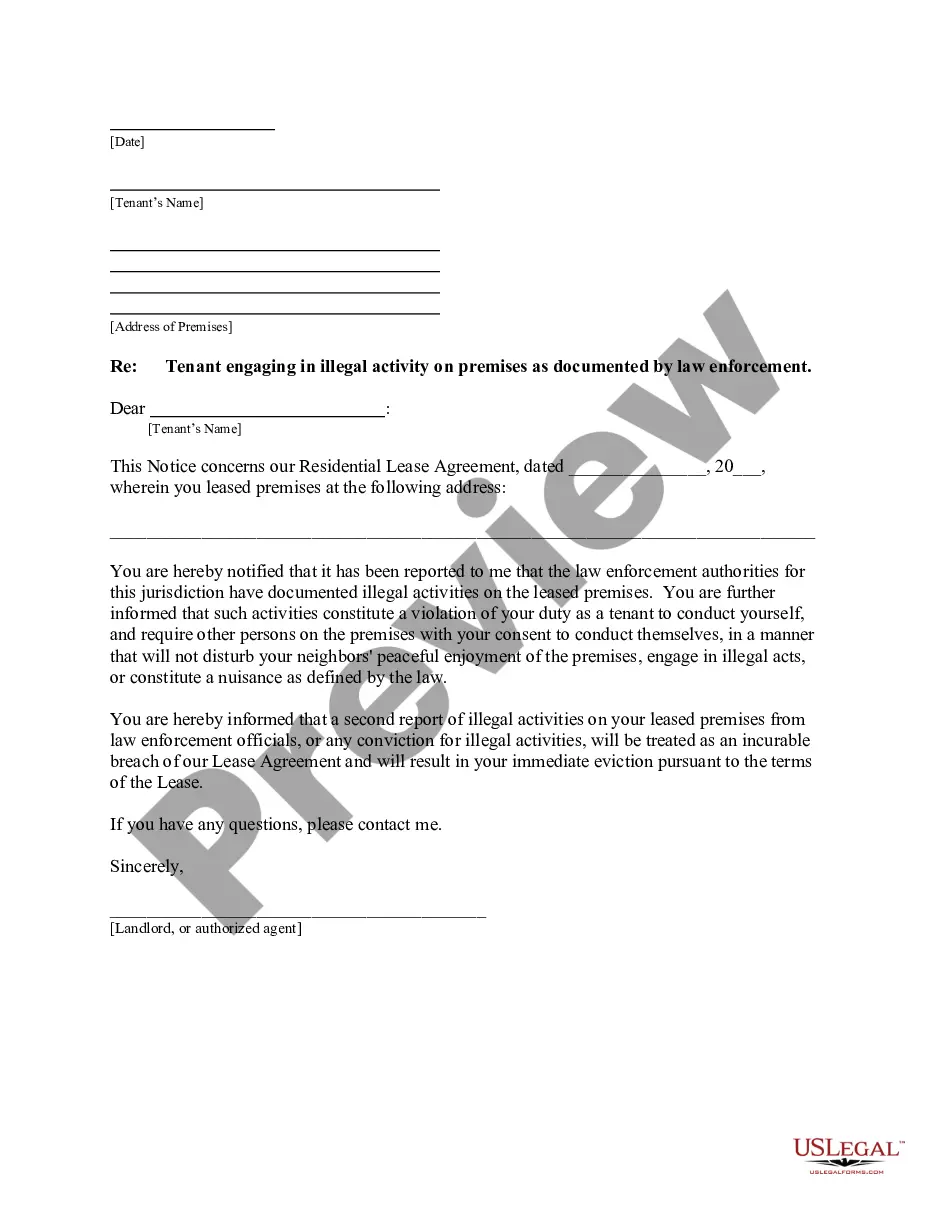
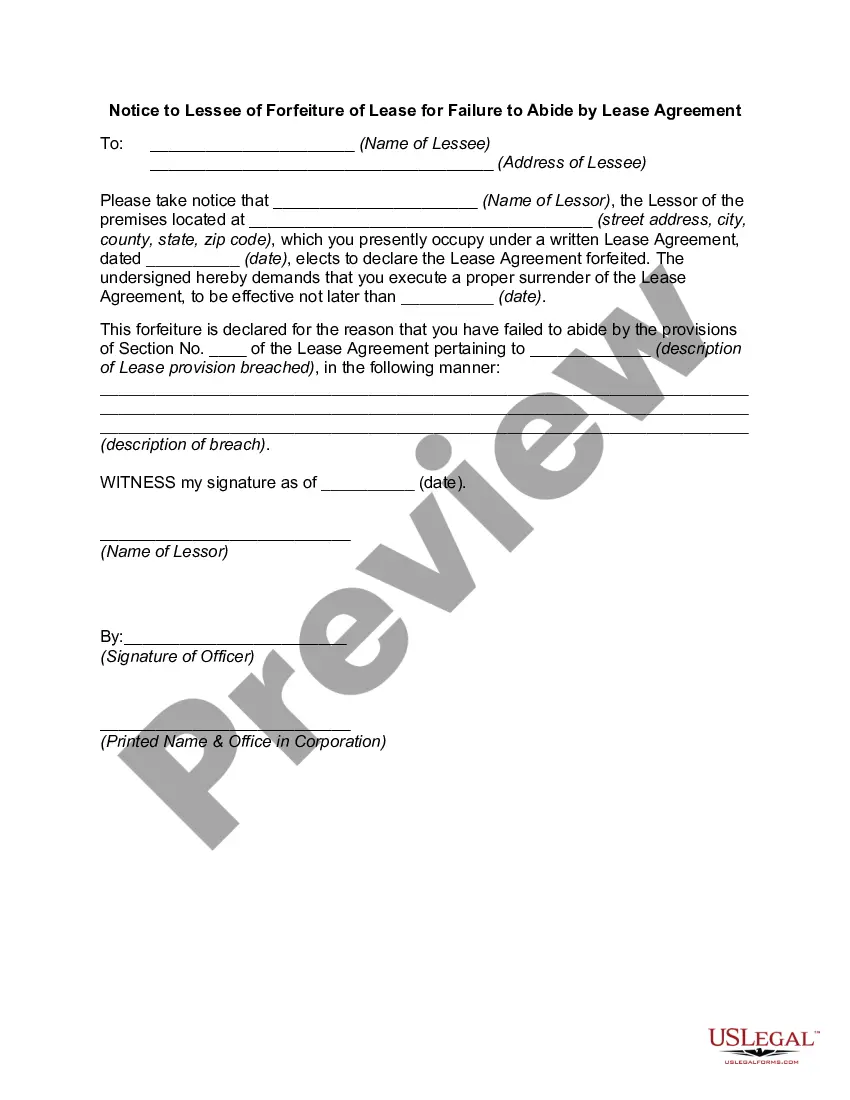
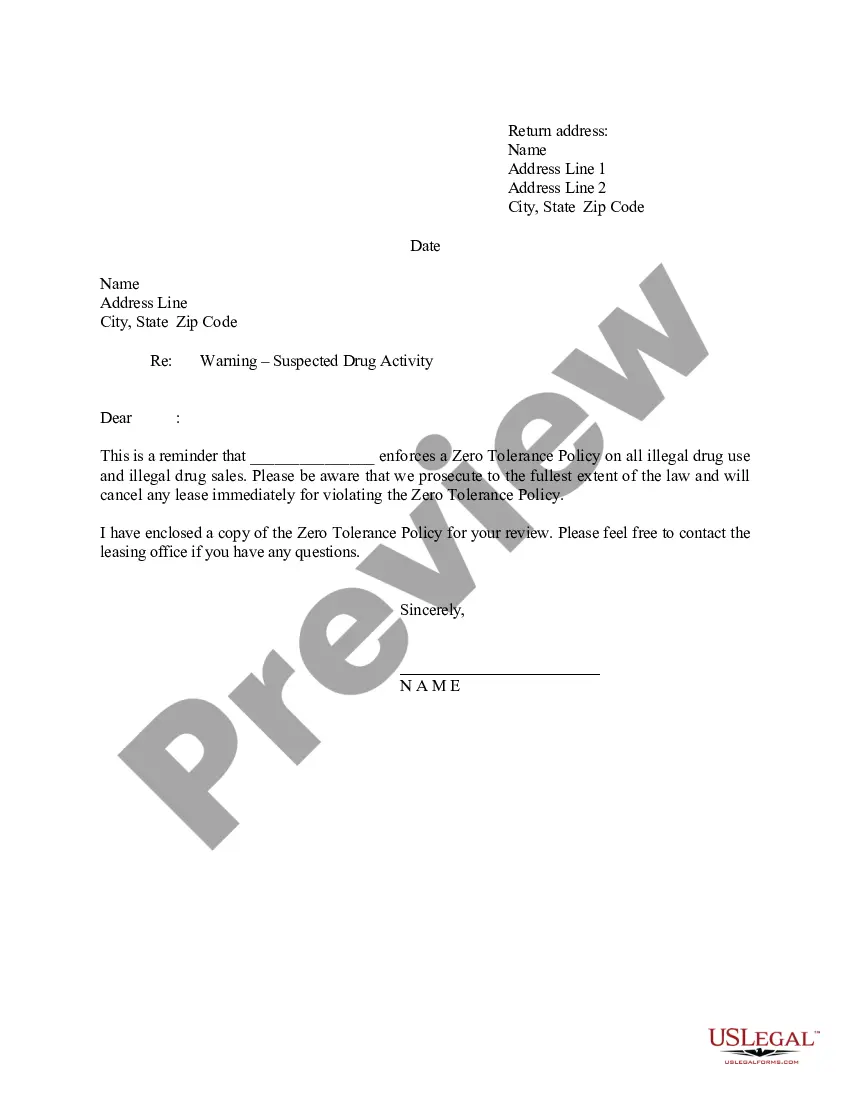
This form is a formal notice from the landlord to the tenant advising them that law enforcement has documented illegal activities occurring on the leased premises. It serves to inform the tenant that such actions violate their lease agreement and could lead to eviction if these activities continue. This letter is distinct from general eviction notices as it specifically addresses the illegal actions and offers the tenant a chance to rectify their behavior.
Key parts of this document
- Notification of reported illegal activities by law enforcement.
- Outline of tenant's responsibilities to maintain a lawful environment.
- Consequences of a second violation, including potential eviction.
- Contact information for further inquiries.

When to use this document
Use this form when you, as a landlord, have received reports from law enforcement about illegal activities in your rental property. This letter serves as an official warning to the tenant, allowing them the opportunity to cease any unlawful actions and avoid further legal action or eviction.
Who needs this form
- Landlords who suspect or have confirmed illegal activities by their tenants.
- Property managers handling lease violations related to illegal conduct.
- Landlords seeking to document communication regarding lease violations.
How to complete this form
- Identify and enter your name as the landlord and the tenant's name.
- Specify the property address where the illegal activities have been reported.
- Clearly state the nature of the illegal activities documented by law enforcement.
- Include a warning about the consequences of repeated violations, specifically referencing the potential for eviction.
- Provide your contact information for any questions the tenant may have.
Notarization guidance
This form does not typically require notarization unless specified by local law. It serves as an official warning but is not a legal filing that necessitates notarization.
Get your form ready online
Our built-in tools help you complete, sign, share, and store your documents in one place.
Make edits, fill in missing information, and update formatting in US Legal Forms—just like you would in MS Word.
Download a copy, print it, send it by email, or mail it via USPS—whatever works best for your next step.
Sign and collect signatures with our SignNow integration. Send to multiple recipients, set reminders, and more. Go Premium to unlock E-Sign.
If this form requires notarization, complete it online through a secure video call—no need to meet a notary in person or wait for an appointment.
We protect your documents and personal data by following strict security and privacy standards.

Make edits, fill in missing information, and update formatting in US Legal Forms—just like you would in MS Word.

Download a copy, print it, send it by email, or mail it via USPS—whatever works best for your next step.

Sign and collect signatures with our SignNow integration. Send to multiple recipients, set reminders, and more. Go Premium to unlock E-Sign.

If this form requires notarization, complete it online through a secure video call—no need to meet a notary in person or wait for an appointment.

We protect your documents and personal data by following strict security and privacy standards.
Common mistakes to avoid
- Failing to specify the illegal activities, leading to confusion.
- Not providing complete contact information for the landlord.
- Neglecting to follow up if the illegal activities continue.
Benefits of completing this form online
- Easy downloadable access to a legally sound template created by licensed attorneys.
- Immediate customization options to address your specific situation.
- Access to legal support and guidance during completion if needed.
Legal use & context
- This letter serves as documentation of the violation and may be used in court proceedings if eviction is pursued.
- For effective enforcement, it is essential to adhere to local tenant laws regarding eviction and tenant communications.
Key takeaways
- A letter from landlord to tenant about illegal activities serves as an official notice.
- It is crucial for landlords to act promptly upon receiving reports of illegal conduct.
- Ensuring compliance with state laws is essential to avoid complications in the eviction process.
Looking for another form?

Form popularity
FAQ
A landlord cannot legally evict you without a court order, whether or not you have a lease.) How long does it take for a landlord to evict a tenant? A landlord can evict a tenant only by going through a formal eviction proceeding, which can take a few weeks from start to finish.
Your name, and the landlord's name and address. The date you're writing the letter. Informing the landlord you're breaking your lease early. The reason why you're breaking your lease. The building and apartment you're vacating. The date by which you're vacating.
If you're seeking damages for emotional distress caused by a landlord's discrimination, or punitive damages for especially blatant and intentional discrimination, a lawsuit may well be your best bet. Understand what's involved in suing your landlord. You may file a lawsuit in either federal or state court.
Be in writing. be signed and dated by you as the property manager, or by your client. be properly addressed to the tenant. give the day on which the residential tenancy agreement is terminated and by which the tenant is required to vacate. where appropriate, give the grounds or reason for the notice.
A lease is automatically void when it is against the law, such as a lease for an illegal purpose. In other circumstances, like fraud or duress, a lease can be declared void at the request of one party but not the other.
The rental property address, including unit number (if applicable) The names of all tenants on the lease agreement. The date the lease violation notice was written. The specific reason for the notice. The time and date the violation occurred (if applicable)
Send a 3-day notice to fix or quit. If the tenant doesn't follow through with a fix, visit your local courthouse and begin a filing for eviction. In some states, you can file to only evict the unauthorized tenant. In others, you'll have the option to evict your tenant as well as the unauthorized occupant.
When a crime occurs at a rental property, the tenant is responsible for insuring his or her possessions, while the landlord is responsible for the premises and any damage incurred. The only exception would be in the highly unlikely event that the landlord could prove that you were somehow responsible for the damage.
Tell Them The Problem & Consequences. Explain the reason that you want the tenant to go. Offer Them a Way Out. Let the tenant know that you are willing to give them a lump sum of cash in agreement for leaving the property. The Release.