Ohio Assignment of Lease and Rent from Borrower to Lender
About this form
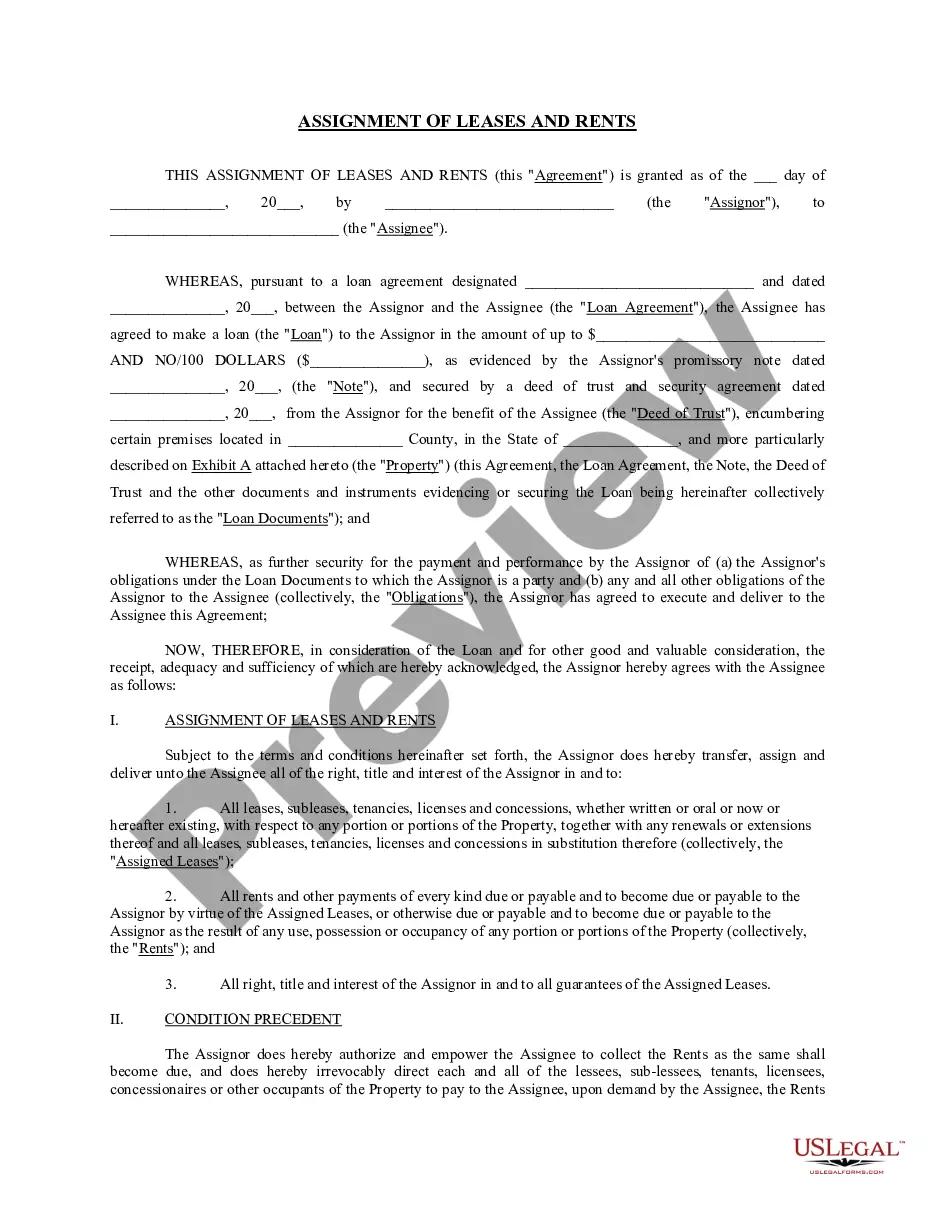
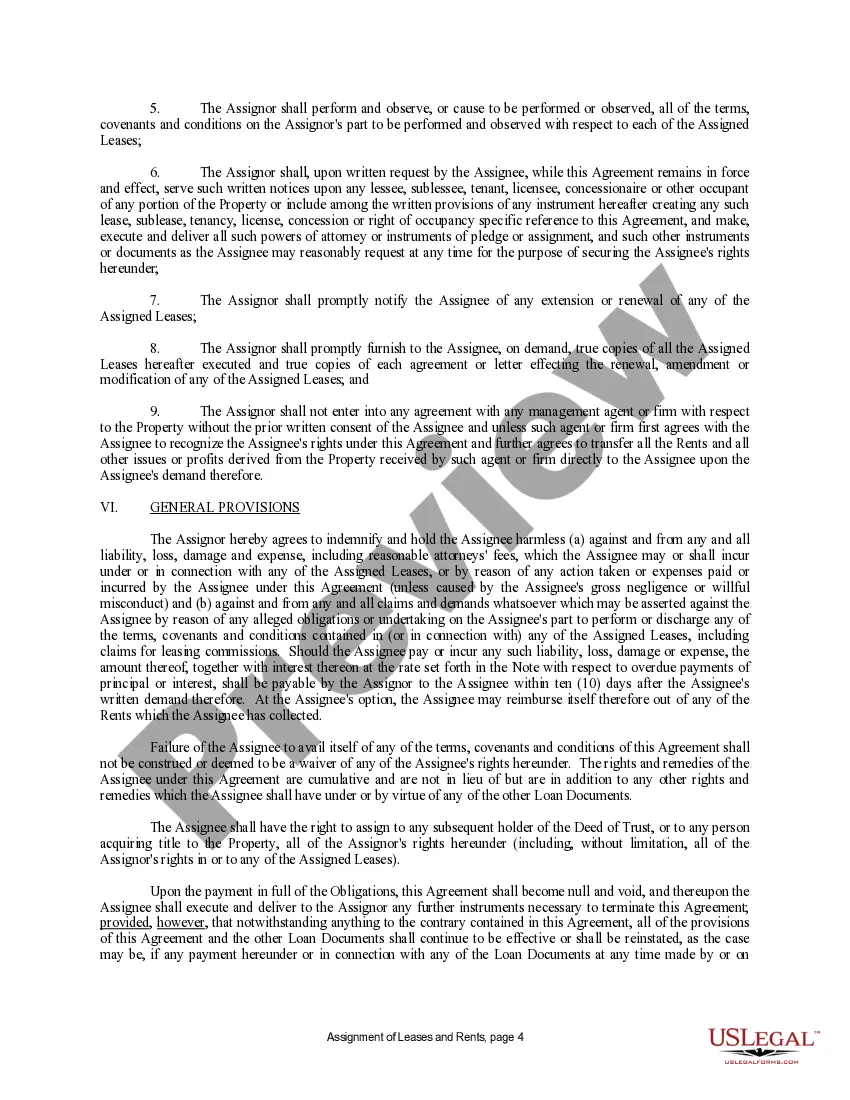
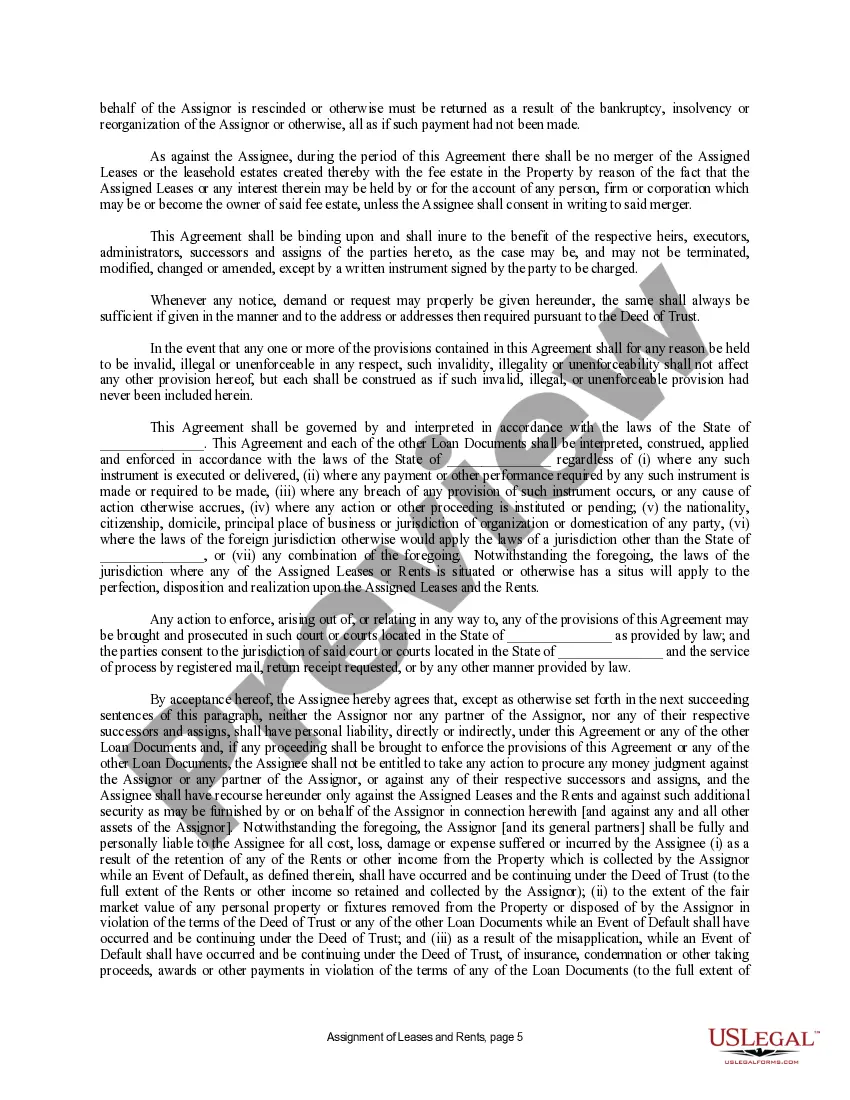
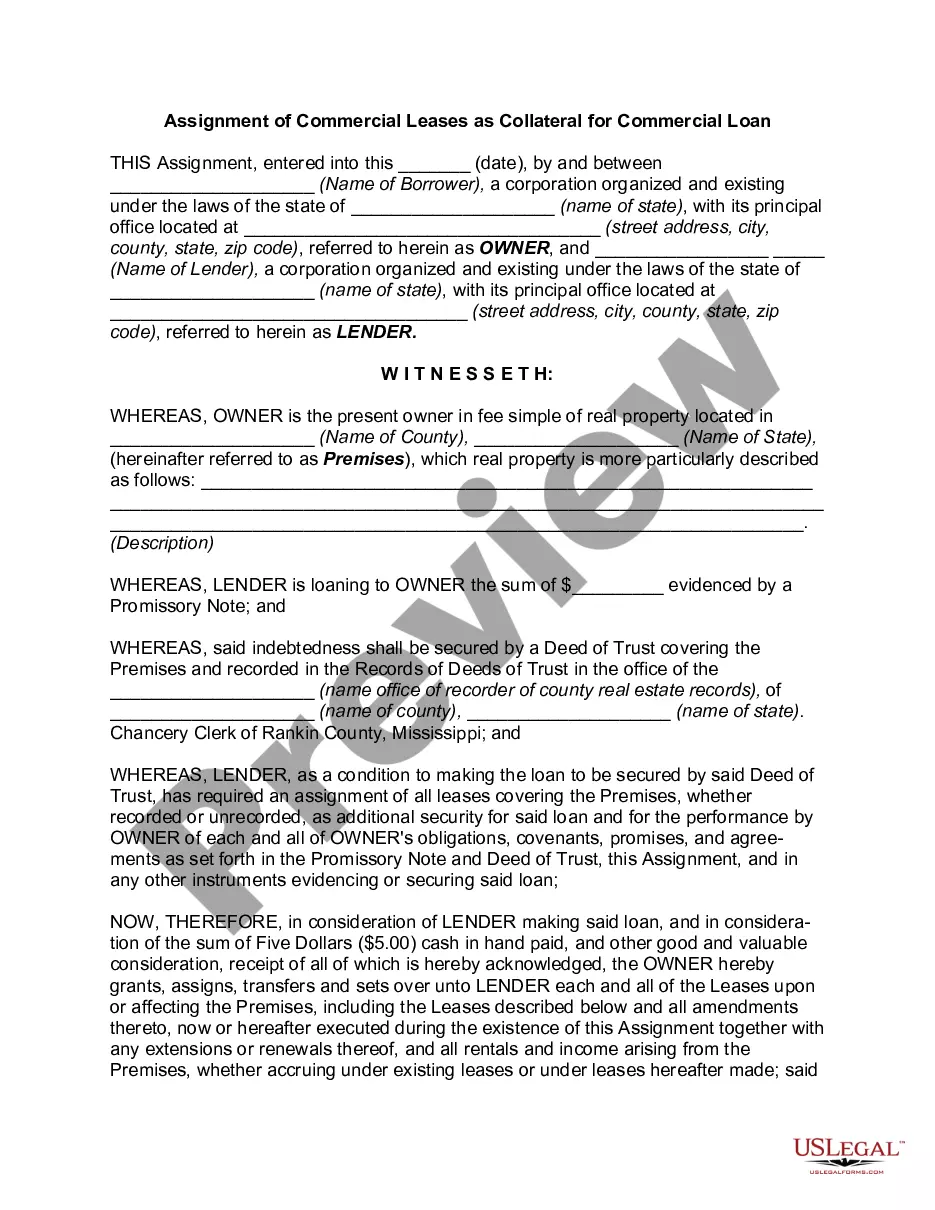
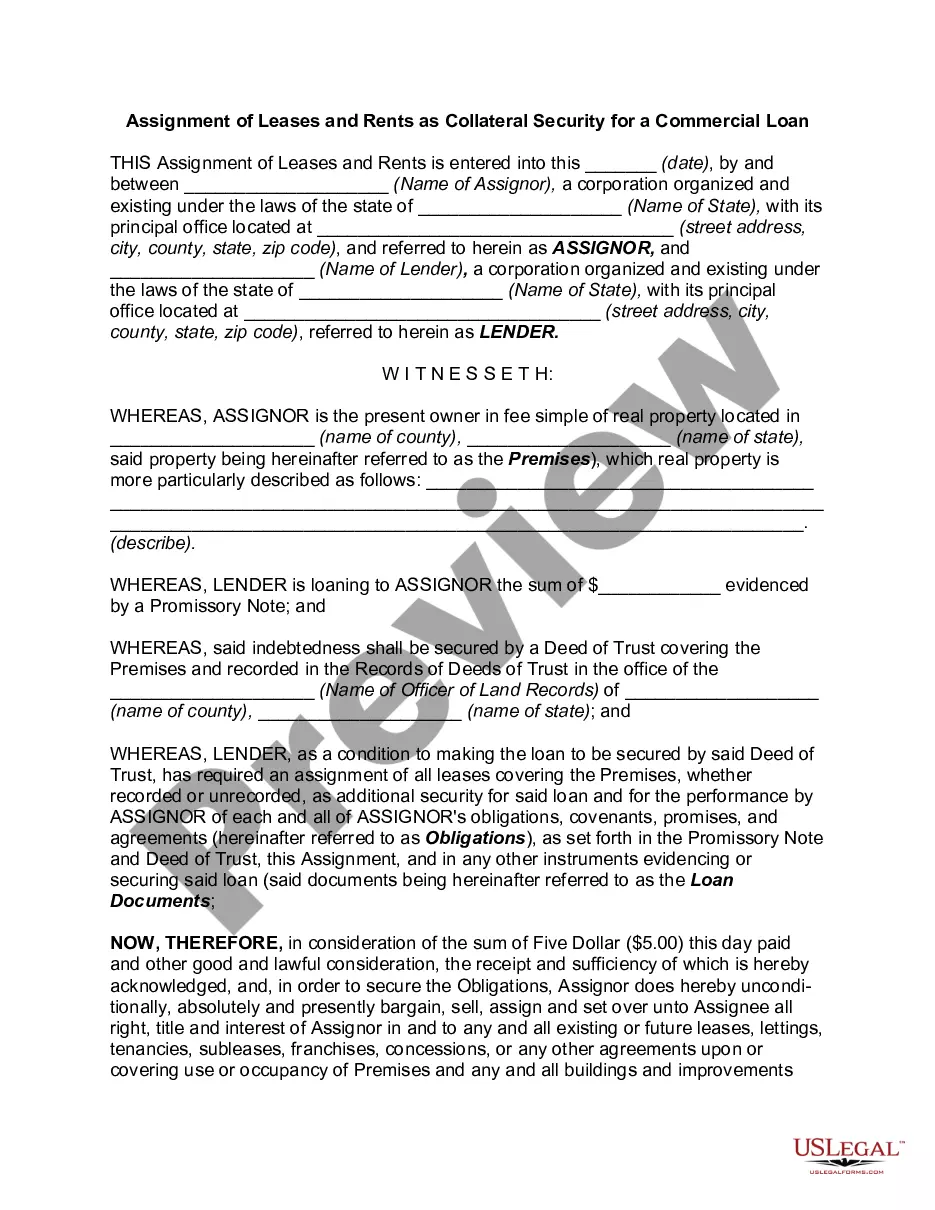
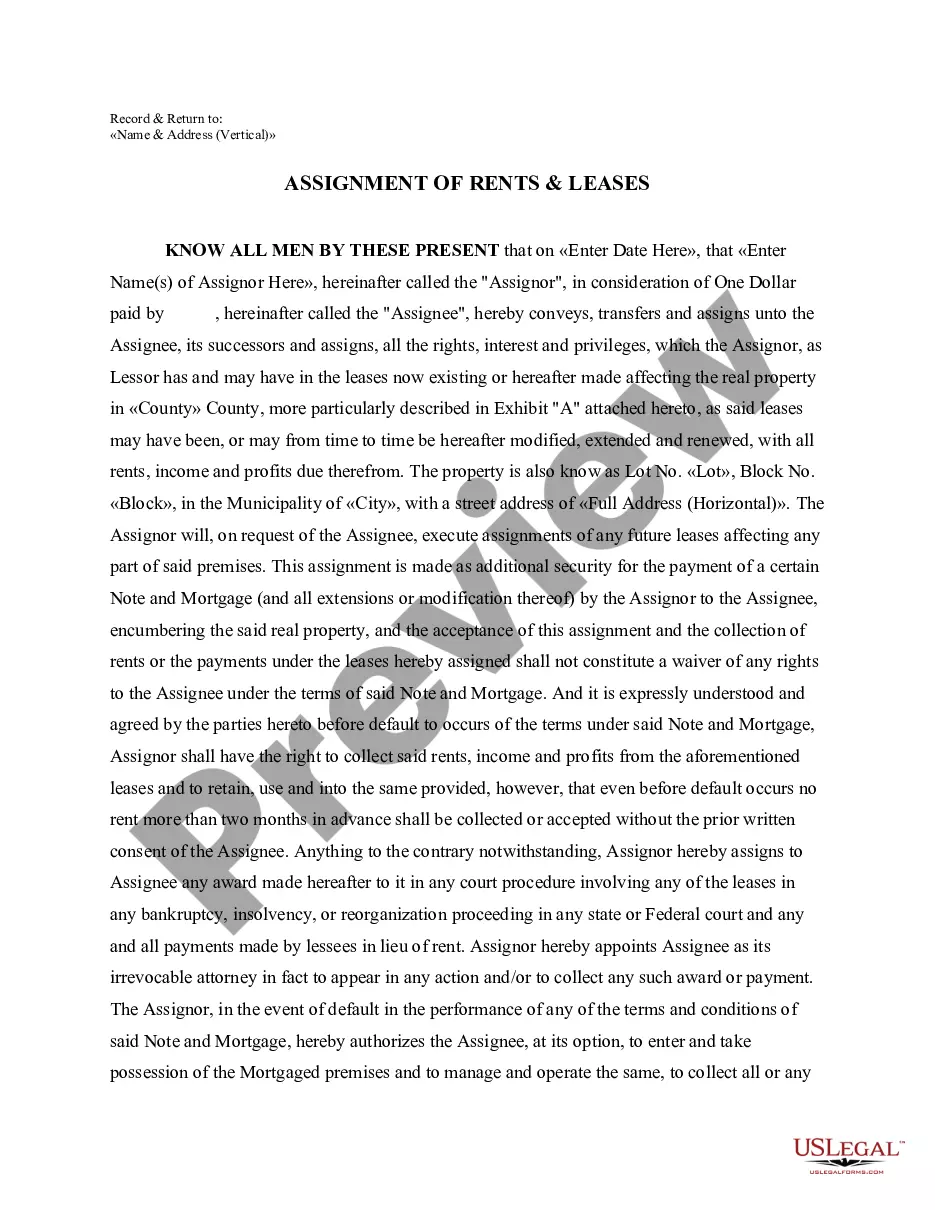
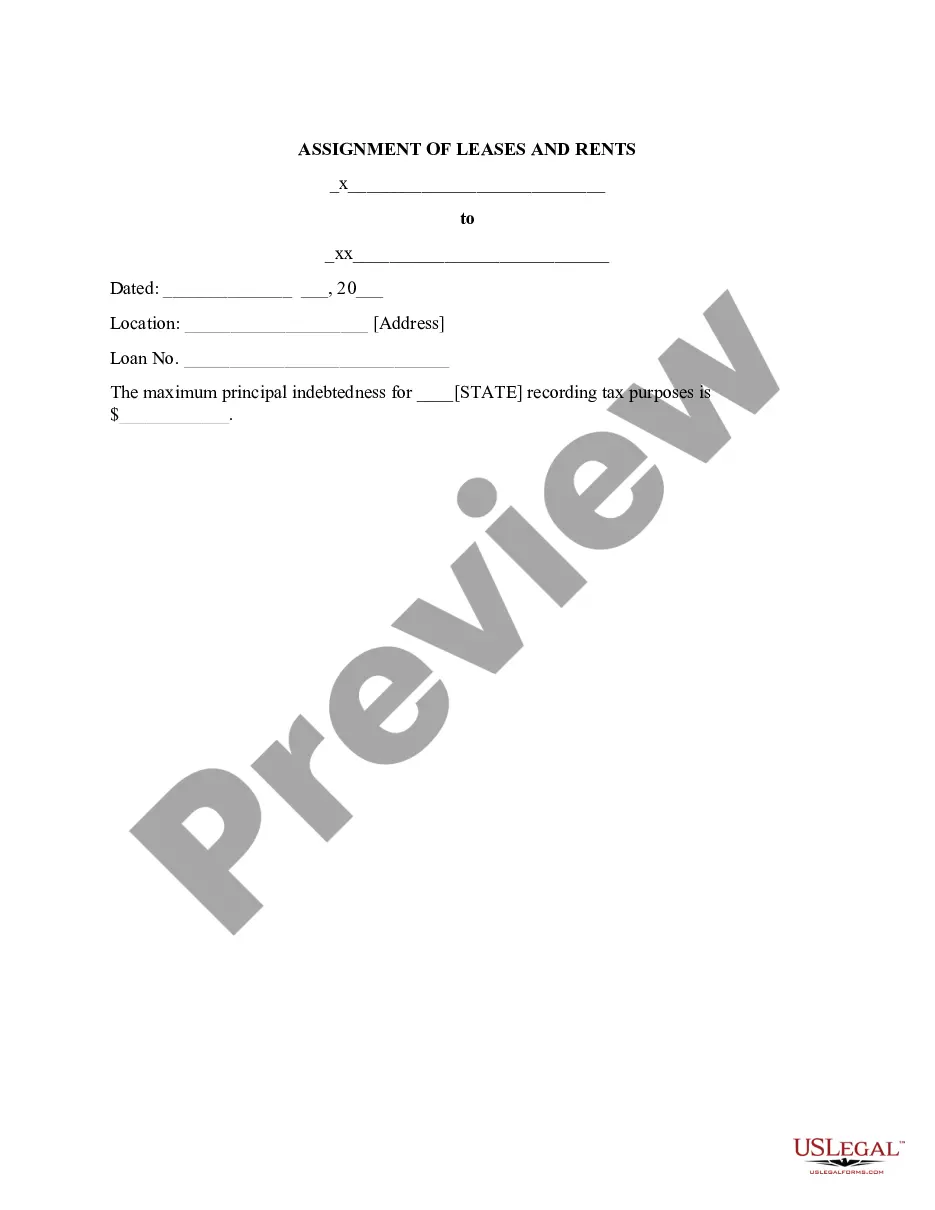
The Assignment of Lease and Rent from Borrower to Lender is a legal document used to transfer the rights of leases and rental payments from a borrower (the Assignor) to a lender (the Assignee) as security for a loan. This form ensures that the lender can collect rent directly from tenants if the borrower defaults on their loan obligations. This type of assignment differs from a typical lease agreement as it focuses on the transfer of rights to collect rent rather than granting the right to occupy the property.
Main sections of this form
- Identification of parties: Includes the roles of Assignor and Assignee.
- Loan amount and details: Specifies the terms of the loan, including amount and related documentation.
- Property description: Legal description of the property involved in the assignment.
- Transfer of rights: Clearly states the rights being assigned, including all leases and rents from the property.
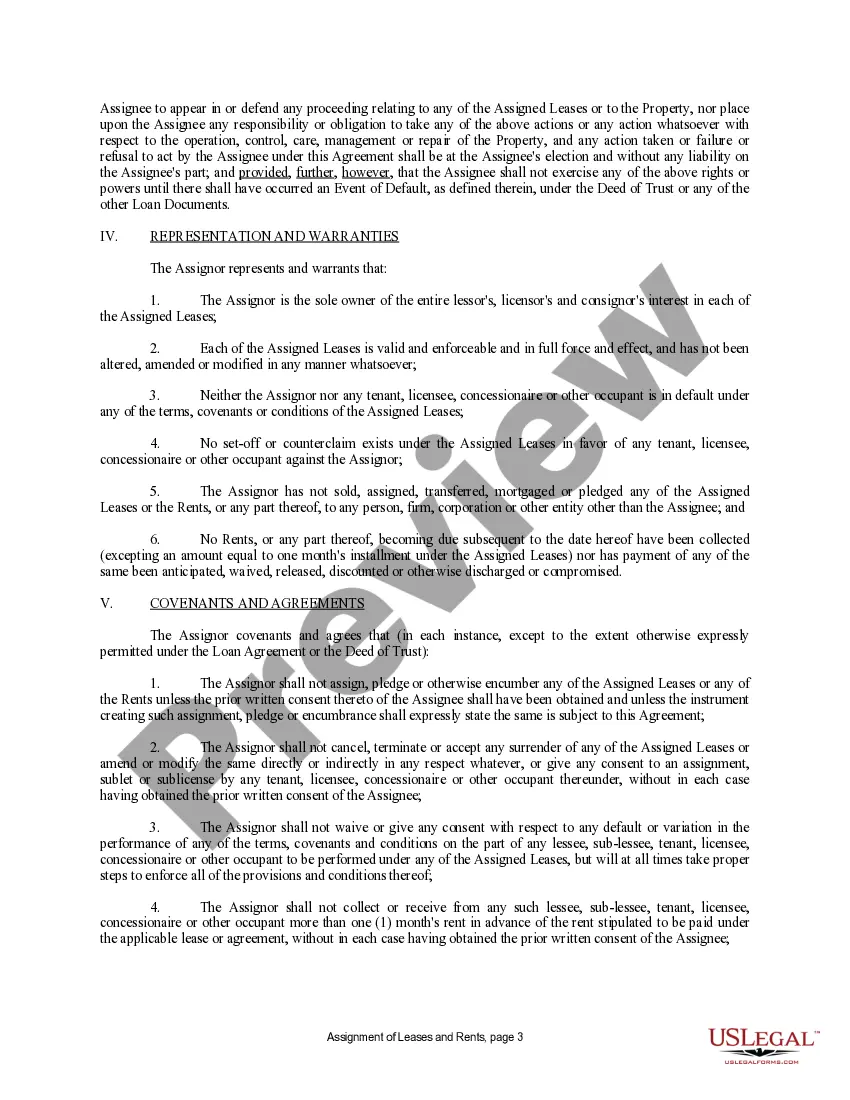
- Conditions for collection: Outlines when the Assignee can collect rents and what constitutes an Event of Default.
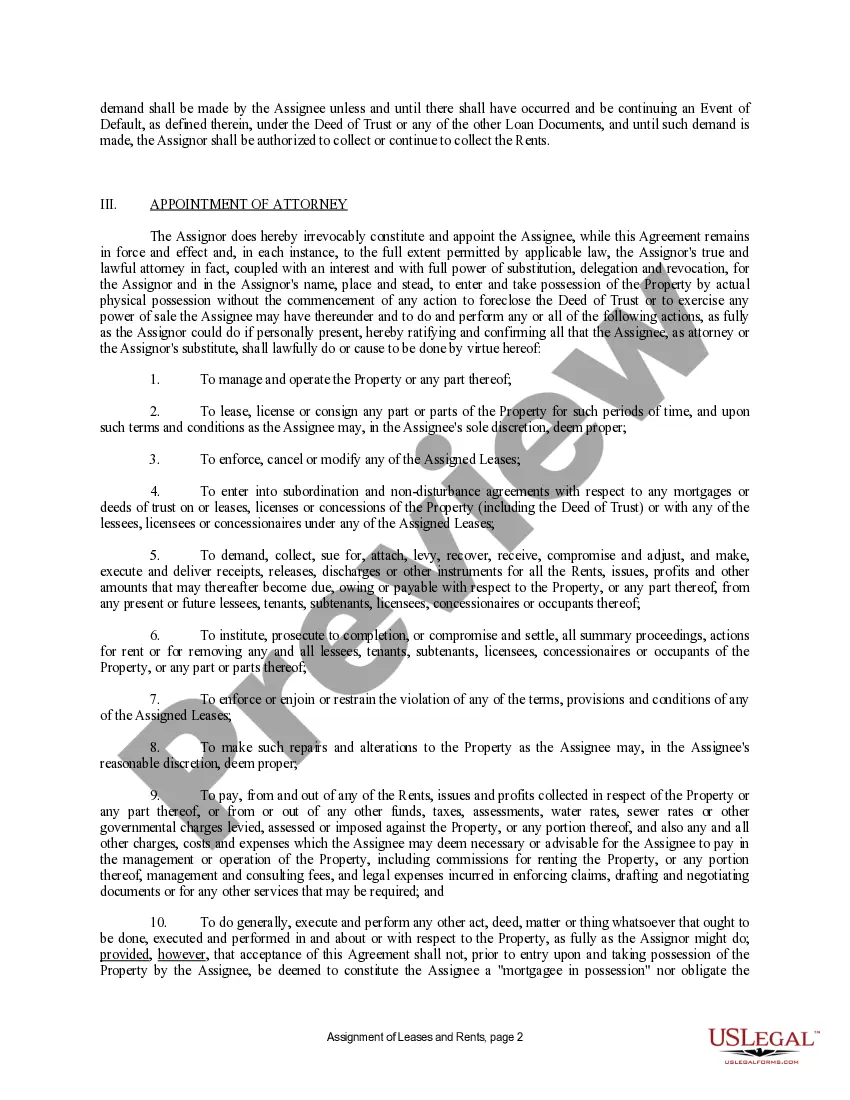
- Attorney-in-fact clause: Grants the Assignee authority to act on behalf of the Assignor in managing the property.
- Indemnity provisions: Protects the Assignee against certain liabilities related to the Assigned Leases.

Common use cases
This form is necessary in situations where a borrower needs to provide a lender with collateral in the form of rental income from leased properties. It is commonly used in real estate transactions when securing a loan to ensure that the lender has access to rental payments should the borrower default. This assignment protects the lender's interests while providing the borrower with the funding they need.
Who this form is for
Eligible users of this form include:
- Property owners who are borrowing money and intend to use rental income as collateral.
- Lenders who require assurance of repayment through rental income from properties.
- Real estate investors seeking to secure financing against rental properties.
- Legal professionals drafting transactions involving lease assignments and securing loans.
How to prepare this document
To complete the Assignment of Lease and Rent from Borrower to Lender, follow these steps:
- Identify the parties involved: Fill in the names of the Assignor (Borrower) and Assignee (Lender).
- Specify the loan agreement: Indicate the details of the loan agreement, including the date and amount of the loan.
- Describe the property: Provide a detailed legal description of the property being assigned.
- List the leases and rents: Clearly outline the leases included in the assignment and rights to collect rents.
- Sign and date the document: Ensure that all parties sign and date the form, preferably in the presence of a notary.
Notarization requirements for this form
Yes, this form must be notarized to be legally valid. Notarization ensures that the identities of the parties involved are verified and that the agreement is executed in accordance with state requirements. US Legal Forms offers integrated online notarization services, available 24/7 via secure video call, allowing you to complete your notarization conveniently without any travel.
Get your form ready online
Our built-in tools help you complete, sign, share, and store your documents in one place.
Make edits, fill in missing information, and update formatting in US Legal Forms—just like you would in MS Word.
Download a copy, print it, send it by email, or mail it via USPS—whatever works best for your next step.
Sign and collect signatures with our SignNow integration. Send to multiple recipients, set reminders, and more. Go Premium to unlock E-Sign.
If this form requires notarization, complete it online through a secure video call—no need to meet a notary in person or wait for an appointment.
We protect your documents and personal data by following strict security and privacy standards.

Make edits, fill in missing information, and update formatting in US Legal Forms—just like you would in MS Word.

Download a copy, print it, send it by email, or mail it via USPS—whatever works best for your next step.

Sign and collect signatures with our SignNow integration. Send to multiple recipients, set reminders, and more. Go Premium to unlock E-Sign.

If this form requires notarization, complete it online through a secure video call—no need to meet a notary in person or wait for an appointment.

We protect your documents and personal data by following strict security and privacy standards.
Avoid these common issues
- Failing to provide a detailed property description, which can lead to ambiguity in the assignment.
- Not securing signatures in the presence of a notary, which may affect the enforceability of the agreement.
- Neglecting to specify the terms of default can lead to disputes over when the lender can take action.
- Overlooking state-specific regulations that may apply to lease assignments and security interests.
- Inaccurately defining the parties involved, which could lead to legal complications.
Advantages of online completion
- Convenience: The form is downloadable and easily accessible online, allowing users to complete it at their own pace.
- Editability: Users can customize the form to reflect specific terms and conditions of their agreement.
- Reliability: The legal forms provided are drafted by licensed attorneys, ensuring compliance with statutory laws.
- Cost-effective: Using downloadable forms can significantly reduce legal fees associated with drafting documents from scratch.
Looking for another form?







Form popularity
FAQ
Definition from Nolo's Plain-English Law Dictionary A surviving spouse's right to receive a set portion of the deceased spouse's estate -- usually one-third to one-half. Dower (not to be confused with a dowry) refers to the portion to which a surviving wife is entitled, while curtesy refers to what a man may claim.
Currently, the only way to extinguish dower rights in Ohio are death, divorce and voluntary, written release of dower at each property transfer transaction.
Dower and curtesy rights exist by statute in Kentucky. They are inchoate (undeveloped) rights, and every spouse has them to their spouse's property. As soon as you say "I do" you have the right, if your spouse dies, to roughly one half of their property.
A dower rights law entitles a surviving spouse to at least one-third of a deceased spouse's real property when they die.
' Dower rights are the interest that a person has in real property owned by his or her spouse.What this means when a married individual wants to transfer real property that he or she owns in his/her own name, a release of dower rights signed by the grantor's spouse will be included in the deed.
Ohio is one of the few states that still recognizes dower rights. In Ohio, dower is the right of the surviving spouse to a life estate in an undivided one-third of all real property that the deceased spouse owned at any time during the marriage.
People who buy or sell a home in Alberta, often hear about Dower rights. The Dower Act creates Dower rights. This legislation gives a married person, who is not on title to a home, a life interest in their home or homestead.A Dower release is a mechanism where a person gives up their rights under the Act.
A Dower is a common law that entitled a widow to a portion of her husband's estate in absence of a will. The provision of dower allowed the wife to provide for herself and any children born during the marriage. In most circumstances, the widow was granted up to one-third interest in her husband's assets.
This means to give a right by a spouse to claim property owned by their partner.