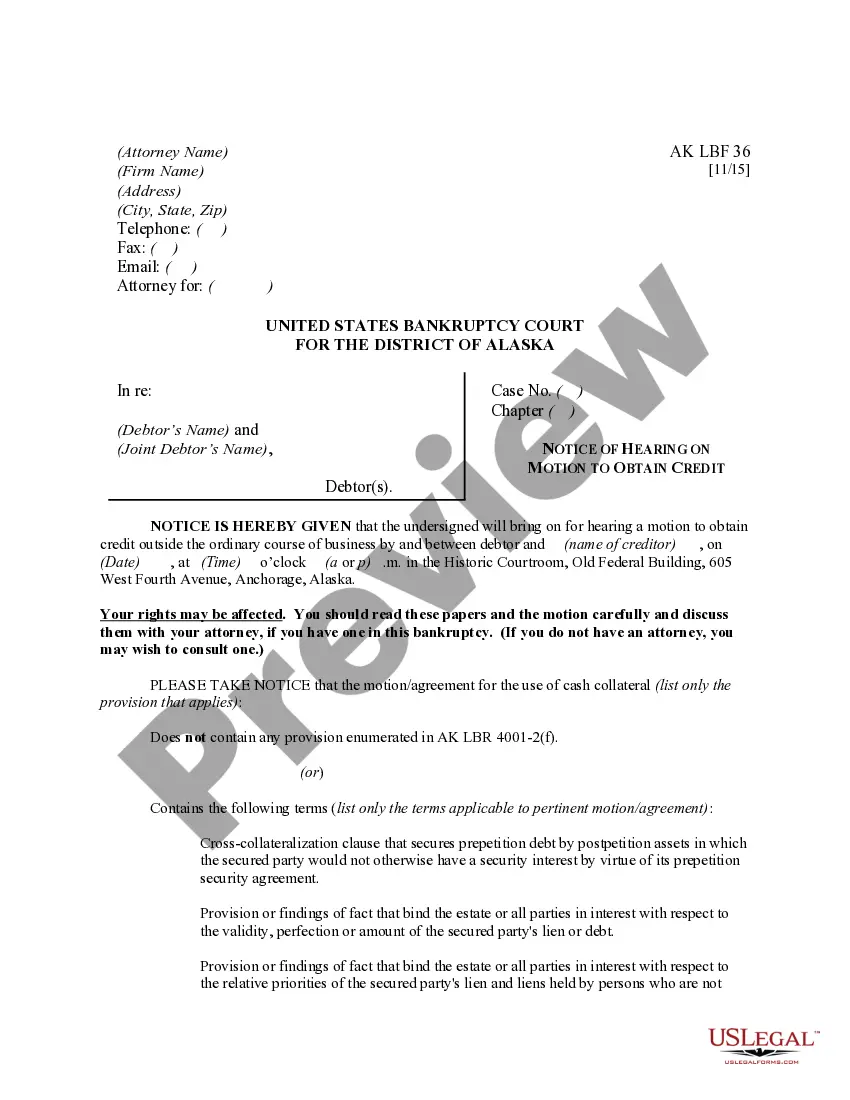
Ohio Letter from Tenant to Landlord containing Notice to landlord to withdraw improper rent increase due to violation of rent control ordinance
About this form
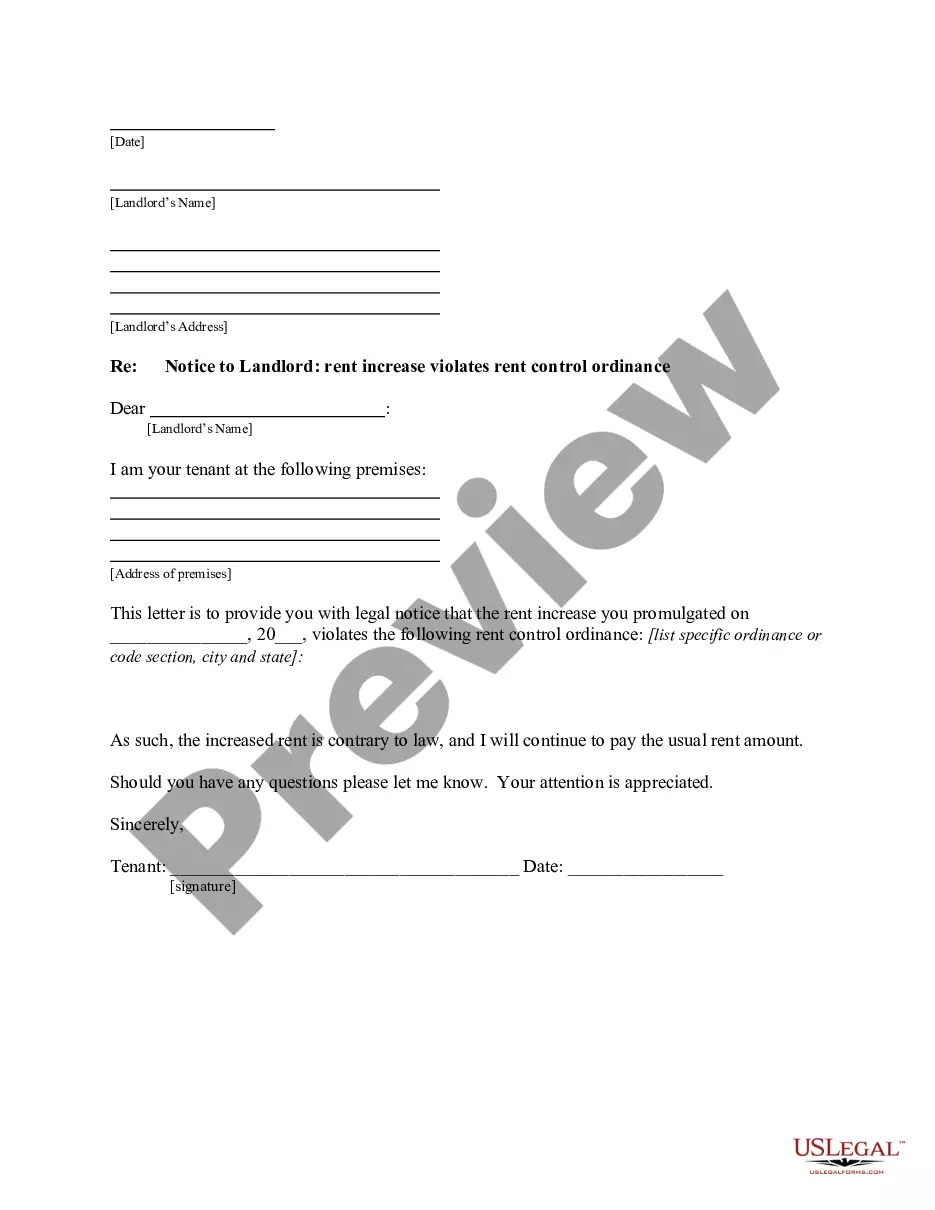
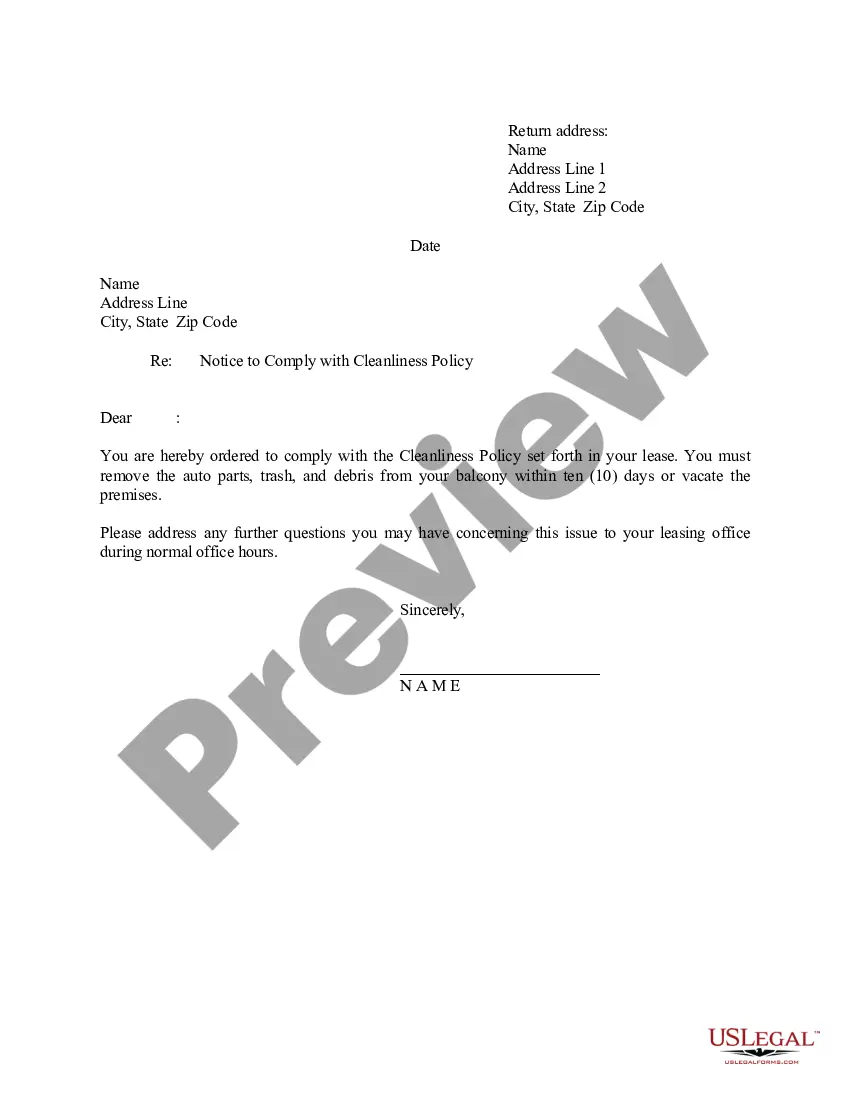
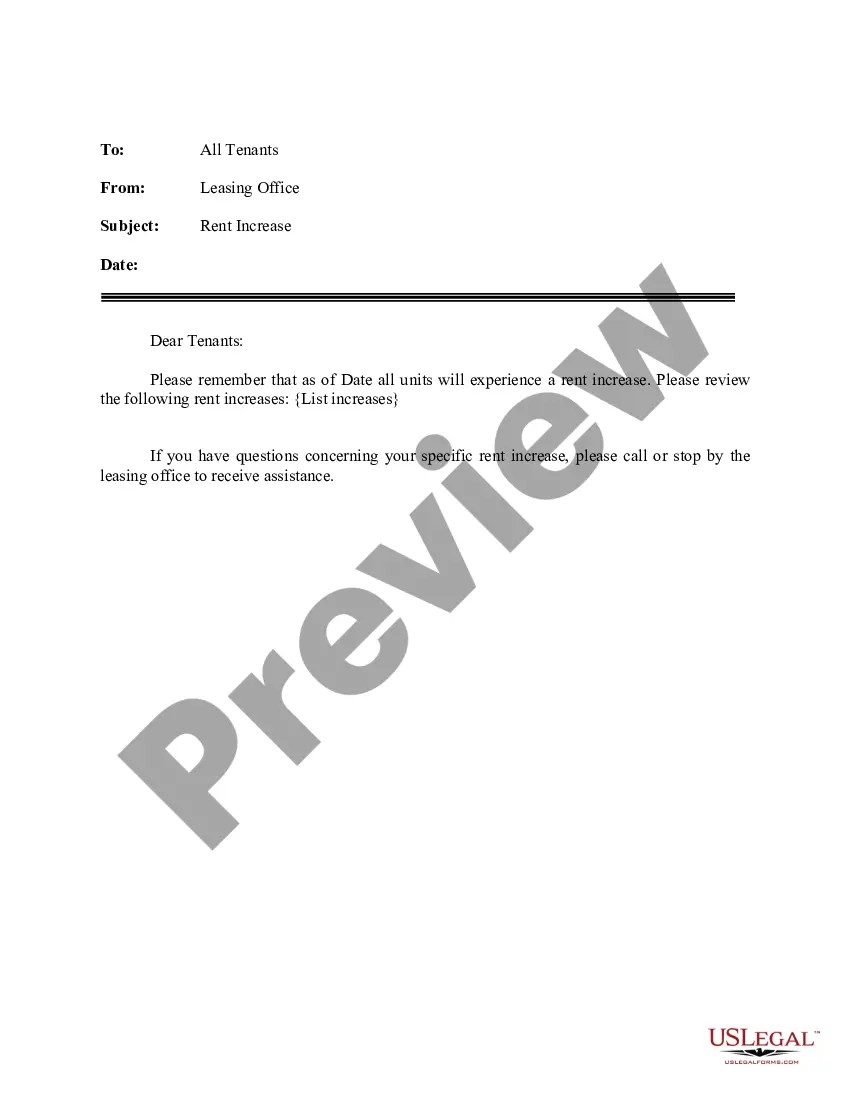
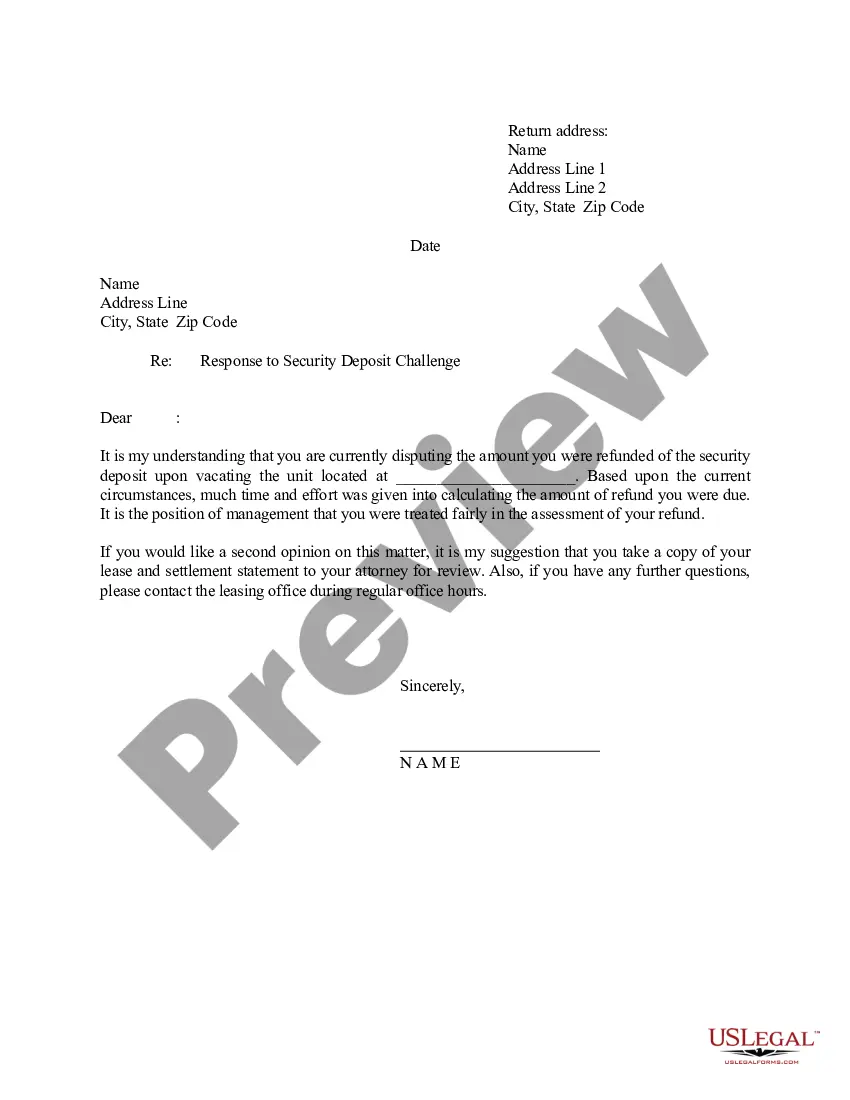
This form is a Letter from Tenant to Landlord containing a notice to withdraw an improper rent increase due to a violation of rent control ordinances. It serves to inform the landlord that the increase may be unlawful, ensuring that tenants are aware of their rights under applicable rent control laws. This form is specifically tailored for situations where landlords have attempted to increase rent in violation of local regulations.
Main sections of this form
- Tenant's name and contact information
- Date of the letter
- Landlord's name and address
- Statement regarding the improper rent increase
- Explanation of the relevant rent control ordinance
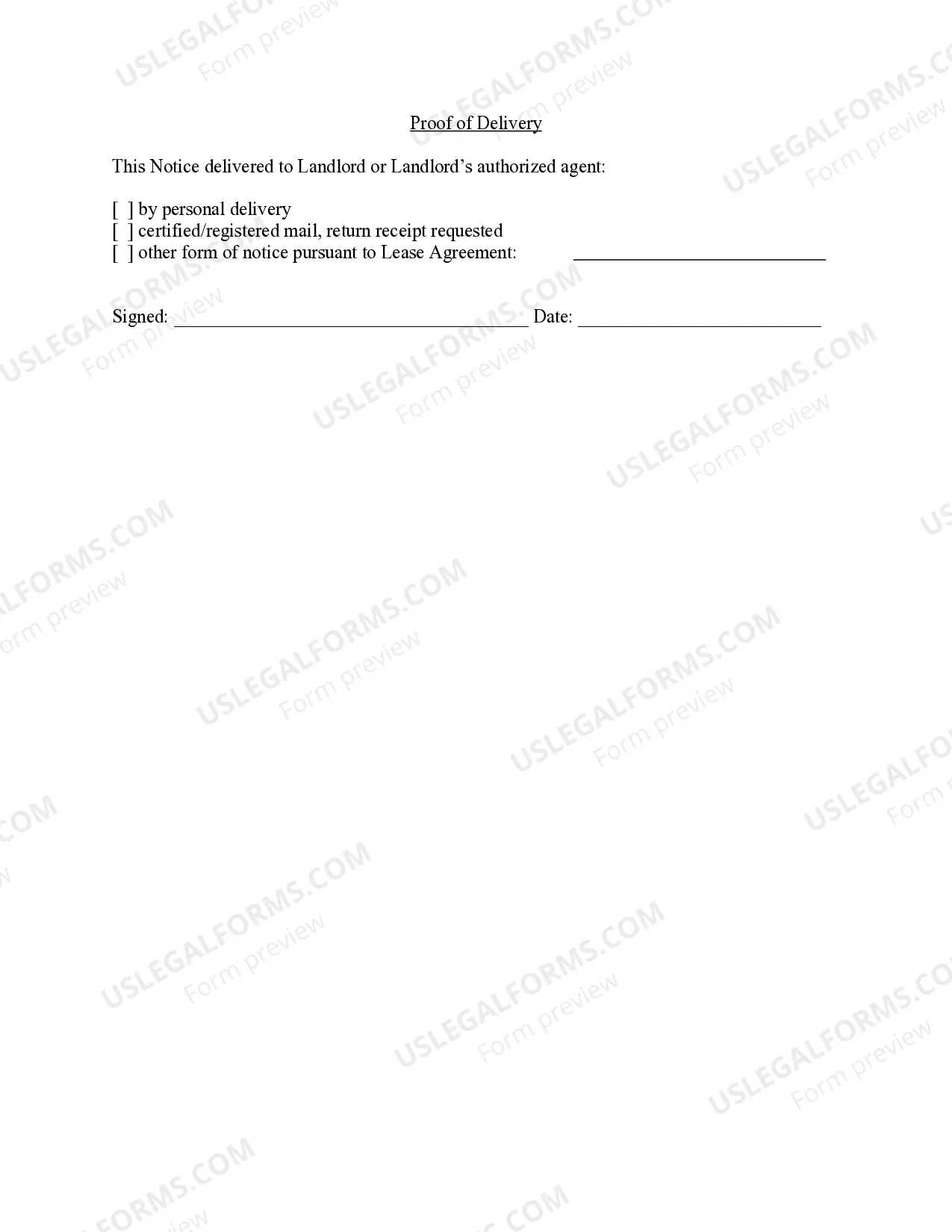
- Proof of delivery method

When this form is needed
Use this form when you receive a notice of rent increase from your landlord that you believe violates local rent control laws. This letter notifies the landlord of the violation and requests the withdrawal of the unlawful increase. It's a crucial step in asserting your rights as a tenant and could help you avoid unnecessary disputes.
Who needs this form
- Tenants who have received a notice of rent increase
- Individuals living in areas with rent control ordinances
- Anyone seeking to address a potentially unlawful rent increase with their landlord
Steps to complete this form
- Identify and write your name and contact information at the top of the letter.
- Fill in the date when you are sending the notice.
- Provide the landlord's name and address clearly.
- Clearly state your objection to the rent increase and explain how it violates rent control ordinances.
- Sign the letter and include the proof of delivery method you choose.
Notarization requirements for this form
This form does not typically require notarization unless specified by local law. It is important to check your local regulations regarding tenant-landlord communications and notices.
Get your form ready online
Our built-in tools help you complete, sign, share, and store your documents in one place.
Make edits, fill in missing information, and update formatting in US Legal Forms—just like you would in MS Word.
Download a copy, print it, send it by email, or mail it via USPS—whatever works best for your next step.
Sign and collect signatures with our SignNow integration. Send to multiple recipients, set reminders, and more. Go Premium to unlock E-Sign.
If this form requires notarization, complete it online through a secure video call—no need to meet a notary in person or wait for an appointment.
We protect your documents and personal data by following strict security and privacy standards.

Make edits, fill in missing information, and update formatting in US Legal Forms—just like you would in MS Word.

Download a copy, print it, send it by email, or mail it via USPS—whatever works best for your next step.

Sign and collect signatures with our SignNow integration. Send to multiple recipients, set reminders, and more. Go Premium to unlock E-Sign.

If this form requires notarization, complete it online through a secure video call—no need to meet a notary in person or wait for an appointment.

We protect your documents and personal data by following strict security and privacy standards.
Mistakes to watch out for
- Failing to include essential information like the date and landlord's address.
- Not clearly stating the grounds for believing the rent increase is unlawful.
- Neglecting to keep a copy of the letter for personal records.
Advantages of online completion
- Convenience of downloading and completing the form from anywhere.
- Editability allows you to customize the letter to fit your specific situation.
- Access to professionally drafted templates ensures legal accuracy.
- This form functions as a formal notice and helps to initiate a legal dialogue between landlord and tenant.
- Ensuring that the notice is sent provides a documented defense if legal issues arise over the rent increase.
Key takeaways
- This letter is crucial for tenants facing unjust rent increases.
- Properly completing and sending this letter can help safeguard tenant rights.
- Local laws on rent control vary; always confirm regulations in your area.
Looking for another form?

Form popularity
FAQ
In most states, a landlord must give tenants notice at least 30 days before they'll enforce a rent increase. However, in other states like California, the notice can increase to 60 days' notice if the increase is more than 10% of the current rent rate.
Notice Requirements for Ohio Landlords A landlord can simply give you a written notice to move, allowing you 30 days as required by Ohio law and specifying the date on which your tenancy will end.
Remember you're a business. Do your research. Raise the rent all at once or incrementally. Don't negotiate or ask tenants what they think a fair rent increase would be. Be courteous and firm. Find a template you like. Send a formal letter by certified mail. Give the tenant notice.
Tenants in the state of Ohio are granted certain rights by the state's landlord-tenant code, including the right to fair housing, the right to a return of the security deposit, and the right to notice before landlord entry.
Yes. You can kick that person out. (Unless you've been directed by a court to provide housing for the person.)
To end a month-to-month tenancy, a landlord must give a tenant at least a 30-day written notice to move. The notice must state the date by which the tenant needs to be out of the rental unit.
They don't have to give you any reasons why they want to evict you. They have to give you at least 28 days notice, but this could be longer depending on your agreement. If you don't leave by the time your notice ends, your landlord has to go to court to get a court order to make you leave.
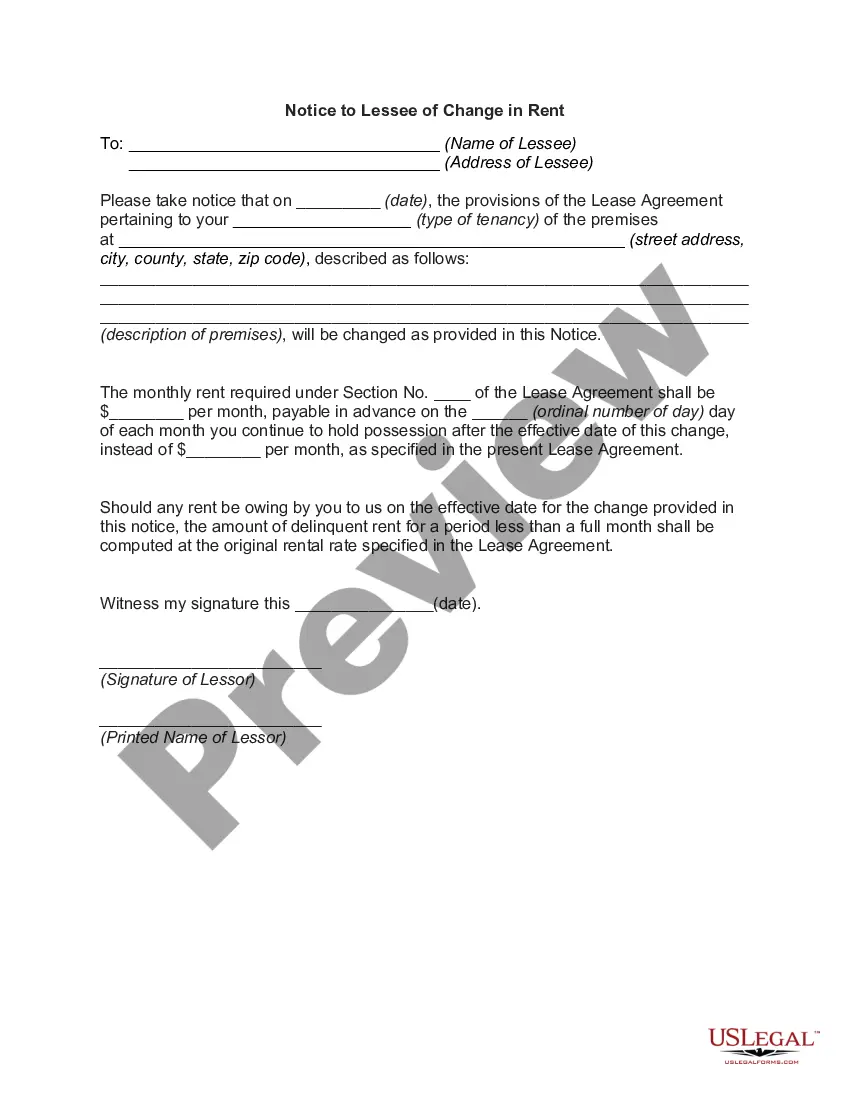
Tenant's name. Property address. Landlord name and contact information. Date the letter is written. Date the rent increase will take effect. Amount of rent increase. Current cost of rent.
There is no rent control in the state of Ohio. A landlord can raise the rent any amount as long as tenants are given notice before they sign the lease agreement or any renewal agreement.