Ohio Letter from Landlord to Tenant about time of intent to enter premises
What this document covers
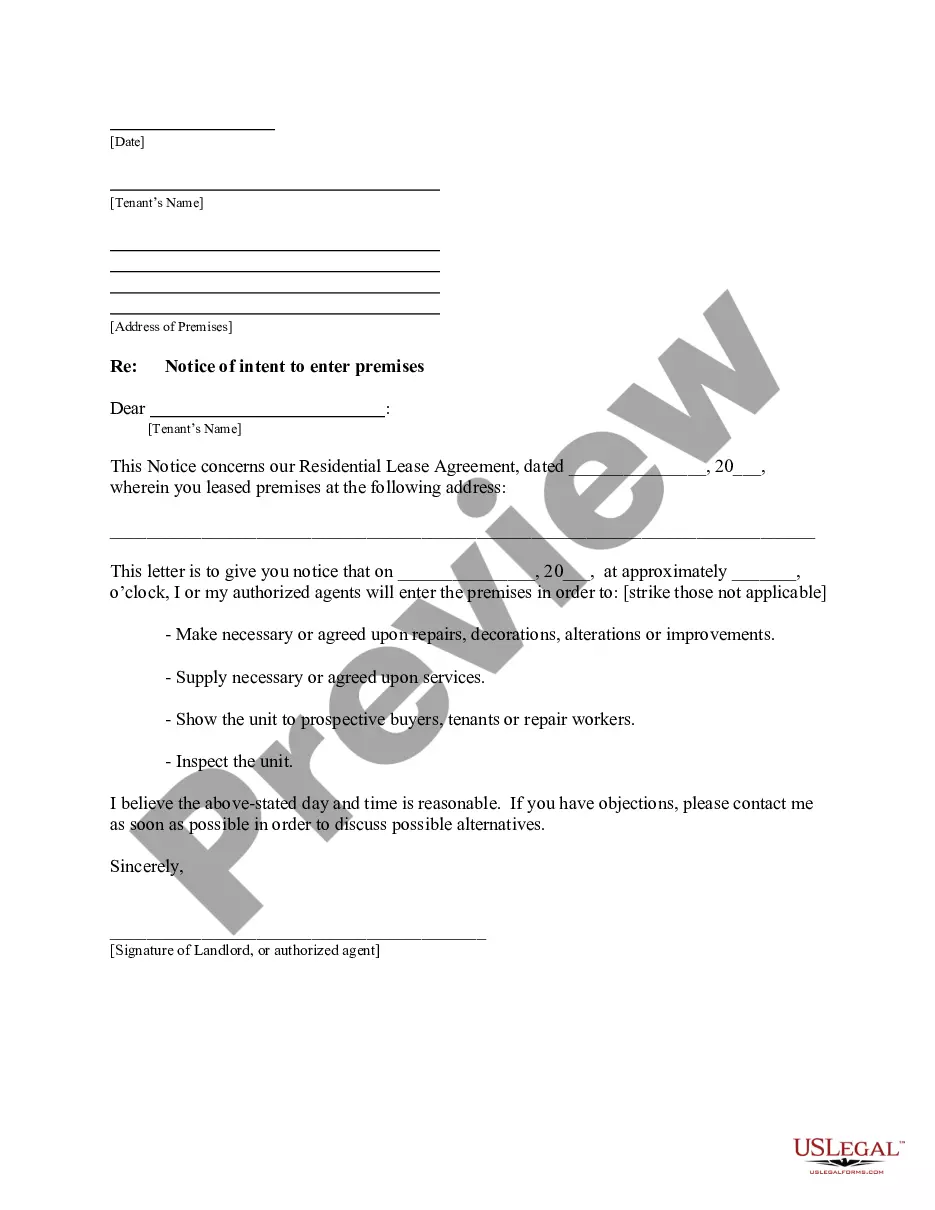
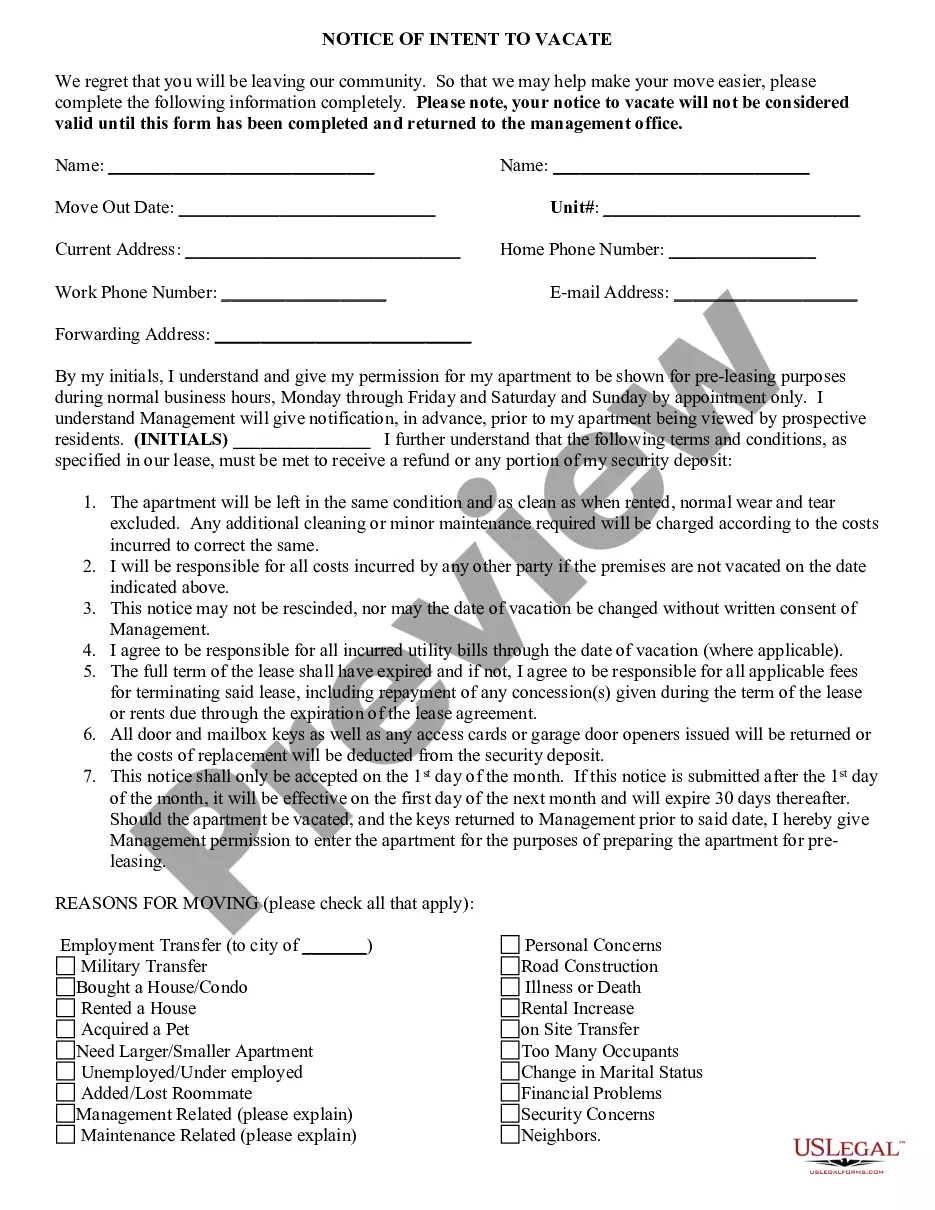
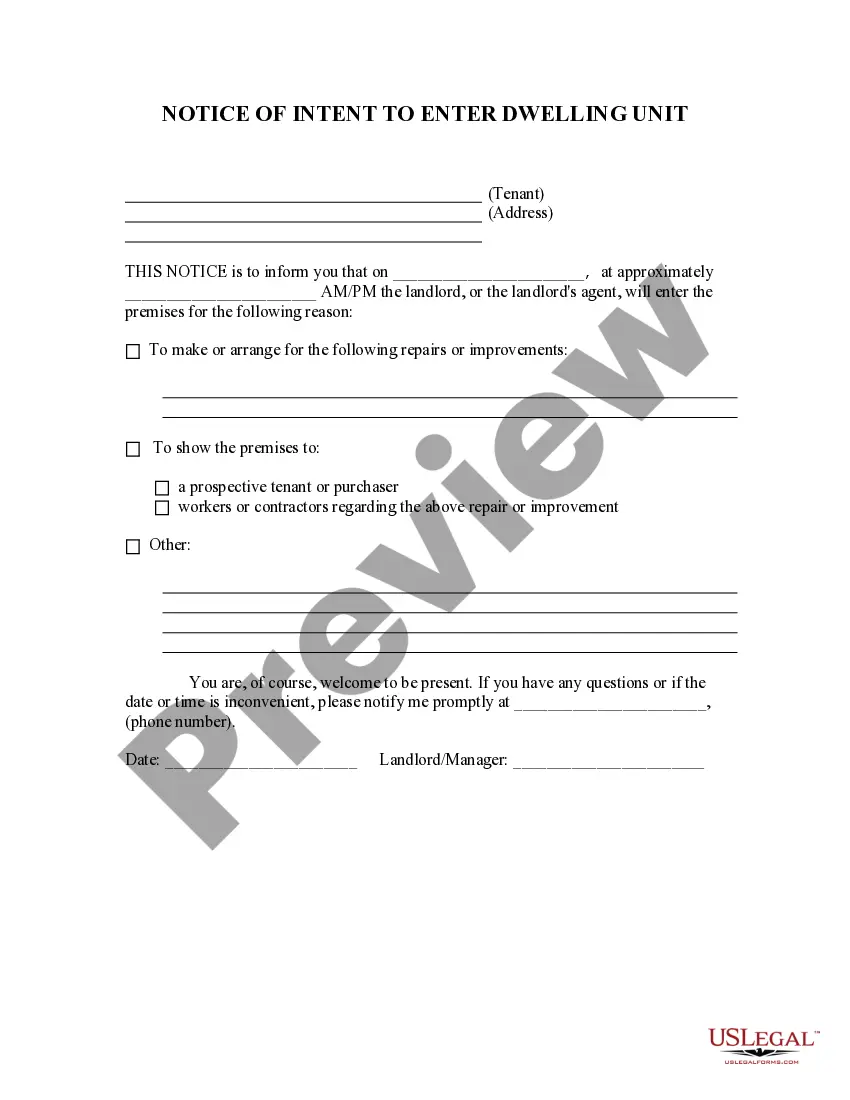
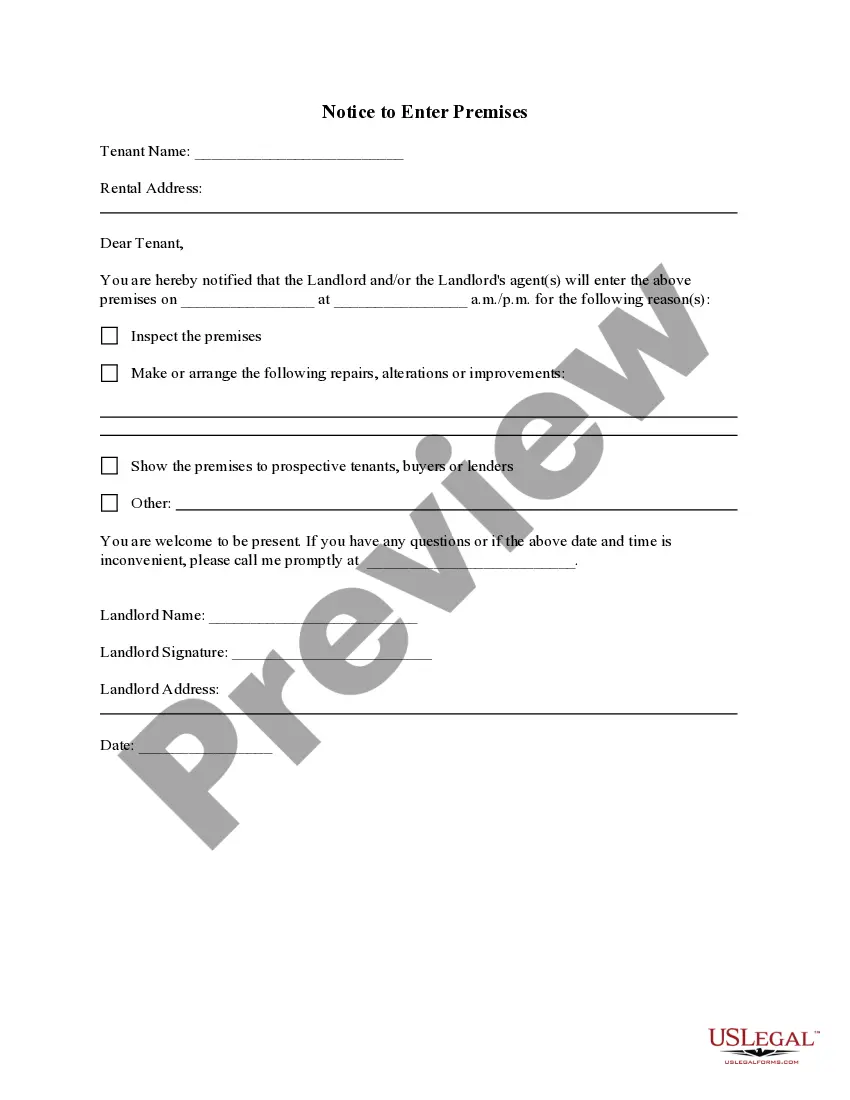
This letter from landlord to tenant serves as a formal notice regarding the landlord's intent to enter the rented premises. It outlines the reasons for entry as per the Residential Lease Agreement, distinguishing it from general communication by specifying a scheduled visit.
What’s included in this form
- Date of the Residential Lease Agreement.
- Address of the leased premises.
- Date and time of the intended entry.
- Specific reasons for entry (such as repairs, inspections, or showings).
- Landlord's or authorized agent's signature.
When to use this form
You should use this form when you need to provide your tenant with formal notice of your intent to enter the property. This may be necessary for various reasons, including performing maintenance, showing the unit to prospective tenants, or inspecting the premises for compliance with lease terms.
Who this form is for
- Landlords who lease residential properties.
- Property managers acting on behalf of landlords.
- Any authorized agents of the landlord who need to enter the premises.
How to complete this form
- Identify and enter the date of the Residential Lease Agreement.
- Clearly specify the address of the rental property.
- Indicate the date and time of your planned entry.
- Specify the purpose for entering the premises.
- Have the landlord or authorized agent sign and date the notice.
Does this form need to be notarized?
This form usually doesn’t need to be notarized. However, local laws or specific transactions may require it. Our online notarization service, powered by Notarize, lets you complete it remotely through a secure video session, available 24/7.
Get your form ready online
Our built-in tools help you complete, sign, share, and store your documents in one place.
Make edits, fill in missing information, and update formatting in US Legal Forms—just like you would in MS Word.
Download a copy, print it, send it by email, or mail it via USPS—whatever works best for your next step.
Sign and collect signatures with our SignNow integration. Send to multiple recipients, set reminders, and more. Go Premium to unlock E-Sign.
If this form requires notarization, complete it online through a secure video call—no need to meet a notary in person or wait for an appointment.
We protect your documents and personal data by following strict security and privacy standards.

Make edits, fill in missing information, and update formatting in US Legal Forms—just like you would in MS Word.

Download a copy, print it, send it by email, or mail it via USPS—whatever works best for your next step.

Sign and collect signatures with our SignNow integration. Send to multiple recipients, set reminders, and more. Go Premium to unlock E-Sign.

If this form requires notarization, complete it online through a secure video call—no need to meet a notary in person or wait for an appointment.

We protect your documents and personal data by following strict security and privacy standards.
Mistakes to watch out for
- Failing to provide adequate notice under state laws.
- Not specifying the date or reason for entry clearly.
- Omitting the signature of the landlord or agent.
Benefits of using this form online
- Immediate availability for download and completion.
- Edit and customize the form to fit specific needs.
- Reliable documents drafted by licensed attorneys.
Looking for another form?
Form popularity
FAQ
Put cameras everywhere (Nest Cam is a good brand), make sure you put signs "Premises secured by video surveillance" and you will be good to go. While it won't prevent the landlord from entering, it will prevent the landlord from doing anything funky, and who knows, with time even stop.
If your landlord enters your home without permission You have the right to live in your home without being disturbed unreasonably.If your landlord keeps turning up unannounced, or enters your home without notice or permission it could be harassment.
The date you're submitting your notice. The date you're moving. Information on your current home the address and the landlord's name. A statement declaring that you intend to leave the home. A straightforward statement that you're providing this letter, 30 days out, per your lease agreement.
Dear (Name of landlord or manager), This letter constitutes my written (number of days' notice that you need to give based on your lease agreement)-day notice that I will be moving out of my apartment on (date), the end of my current lease. I am leaving because (new job, rent increase, etc.)
Notice Requirements for Ohio Landlords A landlord can simply give you a written notice to move, allowing you 30 days as required by Ohio law and specifying the date on which your tenancy will end.
Notice of Entry Laws in Ohio In any case other than an emergency, the landlord must notify the tenant at least 24 hours before entry, and may only enter the unit at a reasonable time. Although Ohio landlord-tenant law requires at least 24-hour notice, most landlords in Ohio provide tenants 48 hours notice before entry.
To end a month-to-month tenancy, a landlord must give a tenant at least a 30-day written notice to move. The notice must state the date by which the tenant needs to be out of the rental unit.
Quiet enjoyment You are paying rent to the landlord for exclusive use as the property as your home and as such you have the right to decide who enters it and when. If a landlord enters your home without permission they are, technically, trespassing, unless they have a court order to allow them otherwise.
Yes. You can kick that person out. (Unless you've been directed by a court to provide housing for the person.)