Ohio Letter from Tenant to Landlord with Demand that landlord remove garbage and vermin from premises
About this form
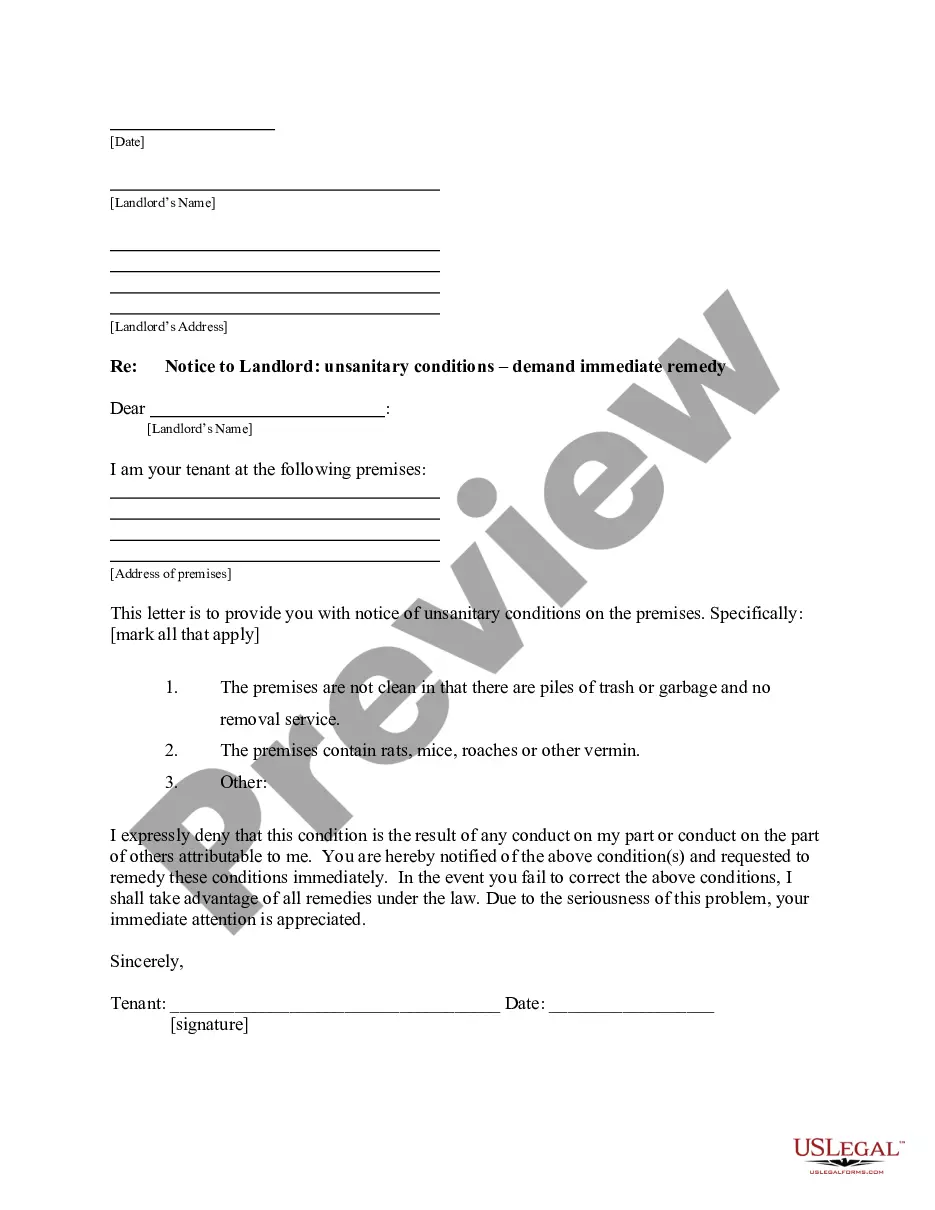
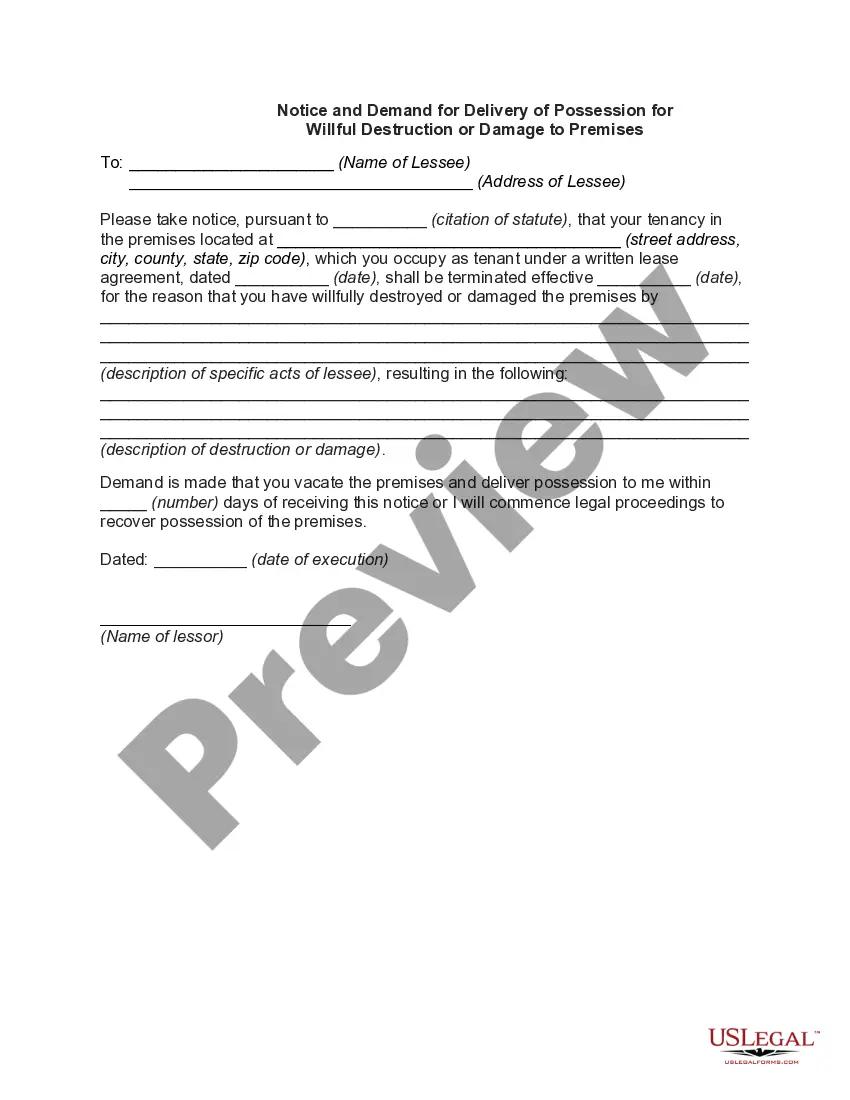
This form is a Letter from Tenant to Landlord that demands the landlord to address unsanitary conditions, such as garbage and vermin, in the rented property. It serves as a formal notification of a lease violation and requests immediate repairs, distinguishing itself from other lease-related forms by its specific focus on health and safety issues within the premises.
Form components explained
- Identification of tenant and landlord: Clearly states who is involved in the agreement.
- Description of unsanitary conditions: Explicitly outlines the issues, such as garbage and vermin.
- Demand for repair: Requests immediate action from the landlord to remedy the conditions.
- Legal disclaimer: Clarifies that the conditions are not due to any conduct by the tenant.
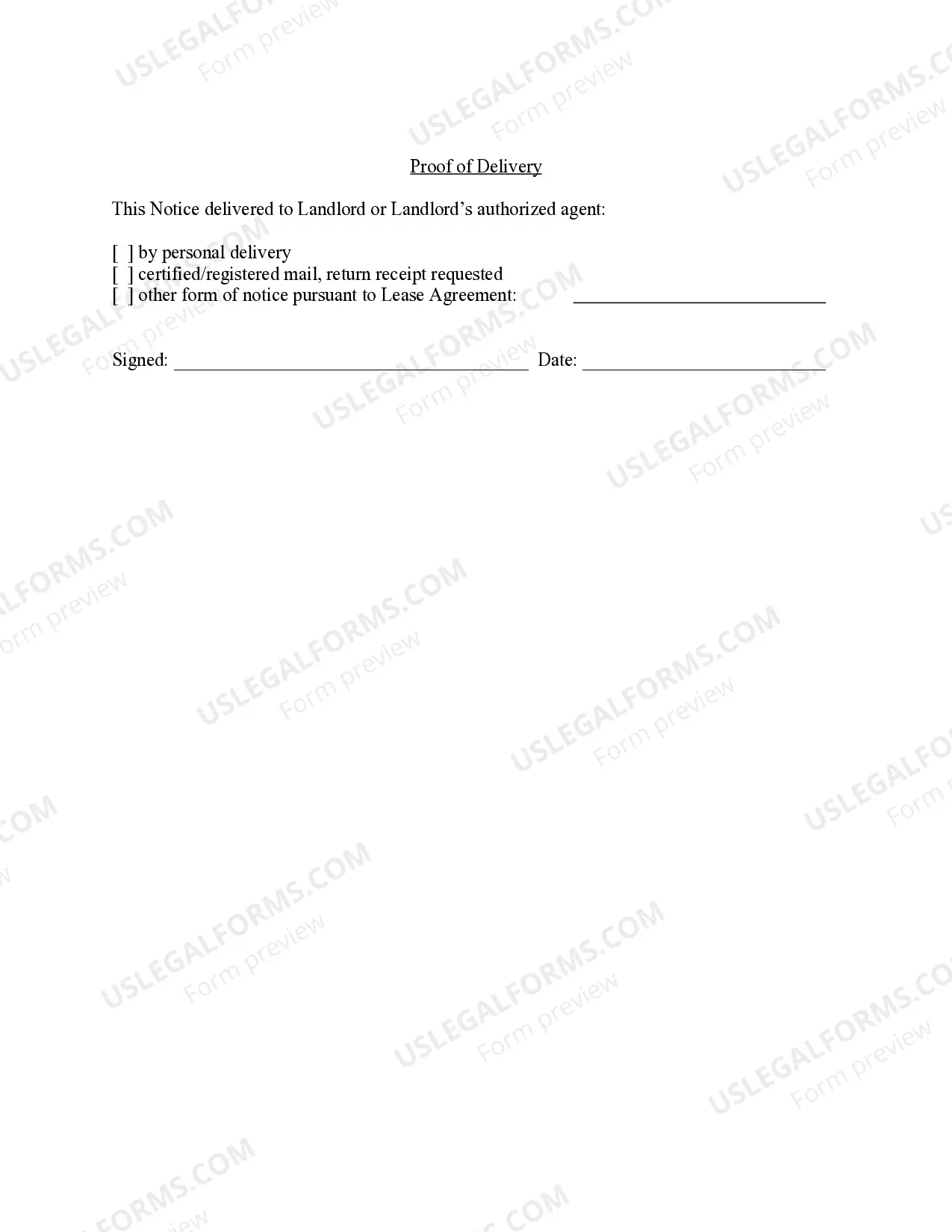
- Proof of delivery instructions: Provides options for delivering the notice to the landlord.

When to use this document
This form should be used when a tenant discovers unsanitary conditions in their rental property that violate health and safety standards. If there is a problem with garbage accumulation or the presence of vermin that poses a risk to health, the tenant can use this letter to formally notify the landlord and demand corrective action.
Who can use this document
Eligible users of this form include:
- Tenants residing in rental properties facing unsanitary conditions.
- Individuals looking to formally document a lease violation by their landlord.
- People who want to ensure their rights are protected under the lease agreement.
How to prepare this document
Steps to complete this form:
- Identify the parties: Fill in the names of the tenant and landlord.
- Specify the property: Provide the address of the rental unit in question.
- Detail the unsanitary conditions: Clearly describe the garbage and vermin issues.
- Sign and date the letter: Ensure to include your signature and the date of submission.
- Choose the delivery method: Indicate how you will deliver the notice to your landlord.
Notarization requirements for this form
This form does not typically require notarization unless specified by local law.
Get your form ready online
Our built-in tools help you complete, sign, share, and store your documents in one place.
Make edits, fill in missing information, and update formatting in US Legal Forms—just like you would in MS Word.
Download a copy, print it, send it by email, or mail it via USPS—whatever works best for your next step.
Sign and collect signatures with our SignNow integration. Send to multiple recipients, set reminders, and more. Go Premium to unlock E-Sign.
If this form requires notarization, complete it online through a secure video call—no need to meet a notary in person or wait for an appointment.
We protect your documents and personal data by following strict security and privacy standards.

Make edits, fill in missing information, and update formatting in US Legal Forms—just like you would in MS Word.

Download a copy, print it, send it by email, or mail it via USPS—whatever works best for your next step.

Sign and collect signatures with our SignNow integration. Send to multiple recipients, set reminders, and more. Go Premium to unlock E-Sign.

If this form requires notarization, complete it online through a secure video call—no need to meet a notary in person or wait for an appointment.

We protect your documents and personal data by following strict security and privacy standards.
Common mistakes to avoid
- Failing to provide specific details about the unsanitary conditions.
- Not delivering the notice in a legally acceptable manner.
- Omitting the date or signature, making the letter invalid.
Why use this form online
- Convenience of downloading and customizing the form online.
- Editability allows for precise details tailored to your situation.
- Reliability: The form is drafted by licensed attorneys to ensure legal validity.
- The letter serves as evidence of the landlord's awareness of the issue.
- Failure to address the violations can provide grounds for further legal actions.
Main things to remember
- This letter is a crucial document for tenants facing unsanitary conditions.
- It formally notifies landlords of their responsibilities under the lease.
- Proper completion and delivery can protect your tenant rights.
Looking for another form?
Form popularity
FAQ
Tenants have been forced to live in terrible housing, and neighborhoods have suffered from housing eyesores. HUD calls this a double crime: one against both tenants and taxpayers. To report a bad landlord to the Multifamily Housing Complaint Line call toll-free at (800) MULTI-70 (800) 685-8470) / TTY (800) 432-2209.
Know your state's landlord/tenant laws. Read and respond to the court summons. Try to work out a settlement. Consider legal counsel. Show up for court. Look sharp and provide evidence.
Can a landlord kick me out without a reason, and how much notice should I be given? Your landlord can't evict you during the fixed term of a tenancy unless you breach a term in the tenancy agreement, such as not paying rent or damaging the property, unless there is a break clause in your agreement.
Uninhabitable conditions can include dangerous ones, such as holes in the floor, unsafe or exposed wiring, or non-working air conditioning in dangerously hot summer months. Gross infestations of roaches, fleas or other pests are also uninhabitable conditions.
Tenants in the state of Ohio are granted certain rights by the state's landlord-tenant code, including the right to fair housing, the right to a return of the security deposit, and the right to notice before landlord entry.
The landlord had a duty to reasonably maintain the property; The landlord knew or should have known of the dangerous condition; The landlord breached their duty by failing to repair/fix the dangerous condition;
A landlord cannot evict a tenant without an adequately obtained eviction notice and sufficient time. A landlord cannot retaliate against a tenant for a complaint. A landlord cannot forego completing necessary repairs or force a tenant to do their own repairs.A landlord cannot remove a tenant's personal belongings.
Negligent Landlords Depending on the type of problem, the duration of neglect and the severity of its effect on health or safety, tenants can file a lawsuit against their landlords.Tenants can file a lawsuit in California's small claims court or even Superior Court if the negligence is severe enough.
1The landlord had a duty to reasonably maintain the property;2The landlord knew or should have known of the dangerous condition;3The landlord breached their duty by failing to repair/fix the dangerous condition;Holding A Landlord Liable For Personal Injury Tobener\nwww.tobenerlaw.com > personal-injury