Ohio Letter from Landlord to Tenant as Notice to remove unauthorized pets from premises
What is this form?
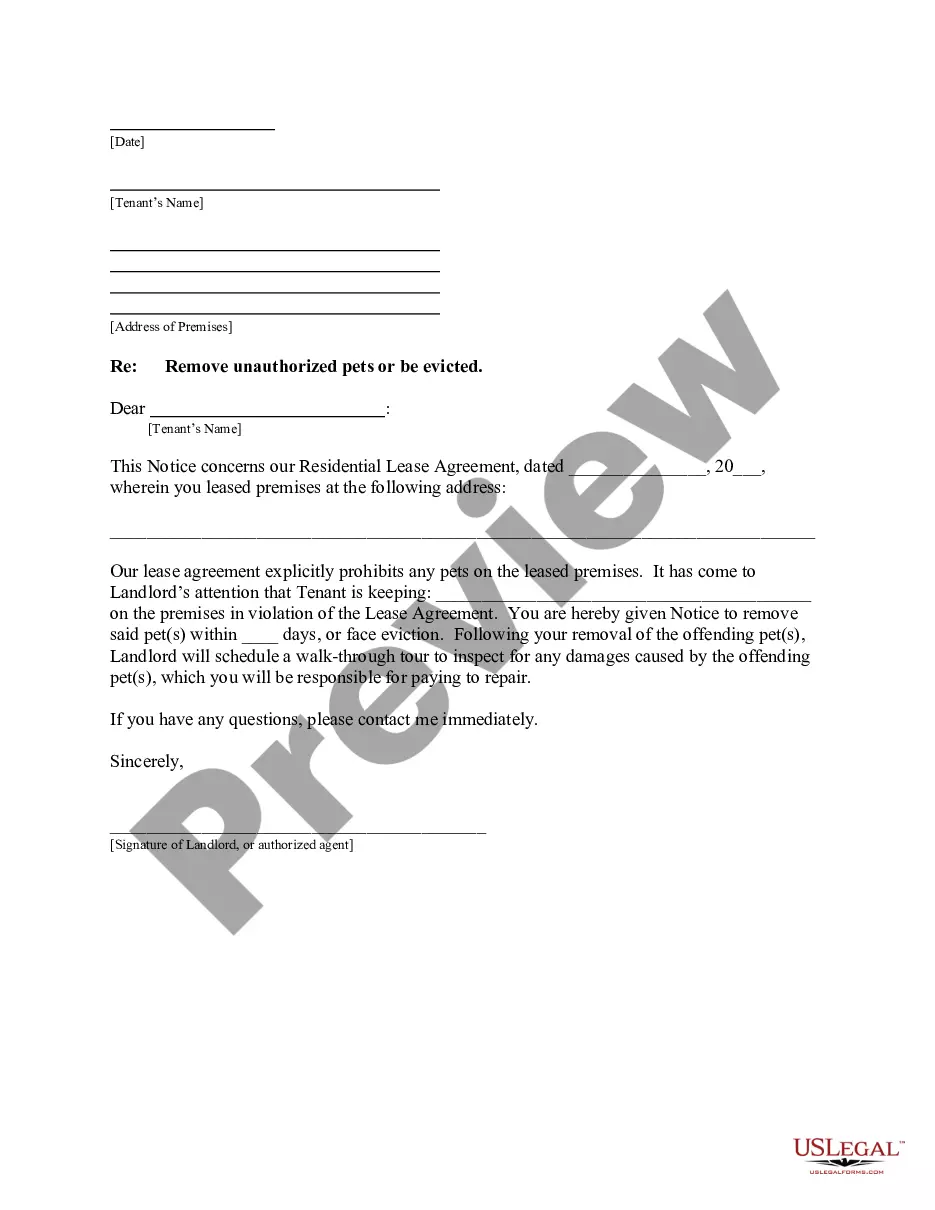
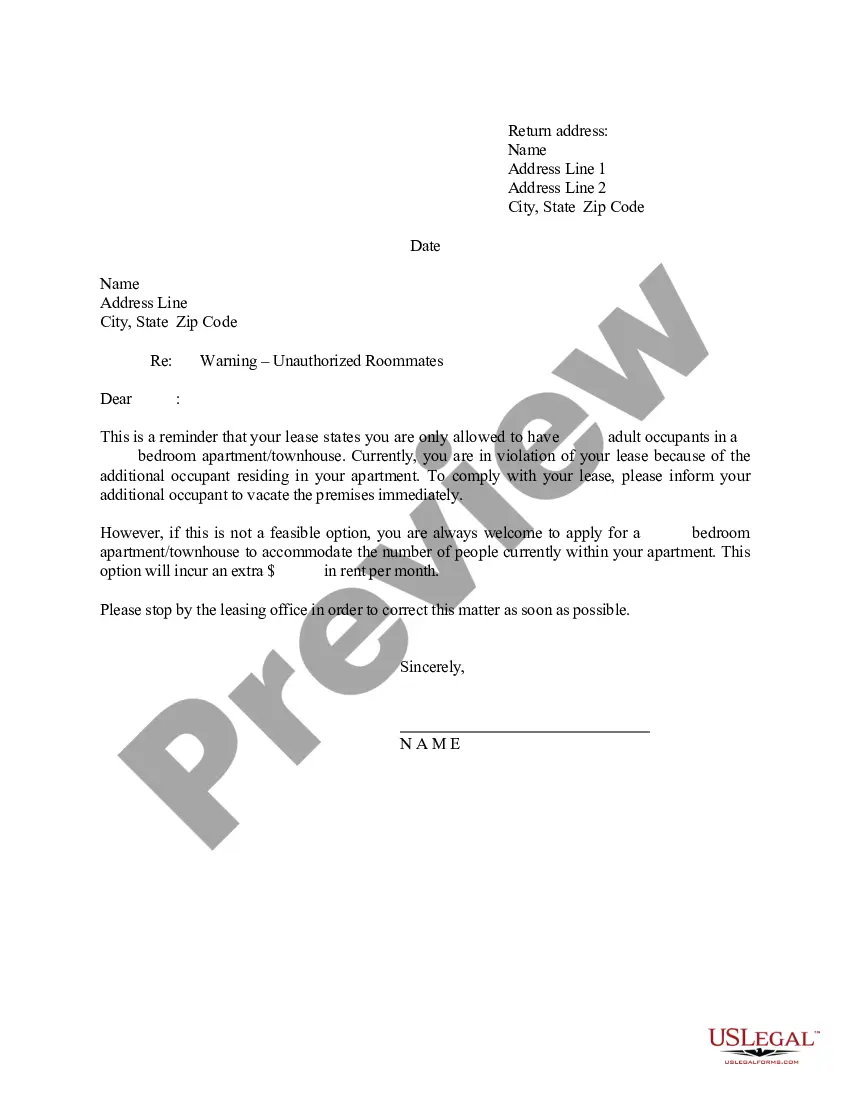
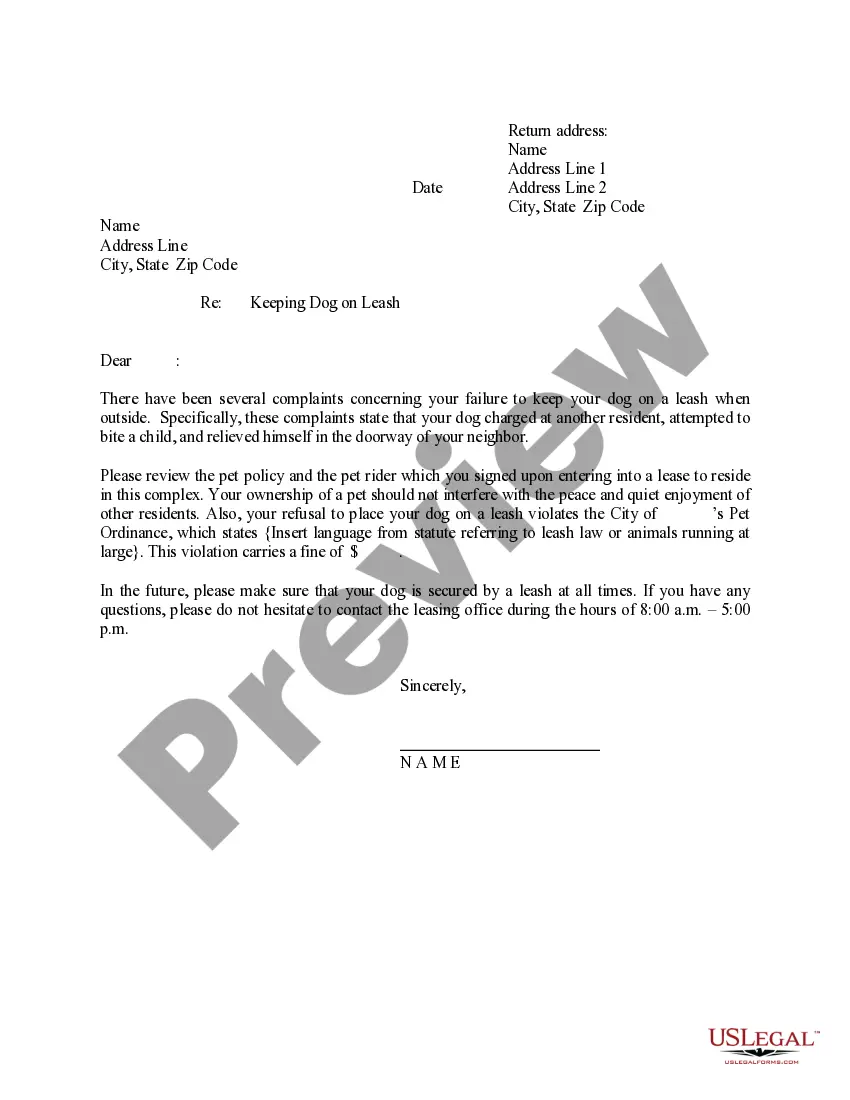
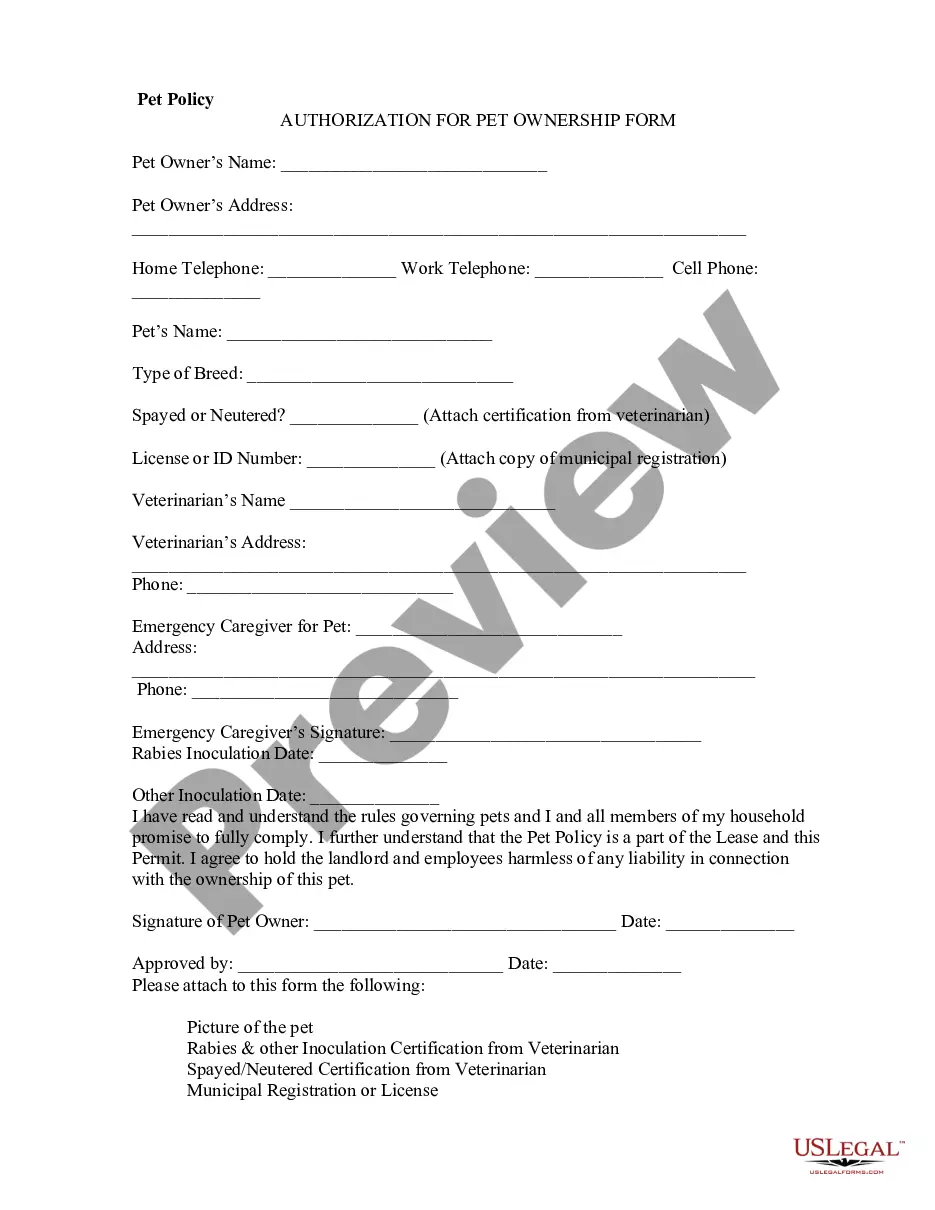
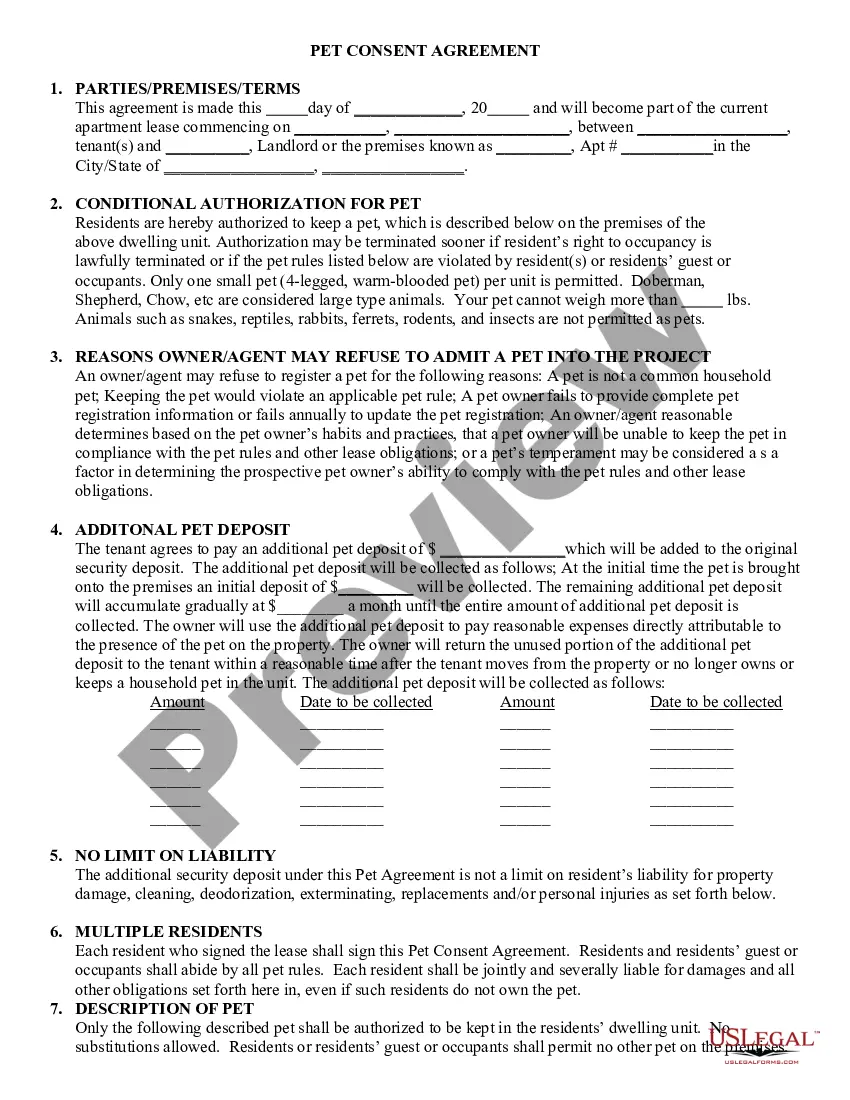
This form is a notice from a landlord to a tenant, demanding the removal of unauthorized pets from the rental property. It serves the purpose of formally notifying the tenant of their breach of the lease agreement due to non-compliance with the pet policy. Utilizing this Letter from Landlord to Tenant as Notice to Remove Unauthorized Pets is critical for landlords wishing to address violations effectively while maintaining legal grounds for further action, if necessary.
Form components explained
- Date of the Residential Lease Agreement.
- Address of the leased premises.
- Details of the unauthorized pets being kept on the property.
- Timeframe for the tenant to remove the pets.
- Landlord's right to inspect for damages and potential eviction implications.
- Signature of the landlord or authorized agent.
When to use this document
You should use this form when you discover that a tenant is keeping pets in violation of your lease agreement. It is an essential step in notifying the tenant of the breach and the required actions to rectify the situation. This letter can help prevent further legal complications by providing formal documentation of the issue and the landlord's response.
Who can use this document
- Landlords who have renters under a lease agreement that prohibits pets.
- Property managers authorized to act on behalf of the landlord.
- Real estate professionals managing rental properties for clients.
Instructions for completing this form
- Identify the date of the lease agreement and enter it in the specified field.
- Specify the address of the property where the unauthorized pets are located.
- List the unauthorized pets that the tenant is keeping.
- Indicate the number of days the tenant has to remove the pets.
- Sign the form as the landlord or have your authorized agent sign.
Does this form need to be notarized?
This form does not typically require notarization unless specified by local law. It is crucial to verify local regulations to ensure compliance with specific requirements in your jurisdiction.
Get your form ready online
Our built-in tools help you complete, sign, share, and store your documents in one place.
Make edits, fill in missing information, and update formatting in US Legal Forms—just like you would in MS Word.
Download a copy, print it, send it by email, or mail it via USPS—whatever works best for your next step.
Sign and collect signatures with our SignNow integration. Send to multiple recipients, set reminders, and more. Go Premium to unlock E-Sign.
If this form requires notarization, complete it online through a secure video call—no need to meet a notary in person or wait for an appointment.
We protect your documents and personal data by following strict security and privacy standards.

Make edits, fill in missing information, and update formatting in US Legal Forms—just like you would in MS Word.

Download a copy, print it, send it by email, or mail it via USPS—whatever works best for your next step.

Sign and collect signatures with our SignNow integration. Send to multiple recipients, set reminders, and more. Go Premium to unlock E-Sign.

If this form requires notarization, complete it online through a secure video call—no need to meet a notary in person or wait for an appointment.

We protect your documents and personal data by following strict security and privacy standards.
Common mistakes
- Failing to provide a specific timeframe for pet removal.
- Not including the details of the lease agreement date.
- Neglecting to sign the notice, which can invalidate it.
Benefits of using this form online
- Convenience of immediate download and completion.
- Editability allows for customization to fit specific situations.
- Assurance that the form is legally compliant, as reviewed by licensed attorneys.
Summary of main points
- This form is essential for notifying tenants about unauthorized pets.
- Clearly specify the required actions and timeframes to avoid legal disputes.
- Ensure compliance with state laws when using this form.
Looking for another form?



Form popularity
FAQ
So, for over 90 percent of landlords, a blanket ban on pets of any kind was included in their contract. If a tenancy agreement included a ban on pets, getting one was reasonable grounds for eviction. This has, in reality, torn families apart, and some have even had to leave their dear pets behind.
Your landlord cannot go into your apartment and remove a pet or show up and force you or your pet out.Generally the landlord cannot even enter the home without giving the tenant notice except in an emergency, unless the lease specifies otherwise.
The date that the tenant warning letter was written. The name and the basic personal information of the tenant. The name of the landlord or the owner of the property. The reason why a tenant warning letter has been written.
Notice Requirements for Ohio Landlords A landlord can simply give you a written notice to move, allowing you 30 days as required by Ohio law and specifying the date on which your tenancy will end.
Addresses. Date. Tenant names. Status and date of the lease. Why the eviction notice is served (clear and concise explanation) Date tenant must vacate the property. Proof of service or delivery of notice.
New rules mean landlords can no longer automatically ban tenants from having pets in their property. The Ministry of Housing, Communities and Local Government has announced new guidelines around common household pets, bringing the UK one step closer to banning landlords from refusing tenants with animals.
If you're caught sneaking in a pet, your landlord may have the right to evict you. If you're evicted, your landlord may sue you for the remainder of your lease payment.Any future landlords can learn about your eviction history, and that may make renting again a tough proposition.
If you want to hide your pet from your landlord, always cover up any evidence (odor, hair). Vacuum your house thoroughly, including the couches, curtains, and the rugs/carpets. Regularly make use of scented candles, room sprays to mask the pet smell. A portable air purifier can help in eliminating the pet odor.
Addresses. Date. Tenant names. Status and date of the lease. Why the eviction notice is served (clear and concise explanation) Date tenant must vacate the property. Proof of service or delivery of notice.