Ohio General Warranty Deed from Husband and Wife to Husband and Wife
What this document covers
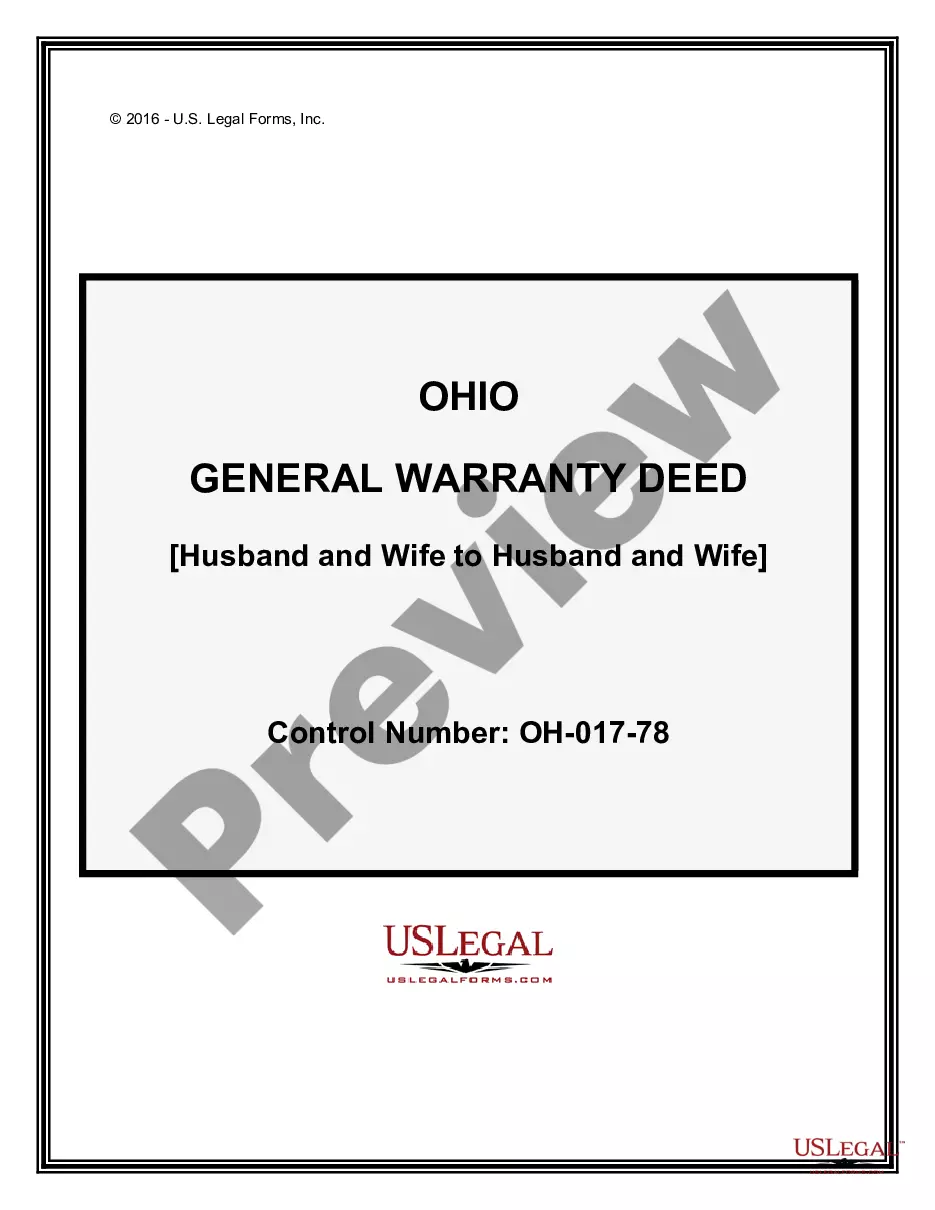
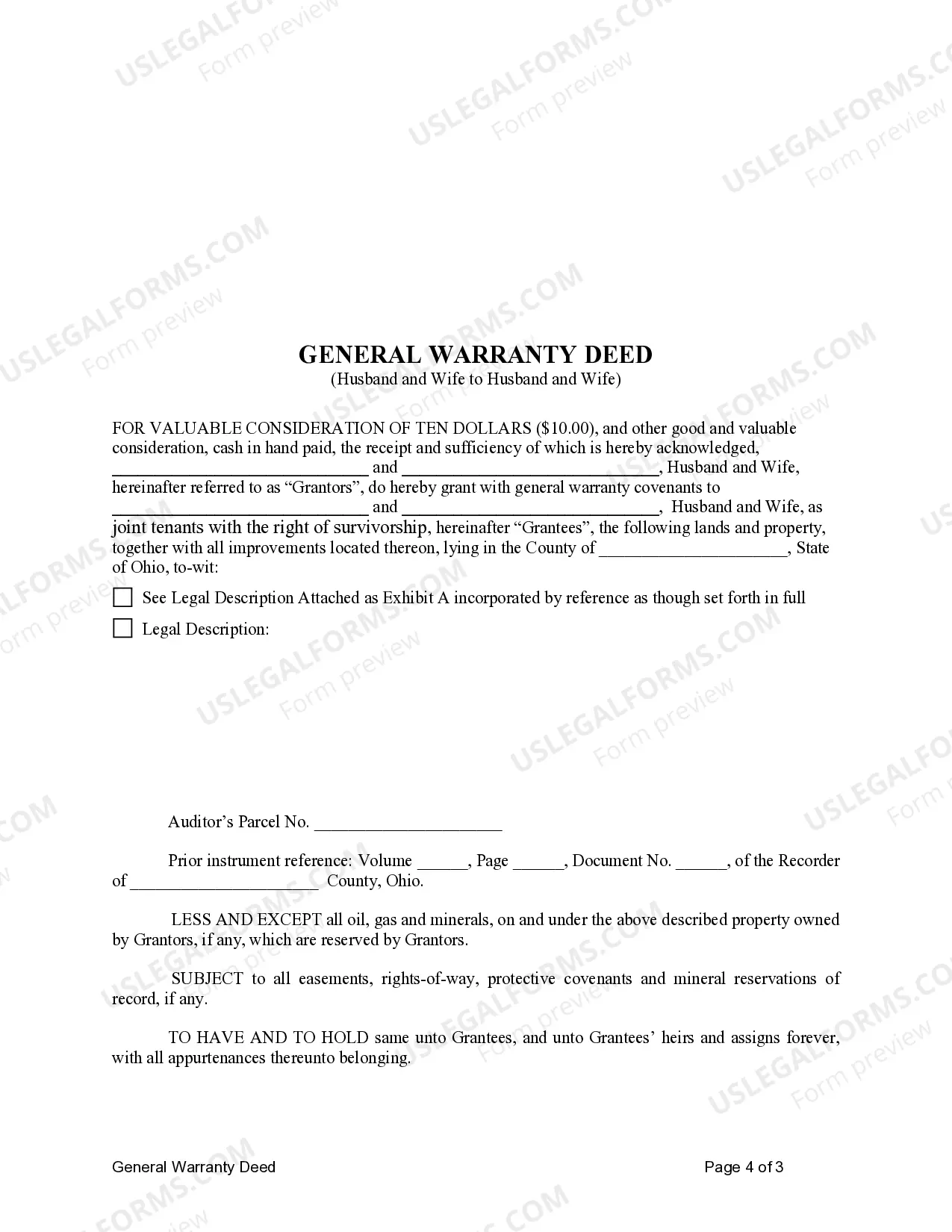
This General Warranty Deed from Husband and Wife to Husband and Wife is a legal document used to transfer property ownership between spouses. It ensures the grantees receive clear title to the property, free from claims. This type of deed differs from others by providing stronger assurances regarding the property's title, making it a reliable option for married couples looking to formalize property transfers between each other.
Key parts of this document
- Identification of grantors (the husband and wife transferring the property).
- Identification of grantees (the husband and wife receiving the property).
- Property description that clearly defines the real estate being transferred.
- Reservation clause excluding oil, gas, and minerals from the transfer.
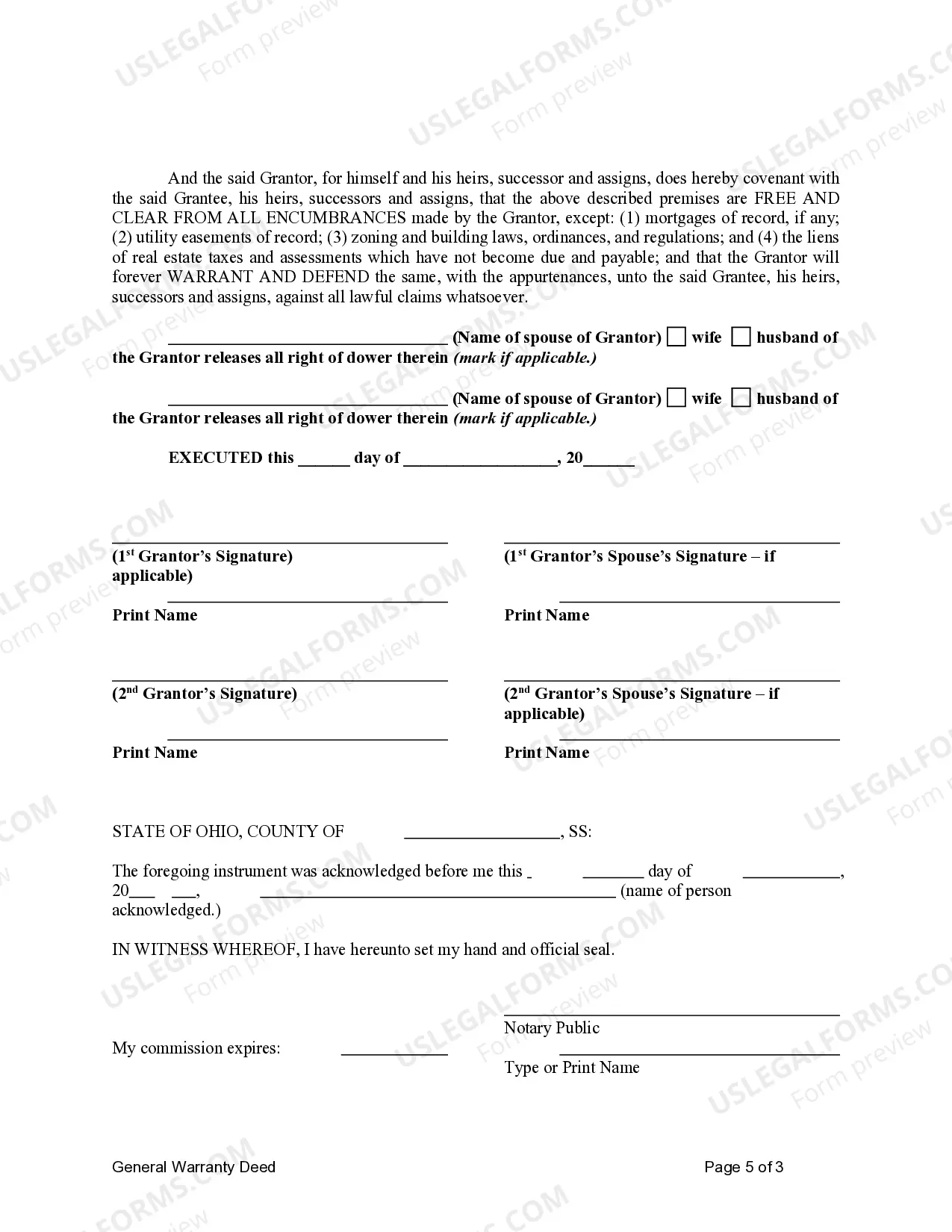
- Warranties by the grantors against encumbrances on the property.
- Signature lines for both grantors to validate the deed.






Common use cases
This form is typically used when a married couple wants to transfer property ownership to each other. Situations may include ensuring equal ownership, facilitating estate planning, or reorganizing assets during a marriage. It can also be used in sales or transfers of property between spouses as part of a divorce settlement or financial planning.
Intended users of this form
- Married couples wanting to transfer real estate between themselves.
- Individuals seeking to formalize property ownership for legal or financial reasons.
- Couples involved in estate planning or asset reallocation.
Steps to complete this form
- Identify the parties involved as the grantors (husband and wife) and grantees (husband and wife).
- Provide a complete description of the property being transferred.
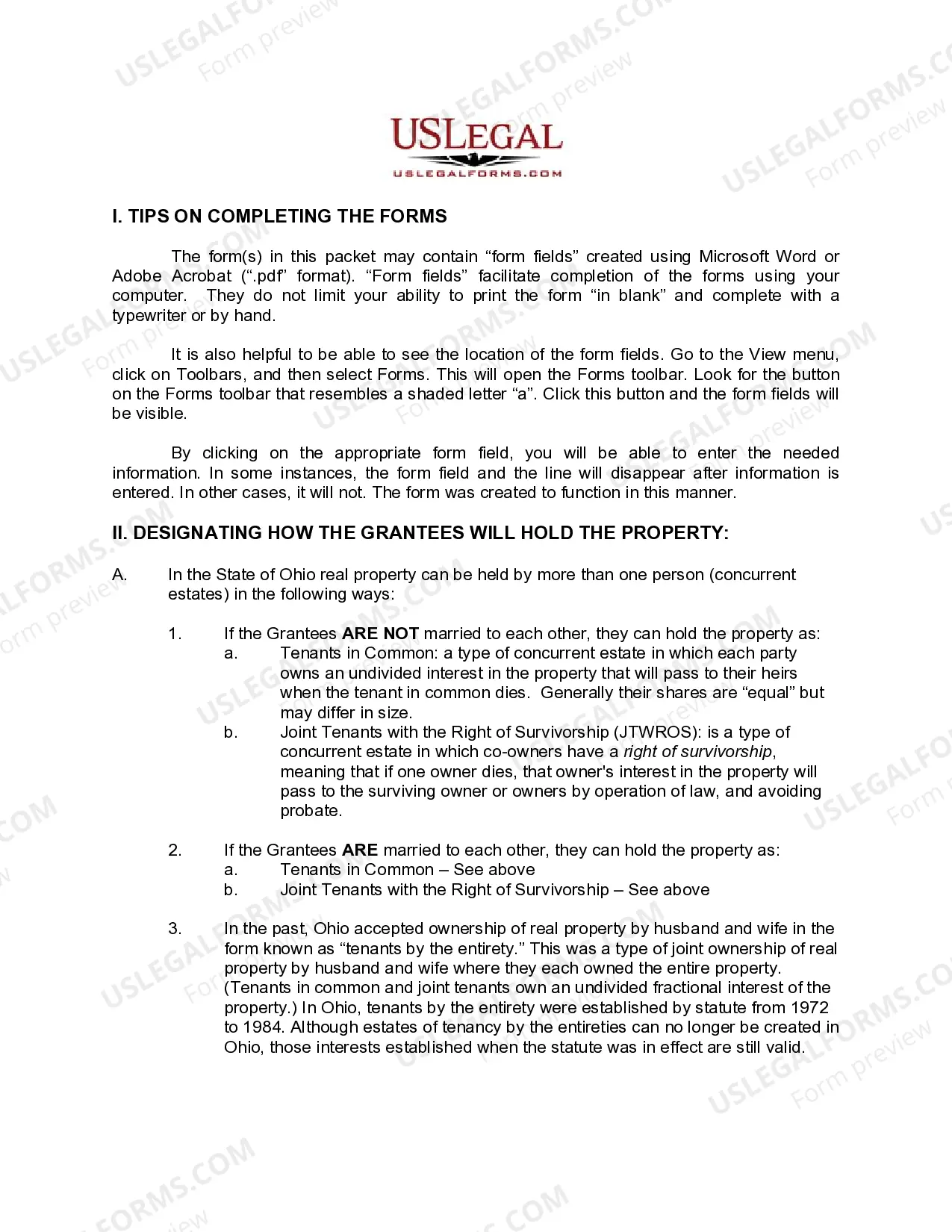
- Specify how the grantees will hold the property (e.g., tenants in common or joint tenants with right of survivorship).
- Include the reservation of oil, gas, and mineral rights, if applicable.
- Obtain signatures from both grantors dated appropriately.
Notarization guidance
This form does not typically require notarization unless specified by local law. However, it is recommended to have the deed notarized to enhance its legal validity and to ensure it is accepted by the county recorderâs office when filing.
Get your form ready online
Our built-in tools help you complete, sign, share, and store your documents in one place.
Make edits, fill in missing information, and update formatting in US Legal Forms—just like you would in MS Word.
Download a copy, print it, send it by email, or mail it via USPS—whatever works best for your next step.
Sign and collect signatures with our SignNow integration. Send to multiple recipients, set reminders, and more. Go Premium to unlock E-Sign.
If this form requires notarization, complete it online through a secure video call—no need to meet a notary in person or wait for an appointment.
We protect your documents and personal data by following strict security and privacy standards.

Make edits, fill in missing information, and update formatting in US Legal Forms—just like you would in MS Word.

Download a copy, print it, send it by email, or mail it via USPS—whatever works best for your next step.

Sign and collect signatures with our SignNow integration. Send to multiple recipients, set reminders, and more. Go Premium to unlock E-Sign.

If this form requires notarization, complete it online through a secure video call—no need to meet a notary in person or wait for an appointment.

We protect your documents and personal data by following strict security and privacy standards.
Mistakes to watch out for
- Failing to provide a clear description of the property being transferred.
- Not specifying how the property will be held by grantees.
- Omitting signatures from one or both grantors, which invalidates the deed.
Benefits of completing this form online
- Convenience of completing the form digitally from any location.
- Editability allows users to make changes easily before finalizing.
- Access to reliable templates drafted by licensed attorneys.
Looking for another form?




Form popularity
FAQ
A warranty deed, also known as a general warranty deed, is a legal real estate document between the seller (grantor) and the buyer (grantee). The deed protects the buyer by pledging that the seller holds clear title to the property and there are no encumbrances, outstanding liens, or mortgages against it.
A warranty deed is a document often used in real estate that provides the greatest amount of protection to the purchaser of a property. It pledges or warrants that the owner owns the property free and clear of any outstanding liens, mortgages, or other encumbrances against it.
It's important to note that a warranty deed does not actually prove the grantor has ownership (a title search is the best way to prove that), but it is a promise by the grantor that they are transferring ownership and if it turns out they don't actually own the property, the grantor will be responsible for compensating
A special warranty deed to real estate offers protection to the buyer through the seller's guarantee that the title has been free and clear of encumbrances during their ownership of the property. It does not guarantee clear title beyond their ownership.
They are (1) covenant for seisin; (2) covenant of the right to convey; (3) covenant against encumbrances; (4) covenant for QUIET ENJOYMENT; (5) covenant of general WARRANTY; and (6) covenant for further assurances.
DEED: A written instrument by which one party, the Grantor, conveys the title of ownership in property to another party, the Grantee. A Warranty Deed contains promises, called covenants, that the Grantor makes to the Grantee.It is even possible that the Grantor does not have any title or ownership interest at all!
Typically, the lender will provide you with a copy of the deed of trust after the closing. The original warranty deeds are often mailed to the grantee after they are recorded. These are your original copies and should be kept in a safe place, such as a fireproof lockbox or a safe deposit box at a financial institution.
A general warranty deed is the most common type of deed used for transferring real estate. It basically promises that: not only does the seller have good and proper title to sell the property, but all the prior owners also had good title, thus making a complete chain of ownership; and.