New York Warranty Deed from two Individuals to LLC
About this form
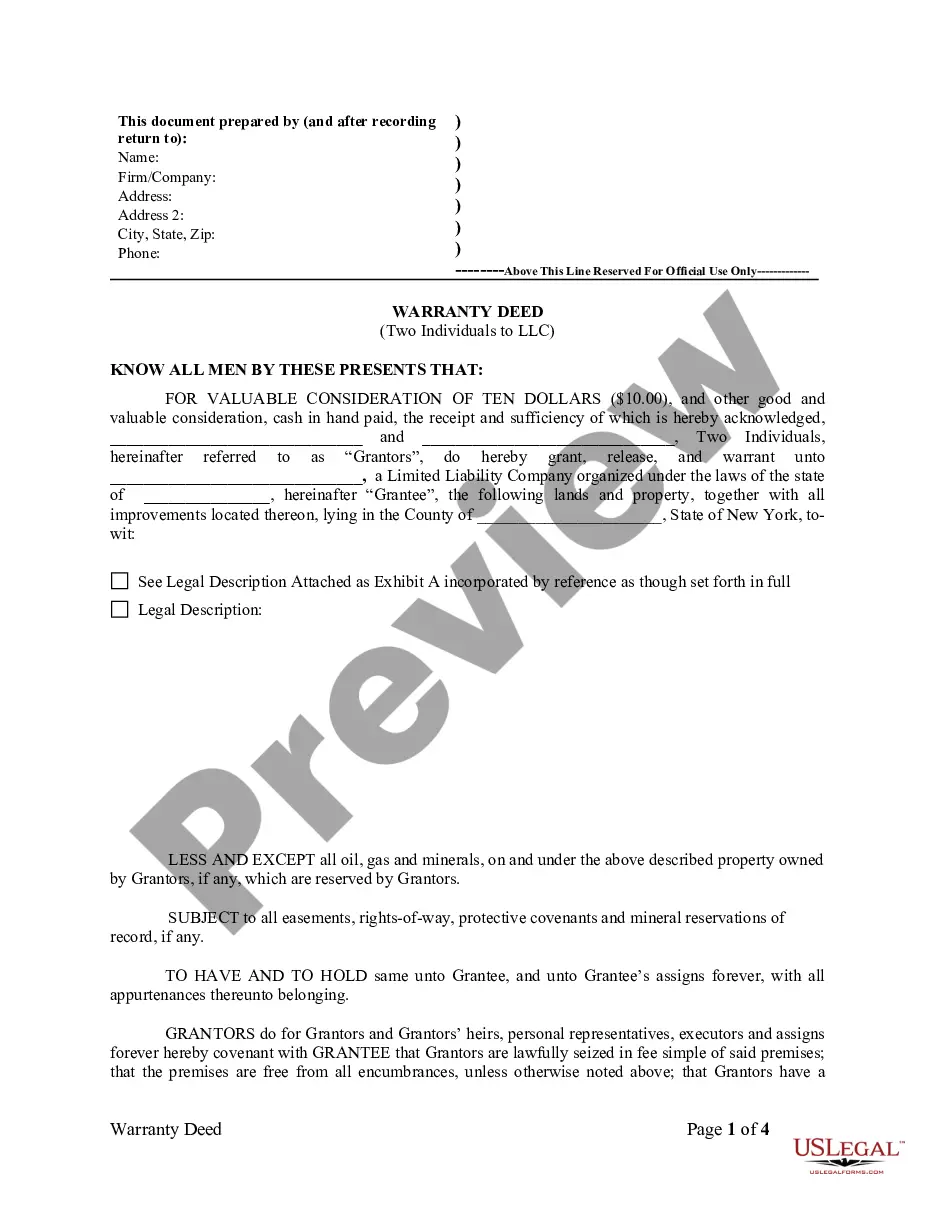
The Warranty Deed from two Individuals to LLC is a legal document that allows two individuals (known as Grantors) to transfer ownership of real property to a limited liability company (LLC) (the Grantee). This form is specifically designed to convey property rights while reserving any oil, gas, and minerals beneath the land. Unlike general quitclaim deeds or special warranty deeds, this form provides a guarantee that the property is free from claims, making it a crucial choice for property transactions involving LLCs.
Key parts of this document
- Grantors: The two individuals transferring the property.
- Grantee: The limited liability company receiving the property.
- Legal Description: Detailed description of the property being transferred, usually attached as Exhibit A.
- Reservations: Specification that oil, gas, and minerals underlying the property are reserved by Grantors.
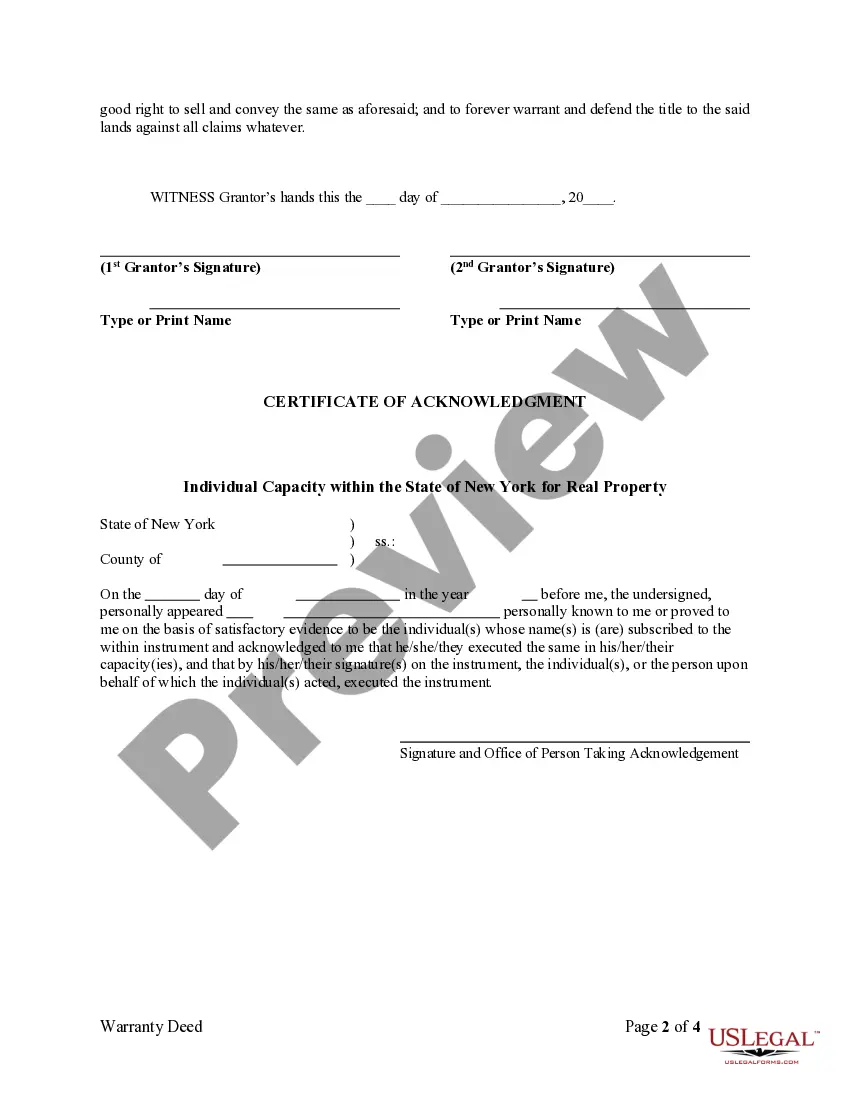
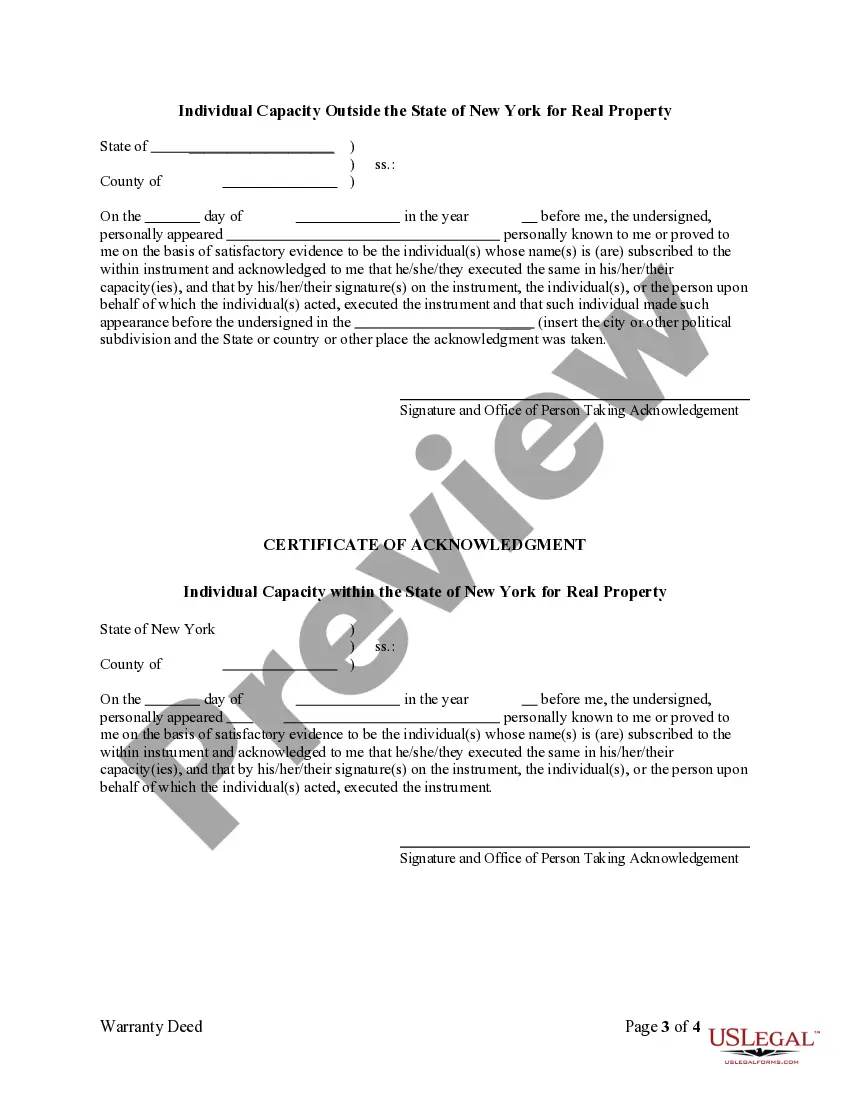
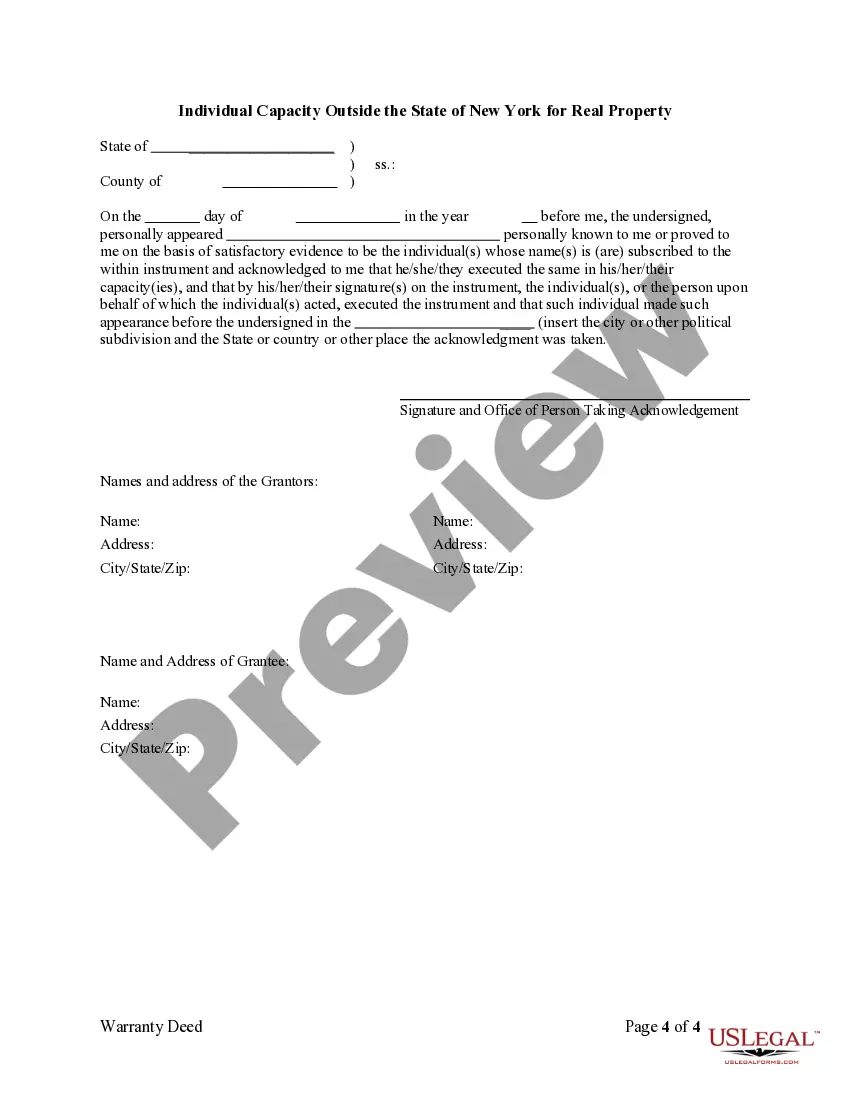
- Signatures: Section for the Grantors' signatures and acknowledgement by a notary or official.





When to use this document
This form should be used when two individuals wish to transfer ownership of a property to a limited liability company. It is particularly useful in scenarios such as property investments, business property acquisitions, or when individuals want to manage property assets through an LLC structure. This warranty deed ensures legal protection for the LLC from prior claims against the property.
Who can use this document
- Individuals who are co-owners of a property.
- Business owners looking to transfer property ownership to their LLC.
- Real estate investors acquiring property under an LLC.
- Attorneys or legal representatives facilitating real estate transactions.
How to complete this form
- Identify the Grantors: Enter the names of the two individuals conveying the property.
- Specify the Grantee: Enter the legal name of the LLC receiving the property.
- Provide the legal description: Attach a detailed legal description of the property as Exhibit A.
- Include reservations: Clearly state that oil, gas, and mineral rights are reserved by the Grantors.
- Sign and acknowledge: Both Grantors must sign the deed in front of a notary or official for validation.
Does this document require notarization?
Yes, this form must be notarized to be legally valid. Proper notarization involves signing the document in front of a certified notary public, ensuring that the identities of the Grantors are verified. US Legal Forms offers integrated online notarization services, making it easy and secure to complete the process from the comfort of your home.
Get your form ready online
Our built-in tools help you complete, sign, share, and store your documents in one place.
Make edits, fill in missing information, and update formatting in US Legal Forms—just like you would in MS Word.
Download a copy, print it, send it by email, or mail it via USPS—whatever works best for your next step.
Sign and collect signatures with our SignNow integration. Send to multiple recipients, set reminders, and more. Go Premium to unlock E-Sign.
If this form requires notarization, complete it online through a secure video call—no need to meet a notary in person or wait for an appointment.
We protect your documents and personal data by following strict security and privacy standards.

Make edits, fill in missing information, and update formatting in US Legal Forms—just like you would in MS Word.

Download a copy, print it, send it by email, or mail it via USPS—whatever works best for your next step.

Sign and collect signatures with our SignNow integration. Send to multiple recipients, set reminders, and more. Go Premium to unlock E-Sign.

If this form requires notarization, complete it online through a secure video call—no need to meet a notary in person or wait for an appointment.

We protect your documents and personal data by following strict security and privacy standards.
Common mistakes to avoid
- Not including a complete legal description of the property.
- Failure to properly reserve rights to oil, gas, and minerals.
- Not having the signatures notarized or acknowledged, which can invalidate the deed.
- Incorrectly identifying the legal names of the individuals or LLC.
Why complete this form online
- Convenient access to professionally drafted legal documents.
- Easy to edit and customize for your specific situation.
- Secure online processing ensures your information is protected.
- Fast download options allow for immediate use without visiting a lawyer.
Main things to remember
- A Warranty Deed from two Individuals to LLC is essential for transferring property rights to an LLC.
- The form preserves mineral rights for the Grantors, providing them continued ownership of these assets.
- Proper completion and notarization are crucial for ensuring legal validity.
Looking for another form?

Form popularity
FAQ
Retrieve your original deed. Get the appropriate deed form. Draft the deed. Sign the deed before a notary. Record the deed with the county recorder. Obtain the new original deed.
Fill in the deed form. Print it out. Have the grantor(s) sign and get the signature(s) notarized. Complete a transfer tax form, Form TP-584. Complete and print out Form RP-5217 (or, if you are in New York City, Form RP-5217NYC).
Before adding your spouse to the deed, speak with your attorney. The easiest way to grant your spouse title to your home is via a quitclaim deed (Californians generally use an interspousal grant deed). With a quitclaim deed, you can name your spouse as the property's joint owner.
To change the deed in New York City, as we discussed, we will need a deed signed and notorized by the grantor. Additionally, the deed must also be filed and recorded with the Office of the City Register along with transfer documents which identify if any taxes are due.
It is possible to be named on the title deed of a home without being on the mortgage. However, doing so assumes risks of ownership because the title is not free and clear of liens and possible other encumbrances.If a mortgage exists, it's best to work with the lender to make sure everyone on the title is protected.
Under New York law, a person who wishes to update her name on a deed must execute a new deed and record it with the county clerk where the property is located. Obtain or purchase a New York warranty deed form.
Yes you can. This is called a transfer of equity but you will need the permission of your lender. If you are not married or in a civil partnership you may wish to consider creating a deed of trust and a living together agreement which we can explain to you.
You would simply prepare a deed to you and your fiance. You would then have to prepare and execute the other necessary forms take them to the clerks office and file them. I suggest that you consult with a local attorney. They can do this at a modest cost.
The fees to file a New York quitclaim deed vary from county to county, but some of the fees are similar. As of 2018, the basic fee for filing a quitclaim deed of residential or farm property is $125, while the fee for all other property is $250. These fees are for the RP-5217 form.