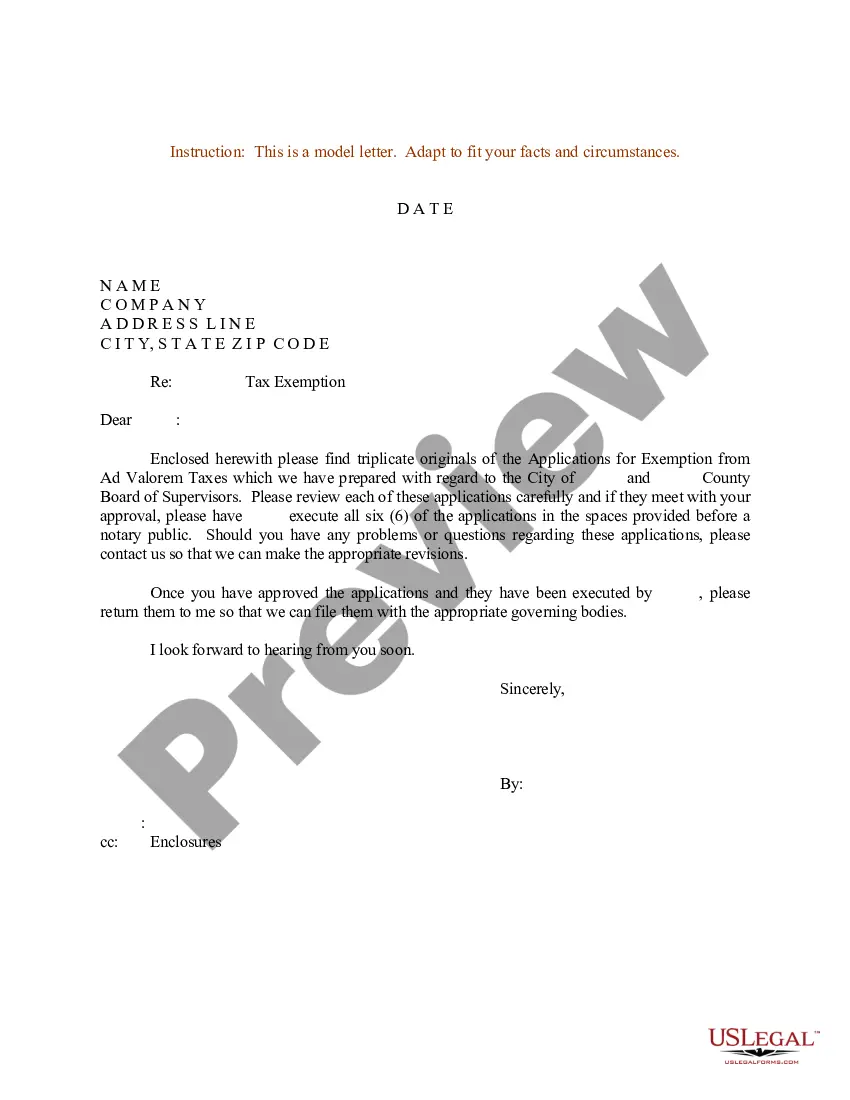
Nevada Mutual Wills Package with Last Wills and Testaments for Married Couple with Minor Children

About this form
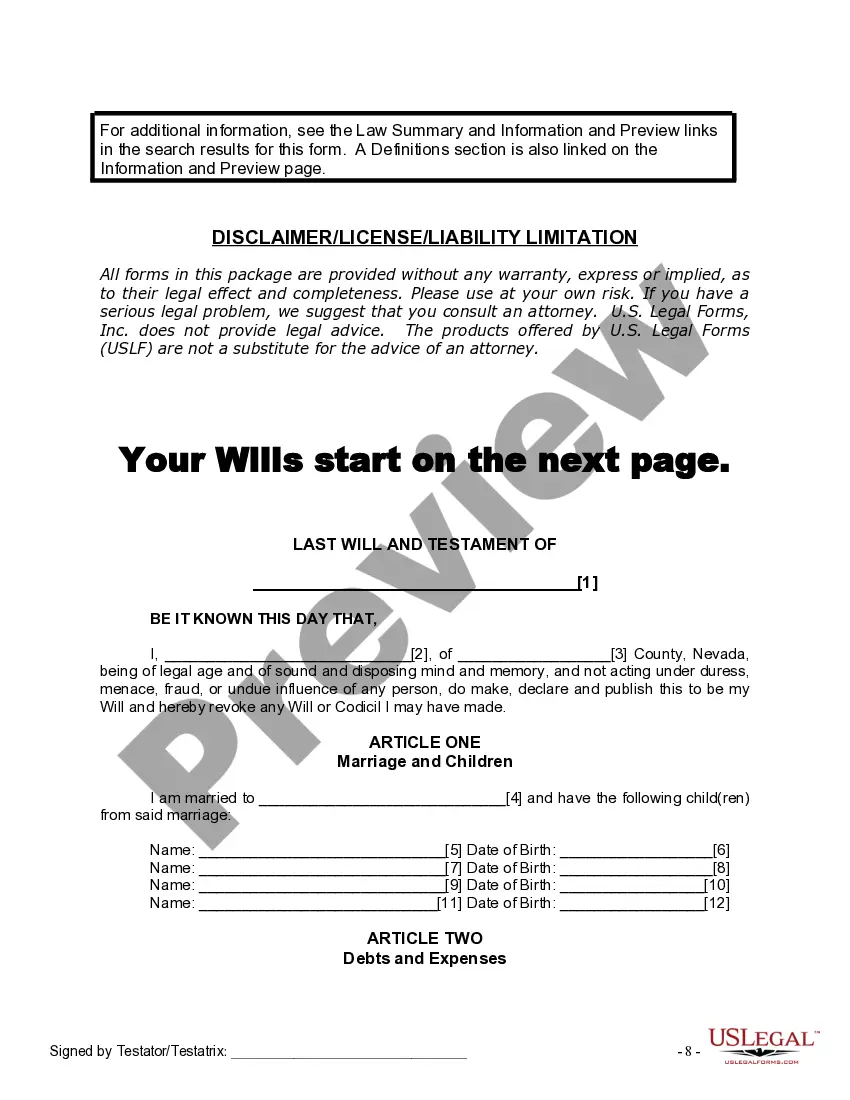
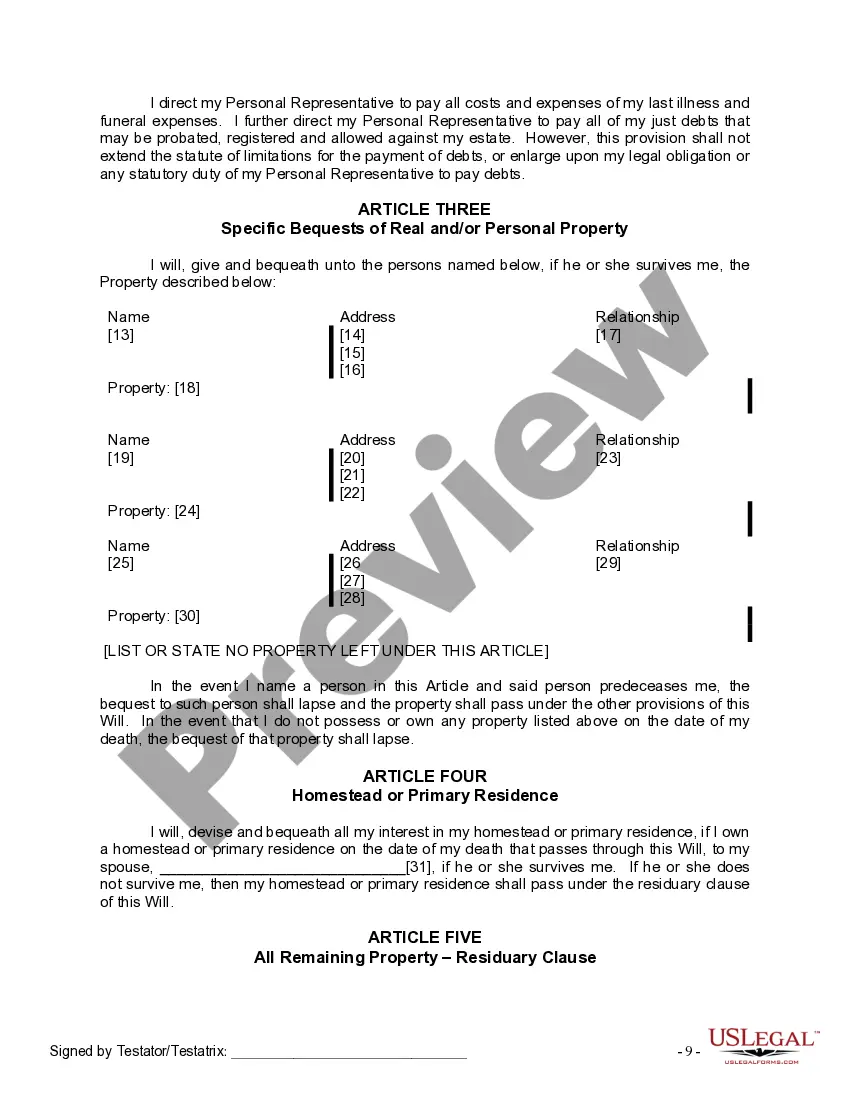
The Mutual Wills Package with Last Wills and Testaments for Married Couples with Minor Children provides legal documentation for spouses to specify the distribution of their assets upon death. This form is specifically designed for couples who want to ensure that their minor children are cared for and that their wishes regarding property distribution are legally recognized. Unlike individual wills, these mutual wills bind both spouses to the agreed terms, ensuring that the wishes of both partners are honored in the event of death.
Form components explained
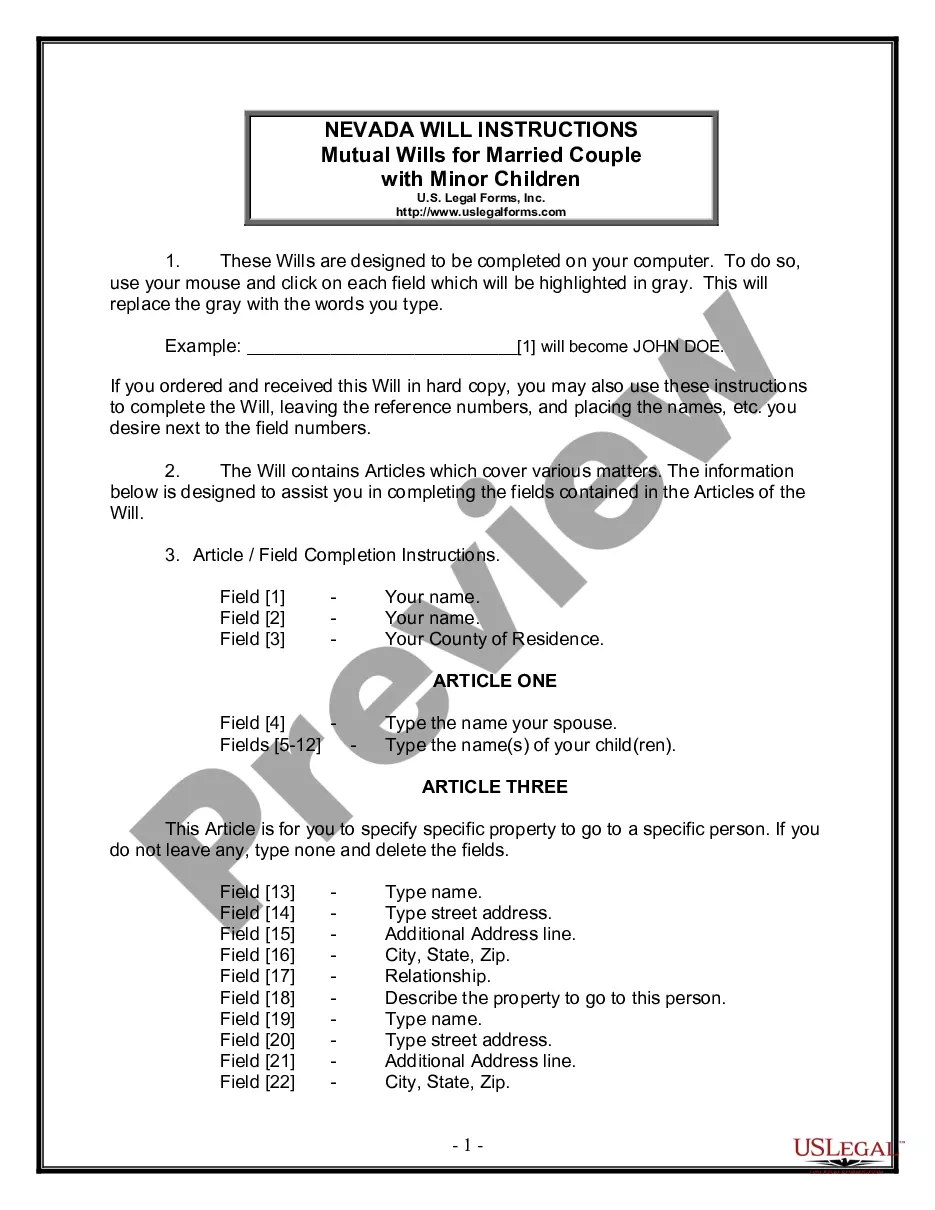
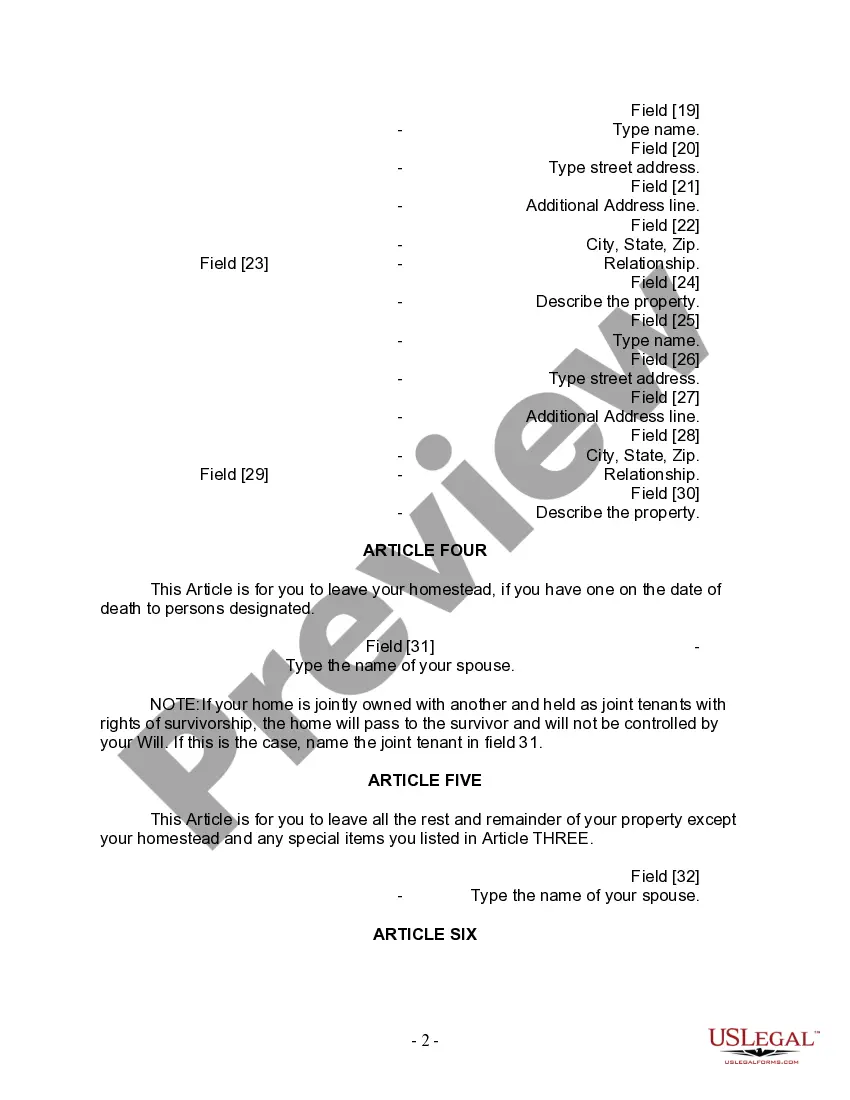
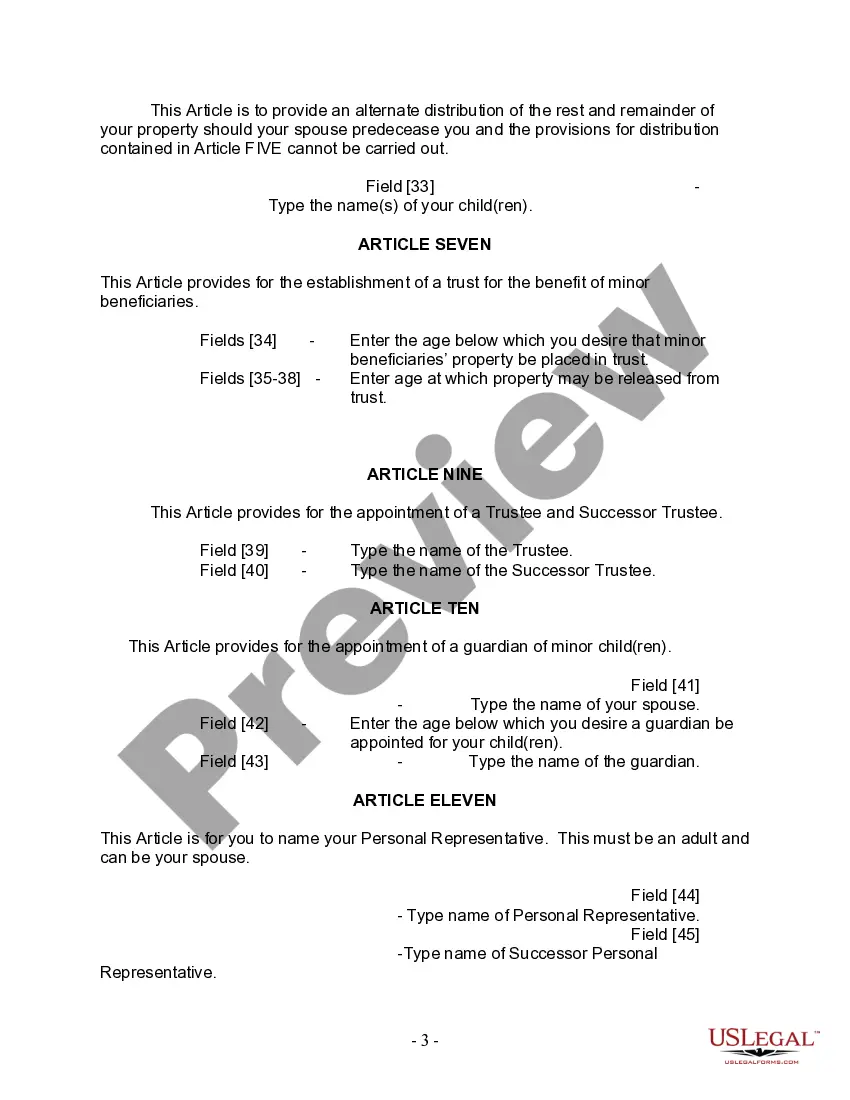
- Appointment of a personal representative or executor to manage the estate.
- Designation of property beneficiaries, ensuring both spouses and children are included.
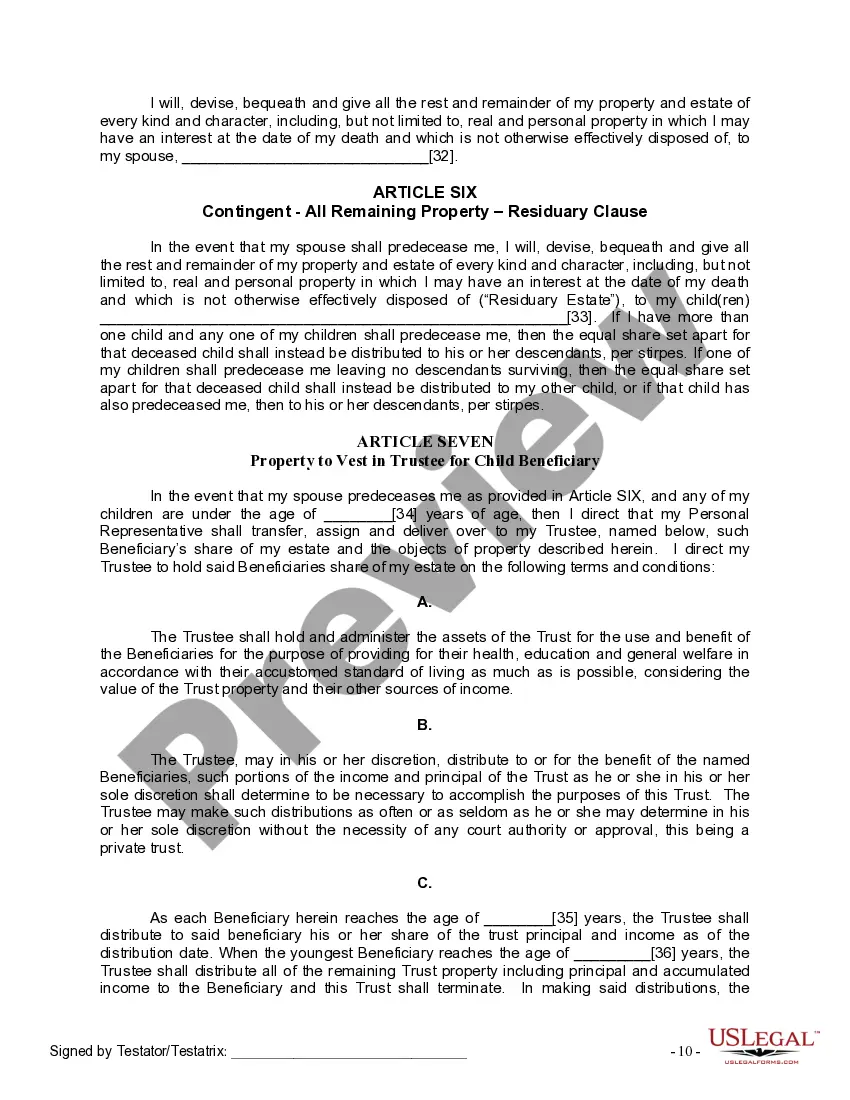
- Provisions for establishing a trust for minor children's assets.
- Instructions for the appointment of a guardian for minor children.
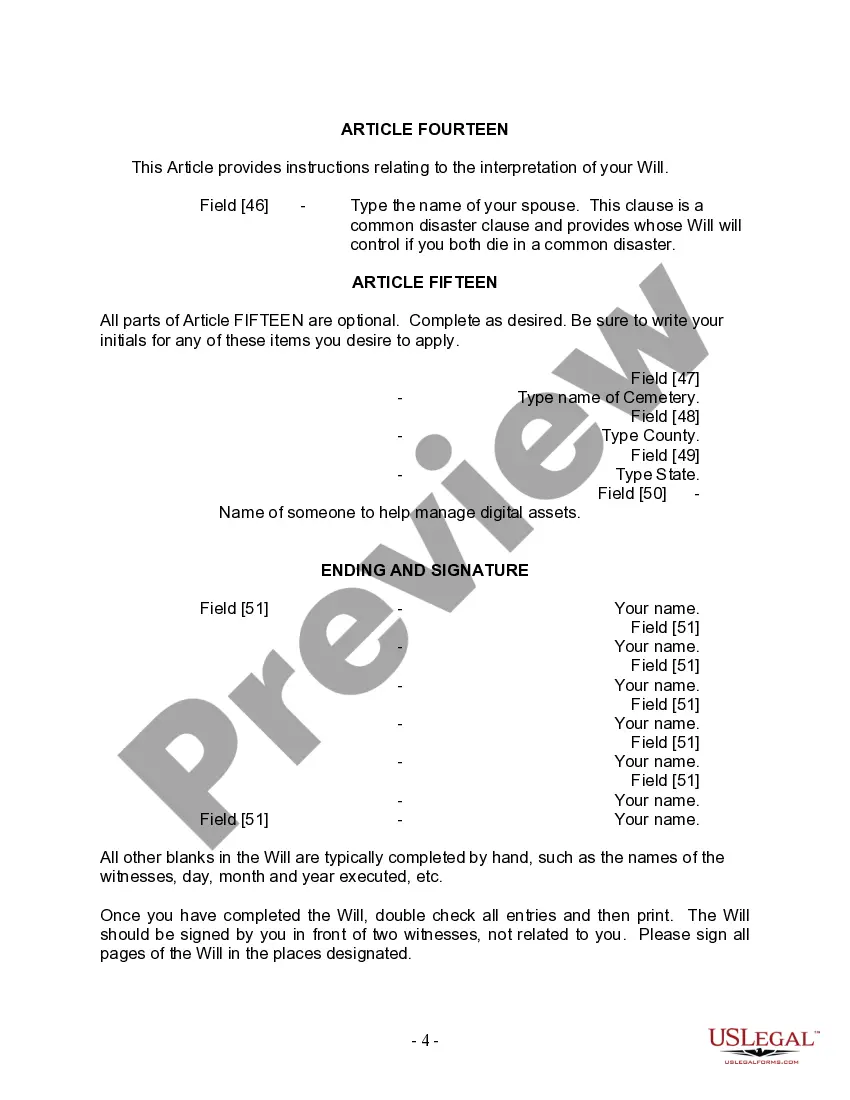
- Self-proving affidavit to simplify the probate process, with requirements for notarization.




When to use this document
This form should be utilized by married couples who have minor children and want to outline their wishes for asset distribution upon their deaths. It is particularly useful to prevent disputes and ensure that the couple's intentions are upheld regarding guardianship and the management of any trusts set up for their children.
Who can use this document
- Married couples with minor children.
- Couples who wish to ensure mutual consent on asset distribution.
- Individuals looking to simplify the probate process for their survivors.
How to prepare this document
- Clearly identify the full names of both spouses in the designated fields.
- List any minor children and specify any specific property they will receive.
- Designate guardians for the minor children, along with their contact information.
- Sign the wills in the presence of two witnesses, ensuring they are not relatives or mentioned in the will.
- Consider completing the self-proving affidavit with a notary to streamline probate.
Does this document require notarization?
To make this form legally binding, it must be notarized. Our online notarization service, powered by Notarize, lets you verify and sign documents remotely through an encrypted video session.
Get your form ready online
Our built-in tools help you complete, sign, share, and store your documents in one place.
Make edits, fill in missing information, and update formatting in US Legal Forms—just like you would in MS Word.
Download a copy, print it, send it by email, or mail it via USPS—whatever works best for your next step.
Sign and collect signatures with our SignNow integration. Send to multiple recipients, set reminders, and more. Go Premium to unlock E-Sign.
If this form requires notarization, complete it online through a secure video call—no need to meet a notary in person or wait for an appointment.
We protect your documents and personal data by following strict security and privacy standards.

Make edits, fill in missing information, and update formatting in US Legal Forms—just like you would in MS Word.

Download a copy, print it, send it by email, or mail it via USPS—whatever works best for your next step.

Sign and collect signatures with our SignNow integration. Send to multiple recipients, set reminders, and more. Go Premium to unlock E-Sign.

If this form requires notarization, complete it online through a secure video call—no need to meet a notary in person or wait for an appointment.

We protect your documents and personal data by following strict security and privacy standards.
Common mistakes
- Failing to have two disinterested witnesses sign the will.
- Not completing the self-proving affidavit, which can complicate the probate process.
- Leaving out specific instructions for guardianship of minor children.
- Assuming mutual wills do not require legal formalities similar to independent wills.
Advantages of online completion
- Convenience of completing forms at your own pace from home.
- Editability that allows users to tailor the document to their specific needs.
- Access to templates created by licensed attorneys, ensuring legal compliance.
- Ability to securely store and download completed documents for easy access.
Looking for another form?


Form popularity
FAQ
The difference between them, however, is that in the case of mirror wills, there is nothing to stop either person changing their Wills, even if they are still with the 'mirror' person.
The doctrine of mutual Wills does not theoretically take away the ability to make a new Will revoking the mutual Will.So the practical effect is that a mutual Will is only revocable in accordance with the agreement (if at all).
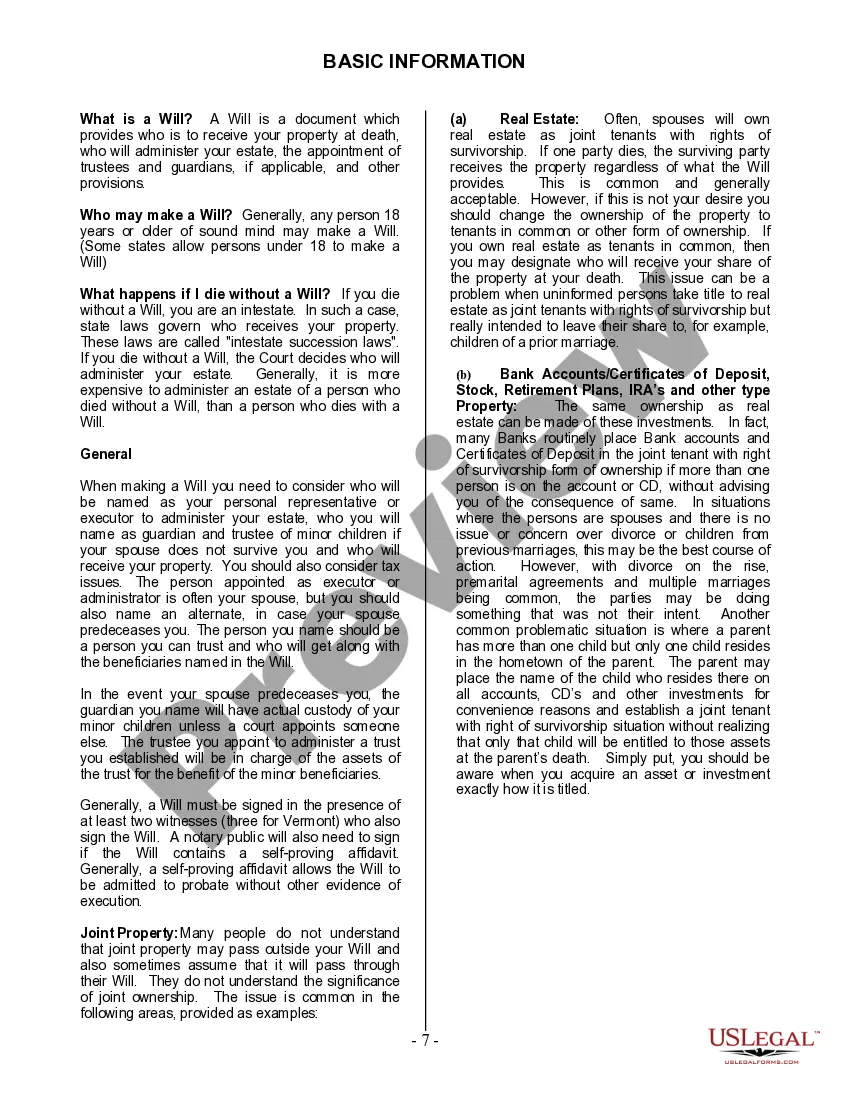
As mutual wills are binding, the key purpose of such wills is to ensure that property flows to intended, agreed, beneficiaries. They are generally used to ensure that a testator's property can be enjoyed by another during his or her lifetime, but then passes to a third party, the 'ultimate beneficiary.
The reason is that making it impossible for the surviving spouse to change the terms of the will can turn out to be a very bad result. The survivorwho may live years or decades after the first spouse's deathcannot react to changed life circumstances, and the family may suffer as a result.