Nevada Notice of Default on Residential Lease
About this form
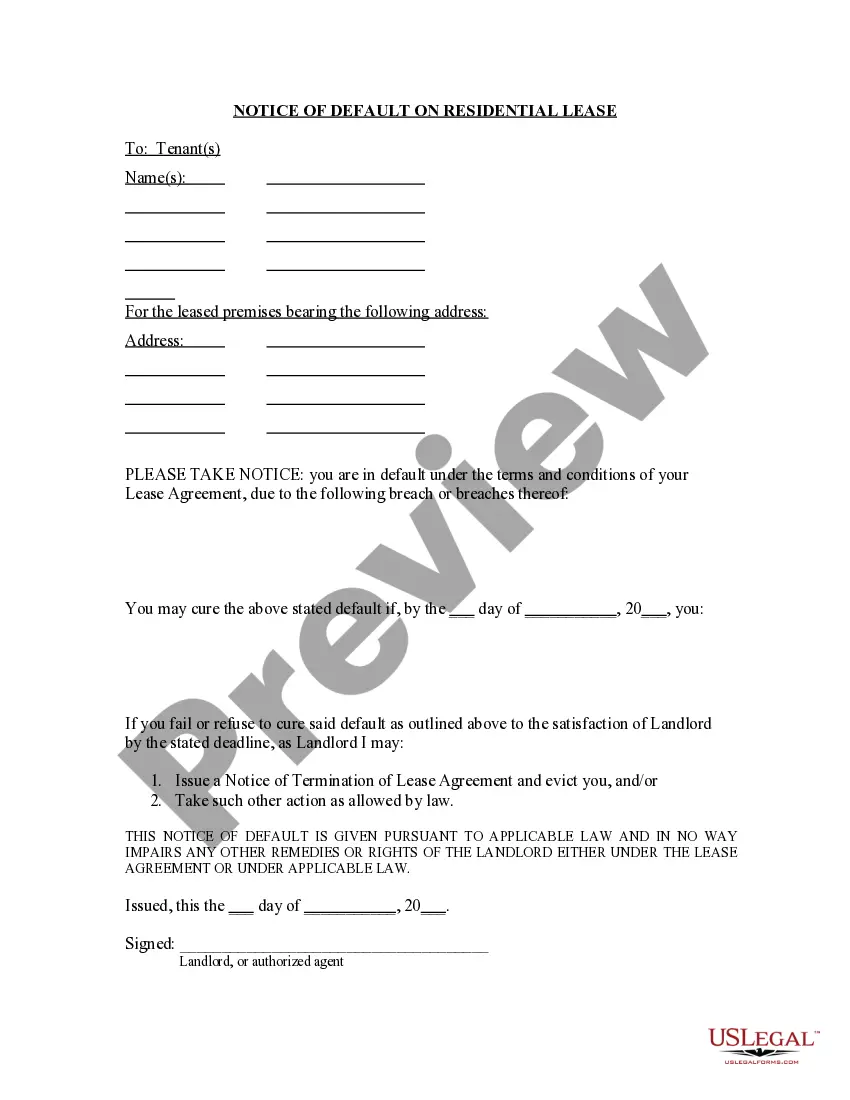
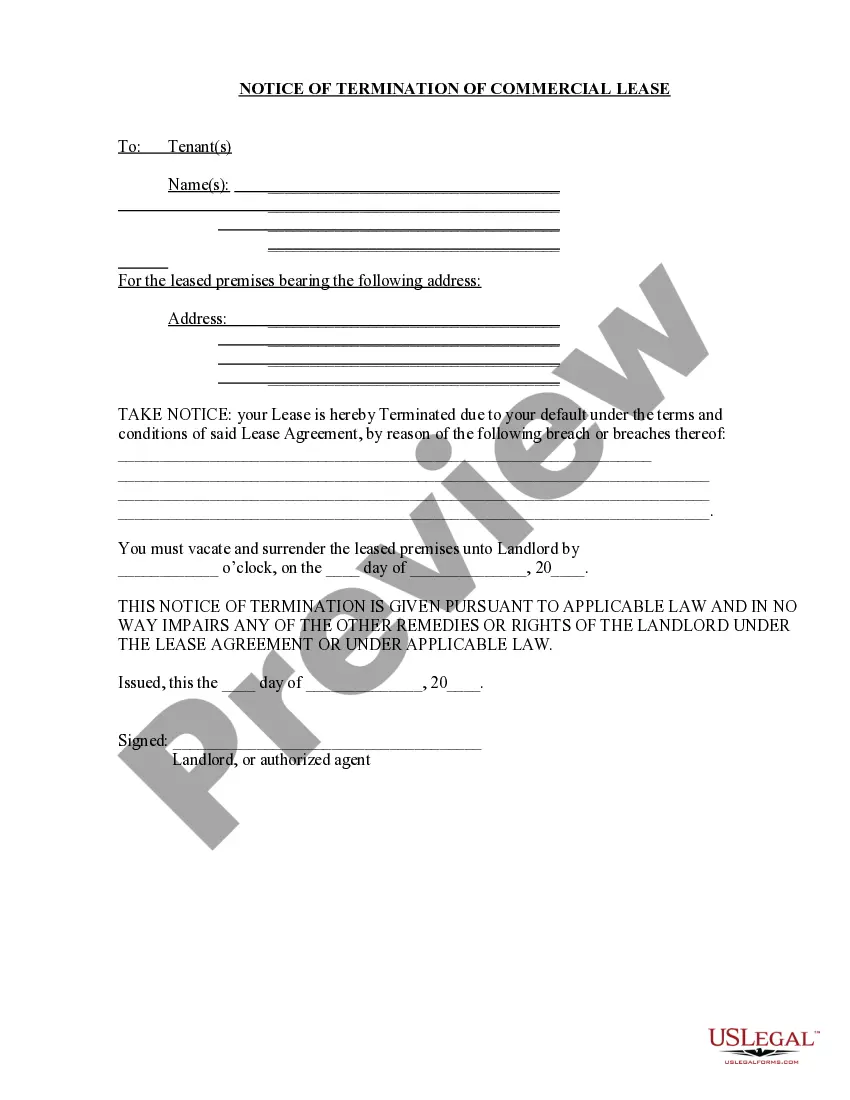
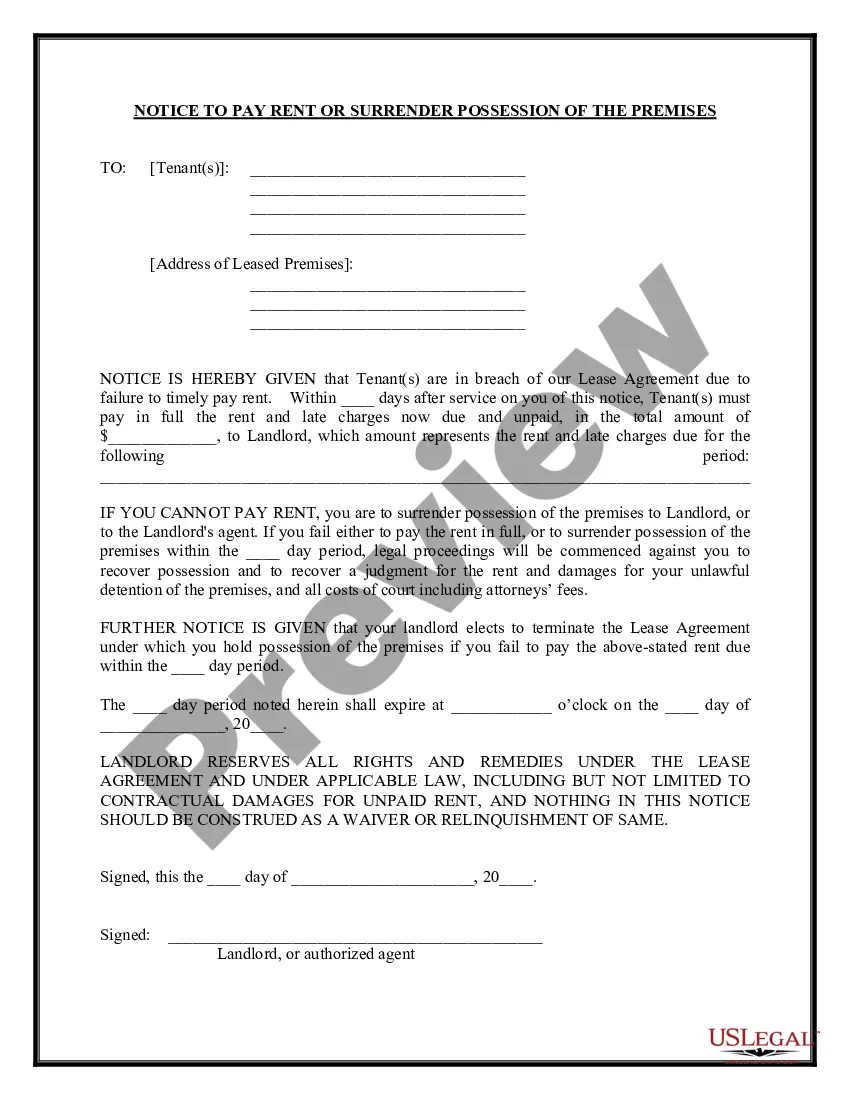
The Notice of Default on Residential Lease is a formal document issued by a landlord to a tenant indicating that the tenant has failed to comply with specific terms of their lease. This notice specifies the reasons for the default and provides a deadline for the tenant to rectify the issue. It serves as a crucial step in the eviction process, differentiating it from other lease-related forms by its focus on the tenant's failure to meet lease obligations.
Form components explained
- Identification of the tenant and landlord.
- Specific reasons for the default.
- Deadline date for the tenant to cure the default.
- Statement of potential consequences if the default is not corrected.
- Signature line for the landlord or authorized agent.

When this form is needed
This form is used when a landlord needs to notify a tenant about a breach of the lease agreement. Common scenarios include non-payment of rent, failure to maintain the property as required, or other lease violations. It is essential to issue this notice before proceeding with eviction or other legal actions against the tenant.
Who needs this form
- Landlords seeking to enforce lease terms against non-compliant tenants.
- Property managers acting on behalf of landlords.
- Legal representatives involved in landlord-tenant disputes.
Steps to complete this form
- Identify the parties involved: clearly state the names of the landlord and tenant.
- Specify the property: include the address of the rental property.
- Detail the reasons for default: clearly list the specific lease violations.
- State the deadline: provide a date by which the tenant must cure the default.
- Sign and date the notice: have the landlord or authorized agent sign the document.
Is notarization required?
Notarization is generally not required for this form. However, certain states or situations might demand it. You can complete notarization online through US Legal Forms, powered by Notarize, using a verified video call available anytime.
Get your form ready online
Our built-in tools help you complete, sign, share, and store your documents in one place.
Make edits, fill in missing information, and update formatting in US Legal Forms—just like you would in MS Word.
Download a copy, print it, send it by email, or mail it via USPS—whatever works best for your next step.
Sign and collect signatures with our SignNow integration. Send to multiple recipients, set reminders, and more. Go Premium to unlock E-Sign.
If this form requires notarization, complete it online through a secure video call—no need to meet a notary in person or wait for an appointment.
We protect your documents and personal data by following strict security and privacy standards.

Make edits, fill in missing information, and update formatting in US Legal Forms—just like you would in MS Word.

Download a copy, print it, send it by email, or mail it via USPS—whatever works best for your next step.

Sign and collect signatures with our SignNow integration. Send to multiple recipients, set reminders, and more. Go Premium to unlock E-Sign.

If this form requires notarization, complete it online through a secure video call—no need to meet a notary in person or wait for an appointment.

We protect your documents and personal data by following strict security and privacy standards.
Avoid these common issues
- Failing to provide specific reasons for the default.
- Not including a clear deadline for compliance.
- Omitting signatures from the landlord or authorized agent.
- Not following state-specific notice requirements.
Why complete this form online
- Convenient: download and fill out the form at your own pace.
- Editability: easily modify the form to accommodate specific circumstances.
- Reliability: forms are drafted by licensed attorneys to ensure legal compliance.
Legal use & context
- This notice serves as a preliminary step before eviction proceedings.
- It must comply with local housing laws to be enforceable.
- Landlords retain other legal remedies under applicable law.
Summary of main points
- The Notice of Default is essential for addressing tenant violations.
- Provide clear reasons and a deadline to cure the default.
- Follow state-specific guidelines for effective enforcement.
Looking for another form?



Form popularity
FAQ
State law regulates several rent-related issues, including late and bounced-check fees, the amount of notice (at least 45 days in Nevada) landlords must give tenants to raise the rent, and how much time (five days in Nevada) a tenant has to pay overdue rent or move before a landlord can file for eviction.
A no-cause eviction is when a tenant hasn't done anything wrong and the landlord does not want to renew a lease. A landlord cannot use a no-cause eviction before a lease is up. Currently, property owners have to give tenants a 30-days notice for normal renters.
Nevada law requires a thirty-day notice to the tenant (or a seven-day notice if the tenant pays rent weekly), followed by a second five-day Notice to Quit for Unlawful Detainer (after the first notice period has elapsed) instructing the tenant to leave because tenant's presence is now unlawful.
Unless your lease says otherwise simply breaking it is not an option. This is known as "unilateral breach" and typical penalties can include: Paying the rent - One way or another, if you walk away from your lease and no one else rents the apartment then you will owe the landlord this money.
State law regulates several rent-related issues, including late and bounced-check fees, the amount of notice (at least 45 days in Nevada) landlords must give tenants to raise the rent, and how much time (five days in Nevada) a tenant has to pay overdue rent or move before a landlord can file for eviction.
Tenant default occurs when a Tenant breaches one of the tenant's covenants in its lease. Tenant default can arise in a number of different ways but will typically be for one of the following: Non-payment of rent or other sums reserved under the lease.
Your landlord can end the let at any time by serving a written 'notice to quit'. The notice period will depend on the tenancy or agreement, but is often at least 4 weeks.
Nevada's new eviction ban prevents protected tenants from being evicted from residential properties through March 31, 2021. Importantly, the ban is not automatic so tenants must take action to protect themselves.
In landlord-tenant law, default refers to the failure of a tenant to timely pay rent due.In general, the landlord is required to give the tenant notice of the default before bringing eviction proceedings or applying security deposit proceeds to the payment in default.