Nevada Grant, Bargain, Sale Deed from Husband and Wife to a Trust
What this document covers
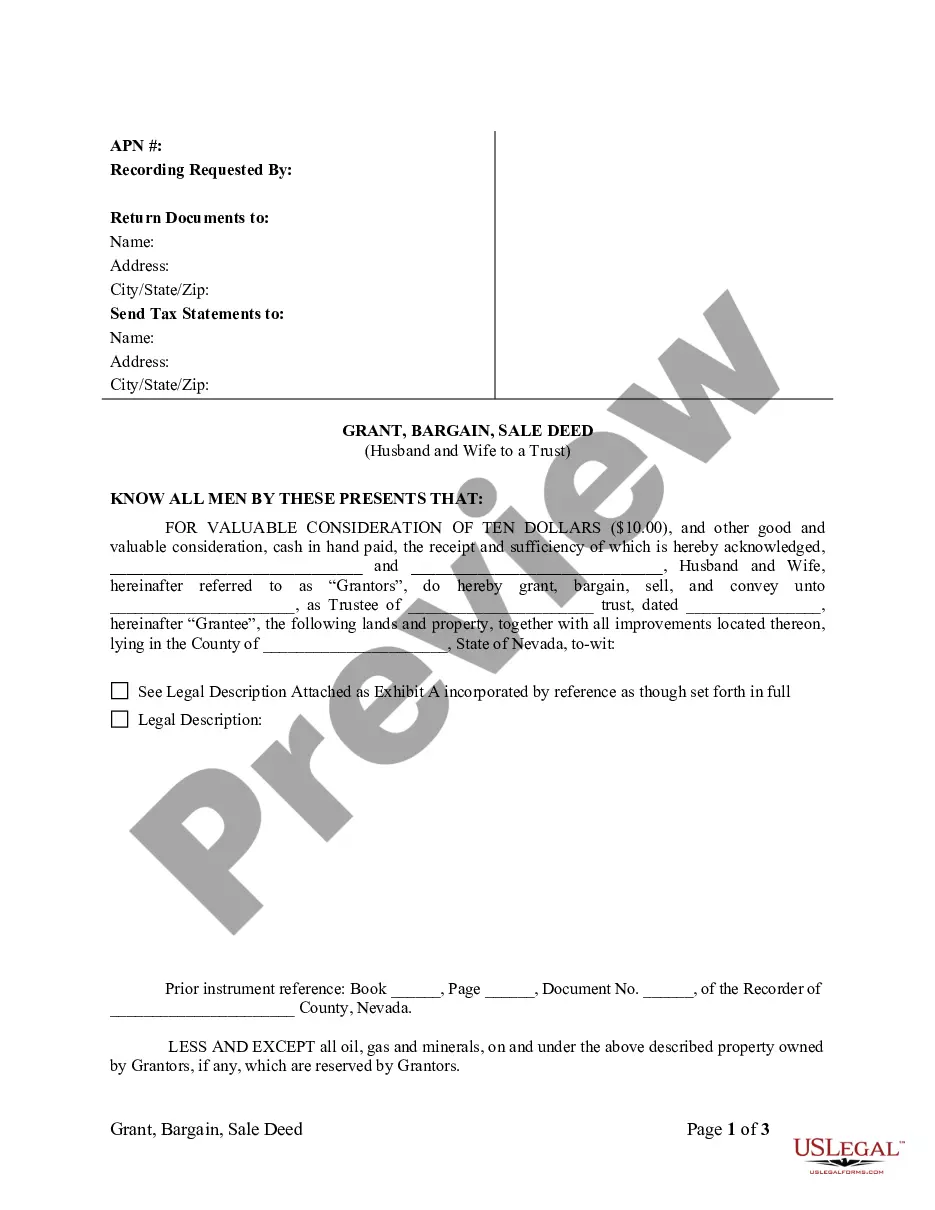
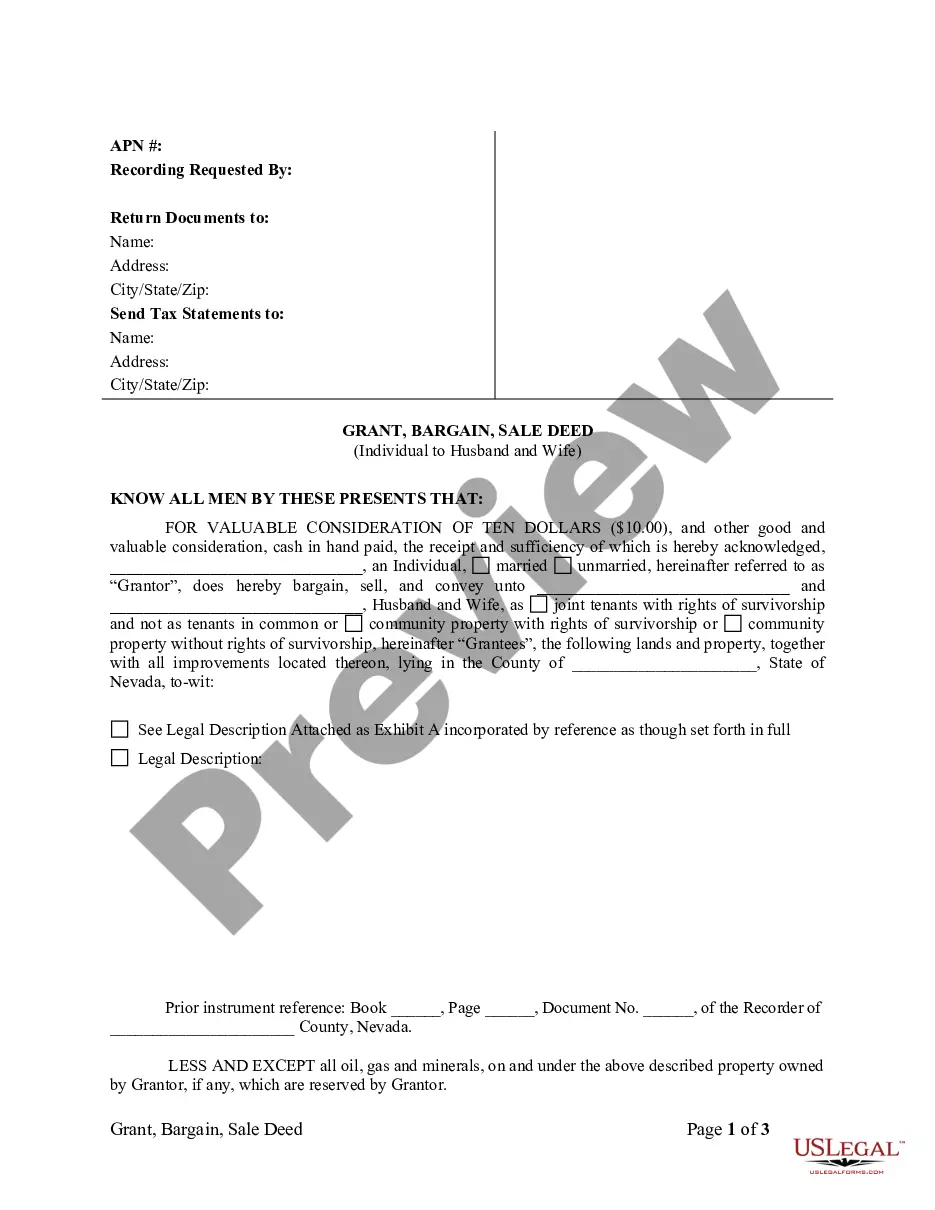
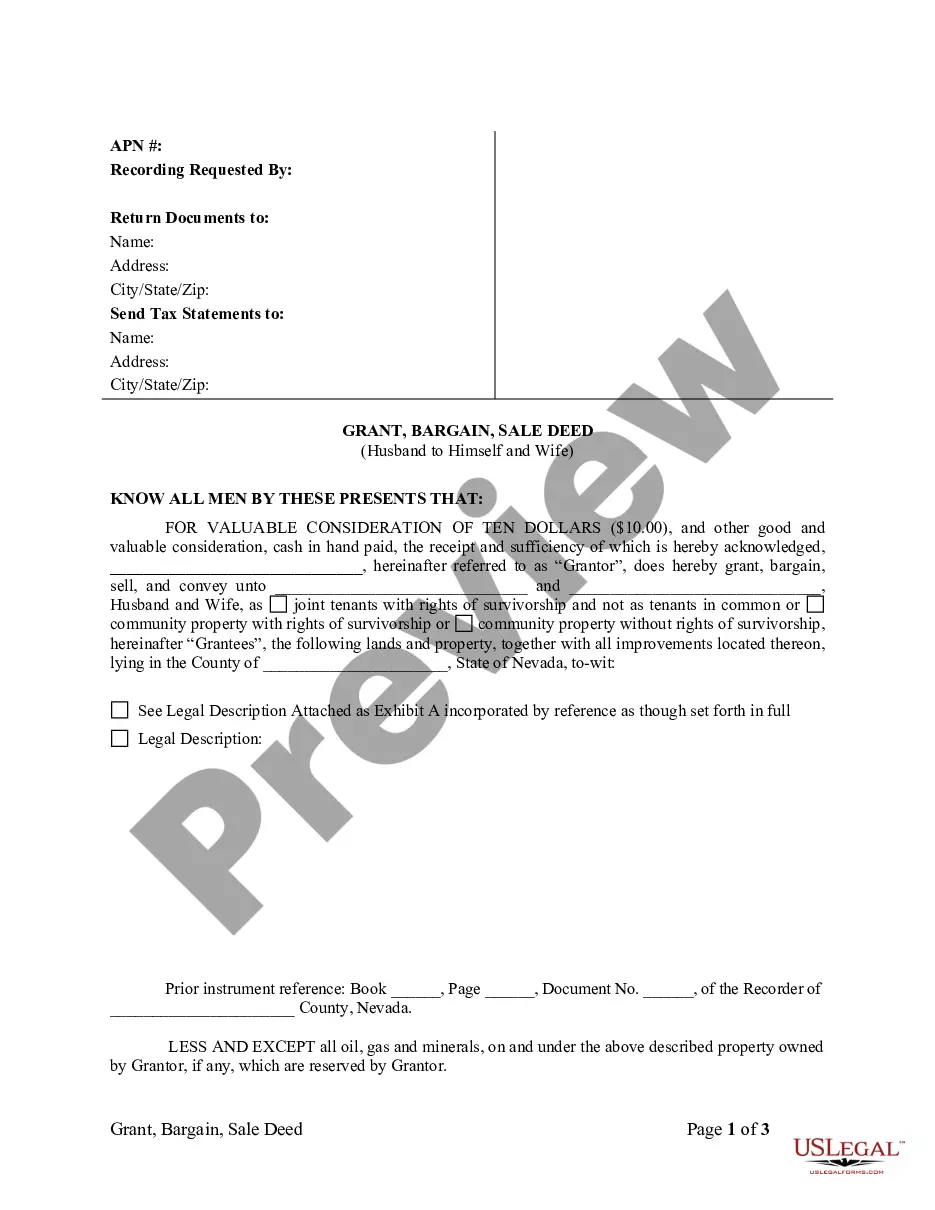
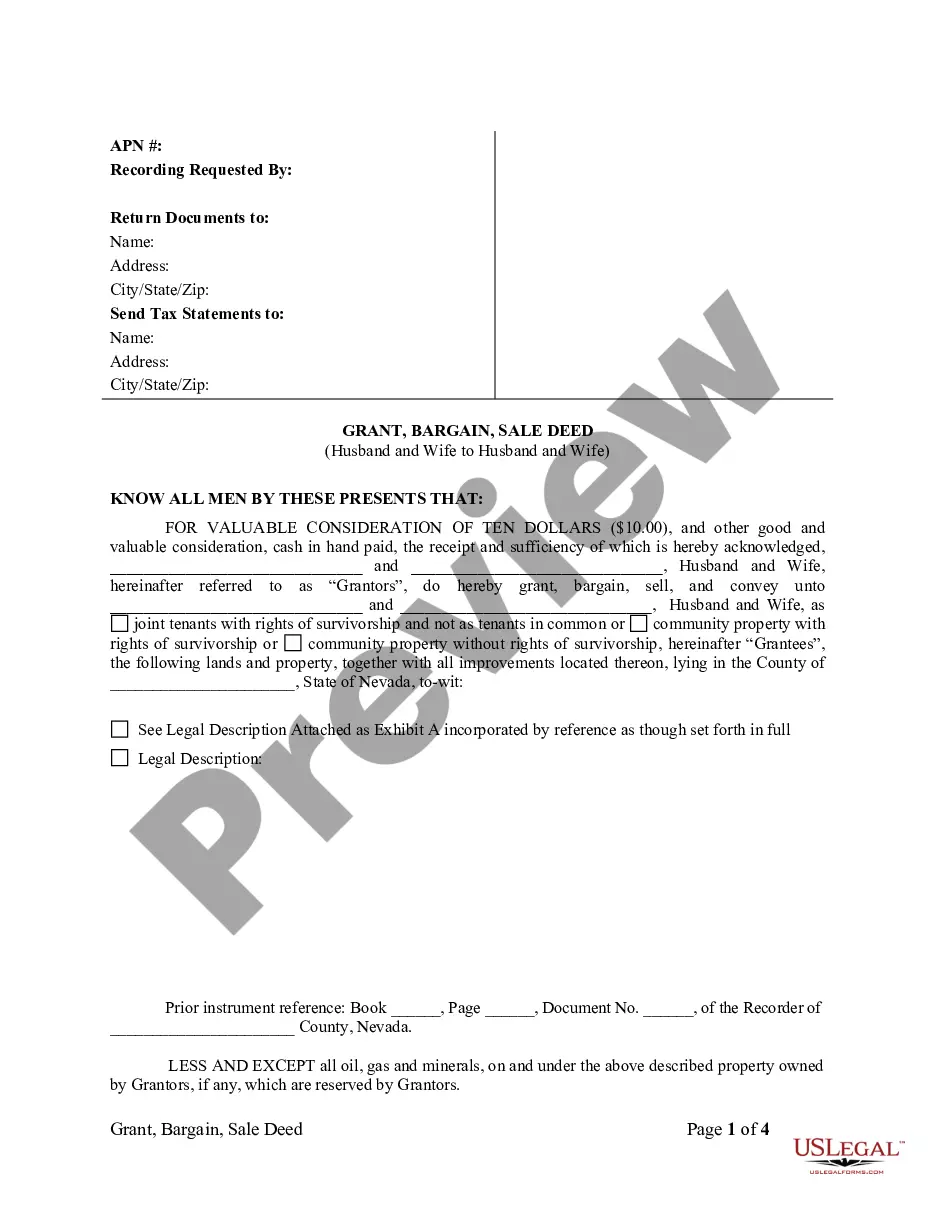
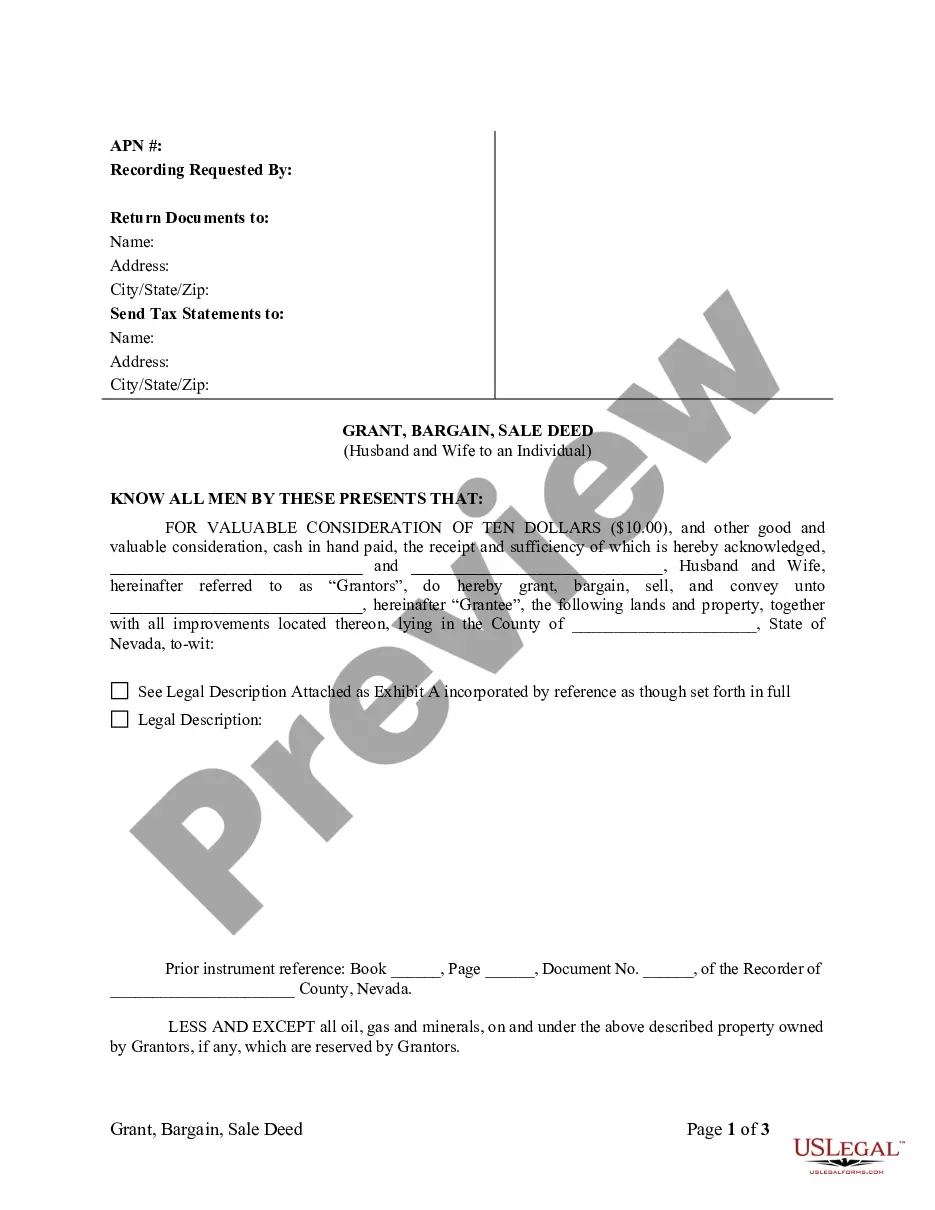
The Grant, Bargain, Sale Deed from Husband and Wife to a Trust is a legal document through which a married couple conveys ownership of property to a trust. Unlike other types of deeds, this Warranty Deed specifically involves both grantors (the husband and wife) and a grantee (the trust), ensuring the transfer includes specific reservations for oil, gas, and minerals unless otherwise stated. This form complies with state statutory laws, providing a reliable means to facilitate property transfers to trusts.
What’s included in this form
- Identification of grantors (husband and wife) and the grantee (trust).
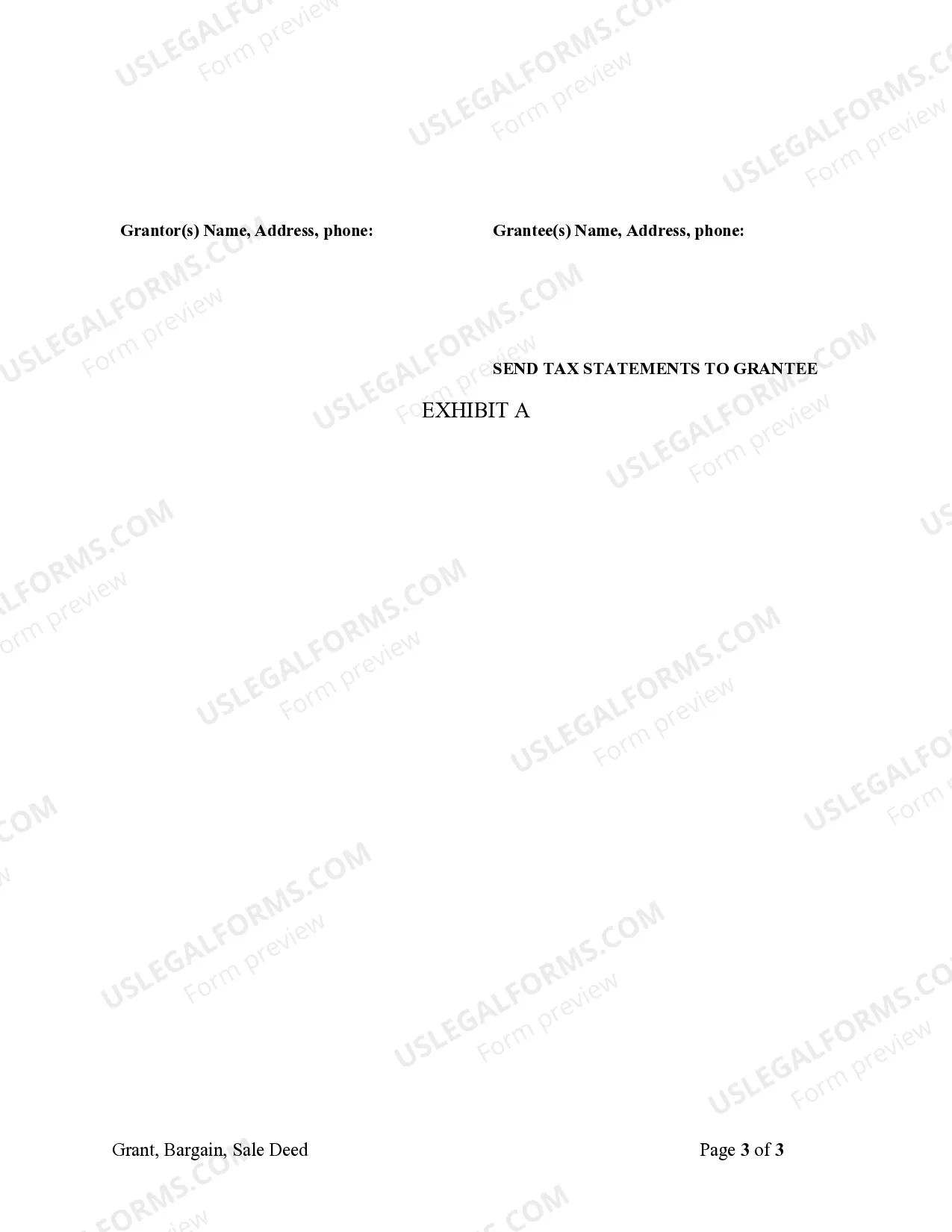
- Legal description of the property being conveyed.
- Reservation of rights for any oil, gas, or minerals beneath the property.
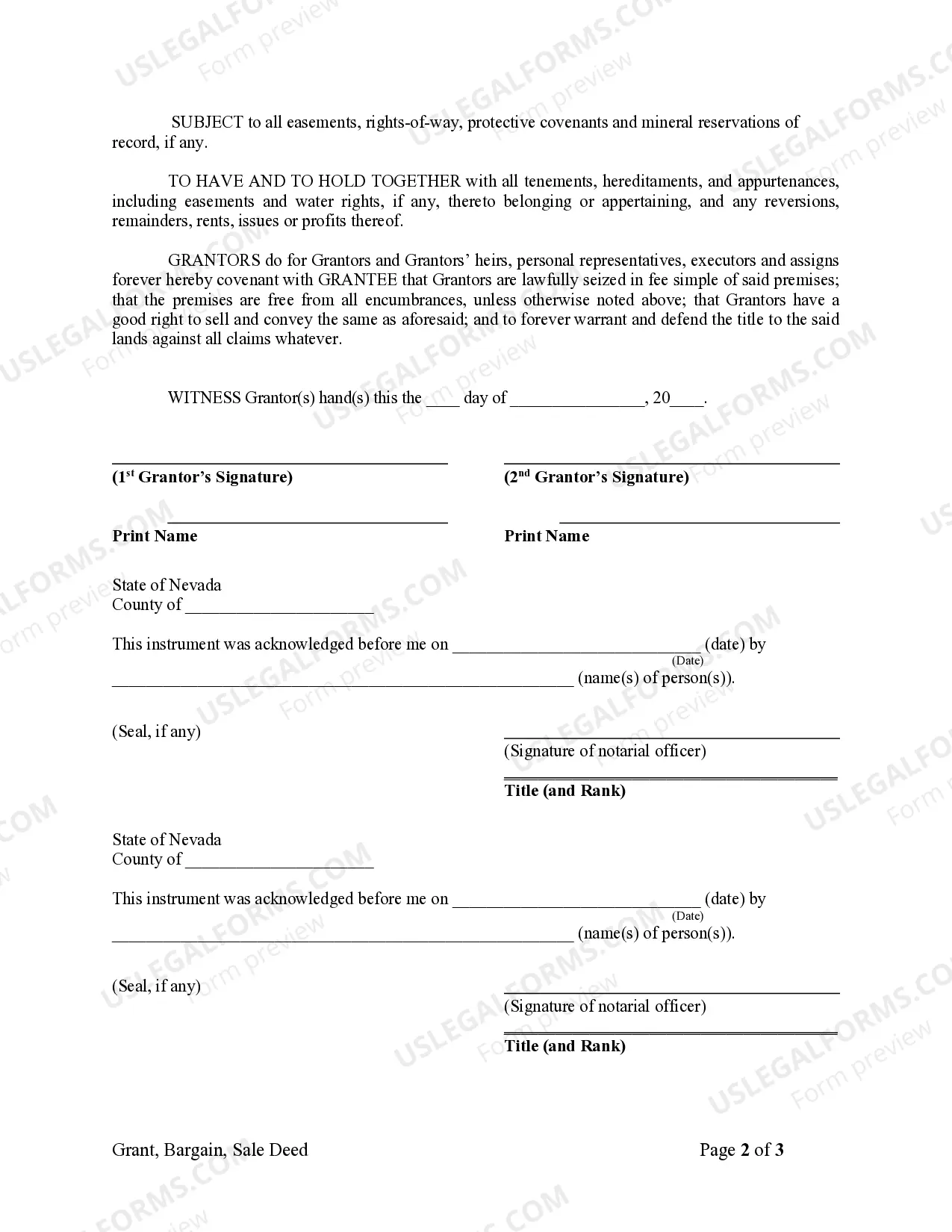
- Covenants by the grantors assuring they hold clear title to the property.
- Signatures of the grantors with dates to finalize the agreement.

When this form is needed
This form is typically used when a husband and wife wish to transfer their property into a trust for estate planning purposes. It may also be applicable when seeking to protect the property from probate or to manage assets more effectively for beneficiaries. Additionally, it is beneficial when the couple wants to retain control over the property while guaranteeing its transfer upon the grantors' passing.
Who should use this form
- Married couples looking to place their property into a trust.
- Individuals involved in estate planning and asset management.
- Homeowners wishing to specify the ownership structure of their property.
- Trustees managing assets on behalf of beneficiaries.
Completing this form step by step
- Identify the full names of the grantors (husband and wife).
- Enter the name of the trust receiving the property as the grantee.
- Provide a detailed legal description of the property.
- Specify any reservations regarding oil, gas, or minerals as required.
- Both grantors must sign and date the document to validate the deed.
Is notarization required?
This form does not typically require notarization unless specified by local law. However, having it notarized can help ensure greater legal validity and ease in processing.
Get your form ready online
Our built-in tools help you complete, sign, share, and store your documents in one place.
Make edits, fill in missing information, and update formatting in US Legal Forms—just like you would in MS Word.
Download a copy, print it, send it by email, or mail it via USPS—whatever works best for your next step.
Sign and collect signatures with our SignNow integration. Send to multiple recipients, set reminders, and more. Go Premium to unlock E-Sign.
If this form requires notarization, complete it online through a secure video call—no need to meet a notary in person or wait for an appointment.
We protect your documents and personal data by following strict security and privacy standards.

Make edits, fill in missing information, and update formatting in US Legal Forms—just like you would in MS Word.

Download a copy, print it, send it by email, or mail it via USPS—whatever works best for your next step.

Sign and collect signatures with our SignNow integration. Send to multiple recipients, set reminders, and more. Go Premium to unlock E-Sign.

If this form requires notarization, complete it online through a secure video call—no need to meet a notary in person or wait for an appointment.

We protect your documents and personal data by following strict security and privacy standards.
Typical mistakes to avoid
- Failing to provide a complete legal description of the property.
- Not specifying reservations for oil, gas, or minerals when applicable.
- Omitting signatures or dates from the grantors.
- Incorrectly identifying the trust, which could lead to title issues.
Why use this form online
- Immediate access to downloadable forms tailored by licensed attorneys.
- Convenient editing options that allow customization for your specific needs.
- Reliable resources that comply with current legal standards.
Legal use & context
- The Grant, Bargain, Sale Deed creates a legally binding transfer of property ownership.
- This form is enforceable in accordance with Nevada state law governing property transfers.
- Proper execution and adherence to legal requirements are essential to avoid disputes.
Key takeaways
- A Grant, Bargain, Sale Deed facilitates the transfer of property from a married couple to a trust.
- This form protects property rights while ensuring compliance with state laws.
- Correctly completing and executing the deed is vital for legal validity.
Looking for another form?






Form popularity
FAQ
A grant, bargain, and sale deed is commonly used in Nevada for a conveyance of real property.A certificate of the acknowledgement or proof of execution, signed by the person taking the acknowledgment or proof, and under the seal or stamp of that person, will entitle the deed to be recorded (NRS 111.310).
A bargain and sale deed doesn't warrant against any encumbrances. It simply implies that the grantor holds title to the property.A bargain and sale deed is much like a quitclaim deed in this respect. It conveys property, but it makes no guarantees that no one else has a stake in that property.
The Nevada Deed Upon Death is like a regular deed you might use to transfer real estate located in Nevada, but with a crucial difference: It doesn't take effect until your death. At your death, the real estate goes automatically to the person you named to inherit it, without the need for probate court proceedings.
The Grantee and Grantor are jointly and severally liable for the payment of the tax. When all taxes and recording fees required are paid, the deed is recorded. Each County Recorder's Office: 1.
Quitclaim deeds are most often used to transfer property between family members. Examples include when an owner gets married and wants to add a spouse's name to the title or deed, or when the owners get divorced and one spouse's name is removed from the title or deed.
Bargain and sale deeds are most often used when property is transferred pursuant to a foreclosure, tax sale, or settlement of the estate of a deceased person. They may also be used in the same situations as a quitclaim deed, although they give the grantee a little more protection.
Buying property with this type of deed is not necessarily a bad idea, but it is advisable to take some precautions. If possible, a title search should be conducted to look for any clouds on the title and to see how difficult it would be to release them.
The quitclaim deed provides no warranties; it conveys the interest the grantor had in the propertynothing more.The bargain and sale deed indicates that the grantor has title; but property might come with encumbrances and defects.
Bargain and sale deeds, as the term suggests, is used in a sale. Unlike a quitclaim, the bargain and sale deed indicates that the grantor has the title and can convey it to a buyer.The bargain and sale deed indicates that the grantor has title; but property might come with encumbrances and defects.