New Mexico Revocation of Power of Attorney for Care of Child or Children
Overview of this form
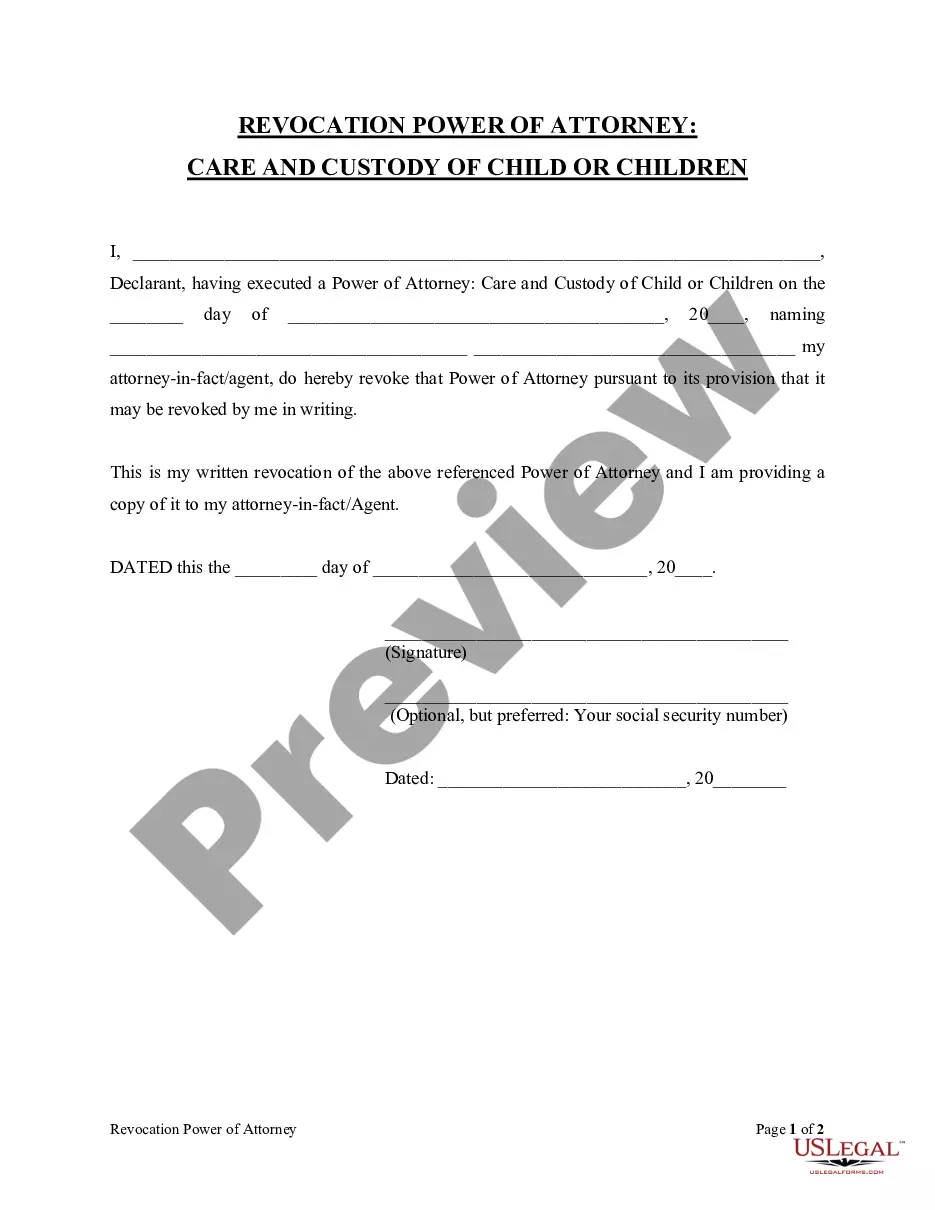
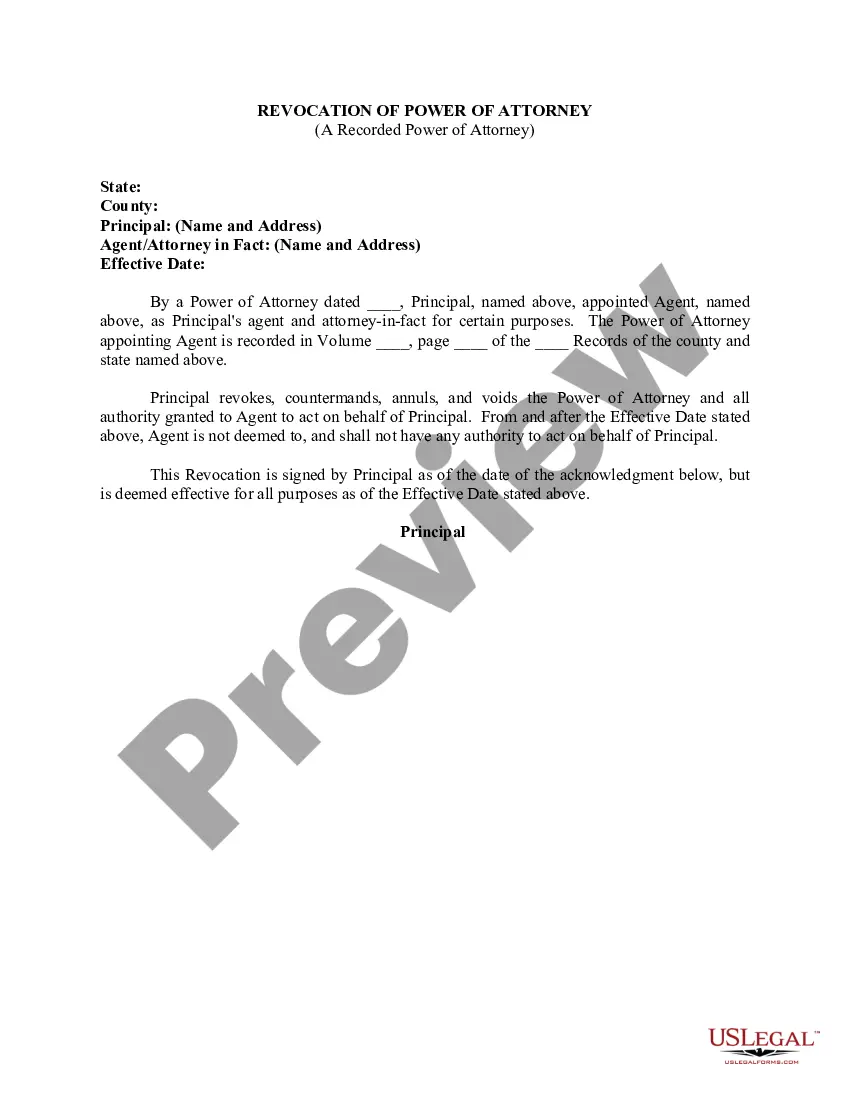
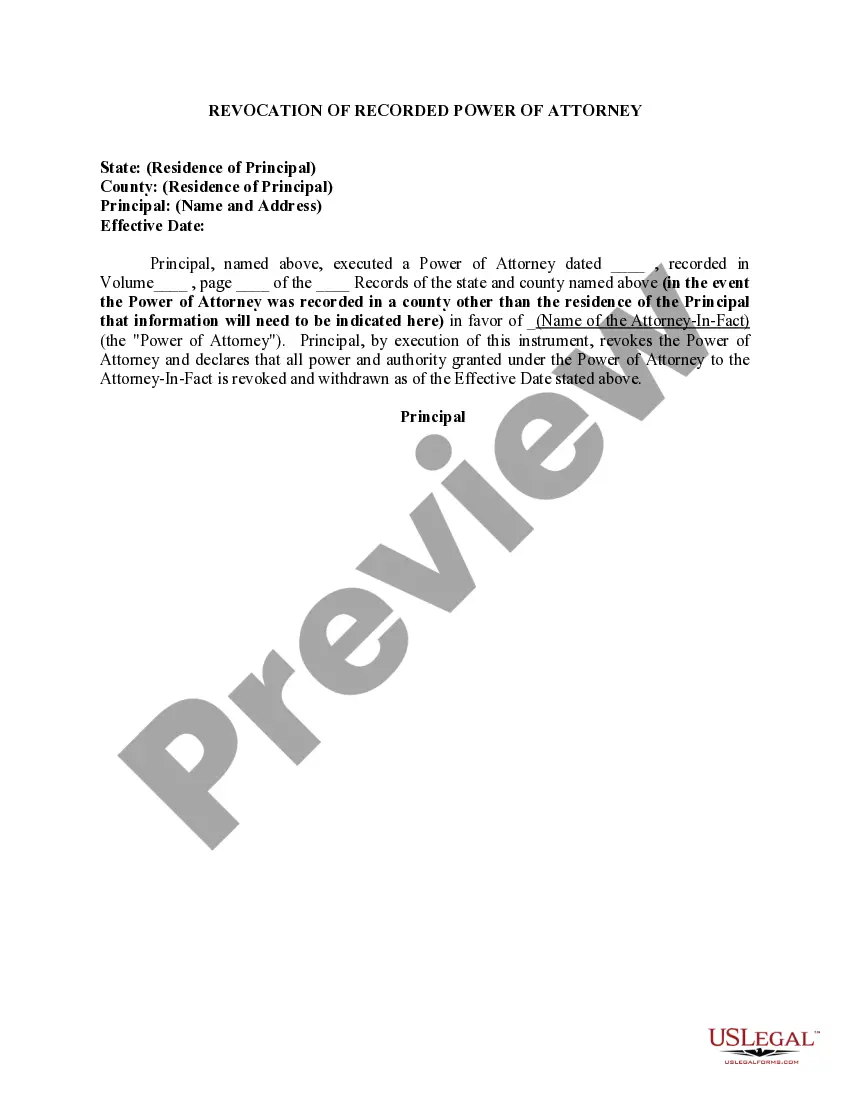
The Revocation of Power of Attorney for Care of Child or Children is a legal document that formally cancels a previously granted power of attorney regarding the care and custody of a child or children. This form enables the principalâthe individual who granted the initial authorityâto revoke that power at any time while they are competent. Unlike other power of attorney forms, this document specifically addresses the care of minors and is designed to comply with all relevant state laws, ensuring that the revocation is valid and recognized.
Key components of this form
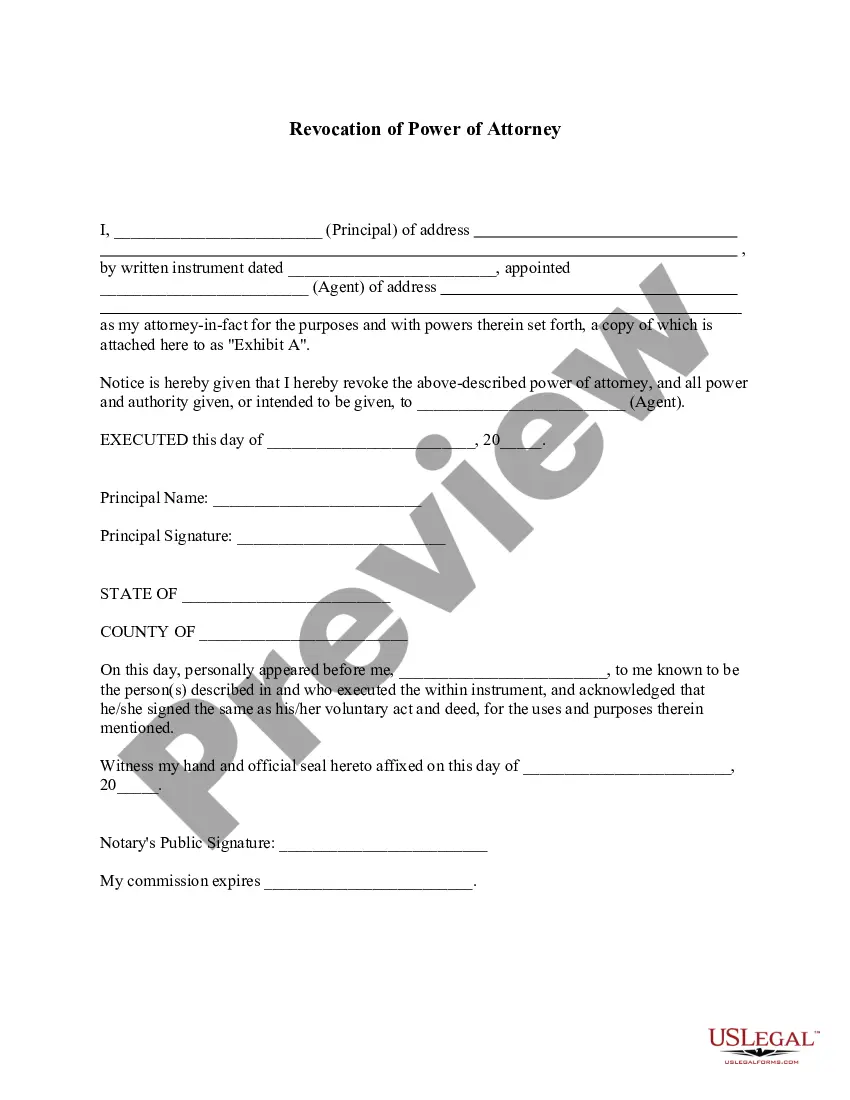
- Declarant's name: Identifies the person revoking the power of attorney.
- Date of original power of attorney: Specifies when the initial power was granted.
- Name of attorney-in-fact: Names the individual who was granted authority to act on behalf of the declarant.
- Written revocation statement: Clearly states that the power of attorney is revoked.
- Signature of declarant: Confirms the revocation is executed by the principal.
- Date of revocation: Indicates when the revocation takes effect.
When to use this document
This form should be used when the principal, or the individual who granted the power of attorney, decides to terminate that authority over the care of a child or children. Common scenarios include a change in circumstances such as the principal's ability to resume care, a change in the relationship with the attorney-in-fact, or when the principal no longer trusts the appointed individual. It is a proactive step to ensure that parental rights and responsibilities are clearly defined and updated.
Who can use this document
- Parents or legal guardians who have previously granted power of attorney for their child's care.
- Individuals looking to regain full parental rights after temporarily delegating care responsibilities.
- Anyone who has concerns regarding the trustworthiness or capability of their attorney-in-fact.
Steps to complete this form
- Identify yourself as the declarant by filling in your full name at the top of the form.
- Enter the date on which you originally granted the power of attorney.
- Specify the name of the person who was designated as your attorney-in-fact.
- Clearly state your intention to revoke the power of attorney in the designated section.
- Sign and date the form to finalize the revocation.
- Consider providing a copy of the completed form to your former attorney-in-fact for their records.
Is notarization required?
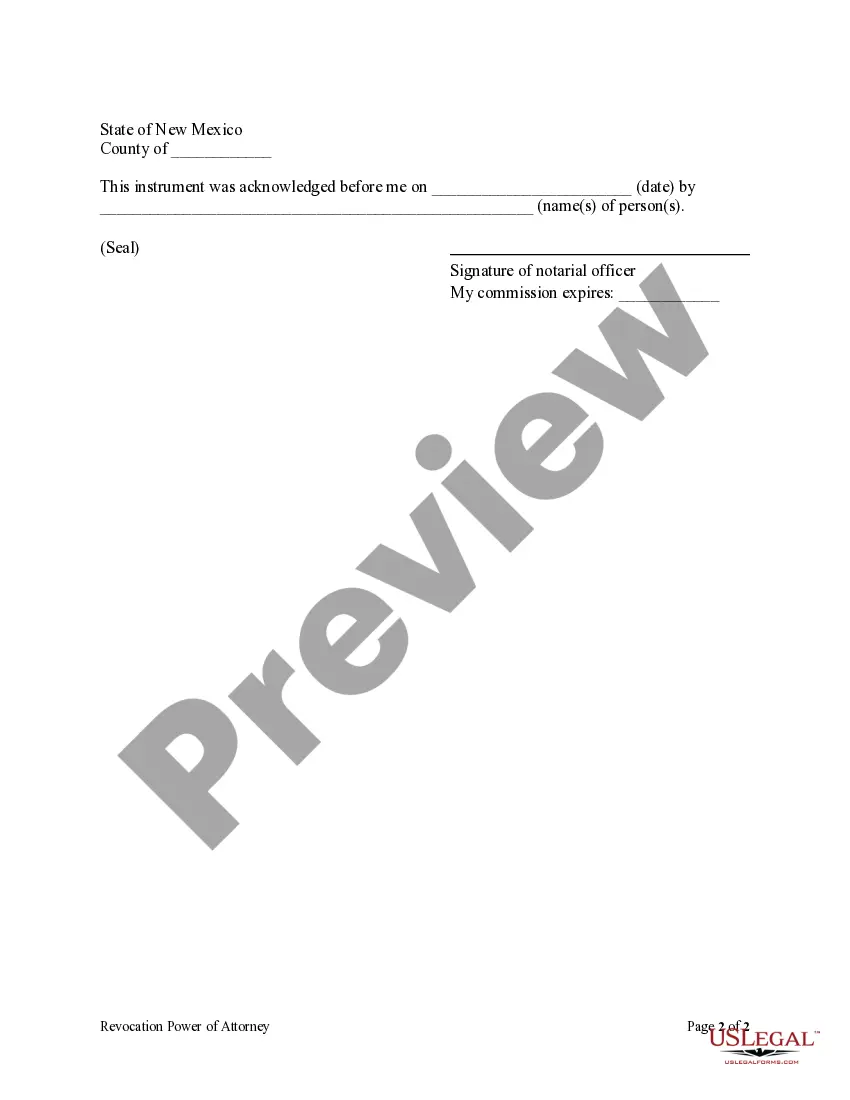
This form does not typically require notarization unless specified by local law. However, getting it notarized can provide an additional layer of credibility and may help in future legal proceedings.
Get your form ready online
Our built-in tools help you complete, sign, share, and store your documents in one place.
Make edits, fill in missing information, and update formatting in US Legal Forms—just like you would in MS Word.
Download a copy, print it, send it by email, or mail it via USPS—whatever works best for your next step.
Sign and collect signatures with our SignNow integration. Send to multiple recipients, set reminders, and more. Go Premium to unlock E-Sign.
If this form requires notarization, complete it online through a secure video call—no need to meet a notary in person or wait for an appointment.
We protect your documents and personal data by following strict security and privacy standards.

Make edits, fill in missing information, and update formatting in US Legal Forms—just like you would in MS Word.

Download a copy, print it, send it by email, or mail it via USPS—whatever works best for your next step.

Sign and collect signatures with our SignNow integration. Send to multiple recipients, set reminders, and more. Go Premium to unlock E-Sign.

If this form requires notarization, complete it online through a secure video call—no need to meet a notary in person or wait for an appointment.

We protect your documents and personal data by following strict security and privacy standards.
Typical mistakes to avoid
- Failing to include the name of the attorney-in-fact or the date of the original power of attorney.
- Not signing the form, which is crucial for its validity.
- Neglecting to provide copies to all relevant parties after completing the revocation.
Benefits of completing this form online
- Convenience: Easily access and complete the form from any device.
- Editability: Make changes as needed before finalizing the document.
- Reliability: Ensure that the form complies with current legal standards set by licensed attorneys.
Legal use & context
- The revocation is legally binding once completed and shared with the relevant parties.
- This form must be filled out correctly to avoid any potential disputes regarding custody and care of the child.
What to keep in mind
- The revocation form is essential for cancelling an existing power of attorney for a childâs care.
- Ensure all parties have copies of the signed document.
- Check local laws for any additional requirements regarding revocation.
Looking for another form?






Form popularity
FAQ
The more recent POA does not necessarily supersede the earlier one. The earlier one can be revoked, though. You can also have two POAs in effect at the same time.
Until an attorney-in-fact's powers are properly revoked, they can continue to legally act for the principal. To cancel a Power of Attorney, the principal can create a document called a Revocation of Power of Attorney or create a new Power of Attorney that indicates the previous Power of Attorney is revoked.
If the agent is acting improperly, family members can file a petition in court challenging the agent. If the court finds the agent is not acting in the principal's best interest, the court can revoke the power of attorney and appoint a guardian. The power of attorney ends at death.
A principal can revoke the power of attorney while he or she is still mentally competent. A principal can complete a formal written document requesting the revocation of a power of attorney at any time, for any reason, while he or she is still competent. The principal must sign and notarize the revocation request.
An agent under a financial power of attorney should not have the right to bar a sibling from seeing their parent. A medical power of attorney may give the agent the right to prevent access to a parent if the agent believes the visit would be detrimental to the parent's health.
Revoke Your Current Power of Attorney. To change or cancel your current power of attorney, you should complete a formal, written revocation. Notify Your Power of Attorney. Once you complete your revocation, notify your agent of the cancellation in writing. Notify Relevant Third Parties. Execute a New Power of Attorney.
Until an attorney-in-fact's powers are properly revoked, they can continue to legally act for the principal. To cancel a Power of Attorney, the principal can create a document called a Revocation of Power of Attorney or create a new Power of Attorney that indicates the previous Power of Attorney is revoked.
Unless the power of attorney states otherwise, and they usually don't, a revocation of a POA must be made in writing. A verbal revocation may not be enough.A revocation will reference the existing POA and the current attorney-in-fact and revoke the document and the powers granted.
The revocation should include your name, a statement that you are of sound mind, and your wish to revoke the power of attorney. You should also specify the date the original power of attorney was executed and the person selected as your agent.