New Mexico Interspousal Transfer Deed - Individual to Individual
Understanding this form
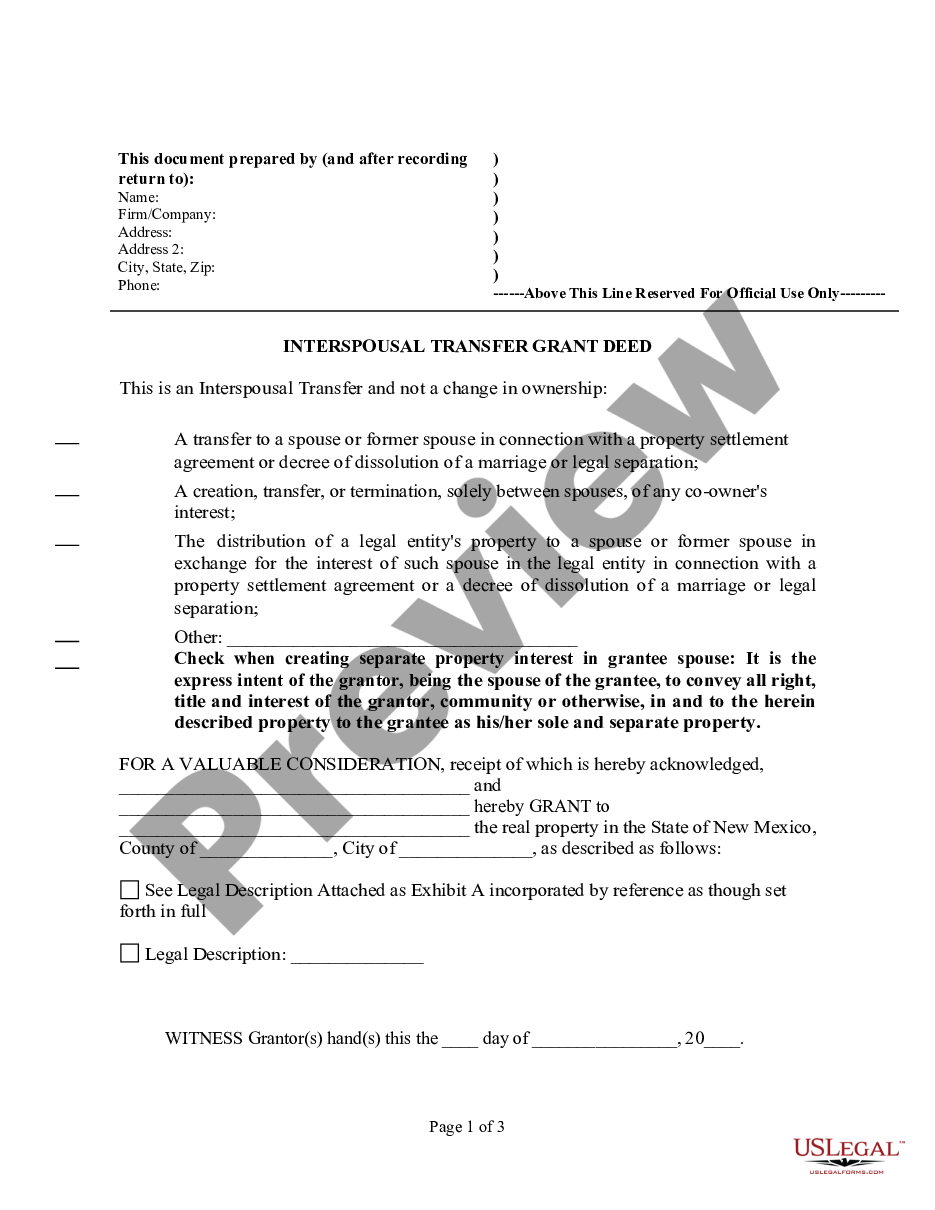
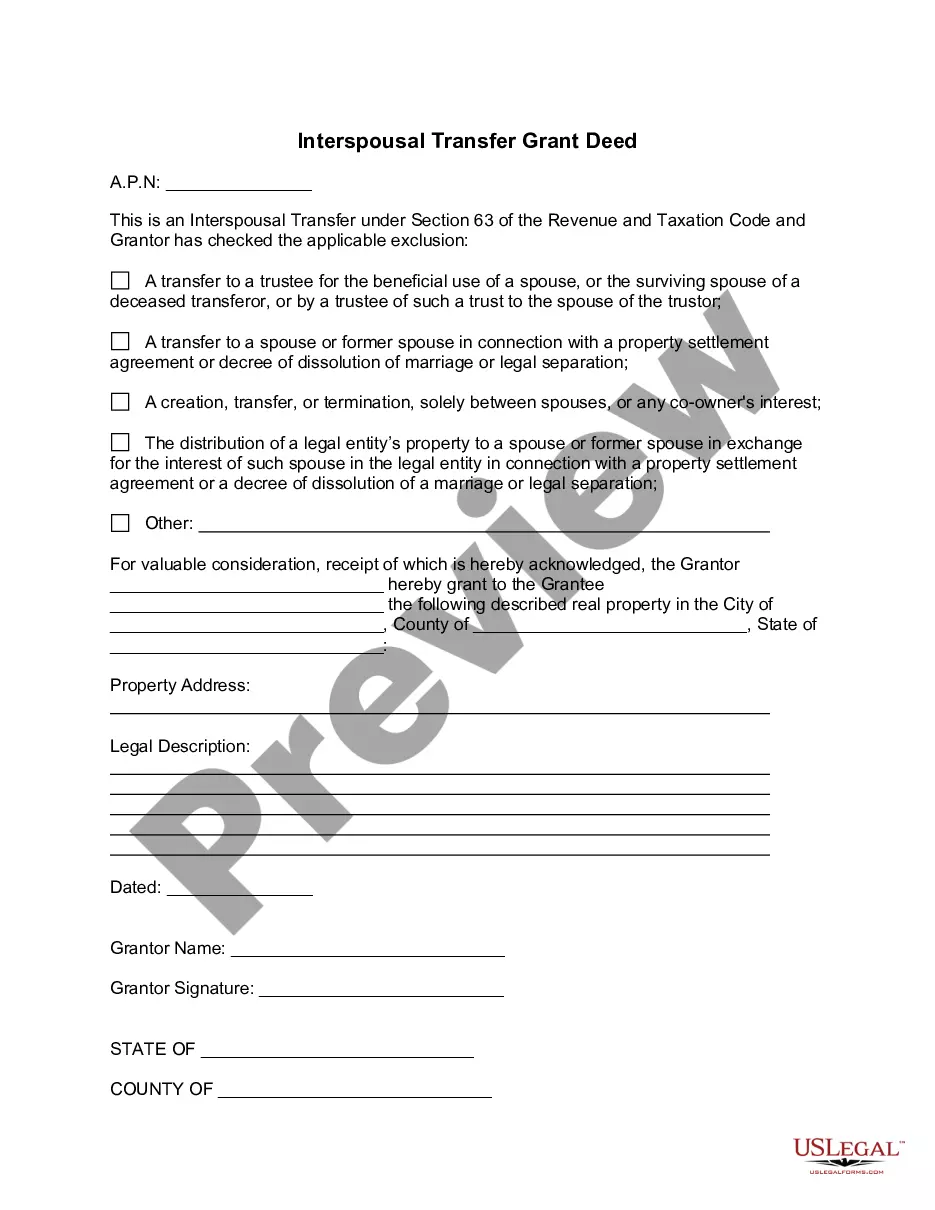
The Interspousal Transfer Deed is a type of Quitclaim Deed specifically designed for the transfer of property between spouses. Unlike a standard Quitclaim Deed, this form facilitates the transfer of ownership in the context of a marriage-related matter, such as a divorce settlement or the creation of separate property. This deed ensures that the grantor conveys their interest in the property to the grantee spouse, clarifying both parties' intentions regarding property rights.
Key parts of this document
- Grantor and Grantee Information: Names and addresses of the individuals involved in the property transfer.
- Legal Description of Property: A detailed description of the property being transferred, attached as Exhibit A.
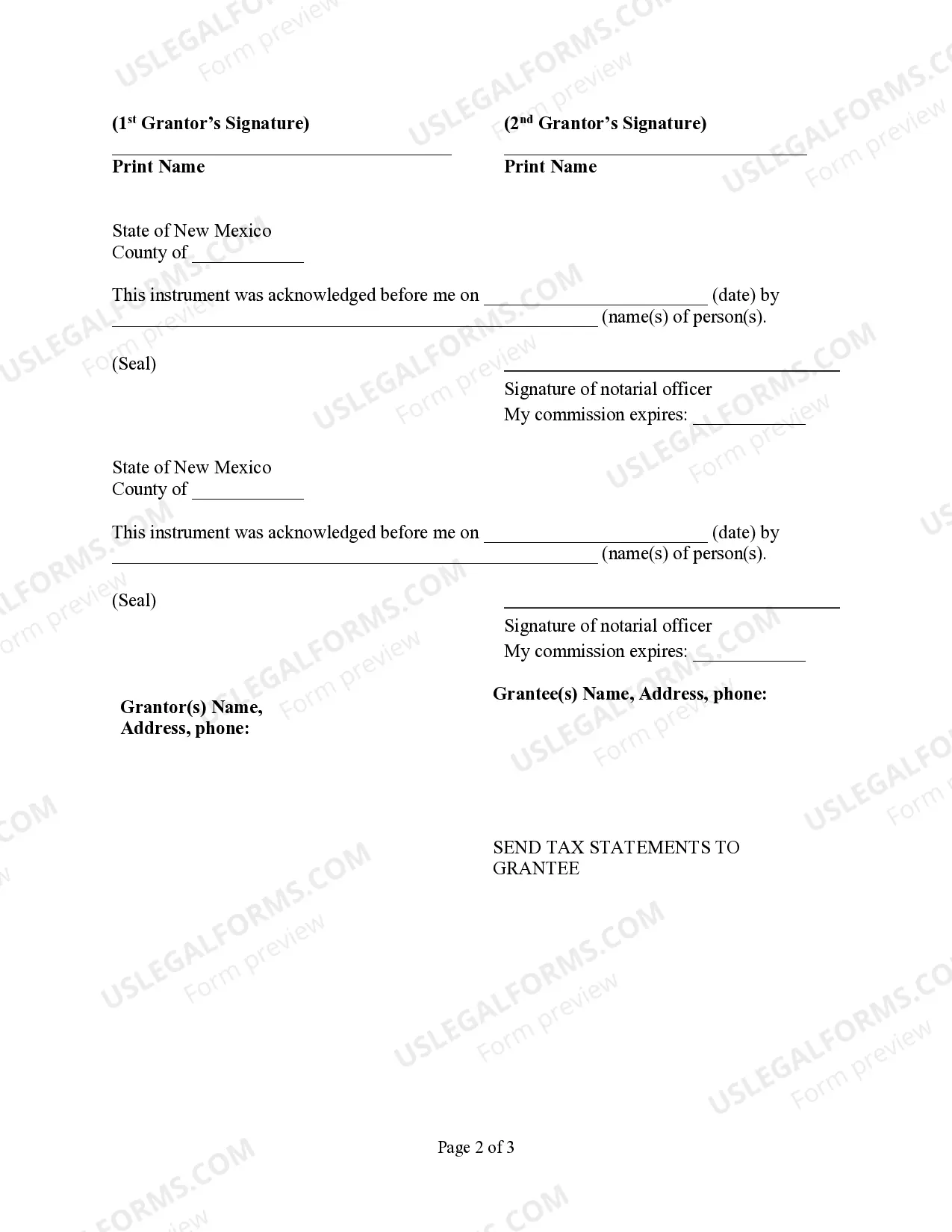
- Signatures: Required signatures of both the grantor and grantee to validate the deed.
- Notarization Section: Spaces for notarization to confirm the identities of the signers.
- Intent Declaration: A section specifying the intent to create separate property for the grantee spouse.




Common use cases
This form is typically used in scenarios such as divorce proceedings where one spouse is transferring their interest in a property to the other. It is also applicable when spouses wish to delineate their separate property rights or to execute property settlements resulting from legal separation agreements. Additionally, it may be utilized when creating or modifying ownership interests in properties previously held jointly.
Who needs this form
This form is intended for:
- Married couples seeking to transfer property between themselves.
- Individuals going through divorce who need to settle property ownership issues.
- Spouses who wish to clarify separate property interests.
- Anyone involved in legal separation proceedings involving property distribution.
How to prepare this document
- Identify the parties involved: Fill in the names and addresses of the grantor and grantee.
- Specify the property: Attach and reference the legal description of the property intended for transfer.
- Enter the date: Include the date of the transaction and when the deed is signed.
- Include signatures: Both the grantor and grantee must sign the deed to make it legally binding.
- Notarize the form: Have the document notarized to ensure legal validity, if required by local laws.
Does this document require notarization?
Yes, this form must be notarized to be legally valid. Notarization helps in verifying the identities of the signers and the voluntary nature of the deed. US Legal Forms offers integrated online notarization, allowing you to complete this process through a secure video call at your convenience.
Get your form ready online
Our built-in tools help you complete, sign, share, and store your documents in one place.
Make edits, fill in missing information, and update formatting in US Legal Forms—just like you would in MS Word.
Download a copy, print it, send it by email, or mail it via USPS—whatever works best for your next step.
Sign and collect signatures with our SignNow integration. Send to multiple recipients, set reminders, and more. Go Premium to unlock E-Sign.
If this form requires notarization, complete it online through a secure video call—no need to meet a notary in person or wait for an appointment.
We protect your documents and personal data by following strict security and privacy standards.

Make edits, fill in missing information, and update formatting in US Legal Forms—just like you would in MS Word.

Download a copy, print it, send it by email, or mail it via USPS—whatever works best for your next step.

Sign and collect signatures with our SignNow integration. Send to multiple recipients, set reminders, and more. Go Premium to unlock E-Sign.

If this form requires notarization, complete it online through a secure video call—no need to meet a notary in person or wait for an appointment.

We protect your documents and personal data by following strict security and privacy standards.
Common mistakes
- Not including the legal description of the property or failing to attach Exhibit A.
- Incorrectly filling out the names or signatures of the grantor and grantee.
- Neglecting to notarize the document, if required by local regulations.
Advantages of online completion
- Convenience: Download and complete the form from the comfort of your home.
- Editability: Easily fill in specific details relevant to your situation.
- Reliability: Forms are drafted by licensed attorneys to ensure legal compliance.
Looking for another form?
Form popularity
FAQ
Quitclaim deeds, therefore, are commonly used to transfer property within a family, such as from a parent to an adult child, between siblings, or when a property owner gets married and wants to add their spouse to the title. Married couples who own a home together and later divorce also use quitclaim deeds.
New Mexico law requires Form RPTDA when a deed transfers residential real estate to a new owner. A completed Form RPTDA must be signed by the current owner, new owner, or authorized agent and filed with the county assessor within 30 days after the deed is recorded.
A New Mexico deed is used to legally convey real estate between parties in New Mexico. In order to transfer property, with a deed, you will need the names of the seller, or grantor, the names of the buyer, or grantee, the legal description of the property and an acknowledgment by a notary public.
A New Mexico quit claim deed is a legal form that can be used to convey real property, or land and buildings, from a seller (grantor) to a buyer (grantee). A quitclaim is different from a warranty deed because it comes with no guarantee. Instead, the grantor is only selling whatever interest he may own in the property.
Trust- You can have an attorney create a trust and then deed the property to the trust and make your adult child or whomever you chose the beneficiary of the trust upon your death. For minor children this is the best legal option.
A. The grantee beneficiary takes a certified copy of the owner's death certificate to the county clerk's office to be recorded. This completes the trans- fer. Title is transferred without having to open a probate proceeding.
An interspousal transfer deed, more technically called an interspousal transfer grant deed, is a legal document used to give sole ownership of shared property, such as a house, to one person in a marriage. They are commonly employed in divorce cases to transfer community property to one spouse.