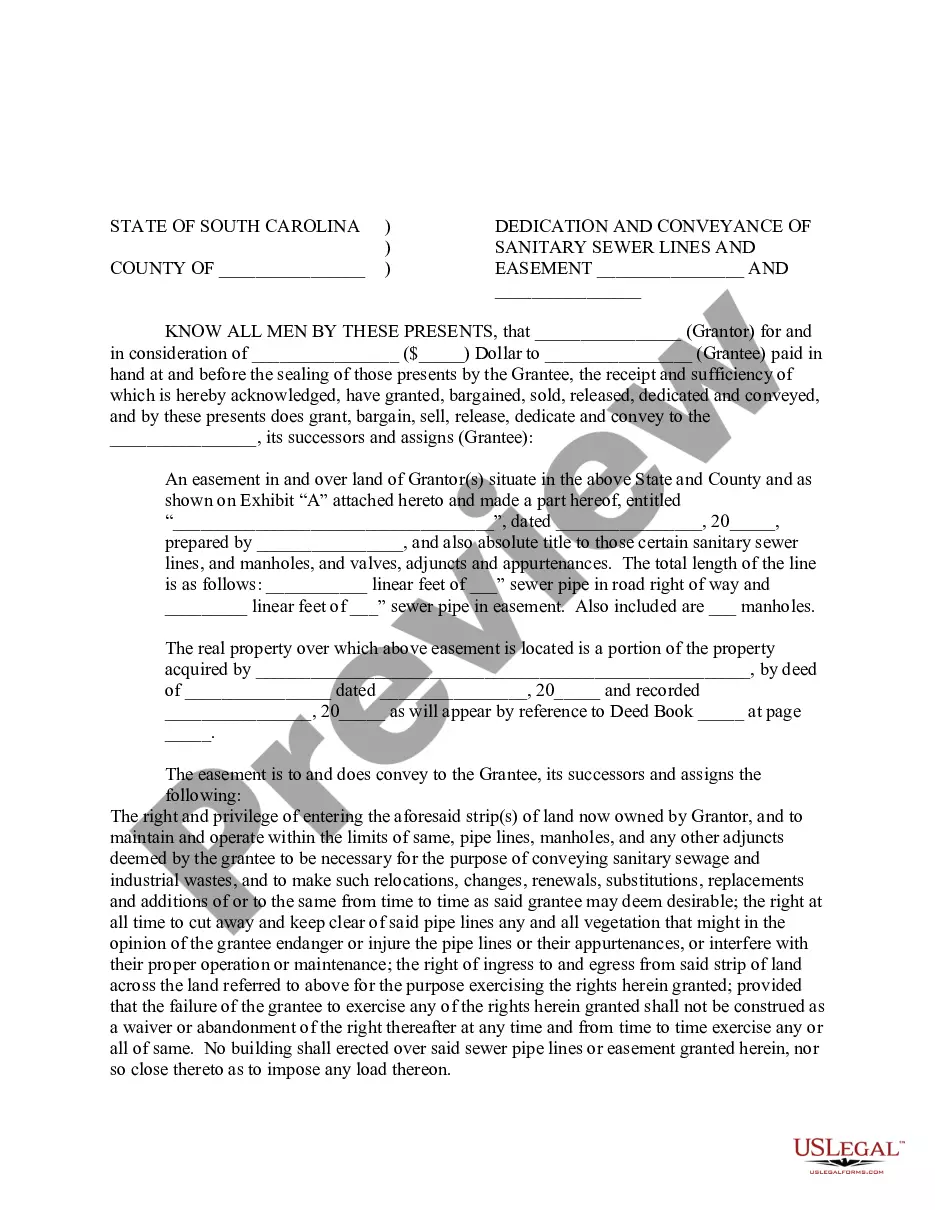
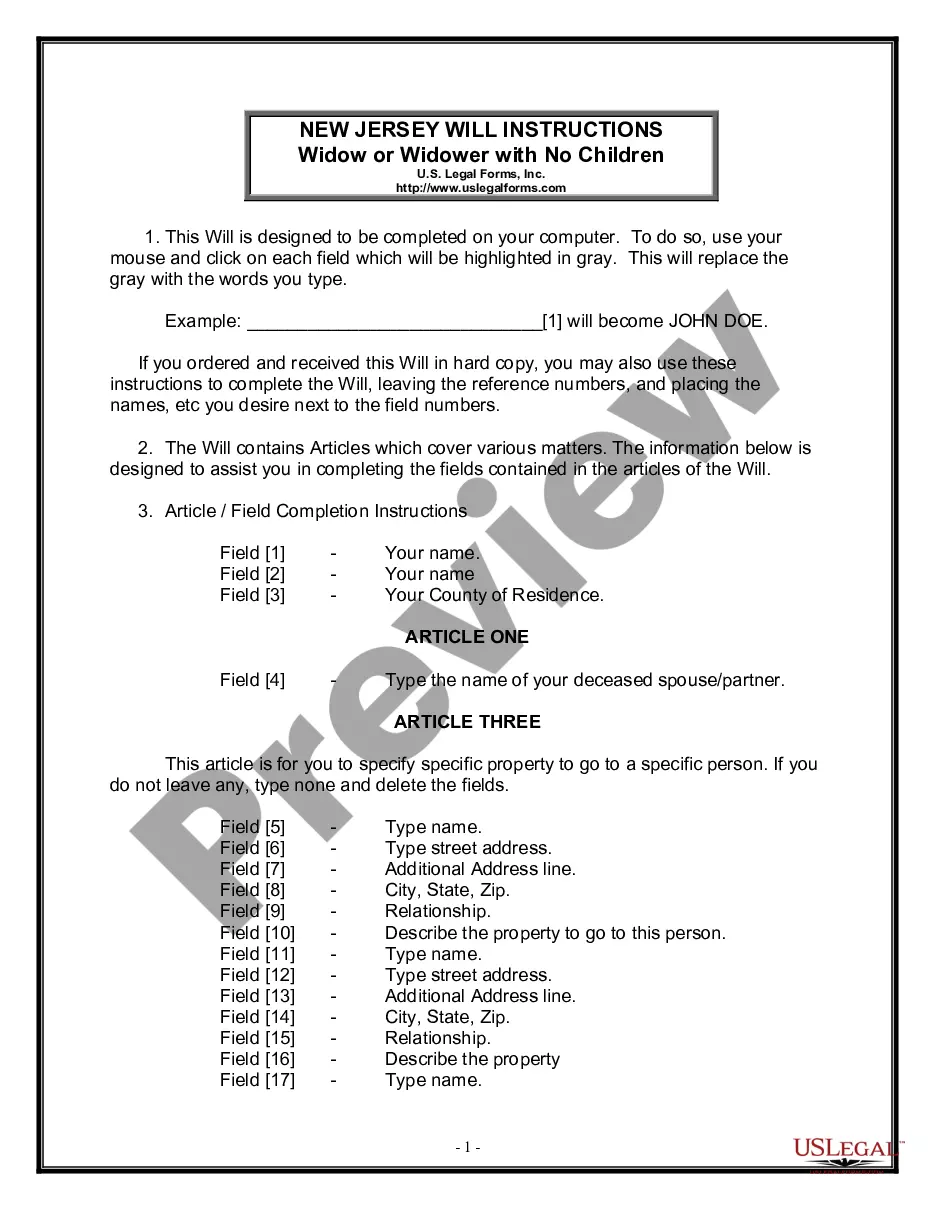
New Jersey Last Will for a Widow or Widower with no Children
Overview of this form
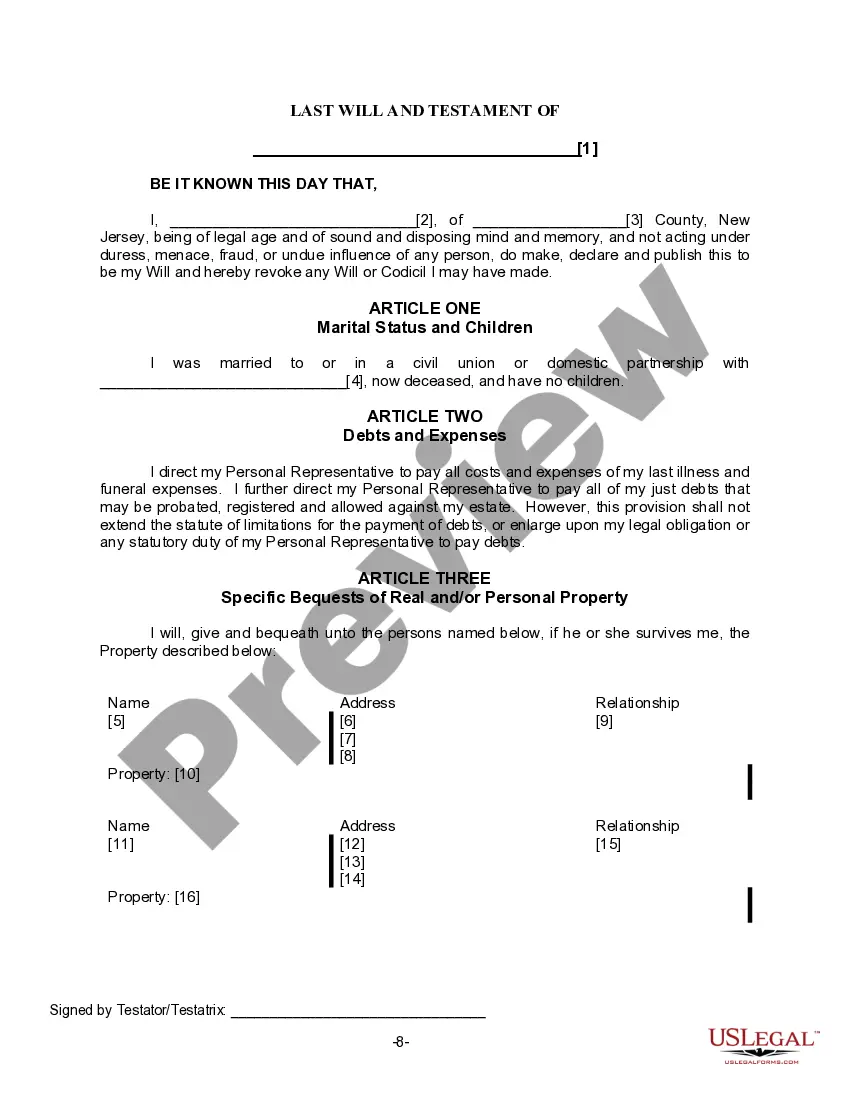
This legal document is a Last Will for a widow or widower with no children. It allows individuals to appoint an executor, designate beneficiaries for their property, and outline their final wishes. Unlike a standard will, this form is specifically tailored for those who have lost a spouse and do not have children, making it a critical tool for asset distribution and estate management.
Key components of this form
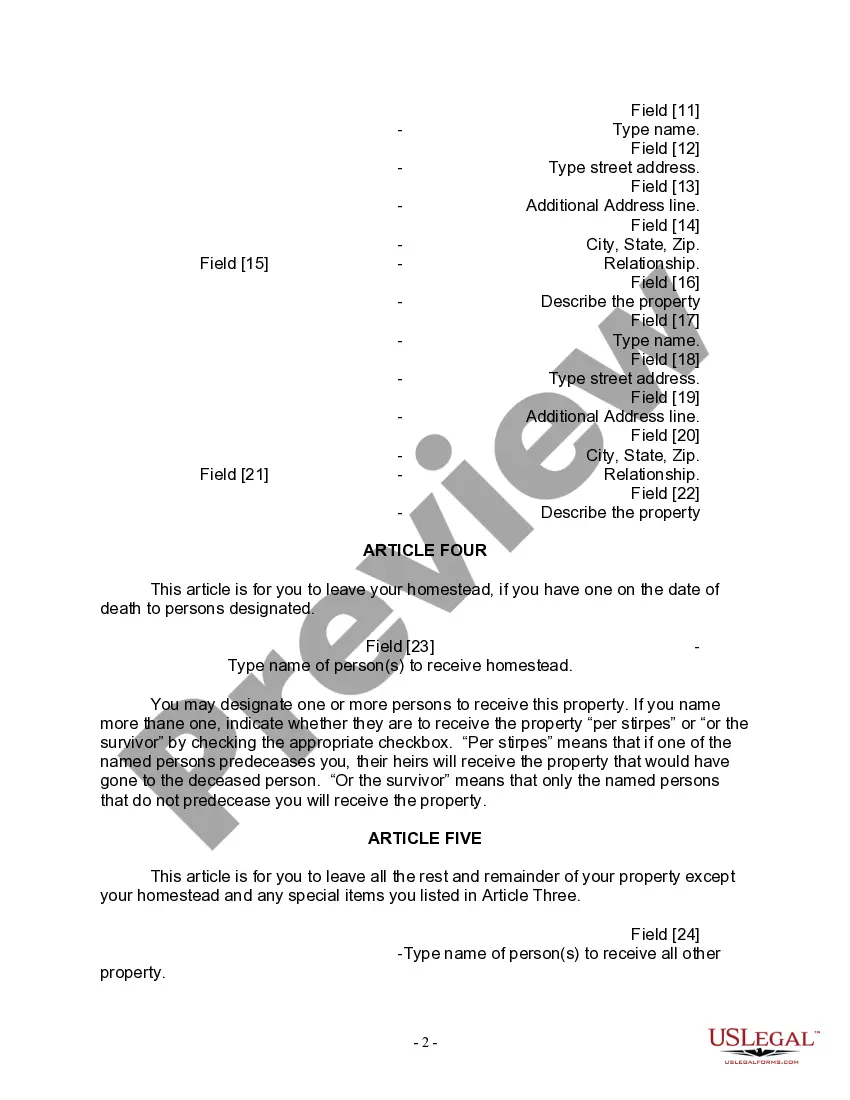
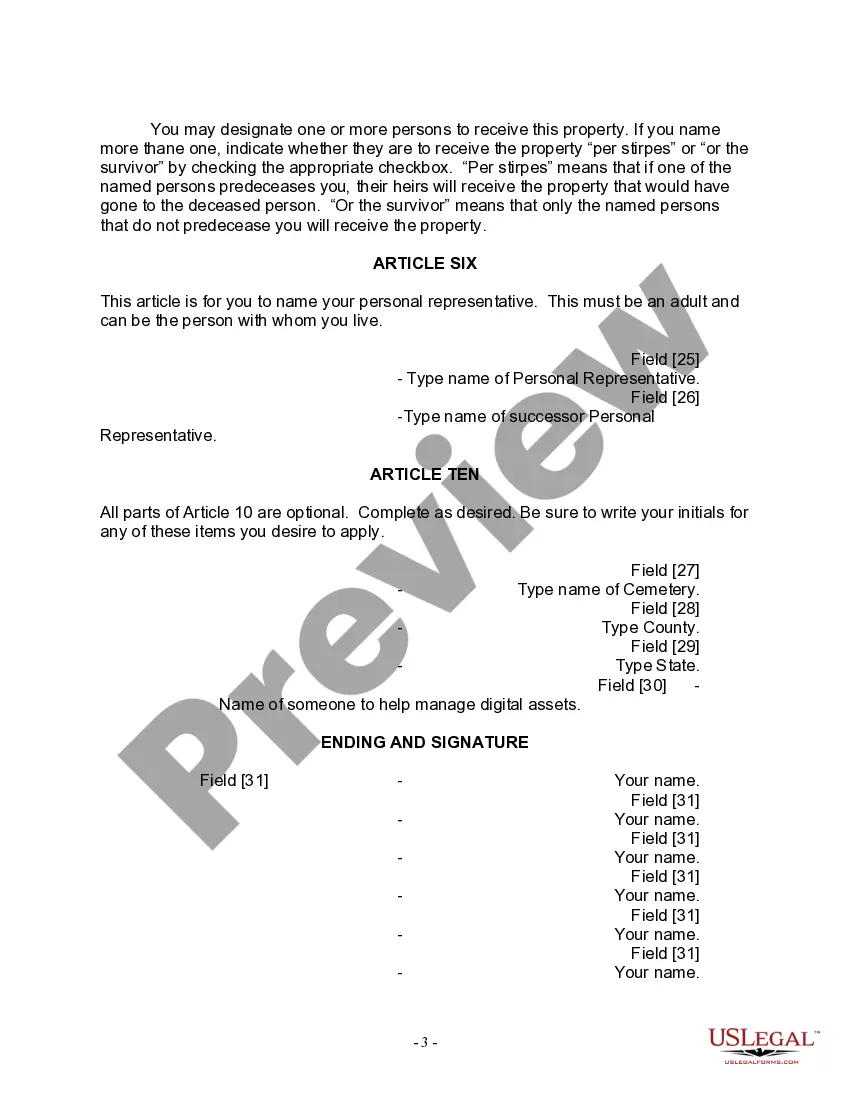
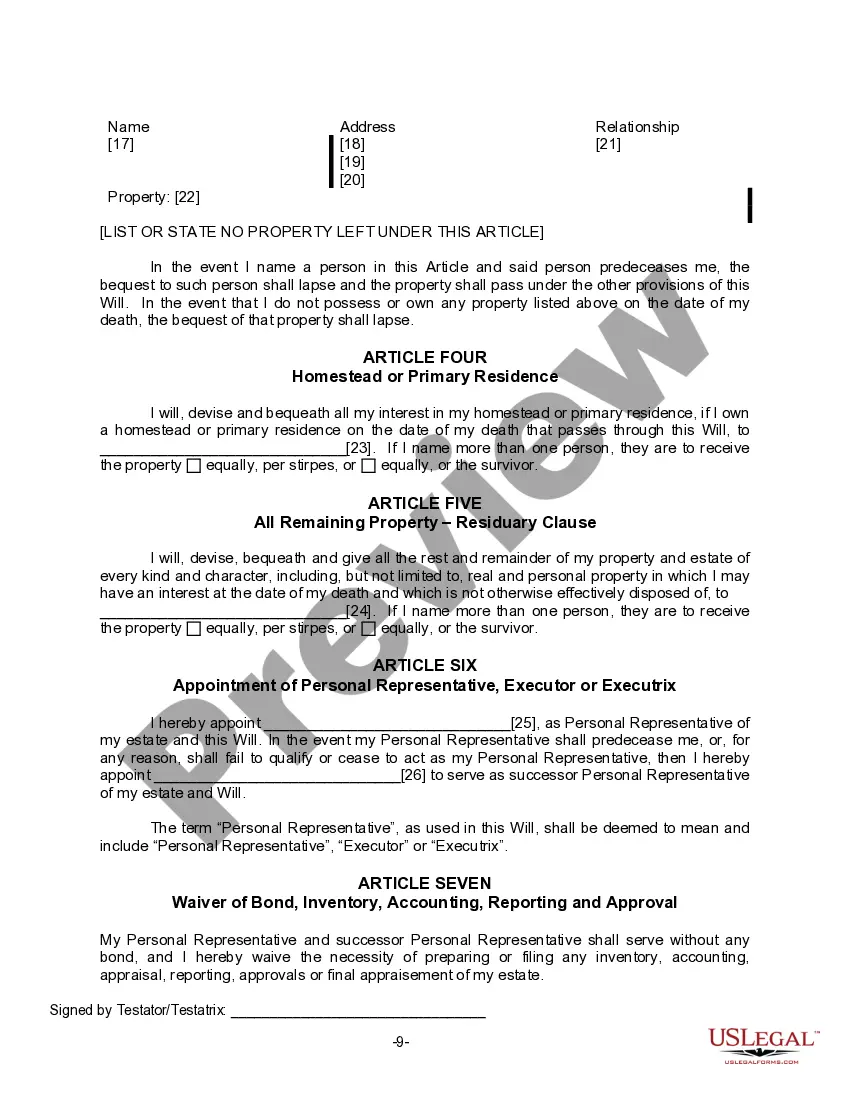
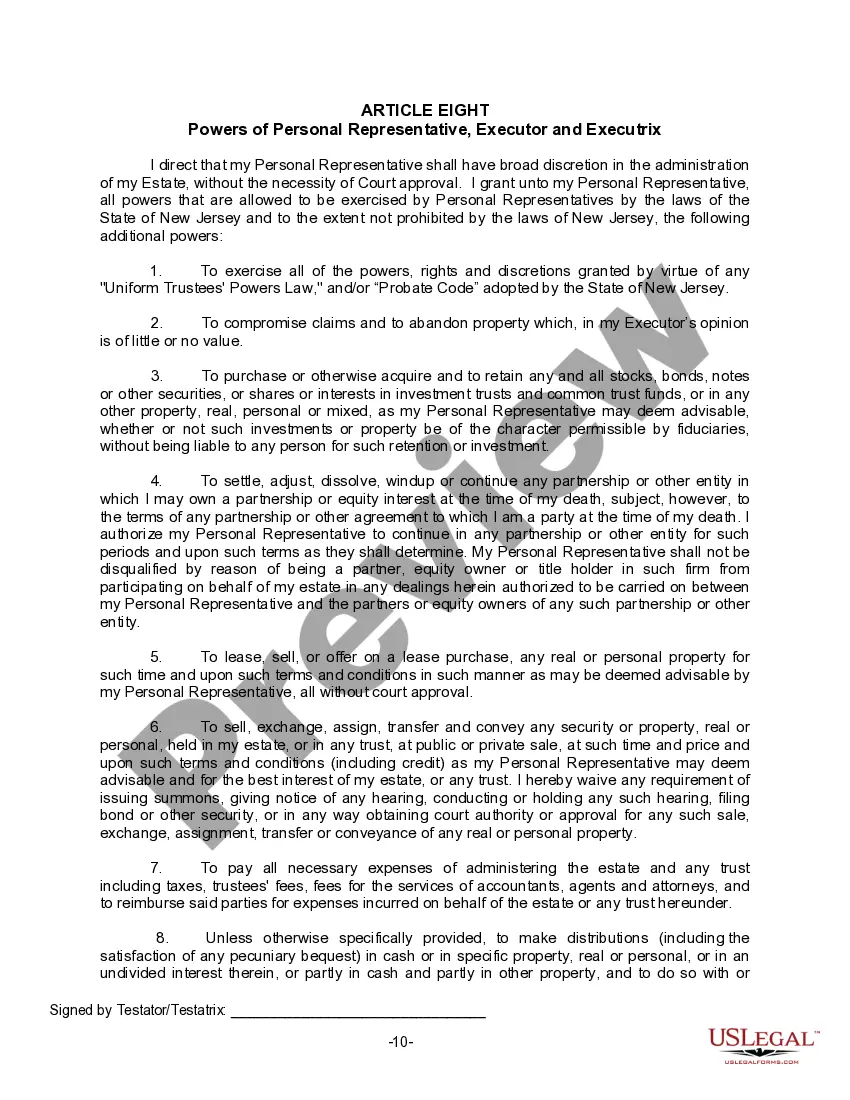
- Personal Representative: Appoint a trusted adult to oversee the execution of your will.
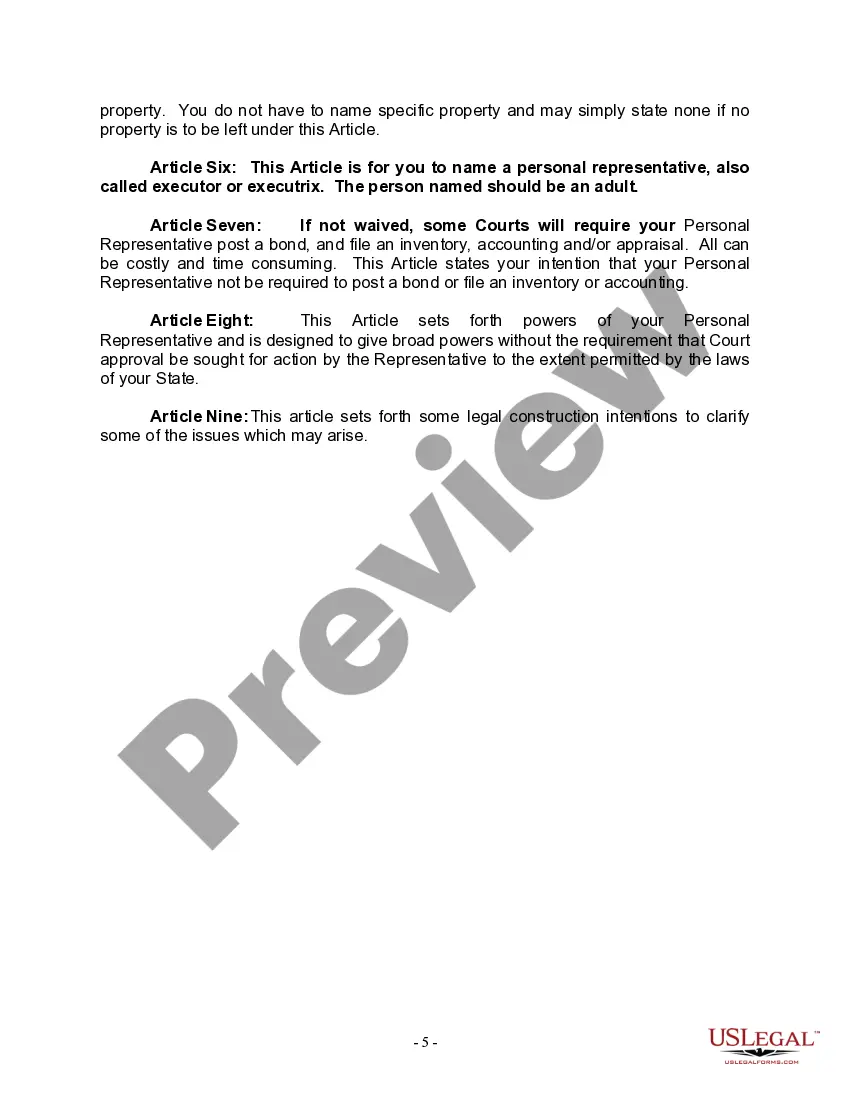
- Specific Bequests: Specify any particular items or property you wish to leave to designated individuals.
- Homestead Provision: Designate who will inherit your primary residence if applicable.
- Residuary Clause: Outline how to distribute any remaining assets after specific bequests are fulfilled.
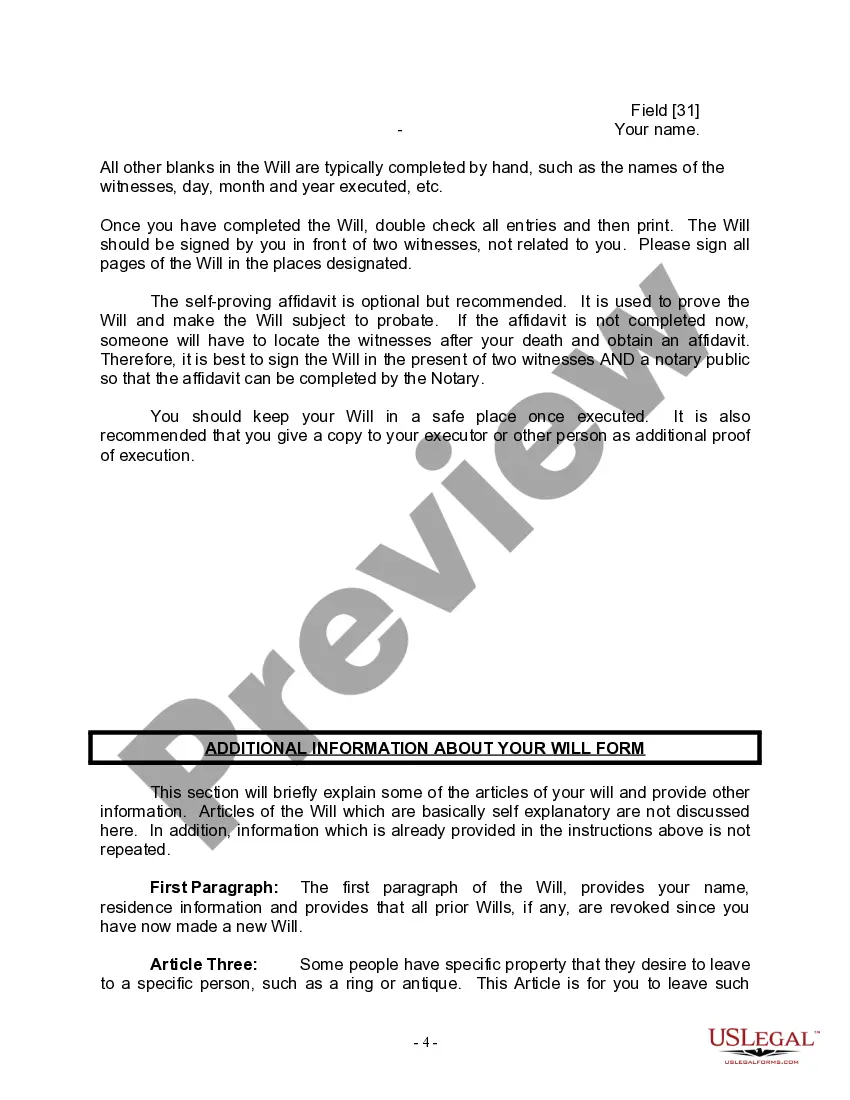
- Witness Requirements: Stipulate that the will must be signed in front of two impartial witnesses.
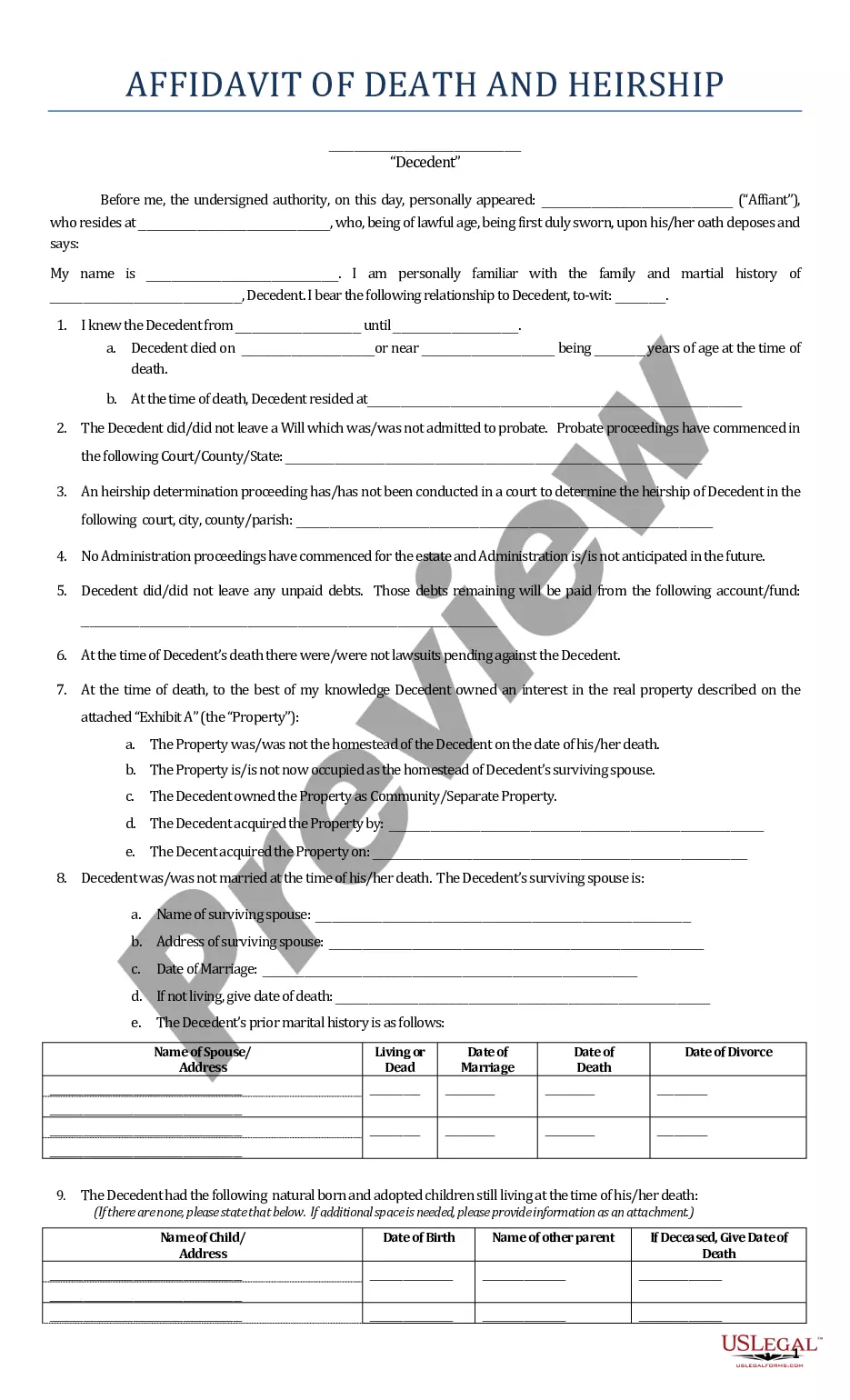
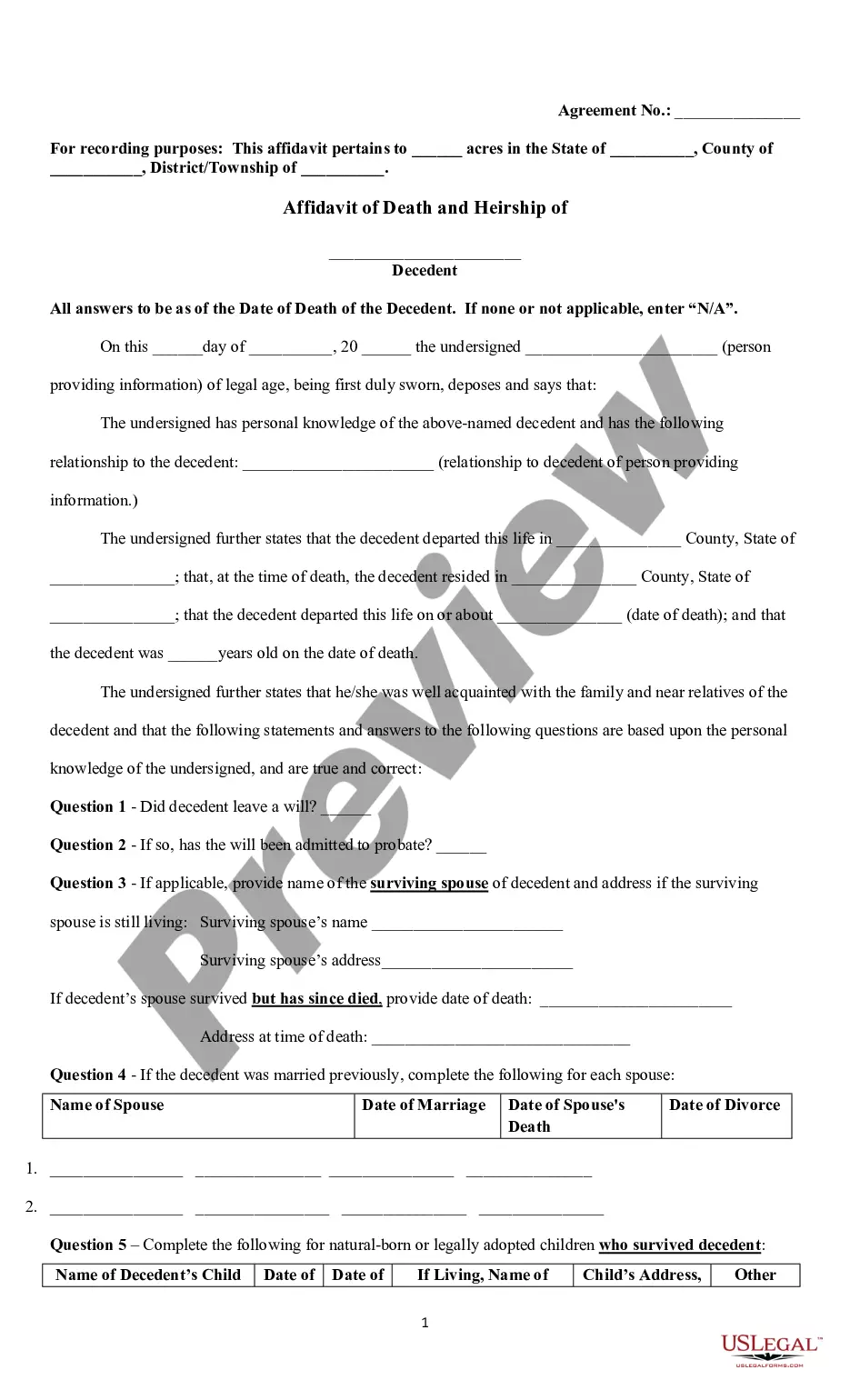
- Self-Proving Affidavit: Optionally include an affidavit that can simplify the probate process.



When to use this document
This form is essential when a widow or widower without children seeks to manage the distribution of their assets after death. It ensures that loved ones are taken care of according to their wishes and helps to avoid disputes over property ownership. Consider using this form if you have specific wishes for your assets, wish to appoint an executor, or want to outline your final arrangements.
Who can use this document
- Individuals who are widows or widowers without children.
- Those who wish to designate specific beneficiaries for their property.
- People looking for a straightforward way to manage the distribution of their estate.
- Anyone wanting to ensure that their wishes are legally documented and fulfilled after their passing.
Steps to complete this form
- Provide your full name and county of residence.
- List the name of your deceased spouse in the designated field.
- Outline specific bequests of property by providing names, addresses, and descriptions.
- Assign an executor and a successor personal representative.
- Sign the document in the presence of two witnesses, ensuring they are not related to you.
- If applicable, complete the self-proving affidavit for easier probate.
Does this document require notarization?
Yes, this form must be notarized to be legally valid if a self-proving affidavit is included. This process solidifies the authenticity of the will and simplifies the probate process. US Legal Forms provides integrated online notarization options, allowing you to complete this step securely and conveniently through a video call.
Get your form ready online
Our built-in tools help you complete, sign, share, and store your documents in one place.
Make edits, fill in missing information, and update formatting in US Legal Forms—just like you would in MS Word.
Download a copy, print it, send it by email, or mail it via USPS—whatever works best for your next step.
Sign and collect signatures with our SignNow integration. Send to multiple recipients, set reminders, and more. Go Premium to unlock E-Sign.
If this form requires notarization, complete it online through a secure video call—no need to meet a notary in person or wait for an appointment.
We protect your documents and personal data by following strict security and privacy standards.

Make edits, fill in missing information, and update formatting in US Legal Forms—just like you would in MS Word.

Download a copy, print it, send it by email, or mail it via USPS—whatever works best for your next step.

Sign and collect signatures with our SignNow integration. Send to multiple recipients, set reminders, and more. Go Premium to unlock E-Sign.

If this form requires notarization, complete it online through a secure video call—no need to meet a notary in person or wait for an appointment.

We protect your documents and personal data by following strict security and privacy standards.
Common mistakes
- Failing to include witness signatures, rendering the will invalid.
- Not specifying beneficiaries clearly, which may lead to disputes.
- Overlooking the need for a self-proving affidavit if required by your state.
- Neglecting to review and update the will as circumstances change.
- Assuming that joint property will pass according to the will, rather than through survivorship laws.
Why use this form online
- Convenience: Complete the document from the comfort of your home at any time.
- Editability: Easily make changes and updates as your circumstances evolve.
- Reliability: Rely on professionally drafted templates that comply with legal standards.
- Accessibility: Download and print your will immediately after completion.
- Cost-effective: Avoid high attorney fees by using a straightforward template for your needs.
Looking for another form?








Form popularity
FAQ
In New Jersey, the will must be in writing. You must sign your own will, witnessed by two individuals over 18 (You must be at least age 18 as well.)Notarized wills are not required, but they do help speed the process, since a probate court doesn't have to track down the two witnesses.
A will is a legal document that explains how your property will be distributed after you die.Self-written wills are typically valid, even when handwritten, as long as they're properly witnessed and notarized, or proven in court. A handwritten will that is not witnessed or notarized is considered a holographic will.
There is no requirement that spouses leave assets to each other when they die.
A will that is created in a way that allows a probate court to easily accept it as the true will of the person who has died. In some states, a will is self-proving when two witnesses sign under penalty of perjury that they observed the willmaker sign it and that he told them it was his will.
What makes a will valid in New Jersey? A person must be at least 18 years old and mentally competent to create a valid will. Generally, this means they understand the purpose of the will and know what they wish to happen to their property. The testator, as well as two witnesses, must sign a typed will.
In New Jersey, the will must be in writing. You must sign your own will, witnessed by two individuals over 18 (You must be at least age 18 as well.)Notarized wills are not required, but they do help speed the process, since a probate court doesn't have to track down the two witnesses.
A New Jersey self-proving affidavit form allows a last will and testament to be recognized by probate court to be self-proved.To make a will self-proved, the testator and the two (2) witnesses must appear before a notary public and sign the affidavit form; the notary public will complete the rest.
In New Jersey, the will must be in writing. You must sign your own will, witnessed by two individuals over 18 (You must be at least age 18 as well.) Then, the witnesses must sign the document. If you wish to go the extra step, you can bring your two witnesses to a notary and do the signing there.