New Jersey Complaint in Prerogative Writ Appeal from Zoning Board
Overview of this form
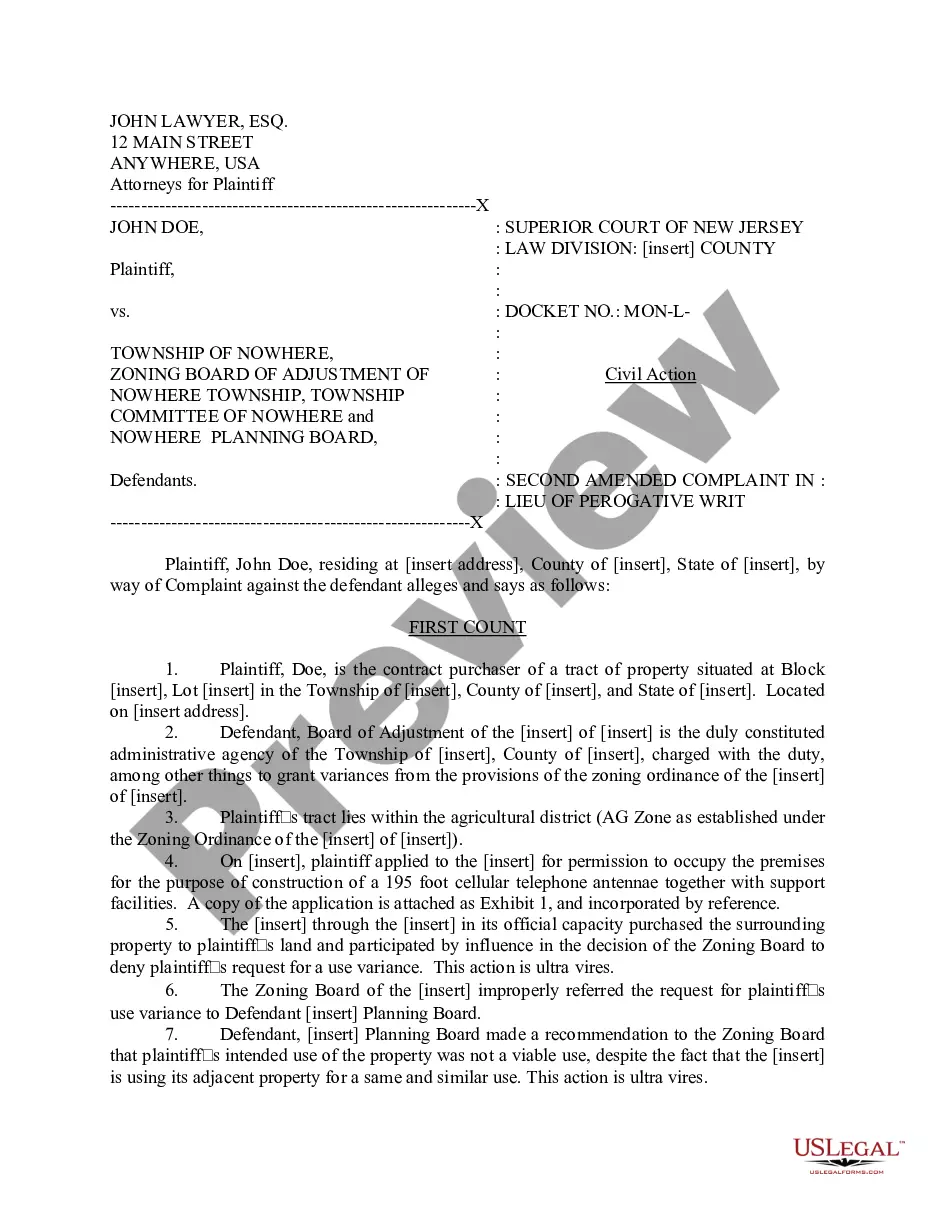
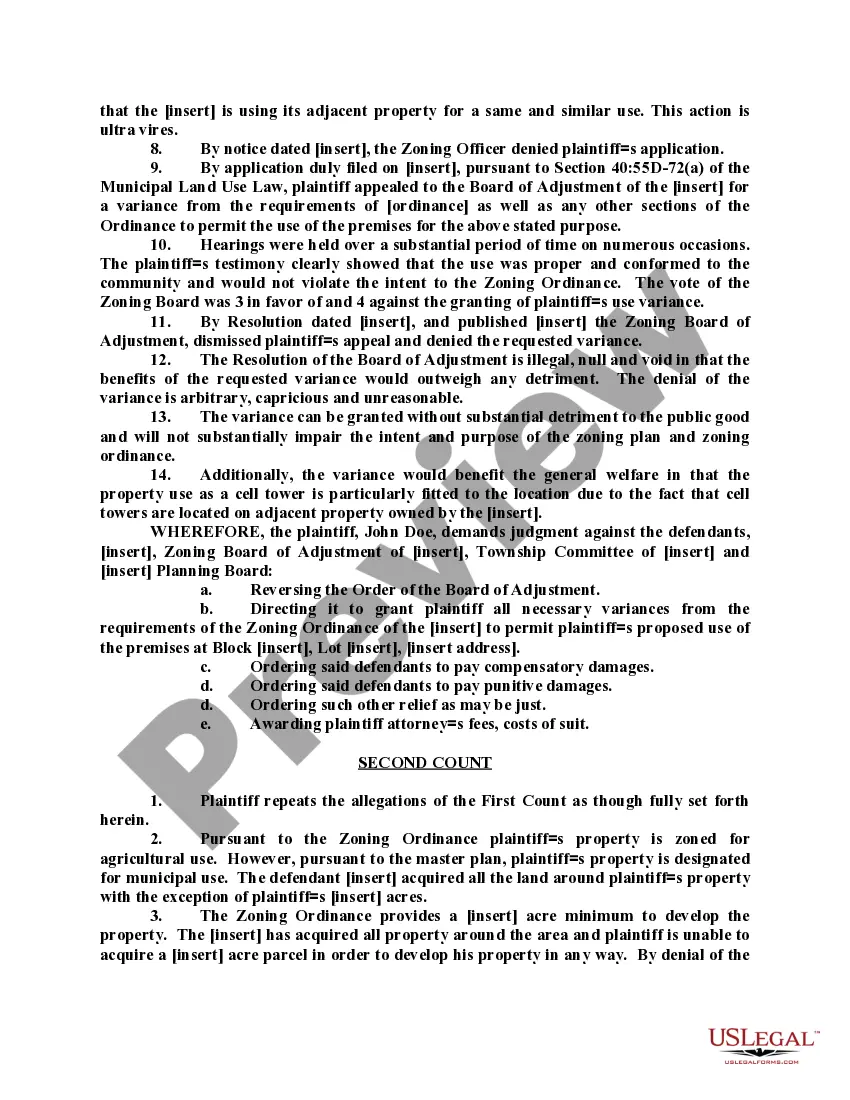
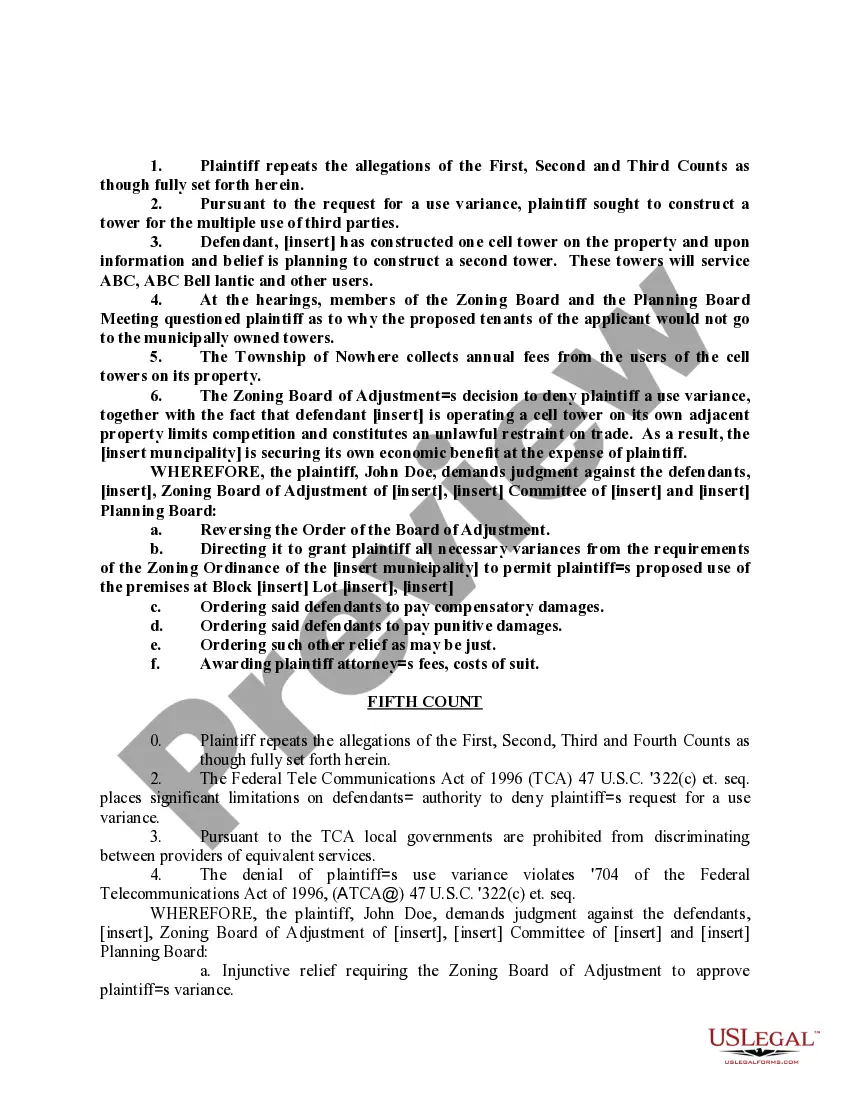
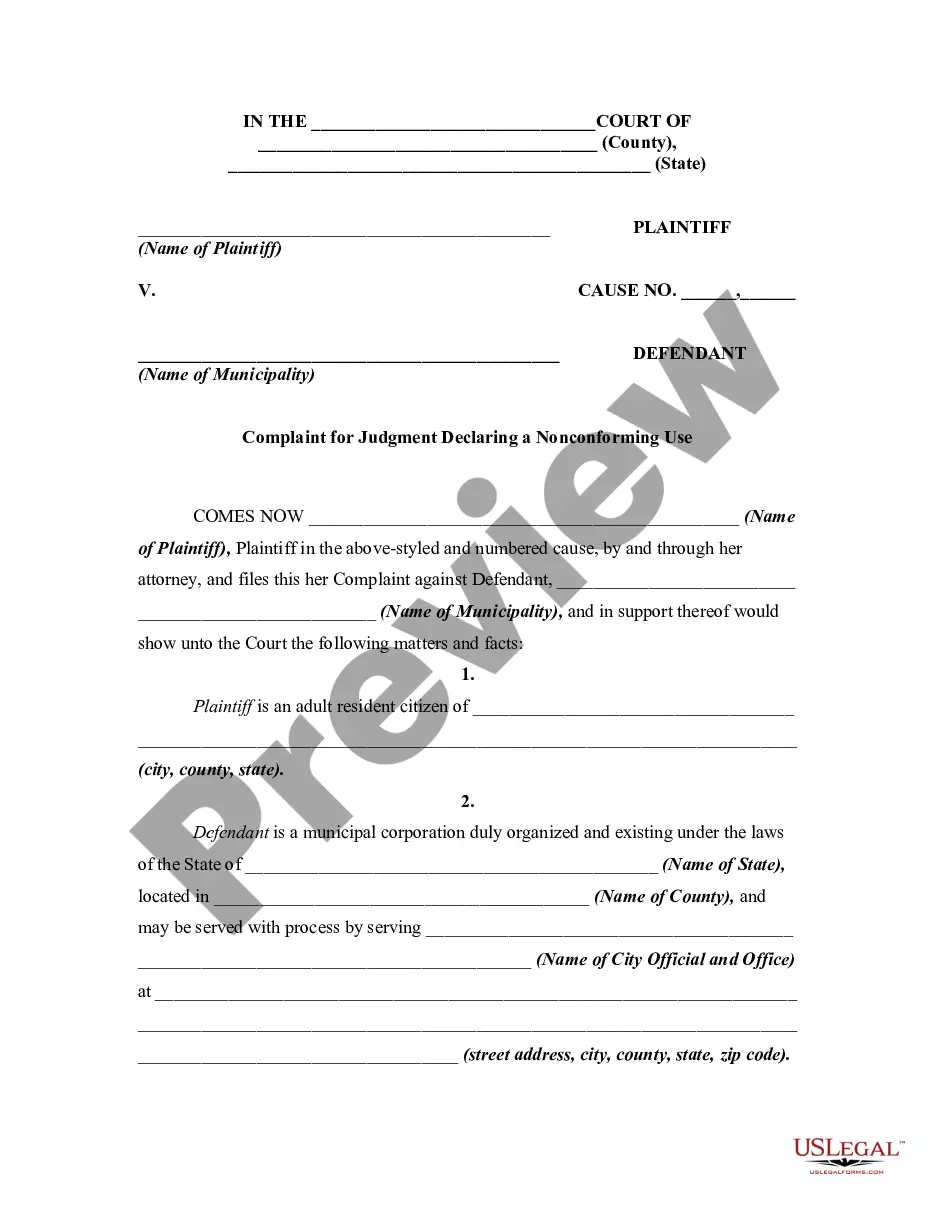
The Complaint in Prerogative Writ Appeal from the Zoning Board is a legal document used by individuals appealing a decision made by the zoning board in New Jersey. This form allows plaintiffs to challenge the denial of zoning variances or approvals and is specifically designed for actions related to zoning disputes within New Jersey's legal framework. Unlike general complaint forms, this document focuses on the procedural and substantive issues surrounding zoning decisions, particularly for those seeking to construct or modify property in ways that the local zoning ordinances may restrict.
Key components of this form
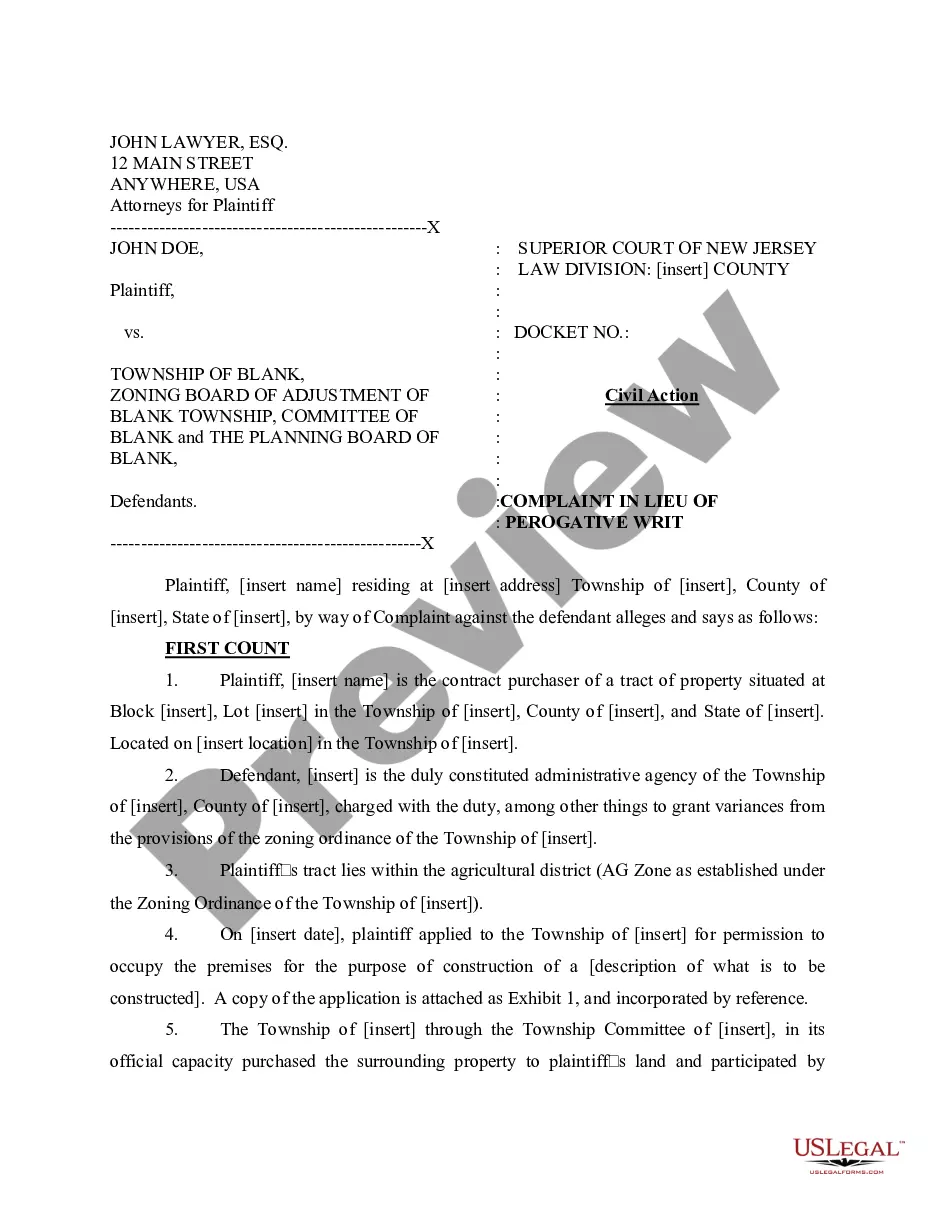
- Plaintiff's identification and address
- Defendant details including the zoning board and township
- Facts supporting the appeal, including application history and zoning classifications
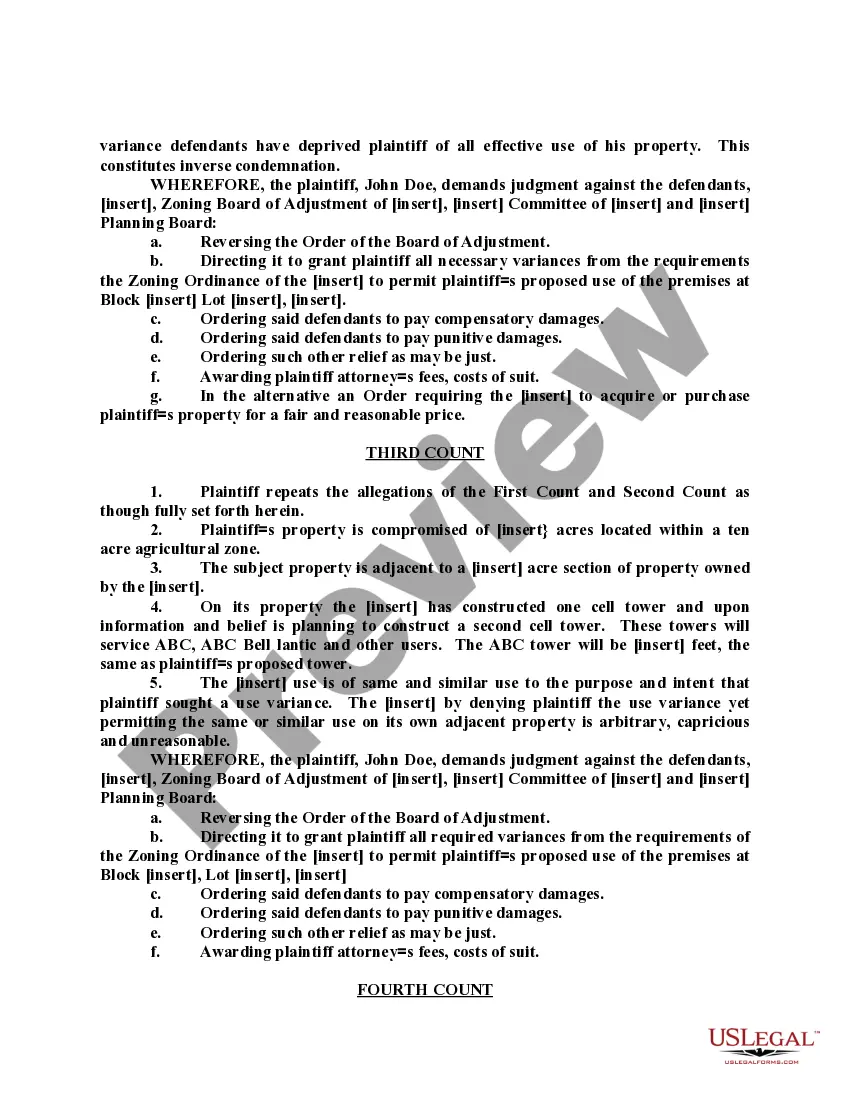
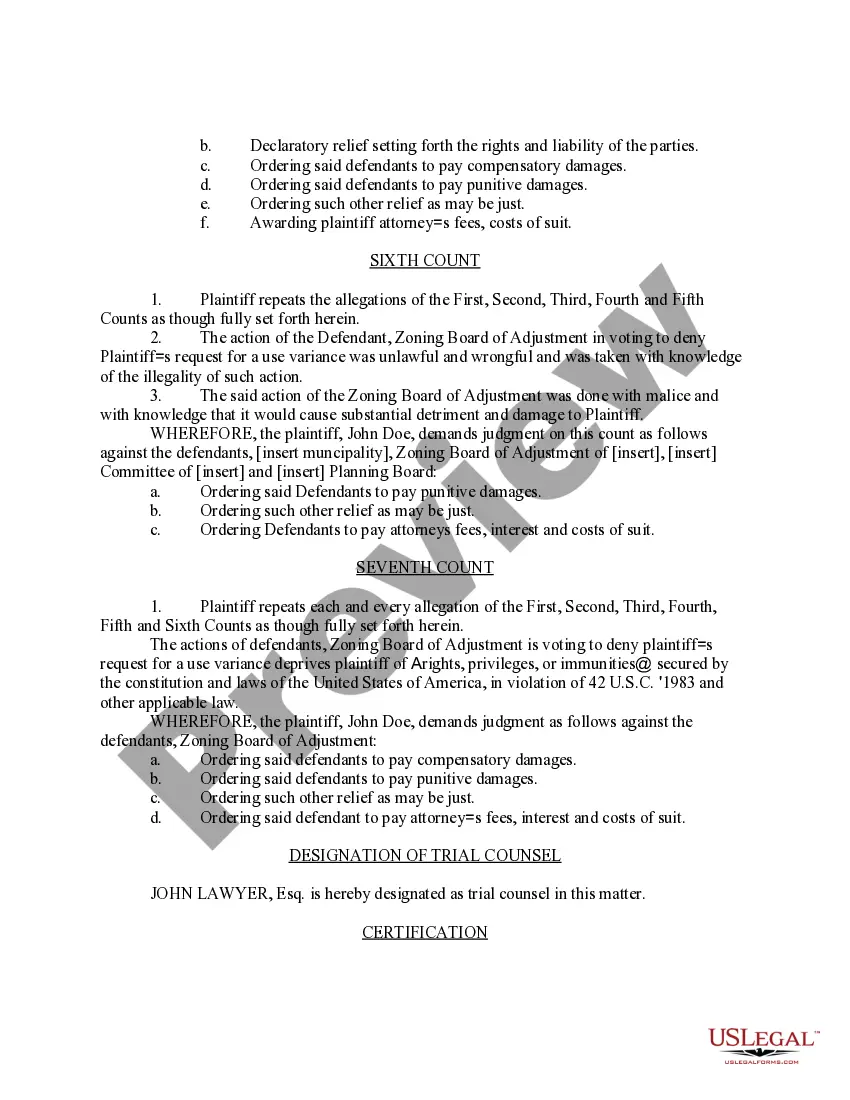
- Allegations of improper denial and requests for legal relief
- Claims for damages including compensatory and punitive damages
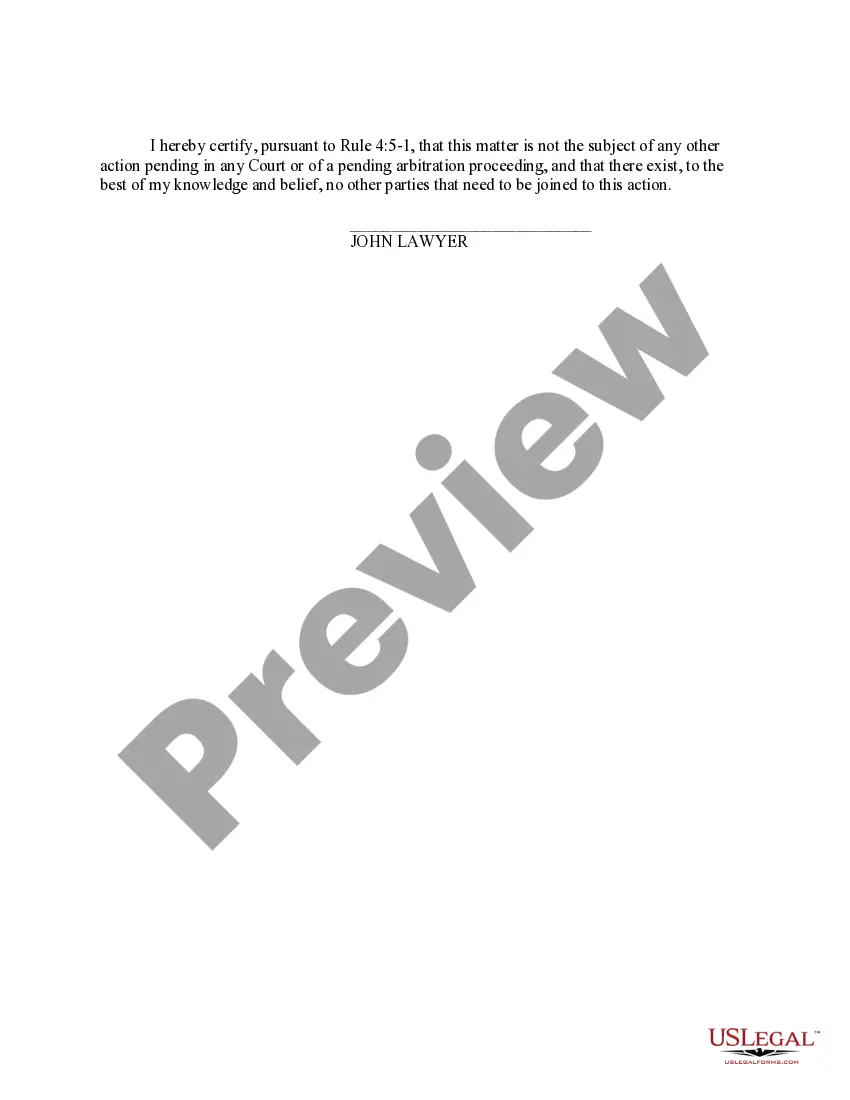
- Designation of trial counsel and certifications regarding other legal proceedings

When this form is needed
This form should be used in situations where an individual or entity has had a variance or application denied by a zoning board in New Jersey. Common scenarios include disputes over permits for construction, modifications to existing structures, or specific land uses that do not comply with current zoning laws. It is particularly relevant for those who believe the zoning board acted arbitrarily or capriciously in denying their request, or where local laws may have resulted in a loss of property use rights.
Who this form is for
- Individuals or businesses whose applications for zoning variances have been denied.
- Property owners who wish to challenge decisions affecting their land use.
- Attorneys representing clients in zoning disputes within New Jersey.
- Anyone planning to appeal a zoning board decision to seek clarification or modification of existing zoning laws.
How to prepare this document
- Identify the plaintiff and provide their complete address.
- List the defendants, which typically include the zoning board and municipal authorities.
- Detail the facts surrounding the application for the variance and the basis for the appeal.
- State all claims for damages or specific relief sought from the court.
- Designate trial counsel and ensure all certifications are appropriately completed and signed.
Does this form need to be notarized?
This form does not typically require notarization to be legally valid. However, some jurisdictions or document types may still require it. US Legal Forms provides secure online notarization powered by Notarize, available 24/7 for added convenience.
Get your form ready online
Our built-in tools help you complete, sign, share, and store your documents in one place.
Make edits, fill in missing information, and update formatting in US Legal Forms—just like you would in MS Word.
Download a copy, print it, send it by email, or mail it via USPS—whatever works best for your next step.
Sign and collect signatures with our SignNow integration. Send to multiple recipients, set reminders, and more. Go Premium to unlock E-Sign.
If this form requires notarization, complete it online through a secure video call—no need to meet a notary in person or wait for an appointment.
We protect your documents and personal data by following strict security and privacy standards.

Make edits, fill in missing information, and update formatting in US Legal Forms—just like you would in MS Word.

Download a copy, print it, send it by email, or mail it via USPS—whatever works best for your next step.

Sign and collect signatures with our SignNow integration. Send to multiple recipients, set reminders, and more. Go Premium to unlock E-Sign.

If this form requires notarization, complete it online through a secure video call—no need to meet a notary in person or wait for an appointment.

We protect your documents and personal data by following strict security and privacy standards.
Common mistakes to avoid
- Failing to properly identify all parties involved in the appeal.
- Omitting relevant details about the application history that supports the claim.
- Not including necessary evidentiary materials or exhibits that bolster the case.
- Missing deadlines for filing the complaint after the zoning board's decision.
- Inadequate description of the relief sought or the legal basis for the appeal.
Benefits of completing this form online
- Convenient access to a professionally drafted form tailored to New Jersey law.
- Edit and customize the form quickly to meet specific requirements.
- Avoid potential errors associated with handwritten forms by using digital templates.
- Immediate downloading and easy filing procedures.
Legal use & context
- This form is legally enforceable in New Jersey courts provided it follows the stateâs procedural rules.
- The contents must align with state laws regarding zoning and land use.
- Care should be taken to ensure the claims presented meet legal standards for appealing zoning board decisions.
Looking for another form?








Form popularity
FAQ
After all, every appellate court has deadlines that are usually relatively short. In New Jersey, you will be given 45 days from the date of your sentence to seek appellate review of a Superior Court conviction. You get even less for a municipal court conviction: 20 days from the date of sentencing.
Filing the Notice of Appeal. Abandonment or Settlement. Waiver of Fees. Designating the Record. Civil Case Information Sheet. Briefs. Oral Argument. The Court's Decision.
An appellate court may issue its opinion, or decision, in as little as a month or as long as a year or more. The average time period is 6 months, but there is no time limit.
When the Supreme Court rules on a constitutional issue, that judgment is virtually final; its decisions can be altered only by the rarely used procedure of constitutional amendment or by a new ruling of the Court. However, when the Court interprets a statute, new legislative action can be taken.
Because the decision was on constitutional grounds, Congress can't overturn it simply by updating the law, and a constitutional amendment remains unlikely.
The Appellate Division hears appeals from the Law and Chancery Divisions of the New Jersey Superior Court, the Tax Court, and final decisions of State administrative agencies. The Appellate Division decides approximately 7,000 appeals and 7,500 motions each year.
The chances of winning a criminal appeal in California are low. Only about 20 percent of criminal appeals are successful.
Make sure you lodge any appeal promptly. An appeal against conviction or sentence (or an application for leave to appeal) from the Local Court to the District Court must generally be lodged within 28 days of the sentence being imposed.
Both parties have the right to appeal the decision to the United States Supreme Court, the highest court in the nation. The Supreme Court, unlike the court of appeals, is not required to take all cases. The party requesting the input of the U.S. Supreme Court files a Petition for Writ of Certiorari.