New Jersey Complaint Breach of Employment Contract
What is this form?
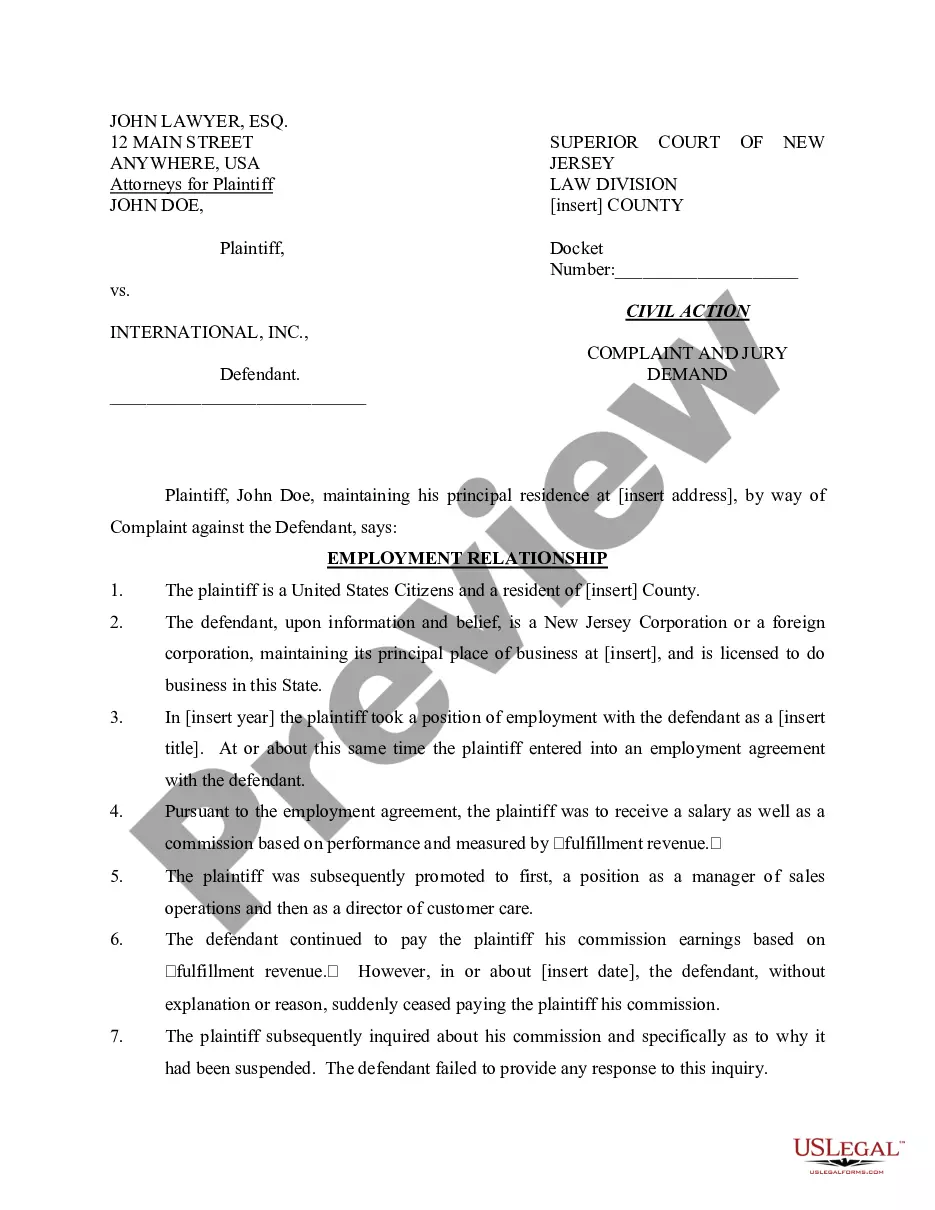
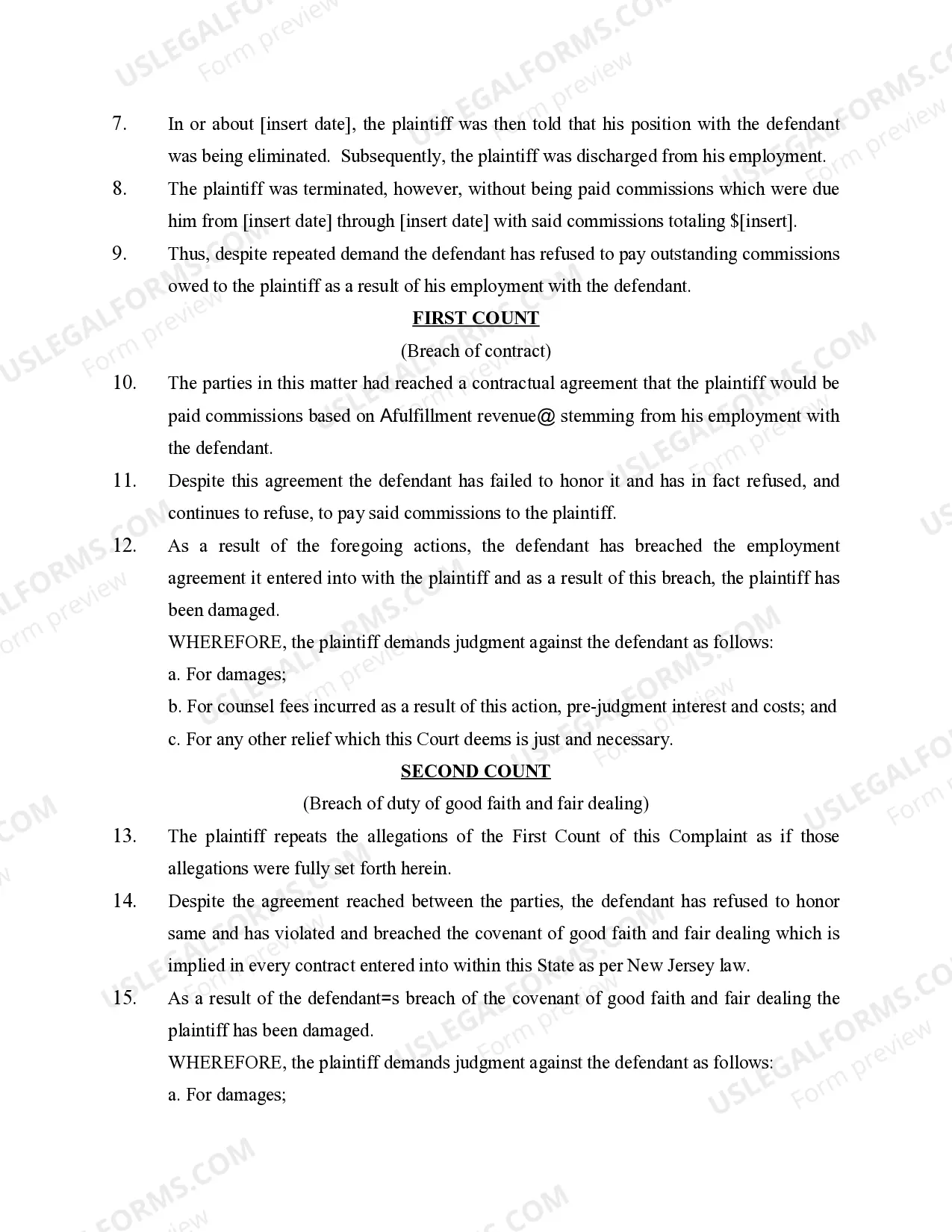
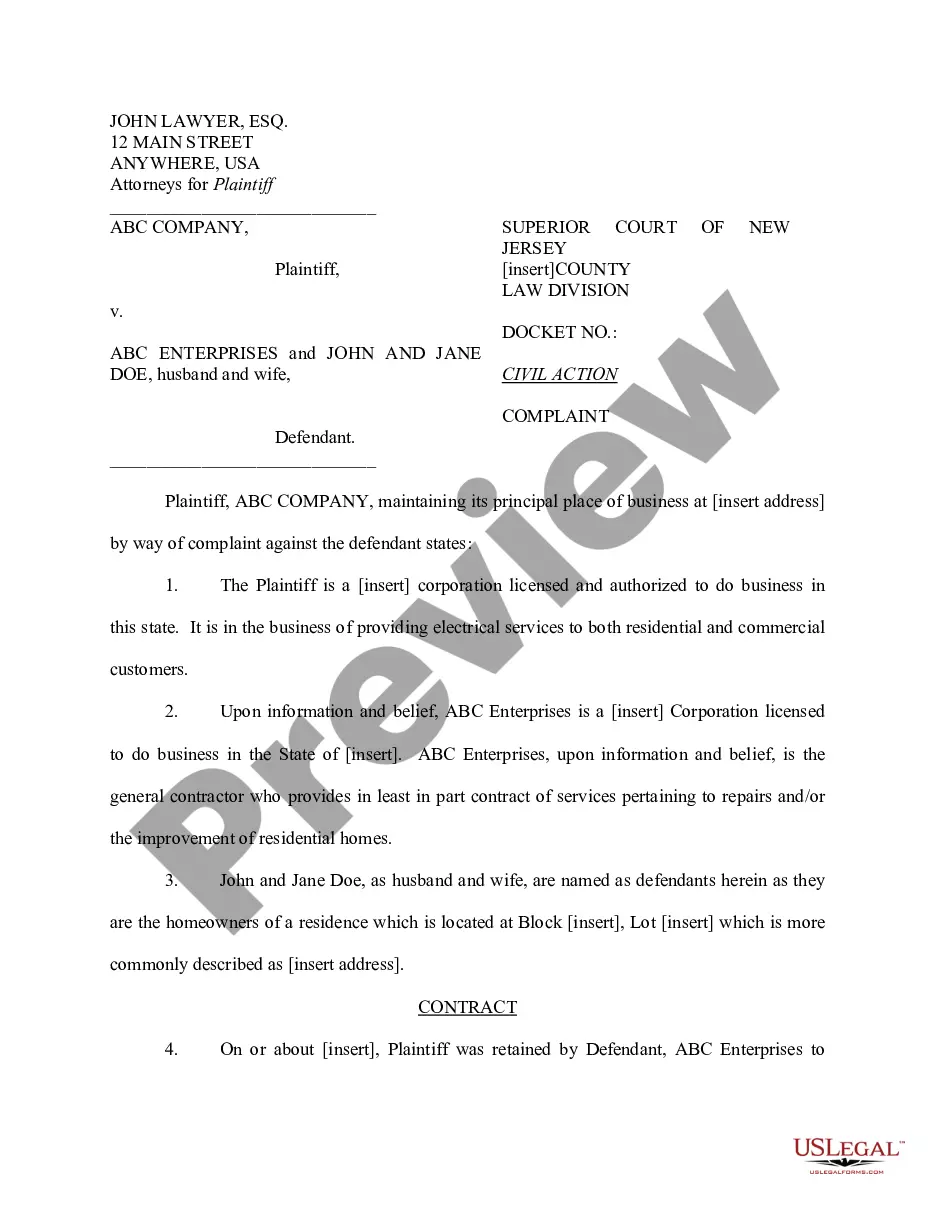
This Complaint for Breach of Employment Contract is a legal document used by an employee (the plaintiff) to initiate a lawsuit against an employer (the defendant) for failing to honor the terms of an employment agreement. Unlike other forms, this complaint explicitly details the breach of contract, outlining key claims such as failure to pay commissions and violation of good faith and fair dealing. It serves as the basis for seeking remedies in court for damages incurred due to the breach.
Form components explained
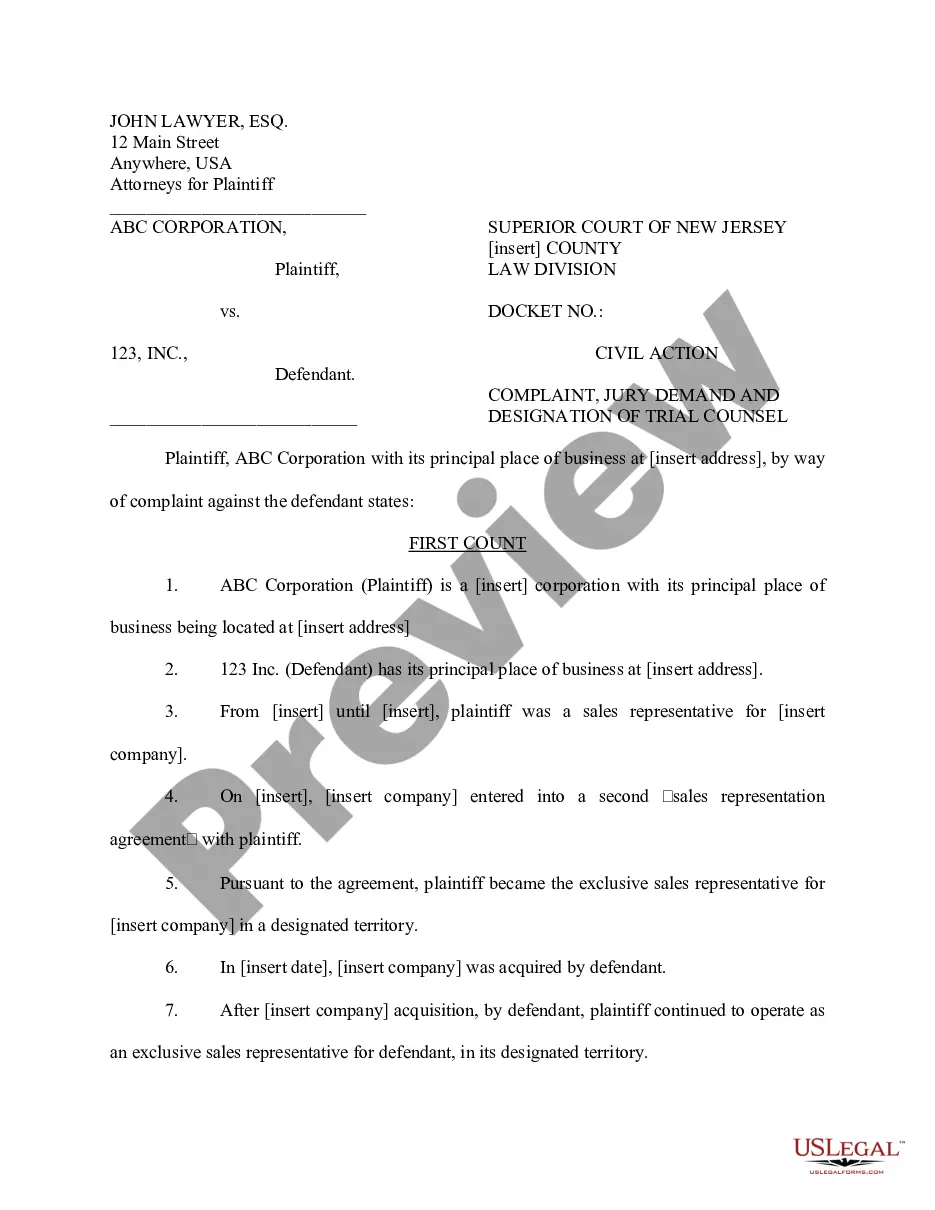
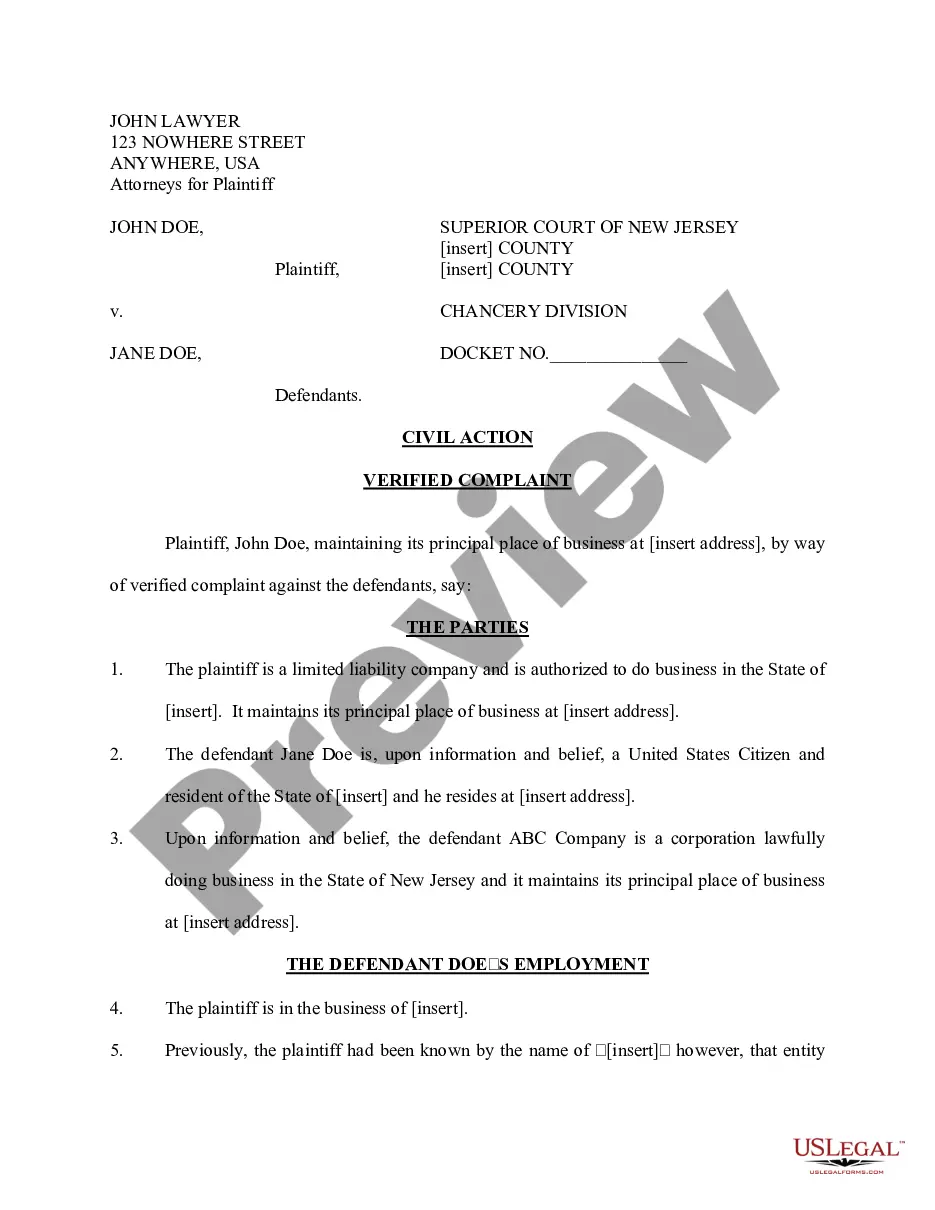
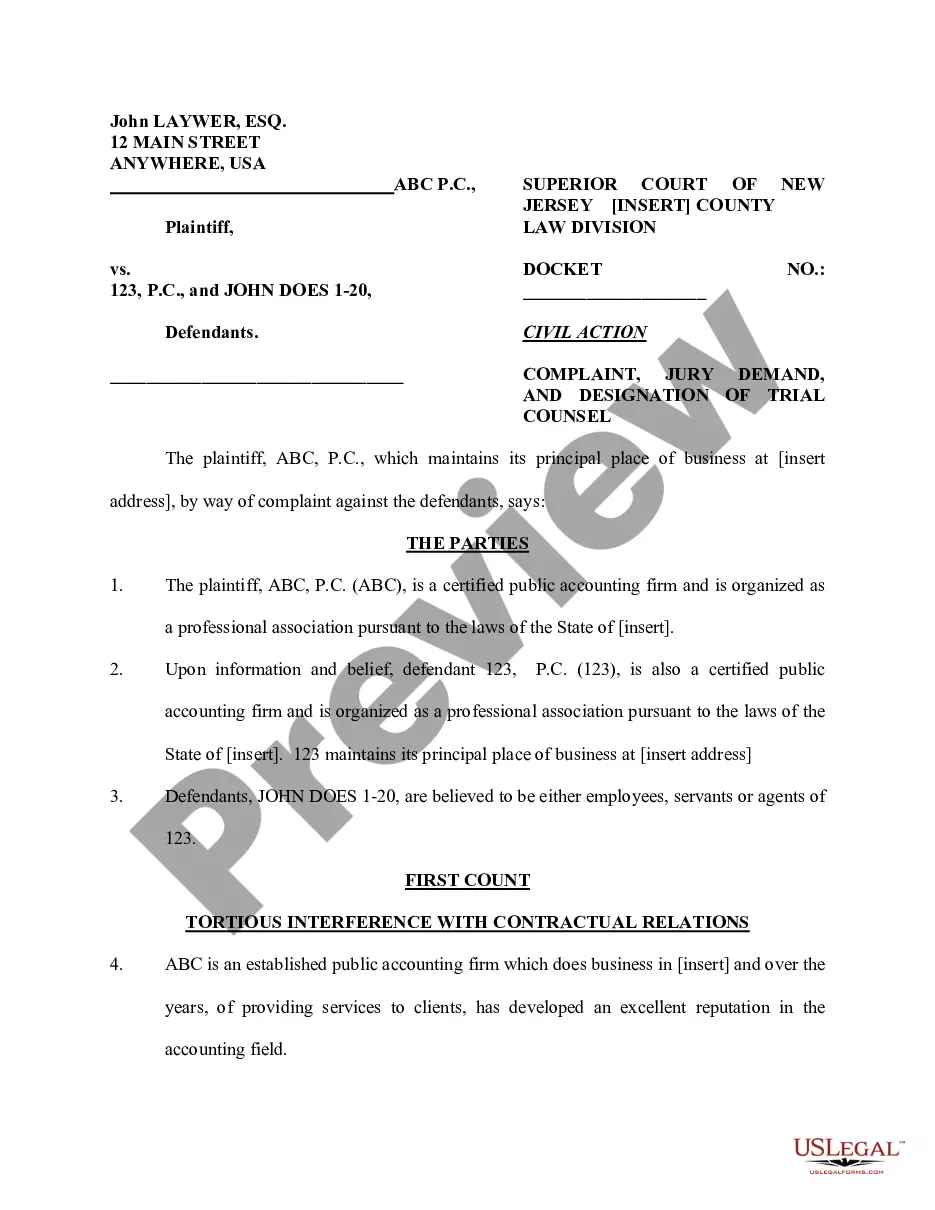
- Title and court information: The heading states the nature of the lawsuit, including the court name and docket number.
- Parties involved: Identification of the plaintiff and defendant, including their addresses and relationships.
- Employment relationship details: Description of the employment agreement, including salary and commission structure.
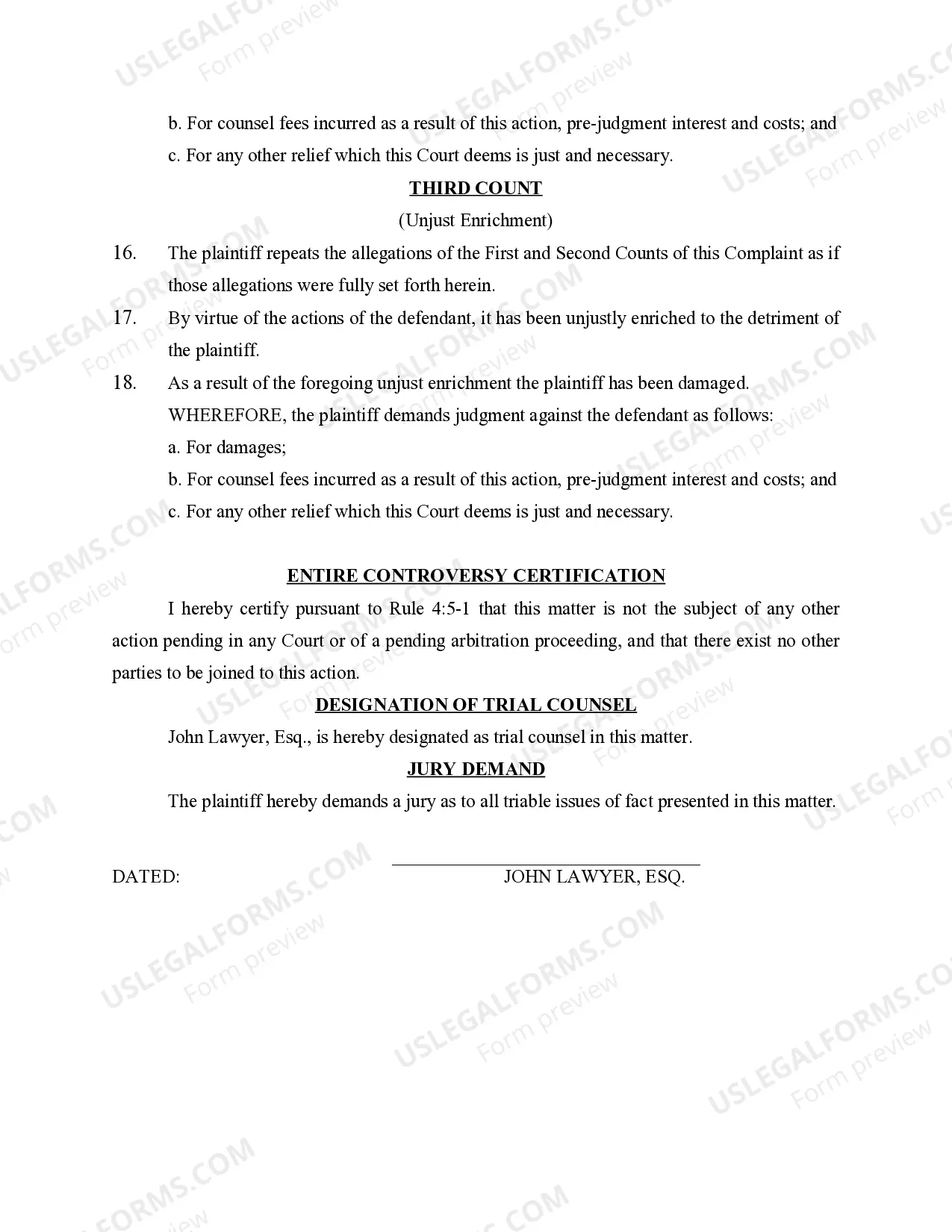
- Claims for breach: Specific counts of breach of contract, breach of duty of good faith, and unjust enrichment.
- Demand for relief: Statement of what the plaintiff seeks, including damages and attorney fees.
- Certification and jury demand: Declaration regarding the status of other actions and demand for a jury trial.

When to use this document
You should use this form if you have an employment agreement with your employer and believe they have violated the terms, particularly if they ceased payment of agreed commissions or terminated your position unjustly. This complaint is necessary to formally assert your rights and seek compensation for losses incurred due to the employer's actions.
Who can use this document
- Employees seeking to enforce their employment contracts.
- Individuals who have been wrongfully terminated or denied payment as per their employment agreement.
- Anyone looking for a structured way to present their claims in a New Jersey court.
Instructions for completing this form
- Identify the parties involved: Fill in the names and addresses of the plaintiff and defendant.
- Detail the employment relationship: Include job title, the nature of the employment agreement, and commission structure.
- Specify important dates: Clearly state when the employment began and when any breach occurred.
- Outline claims: Select the relevant counts (breach of contract, breach of good faith, unjust enrichment) and summarize the specifics of each.
- Provide a demand for relief: State the damages sought, including any attorney fees and costs.
- Sign and date the complaint: Ensure the document is signed by the plaintiff's attorney (if applicable) and dated correctly.
Is notarization required?
Notarization is not commonly needed for this form. However, certain documents or local rules may make it necessary. Our notarization service, powered by Notarize, allows you to finalize it securely online anytime, day or night.
Get your form ready online
Our built-in tools help you complete, sign, share, and store your documents in one place.
Make edits, fill in missing information, and update formatting in US Legal Forms—just like you would in MS Word.
Download a copy, print it, send it by email, or mail it via USPS—whatever works best for your next step.
Sign and collect signatures with our SignNow integration. Send to multiple recipients, set reminders, and more. Go Premium to unlock E-Sign.
If this form requires notarization, complete it online through a secure video call—no need to meet a notary in person or wait for an appointment.
We protect your documents and personal data by following strict security and privacy standards.

Make edits, fill in missing information, and update formatting in US Legal Forms—just like you would in MS Word.

Download a copy, print it, send it by email, or mail it via USPS—whatever works best for your next step.

Sign and collect signatures with our SignNow integration. Send to multiple recipients, set reminders, and more. Go Premium to unlock E-Sign.

If this form requires notarization, complete it online through a secure video call—no need to meet a notary in person or wait for an appointment.

We protect your documents and personal data by following strict security and privacy standards.
Typical mistakes to avoid
- Failing to accurately identify all parties involved in the employment relationship.
- Omitting critical details about the employment contract and terms.
- Not including key dates that might impact the case.
- Submitting the complaint without necessary signatures or without the proper filing in court.
Benefits of completing this form online
- Convenience of completing the form at your own pace from any location.
- Editability allows you to correct any errors or update information easily.
- Access to attorney-drafted templates ensures legal precision and compliance with applicable laws.
Looking for another form?


Form popularity
FAQ
Can an employer sue an employee for breach of contract? The short answer is yes.So for example, if an employee quits their job without working their notice period and it leads to financial losses, you can sue for the losses.
A typical breach in employment contract cases occurs when an employer fails to pay the employee at the time or in the amount that is stated in the contract. This type of breach not only allows the employee out of the contract, but may also give the employee cause to sue the employer for damages.
An agreement written into the contract allows either party to terminate the contract after giving written notice. For example, your contract may state you may terminate your employment contract by giving your employer two weeks' notice, allowing them ample time to find someone to replace you.
A breach of contract is when one party breaks the terms of an agreement between two or more parties. This includes when an obligation that is stated in the contract is not completed on timeyou are late with a rent payment, or when it is not fulfilled at alla tenant vacates their apartment owing six-months' back rent.
A mutual agreement to terminate the contract early is often the best-case scenario for getting out of an employment contract. Determine how much notice you owe, if any. Once again, you will need to go back to your contract to determine how much notice, if at all, you owe the other party before abandoning the contract.
Breaching your employment contract may well result in a disciplinary process, which may eventually lead to your dismissal. Although an employer can also pursue you for damages, this can only be in respect of financial loss which they have suffered as a result of your breach.
After a job offer letter is accepted by the prospective employee and the employer, it becomes a legally binding contract.