New Jersey Complaint by Employer for Tortious Acts by Employee
Overview of this form
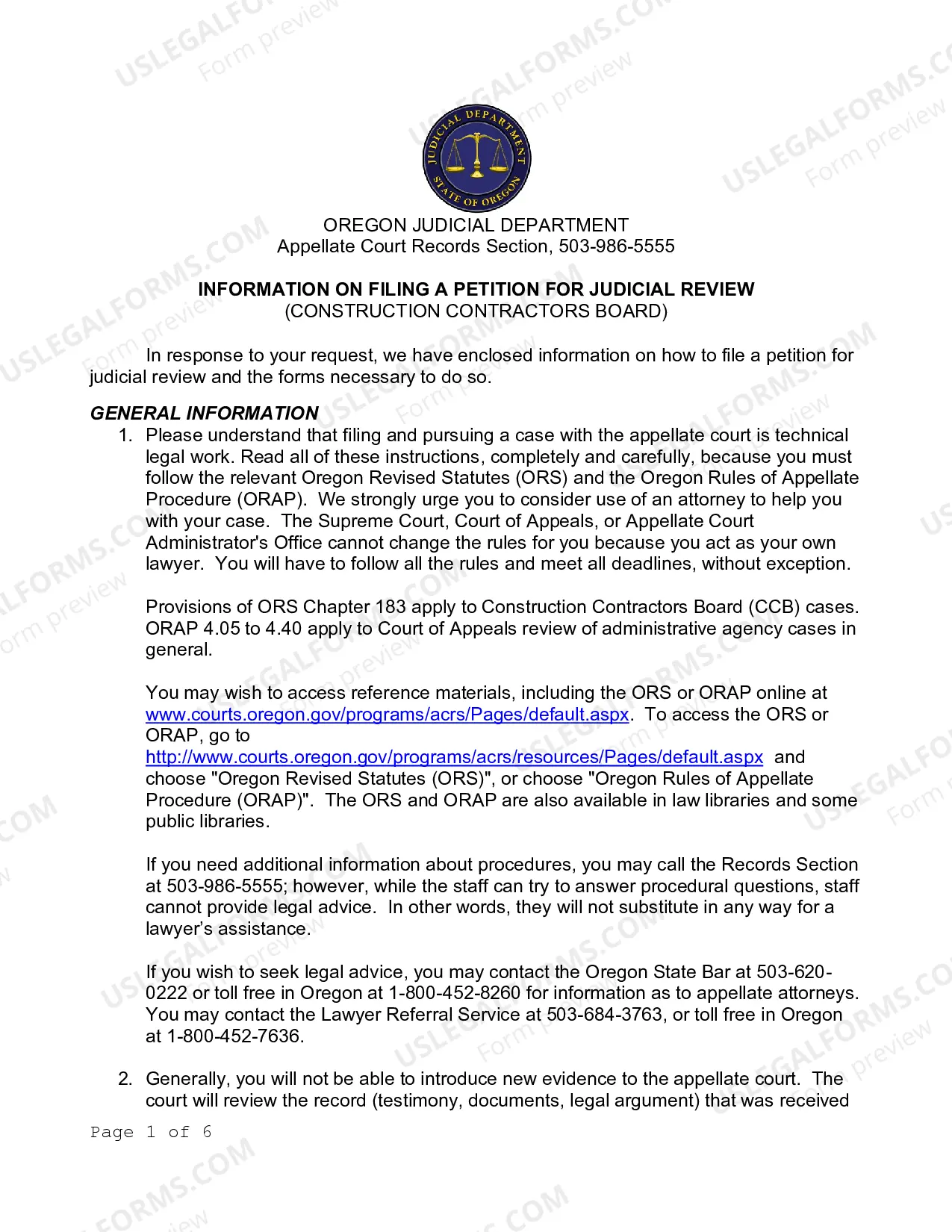
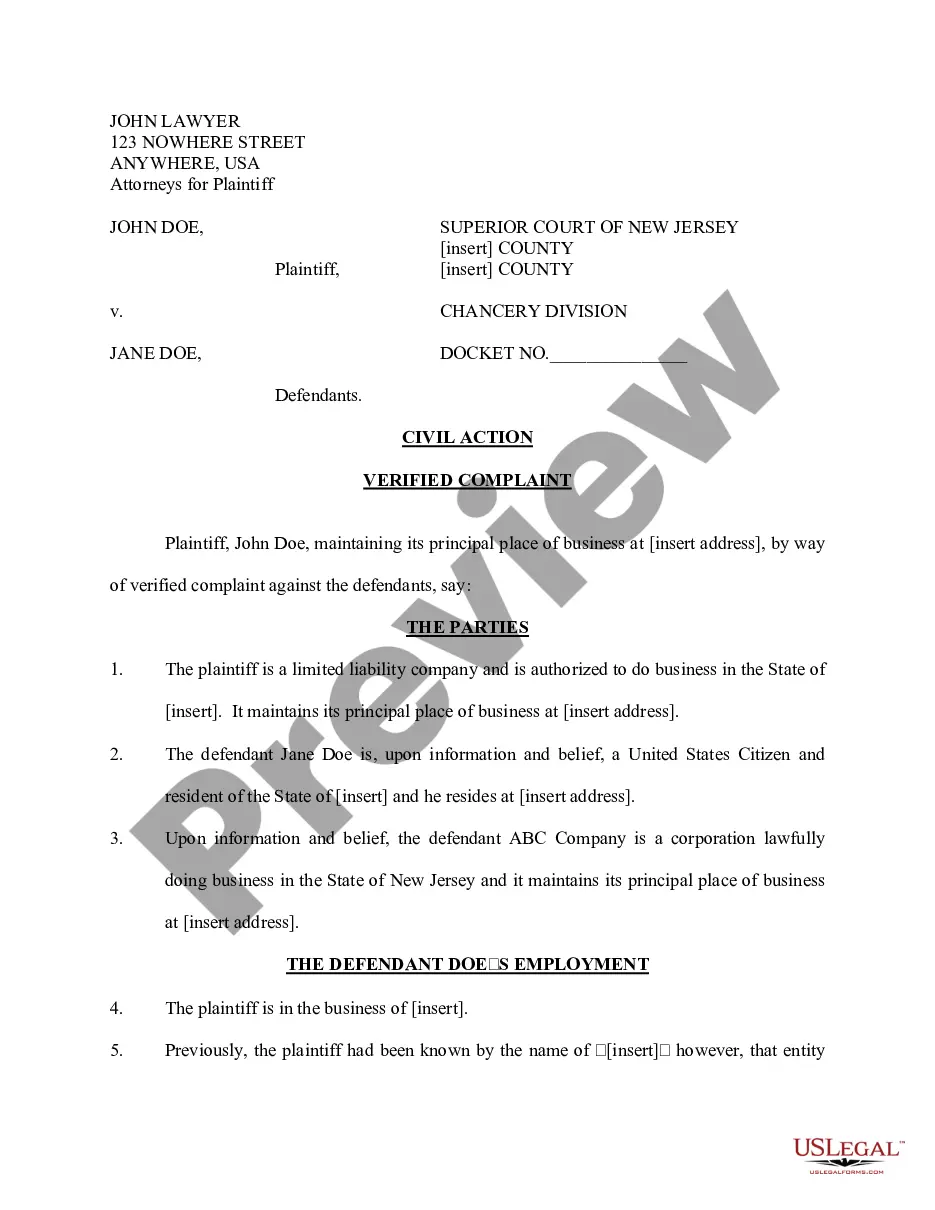
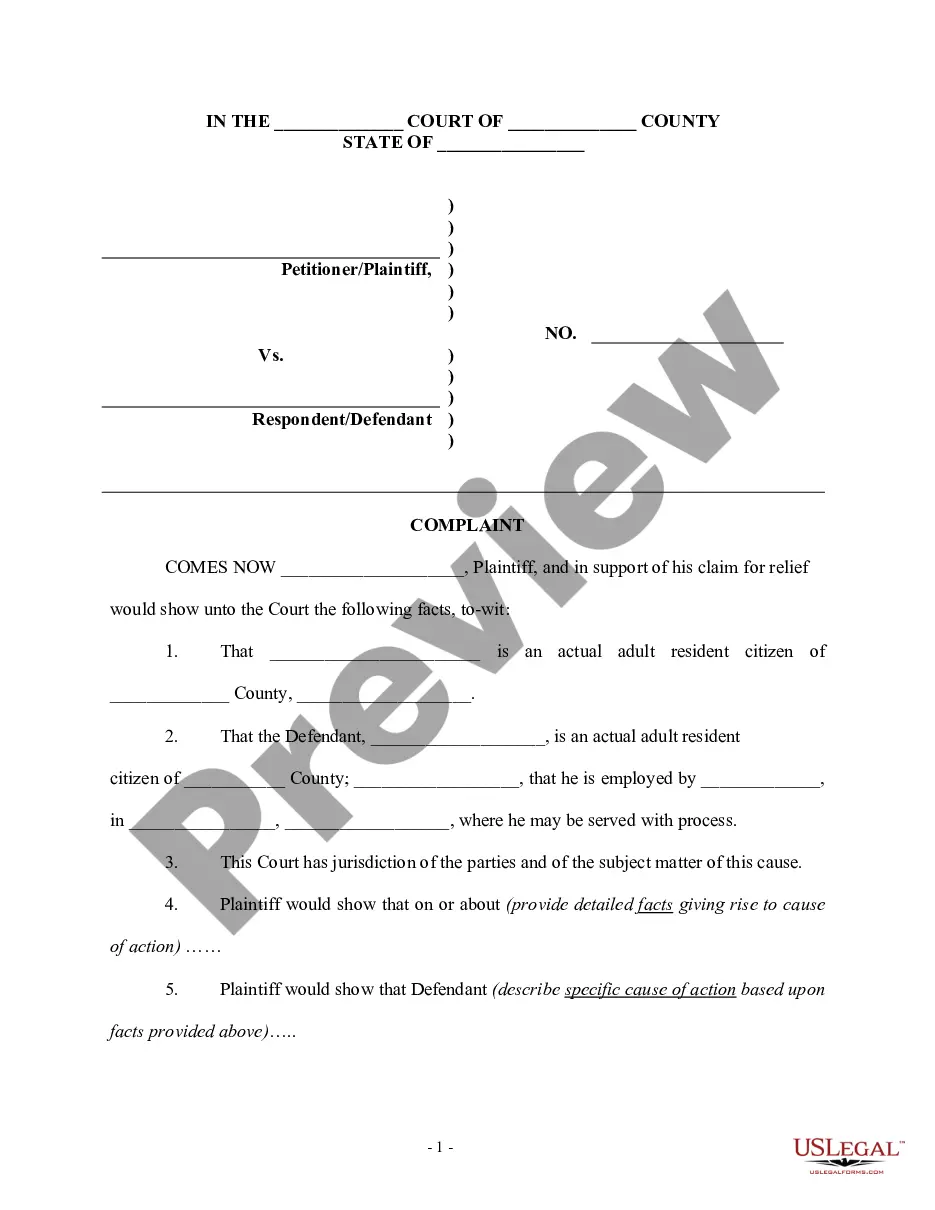
The Complaint by Employer for Tortious Acts by Employee is a legal document used by employers to initiate a lawsuit against a current or former employee. This complaint specifically addresses issues such as breach of loyalty, unauthorized competition, and misappropriation of trade secrets. Unlike other legal complaints, this form is tailored to protect an employer's rights against actions that may harm their business interests.
Key parts of this document
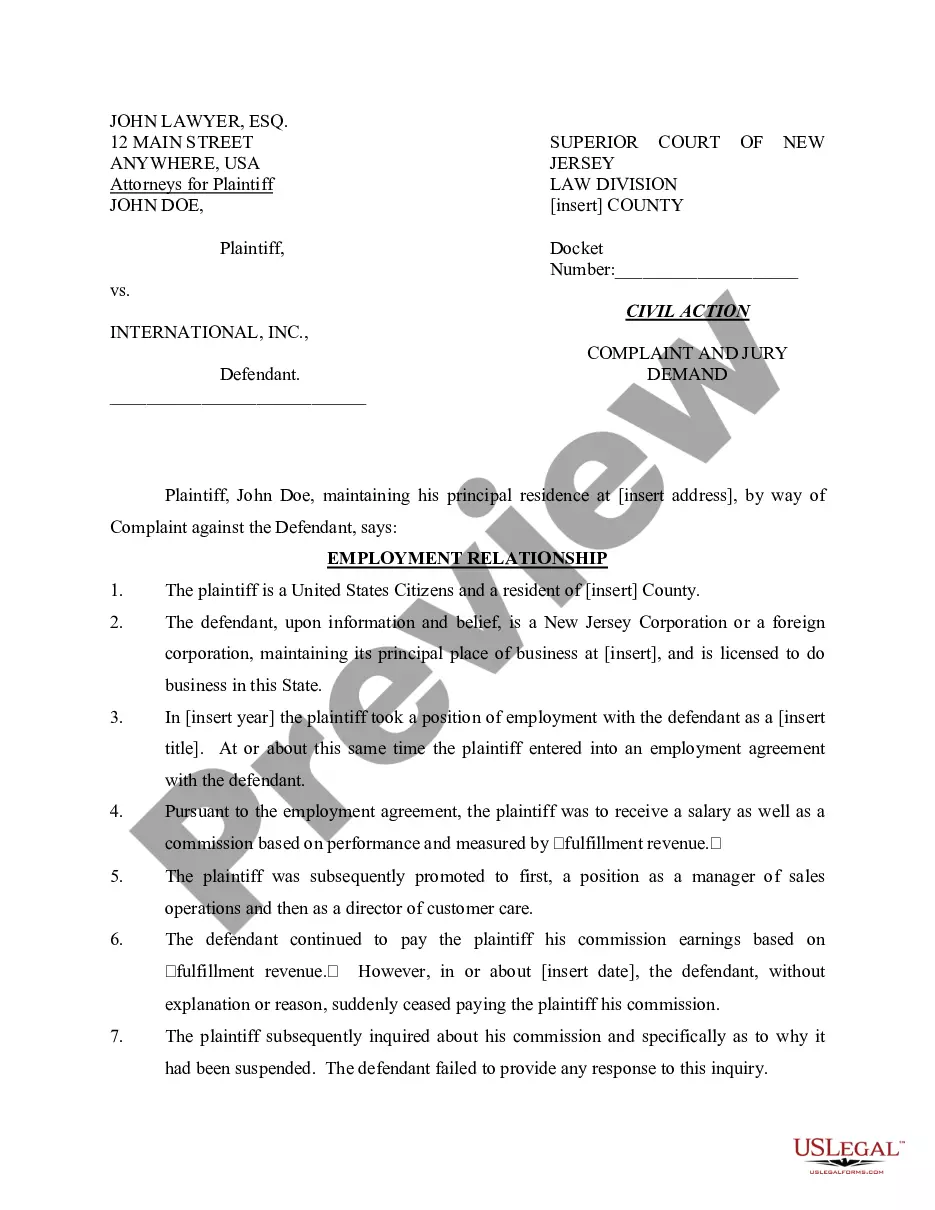
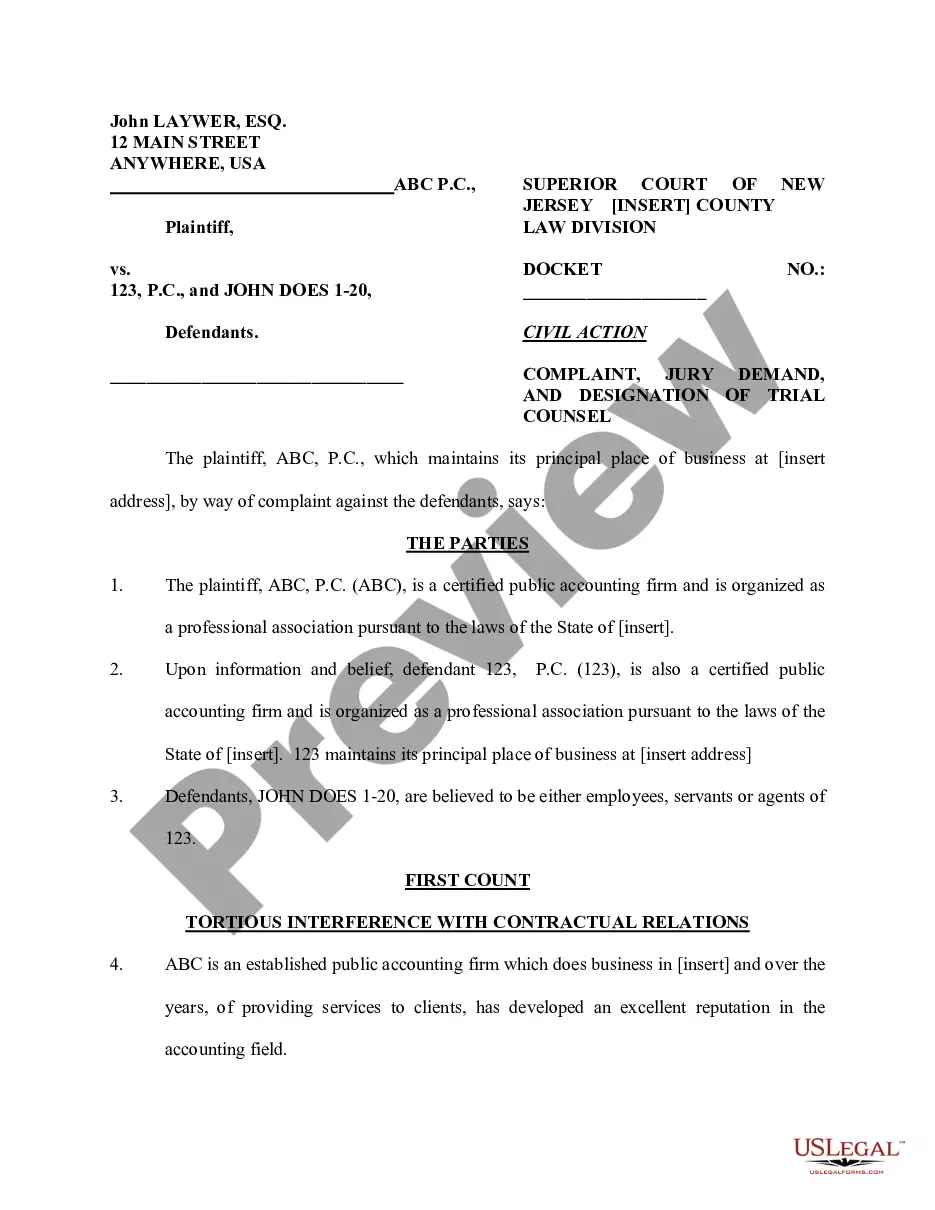
- Identification of the parties involved, including employer and employee details.
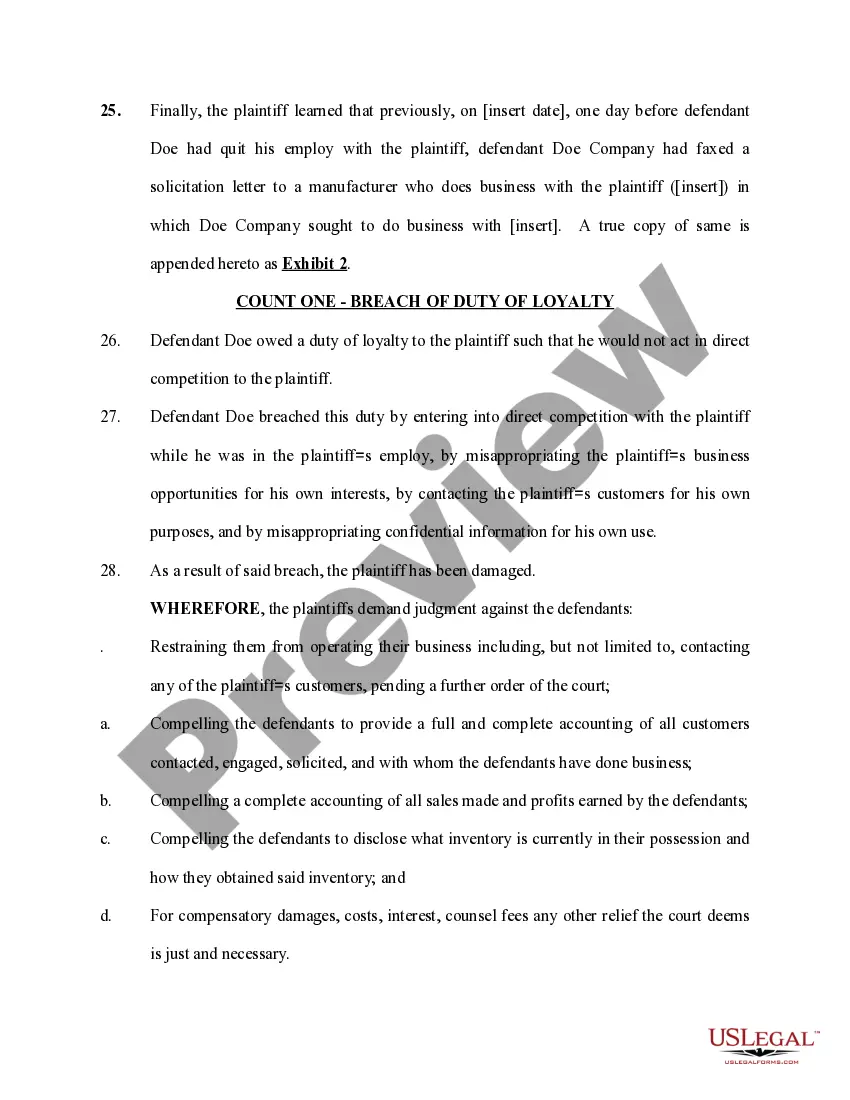
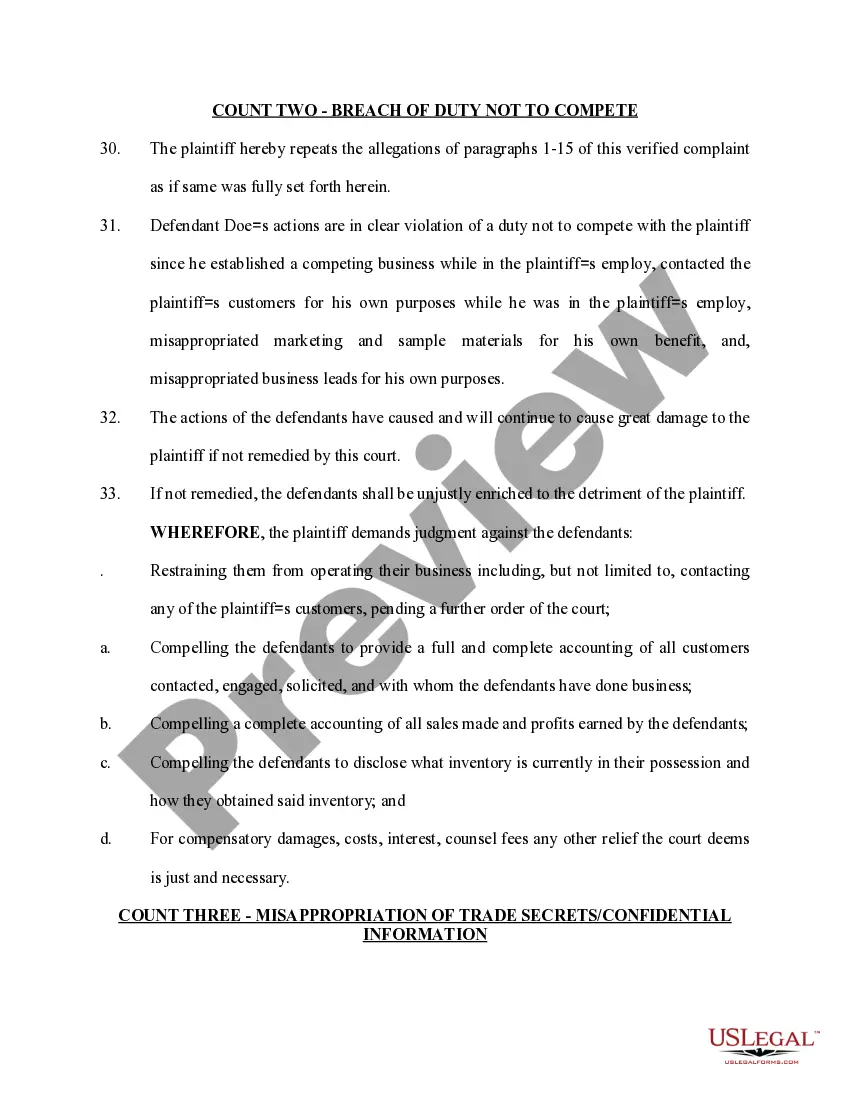
- Specific allegations against the employee, such as breach of duty of loyalty and competition.
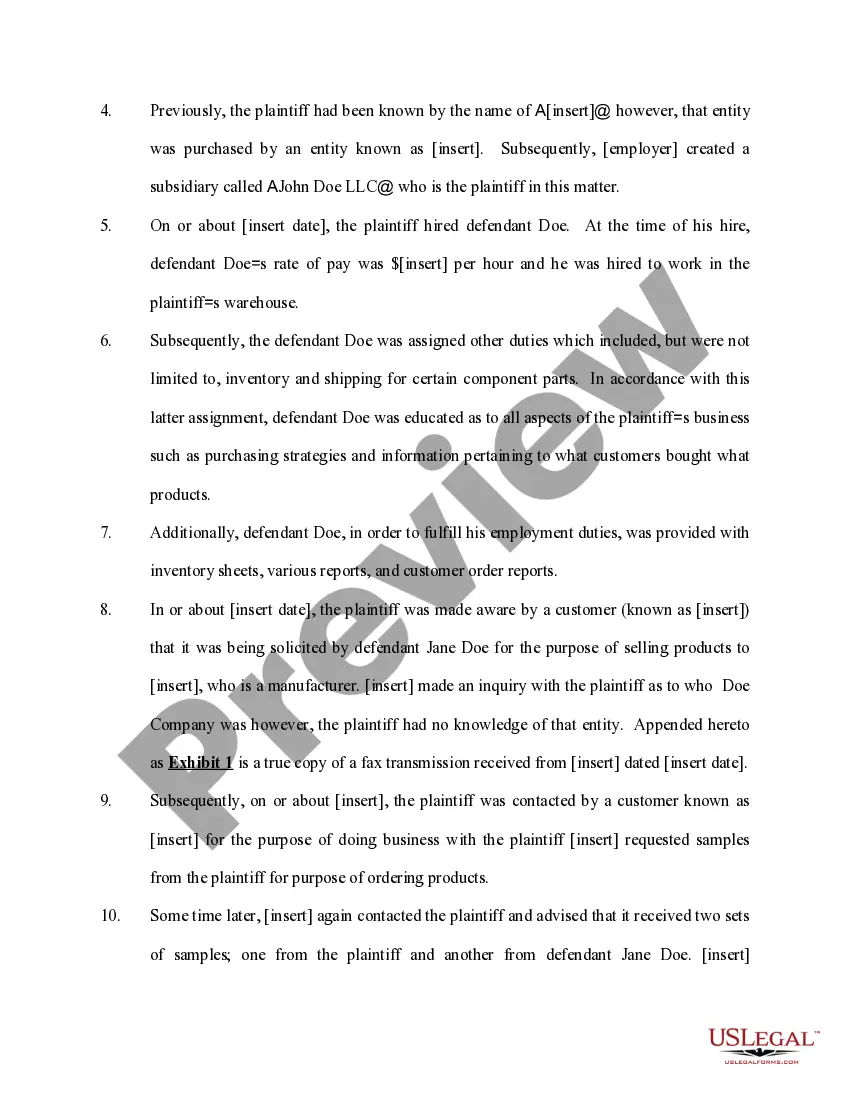
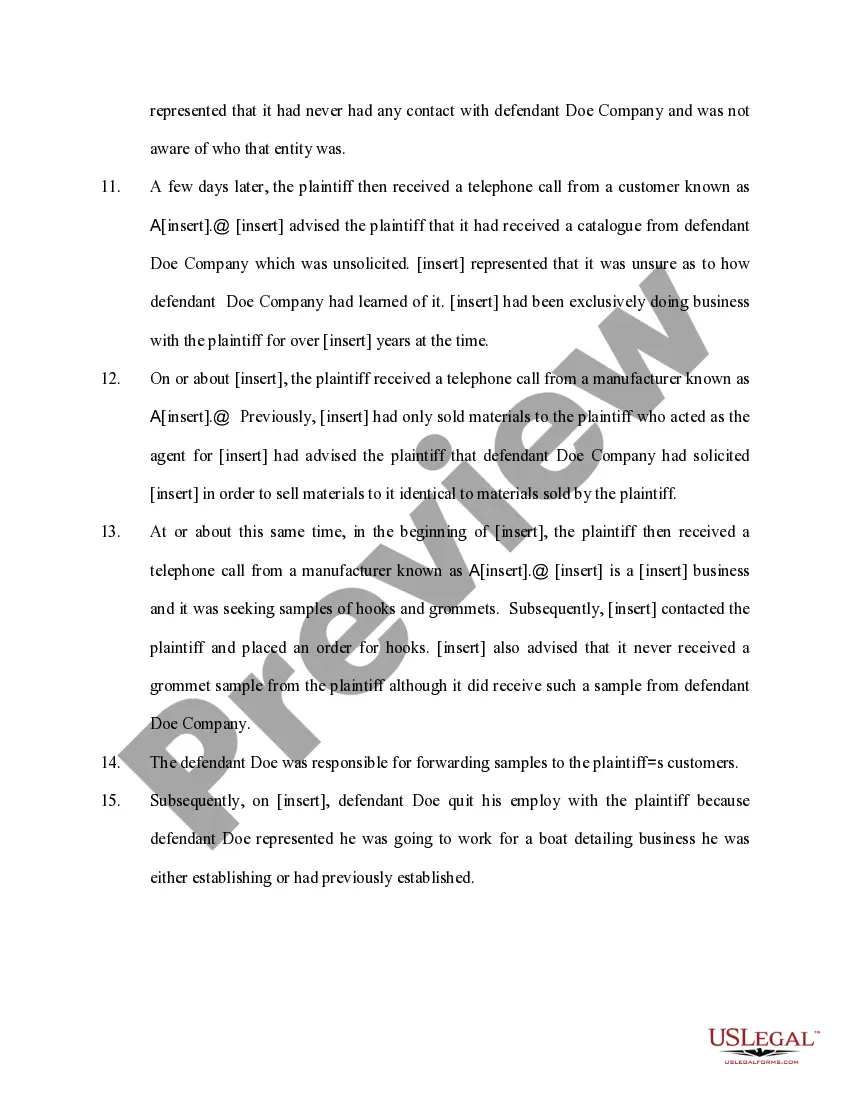
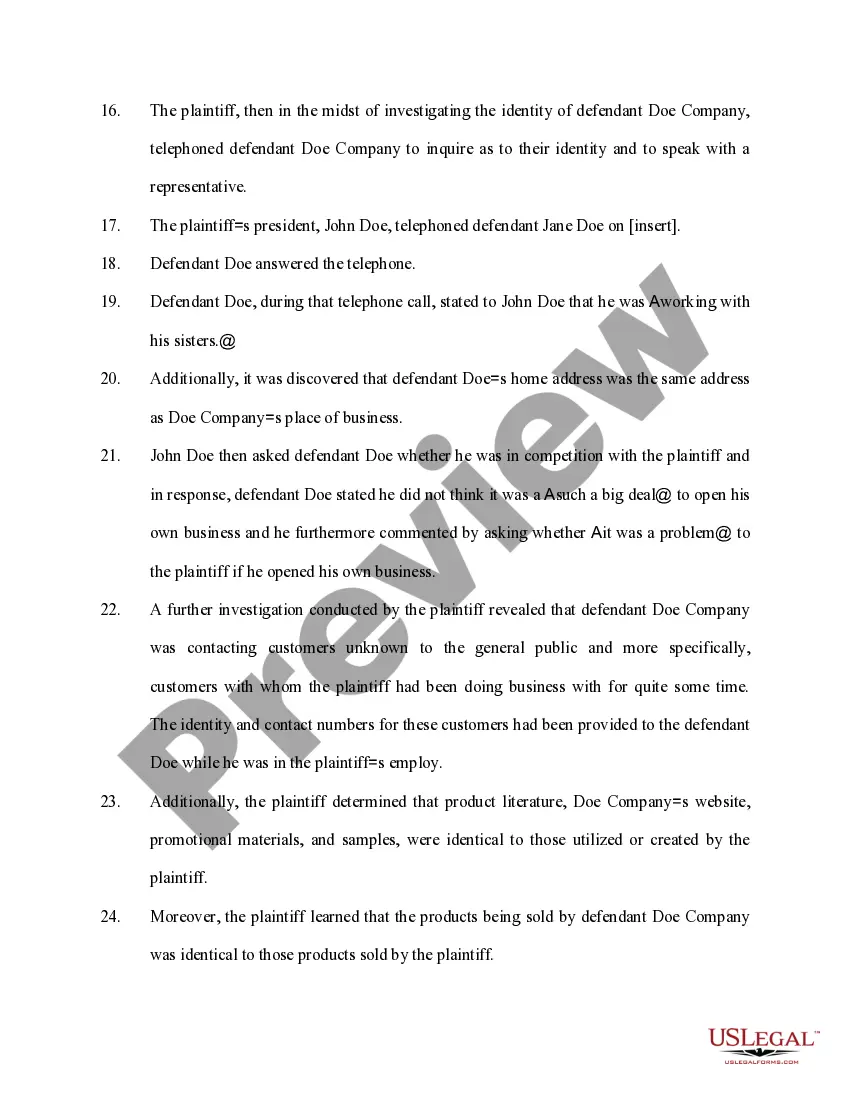
- Details on the employee's actions that led to the complaint, including any misuse of confidential information.
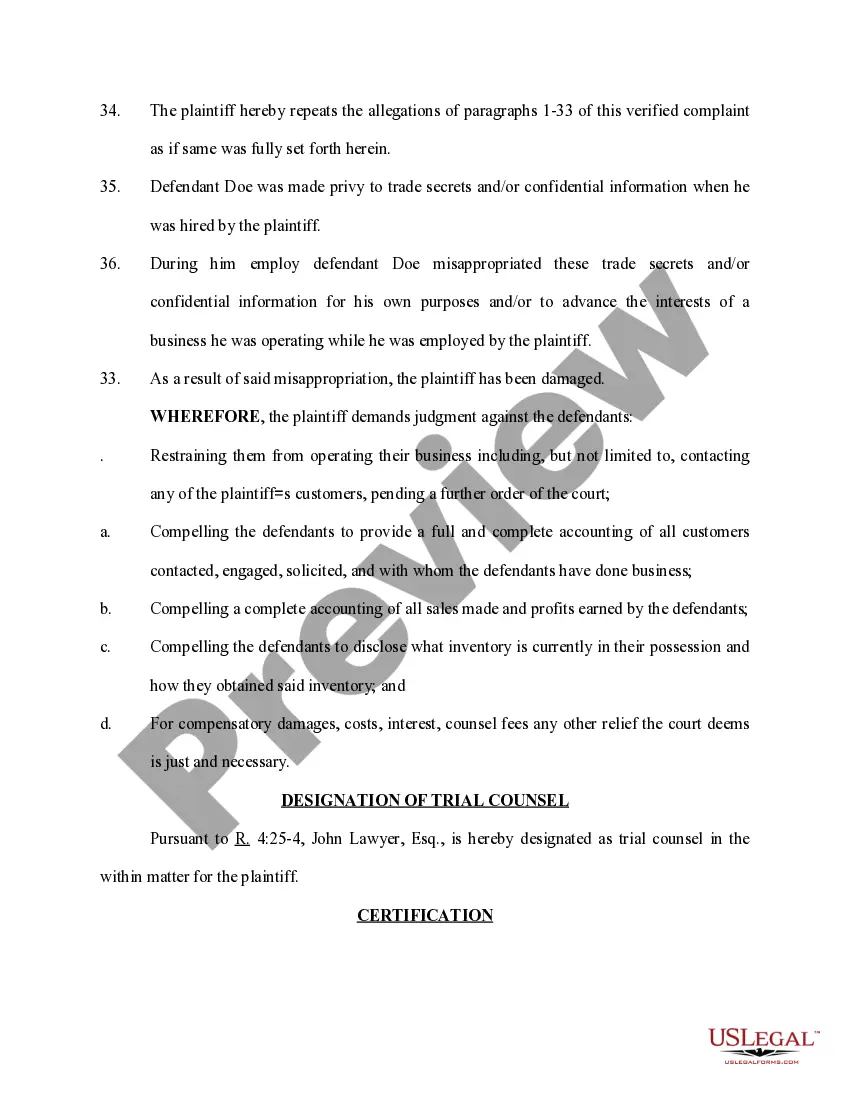
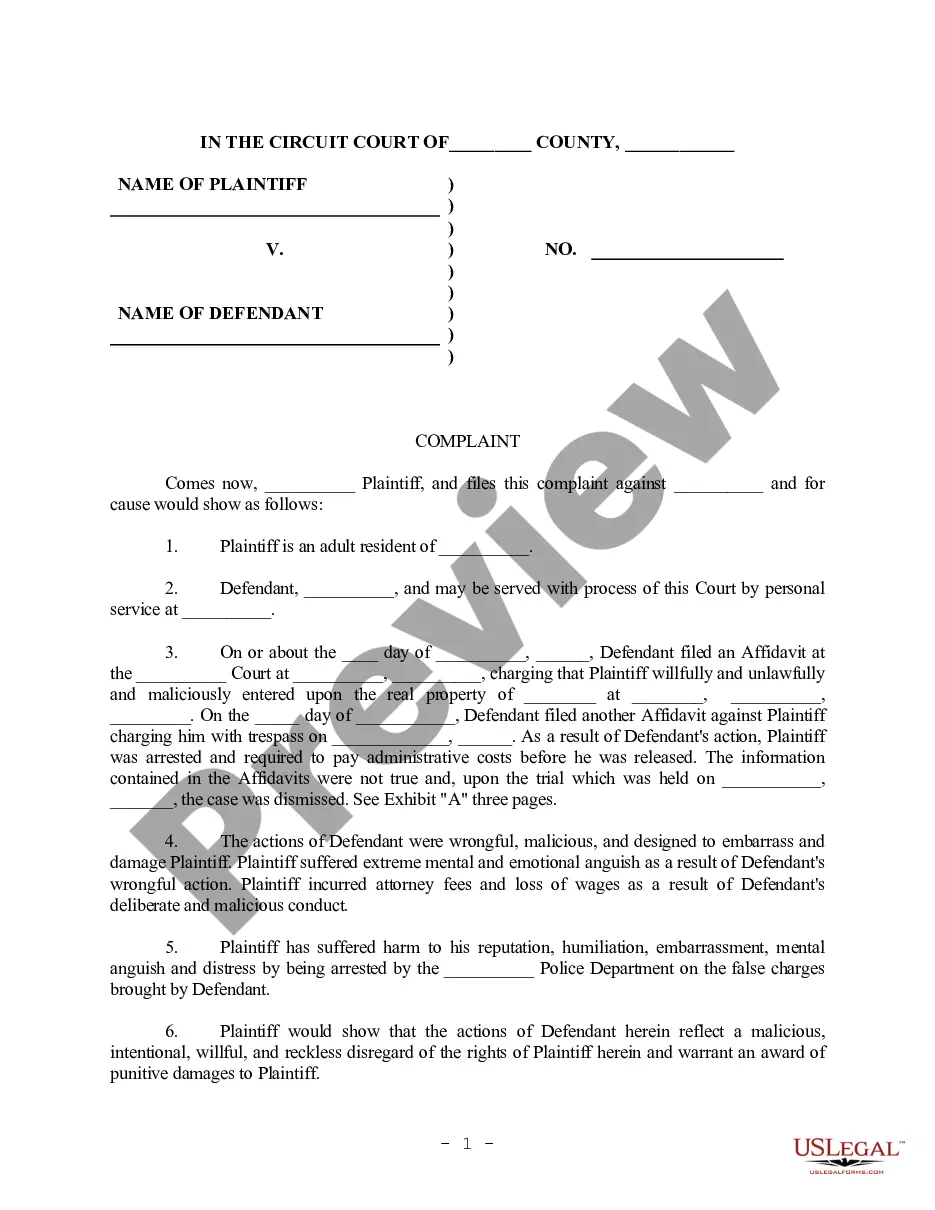
- Requests for relief from the court, such as restraining the employee from certain actions and ordering financial compensation.
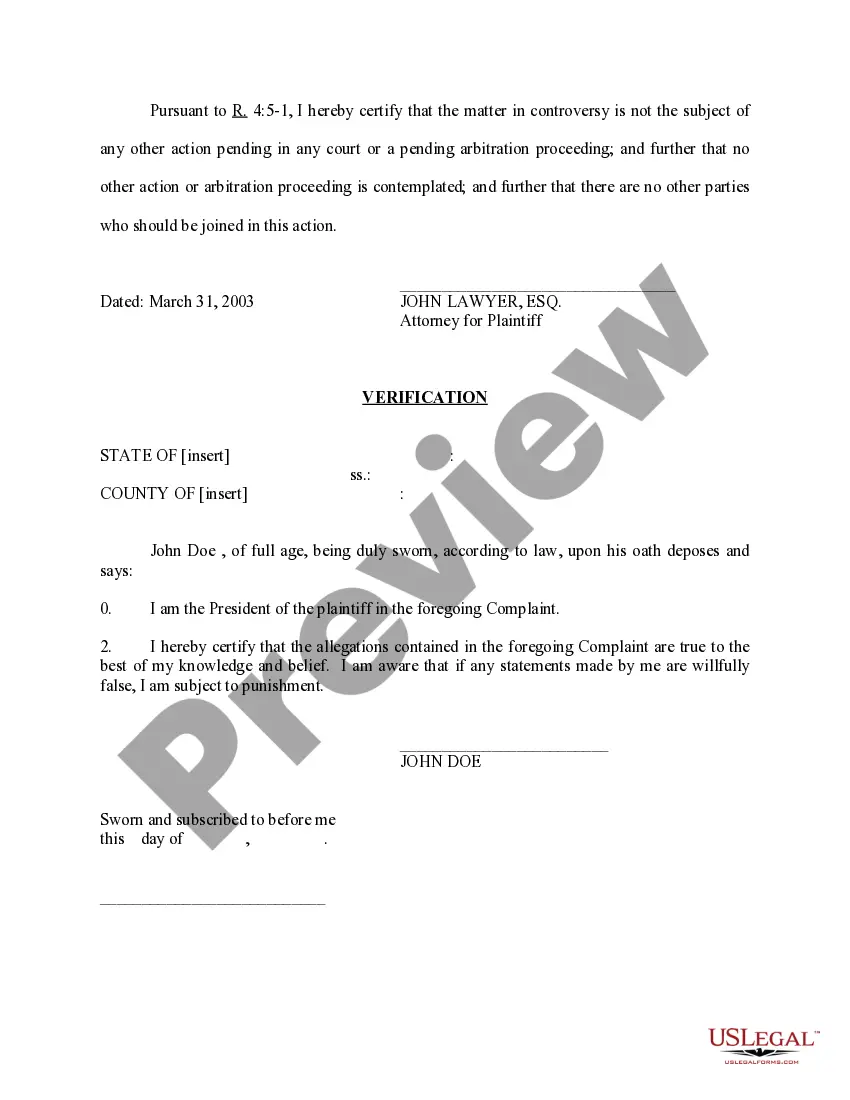
- Certification statements to affirm all information provided is accurate.

When this form is needed
This form is necessary when an employer suspects that an employee has engaged in unethical or illegal conduct that causes harm to the business. Examples include scenarios where an employee starts a competing business while still employed, misuses confidential company information, or solicits clients for their own gain. It is an essential step in protecting your business interests and seeking remediation through the court system.
Who this form is for
- Business owners or managers who believe an employee has violated their contractual duties.
- HR professionals tasked with addressing employee misconduct related to competition.
- Legal representatives preparing to file a lawsuit on behalf of an employer.
How to complete this form
- Identify the plaintiff (the employer) by entering the business name and address.
- Provide the defendant's (employee's) full name and address accurately.
- Clearly outline the employment history relevant to the complaint, including the role and responsibilities of the defendant during their employment.
- Detail specific instances of the alleged tortious behavior, including dates and affected customers or confidential information.
- State the requested relief from the court, detailing how you would like the court to remedy the situation.
Does this document require notarization?
This form must be notarized to be legally valid. US Legal Forms provides secure online notarization powered by Notarize, allowing you to complete the process through a verified video call.
Get your form ready online
Our built-in tools help you complete, sign, share, and store your documents in one place.
Make edits, fill in missing information, and update formatting in US Legal Forms—just like you would in MS Word.
Download a copy, print it, send it by email, or mail it via USPS—whatever works best for your next step.
Sign and collect signatures with our SignNow integration. Send to multiple recipients, set reminders, and more. Go Premium to unlock E-Sign.
If this form requires notarization, complete it online through a secure video call—no need to meet a notary in person or wait for an appointment.
We protect your documents and personal data by following strict security and privacy standards.

Make edits, fill in missing information, and update formatting in US Legal Forms—just like you would in MS Word.

Download a copy, print it, send it by email, or mail it via USPS—whatever works best for your next step.

Sign and collect signatures with our SignNow integration. Send to multiple recipients, set reminders, and more. Go Premium to unlock E-Sign.

If this form requires notarization, complete it online through a secure video call—no need to meet a notary in person or wait for an appointment.

We protect your documents and personal data by following strict security and privacy standards.
Common mistakes to avoid
- Failing to include accurate and complete information about the parties involved.
- Not specifying the exact nature of the tortious acts committed by the employee.
- Missing signature or certification sections, which can lead to the complaint being dismissed.
Benefits of completing this form online
- Quick and easy access to a legally vetted template tailored for specific situations.
- Ability to customize the document to fit unique circumstances while ensuring compliance with legal standards.
- Instant download option, allowing for immediate action in urgent situations.
Legal use & context
- This complaint can be used by employers seeking legal recourse for employee misconduct.
- Courts may enforce the remedies sought within this form, provided they meet legal standards.
- Employers must have tangible evidence of the alleged acts to support their claims effectively.
Looking for another form?
Form popularity
FAQ
A lawsuit is a formal case that has been filed in the appropriate court of law, while a tort claim is usually an informal notice of claim that may trigger an informal resolution without the cost of litigation.
If you have questions or concerns, you can contact us at 1-866-487-9243 or visit www.dol.gov/agencies/whd. You will be directed to the nearest WHD office for assistance.
In most California Tort Claim Act claims, proper notice of a claim must be filed within six months of the injury or accident.
The Tort Claims Act provides for protection of a public employee from liability for injury resulting from the exercise of judgment or discretion vested in him. (N.J.S.A. 59:3-2(a)).There is a public employee immunity exception found in N.J.S.A. 59:3-14.
The Tort Section also files claims on behalf of the State of New Jersey against private entities, individuals, and other public entities to recover damages incurred as a result of their negligent acts.
A tort is a civil claim where a claimant has suffered damages due to the actions of the person who committed the act. In this type of claim, the person who committed the act can be held legally liable.Basically, a tort claim is an act committed by one person that causes harm to another.
Yes. New Jersey has a law that protects employees who act as whistleblowers by reporting their employer for committing misconduct. The law is called the Conscientious Employee Protection Act, or CEPA for short.
Rights as Whistleblower Employees are protected against changes in their job status, such as job loss, demotion, reduction in pay or hours, disciplinary action or the denial of overtime or promotion. Workers cannot be denied benefits, intimidated or reassigned because of an OSHA complaint.