New Jersey Letter from Tenant to Landlord with Demand that landlord provide proper outdoor garbage receptacles
About this form
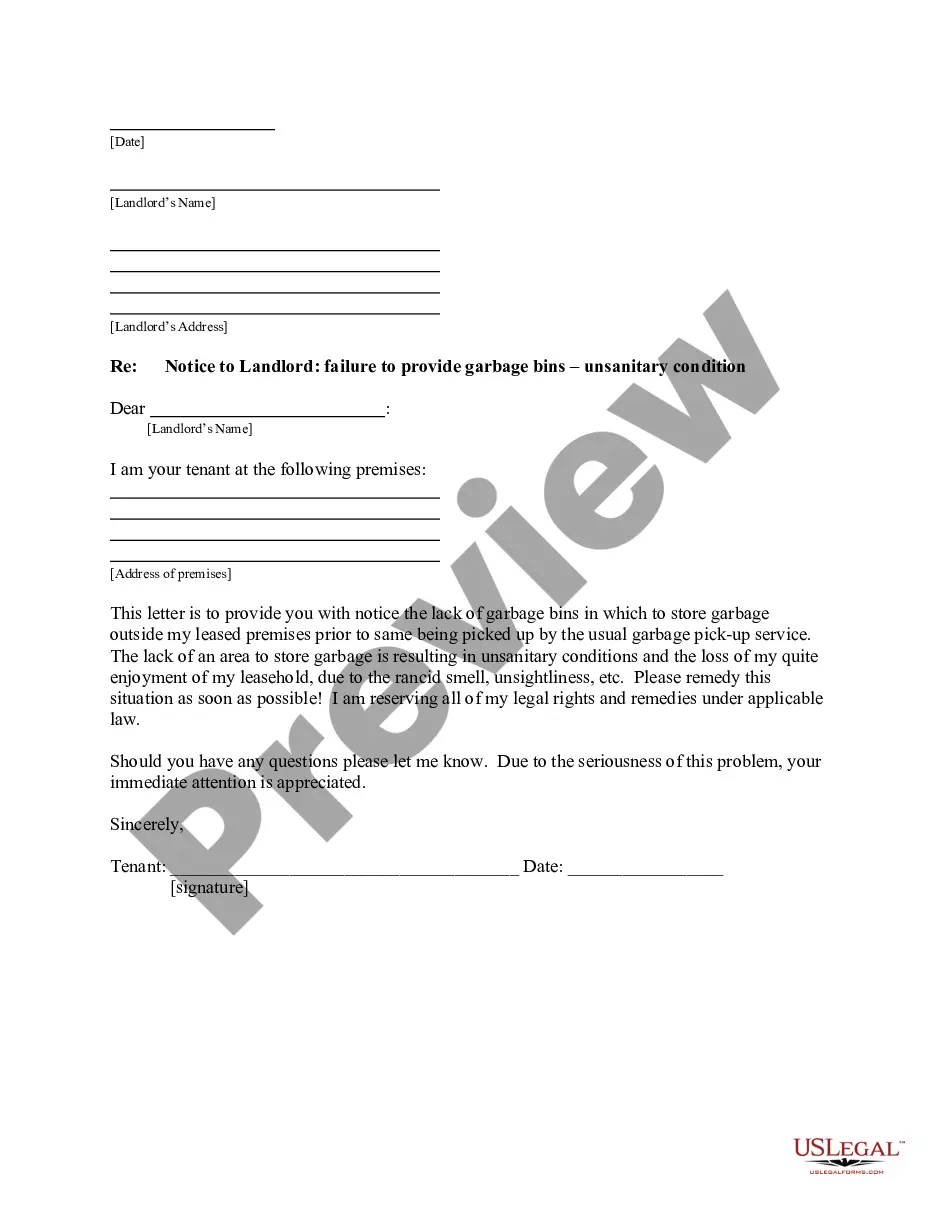
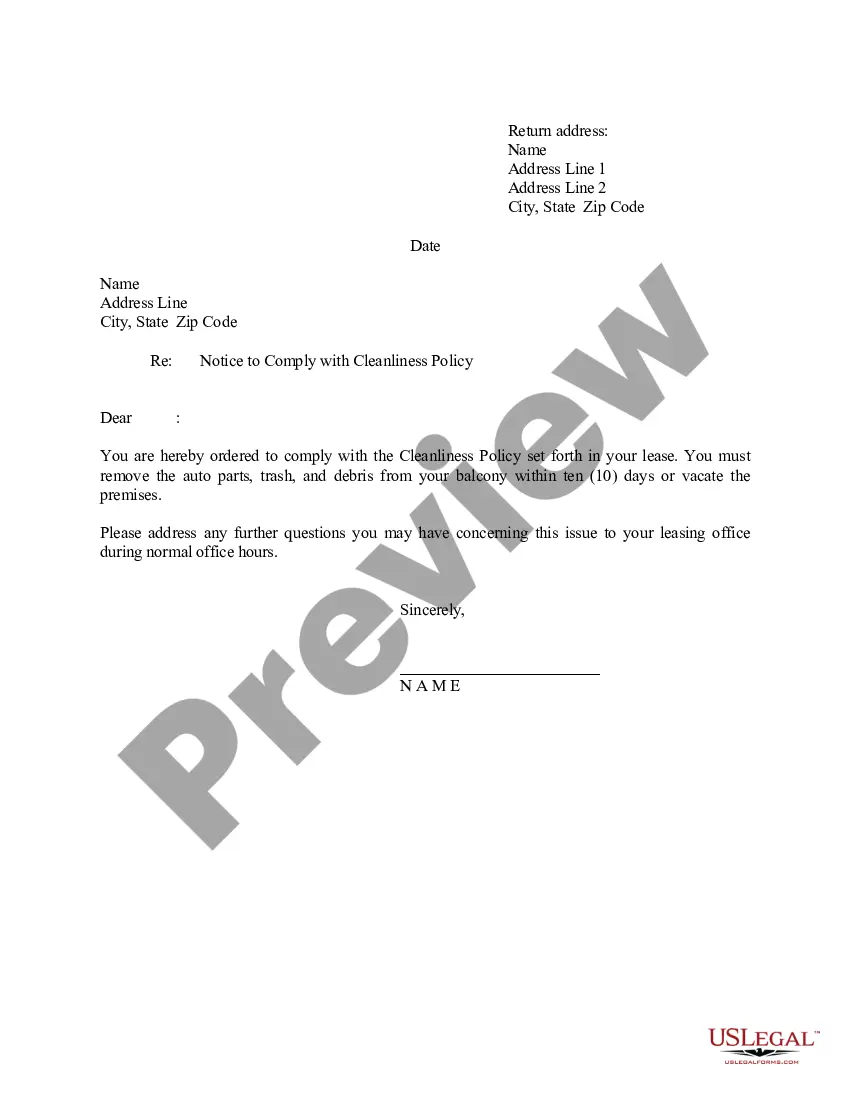
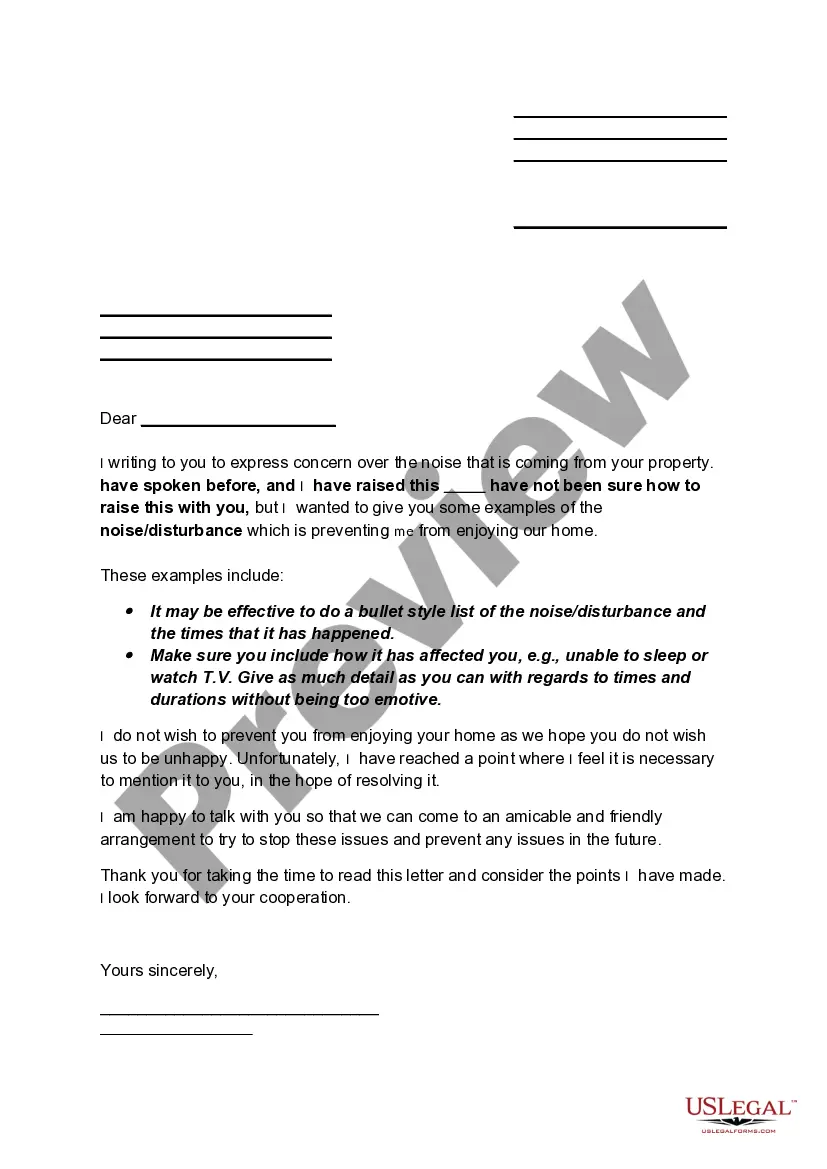
This form is a Letter from Tenant to Landlord with Demand that landlord provide proper outdoor garbage receptacles. It allows a tenant to formally inform the landlord about unsanitary conditions resulting from the lack of garbage bins on the premises. By using this form, the tenant notifies the landlord of a breach of the lease agreement and demands prompt action to resolve the issue. This form is distinct from other notices, as it specifically addresses garbage receptacle concerns.
Main sections of this form
- Tenant's contact information
- Landlord's contact information
- Clear description of the issue related to garbage receptacles
- Demand for immediate action to remedy the situation
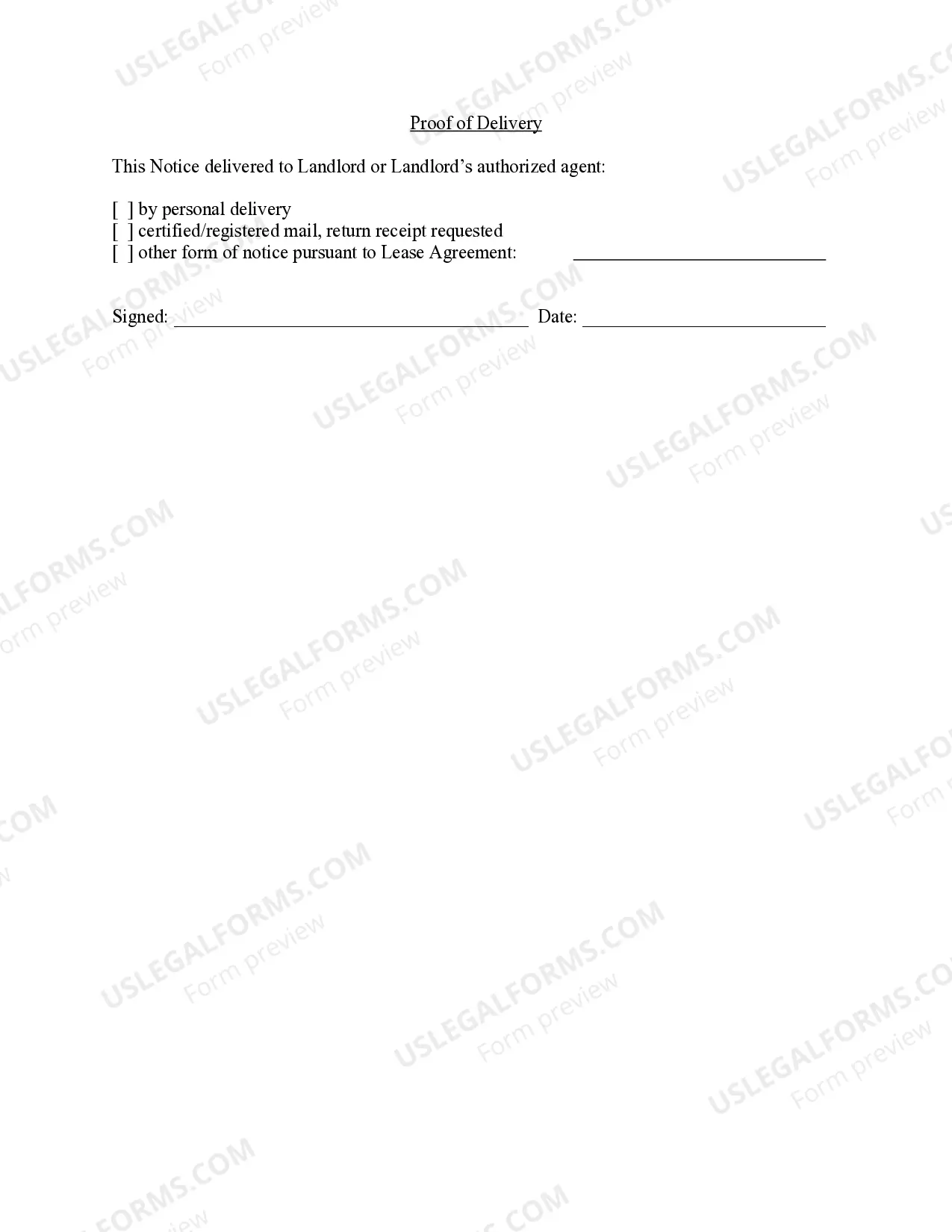
- Proof of delivery method


When to use this document
This form should be used when a tenant notices that the landlord has failed to provide adequate outdoor garbage receptacles, leading to unsanitary conditions. It's suitable in scenarios where repeated verbal requests to the landlord have gone unaddressed, and the tenant needs a documented demand for repairs to ensure compliance with the lease agreement.
Who needs this form
- Tenants experiencing issues with garbage disposal at their rental property
- Individuals who have attempted to communicate with their landlord verbally or informally
- Residents who wish to formally document their concerns regarding lease compliance
Instructions for completing this form
- Identify the tenant and landlord by entering their names and contact information.
- Describe the issue regarding the lack of garbage receptacles clearly and concisely.
- State the demand for the landlord to provide proper outdoor garbage bins.
- Sign and date the bottom of the letter as the tenant.
- Choose the method of delivery, noting whether it is done by personal delivery or certified mail.
Is notarization required?
Notarization is not commonly needed for this form. However, certain documents or local rules may make it necessary. Our notarization service, powered by Notarize, allows you to finalize it securely online anytime, day or night.
Get your form ready online
Our built-in tools help you complete, sign, share, and store your documents in one place.
Make edits, fill in missing information, and update formatting in US Legal Forms—just like you would in MS Word.
Download a copy, print it, send it by email, or mail it via USPS—whatever works best for your next step.
Sign and collect signatures with our SignNow integration. Send to multiple recipients, set reminders, and more. Go Premium to unlock E-Sign.
If this form requires notarization, complete it online through a secure video call—no need to meet a notary in person or wait for an appointment.
We protect your documents and personal data by following strict security and privacy standards.

Make edits, fill in missing information, and update formatting in US Legal Forms—just like you would in MS Word.

Download a copy, print it, send it by email, or mail it via USPS—whatever works best for your next step.

Sign and collect signatures with our SignNow integration. Send to multiple recipients, set reminders, and more. Go Premium to unlock E-Sign.

If this form requires notarization, complete it online through a secure video call—no need to meet a notary in person or wait for an appointment.

We protect your documents and personal data by following strict security and privacy standards.
Typical mistakes to avoid
- Failing to include all necessary contact information for both the tenant and landlord.
- Not clearly stating the issue or demand, which may lead to confusion.
- Neglecting to proofread for grammatical errors before sending.
- Forgetting to include the date of the letter.
Benefits of using this form online
- Convenient access to professionally drafted legal templates.
- Ability to easily customize the form to fit specific situations.
- Immediate availability for download, allowing for swift action.
- Precise language that meets legal standards, reducing the risk of errors.
Legal use & context
- This form serves as evidence that the tenant formally notified the landlord of a lease breach, which could be important if further legal action becomes necessary.
- It helps document the timeline of requests and landlord responses, which may be crucial in disputes over habitability or lease violations.
Key takeaways
- The letter is an important tool for tenants to formally demand improvements in rental conditions.
- Documentation of communication with the landlord can protect the tenant's rights.
- Using a professional template ensures compliance with legal standards.
Looking for another form?
Form popularity
FAQ
Uninhabitable conditions can include dangerous ones, such as holes in the floor, unsafe or exposed wiring, or non-working air conditioning in dangerously hot summer months. Gross infestations of roaches, fleas or other pests are also uninhabitable conditions.
Although the landlord is legally responsible for ensuring that you as a tenant have enough bins to dispose of household waste properly and are informed about where to dispose of your waste, you as a tenant have a responsibility to make every effort to dispose of your own household waste.
Fundamental responsibilities of landlords include: providing and maintaining the property in a clean and reasonable standard; giving proper receipts and maintaining records of all transactions pertaining to the tenancy; paying council rates and taxes; maintaining locks to ensure the property's security; and lodging the
As a landlord, you're not technically liable for nuisance tenants or occupiers of your property. However, you may be liable if you've allowed the tenants to cause the nuisance or if, when renting out your property, you were aware that nuisance was inevitable or almost certainly going to occur.
Holes or tears in linoleum. Burns or oil stains on carpet. Pet urine stains on walls and carpet. Holes in walls, not from doorknobs. Torn or missing curtains. Broken window or missing screens. Water marks from overflowed sink or bathtub. Cuts or burns on countertops.
Uninhabitable conditions can include dangerous ones, such as holes in the floor, unsafe or exposed wiring, or non-working air conditioning in dangerously hot summer months. Gross infestations of roaches, fleas or other pests are also uninhabitable conditions.
The landlord had a duty to reasonably maintain the property; The landlord knew or should have known of the dangerous condition; The landlord breached their duty by failing to repair/fix the dangerous condition;
Fundamental responsibilities of landlords include: providing and maintaining the property in a clean and reasonable standard; giving proper receipts and maintaining records of all transactions pertaining to the tenancy; paying council rates and taxes; maintaining locks to ensure the property's security; and lodging the
This includes keeping the property clean, safe and habitable. The landlord must adhere to all building codes, perform necessary repairs, maintain common areas, keep all vital services, such as plumbing, electricity, and heat, in good working order, must provide proper trash receptacles and must supply running water.