New Hampshire Last Will and Testament for Divorced Person Not Remarried with No Children
What is this form?
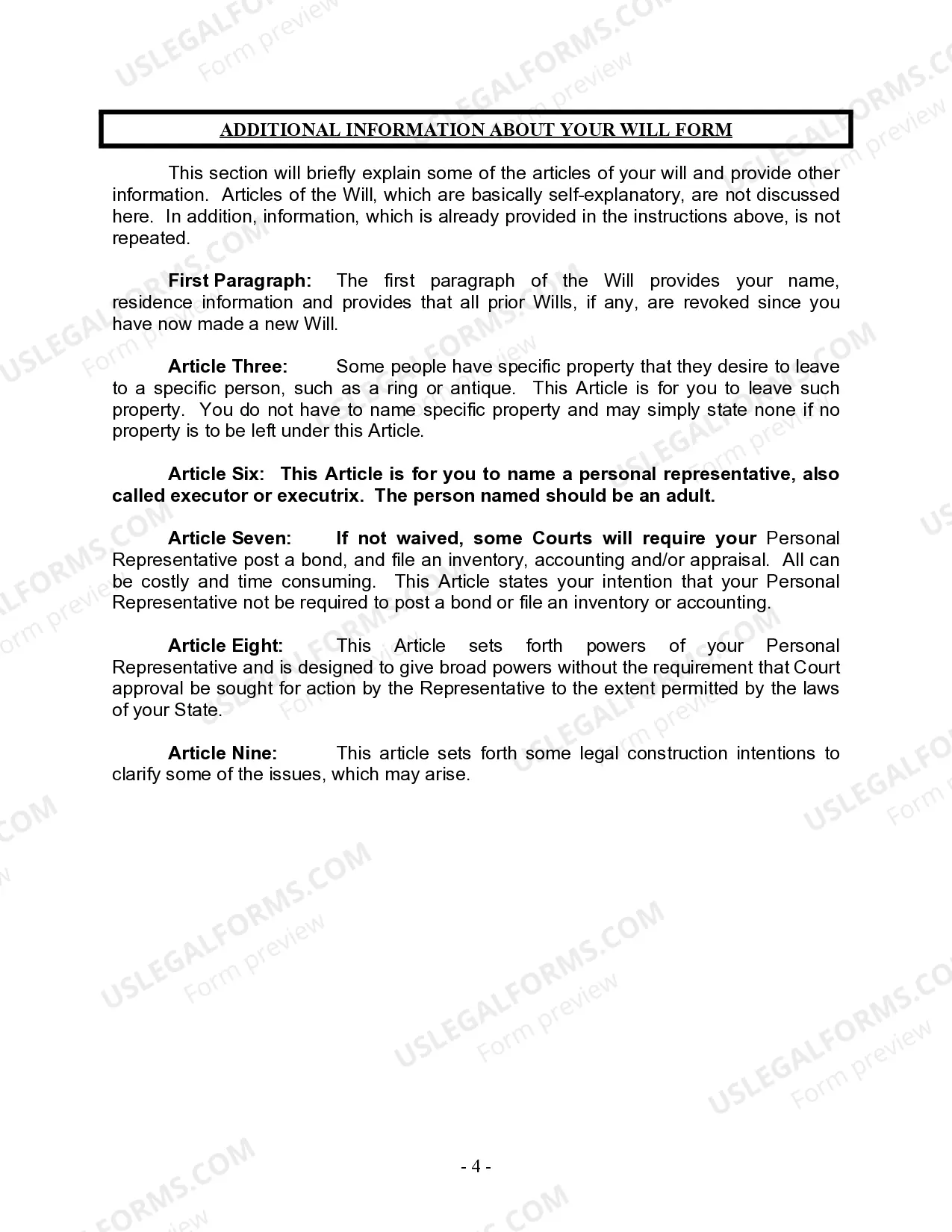
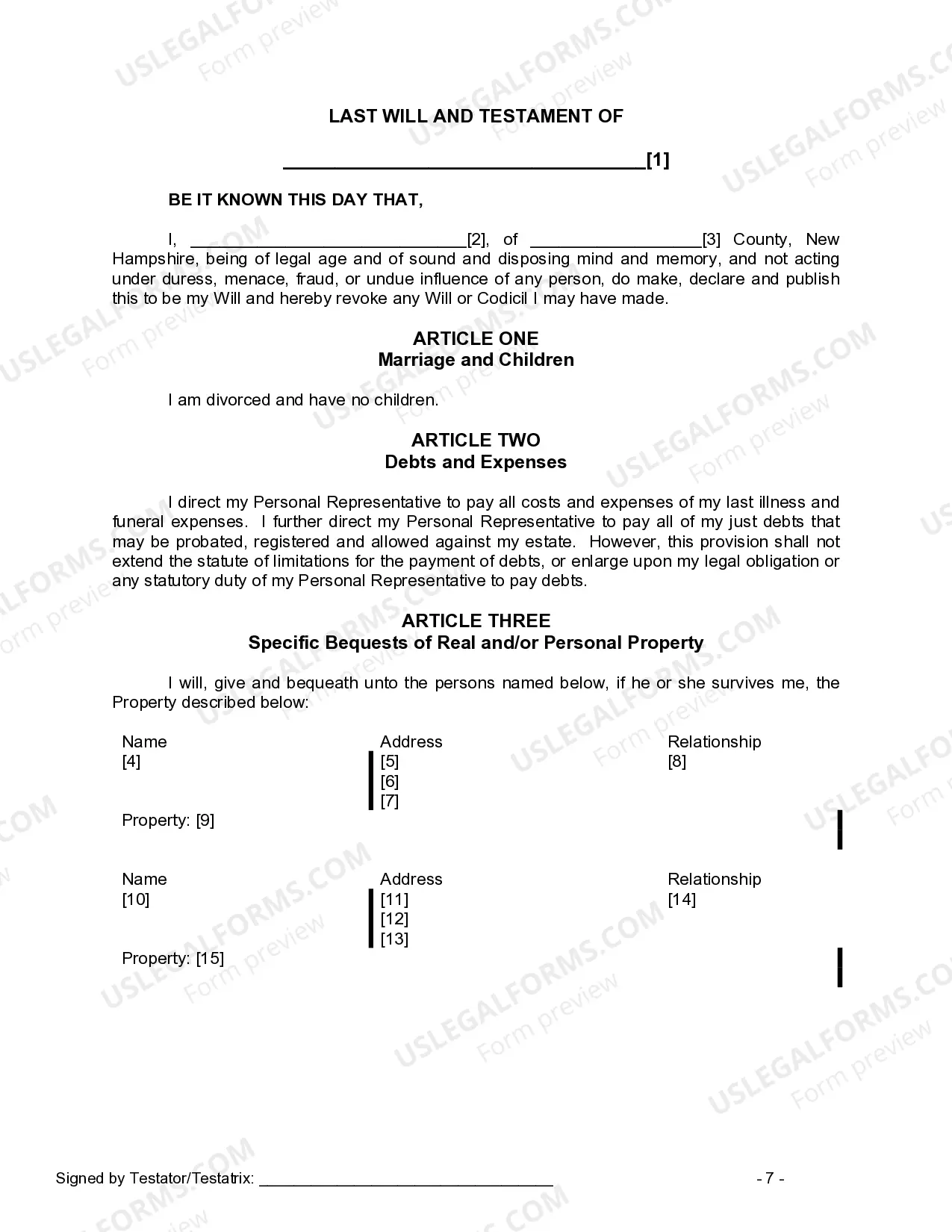
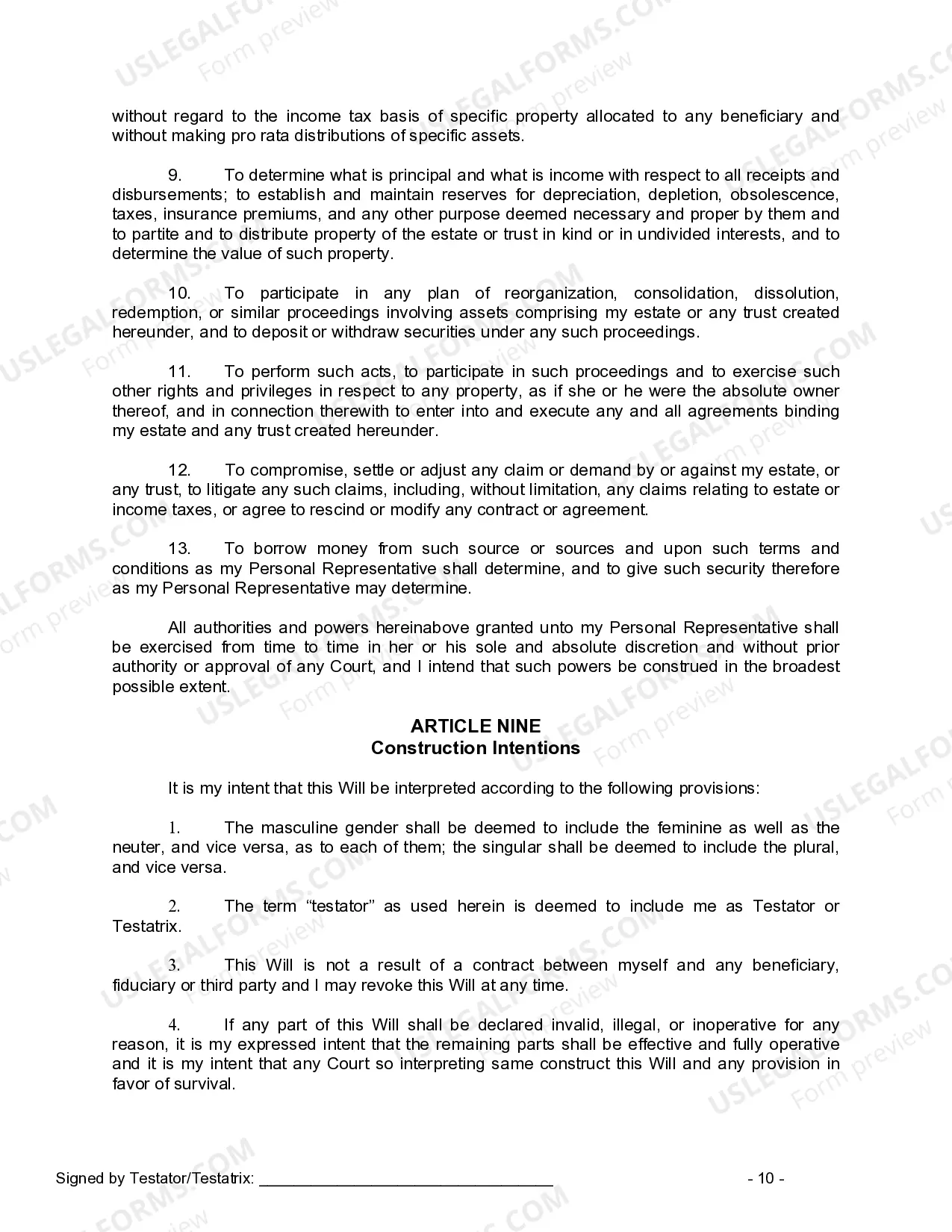
This Last Will and Testament for a divorced person, not remarried with no children, is a crucial legal document that outlines how your assets will be distributed after your death. Unlike other wills, this form specifically caters to individuals who have gone through a divorce and prefer to specify their wishes without the involvement of children or a current spouse. It allows you to appoint a personal representative or executor and designate who will inherit your property.
Key parts of this document
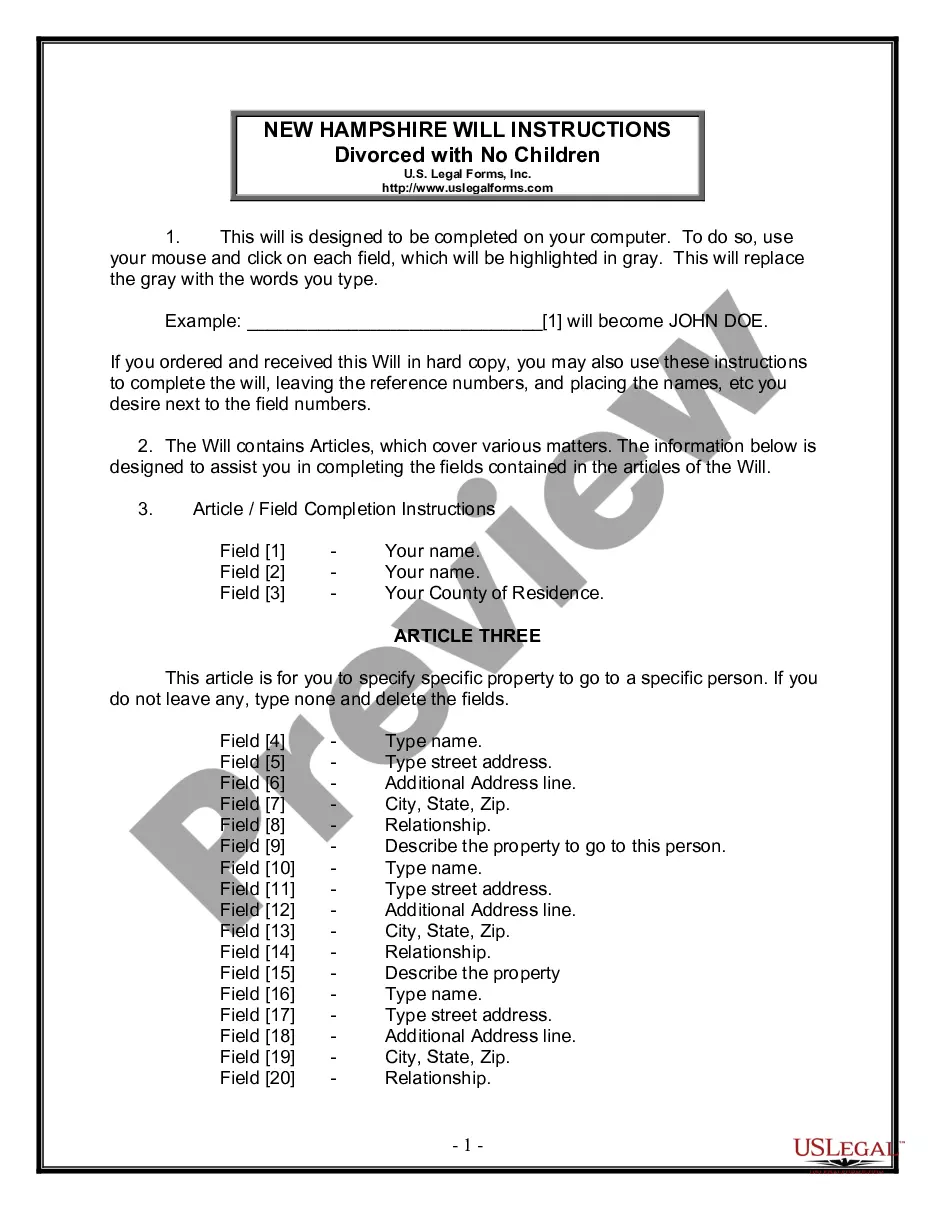
- Article One: Personal identification including your name and county of residence.
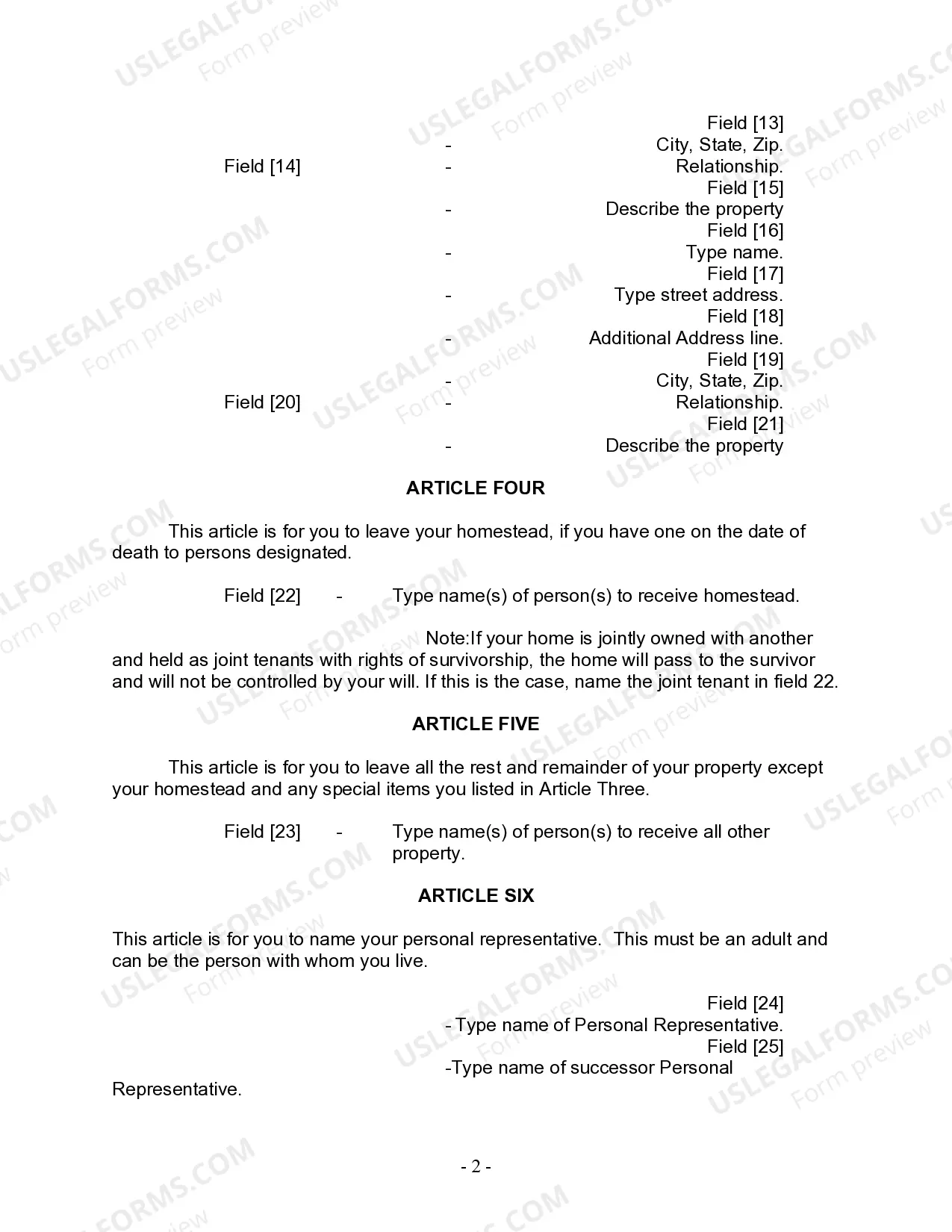
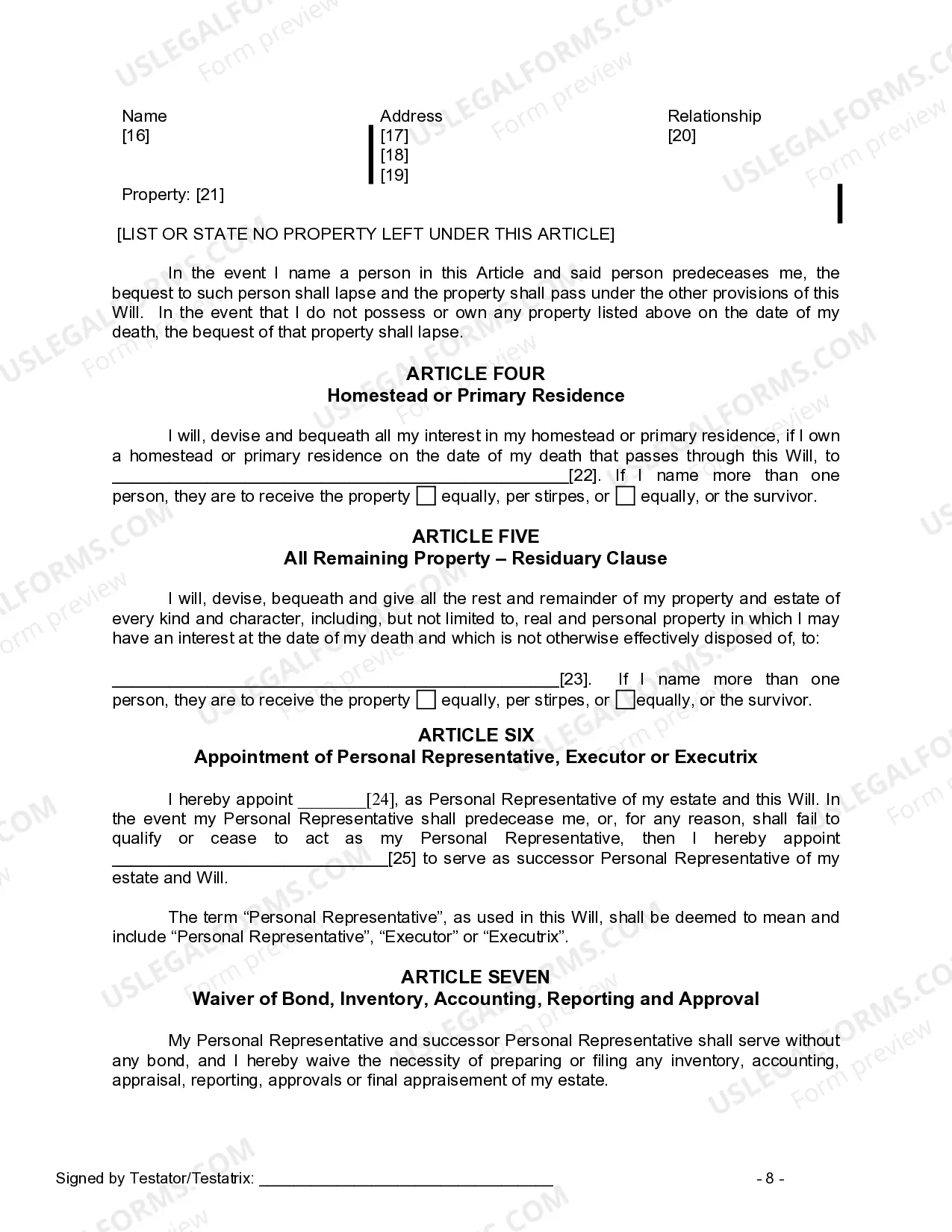
- Article Three: Instructions for specific property bequests to named individuals.
- Article Four: Designation of the homestead or primary residence, if applicable.
- Article Five: A residuary clause that covers all property not specifically listed.
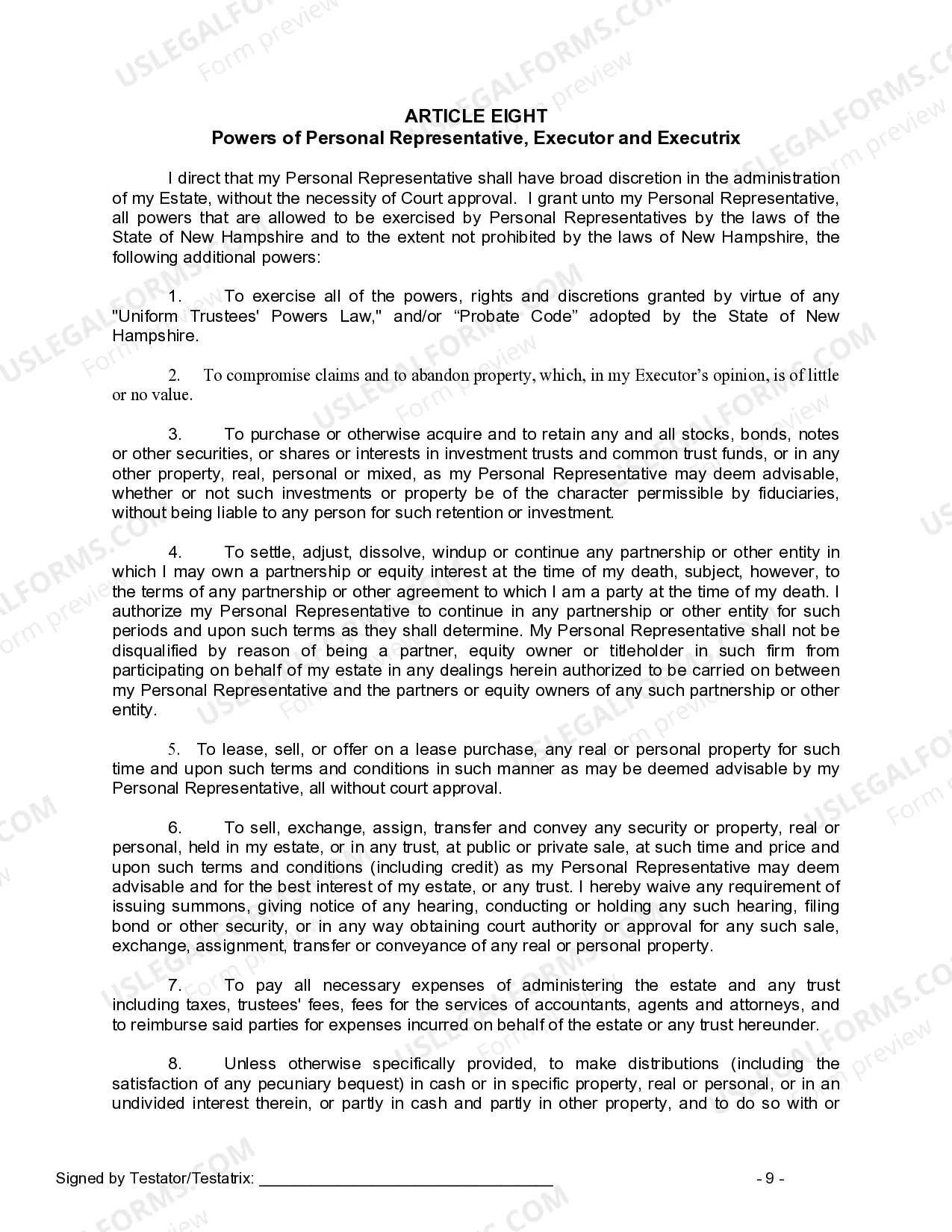
- Article Six: Appointment of a personal representative to manage your estate.
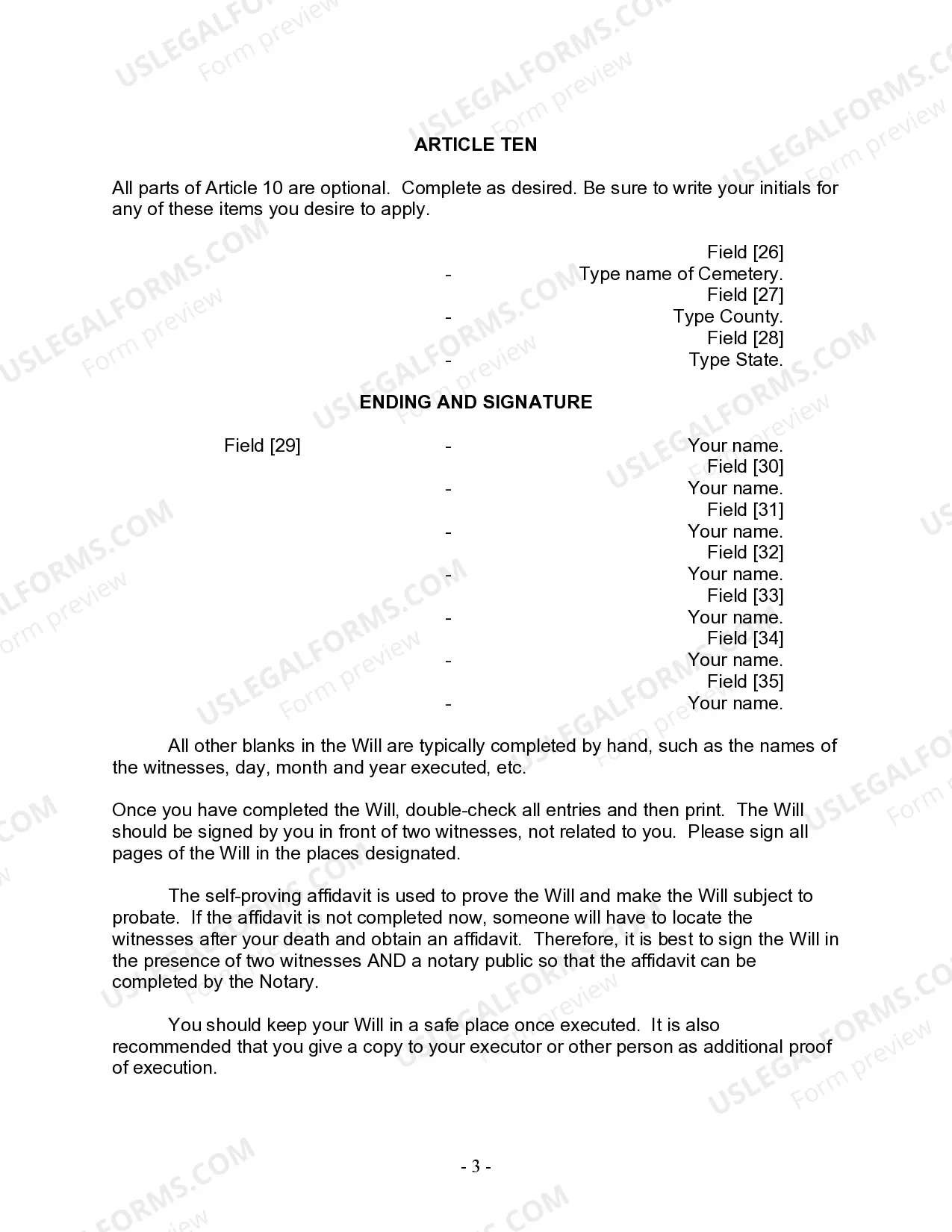
- Signature Section: Requirements for signing the will in front of two witnesses.


When to use this form
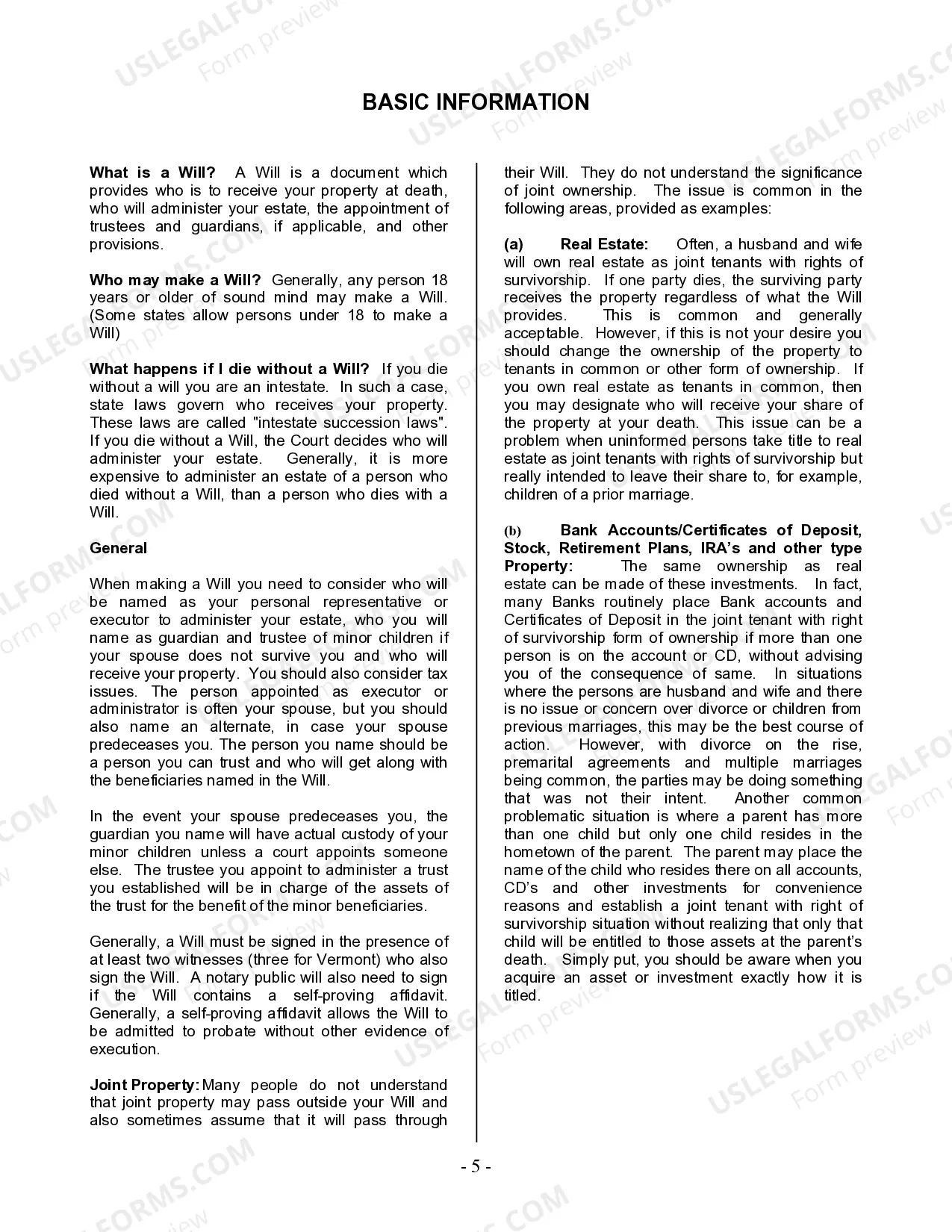
You should consider using this Last Will and Testament when you are a divorced individual without children and want to ensure your assets are distributed according to your wishes after your passing. It is particularly useful if you need to designate a personal representative and clarify how your property should be divided among other individuals.
Who needs this form
This form is intended for:
- Divorced individuals who are not remarried.
- Those who have no children or dependents.
- People wishing to determine the distribution of their property after death.
- Individuals looking for a clear, legal framework for their estate planning.
How to complete this form
- Fill in your personal details, including your name and county of residence in Article One.
- Specify in Article Three any specific items of property you wish to bequeath to chosen individuals.
- Identify your homestead or primary residence, if applicable, in Article Four.
- Designate a personal representative in Article Six who will carry out your wishes after your death.
- Ensure the document is signed in the presence of two witnesses and appropriately notarized, if required.
Is notarization required?
Yes, this form must be notarized to be legally valid. Having it notarized adds an extra layer of authenticity to your will, making it easier to uphold in court during probate. With US Legal Forms, you can conveniently complete the notarization process online through a secure video call, eliminating the need for travel.
Get your form ready online
Our built-in tools help you complete, sign, share, and store your documents in one place.
Make edits, fill in missing information, and update formatting in US Legal Forms—just like you would in MS Word.
Download a copy, print it, send it by email, or mail it via USPS—whatever works best for your next step.
Sign and collect signatures with our SignNow integration. Send to multiple recipients, set reminders, and more. Go Premium to unlock E-Sign.
If this form requires notarization, complete it online through a secure video call—no need to meet a notary in person or wait for an appointment.
We protect your documents and personal data by following strict security and privacy standards.

Make edits, fill in missing information, and update formatting in US Legal Forms—just like you would in MS Word.

Download a copy, print it, send it by email, or mail it via USPS—whatever works best for your next step.

Sign and collect signatures with our SignNow integration. Send to multiple recipients, set reminders, and more. Go Premium to unlock E-Sign.

If this form requires notarization, complete it online through a secure video call—no need to meet a notary in person or wait for an appointment.

We protect your documents and personal data by following strict security and privacy standards.
Mistakes to watch out for
- Not having the will properly witnessed or notarized, which can lead to enforcement issues.
- Failing to update the will after significant life changes like remarriage or changes in property ownership.
- Overlooking the significance of joint property ownership, which may bypass the will.
- Describing property inadequately or failing to specify beneficiaries clearly.
Why use this form online
- Convenience: Easily fill out the form from your computer at your own pace.
- Editability: Make changes easily if your circumstances or wishes change in the future.
- Reliability: Use templates drafted by licensed attorneys, ensuring compliance with legal standards.
What to keep in mind
- This form is specifically for divorced individuals with no children, allowing for clear directives regarding asset distribution.
- Legal requirements for execution include signatures from witnesses and potentially notarization.
- Completing a will helps avoid intestate succession, providing peace of mind about your estate's future.
- Utilizing this form online provides convenience, editability, and legal assurance.
Looking for another form?

Form popularity
FAQ
Contrary to popular belief, you do not need to have an attorney draft a will for you. Anyone can write this document on their own, and as long as it meets all of the legal requirements of the state, courts will recognize one you wrote yourself.
No, in New Hampshire, you do not need to notarize your will to make it legal.A self-proving will speeds up probate because the court can accept the will without contacting the witnesses who signed it.
Find an online template or service. Make a list of your assets. Be specific about who gets what. If you have minor children, choose a guardian. Give instructions for your pet. Choose an executor. Name a 'residuary beneficiary' List your funeral preferences.
Contrary to popular belief, you do not need to have an attorney draft a will for you. Anyone can write this document on their own, and as long as it meets all of the legal requirements of the state, courts will recognize one you wrote yourself.
Yes, people can write their own wills in New Hampshire.For instance, the will must be in writing, signed by the person whose will it is, and signed by two or more credible witnesses who must swear that the person's signature is genuine. The court does not provide standard forms for writing a will.
In most situations, a will template is an easy and inexpensive way to make sure your wishes are known and carried out. Most people can get everything they need by using a will template, with little cost or hassle.
Include personal identifying information. Include a statement about your age and mental status. Designate an executor. Decide who will take care of your children. Choose your beneficiaries. List your funeral details. Sign and date your Last Will and Testament.
Enter the full name of each beneficiary. Provide a Physical Address for each. Beneficiary's relationship to the testator. Provide the last four digits of each beneficiary's Social Security Number. Provide a list of any property being bequeathed to each selected beneficiary.
A simple will costs between $200-$400 and a trust from $2,000 upwards, depending on how complex it is. High-profile family feuds over money are notorious and New Hampshire has been at the center of at least two of them.