New Hampshire Commercial Building or Space Lease

What this document covers
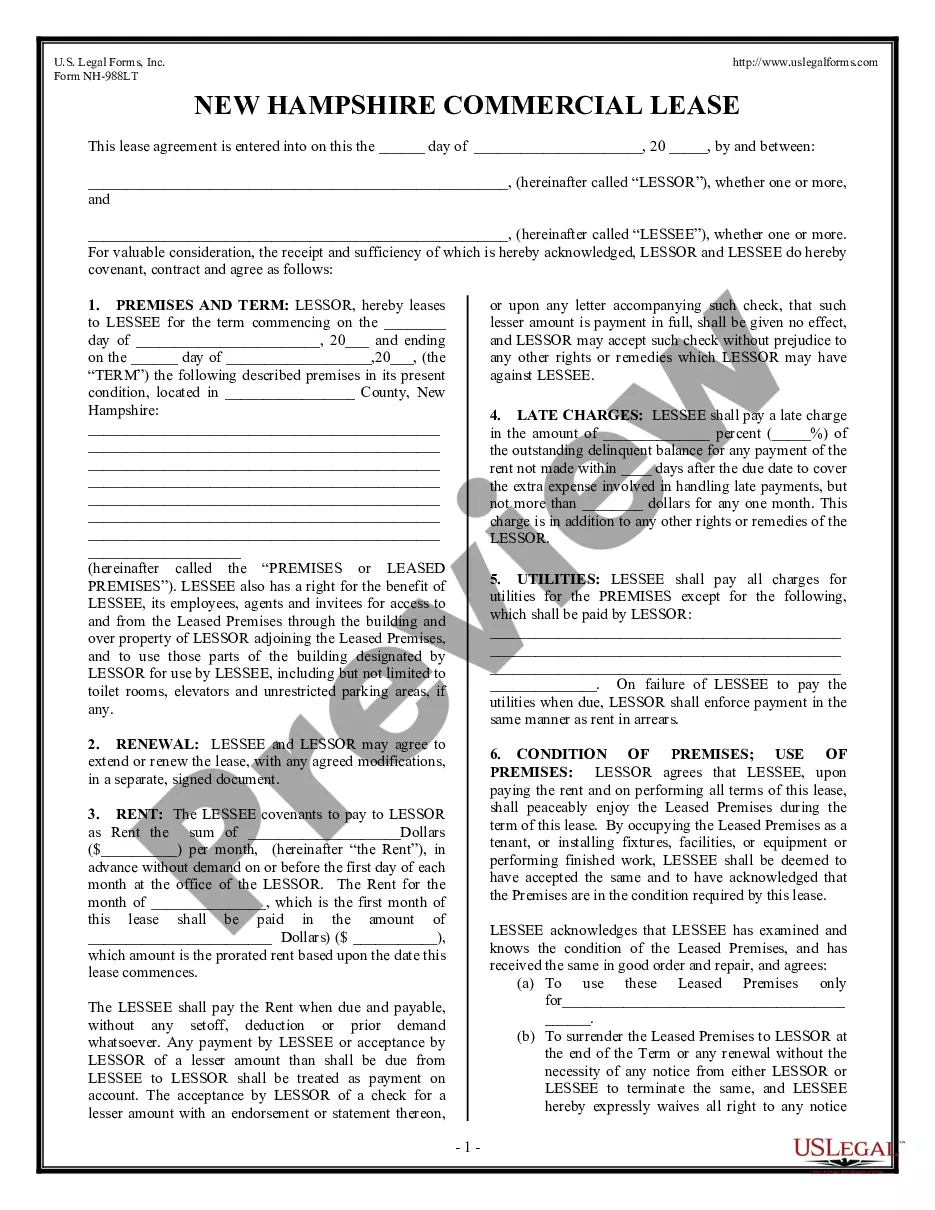
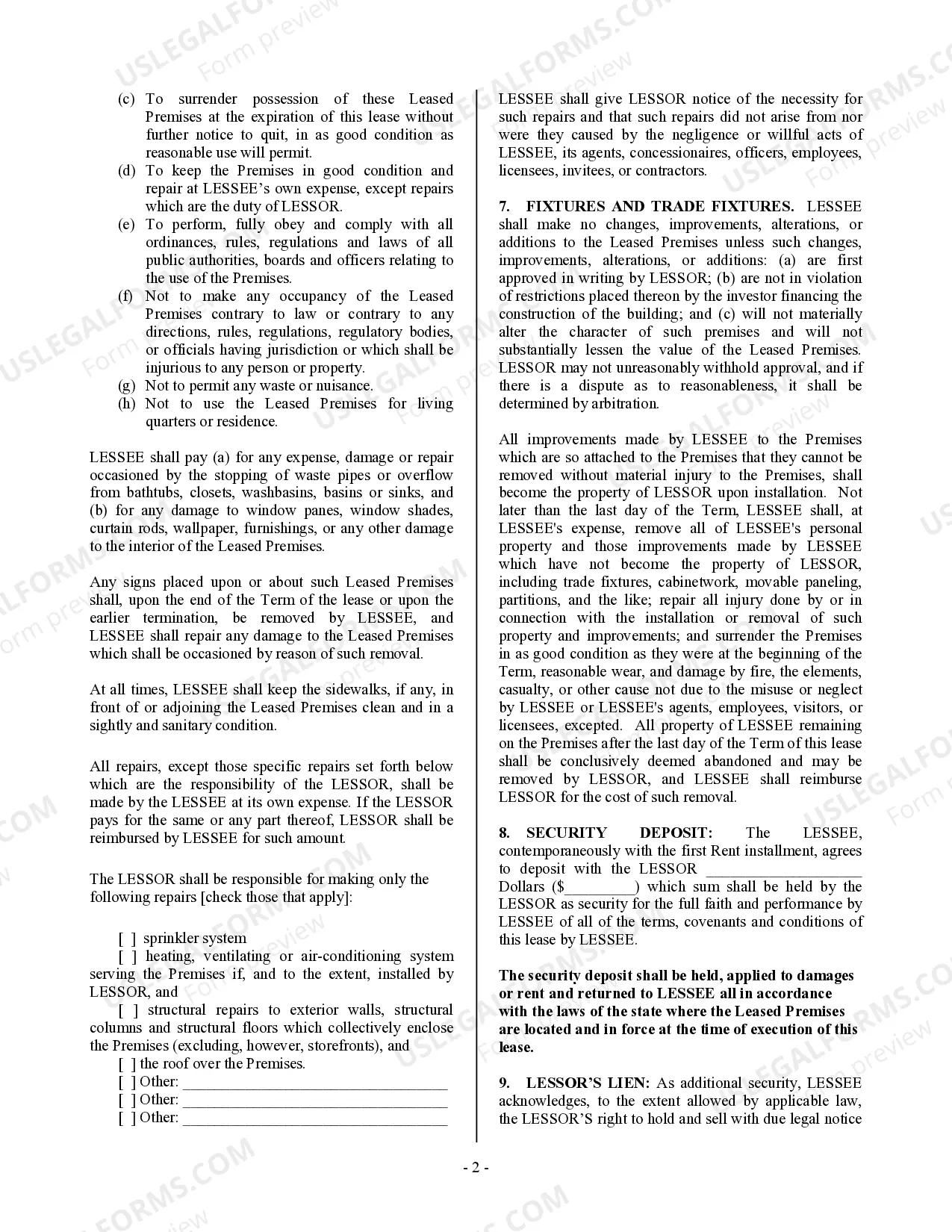
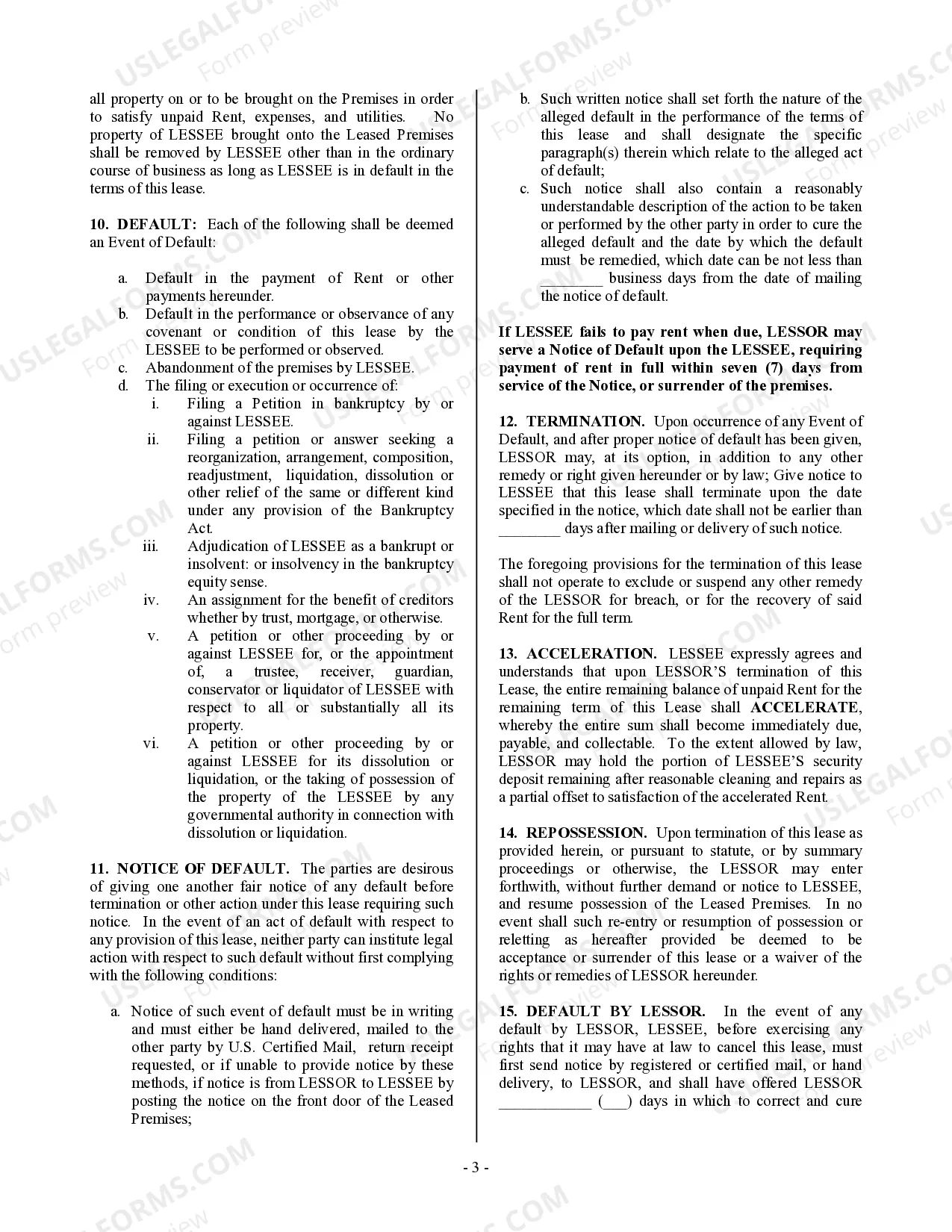
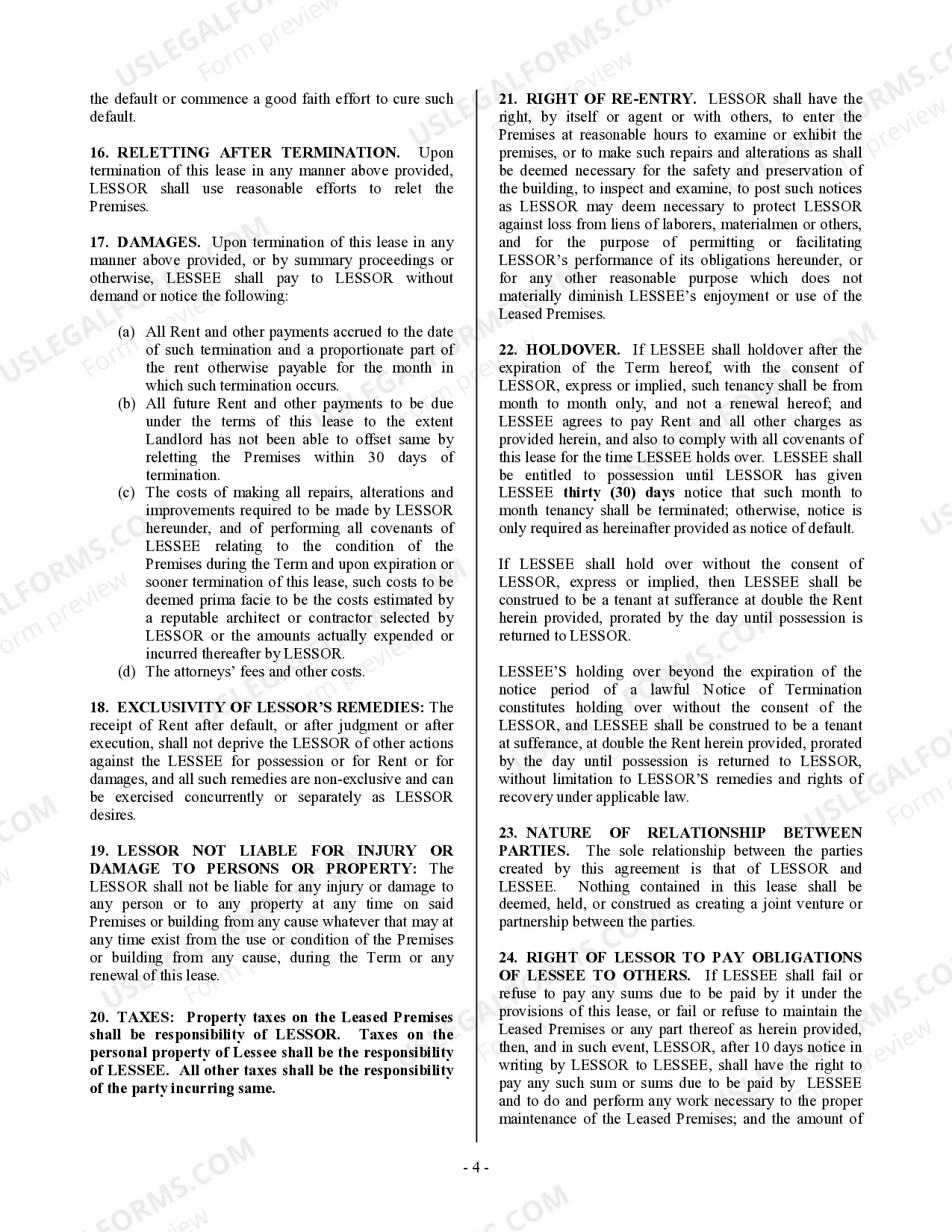
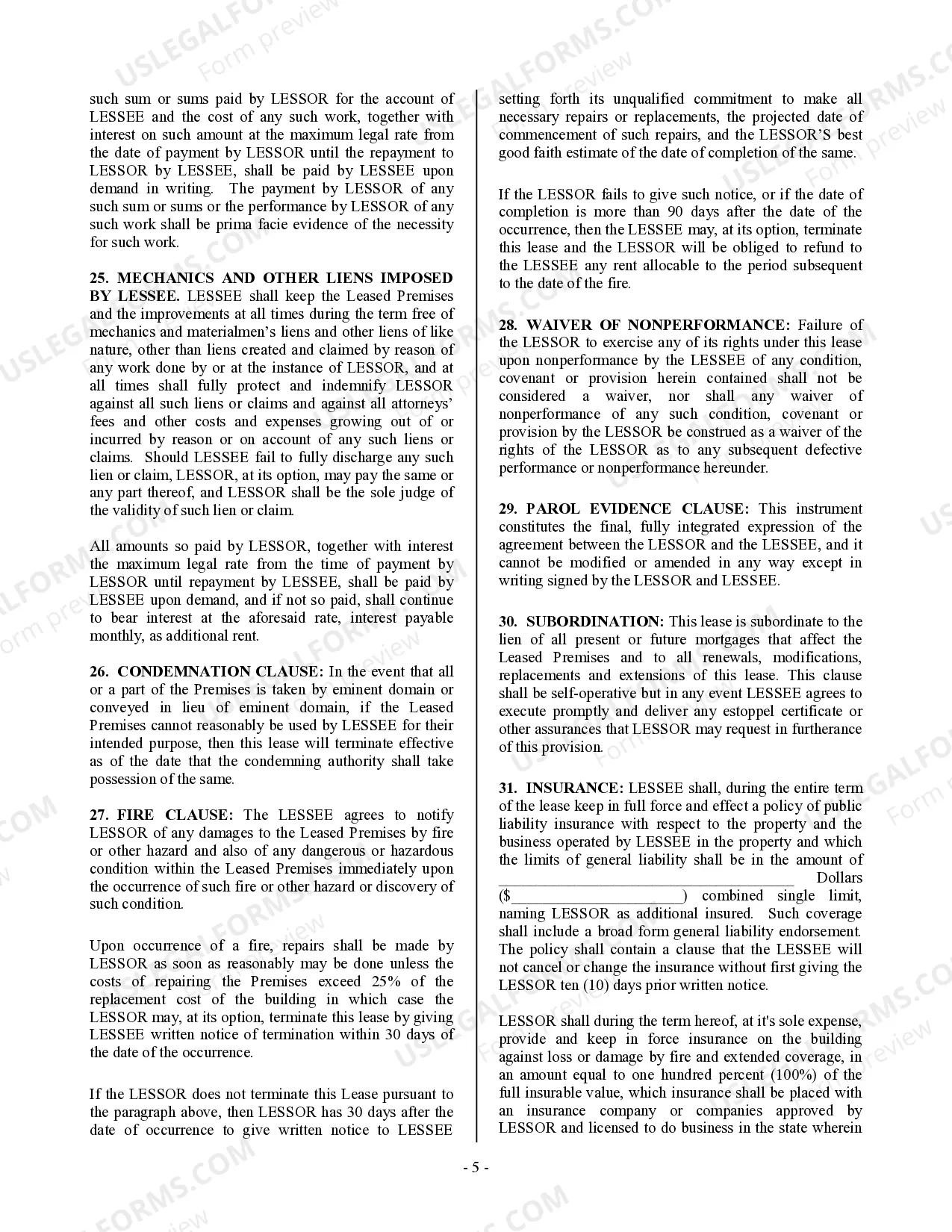
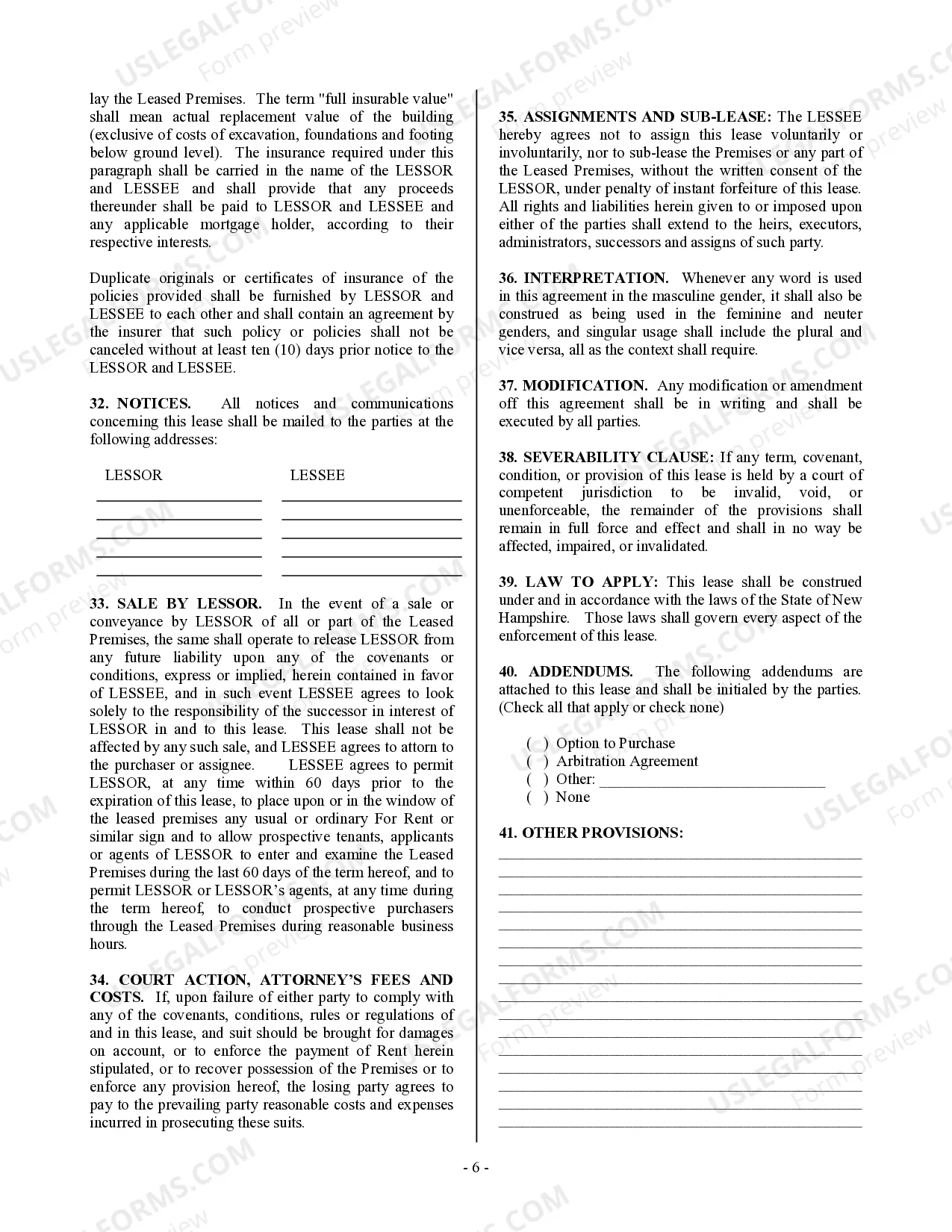
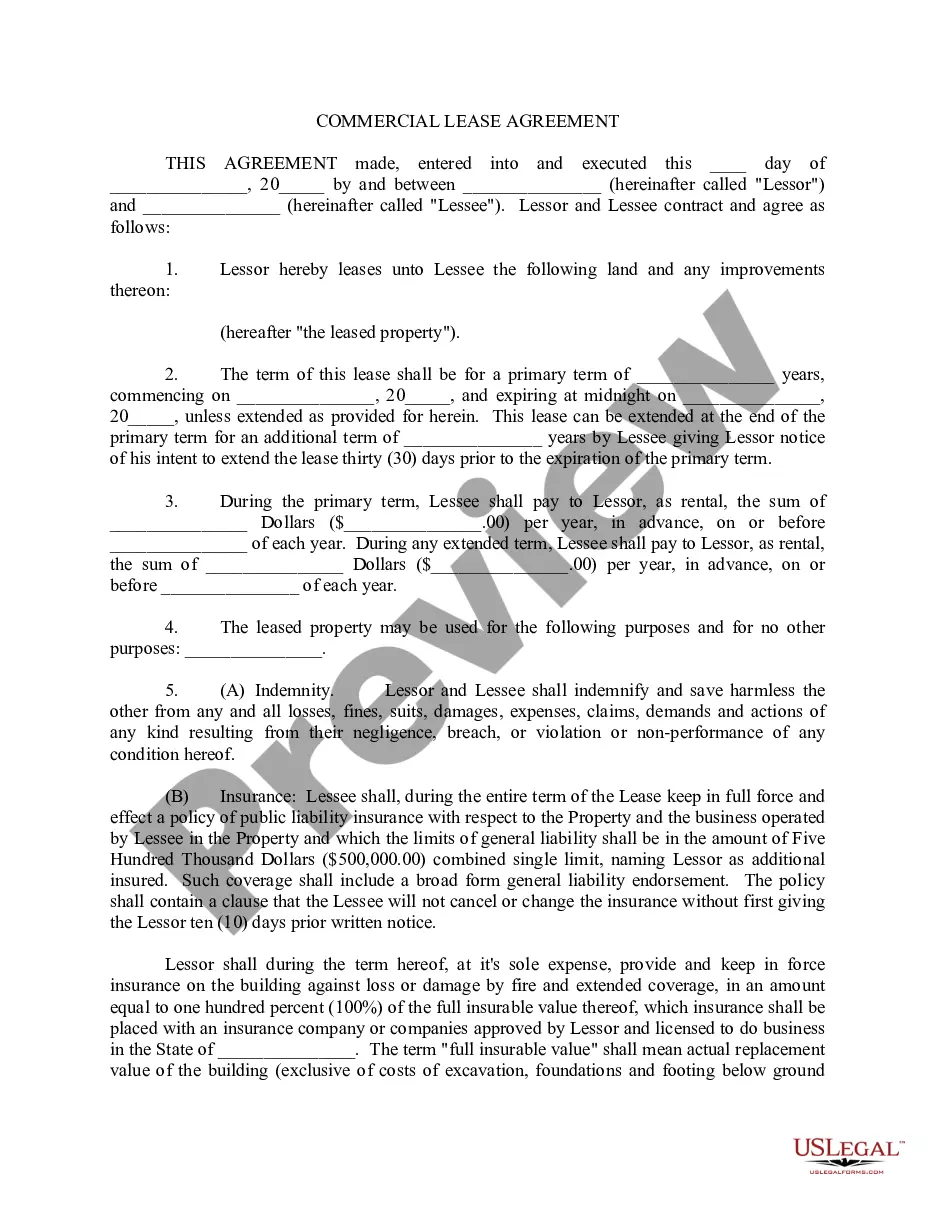
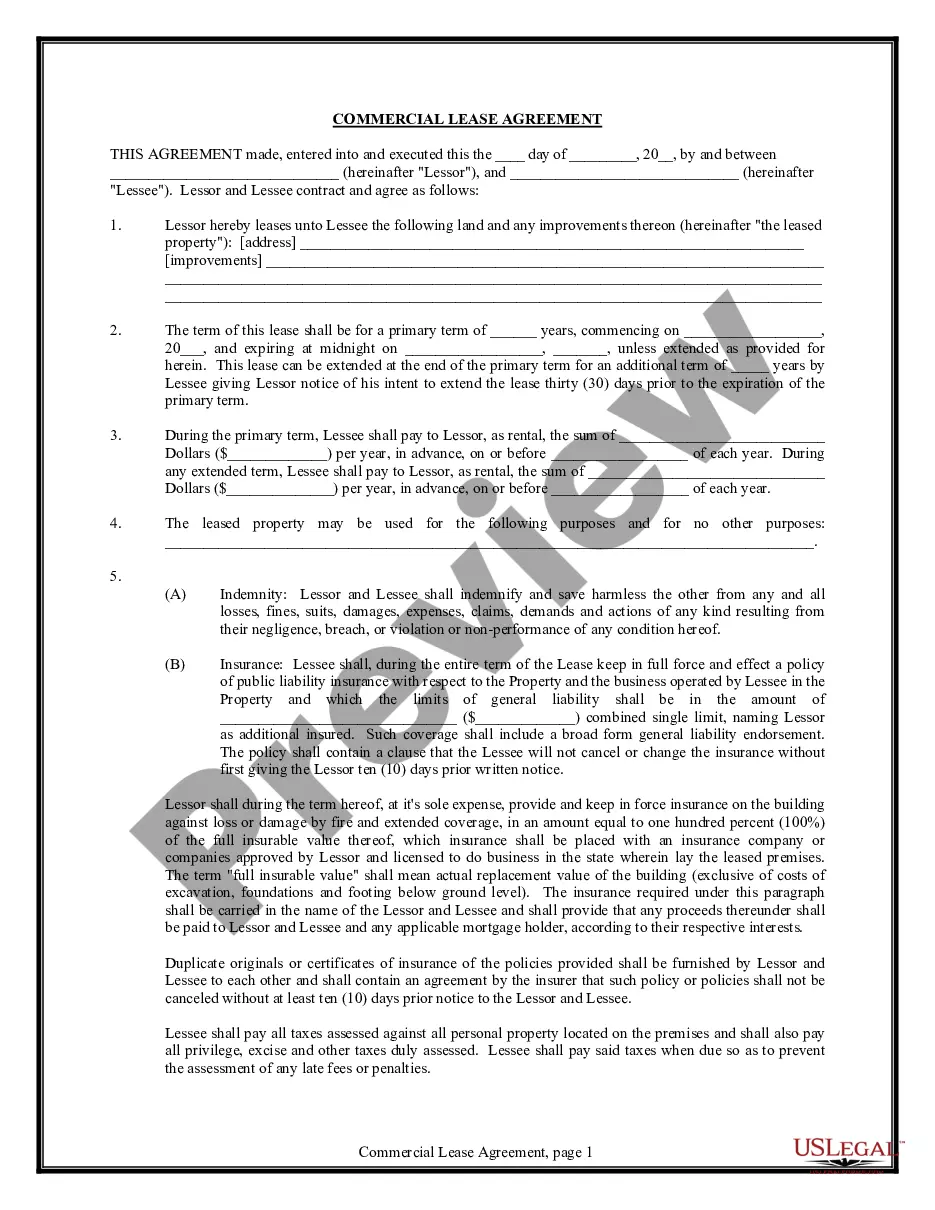
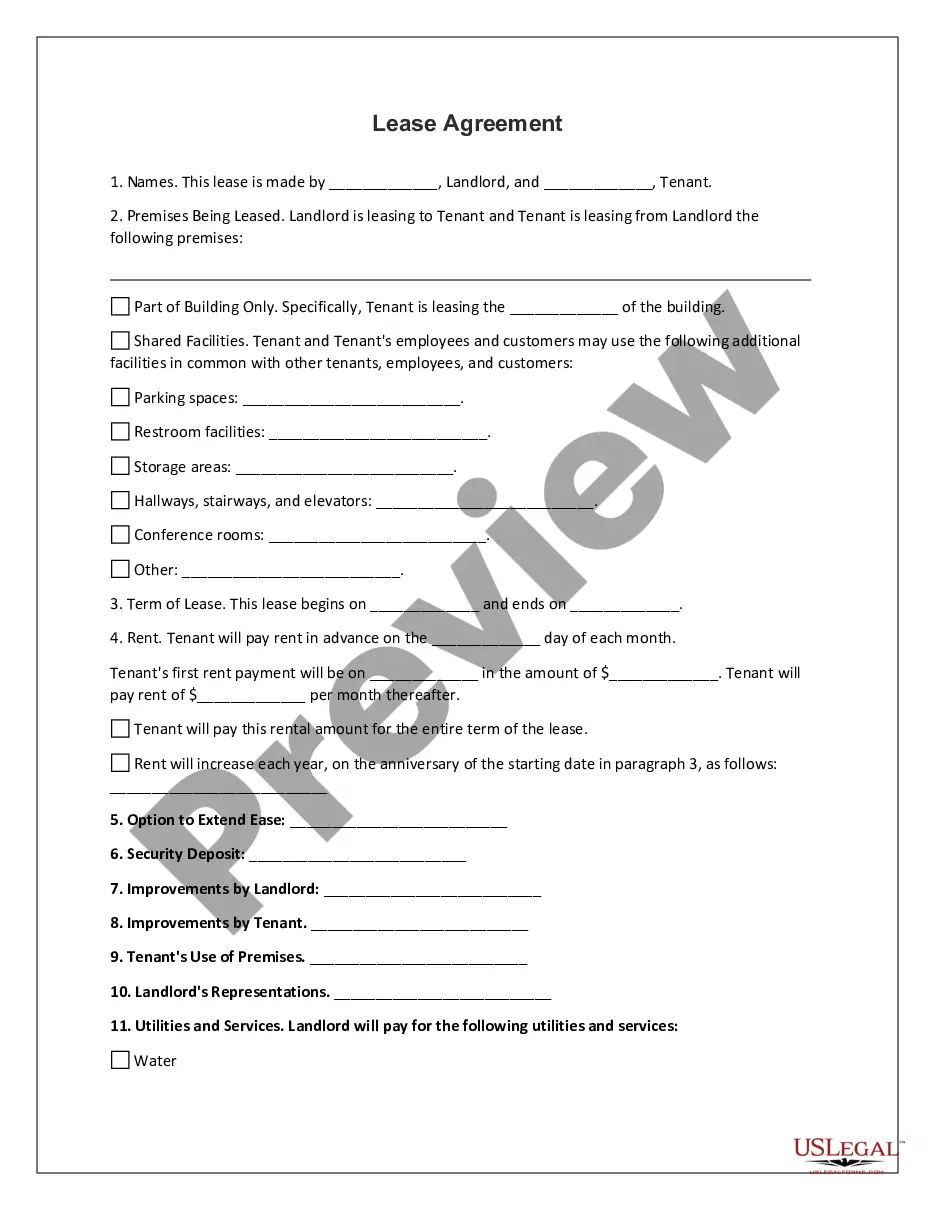
The Commercial Building or Space Lease is a legal document designed for individuals and businesses in New Hampshire who wish to lease commercial property for various purposes, such as office space. This detailed lease includes essential provisions outlining the terms, conditions, and responsibilities of both the lessor (property owner) and lessee (tenant). It serves as a formal agreement that helps protect the interests of both parties, differentiating it from more general rental agreements.
Key components of this form
- Parties involved: Identifies the lessor and lessee entering the lease.
- Premises description: Specifies the leased property and its condition.
- Lease term: Outlines the duration of the lease, including start and end dates.
- Rent details: Describes the rental amount, payment schedule, and late fees.
- Condition of premises: Stipulates responsibilities for maintenance and repairs.
- Default clauses: Defines events that would constitute a breach and outlines subsequent actions.
Situations where this form applies
This form should be used when a business intends to lease a commercial space in New Hampshire. It is relevant in various situations, such as when starting a new office, expanding an existing business, or leasing retail space. Utilizing this lease ensures that all necessary legal protections and obligations are clearly defined, reducing the risk of disputes between the landlord and tenant.
Intended users of this form
- Business owners seeking to lease commercial property.
- Landlords offering commercial spaces for rent.
- Real estate agents managing commercial leases.
- Legal professionals advising clients on property leases.
Steps to complete this form
- Identify the lessor and lessee by entering their legal names in the designated fields.
- Provide a detailed description of the commercial property, including its address and condition.
- Specify the lease term, including start and end dates.
- Enter the amount of rent due, along with payment terms and late fee details.
- Sign and date the lease to make it legally binding for both parties.
Notarization requirements for this form
Notarization is not commonly needed for this form. However, certain documents or local rules may make it necessary. Our notarization service, powered by Notarize, allows you to finalize it securely online anytime, day or night.
Get your form ready online
Our built-in tools help you complete, sign, share, and store your documents in one place.
Make edits, fill in missing information, and update formatting in US Legal Forms—just like you would in MS Word.
Download a copy, print it, send it by email, or mail it via USPS—whatever works best for your next step.
Sign and collect signatures with our SignNow integration. Send to multiple recipients, set reminders, and more. Go Premium to unlock E-Sign.
If this form requires notarization, complete it online through a secure video call—no need to meet a notary in person or wait for an appointment.
We protect your documents and personal data by following strict security and privacy standards.

Make edits, fill in missing information, and update formatting in US Legal Forms—just like you would in MS Word.

Download a copy, print it, send it by email, or mail it via USPS—whatever works best for your next step.

Sign and collect signatures with our SignNow integration. Send to multiple recipients, set reminders, and more. Go Premium to unlock E-Sign.

If this form requires notarization, complete it online through a secure video call—no need to meet a notary in person or wait for an appointment.

We protect your documents and personal data by following strict security and privacy standards.
Mistakes to watch out for
- Failing to specify the condition of the premises leading to disputes about maintenance.
- Inaccurately describing the parties involved in the lease agreement.
- Neglecting to clearly state rental payment terms and consequences for late payments.
- Overlooking the need to sign and date the agreement, which can invalidate the lease.
Why complete this form online
- Easy access to a professionally drafted lease agreement tailored to New Hampshire laws.
- Convenient download and editing options allow customization according to specific needs.
- Reduces the potential for errors through guided instructions and structured fields.
- Provides peace of mind knowing the lease is created by licensed attorneys.
Legal use & context
- This form must adhere to New Hampshire laws governing commercial leases.
- It is enforceable in a court of law when completed correctly.
- Both parties should retain copies of the signed lease for their records.
What to keep in mind
- Ensure all terms, payments, and responsibilities are clearly defined.
- Use this form to protect your rights as a landlord or tenant.
- Consult a legal professional if there are any doubts about the content.
Looking for another form?

Form popularity
FAQ
Commercial leases generally fall into one of three major categories based on how the building's operating expenses are passed on to tenants: Gross or full-service lease. You pay a flat monthly rate from which the landlord pays all operating expenses, including utilities, property taxes and maintenance.
Property address. Monthly rent, generally calculated by square footage. Deposit amount. Purpose for which the space is being rented. Start date for the lease agreement. End date of the rental agreement. Names & signatures of all parties.
Get your own agent. Be ready with your financial plan. Know your essentials. Get a good CAM section. Get only the space you need. Review the lease documents. Be prepared to trade.
Under the Act, the landlord pays the full cost of preparing the lease, including the mortgagee consent fee.
Get your own agent. Be ready with your financial plan. Know your essentials. Get a good CAM section. Get only the space you need. Review the lease documents. Be prepared to trade.
The amount of Rent paid for the occupancy and use of real property. Typically stated on a per square foot per month or per year basis.
The Parties & Personal Guarantees. Lease Term & Renewals. Rent Payments and Expenses. Business Protection Clauses.
Specifically, the tenant pays the base rent, property but also taxes, insurance, utilities, and maintenance. This even includes standard property repairs associated with the commercial space being occupied.
To calculate the value of a commercial property using the Gross Rent Multiplier approach to valuation, simply multiply the Gross Rent Multiplier (GRM) by the gross rents of the property. To calculate the Gross Rent Multiplier, divide the selling price or value of a property by the subject's property's gross rents.