New Hampshire Letter from Tenant to Landlord containing Request for permission to sublease
What this document covers
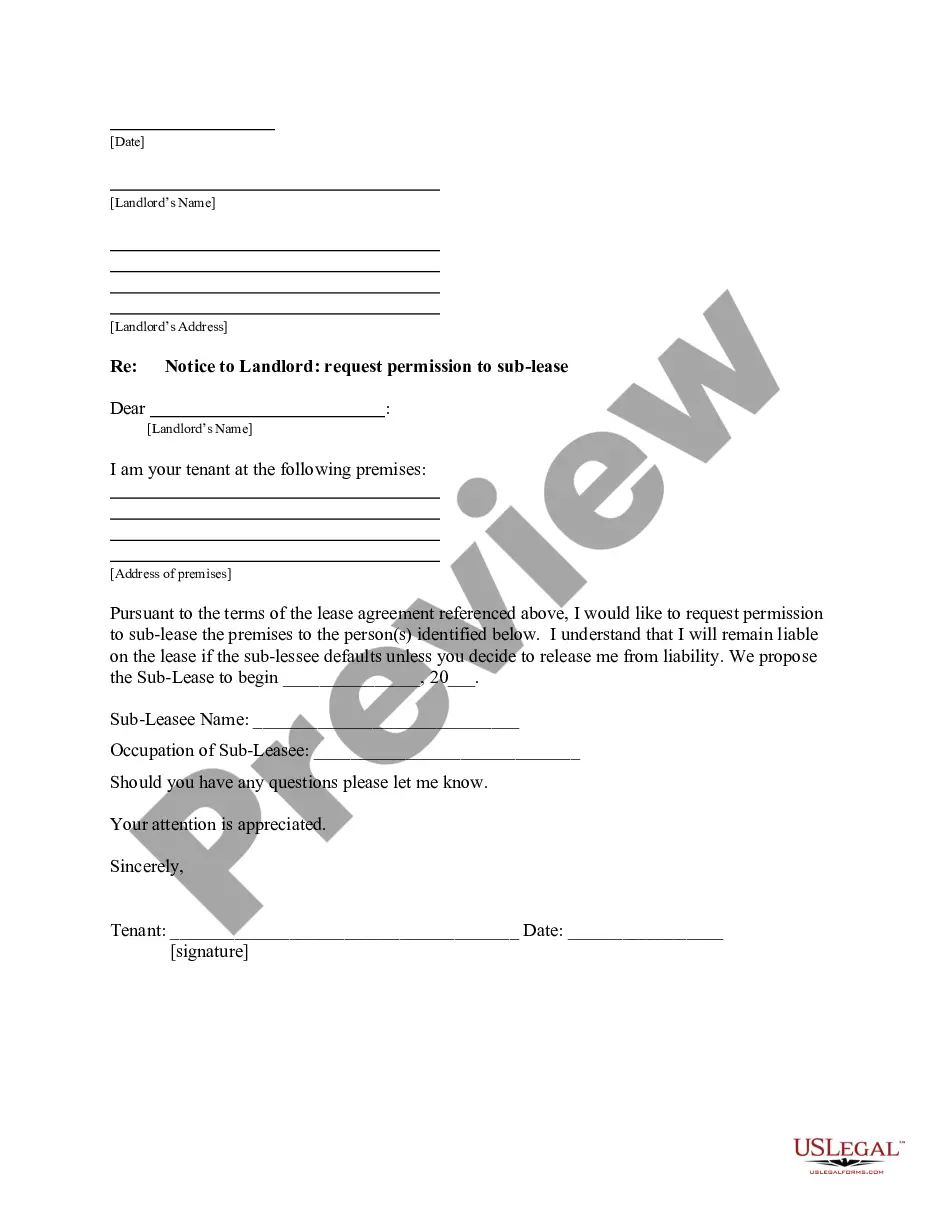
This Letter from Tenant to Landlord containing Request for permission to sublease serves as a formal request from a tenant to the landlord to allow the subleasing of their rental property to another individual. This form is crucial for ensuring that the tenant remains in compliance with the terms of their lease agreement, as subletting typically requires the landlord's consent. Unlike rental agreements or lease applications, this letter focuses specifically on the permission needed for subleasing, highlighting the responsibilities retained by the tenant even after subleasing.
Form components explained
- Sub-Lessee Name: Space to enter the name of the prospective subtenant.
- Occupation of Sub-Lessee: Field for noting the occupation of the subtenant.
- Signature and Date: Signature of the tenant along with the date to authenticate the request.
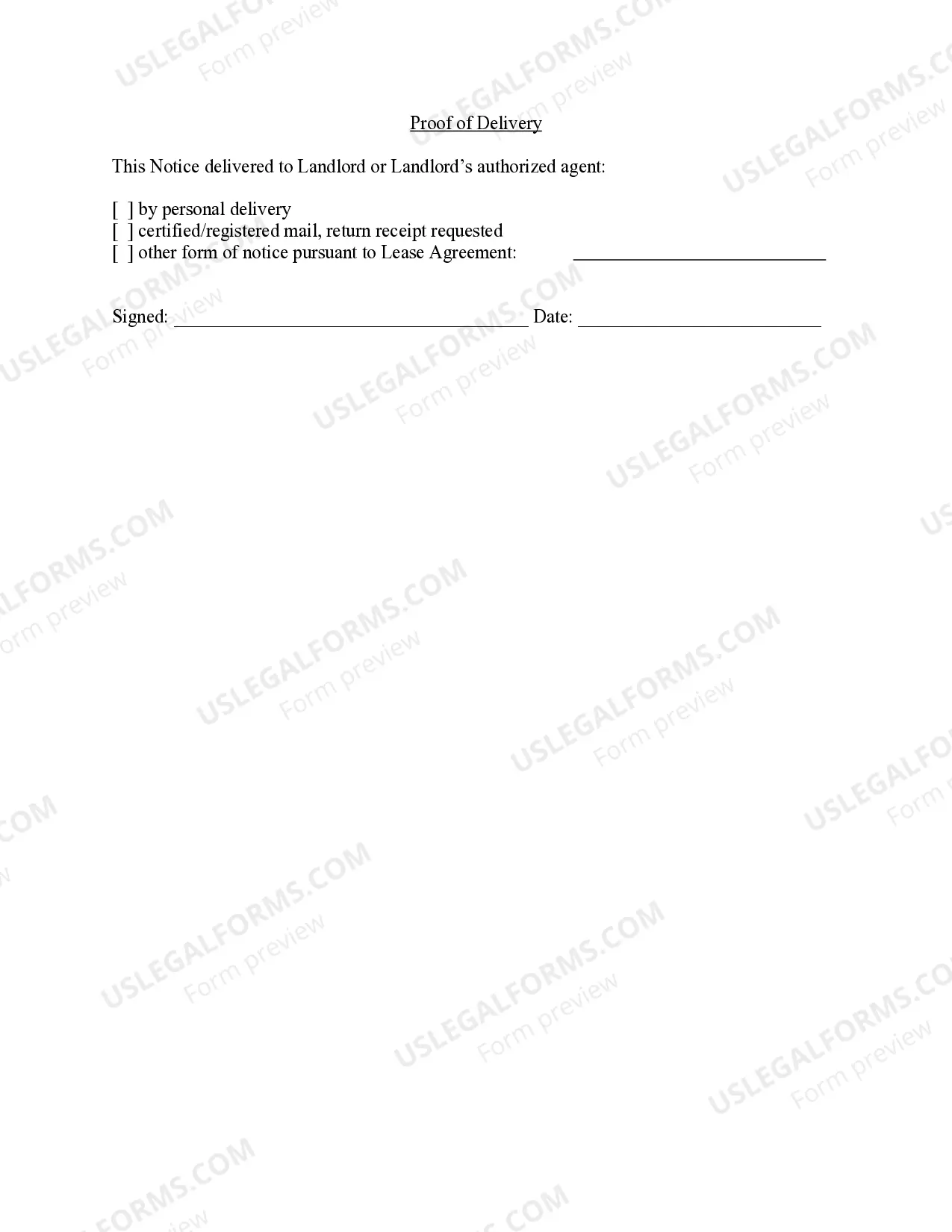
- Proof of Delivery: Options for confirming delivery to the landlord or their authorized agent.
When this form is needed
This form should be used when a tenant wishes to sublease their rental unit to someone else and requires the landlord's approval. It is appropriate in situations where the tenant cannot occupy the property for an extended period but wants to maintain their lease or comply with lease obligations. Examples include moving for a job, studying abroad, or temporarily relocating for personal reasons. The request must be made in writing to ensure legal protection and clarity.
Intended users of this form
- Current tenants seeking to sublease their rental property.
- Tenants who need to comply with lease terms requiring landlord notification.
- Occupants of rental units who intend to find alternative residents during their absence.
Instructions for completing this form
- Identify the sub-lessee by entering their name and occupation in the designated fields.
- Clearly state your request for permission to sublease the property.
- Sign and date the letter to validate your request.
- Select the method of delivery for the letter to your landlord.
- Keep a copy for your records after the form is delivered.
Is notarization required?
Notarization is not commonly needed for this form. However, certain documents or local rules may make it necessary. Our notarization service, powered by Notarize, allows you to finalize it securely online anytime, day or night.
Get your form ready online
Our built-in tools help you complete, sign, share, and store your documents in one place.
Make edits, fill in missing information, and update formatting in US Legal Forms—just like you would in MS Word.
Download a copy, print it, send it by email, or mail it via USPS—whatever works best for your next step.
Sign and collect signatures with our SignNow integration. Send to multiple recipients, set reminders, and more. Go Premium to unlock E-Sign.
If this form requires notarization, complete it online through a secure video call—no need to meet a notary in person or wait for an appointment.
We protect your documents and personal data by following strict security and privacy standards.

Make edits, fill in missing information, and update formatting in US Legal Forms—just like you would in MS Word.

Download a copy, print it, send it by email, or mail it via USPS—whatever works best for your next step.

Sign and collect signatures with our SignNow integration. Send to multiple recipients, set reminders, and more. Go Premium to unlock E-Sign.

If this form requires notarization, complete it online through a secure video call—no need to meet a notary in person or wait for an appointment.

We protect your documents and personal data by following strict security and privacy standards.
Common mistakes
- Failing to obtain the landlord's consent before subleasing.
- Not providing complete information about the subtenant.
- Neglecting to sign and date the form.
- Using informal delivery methods that cannot prove it was sent.
Benefits of completing this form online
- Quickly download and fill out the form for your specific needs.
- Access legally vetted templates drafted by licensed attorneys.
- Easily edit the document to suit your exact situation.
- Securely store and retrieve your forms at any time.
Main things to remember
- This form allows tenants to formally request permission to sublease their rental property.
- It is crucial to complete the form accurately and deliver it to the landlord.
- Knowing the local laws regarding subleasing is important to avoid potential legal issues.
Looking for another form?
Form popularity
FAQ
Provide the name of the entity or person who will be using your premises. Specify the details of the property: location, number, etc... Provide a list of allowed activities within the premises. Provide a list of disallowed activities. Provide the validity dates of this permission: start and end dates.
The landlord cannot refuse the assignment or sublet unless there is a good reason, such as the proposed tenant's inability to pay the rent or problematic behavior of this tenant. This is the case no matter what your lease or the building rules say.
The rental property address, including unit number (if applicable) The names of all tenants on the lease agreement. The date the lease violation notice was written. The specific reason for the notice. The time and date the violation occurred (if applicable)
Addresses: Write down the necessary addresses. Salutation: Here you offer some form of respectful greeting. Title: It should be centered, brief and informative. Body: This should be a maximum of 4 paragraphs. Sign out: Here you mention your name and offer your signature for authentication.
#1 Put the date at the top of the letter: #2 Provide the tenancy information: #3 Share whether or not the tenant paid rent on time: #4 Reveal the care and condition of the property : #5 Give information about the tenant's behavior:
Any time you write a letter or email to your landlord, keep your language clear and concise to eliminate any potential for confusion. Include relevant details such as the date of writing, the dates of any instances referenced within the letter, and your contact information and unit number.
Get your logistics together. Don't give your landlord much extra work (if any at all). Let your landlord know you're going to thoroughly screen applicants. Communicate with your landlord about how things are going with the subtenant.
Include the date, the tenant's full name and address at the top of the letter. Identify yourself as the landlord of the property and that you grant permission for the requested action. Add any additional conditions or provisions that must take place.
Writing Your Sublease. State the name of the parties and the date of the contract. Identify the full names of each party and what their role is in the contract. The original leaseholder of the property is the Tenant and the person subletting the property is the Subtenant.