New Hampshire Warranty Deed from two Individuals to Corporation
About this form
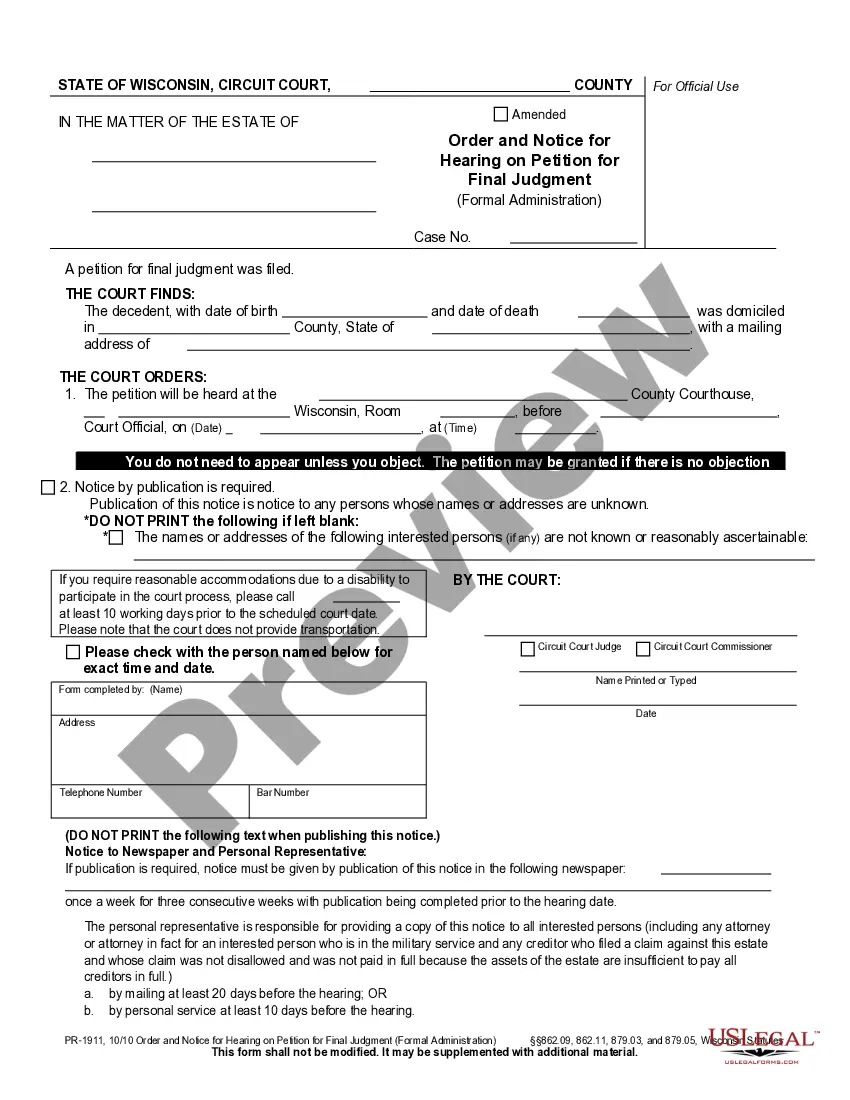
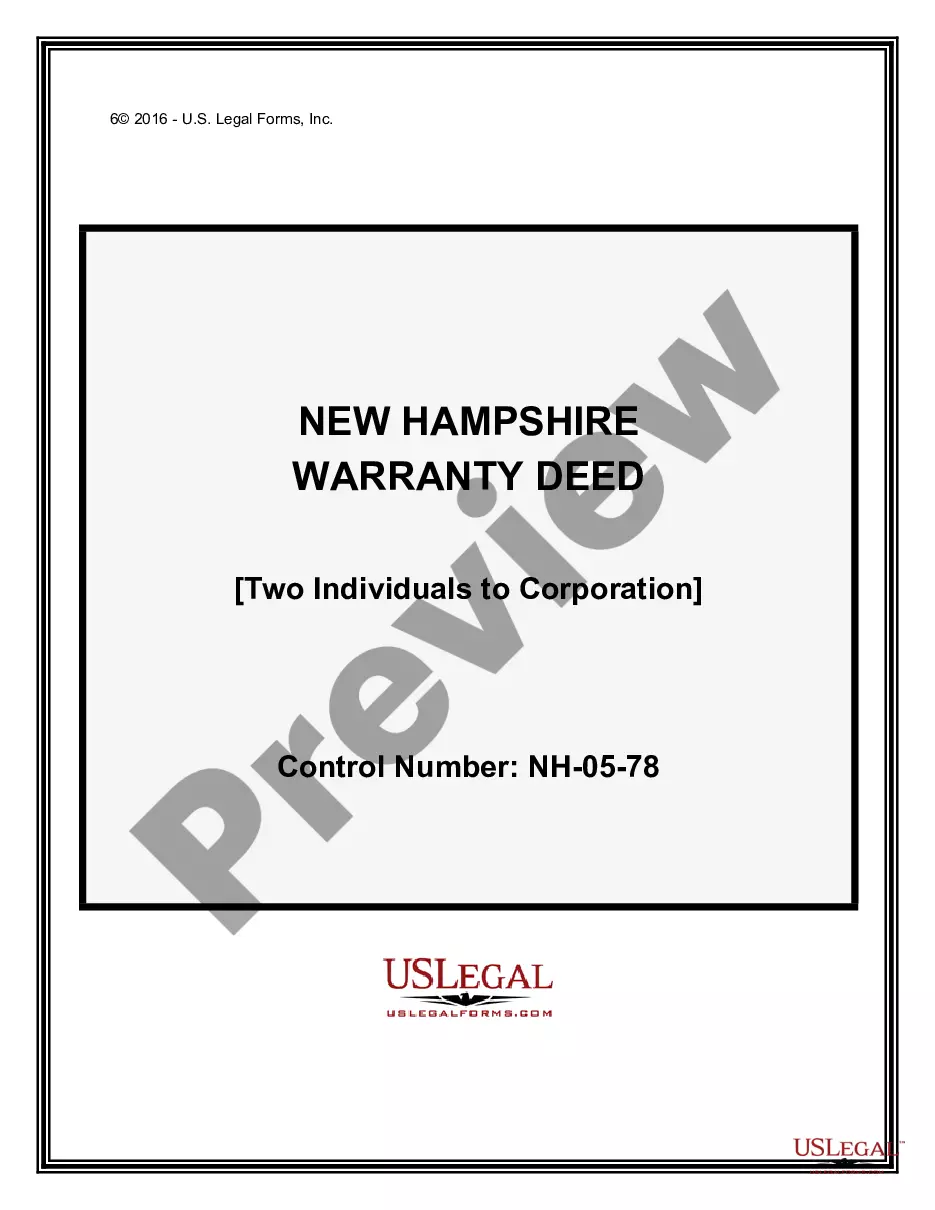
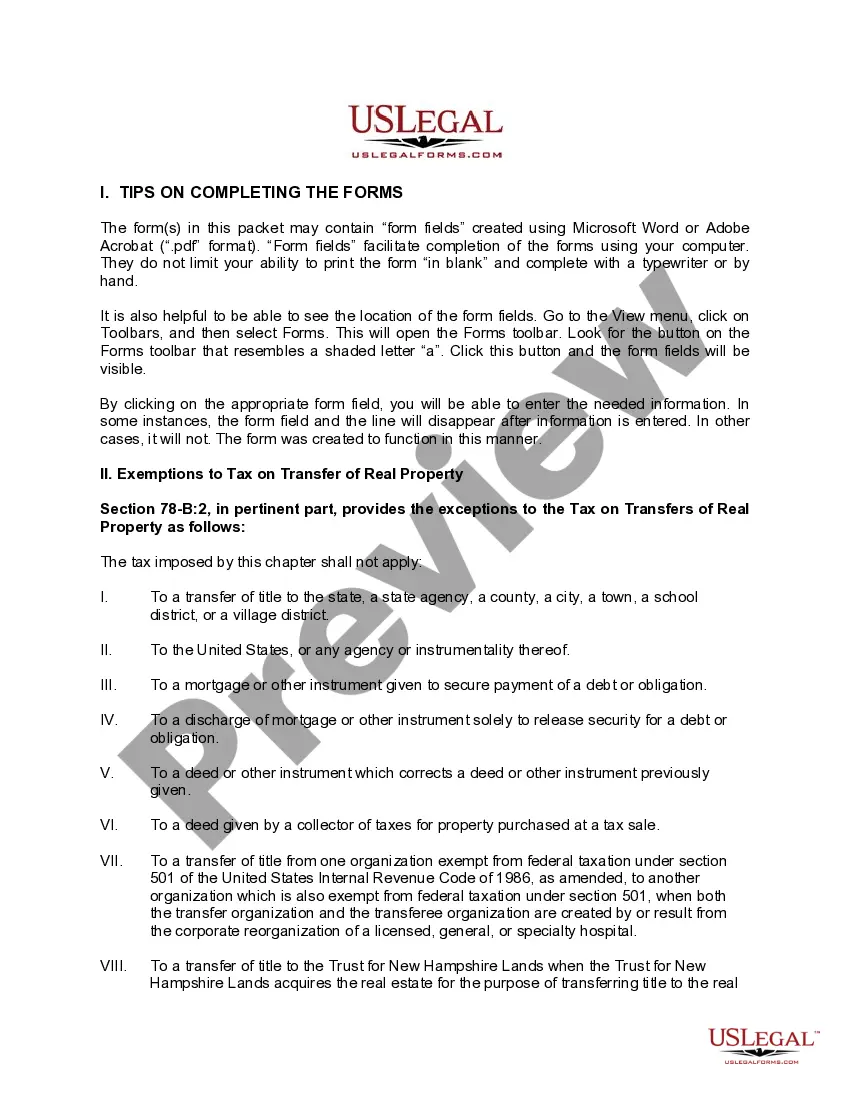
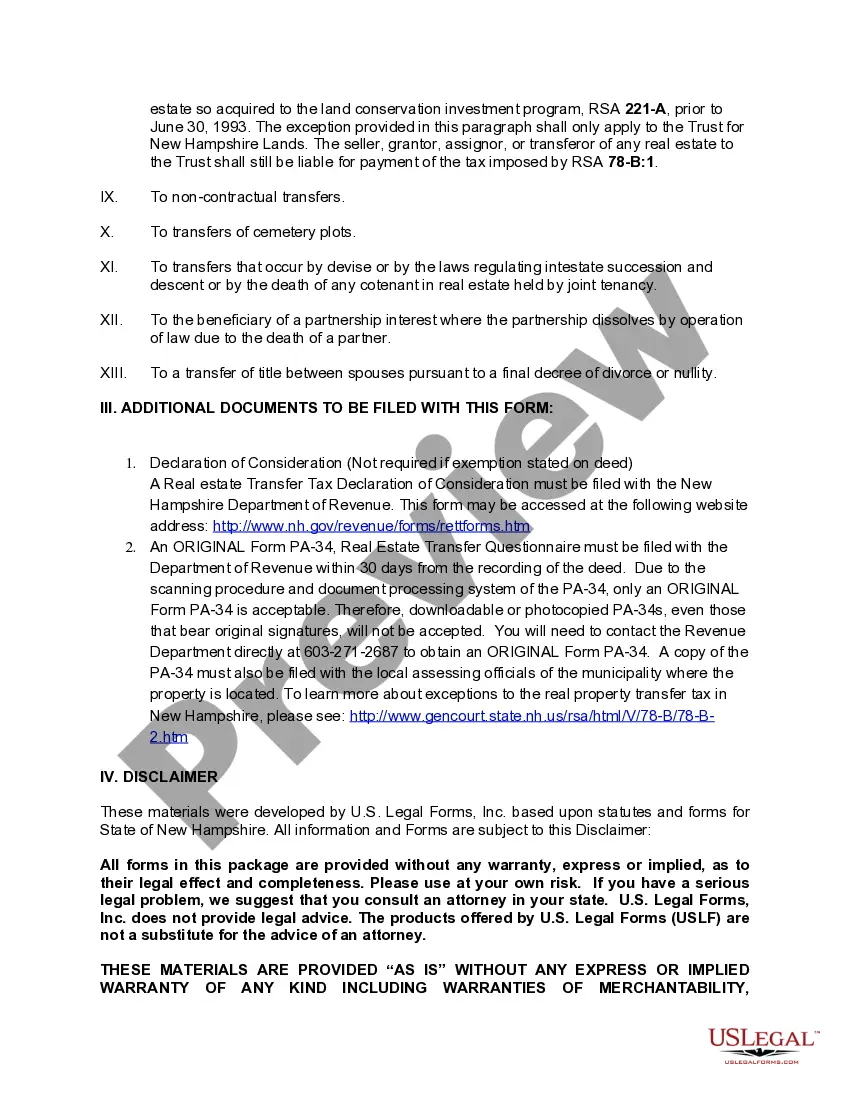
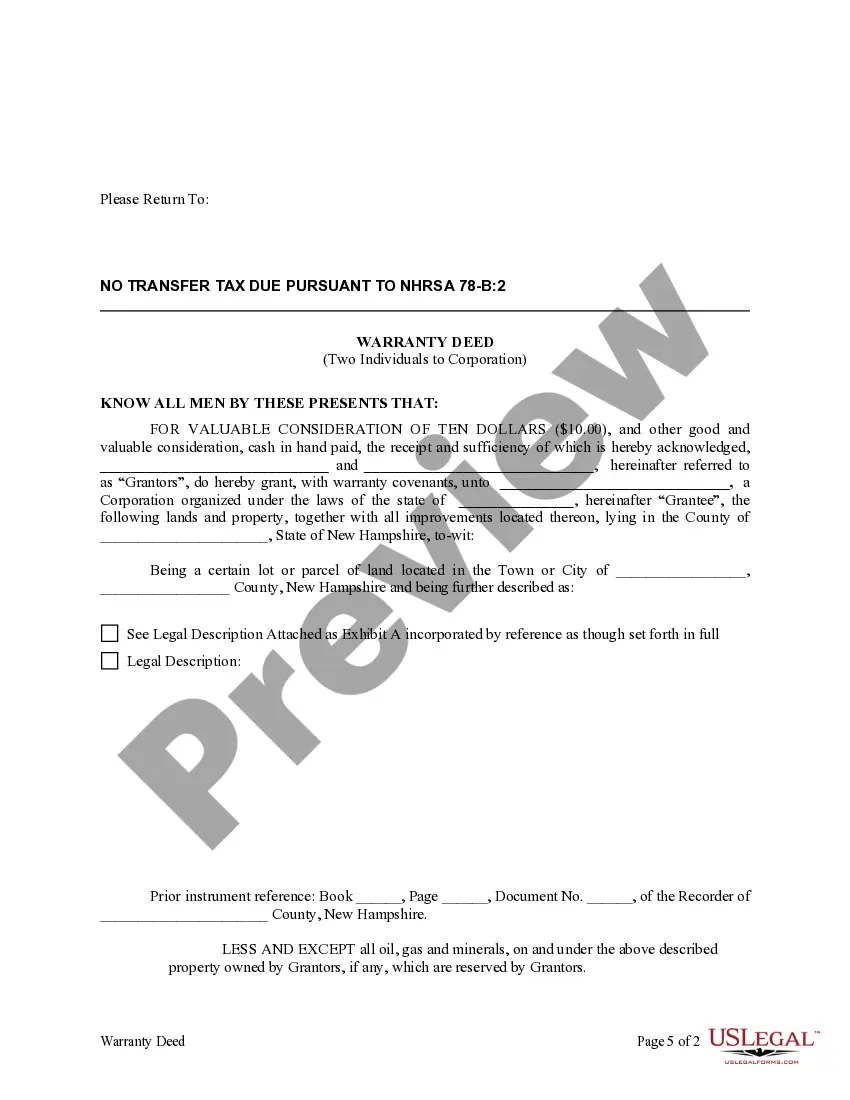
The Warranty Deed from two Individuals to Corporation is a legal document used to transfer property ownership from two individuals (the Grantors) to a corporation (the Grantee). This form ensures that the Grantors convey clear title to the property, with certain reservations regarding oil, gas, and minerals. It differs from other deeds by specifically addressing the transfer to a corporate entity, ensuring that all parties are legally protected during the transaction.
Main sections of this form
- Identification of the Grantors and Grantee
- Description of the property being transferred
- Reservation of oil, gas, and minerals by the Grantors
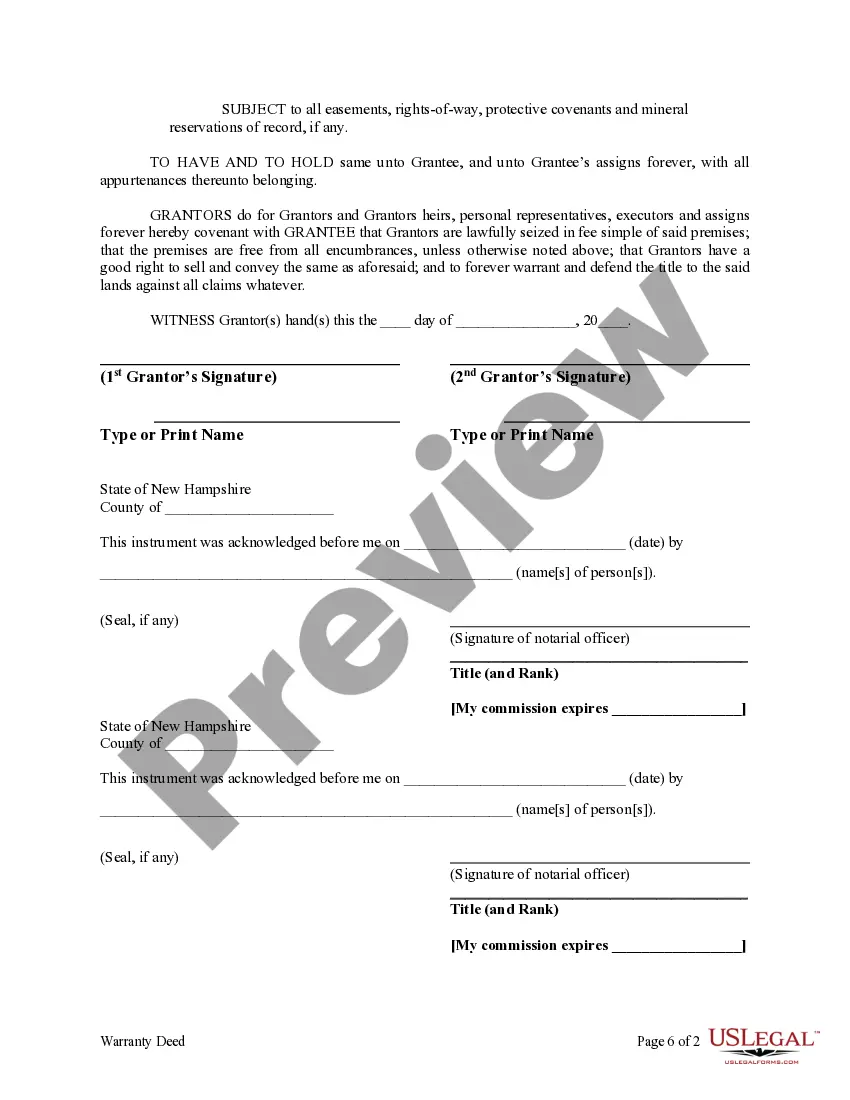
- Covenant of clear title and warranty by the Grantors
- Required signatures and acknowledgment for validation




Situations where this form applies
This form is essential when two individuals wish to transfer real estate property to a corporation. It is applicable in scenarios such as business property acquisitions, real estate investments, or when establishing a corporate entity that will hold title to property. Utilizing this form ensures that the ownership transfer is recognized legally while preserving the Grantors' rights concerning mineral resources.
Who needs this form
- Two individuals who are the current owners of the property
- A corporation that is acquiring the property
- Parties involved in real estate transactions requiring clear title transfer
How to prepare this document
- Identify the full names and addresses of the Grantors and the Grantee.
- Describe the property being transferred, including its legal description.
- Specify any reservations, such as oil, gas, or mineral rights.
- Ensure all Grantors sign the deed in front of a notary.
- File the completed deed with the appropriate local government office.
Is notarization required?
Notarization is required for this form to take effect. Our online notarization service, powered by Notarize, lets you verify and sign documents remotely through an encrypted video session, available 24/7.
Get your form ready online
Our built-in tools help you complete, sign, share, and store your documents in one place.
Make edits, fill in missing information, and update formatting in US Legal Forms—just like you would in MS Word.
Download a copy, print it, send it by email, or mail it via USPS—whatever works best for your next step.
Sign and collect signatures with our SignNow integration. Send to multiple recipients, set reminders, and more. Go Premium to unlock E-Sign.
If this form requires notarization, complete it online through a secure video call—no need to meet a notary in person or wait for an appointment.
We protect your documents and personal data by following strict security and privacy standards.

Make edits, fill in missing information, and update formatting in US Legal Forms—just like you would in MS Word.

Download a copy, print it, send it by email, or mail it via USPS—whatever works best for your next step.

Sign and collect signatures with our SignNow integration. Send to multiple recipients, set reminders, and more. Go Premium to unlock E-Sign.

If this form requires notarization, complete it online through a secure video call—no need to meet a notary in person or wait for an appointment.

We protect your documents and personal data by following strict security and privacy standards.
Common mistakes to avoid
- Failing to include complete property descriptions, which can lead to disputes.
- Not reserving mineral rights when applicable.
- Omitting signatures or failing to have the document notarized.
- Submitting photocopies instead of original forms for filing.
Advantages of online completion
- Convenience of completing the form from your home or office.
- Editability allows for corrections and personalization before printing.
- Access to professionally drafted forms ensures legal compliance.
- Immediate download facilitates quick processing of your property transfer.
Looking for another form?
Form popularity
FAQ
Quitclaim deeds are most often used to transfer property between family members.Examples include when an owner gets married and wants to add a spouse's name to the title or deed, or when the owners divorce and one spouse's name is removed from the title or deed.
Find out if the property or land is registered. Pay £3 to download a copy of the title register. If the deeds are marked as 'filed' in the register then HM Land Registry has a scanned copy. Fill in the deeds request form using the property's title number from the title register.
Deeds can be obtained at the Strafford County Registry of Deeds. Their website is www.nhdeeds.com. They can also be contacted at Strafford County Registry of Deeds, 259 County Farm Road, Suite 202, Dover, NH 03820, (603) 742-1741. Most deeds are also available in the Assessing Office.
Signing - According to New Hampshire Law (§ 477:3) the Grantor must sign the quit claim deed in the presence of a Notary Public. Recording - Once notarized, the quit claim deed must be filed with the County Recorder's Office in the city or county where the property is located.
Once a quitclaim is signed and recorded, can the deed be challenged in court? Yes, it can. Recording your deed only provides notice of your ownership claim to the public. It does not guarantee ownership.
The drawback, quite simply, is that quitclaim deeds offer the grantee/recipient no protection or guarantees whatsoever about the property or their ownership of it. Maybe the grantor did not own the property at all, or maybe they only had partial ownership.
They are commonly used to add/remove someone to/from real estate title or deed (divorce, name changes, family and trust transfers). The quitclaim deed is a legal document (deed) used to transfer interest in real estate from one person or entity (grantor) to another (grantee).
Amherst. Antrim. Bedford. Bennington. Brookline. Deering. Francestown. Goffstown.
Fill out the quit claim deed form, which can be obtained online, or write your own using the form as a guide. The person giving up the interest in the property is the grantor, and the person receiving the interest is the grantee.
Expect to wait four to six weeks and don't expect to get the original deed because they keep that and send you a copy. On an even less romantic note, owners of new homes often only get an electronic copy.