New Hampshire Professional Limited Liability Company PLLC Formation Package
Overview of this form
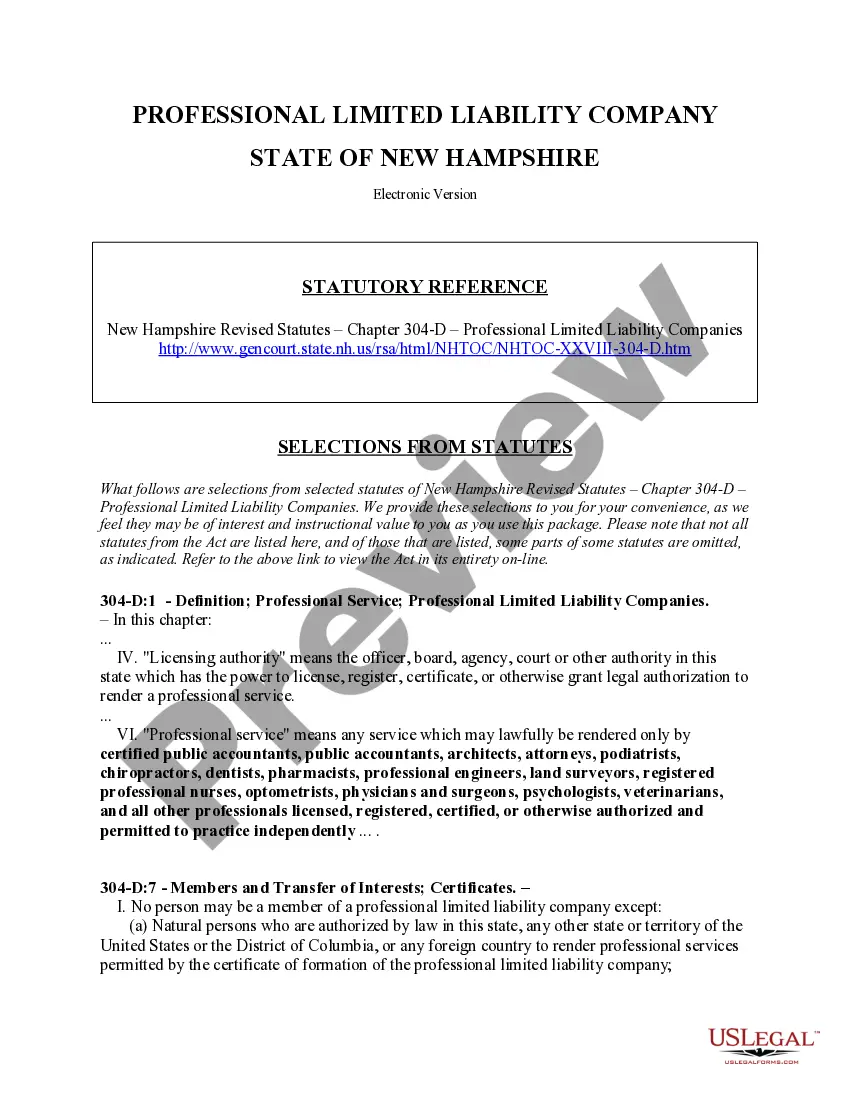
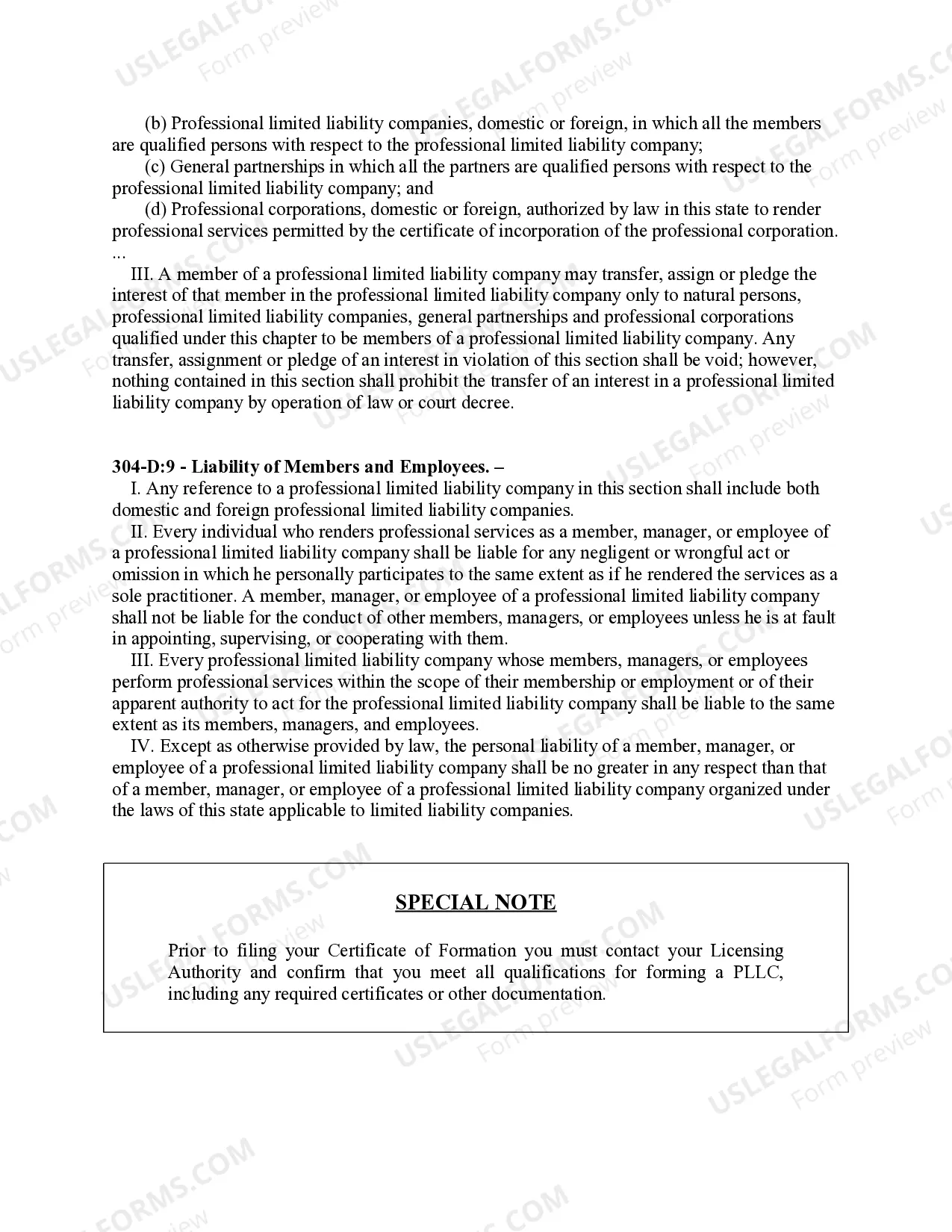
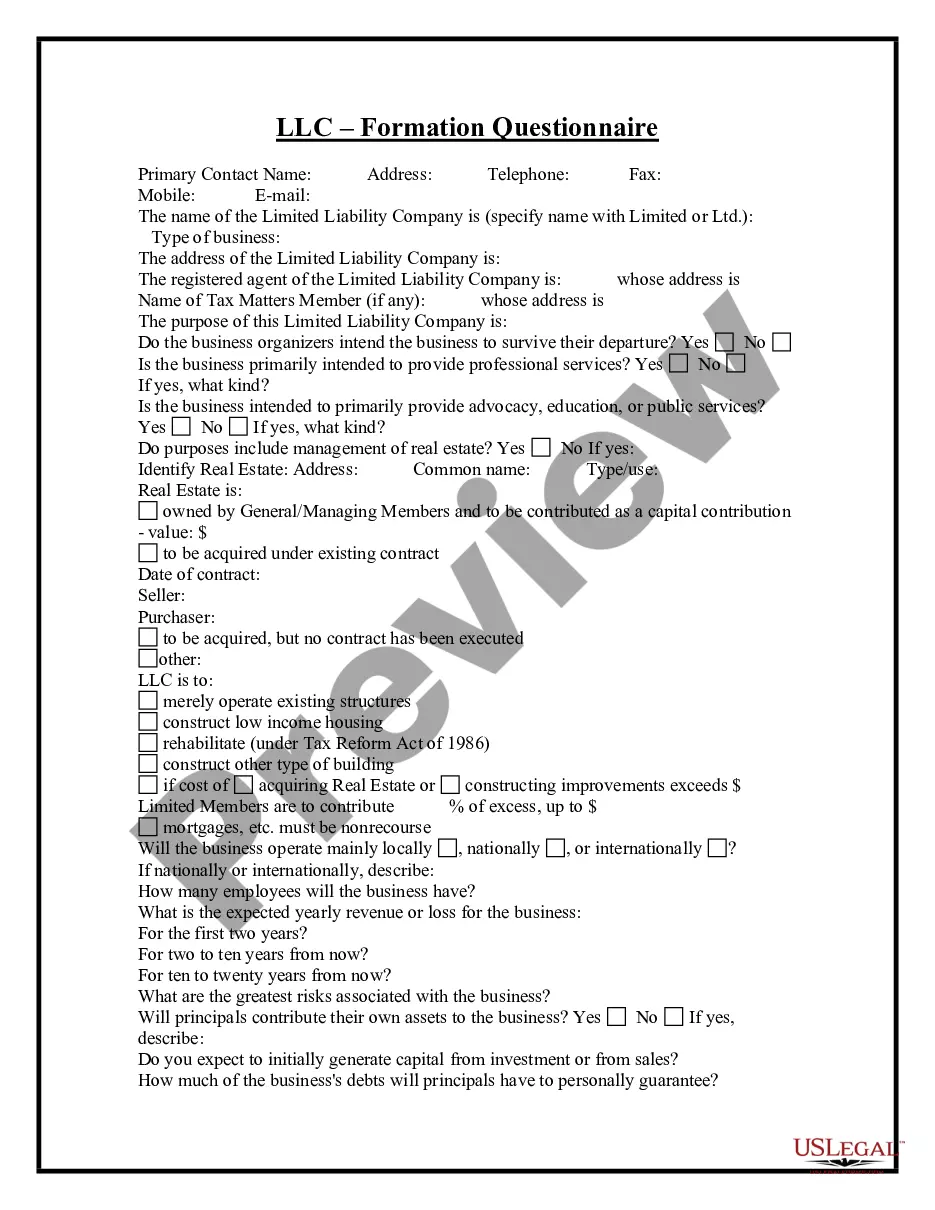
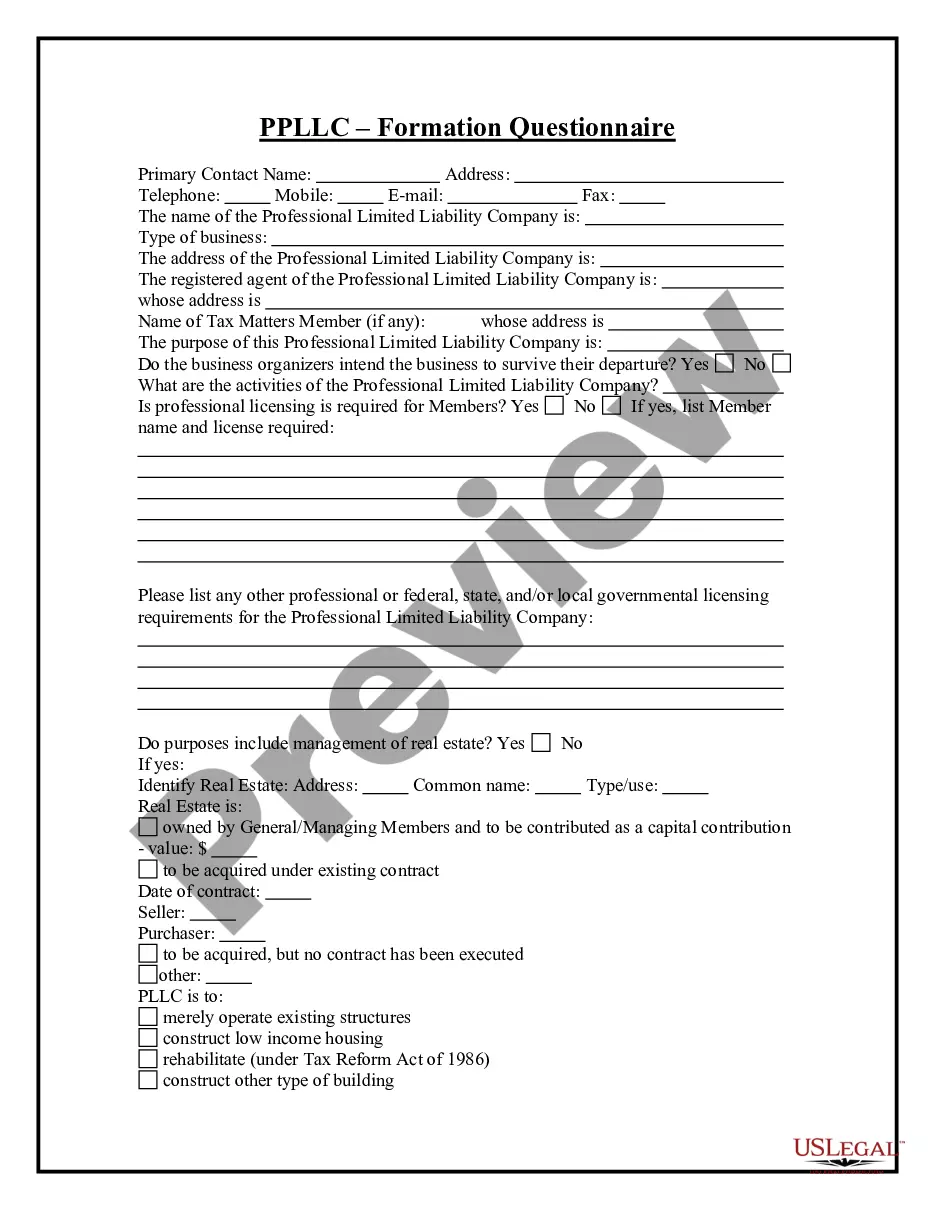
The New Hampshire Professional Limited Liability Company (PLLC) Formation Package is a state-specific form used to create a Professional Limited Liability Company in New Hampshire. Unlike general LLCs, PLLCs are designed for licensed professionals, such as attorneys, accountants, and architects. This package ensures compliance with state law by providing essential information required for formation, including the PLLC's name, purpose, and registered agent details.
Key components of this form
- Application for Reservation of Name: A form to reserve the name of your PLLC.
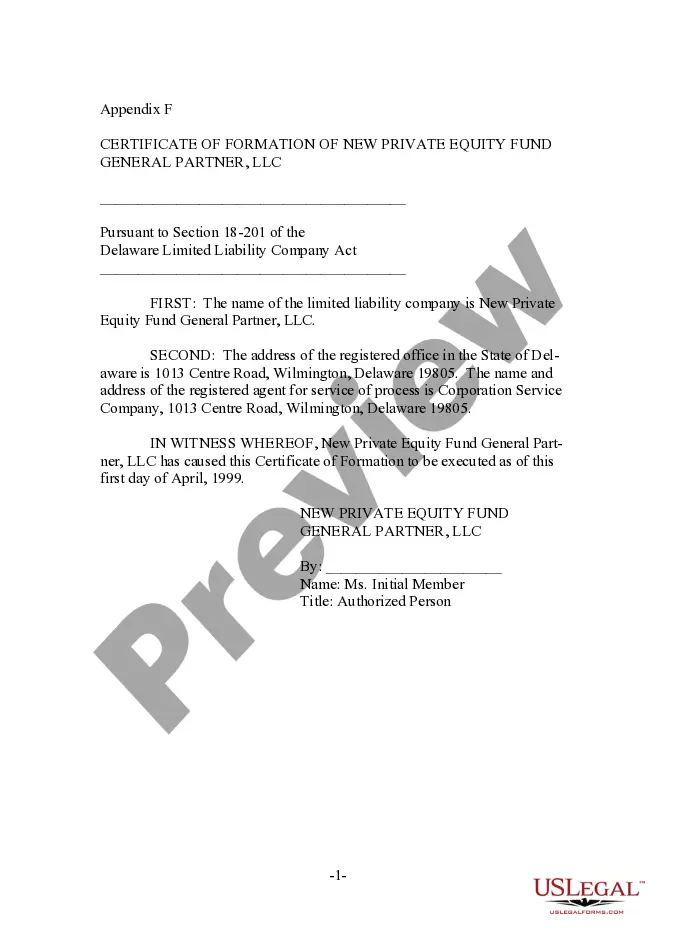
- Certificate of Formation: The core document needed to officially establish your PLLC.
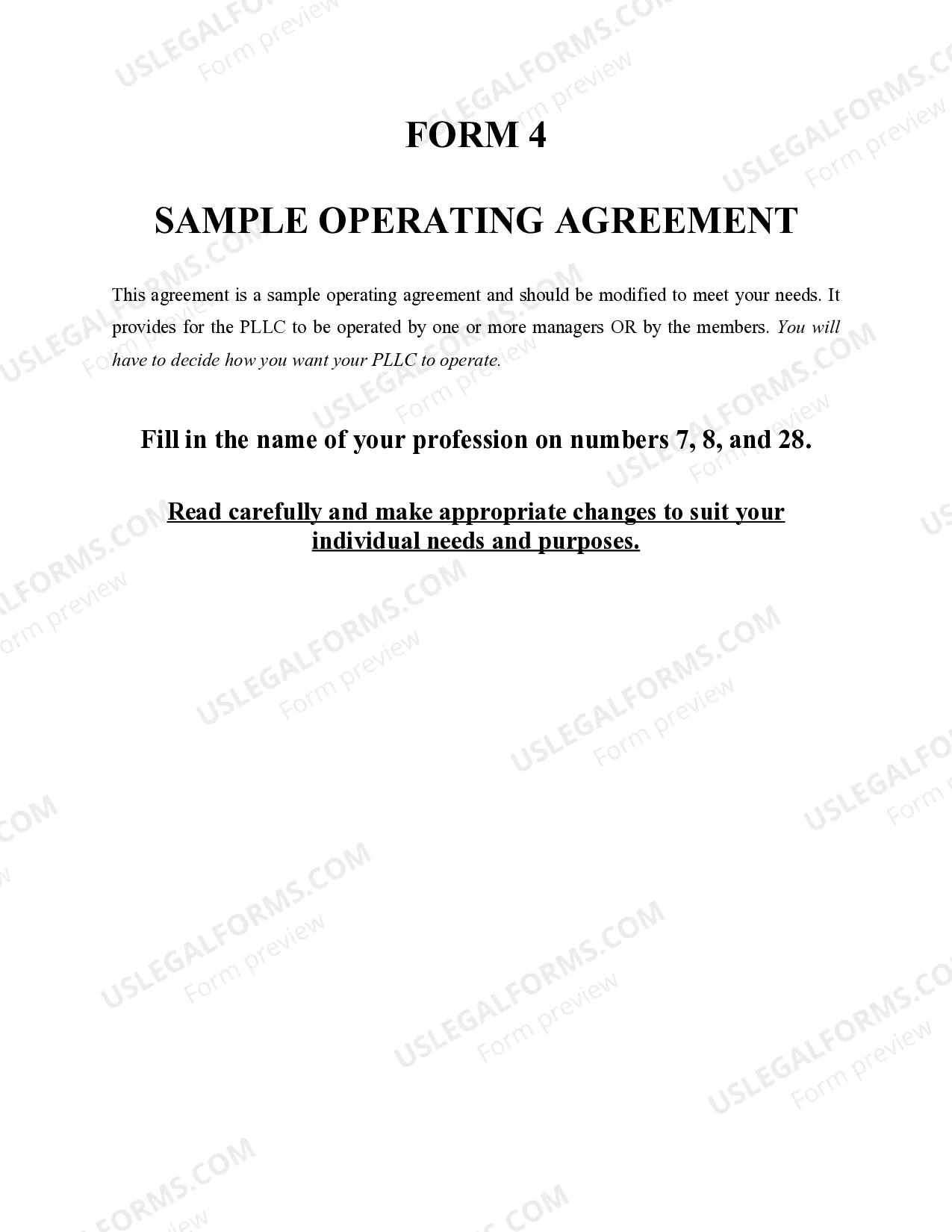
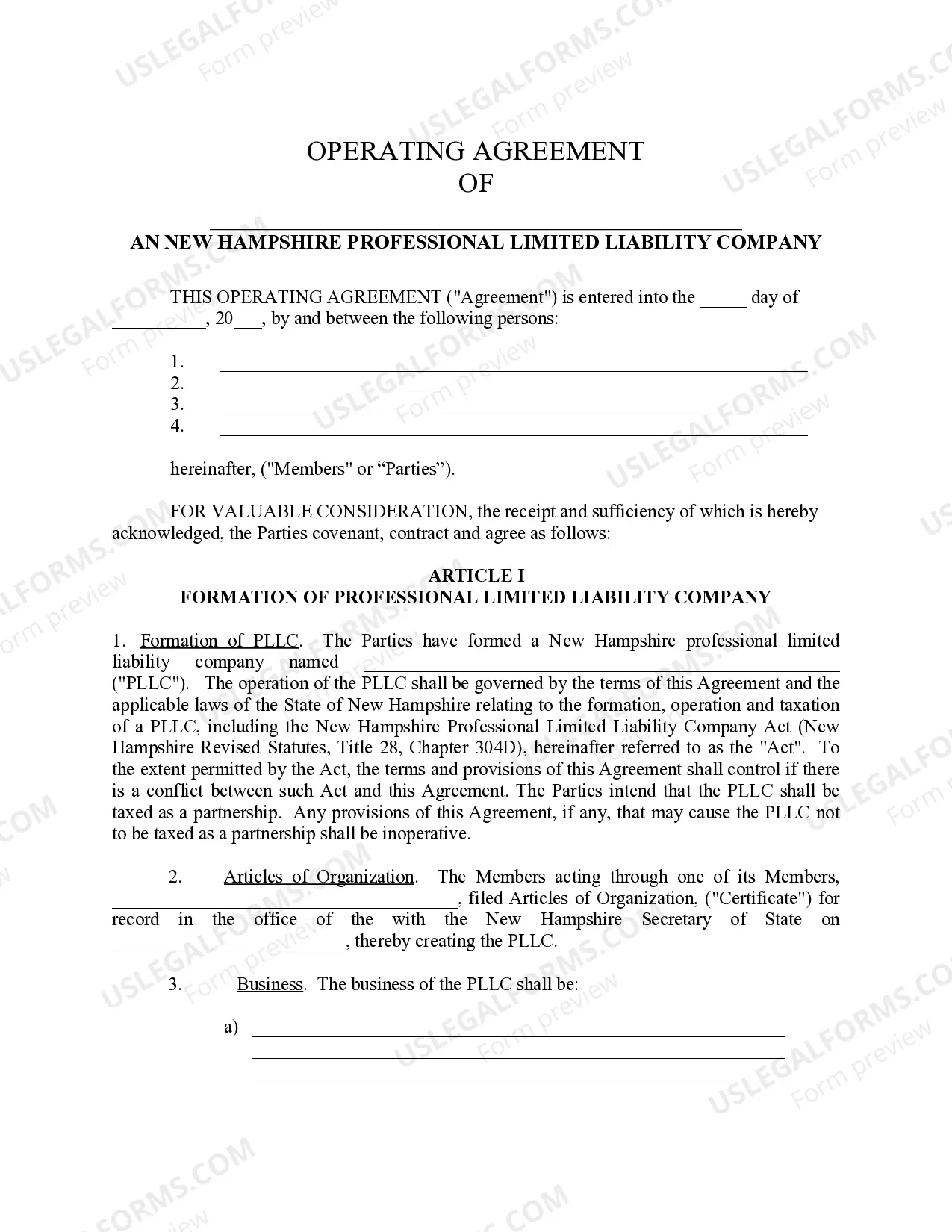
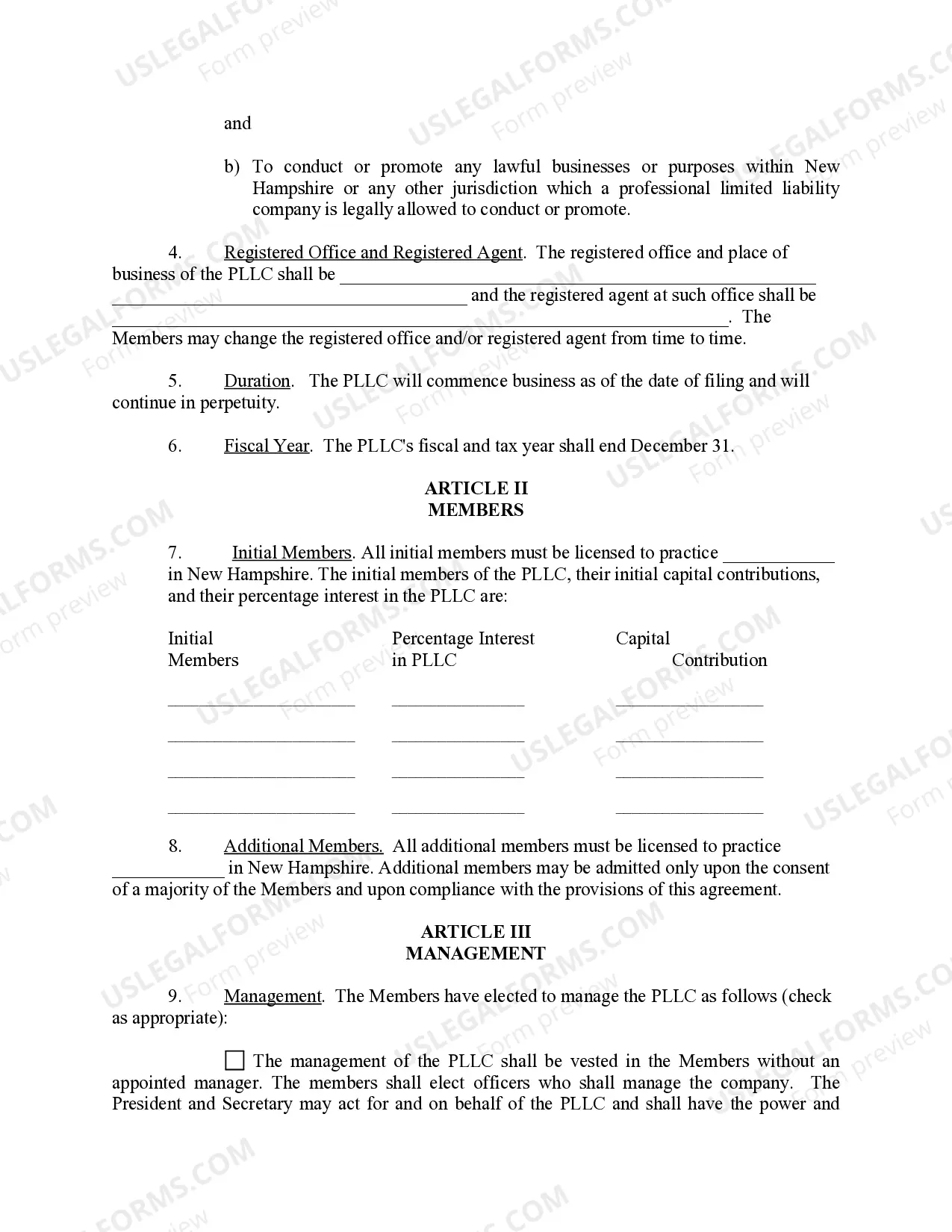
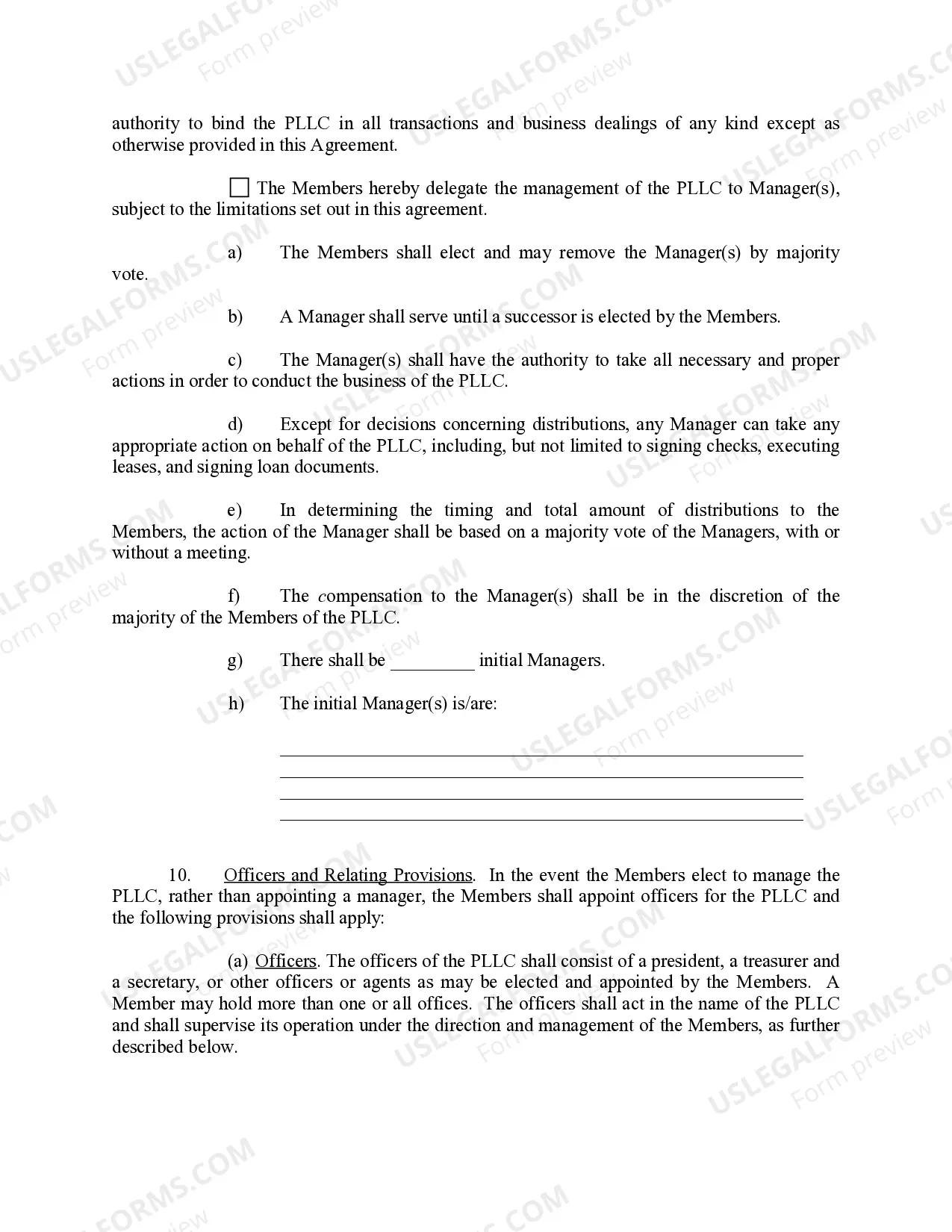
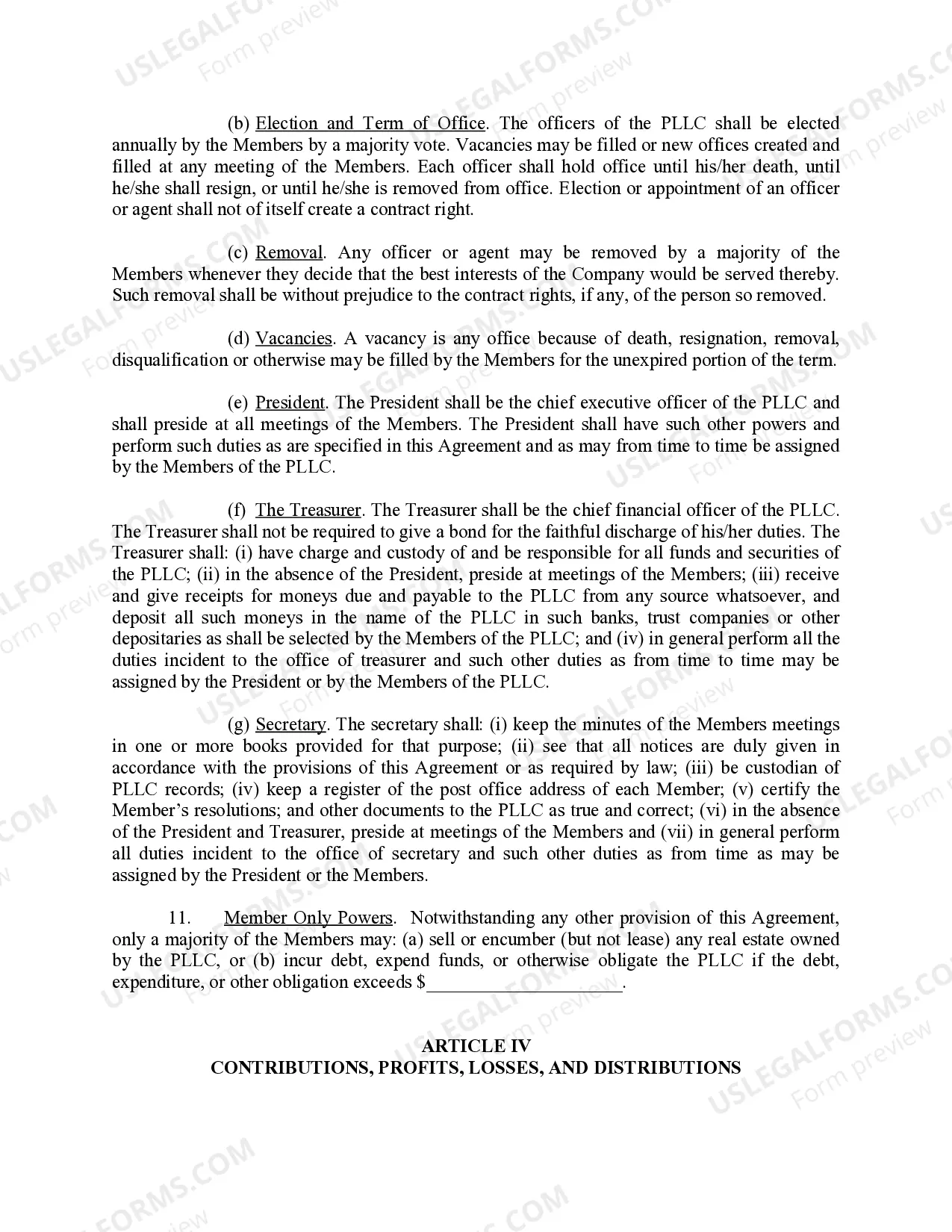
- Operating Agreement: A template to outline the management structure and operating procedures of the PLLC.
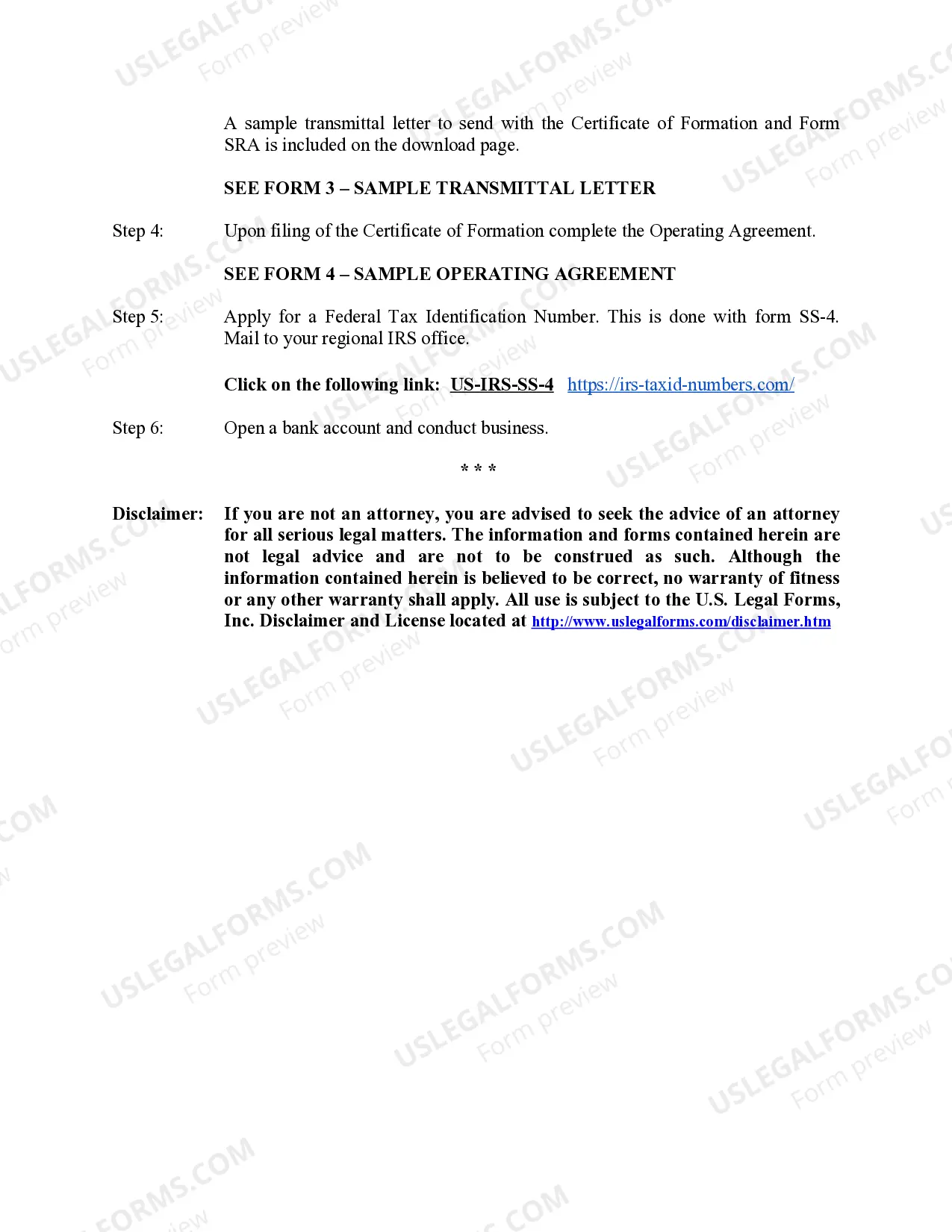
- Form SRA: A required document accompanying the Certificate of Formation.
- IRS Form SS-4: For obtaining a Federal Tax Identification Number.


Common use cases
This form should be used when you intend to establish a Professional Limited Liability Company in New Hampshire. It is necessary for licensed professionals seeking to formalize their practice structure, protect their personal assets, and comply with state regulations governing the formation of PLLCs.
Who can use this document
- Licensed professionals in New Hampshire, including attorneys, accountants, architects, and medical professionals.
- Individuals or groups of professionals looking to limit personal liability while practicing their profession.
- Business owners who want to pursue a professional service in a formal capacity.
How to complete this form
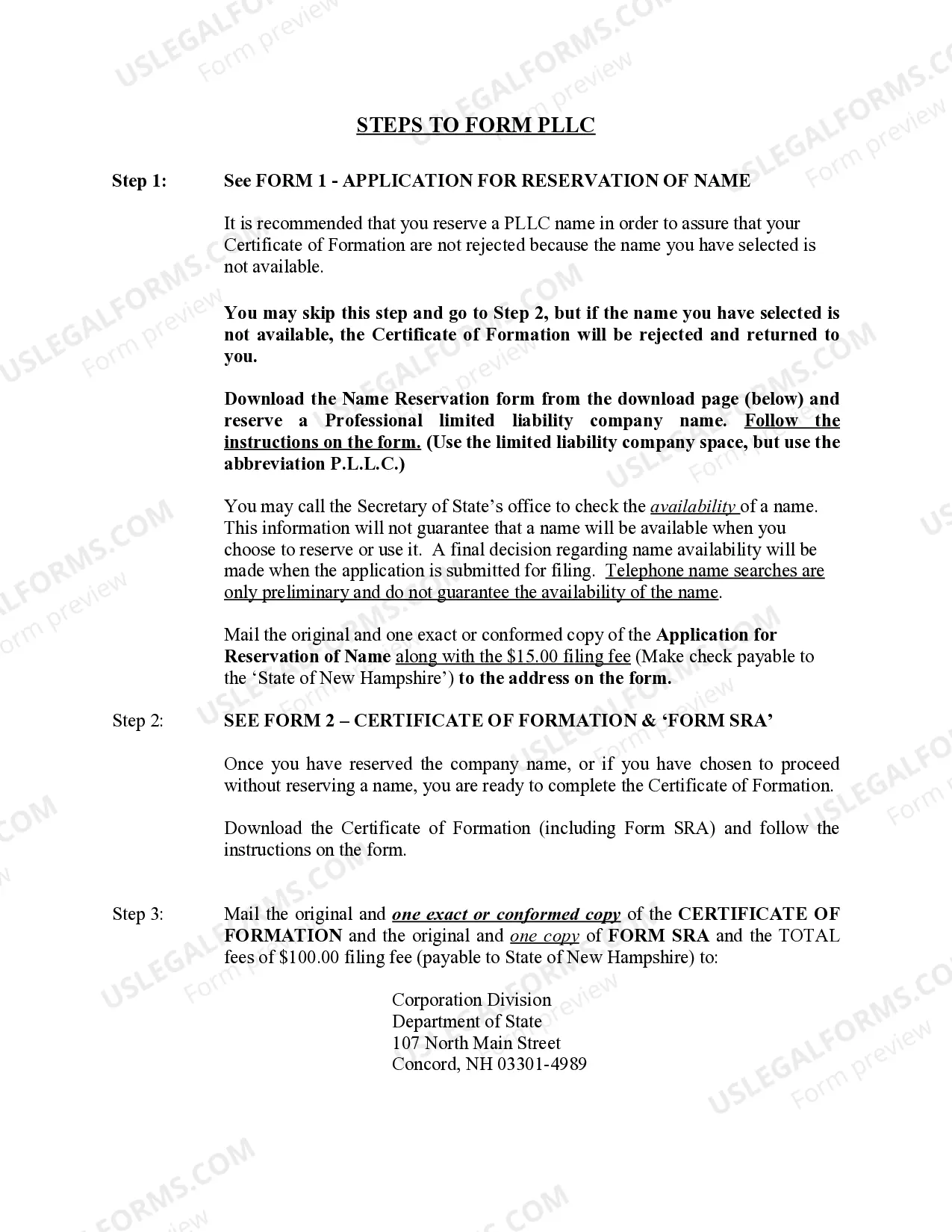
- Step 1: Reserve the PLLC name by filling out the Application for Reservation of Name.
- Step 2: Complete the Certificate of Formation and include the required Form SRA.
- Step 3: Mail the Certificate of Formation, Form SRA, and the filing fee to the Corporation Division of the New Hampshire Department of State.
- Step 4: Prepare the Operating Agreement tailored to your PLLC's specific management structure.
- Step 5: Obtain your Federal Tax Identification Number using Form SS-4.
- Step 6: Open a bank account in the name of your PLLC to conduct business.
Does this document require notarization?
In most cases, this form does not require notarization. However, some jurisdictions or signing circumstances might. US Legal Forms offers online notarization powered by Notarize, accessible 24/7 for a quick, remote process.
Get your form ready online
Our built-in tools help you complete, sign, share, and store your documents in one place.
Make edits, fill in missing information, and update formatting in US Legal Forms—just like you would in MS Word.
Download a copy, print it, send it by email, or mail it via USPS—whatever works best for your next step.
Sign and collect signatures with our SignNow integration. Send to multiple recipients, set reminders, and more. Go Premium to unlock E-Sign.
If this form requires notarization, complete it online through a secure video call—no need to meet a notary in person or wait for an appointment.
We protect your documents and personal data by following strict security and privacy standards.

Make edits, fill in missing information, and update formatting in US Legal Forms—just like you would in MS Word.

Download a copy, print it, send it by email, or mail it via USPS—whatever works best for your next step.

Sign and collect signatures with our SignNow integration. Send to multiple recipients, set reminders, and more. Go Premium to unlock E-Sign.

If this form requires notarization, complete it online through a secure video call—no need to meet a notary in person or wait for an appointment.

We protect your documents and personal data by following strict security and privacy standards.
Common mistakes to avoid
- Forgetting to reserve the PLLC name before filing the Certificate of Formation.
- Not including all required documents, such as Form SRA, during submission.
- Failing to adhere to the specific requirements for licensed professionals in New Hampshire.
Advantages of online completion
- Convenience of downloading the forms immediately after payment.
- Access to reliable templates drafted by licensed attorneys.
- Editability allows you to customize the forms according to your specific needs.
Looking for another form?


Form popularity
FAQ
The least expensive way to form your LLC is filing the forms yourself, although it will depend on the filing fees in your state. Incorporation statements for LLCs are typically the Articles of Organization.
A PLLC, or professional limited liability company, is a special type of LLC that may only be formed by licensed professionals for the purpose of rendering professional services. While this is not required, doing so can be beneficial for tax, liability, financing, and other reasons.
Starting an LLC in New Hampshire is Easy. To start a New Hampshire Limited Liability Company, you will need to file your Certificate of Formation with the State of New Hampshire, which costs $100.
The owners of a PLLC are called members, and they have an operating agreement that governs how they work together and divide profits and losses. Many professionals start a PLLC because they want to separate their individual liability from their liability as a member of the business or practice.
The PLLC files a standard Form 1120, Corporate Income Tax Return, and pays taxes at the regular corporate tax rate. It retains earnings as a corporation, however, and doesn't distribute them to members for personal taxation.
A professional limited liability company (PLLC) is a business entity that offers tax benefits and limited liability for professionals, such as lawyers, accountants, and doctors.
Regarding the management flexibility and taxation, a PLLC has the same advantages of an LLC. The difference between the two is that the PLLC has some restrictions on who may be a member of the PLLC and the limitation of liability of the members. With an LLC, anyone can be a member, or owner, of the business.
Members of a PLLC aren't personally liable for the malpractice of any other member. PLLC members are not personally liable for business debts and lawsuits, such as unpaid office rent. The PLLC can choose to be taxed as a pass-through entity or as a corporation.
Professional LLCs PLLCs offer the same benefits as LLCs. The main difference between a LLC and a PLLC is that only professionals recognized in a state through licensing, such as architects, medical practitioners and lawyers, can form PLLCs.