Nebraska Essential Legal Life Documents for New Parents
What is this form package?
The Nebraska Essential Legal Life Documents for New Parents package includes vital legal documents specifically designed for new parents. This package provides comprehensive resources to help address important legal aspects that arise with the addition of a child to your family. Unlike other packages, this one focuses entirely on the unique needs associated with parenting, ensuring that you have the necessary tools to safeguard your family's future and manage your affairs effectively.
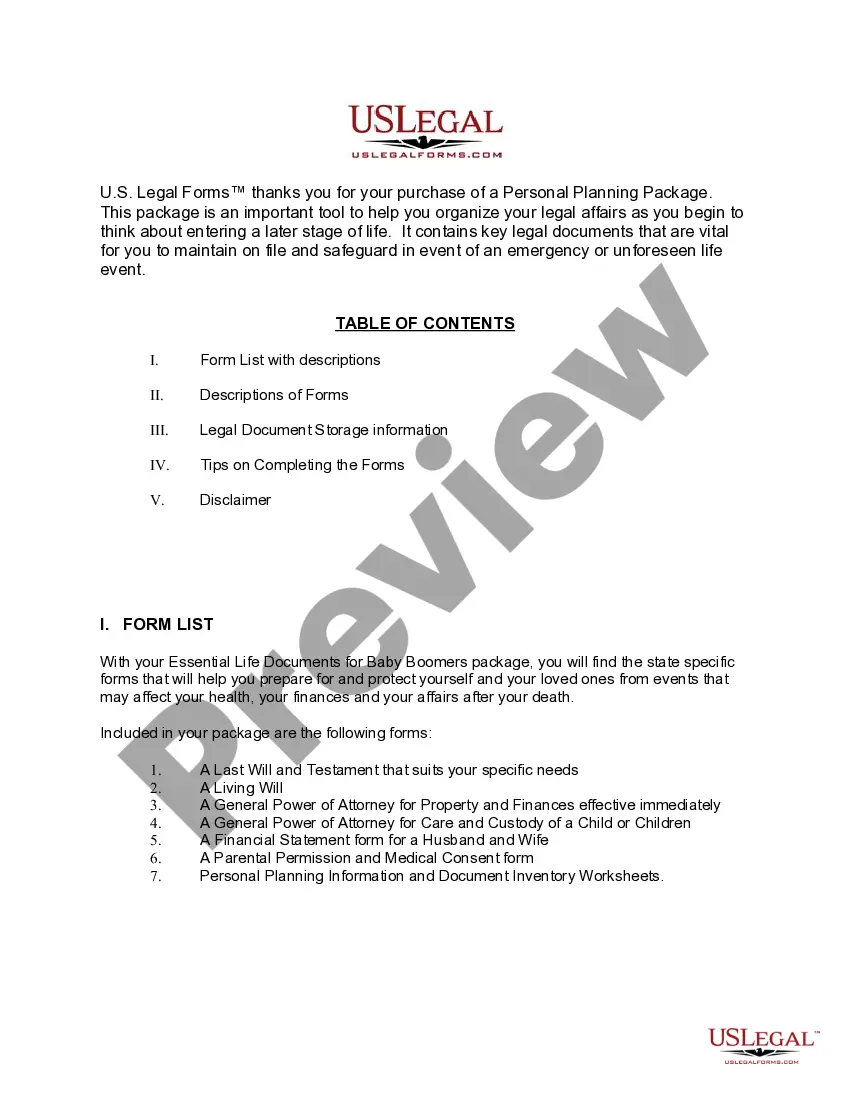
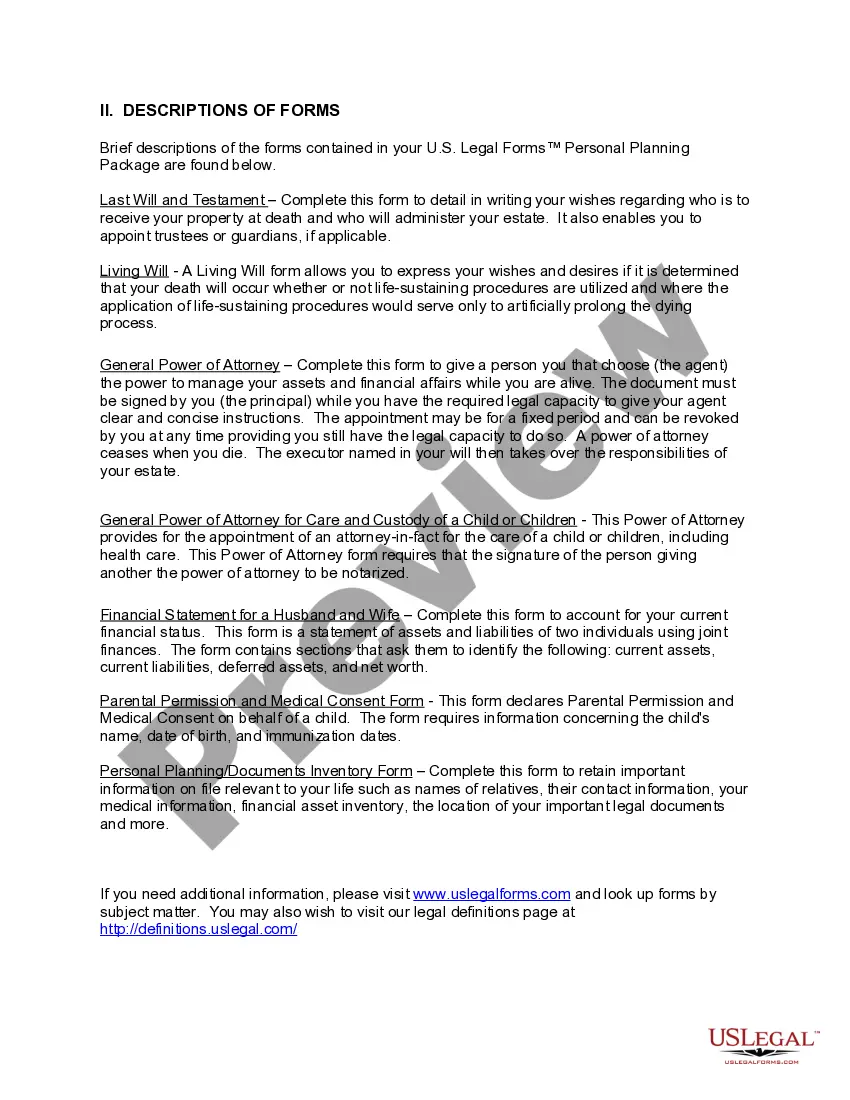
Forms included in this package
- General Durable Power of Attorney for Property and Finances or Financial Effective Immediately
- Power of Attorney for Care and Custody of Child or Children
- Declaration - Living Will - Statutory
- Financial Statement Form - Husband and Wife Joint
- Parental Permission and Medical Consent Form
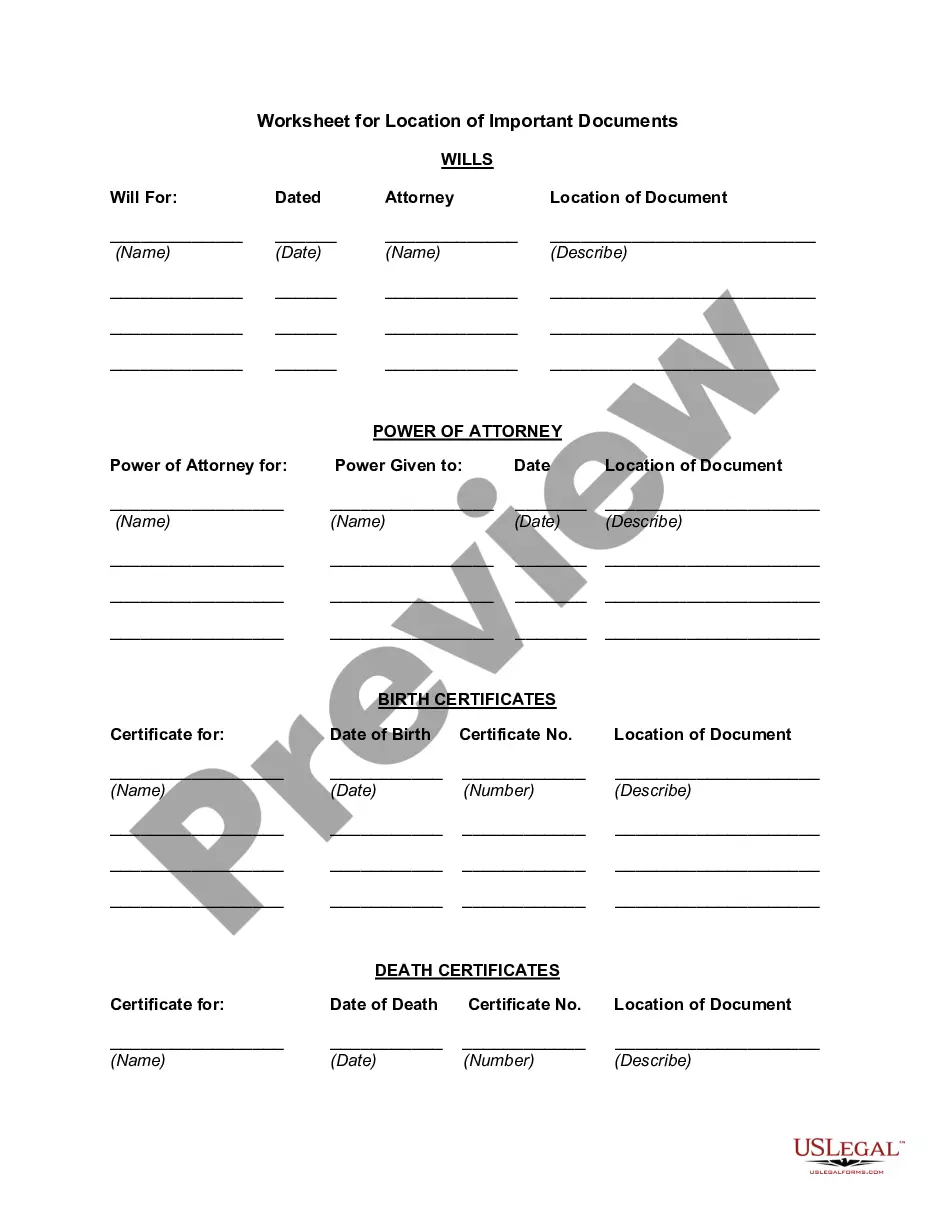
- Personal Planning Information and Document Inventory Worksheets - A Legal Life Document


When to use this document
This form package is ideal for new parents who want to formalize their legal rights and responsibilities as caregivers. You may need this package in various situations, such as:
- If you are expecting a child and want to prepare for legal contingencies.
- After the birth of your child to ensure their wellbeing is legally protected.
- When you wish to delegate financial or caregiving authority in case of emergencies.
- If you want to plan your estate to secure your child's future.
Who can use this document
- New parents seeking to establish legal documents that reflect their family situation.
- Expecting parents wanting to prepare for future legal scenarios.
- Guardians or caregivers responsible for a child.
- Couples who want to organize their legal and financial affairs in light of their new responsibilities.
Instructions for completing these forms
- Review the included forms to understand each document's purpose.
- Gather necessary personal information, including details about your child.
- Fill out each form with accurate information, ensuring all required fields are completed.
- Sign the documents in the presence of a notary, where required.
- Store your completed forms in a secure location accessible to trusted family members or advisors.
Do documents in this package require notarization?
Yes, some forms in this package must be notarized to be legally valid. Specifically, the General Power of Attorney for Care and Custody of a Child requires notarization. US Legal Forms offers integrated online notarization, making it easy to complete this process securely from the comfort of your home.
Get your form ready online
Our built-in tools help you complete, sign, share, and store your documents in one place.
Make edits, fill in missing information, and update formatting in US Legal Forms—just like you would in MS Word.
Download a copy, print it, send it by email, or mail it via USPS—whatever works best for your next step.
Sign and collect signatures with our SignNow integration. Send to multiple recipients, set reminders, and more. Go Premium to unlock E-Sign.
If this form requires notarization, complete it online through a secure video call—no need to meet a notary in person or wait for an appointment.
We protect your documents and personal data by following strict security and privacy standards.

Make edits, fill in missing information, and update formatting in US Legal Forms—just like you would in MS Word.

Download a copy, print it, send it by email, or mail it via USPS—whatever works best for your next step.

Sign and collect signatures with our SignNow integration. Send to multiple recipients, set reminders, and more. Go Premium to unlock E-Sign.

If this form requires notarization, complete it online through a secure video call—no need to meet a notary in person or wait for an appointment.

We protect your documents and personal data by following strict security and privacy standards.
Mistakes to watch out for
- Failing to update documents as family situations change.
- Not providing complete information in the forms, leading to potential legal issues.
- Overlooking the need for notarization on specific forms.
- Neglecting to store documents securely and inform family members of their location.
Why complete this package online
- Convenient access to essential legal documents from home at your own pace.
- Edit forms easily on your device, allowing for personal customization.
- Ensured reliability with documents drafted by licensed attorneys to meet state standards.
- Save time and money compared to hiring a lawyer for basic legal documentation.
Looking for another form?
Form popularity
FAQ
Custody laws in Nebraska do not favor one parent over the other due to sex. So, without extenuating circumstances, they try to award 50/50 joint custody when possible.Schedules can vary based on the parents' schedules and child's needs.
Children cannot decide for themselves until they are 19 years old and legal adults. However, judges in Nebraska will take a child's wishes into consideration in making a custody determination only if the child is of sufficient age and maturity and the child's wishes are based on good, sound reasons.
Nebraska statutes make it clear that there is no presumption favoring either the mother or the father. Nebraska has abolished, as have many other states, the maternal preference, which was a presumption that the mother would be most capable of caring for a child during its earliest childhood years.
1 attorney answer Although a child's wishes are one factor among many the court must consider in determining the child's best interests, a minor child never gets to "decide" which parent to live with.
Nebraska statutes make it clear that there is no presumption favoring either the mother or the father. Nebraska has abolished, as have many other states, the maternal preference, which was a presumption that the mother would be most capable of caring for a child during its earliest childhood years.
Thankfully, Nebraska does have laws in place that protect the rights of fathers, even if they are not married to the mothers of their children. To benefit from that protection, you must establish paternity, or prove that you are the father.
Although the law specifically permits children at least 14-years-old to express an opinion, there is no specific age when a judge will listen to a child's opinion. California statutes also permit a child younger than 14 years old to testify regarding a custodial preference, unless the court decides it's not in the