Nebraska Letter from Tenant to Landlord about Landlord's failure to make repairs
Understanding this form
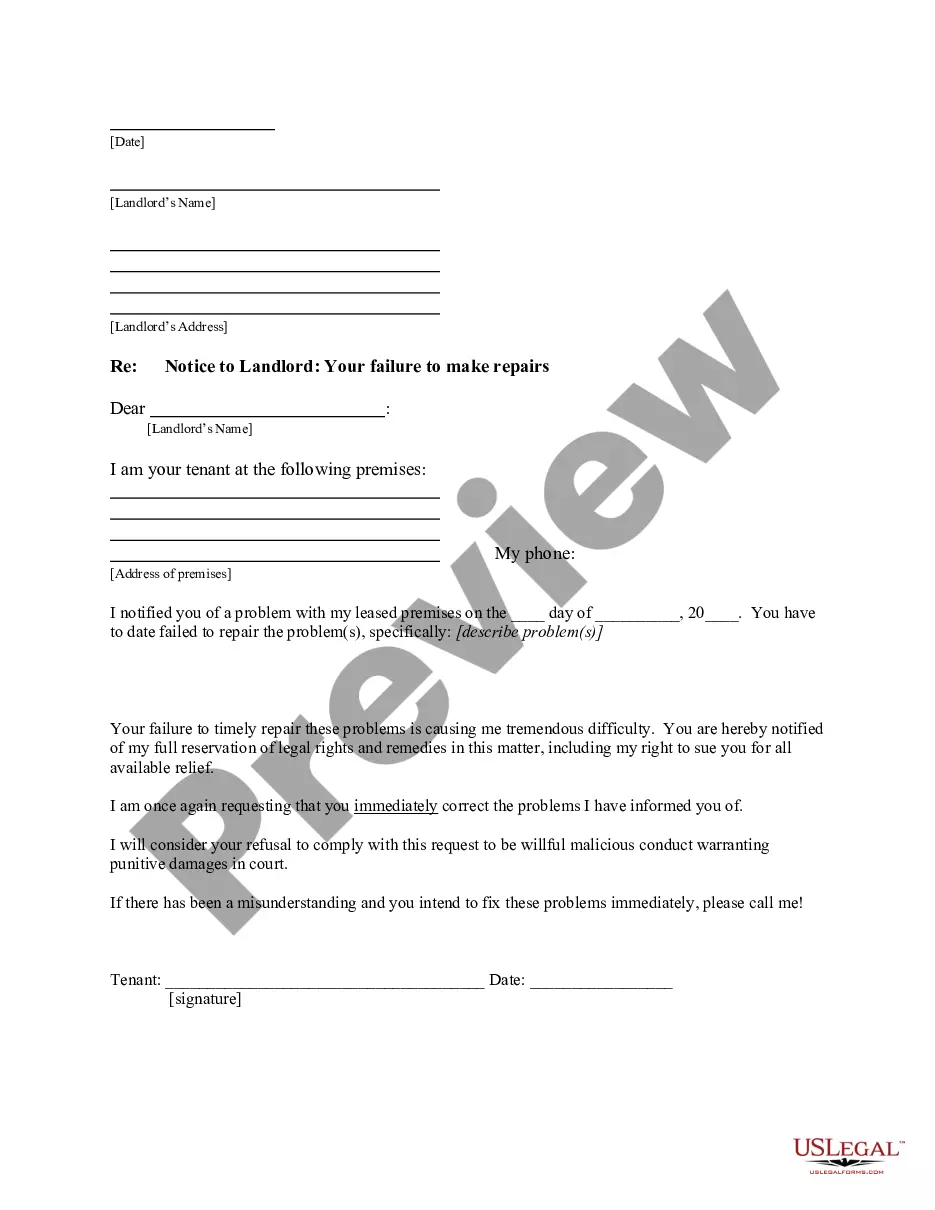
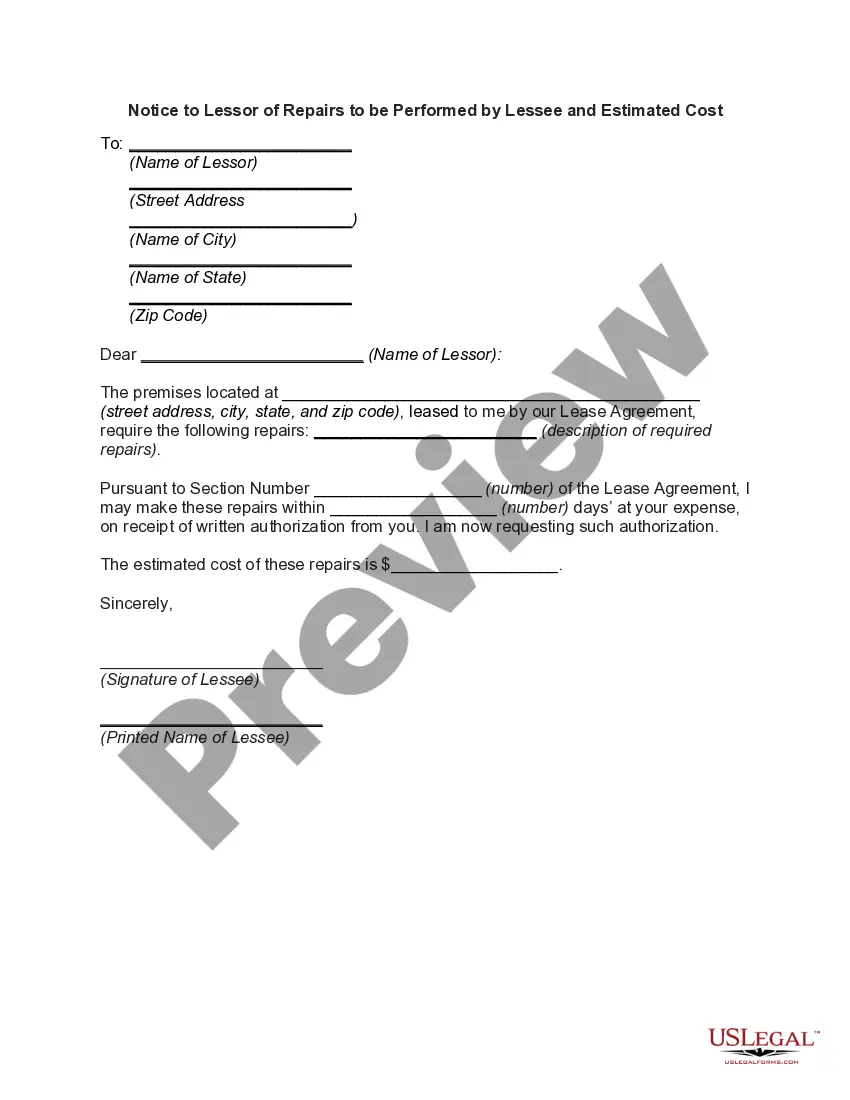
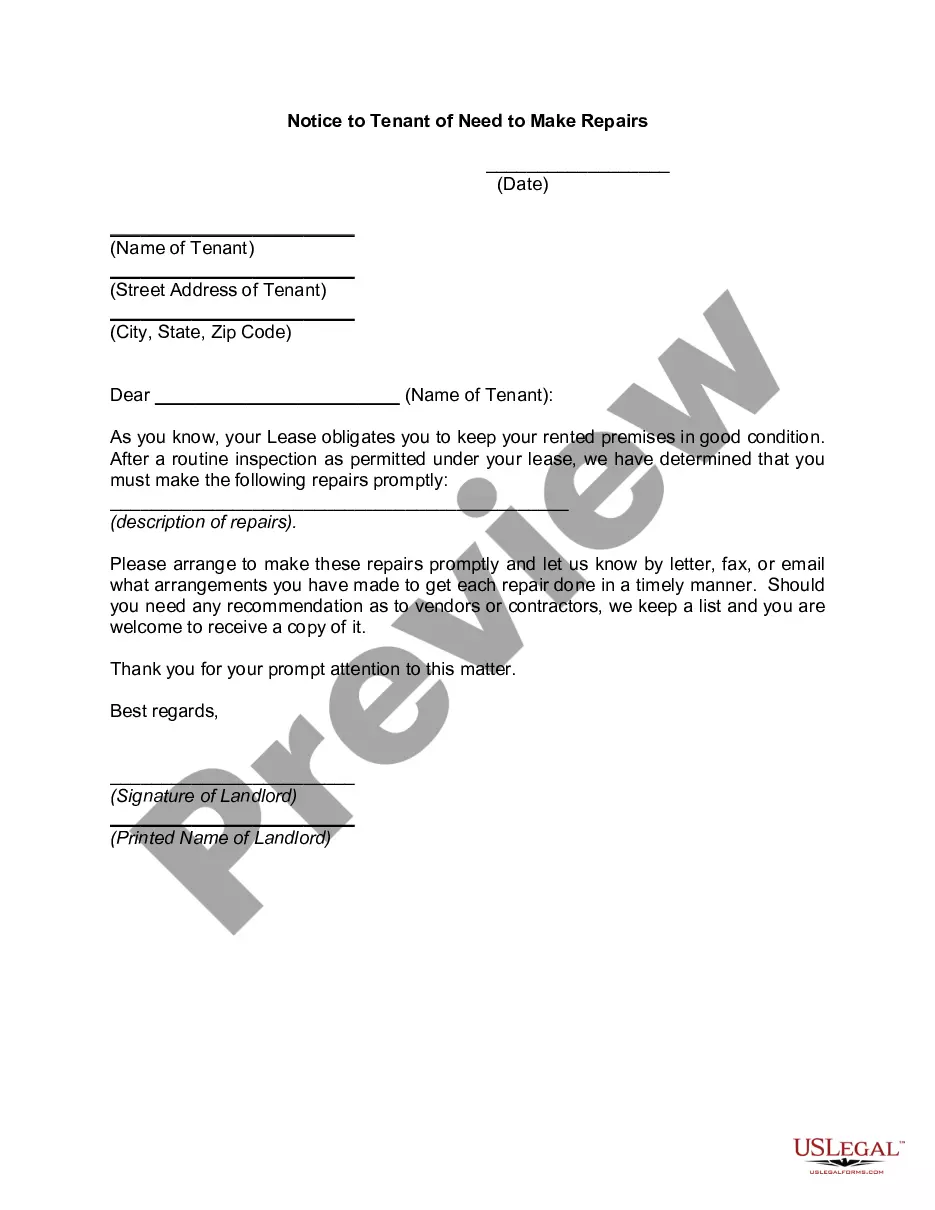
This form is a letter from a tenant to a landlord addressing the landlord's failure to make necessary repairs. The purpose of this letter is to formally request that the landlord take action to resolve maintenance issues that have previously been communicated. This form serves as a record of the tenant's request and may be used in future legal actions, distinguishing it from simpler informal communication methods.
Key components of this form
- Tenant's request for immediate repairs
- Statement regarding the landlord's potential liability for punitive damages
- Space for tenant's signature and contact information
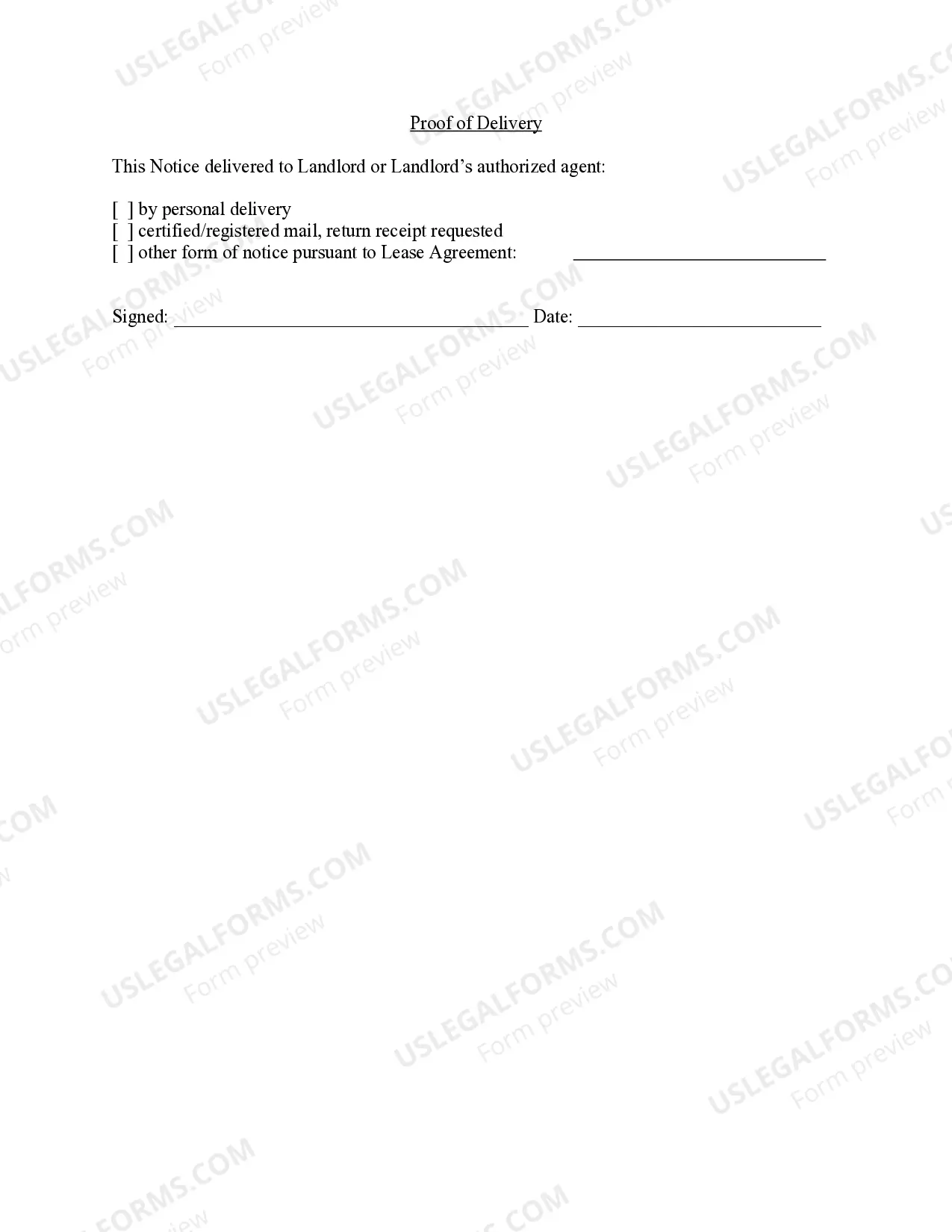
- Proof of delivery options, including personal delivery and certified mail

When to use this document
This form should be used when a tenant has previously notified the landlord of repairs needed in a rented property, but the landlord has not taken action to address these issues. It is particularly relevant when the tenant wants to document their request formally and warn the landlord about potential legal consequences for inaction.
Intended users of this form
- Tenants living in rental properties who have pending repair requests
- Individuals seeking to document their communication with their landlord formally
- Tenants who want to emphasize the urgency of repairs and potential legal consequences
Instructions for completing this form
- Begin by stating your name and contact information as the tenant.
- Clearly describe the repair issues that have not yet been addressed.
- Include the date and details of your previous repair requests.
- Sign and date the letter to make it official.
- Deliver the letter to the landlord or their authorized agent using a preferred method of delivery.
Does this form need to be notarized?
This form does not typically require notarization unless specified by local law. It is advisable to check any specific requirements for your state to ensure compliance with local regulations.
Get your form ready online
Our built-in tools help you complete, sign, share, and store your documents in one place.
Make edits, fill in missing information, and update formatting in US Legal Forms—just like you would in MS Word.
Download a copy, print it, send it by email, or mail it via USPS—whatever works best for your next step.
Sign and collect signatures with our SignNow integration. Send to multiple recipients, set reminders, and more. Go Premium to unlock E-Sign.
If this form requires notarization, complete it online through a secure video call—no need to meet a notary in person or wait for an appointment.
We protect your documents and personal data by following strict security and privacy standards.

Make edits, fill in missing information, and update formatting in US Legal Forms—just like you would in MS Word.

Download a copy, print it, send it by email, or mail it via USPS—whatever works best for your next step.

Sign and collect signatures with our SignNow integration. Send to multiple recipients, set reminders, and more. Go Premium to unlock E-Sign.

If this form requires notarization, complete it online through a secure video call—no need to meet a notary in person or wait for an appointment.

We protect your documents and personal data by following strict security and privacy standards.
Mistakes to watch out for
- Failing to clearly describe the repairs needed.
- Not including a deadline for the landlord to respond or act.
- Omitting personal information, which could lead to issues with communication.
Benefits of using this form online
- Easy to download and customize to fit individual needs.
- Provides a structured format for clarity and consistency.
- Accessible anytime, allowing tenants to act quickly on repair issues.
Legal use & context
- This letter serves as a formal notification to the landlord of needed repairs.
- It may be used as evidence in court if legal action is required.
- Adhering to this process helps tenants maintain their rights under landlord-tenant laws.
Quick recap
- This form is essential for documenting repair requests to a landlord.
- It highlights potential legal consequences if repairs are not addressed.
- Proper completion and delivery of the form can protect tenant rights.
Looking for another form?
Form popularity
FAQ
Make sure the repair is actually your landlord's responsibility. Document the problem thoroughly. Ask your landlord in writing to make the repair. Send your landlord a letter with return receipt requested.
Uninhabitable conditions can include dangerous ones, such as holes in the floor, unsafe or exposed wiring, or non-working air conditioning in dangerously hot summer months. Gross infestations of roaches, fleas or other pests are also uninhabitable conditions.
Dear (Name of landlord or manager), I am writing to request repairs to the (appliance, heating/air conditioning, plumbing issue be specific!) due to (reason for repair; this could include things such as broken handle, leaky sink hose, even normal wear-and-tear that would necessitate replacement).
Clearly, state what you demand to be repaired by the person. Mention the period since it has been causing a problem and that it is high time. Without being too harsh, the letter is written as a warning to the person. Address the person well.
Calling state or local building or health inspectors. withholding the rent. repairing the problem, or having it repaired by a professional, and deducting the cost from your rent (called repair-and-deduct) moving out, or.
To give you an idea, it's in good taste to start your letter "Dear Mr./Ms. Insert Name Here," as is the case with any polite letter. No matter how much you might want to give your landlord a piece of your mind, do yourself a favor and refrain from calling him a slumlord.
Tenants can all agree to withhold rent until the landlord makes repairs. A group of tenants can ask a judge to order the landlord to make repairs. If the landlord absolutely refuses to fix the bad conditions, tenants can ask a court to appoint a temporary landlord called a receiver in order to make repairs.
If you think your landlord is violating the Fair Housing Act, you can get that landlord in trouble by filing a complaint at HUD.gov. Your remedy for breach of quiet enjoyment is to terminate the lease and move or sue in small claims court.
The landlord had a duty to reasonably maintain the property; The landlord knew or should have known of the dangerous condition; The landlord breached their duty by failing to repair/fix the dangerous condition;