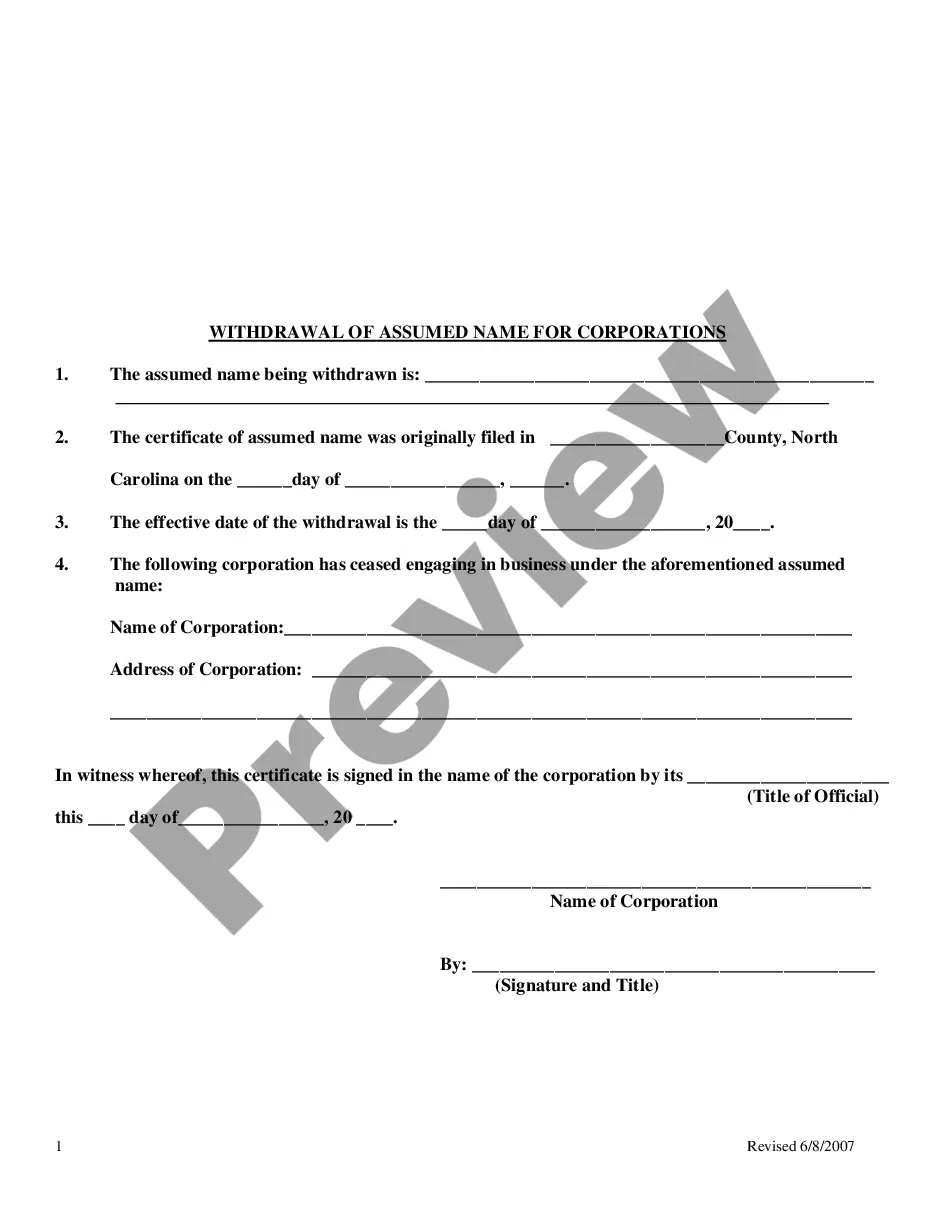
North Dakota Last Will and Testament for other Persons
Understanding this form
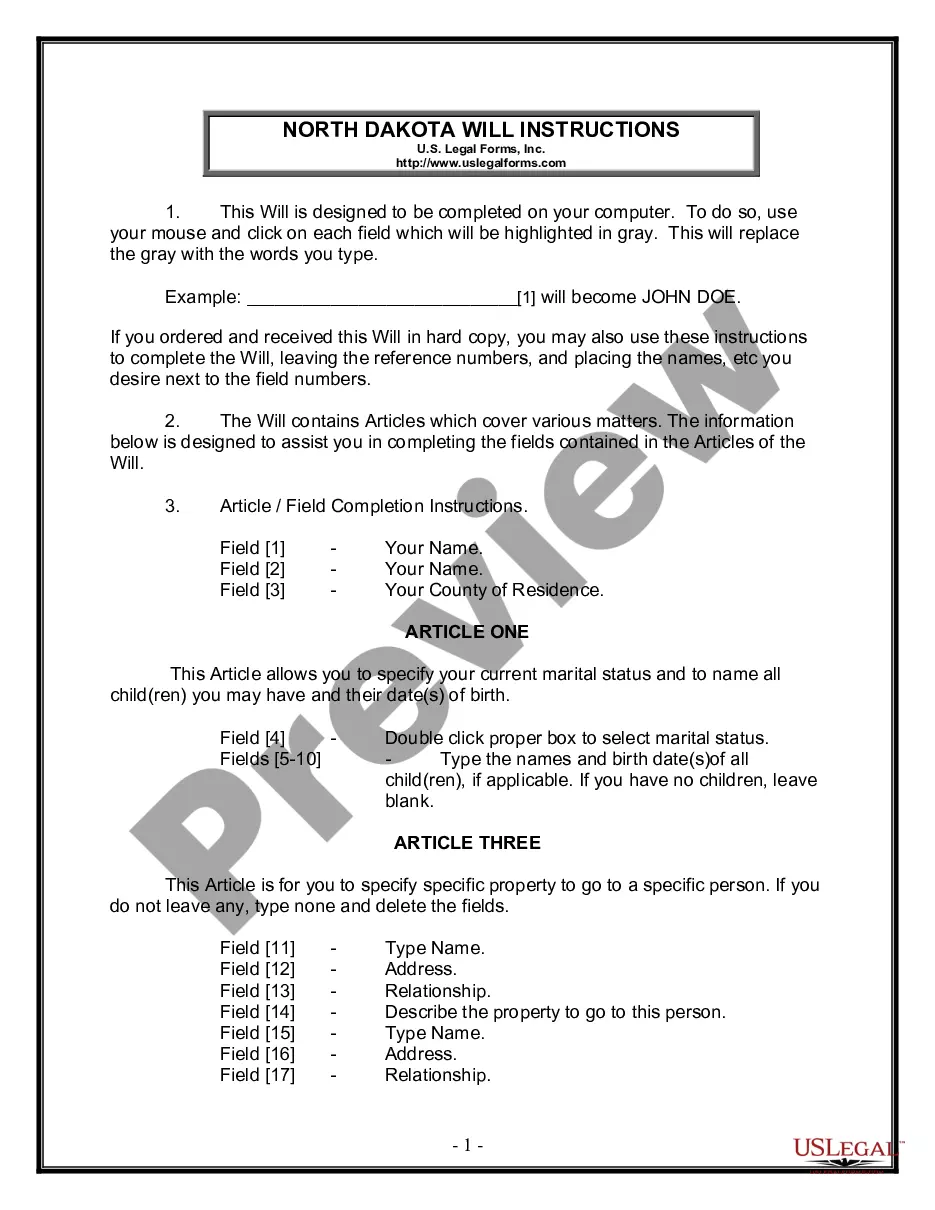
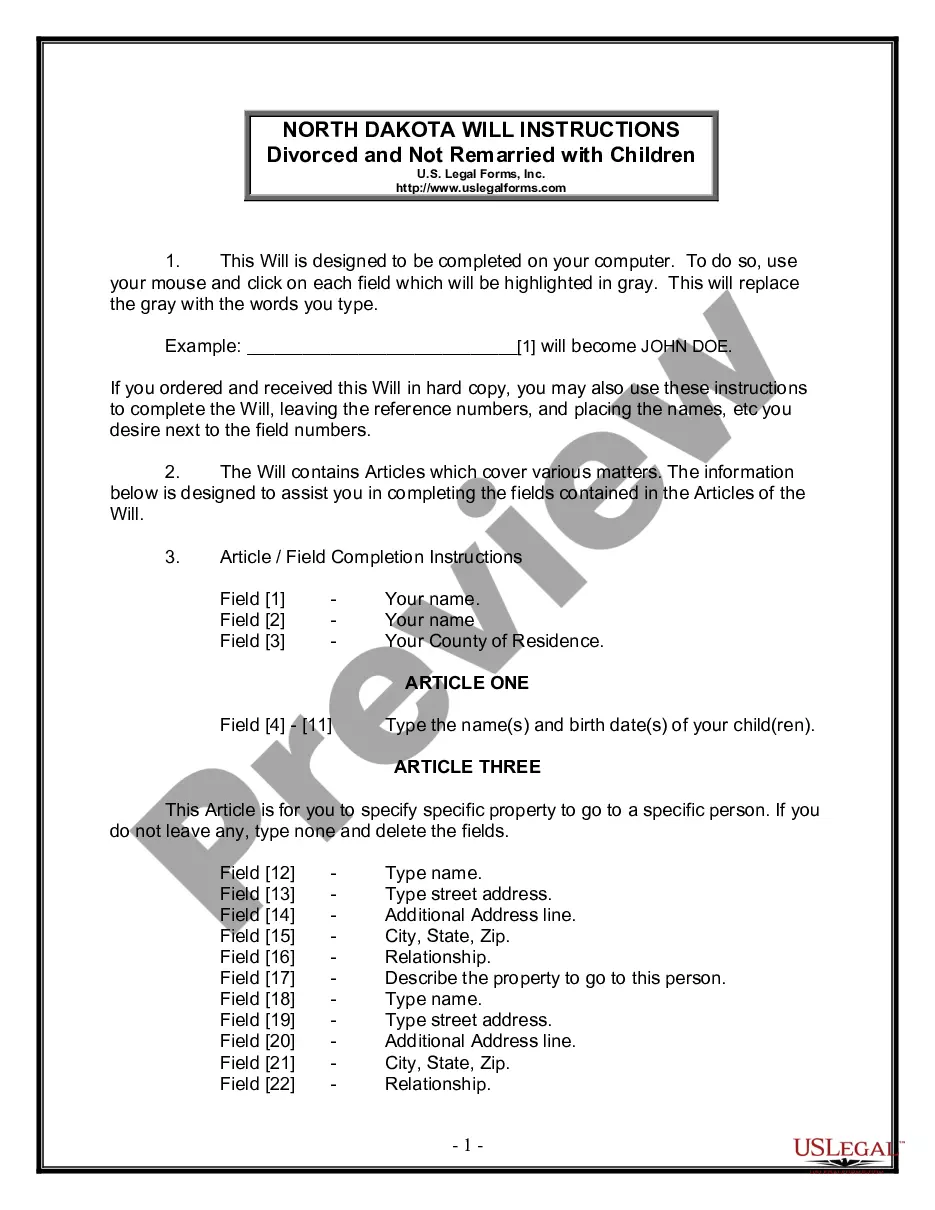
This form is a Last Will and Testament for other Persons, specifically designed for those who reside in North Dakota. It allows individuals to dictate how their property will be distributed upon their death, appoint an executor to manage their estate, and designate guardians for any minor children. This form is tailored for use on a computer, making it easy to fill out and customize according to individual needs.
Key components of this form
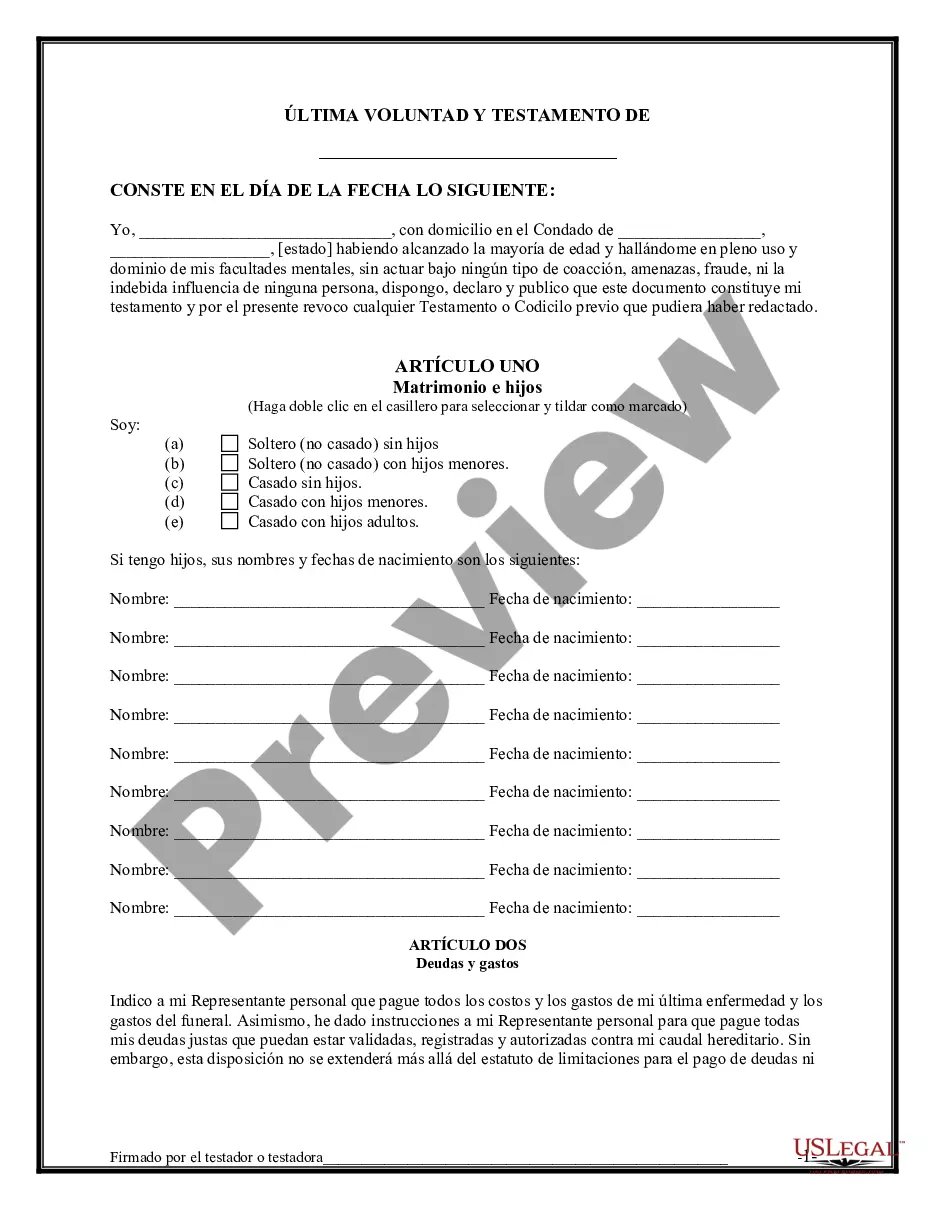
- Article One: Details about your marital status and any children you have.
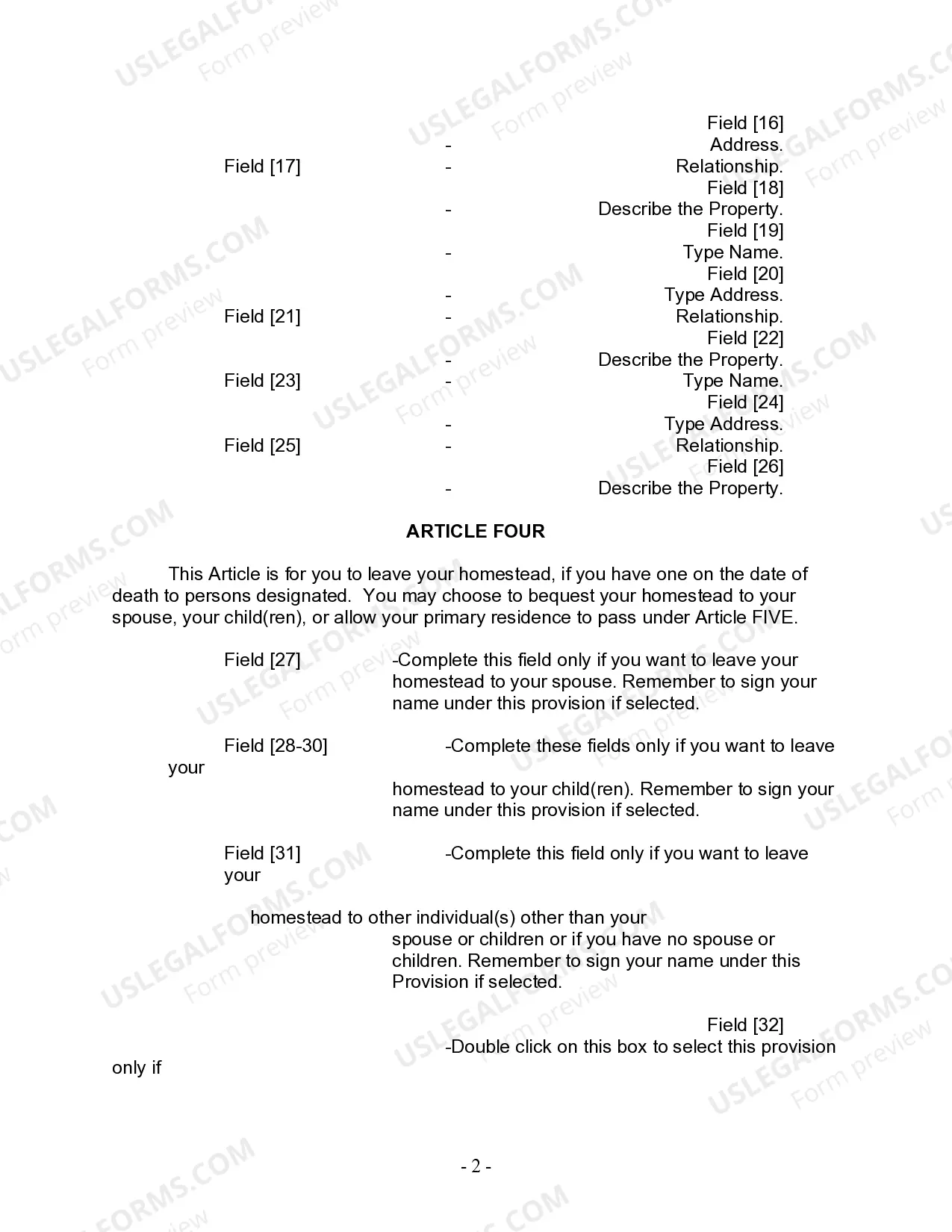
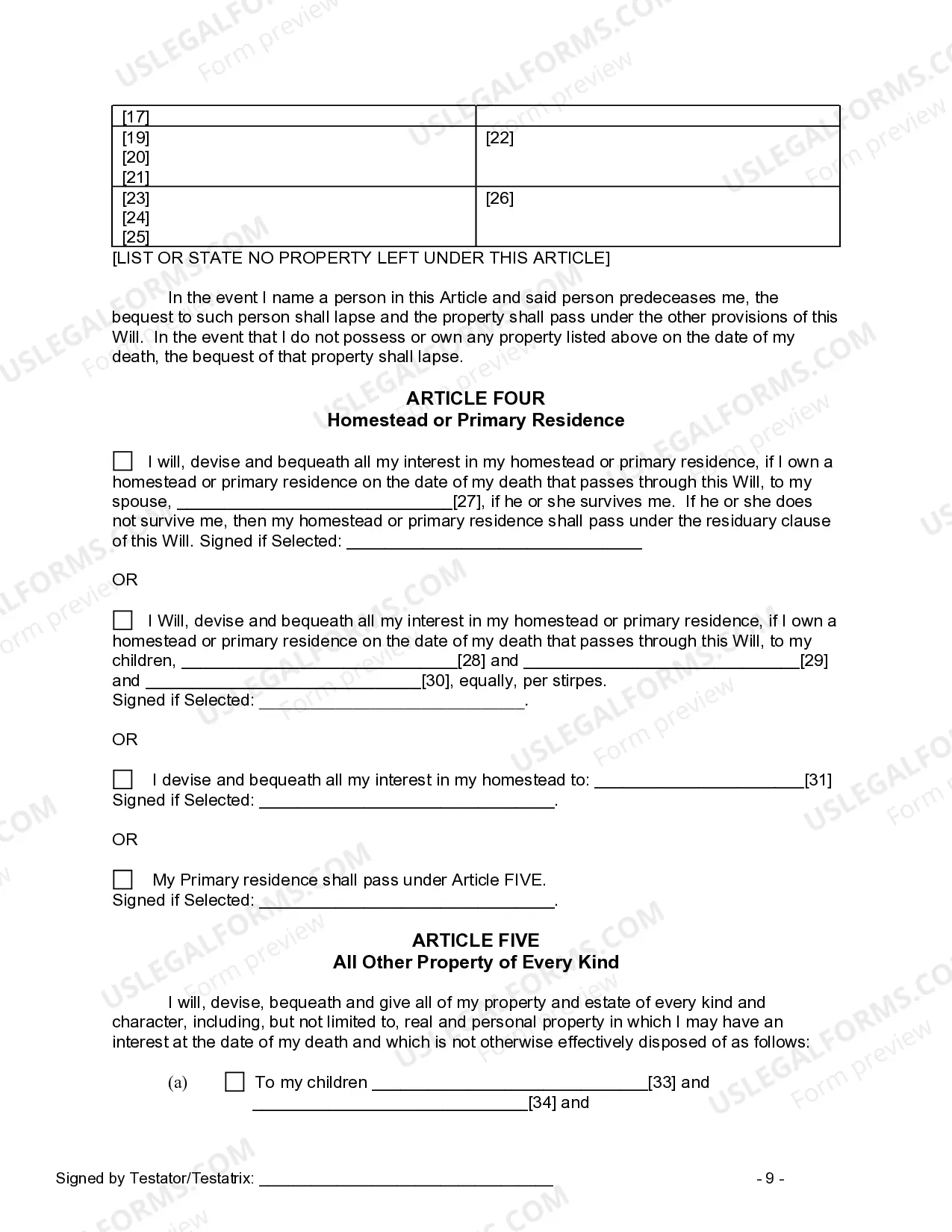
- Article Three: Specific bequests allowing you to leave property to designated individuals.
- Article Four: Provisions on your homestead or primary residence.
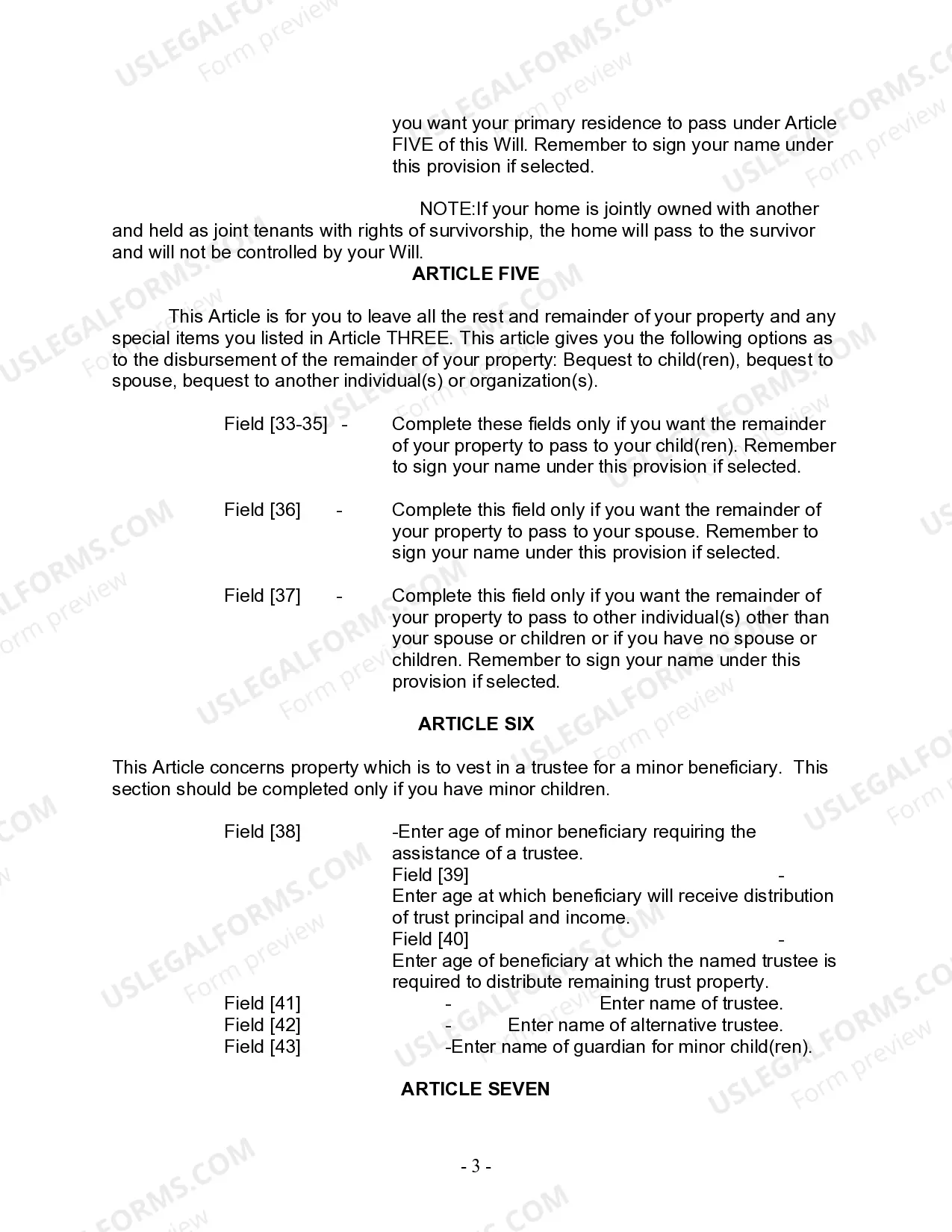
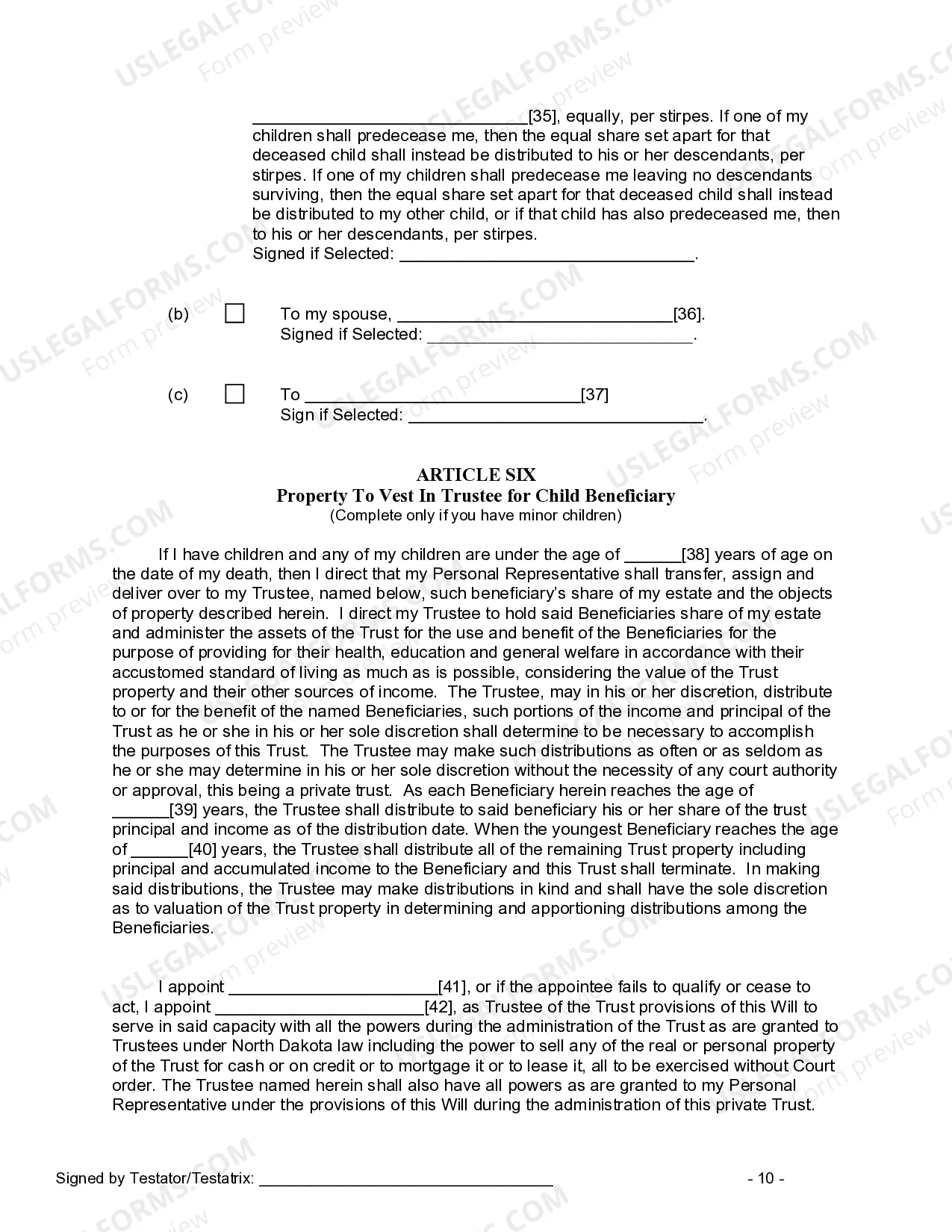
- Article Five: Instructions on the distribution of all remaining property.
- Article Six: Designation of a trustee for assets intended for minor beneficiaries.
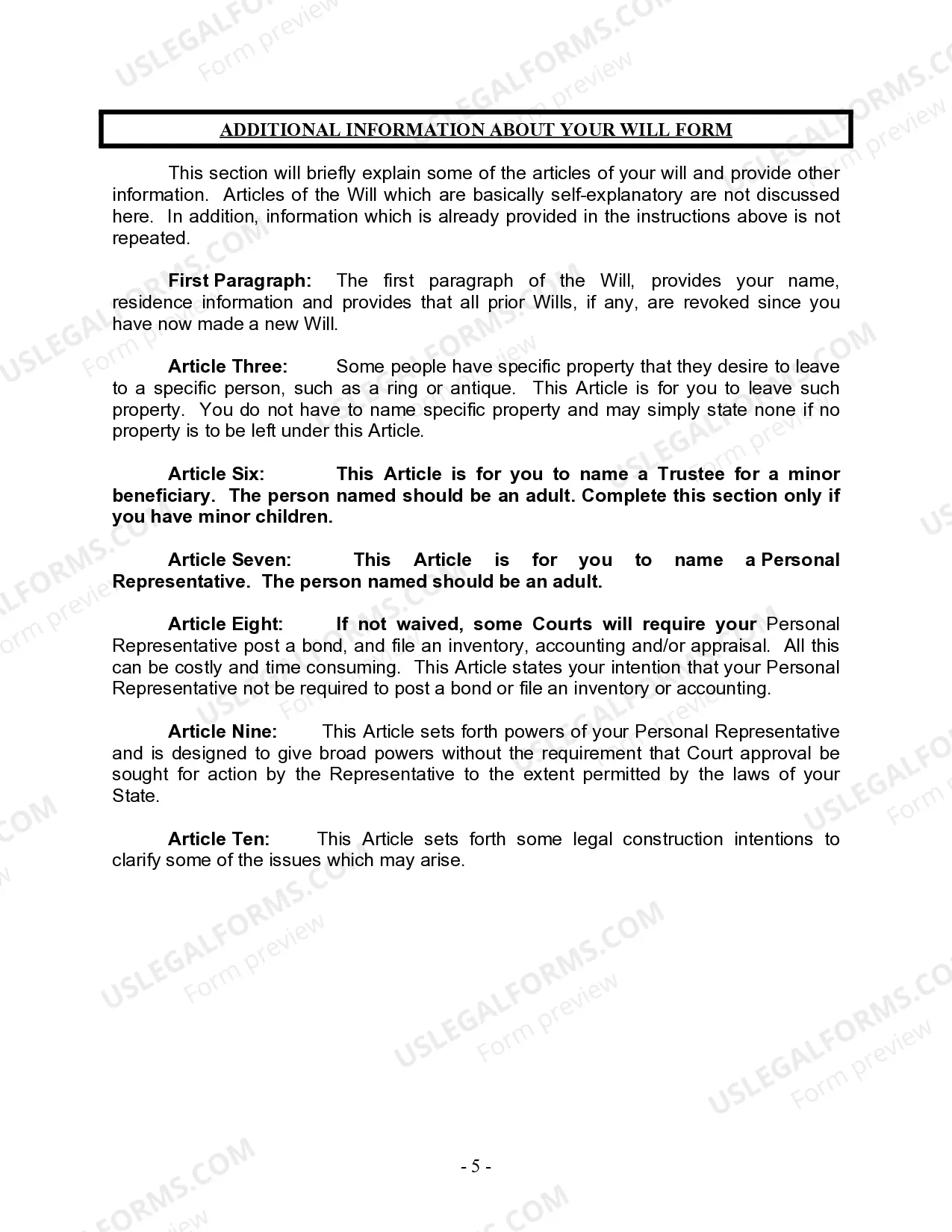
- Article Seven: Appointment of a personal representative to manage the estate.





Situations where this form applies
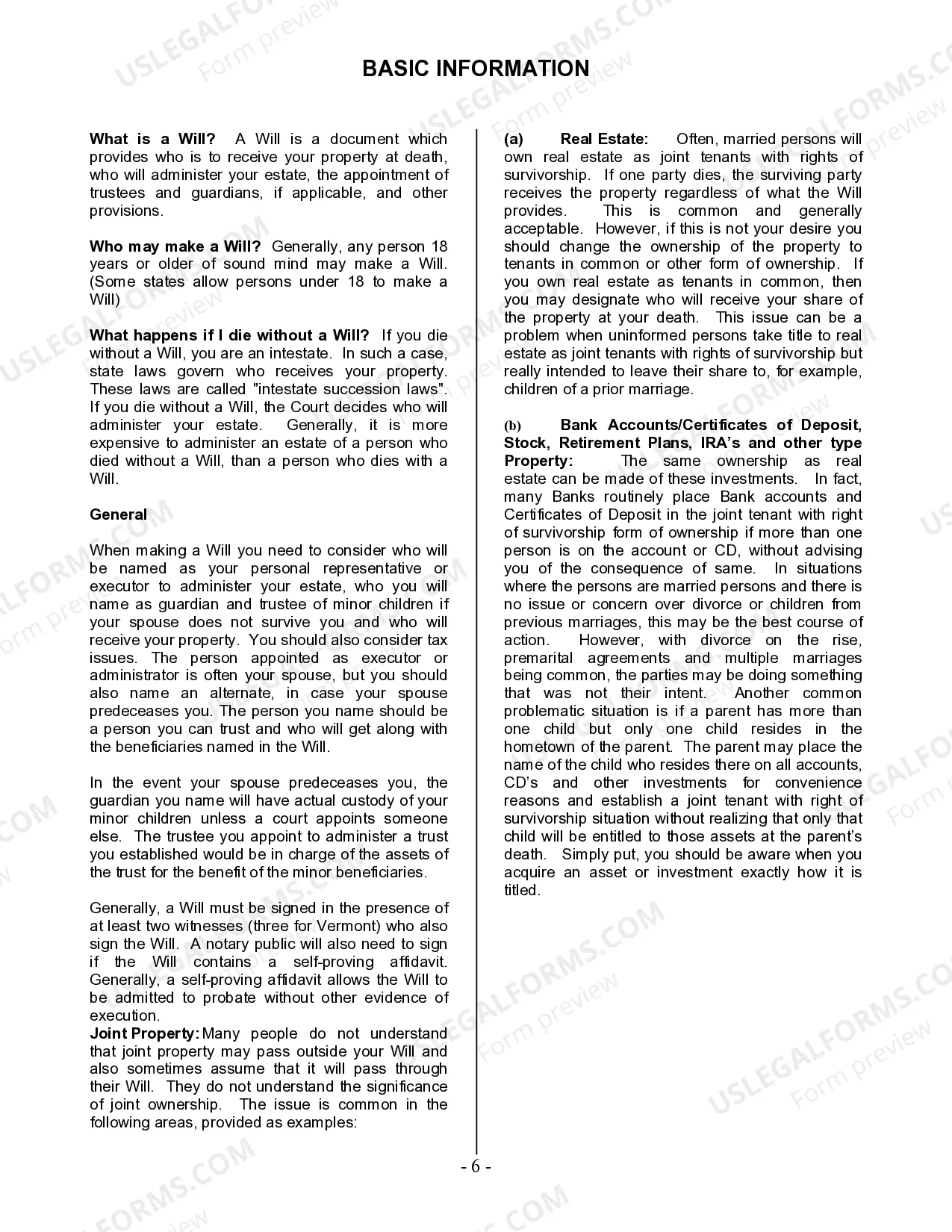
You should use this form when you want to create a legally binding document that clearly outlines your wishes regarding the distribution of your estate after your death. This form is suitable for individuals who do not have specific templates already available, or those who want to ensure their last wishes are formally documented to avoid disputes among heirs.
Who this form is for
- Individuals aged eighteen or older who are of sound mind.
- People residing in North Dakota looking to establish a will.
- Parents wanting to appoint guardians for their minor children.
- Anyone needing a customized legal will without the need for legal assistance.
Steps to complete this form
- Open the form on your computer and enter your name in the designated fields.
- Specify your marital status and list any children, including their birth dates.
- Designate specific individuals to receive property and fill in their details, including name, address, and relationship to you.
- Complete provisions about your homestead and any other property you wish to address.
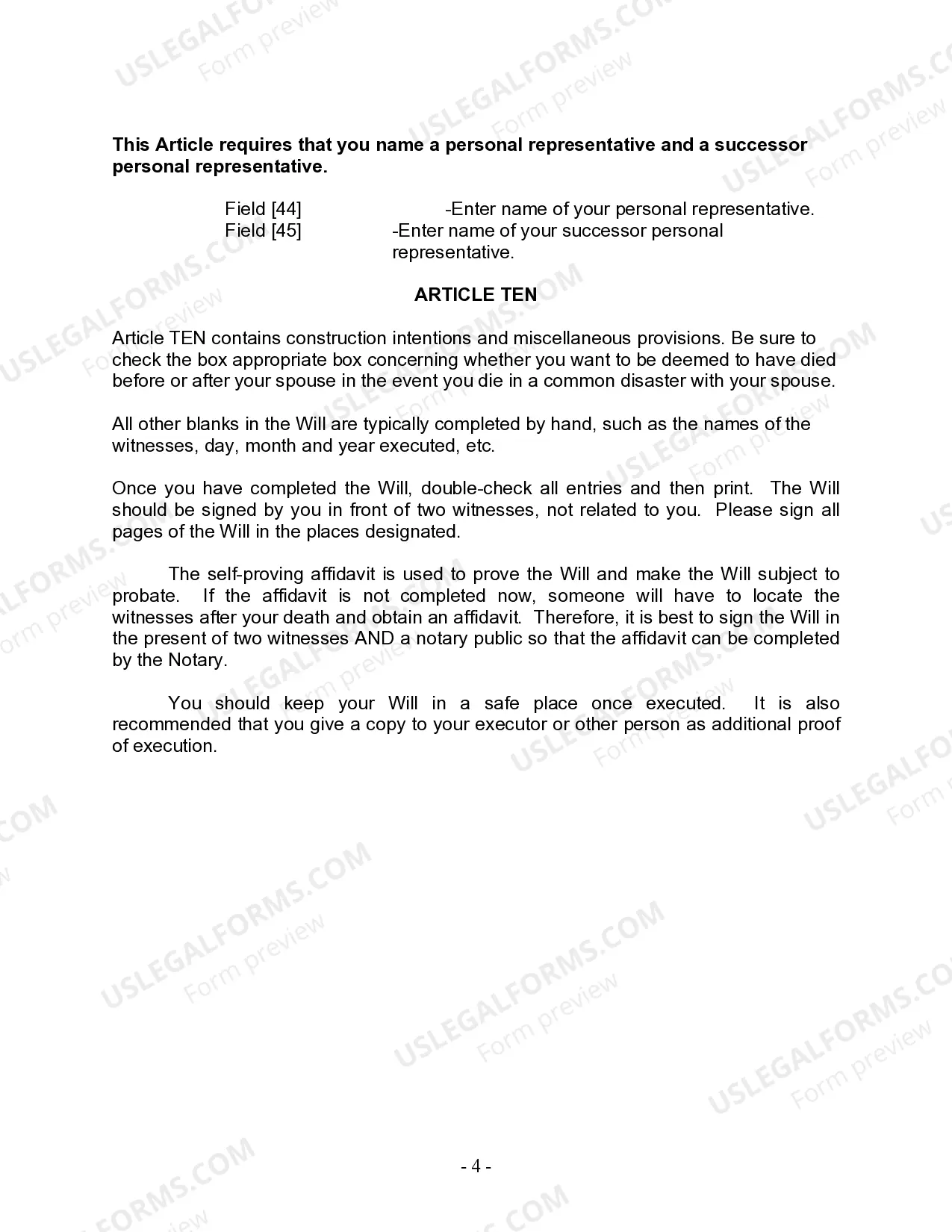
- Include the names of your personal representative and successor representative.
- Print, sign in front of two witnesses, and a notary if necessary to validate your will.
Is notarization required?
Yes, this form must be notarized to be legally valid. This ensures that the document is recognized by the court and may not be contested in the future. U.S. Legal Forms offers integrated online notarization services, allowing you to securely notarize your will via video call, ensuring compliance with legal requirements without the need for in-person meetings.
Get your form ready online
Our built-in tools help you complete, sign, share, and store your documents in one place.
Make edits, fill in missing information, and update formatting in US Legal Forms—just like you would in MS Word.
Download a copy, print it, send it by email, or mail it via USPS—whatever works best for your next step.
Sign and collect signatures with our SignNow integration. Send to multiple recipients, set reminders, and more. Go Premium to unlock E-Sign.
If this form requires notarization, complete it online through a secure video call—no need to meet a notary in person or wait for an appointment.
We protect your documents and personal data by following strict security and privacy standards.

Make edits, fill in missing information, and update formatting in US Legal Forms—just like you would in MS Word.

Download a copy, print it, send it by email, or mail it via USPS—whatever works best for your next step.

Sign and collect signatures with our SignNow integration. Send to multiple recipients, set reminders, and more. Go Premium to unlock E-Sign.

If this form requires notarization, complete it online through a secure video call—no need to meet a notary in person or wait for an appointment.

We protect your documents and personal data by following strict security and privacy standards.
Typical mistakes to avoid
- Failing to sign the will in front of witnesses, which can invalidate the document.
- Not properly appointing an executor or personal representative.
- Forgeting to review and update the will after major life changes (such as marriage or the birth of children).
- Overlooking specific bequests, leading to unintended distributions.
Why complete this form online
- Convenience of filling the form at your own pace and from the comfort of your home.
- Easy editability allows for modifications without the need for printed copies.
- Access to professionally drafted legal language, ensuring your wishes are stated clearly.
Looking for another form?


Form popularity
FAQ
Identify the section and content you want to change. The first step in amending your will is to review it. Type up the changes. Take the time to type up the codicil. Sign and date the codicil. Store your codicil in a safe place.
Rather than taking the will to an attorney, you may attempt to change the will yourself. Not all handwritten changes to a will may be valid, however.A codicil is a legal document, added to your will, through which you can make valid changes to your estate plan.
Create the initial document. Start by titling the document Last Will and Testament" and including your full legal name and address. Designate an executor. Appoint a guardian. Name the beneficiaries. Designate the assets. Ask witnesses to sign your will. Store your will in a safe place.
Bank accounts. Brokerage or investment accounts. Retirement accounts and pension plans. A life insurance policy.
Contrary to popular belief, you do not need to have an attorney draft a will for you. Anyone can write this document on their own, and as long as it meets all of the legal requirements of the state, courts will recognize one you wrote yourself.
Decide if you want to get help or use a do-it-yourself software program. Select your beneficiaries. Choose the executor for your will. Pick a guardian for your kids. Be specific about who gets what. Be realistic about who gets what.
What is a codicil to a will? A codicil is a short, additional document typically one or two pages used to make minor changes, amendments or alterations to an existing will. To be legally valid the codicil document must be signed and executed in front of witnesses in the same way as for a will.
If you would like to modify your will, the proper venue to do this is through a codicil. A codicil is a legal document, added to your will, through which you can make valid changes to your estate plan. You must sign the codicil with the same formalities that are required for the will.
Making changes to your will You cannot amend your will after it's been signed and witnessed. The only way you can change a will is by making an official alteration called a codicil. You must sign a codicil and get it witnessed in the same way as witnessing a will.