North Carolina Last Will and Testament for Married Person with Adult and Minor Children
Overview of this form
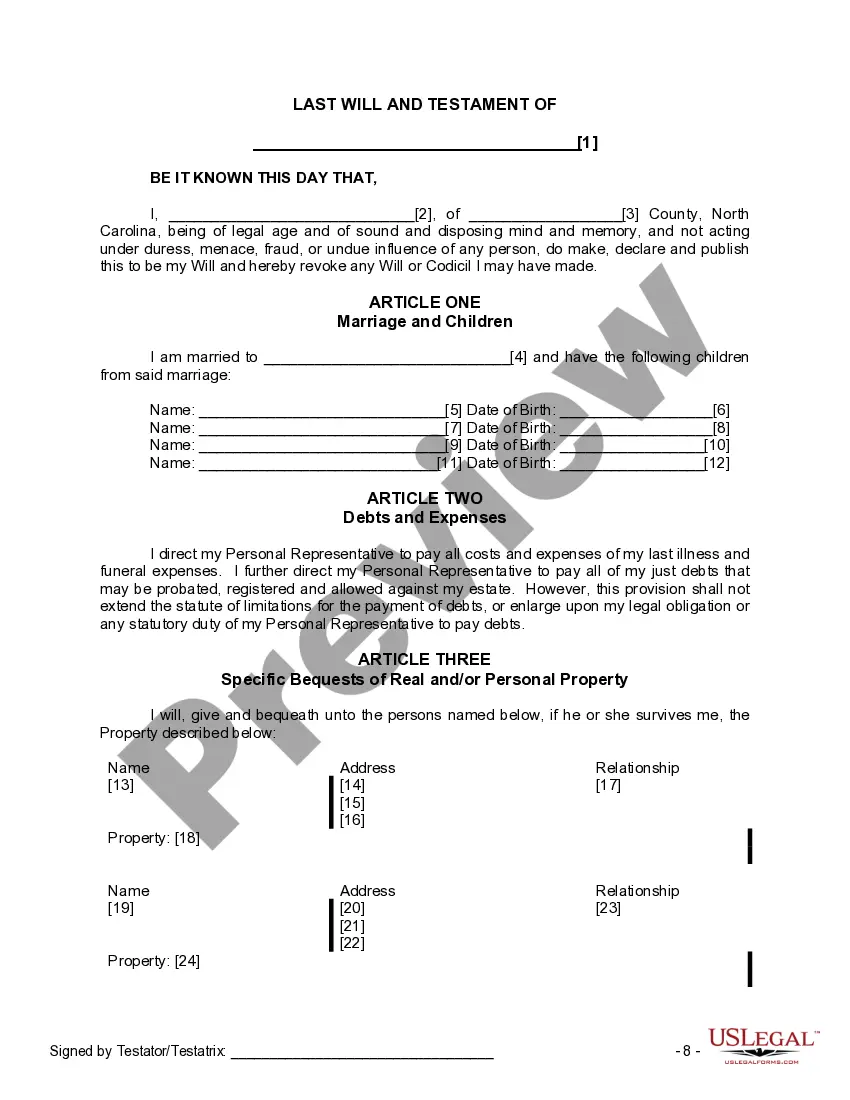
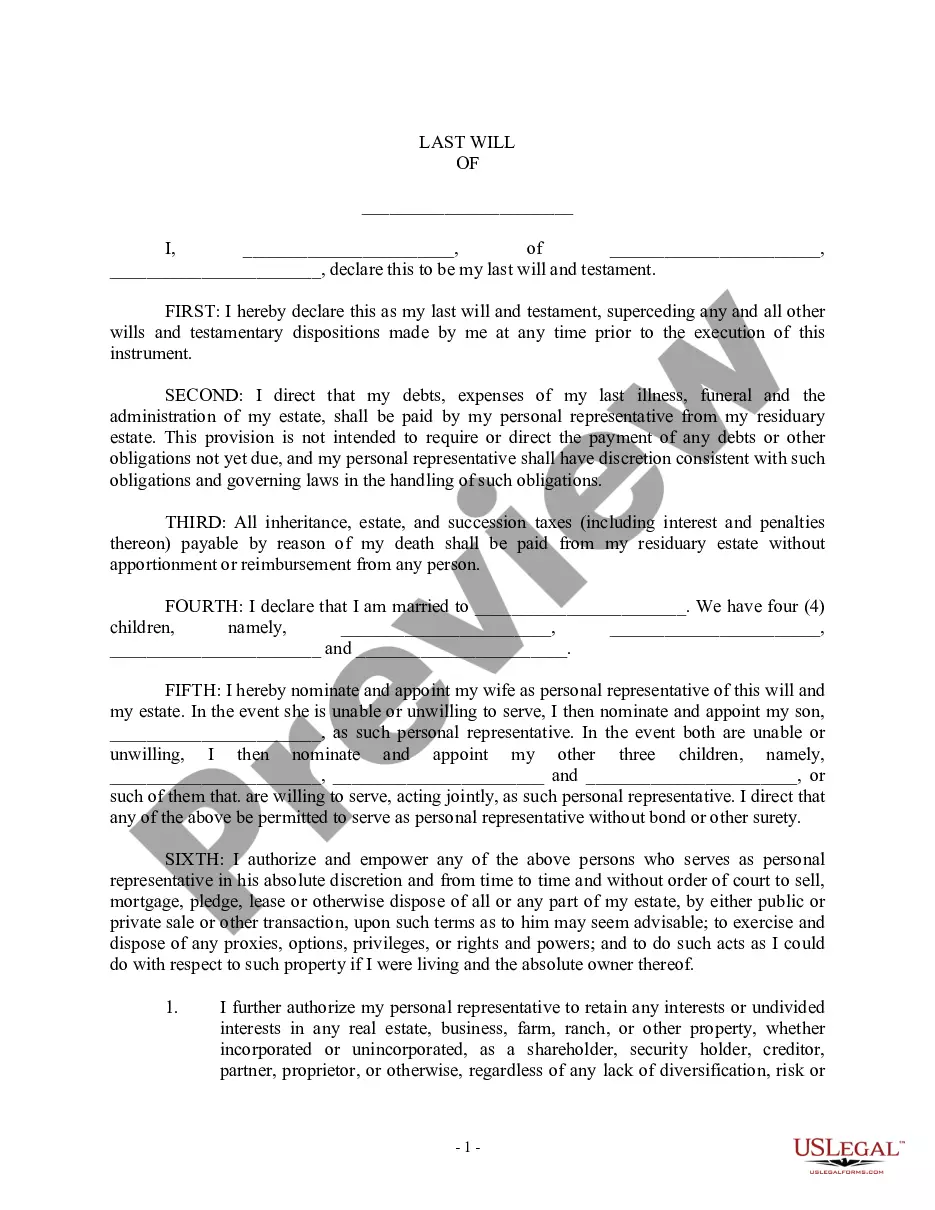
The Last Will and Testament for Married Person with Adult and Minor Children is a legal document that outlines how a married person wishes to distribute their assets and care for their children after their death. Unlike simpler wills, this form provides specific provisions for both adult and minor children, allowing the individual to designate guardians, manage trusts, and appoint a personal representative to handle their estate. This ensures that both personal and financial responsibilities are clearly defined and legally organized.
Key components of this form
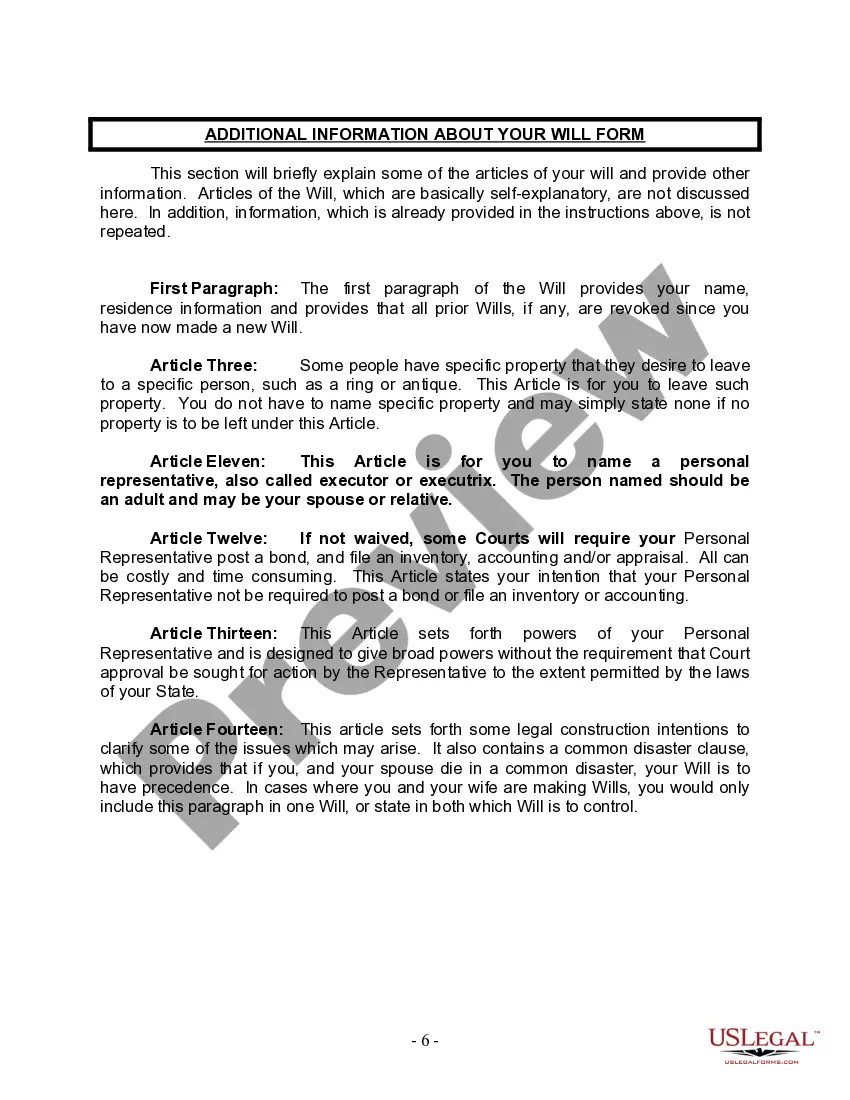
- Appointment of a personal representative or executor.
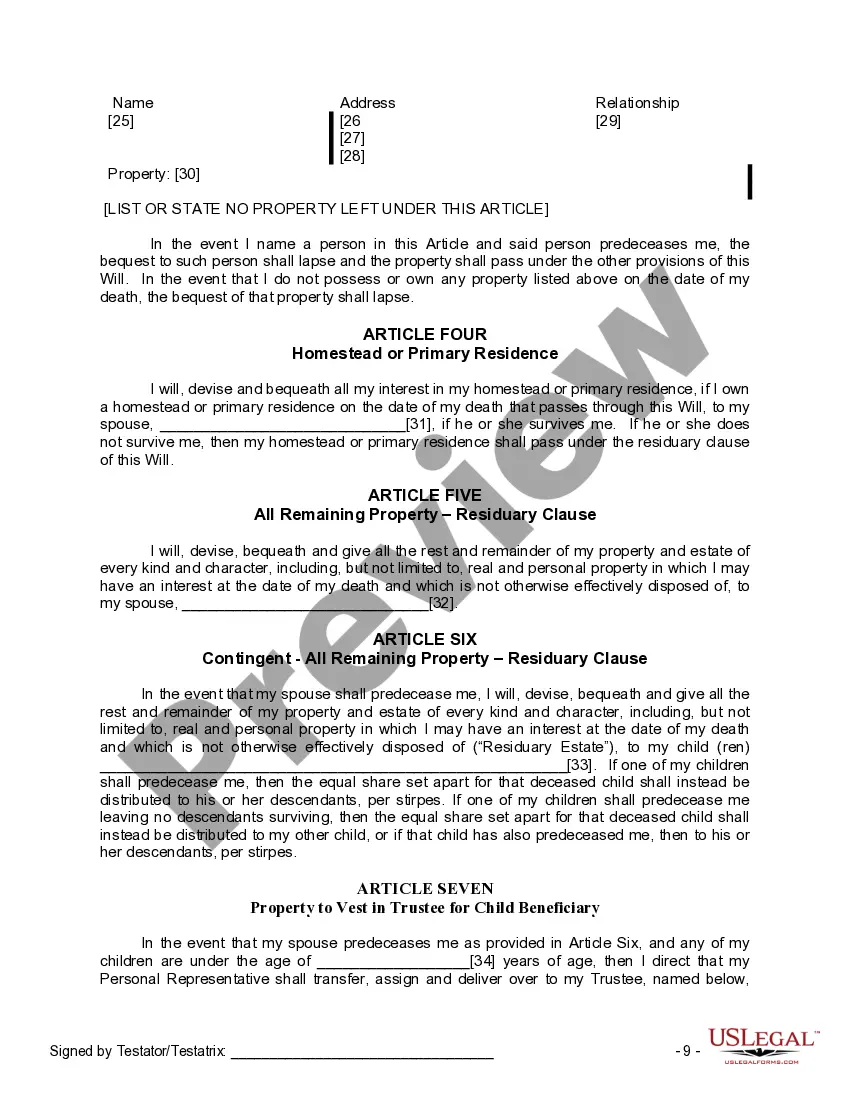
- Provisions for distribution of property to adult and minor children.
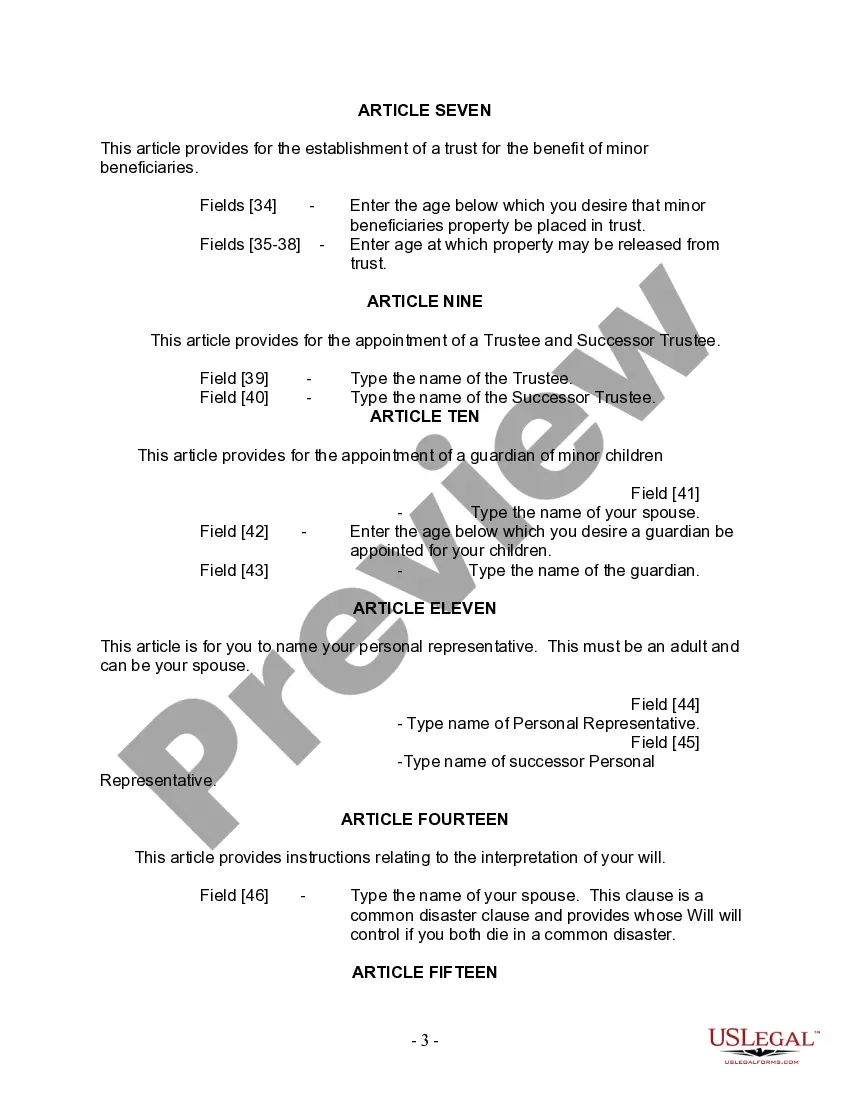
- Establishment of a trust for minor childrenâs inheritance.
- Designation of a guardian for minor children in case the spouse predeceases.
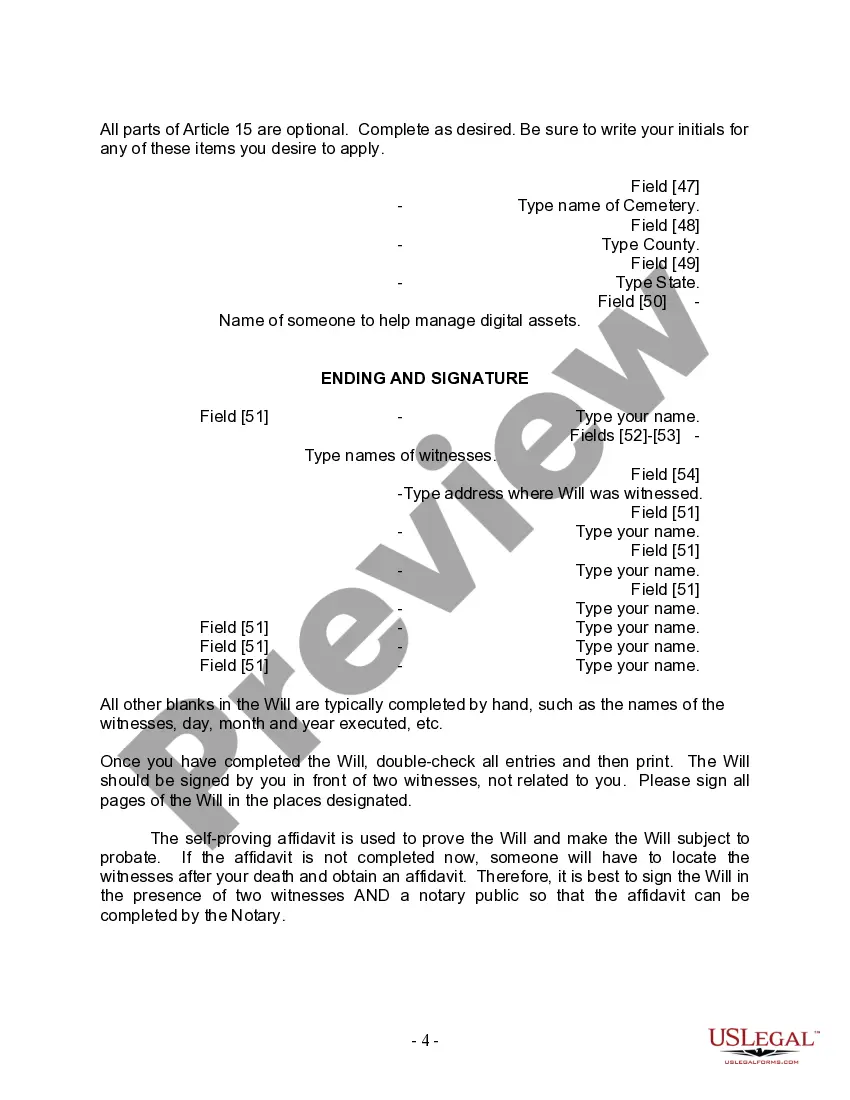
- Self-proving affidavit to simplify the probate process.




When this form is needed
This form is necessary when a married individual with both adult and minor children wishes to ensure that their assets are distributed according to their wishes upon their death. It is especially useful in situations where the individual wants to provide for their spouse while also addressing the financial well-being of their minor children, ensuring that a trusted person will manage the children's inheritance until they reach adulthood.
Who can use this document
- Married individuals with children, both adult and minor.
- Parents wishing to specify guardianship for their minor children.
- Those with specific assets they want to leave to certain individuals.
- People who want to streamline the distribution of their estate and prevent legal complications for their heirs.
Instructions for completing this form
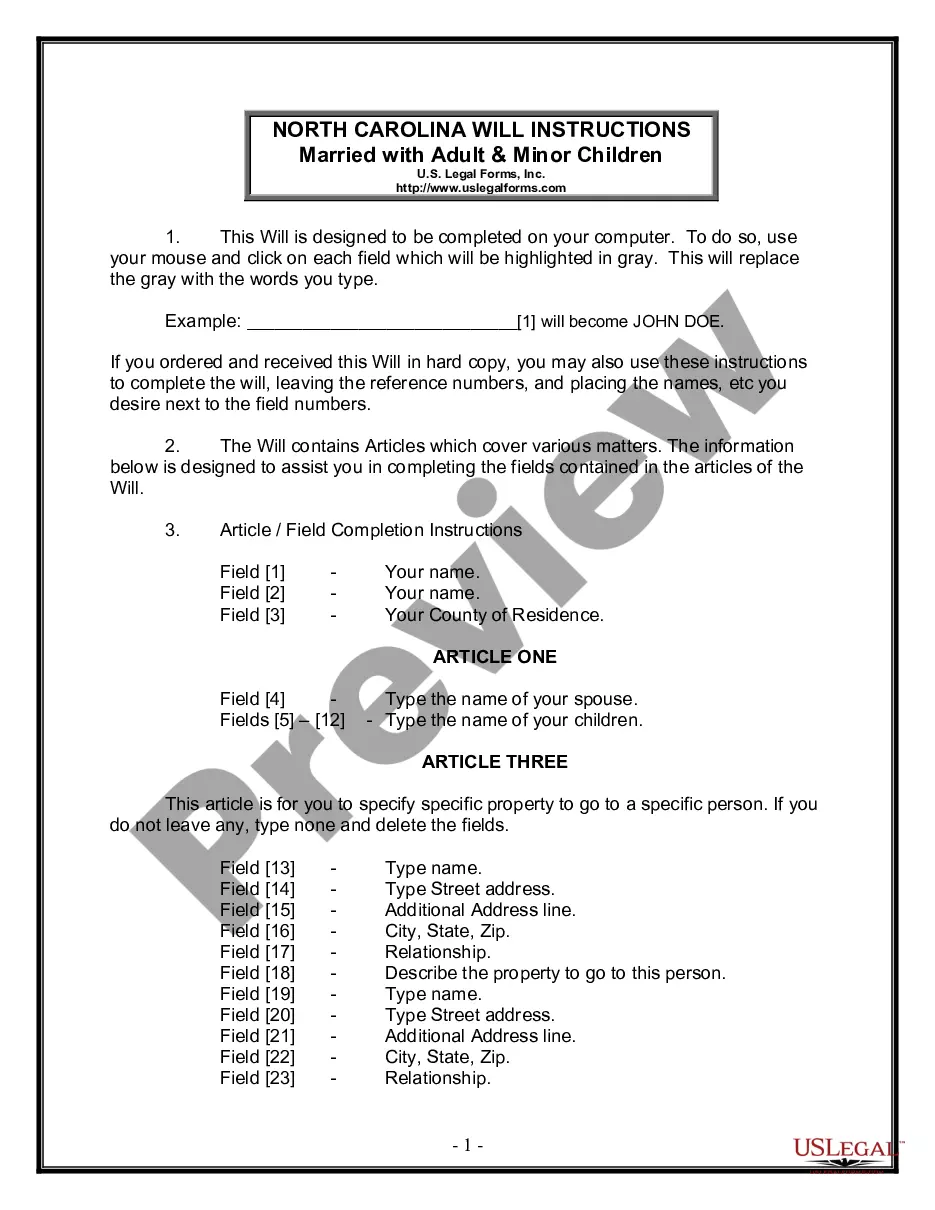
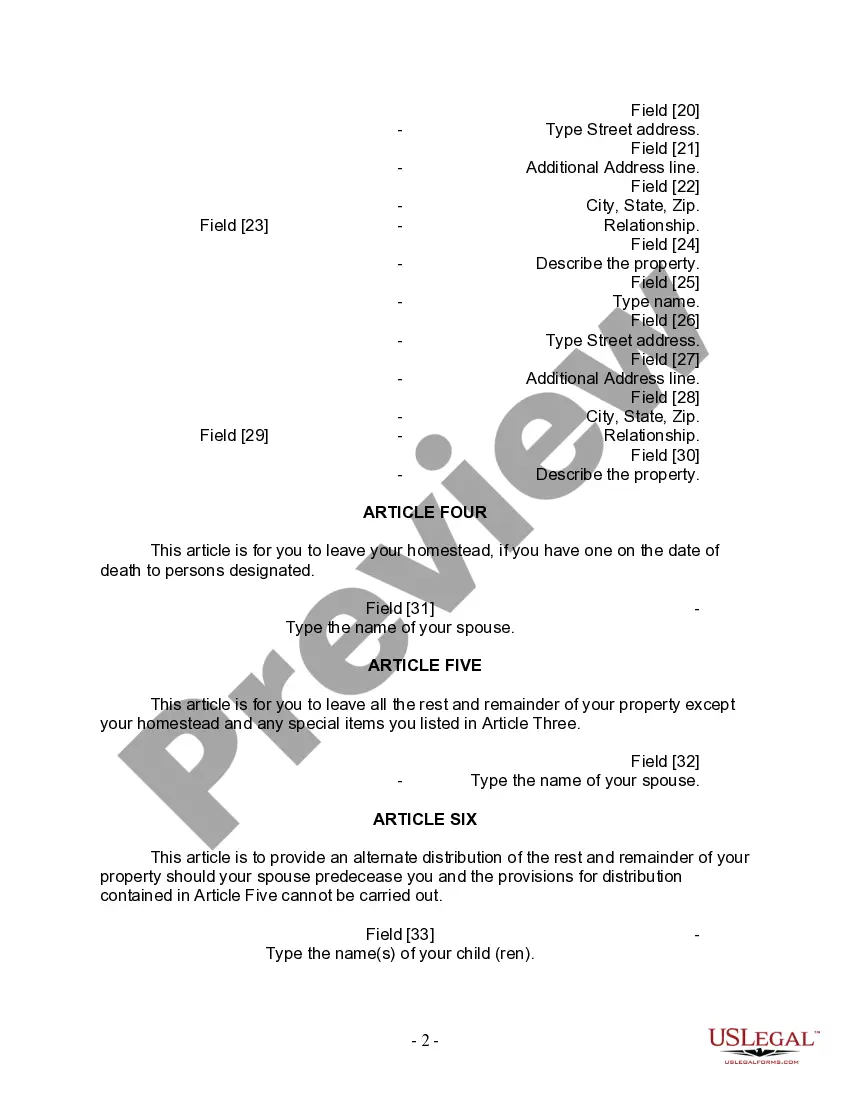
- Provide your name and county of residence.
- List your spouse's name and the names of your children, including their dates of birth.
- Designate specific properties or assets to be distributed to particular individuals.
- Choose a guardian for any minor children in the event of your death.
- Sign the document in the presence of two witnesses and include a notarized self-proving affidavit if required.
Notarization requirements for this form
Yes, this form must be notarized to be legally valid. Using US Legal Forms' integrated online notarization service allows you to complete this process easily and securely through a video call, ensuring that your will meets all legal requirements without the need for travel.
Get your form ready online
Our built-in tools help you complete, sign, share, and store your documents in one place.
Make edits, fill in missing information, and update formatting in US Legal Forms—just like you would in MS Word.
Download a copy, print it, send it by email, or mail it via USPS—whatever works best for your next step.
Sign and collect signatures with our SignNow integration. Send to multiple recipients, set reminders, and more. Go Premium to unlock E-Sign.
If this form requires notarization, complete it online through a secure video call—no need to meet a notary in person or wait for an appointment.
We protect your documents and personal data by following strict security and privacy standards.

Make edits, fill in missing information, and update formatting in US Legal Forms—just like you would in MS Word.

Download a copy, print it, send it by email, or mail it via USPS—whatever works best for your next step.

Sign and collect signatures with our SignNow integration. Send to multiple recipients, set reminders, and more. Go Premium to unlock E-Sign.

If this form requires notarization, complete it online through a secure video call—no need to meet a notary in person or wait for an appointment.

We protect your documents and personal data by following strict security and privacy standards.
Mistakes to watch out for
- Not including all children or mistakenly naming the wrong guardian.
- Failing to properly sign and witness the document according to state laws.
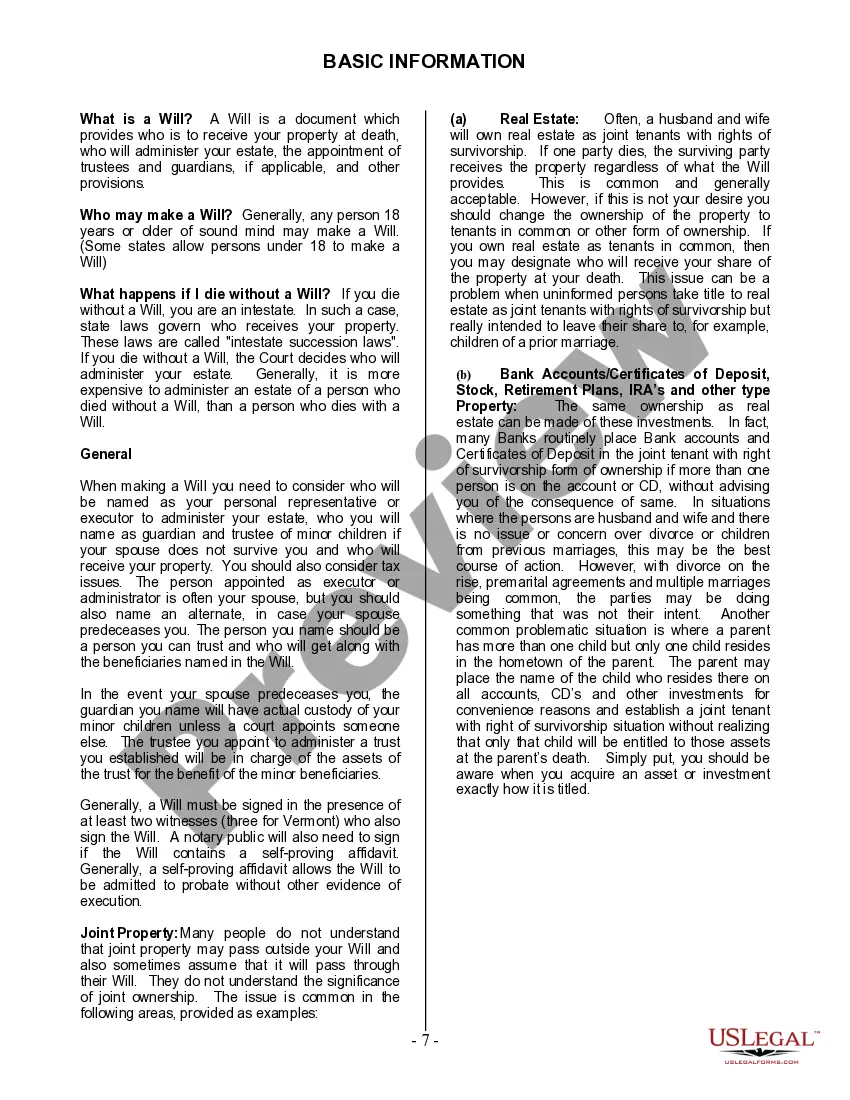
- Assuming all assets will pass through the will without considering joint ownership or beneficiary designations.
Why use this form online
- Convenience of filling out the form digitally, ensuring clarity and ease of completion.
- Editability allows for changes before finalizing the document.
- Access to legal templates prepared by licensed attorneys, providing peace of mind.
Legal use & context
- This form is legally enforceable in states that recognize wills and trusts.
- Using a well-drafted will can help avoid probate disputes and ensure your wishes are honored.
- It is important to understand state-specific laws as they can affect the execution and validity of your will.
What to keep in mind
- This last will and testament is designed for married individuals with adult and minor children.
- It provides a comprehensive approach to managing your estate and ensuring your wishes are fulfilled.
- Be sure to have the document signed and witnessed properly to avoid any legal issues during probate.
- Consider using the self-proving affidavit for easier acceptance in probate proceedings.
Looking for another form?

Form popularity
FAQ
North Carolina recognizes the validity of handwritten wills. Under NC law, a handwritten will must satisfy the following requirements: Written entirely in the handwriting of the testator (the will-maker);Found after the testator's death among his valuable papers or effects or in a place of safekeeping.
A joint will is a legal document executed by two (or more) people, which merges their individual wills into a single, combined last will and testament. Like most wills, a joint will lets the will-makers name who will get their property and assets after they die. Joint wills are usually created by married couples.
According to North Carolina law, a valid written Will is constituted by several formalities. The testator must be of sound mind and eighteen years of age or older. Essentially, the testator must be found competent at the time the Will is executed.
North Carolina law does not require a formal reading of the will. How may I get a copy of a will after my loved one has died? After someone has died, the will may be filed with a clerk of court. A decedent's will becomes a public record when it is filed, after the decedent's death, with the clerk of court.
What makes a will legal?The will must be signed by at least two witnesses. The witnesses must watch you sign the will, though they don't need to read it. Your witnesses, in most states, must be people who won't inherit anything under the will.
Form a Last Will in North Carolina Signature: The will must be signed by the testator with the intent to sign or by another person under his direction and in his presence. Witnesses: At least two witnesses must sign a North Carolina last will and testament in order for it to be valid.
No, in North Carolina, you do not need to notarize your will to make it legal.A self-proving will speeds up probate because the court can accept the will without contacting the witnesses who signed it.
When Is Probate Required? Probate is generally required in North Carolina only when a decedent owned property in their name alone. Assets that were owned with a spouse, for which beneficiaries were named outside of a will, or held in revocable living trusts, generally do not need to go through probate.
You can either download a template (many are free) and write your Will at your own pace offline using your word processor, or tell us your wishes in our online questionnaire and let us write it for you.