North Carolina Continuing Mediator Education Report Form
Understanding this form
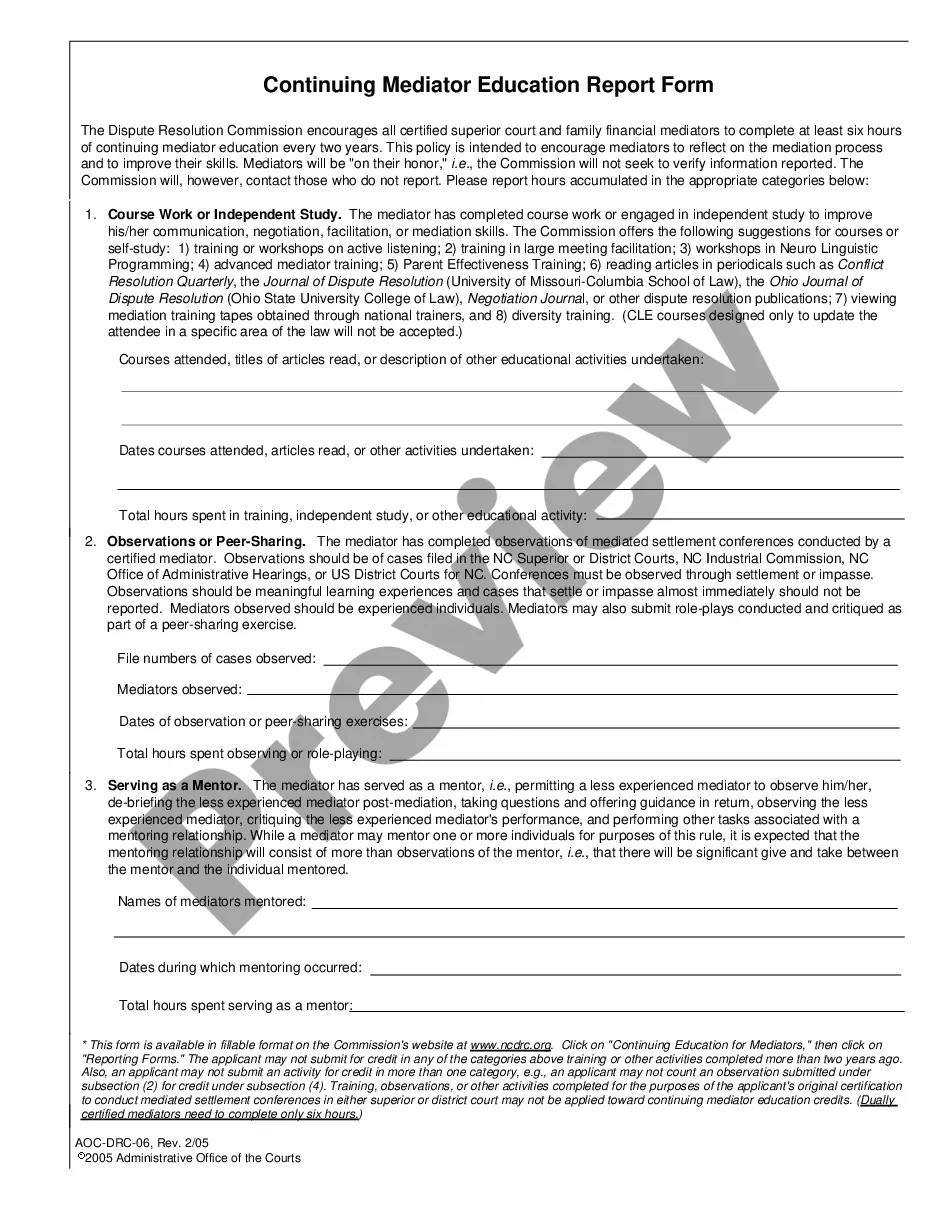
The Continuing Mediator Education Report Form is an official document used in North Carolina to record the educational activities undertaken by certified mediators. This form ensures that mediators comply with the requirement to engage in continuing education to enhance their mediation skills. It is an essential tool for documenting the completion of mandatory training and independent study outcomes, differentiating itself from general educational forms by focusing specifically on mediation practices and standards.
Form components explained
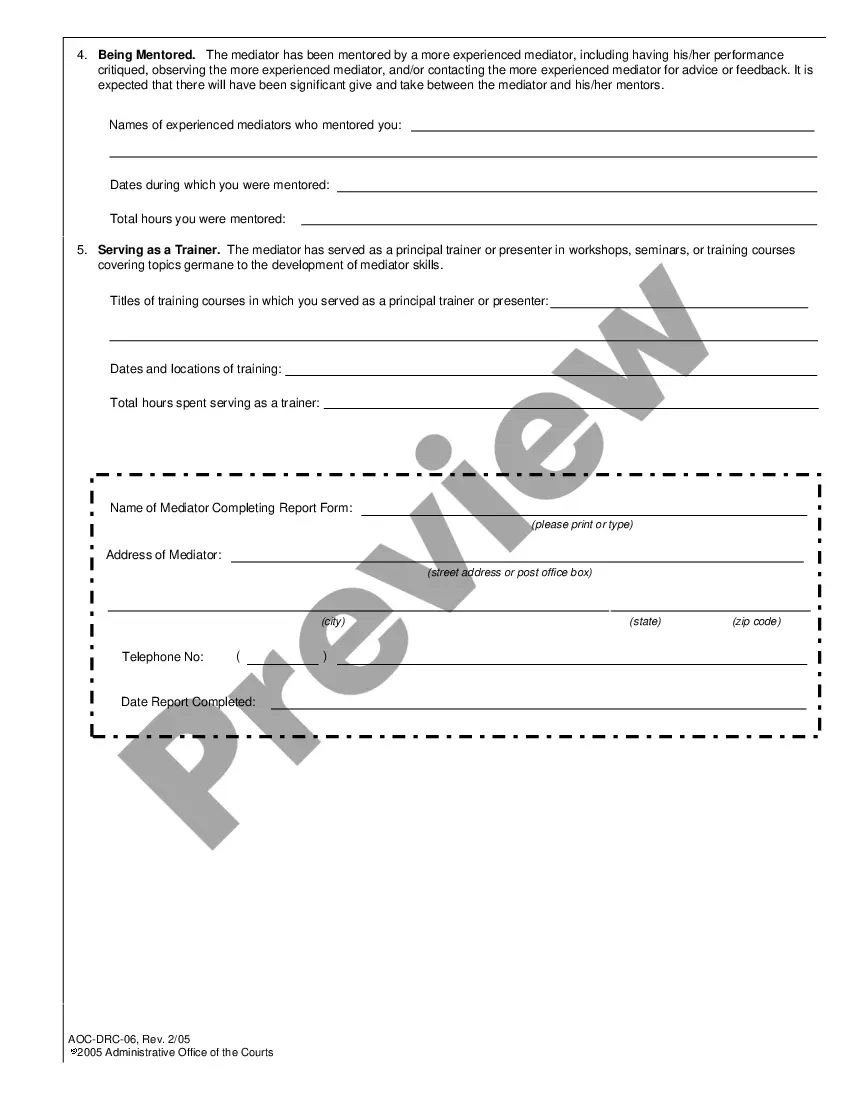
- Documentation of completed course work or independent study aimed at improving mediation skills.
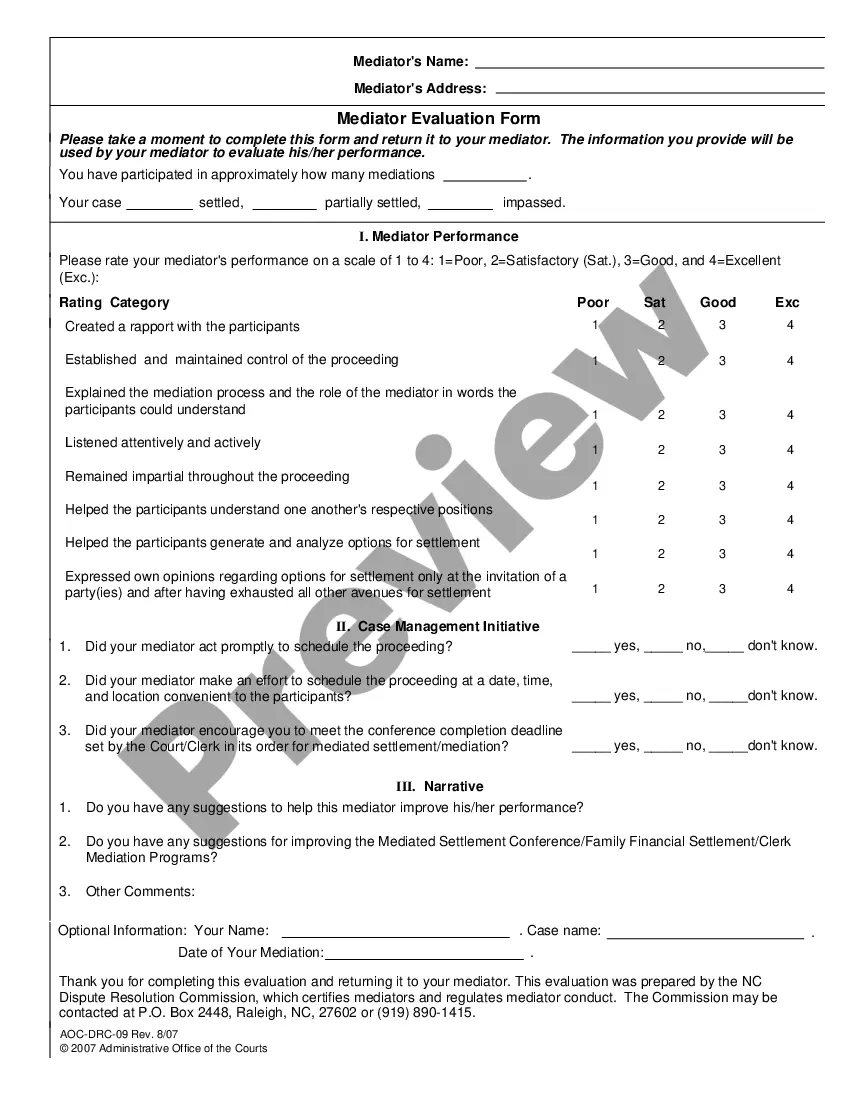
- Sections for reporting observations of mediation sessions conducted by certified mediators.
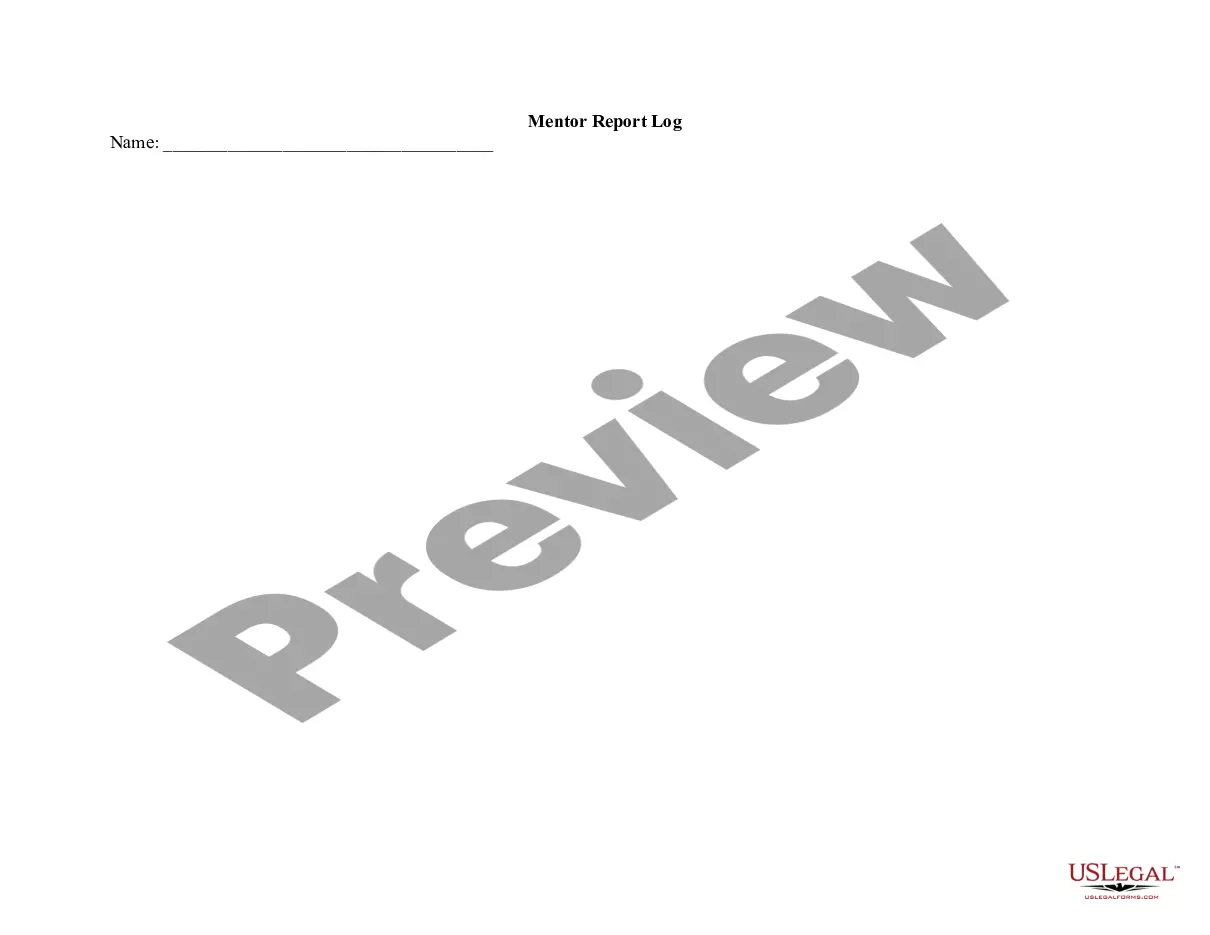
- Fields for mentoring activities, both as a mentor and a mentee.
- Space to record total hours spent on training, observing, and mentoring.
- Requirement to report educational activities within the last two years.

When to use this document
This form should be used by certified mediators in North Carolina every two years to report their continuing mediator education. If you have participated in relevant training, observed other mediators, or served as a mentor, this is the form to document those experiences. Use this form to ensure that you meet the educational requirements set forth by the Dispute Resolution Commission.
Who should use this form
This form is intended for:
- Certified superior court mediators in North Carolina.
- Certified family financial mediators in North Carolina.
- Mediators seeking to maintain their certification and ensure compliance with state educational requirements.
How to prepare this document
- Identify and list the educational courses or independent study activities you have completed within the last two years.
- Document any observations of mediation sessions, including the case file numbers and names of mediators you observed.
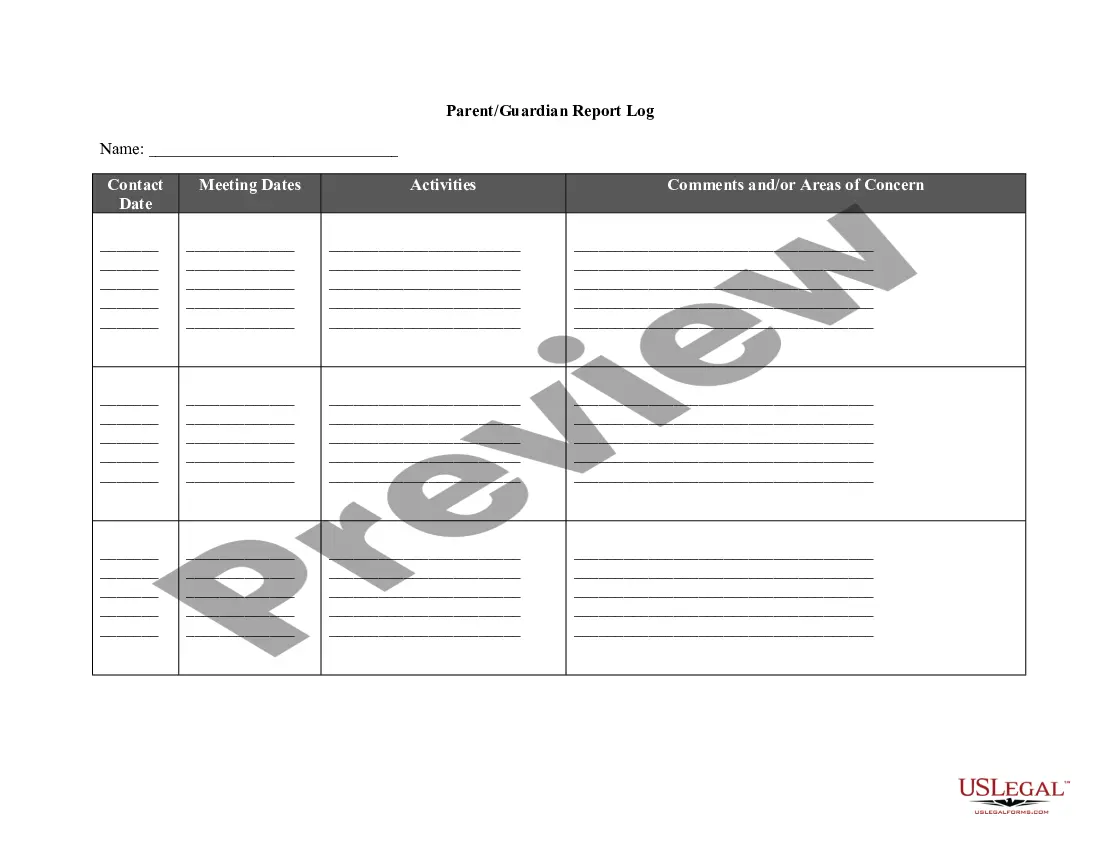
- Detail your mentoring experiences, including the names of those you mentored and dates of mentoring activities.
- Record total hours for each category of activity completed.
- Submit the completed form to the appropriate regulatory body as required.
Is notarization required?
This form does not typically require notarization unless specified by local law. Ensure that all provided information is accurate and complete to maintain compliance with continuing mediator education regulations.
Get your form ready online
Our built-in tools help you complete, sign, share, and store your documents in one place.
Make edits, fill in missing information, and update formatting in US Legal Forms—just like you would in MS Word.
Download a copy, print it, send it by email, or mail it via USPS—whatever works best for your next step.
Sign and collect signatures with our SignNow integration. Send to multiple recipients, set reminders, and more. Go Premium to unlock E-Sign.
If this form requires notarization, complete it online through a secure video call—no need to meet a notary in person or wait for an appointment.
We protect your documents and personal data by following strict security and privacy standards.

Make edits, fill in missing information, and update formatting in US Legal Forms—just like you would in MS Word.

Download a copy, print it, send it by email, or mail it via USPS—whatever works best for your next step.

Sign and collect signatures with our SignNow integration. Send to multiple recipients, set reminders, and more. Go Premium to unlock E-Sign.

If this form requires notarization, complete it online through a secure video call—no need to meet a notary in person or wait for an appointment.

We protect your documents and personal data by following strict security and privacy standards.
Common mistakes to avoid
- Submitting activities that were completed more than two years prior.
- Failing to provide accurate documentation for each educational activity.
- Counting the same activity for more than one category.
- Overlooking the requirement that mediators must be âon their honorâ while reporting educational hours.
Why complete this form online
- Convenience of digital completion and ability to save progress.
- Immediate access to the latest version of the form, ensuring compliance with any recent legal updates.
- Easier tracking and management of your continuing education records.
- Secure submission options available online.
Looking for another form?

Form popularity
FAQ
To be accepted for family mediation training, you will normally need a higher education qualification or substantial relevant work experience. As part of the selection process, you will need to show that you have the right personal qualities and skills to be a family mediator.
Decide on a professional specialty. Earn a relevant undergraduate degree. Gain relevant work experience. Improve essential soft skills. Complete mediation training. Get certified in mediation.
Education. Few states require a law degree to be recognized as a court-approved mediator. In some states, a bachelor's degree in a specific field may be required for family court mediators.Waivers may also be available to allow experienced mediators to bypass education requirements.
Education requirements include a master's degree or higher, a juris doctorate or equivalent, a bachelor's degree plus a graduate level certificate in conflict resolution or substantial, demonstrated and satisfactory knowledge, skills, abilities and experience as a mediator in the applicable field of mediation.
Being a professional mediator is all about conflict resolution, and so the job demands a person with excellent reasoning, problem-solving, and peace-making abilities.A good mediator is honest, neutral, and encouraging; listens well; and has excellent communication skills.
Law qualifications are not essential, although some family law solicitors and legal executives choose to train and work as mediators. Whatever your background, you will need to have paid or voluntary experience of working with families.
Mediators can make a good living, but are not highly paid compared to other legal professionals. Additionally, they're often self-employed, so income can wax and wane.
Mediation in education tends to facilitate interactions by solving and preventing problems and conflicts either by offering formal structures that develop negotiation and school conflicts resolution processes or by preparing several protagonists that in their daily life will apply and use these concepts and competences
Being a professional mediator is all about conflict resolution, and so the job demands a person with excellent reasoning, problem-solving, and peace-making abilities.A good mediator is honest, neutral, and encouraging; listens well; and has excellent communication skills.