North Carolina Letter from Landlord to Tenant about time of intent to enter premises
What this document covers
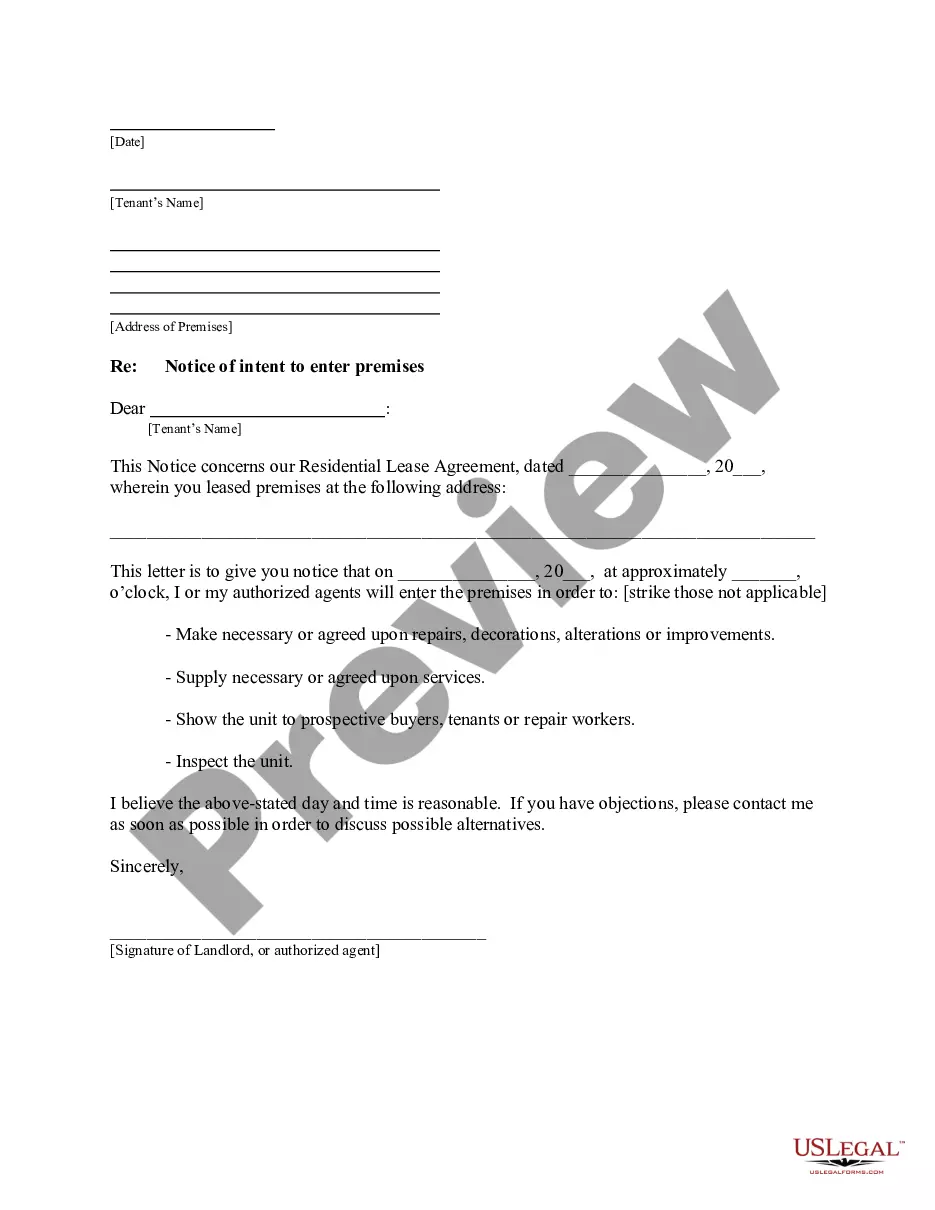
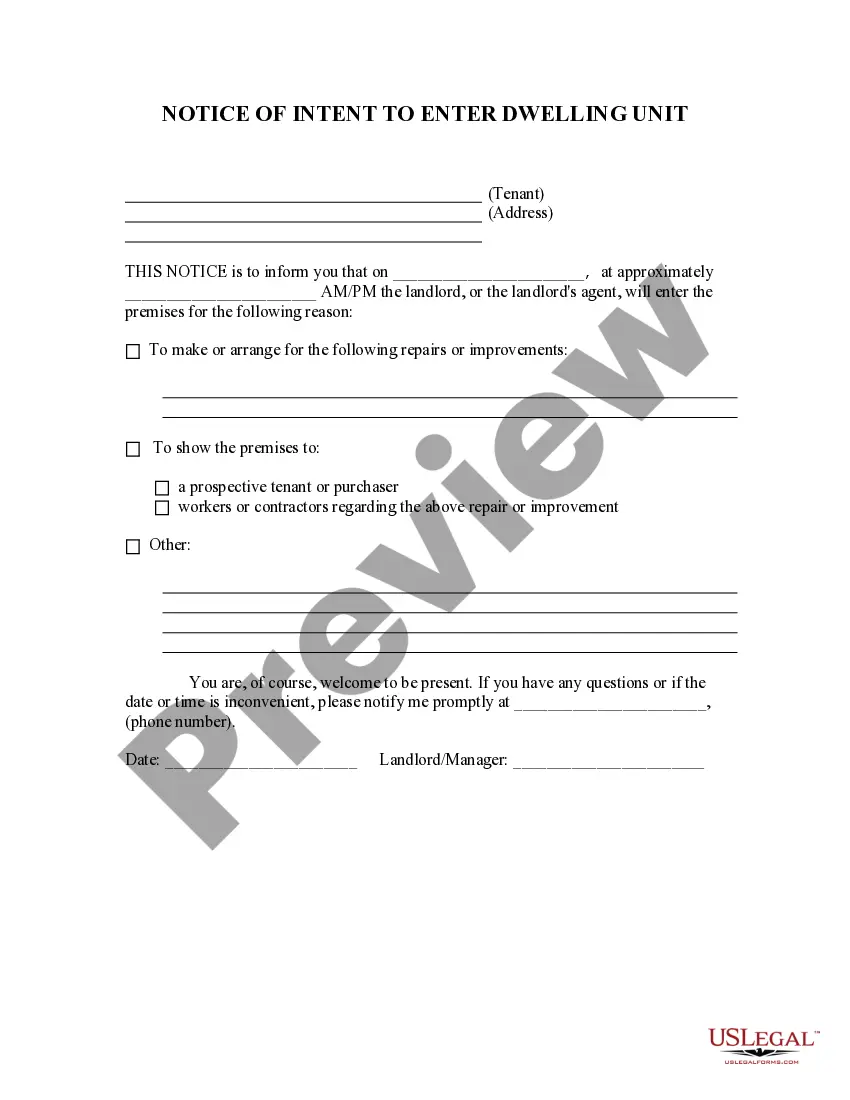
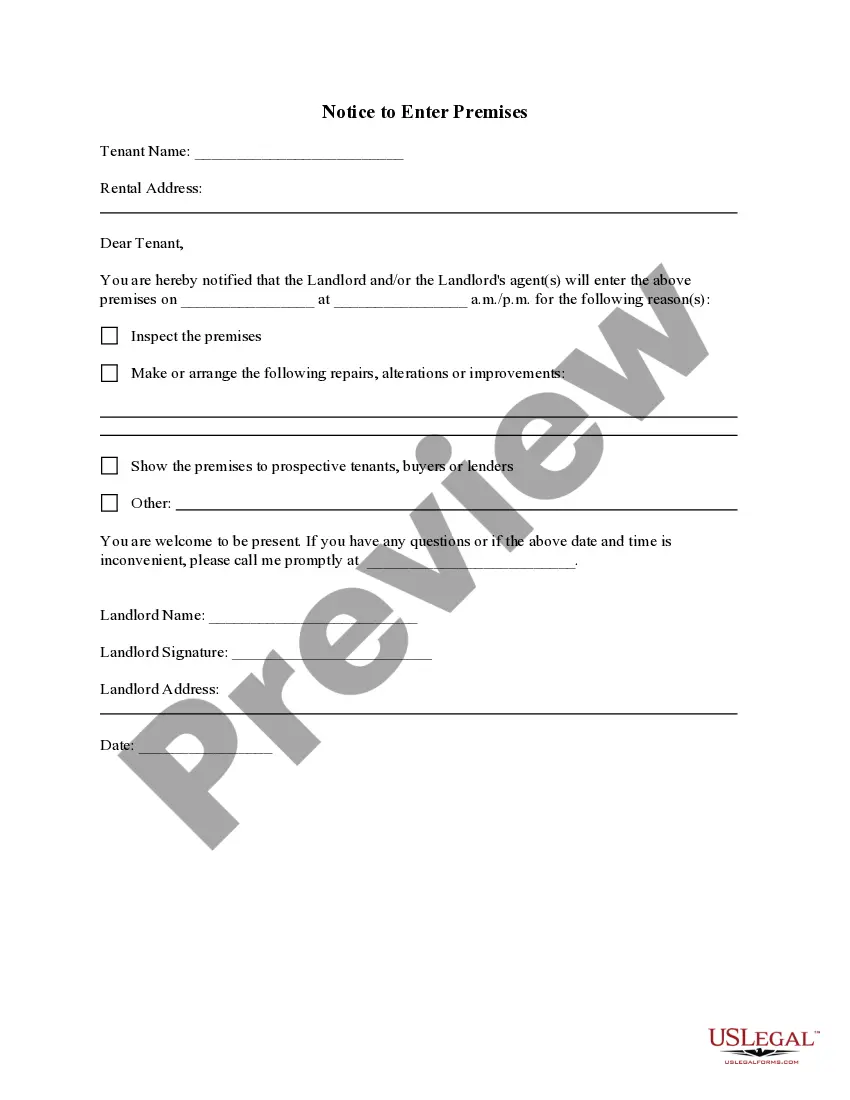
This form is a letter from a landlord to a tenant, providing official notice of the landlord's intent to enter the leased premises. Commonly referred to as a notice of intent to enter, this form is essential for maintaining a respectful landlord-tenant relationship and ensuring compliance with applicable laws. It differs from other notices by specifically addressing the time and reason for entry, making it clear to the tenant what to expect and when.
Form components explained
- Identification of the residential lease agreement date.
- Address of the leased premises.
- Date and approximate time of entry.
- Reasons for entry (repairs, inspections, showings, etc.).
- A request for tenant objections and contact information for further discussion.
- Signature of the landlord or authorized agent.

When this form is needed
Use this form when you, as a landlord, need to inform your tenant of your intention to enter the rented property. This can occur for various reasons such as performing maintenance, inspections, or showing the property to prospective buyers or tenants. Providing notice is essential to comply with legal obligations and to foster good communication with your tenant.
Who this form is for
- Landlords who want to enter a tenant's premises for valid reasons.
- Property managers acting on behalf of landlords.
- Real estate agents involved in property viewings.
Steps to complete this form
- Identify the date of the residential lease agreement at the top of the letter.
- Clearly specify the address of the property in question.
- Fill in the date and time when the landlord will enter the premises.
- Check the applicable reason(s) for entering the premises.
- Include contact information for the landlord to address any tenant concerns.
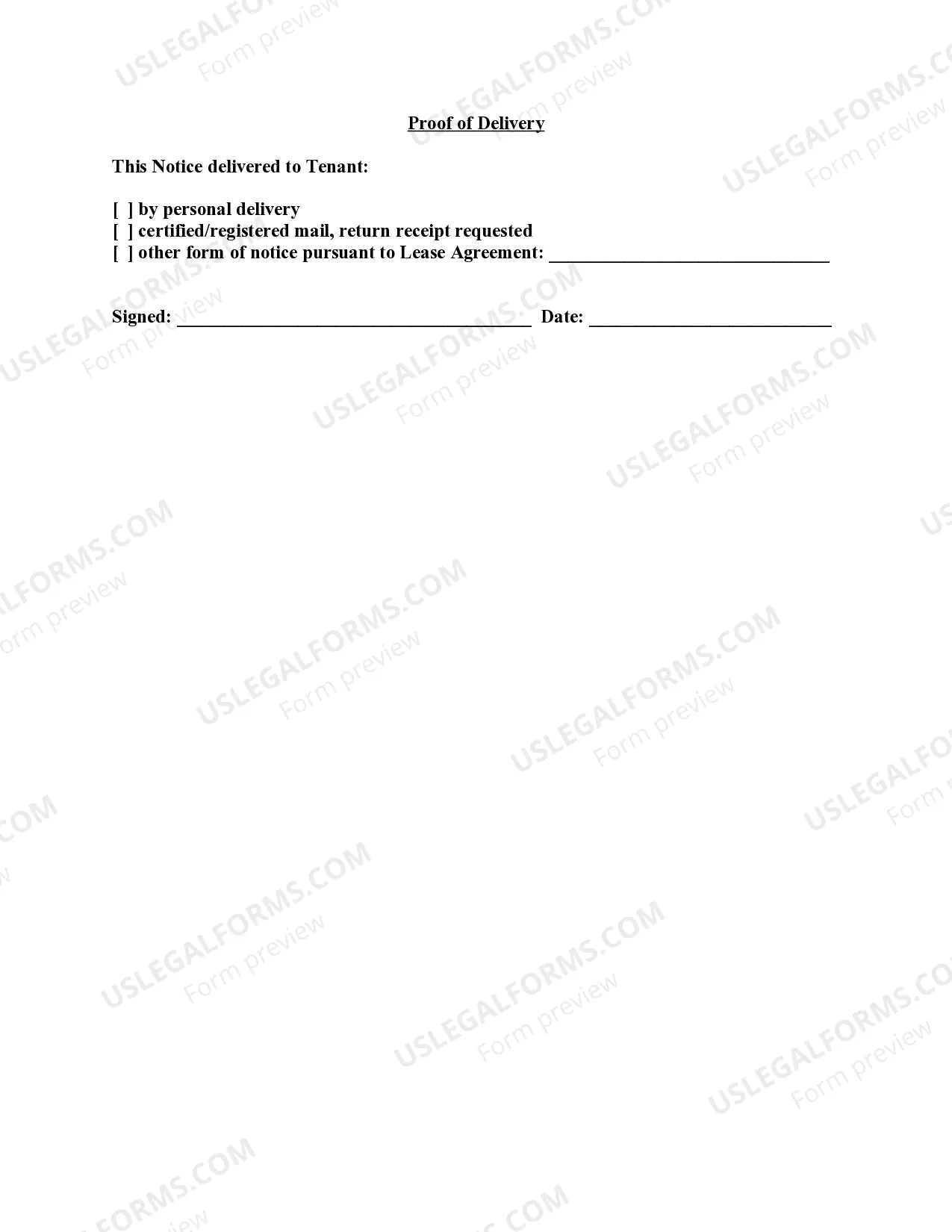
- Sign the letter and provide a proof of delivery method to the tenant.
Does this document require notarization?
In most cases, this form does not require notarization. However, some jurisdictions or signing circumstances might. US Legal Forms offers online notarization powered by Notarize, accessible 24/7 for a quick, remote process.
Get your form ready online
Our built-in tools help you complete, sign, share, and store your documents in one place.
Make edits, fill in missing information, and update formatting in US Legal Forms—just like you would in MS Word.
Download a copy, print it, send it by email, or mail it via USPS—whatever works best for your next step.
Sign and collect signatures with our SignNow integration. Send to multiple recipients, set reminders, and more. Go Premium to unlock E-Sign.
If this form requires notarization, complete it online through a secure video call—no need to meet a notary in person or wait for an appointment.
We protect your documents and personal data by following strict security and privacy standards.

Make edits, fill in missing information, and update formatting in US Legal Forms—just like you would in MS Word.

Download a copy, print it, send it by email, or mail it via USPS—whatever works best for your next step.

Sign and collect signatures with our SignNow integration. Send to multiple recipients, set reminders, and more. Go Premium to unlock E-Sign.

If this form requires notarization, complete it online through a secure video call—no need to meet a notary in person or wait for an appointment.

We protect your documents and personal data by following strict security and privacy standards.
Common mistakes
- Not providing enough advance notice to the tenant as required by local laws.
- Failing to specify the purpose of entry clearly.
- Omitting the date and time of intended entry.
- Not signing the letter, which may render it invalid.
Why use this form online
- Convenience of immediate download and use.
- Editability allows landlords to customize the letter to their specific needs.
- Reliability through templates created by licensed attorneys.
Legal use & context
- This form serves to protect the rights of both landlords and tenants by ensuring proper communication and documentation regarding premises entry.
- Understanding your local laws surrounding tenant rights is crucial to enforceability.
Main things to remember
- This form is essential for notifying tenants of a planned entry into their rented property.
- Clear communication helps to maintain a positive landlord-tenant relationship.
- Always adhere to local laws regarding notice requirements to avoid potential disputes.
Looking for another form?
Form popularity
FAQ
North Carolina law says that your landlord must keep your housing fit and safe. It also says that you, the tenant, must pay your rent, keep your home clean, and not damage your home. To make the law work, both the tenant and the landlord must do their part.
Notice of entry laws are absent from North Carolina law, and as a result, the landlord is not required to provide notice of entry and therefore may enter the premises for the following reasons: Non-emergency maintenance and repairs.
Dear (Name of landlord or manager), This letter constitutes my written (number of days' notice that you need to give based on your lease agreement)-day notice that I will be moving out of my apartment on (date), the end of my current lease. I am leaving because (new job, rent increase, etc.)
North Carolina law says that your landlord must keep your housing fit and safe. It also says that you, the tenant, must pay your rent, keep your home clean, and not damage your home. To make the law work, both the tenant and the landlord must do their part.
TIME OF ENTRYLandlords may only enter with notice between the hours of 8 a.m. and 8 p.m. The timeframe given in the notice is supposed to be of reasonable duration. The landlord cannot enter on a holiday or a Sunday without consent.
Sue the landlord and whoever for up to $10,000 in small claims court for trespassing, breach of contract, invasion of privacy, and breach of quiet enjoyment; if you are two or more tenants, each can separately sue them for up to $10,000, and a joint action is not required.
When you rent a property from a landlord it becomes your home. They should only enter the property without you being present, if you have given permission for them to do so, or in a genuine emergency.
The big take-away is that in most circumstances a landlord cannot enter a property without agreement from the tenant. And If the landlord ignores the law and enters the property without permission, the tenant may be able to claim damages or gain an injunction to prevent the landlord doing it again.
Notice Requirements for North Carolina Landlords A landlord can simply give you a written notice to move, allowing you seven days as required by North Carolina law and specifying the date on which your tenancy will end.