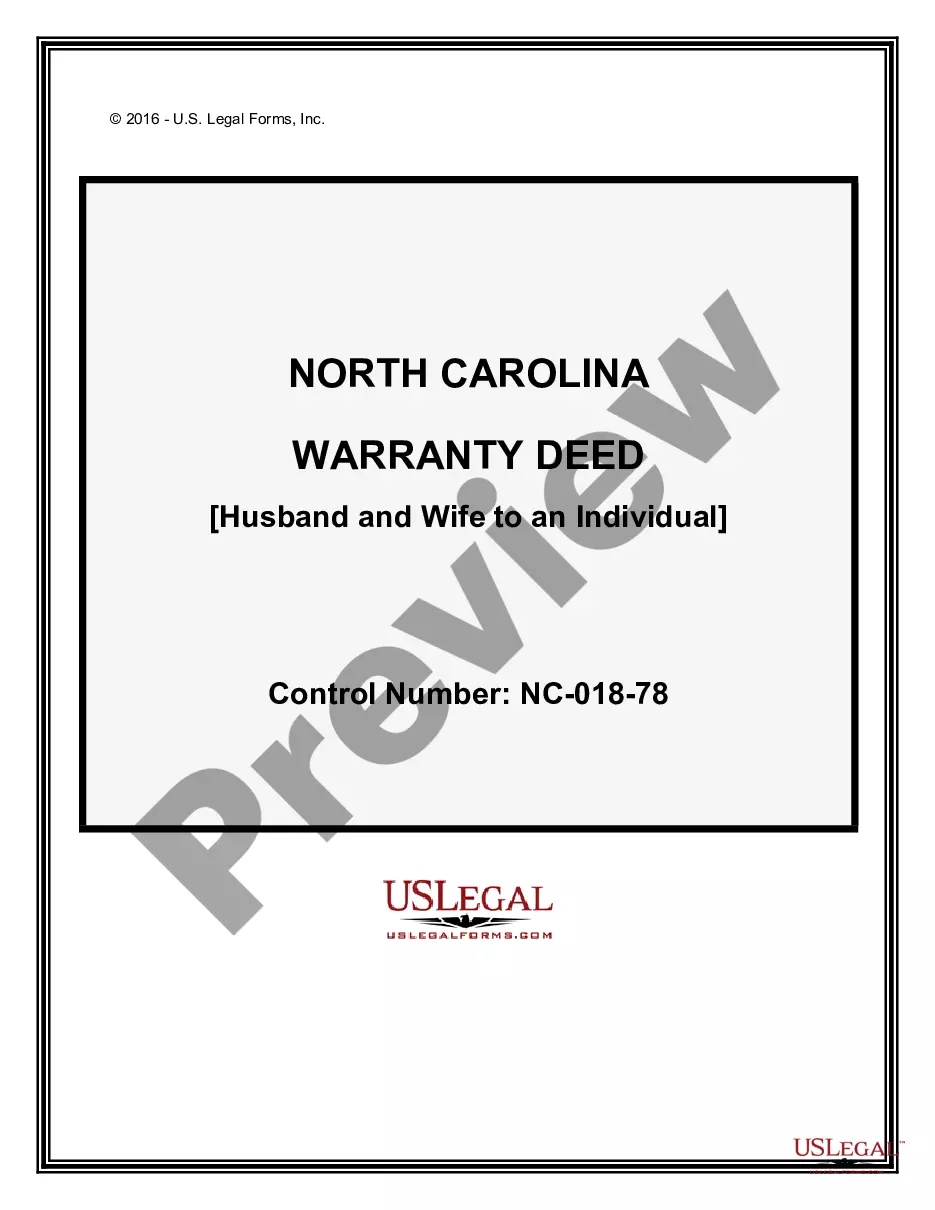
North Carolina General Warranty Deed from Individual to Husband and Wife
About this form
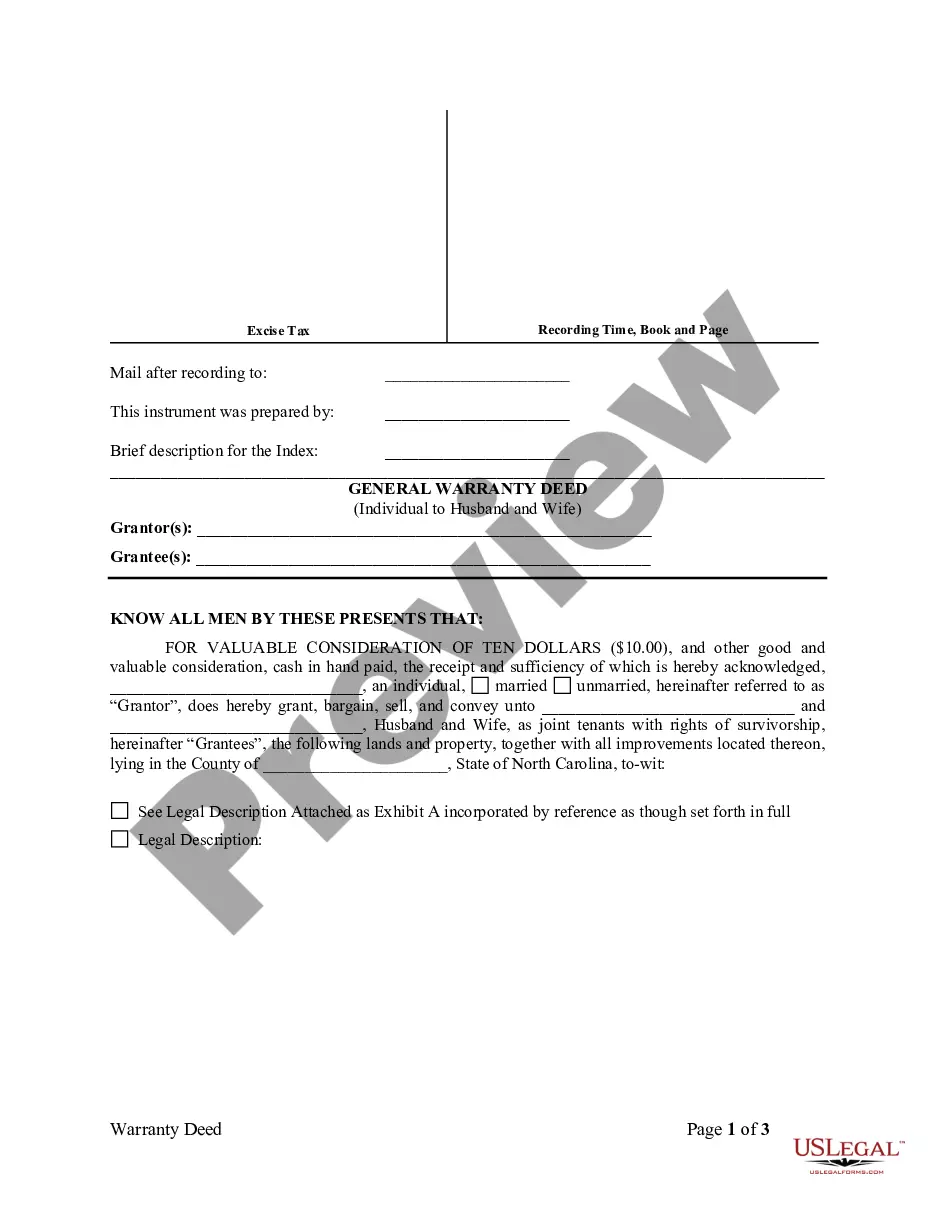
The General Warranty Deed from Individual to Husband and Wife is a legal document used to transfer property ownership from one individual (the Grantor) to a couple (the Grantees) holding title as joint tenants with rights of survivorship. This deed provides the Grantees with assurances regarding the property's title, ensuring it is free of encumbrances. Unlike other types of deeds, a general warranty deed includes comprehensive guarantees about the title, making it a preferred choice for property transfers between individuals who are married.
Form components explained
- Grantor and Grantee identification
- Property description and legal description attachment
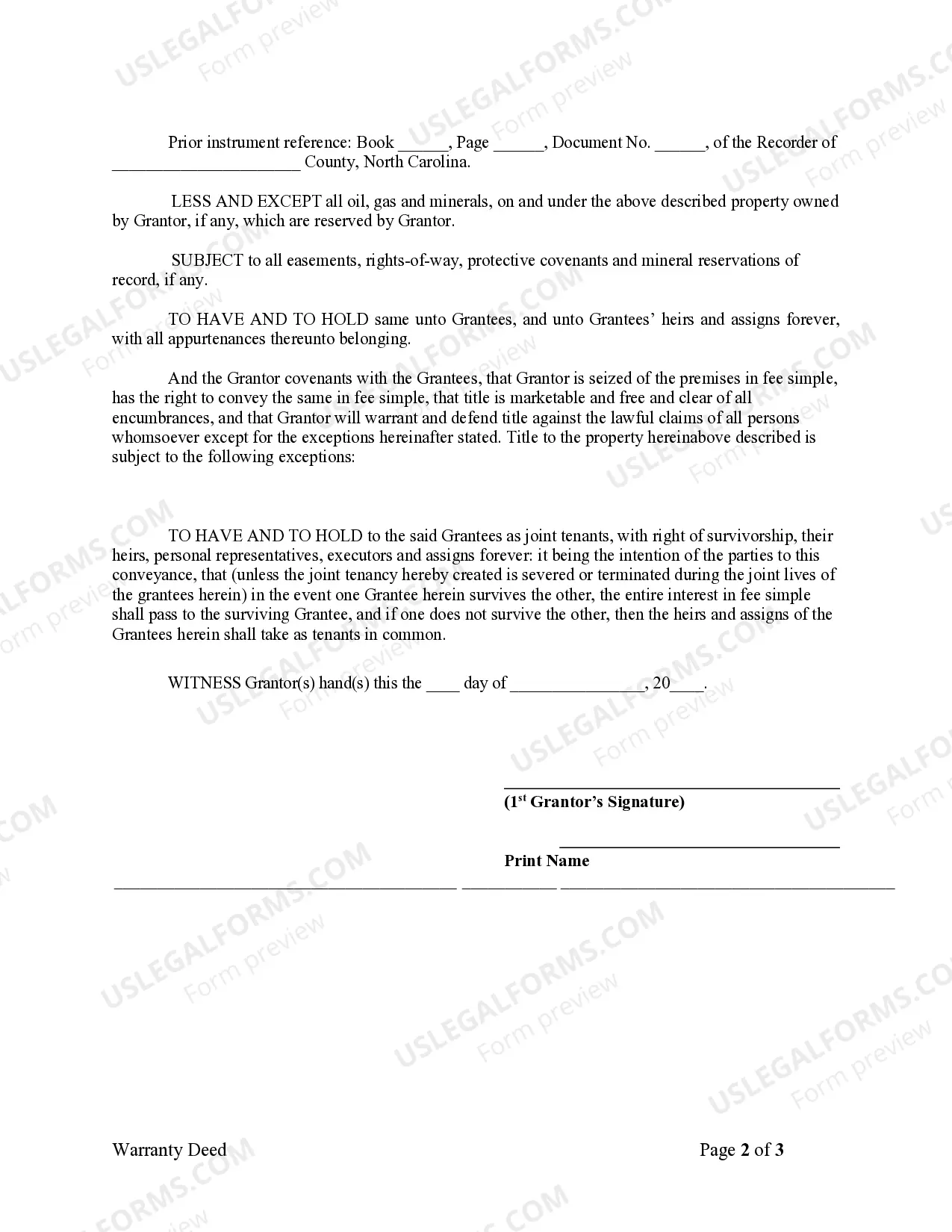
- Warranties and covenants regarding the title
- Joint tenancy with rights of survivorship provisions
- Signature lines for Grantor and Notary Public





Situations where this form applies
This form is typically used when an individual wishes to transfer real estate property to a husband and wife, providing them with joint ownership rights. It is commonly employed in situations such as when couples purchase a home together, inherit property, or want to ensure that the surviving spouse retains full ownership in the event of one spouse's death.
Who this form is for
- Individuals looking to transfer ownership of property to a married couple
- Couples seeking to hold property together with full ownership rights
- Estate planners arranging for property transfer to ensure survivorship
- Homeowners preparing to gift property to family members
Completing this form step by step
- Identify the Grantor (individual) and the Grantees (husband and wife).
- Provide a detailed legal description of the property being transferred.
- Specify any exceptions regarding mineral rights or easements, if applicable.
- Have the Grantor sign the deed before a Notary Public.
- Ensure the completed form is recorded in the appropriate county office.
Does this document require notarization?
This document requires notarization to meet legal standards. US Legal Forms provides secure online notarization powered by Notarize, allowing you to complete the process through a verified video call, available 24/7.
Get your form ready online
Our built-in tools help you complete, sign, share, and store your documents in one place.
Make edits, fill in missing information, and update formatting in US Legal Forms—just like you would in MS Word.
Download a copy, print it, send it by email, or mail it via USPS—whatever works best for your next step.
Sign and collect signatures with our SignNow integration. Send to multiple recipients, set reminders, and more. Go Premium to unlock E-Sign.
If this form requires notarization, complete it online through a secure video call—no need to meet a notary in person or wait for an appointment.
We protect your documents and personal data by following strict security and privacy standards.

Make edits, fill in missing information, and update formatting in US Legal Forms—just like you would in MS Word.

Download a copy, print it, send it by email, or mail it via USPS—whatever works best for your next step.

Sign and collect signatures with our SignNow integration. Send to multiple recipients, set reminders, and more. Go Premium to unlock E-Sign.

If this form requires notarization, complete it online through a secure video call—no need to meet a notary in person or wait for an appointment.

We protect your documents and personal data by following strict security and privacy standards.
Common mistakes
- Failing to accurately describe the property in detail.
- Omitting necessary signatures or not having the document notarized.
- Not checking for local requirements regarding deed recording.
- Confusing joint tenancy with other forms of property ownership.
Benefits of completing this form online
- Convenient access to the legal template without the need for an attorney.
- Edit and customize the form to meet specific transfer requirements.
- Instant downloads to easily print and execute the deed.
- Guides and resources are available to assist in the completion process.
Key takeaways
- The General Warranty Deed transfers property from an individual to a married couple.
- This deed includes warranties about the title and ensures survivorship rights.
- Accurate completion and notarization are essential for validity.
- Using this form can simplify the property transfer process and provide legal assurances.
Looking for another form?
Form popularity
FAQ
The answer is yes. Parties to a transaction are always free to prepare their own deeds. If you do so, be sure your deed measures up to your state's legal regulations, to help avert any legal challenge to the deed later.
A married person buying property individually The owner needs to sign, but their spouse may not be required to sign documents at closing. North Carolina has a specific statute allowing a married buyer of real estate to sign their purchase-money Deed of Trust without requiring the signature of the buyer's spouse.
A warranty deed guarantees that: The grantor is the rightful owner of the property and has the legal right to transfer the title.The title would withstand third-party claims to ownership of the property. The grantor will do anything to ensure the grantee's title to the property.
If you've recently married and already own a home or other real estate, you may want to add your new spouse to the deed for your property so the two of you own it jointly. To add a spouse to a deed, all you have to do is literally fill out, sign and record a new deed in your county recorder's office.
It's important to note that a warranty deed does not actually prove the grantor has ownership (a title search is the best way to prove that), but it is a promise by the grantor that they are transferring ownership and if it turns out they don't actually own the property, the grantor will be responsible for compensating
In California, all property bought during the marriage with income that was earned during the marriage is deemed "community property." The law implies that both spouses own this property equally, regardless of which name is on the title deed.
A warranty deed, also known as a general warranty deed, is a legal real estate document between the seller (grantor) and the buyer (grantee). The deed protects the buyer by pledging that the seller holds clear title to the property and there are no encumbrances, outstanding liens, or mortgages against it.
A warranty deed is a document often used in real estate that provides the greatest amount of protection to the purchaser of a property. It pledges or warrants that the owner owns the property free and clear of any outstanding liens, mortgages, or other encumbrances against it.
The North Carolina general warranty deed is used to transfer property in North Carolina from one person to another legally.In other words, the seller is liable to the buyer if the buyer finds out there was an undisclosed claim against the property.