Montana Last Will and Testament for Married person with Adult Children
Understanding this form
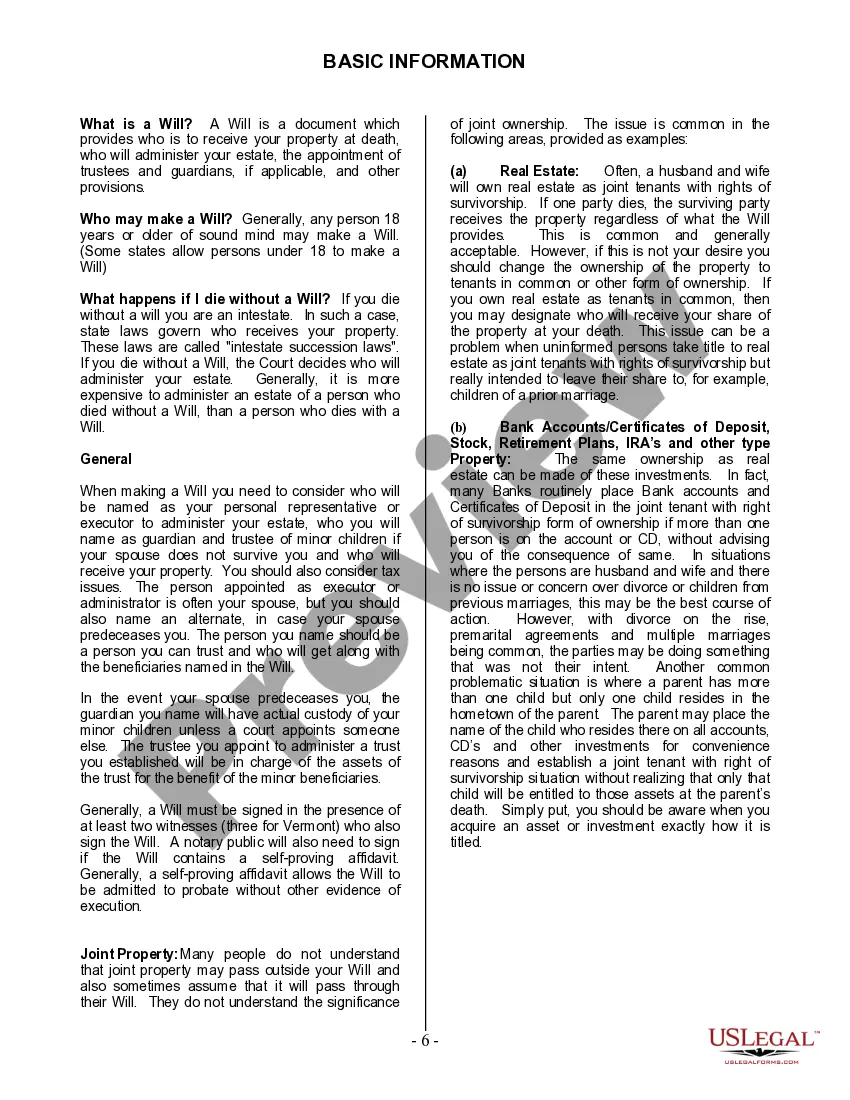
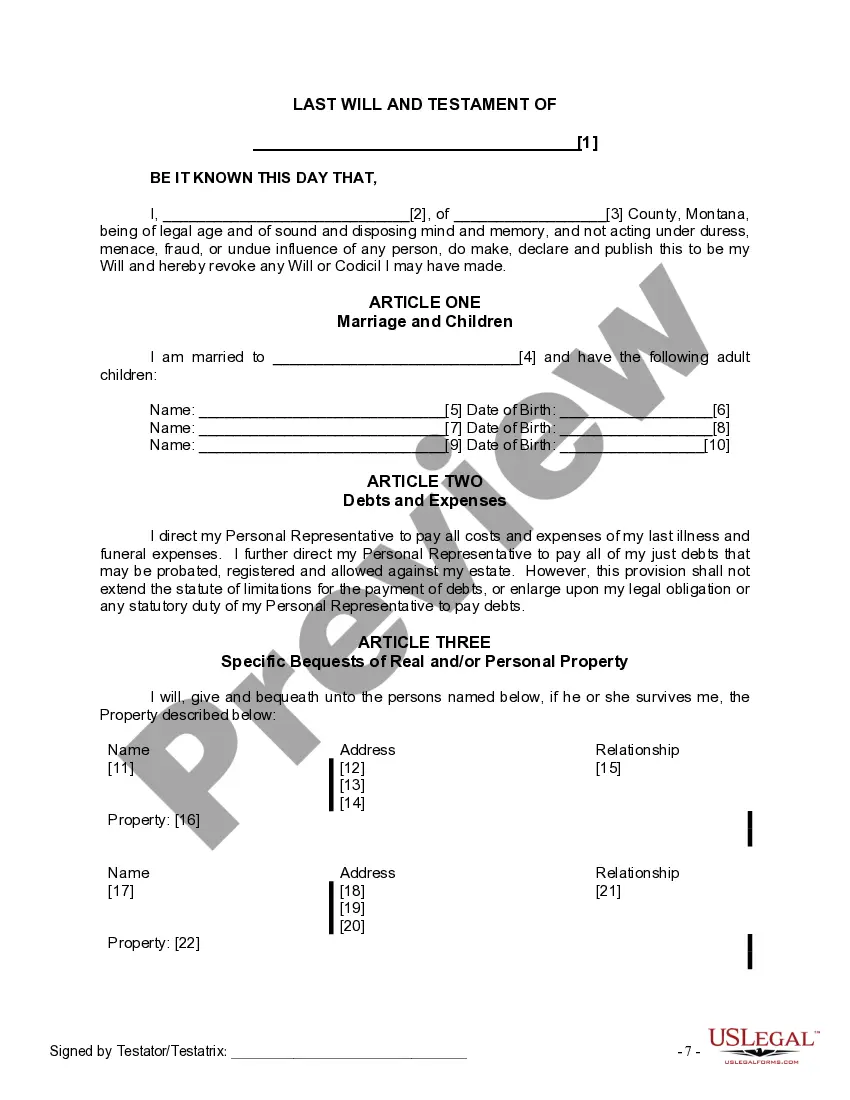
The Last Will and Testament for Married Person with Adult Children is a legal document that outlines how a person's assets should be distributed upon their death. This will specifically caters to married individuals who have adult children, providing for the appointment of a personal representative or executor, as well as designating beneficiaries for property. This form differs from other wills, as it incorporates specific provisions for spouses and adult children, ensuring that all family members are considered in the distribution process.
Main sections of this form
- Personal information including the testator's name and county of residence.
- Designation of spouse and adult children, including their names and birthdates.
- Specific bequests for particular assets to individuals.
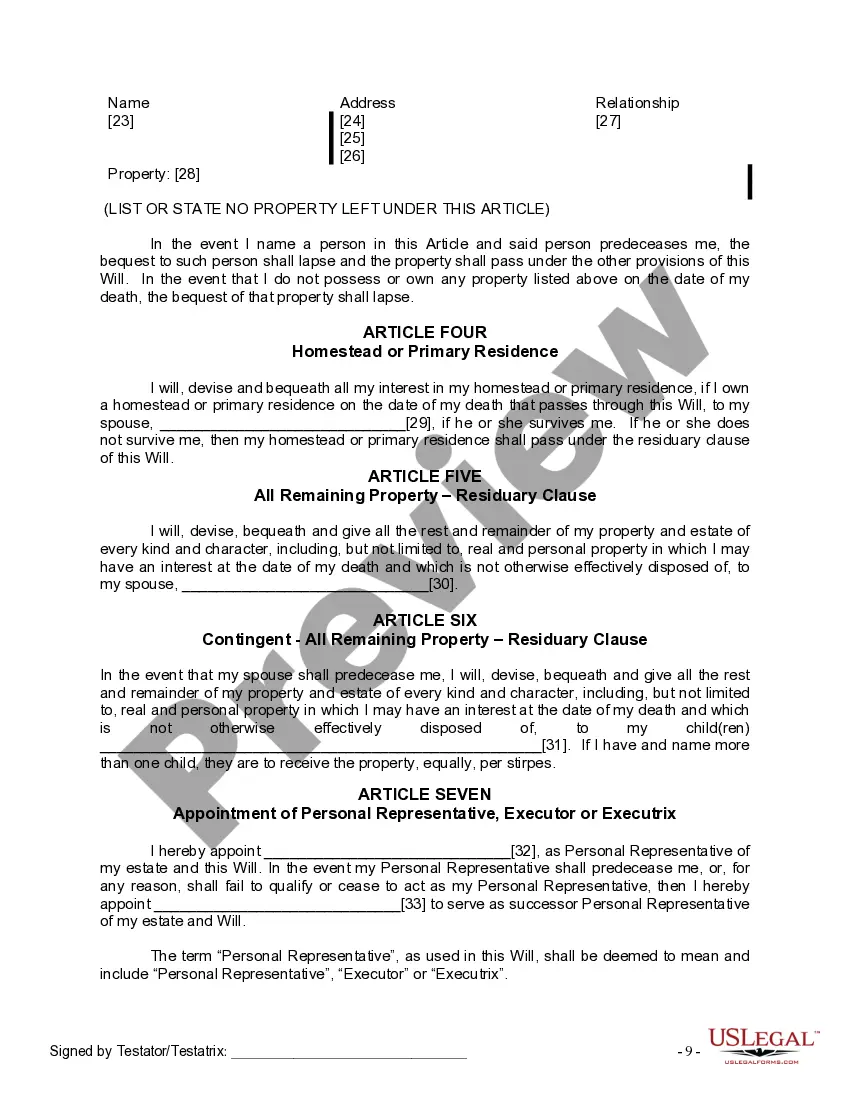
- Provisions for the homestead or primary residence distribution.
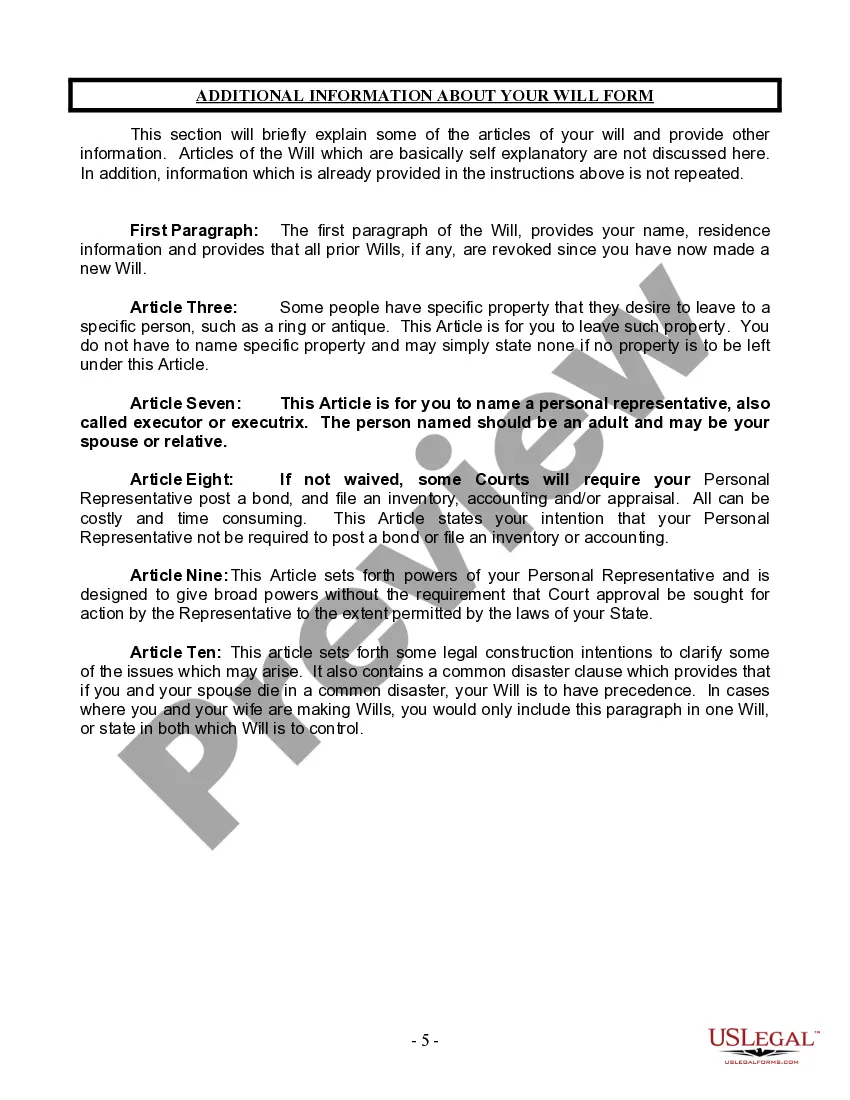
- Appointment of a personal representative to administer the estate.
- Legal clauses for waiving bonds and specifying the powers of the personal representative.






Situations where this form applies
This form should be used when a married person with adult children wishes to clearly define the distribution of their estate after their death. It is especially important if there are specific assets to be bequeathed to family members, or if the individual wishes to designate a trusted representative to handle their affairs upon passing. If you have specific desires about how your family will inherit your property, this Last Will and Testament is essential for ensuring your wishes are honored.
Who can use this document
- Married individuals who have adult children.
- Individuals seeking to outline their estate distribution clearly.
- Those who wish to appoint a personal representative to manage their estate.
- Anyone who wants to ensure their specific wishes regarding asset distribution are documented legally.
Steps to complete this form
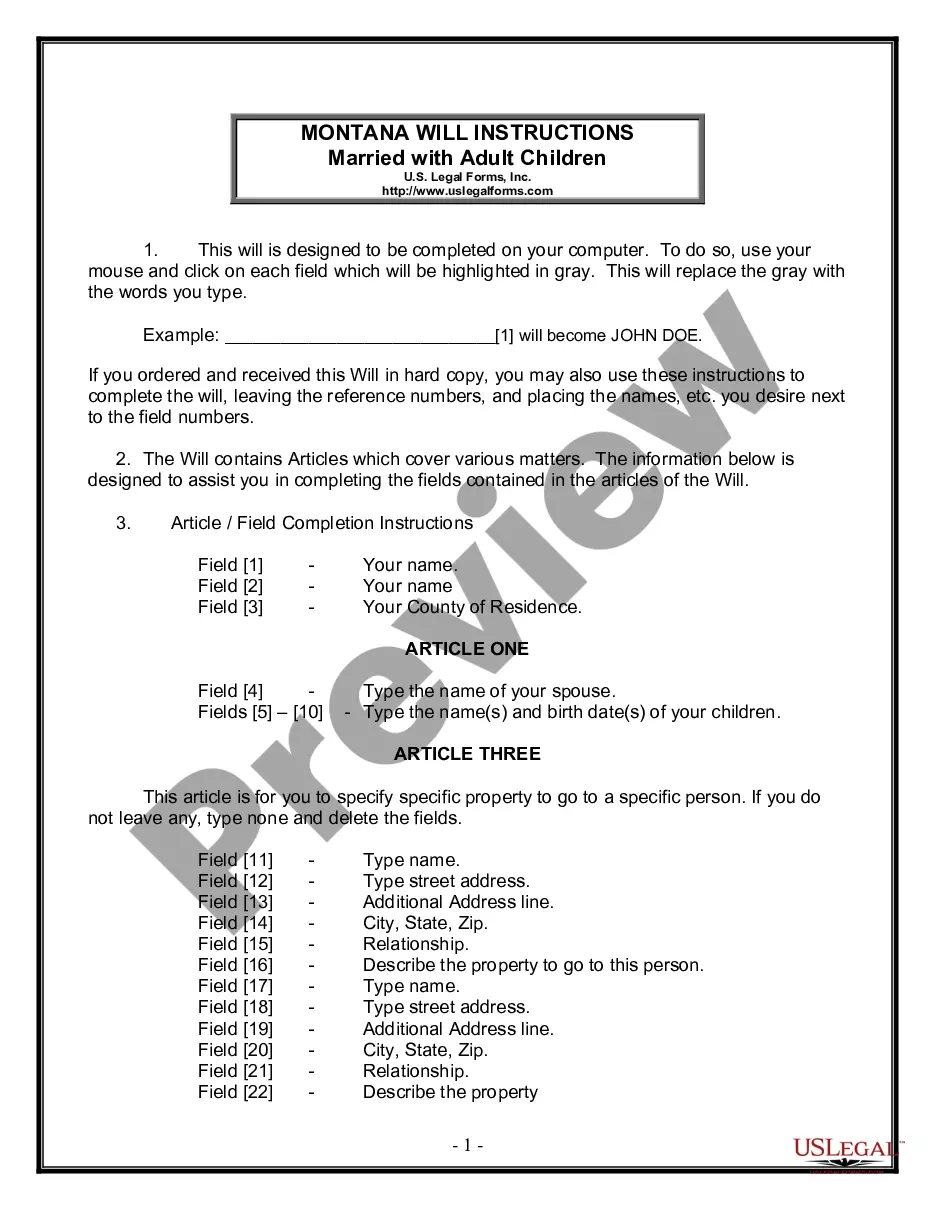
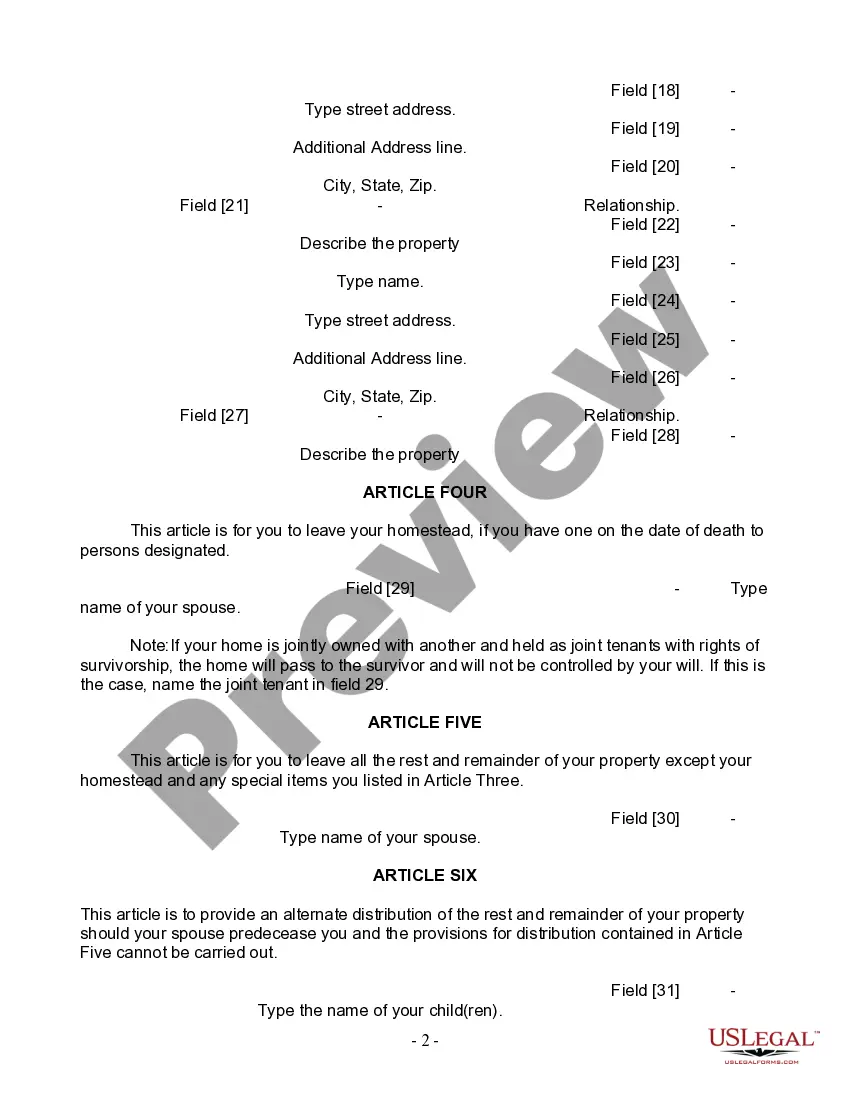
- Fill in your personal information, such as your name and county of residence.
- Designate your spouse's name and list your adult children's names and birthdates.
- Specify any particular assets you wish to bequeath to individuals and their respective addresses.
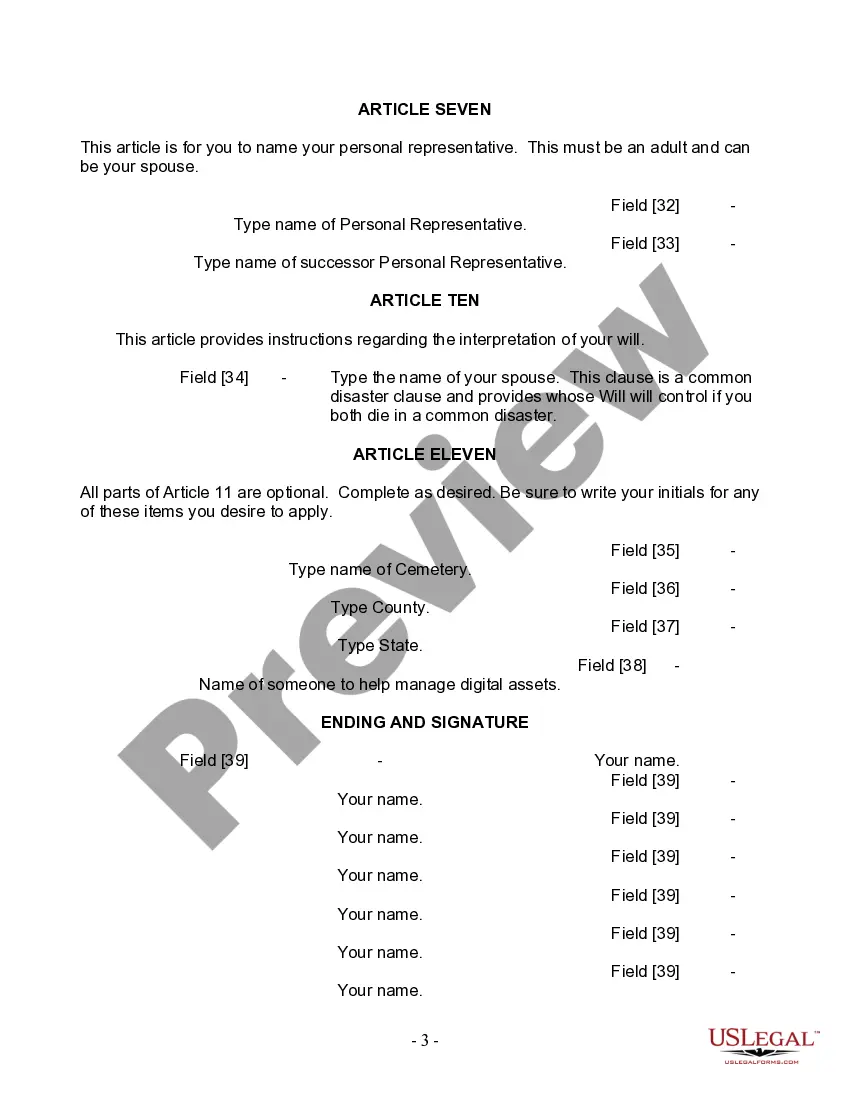
- Appoint a personal representative to oversee the execution of your will.
- Ensure all fields are completed, double-checking for accuracy before printing and signing.
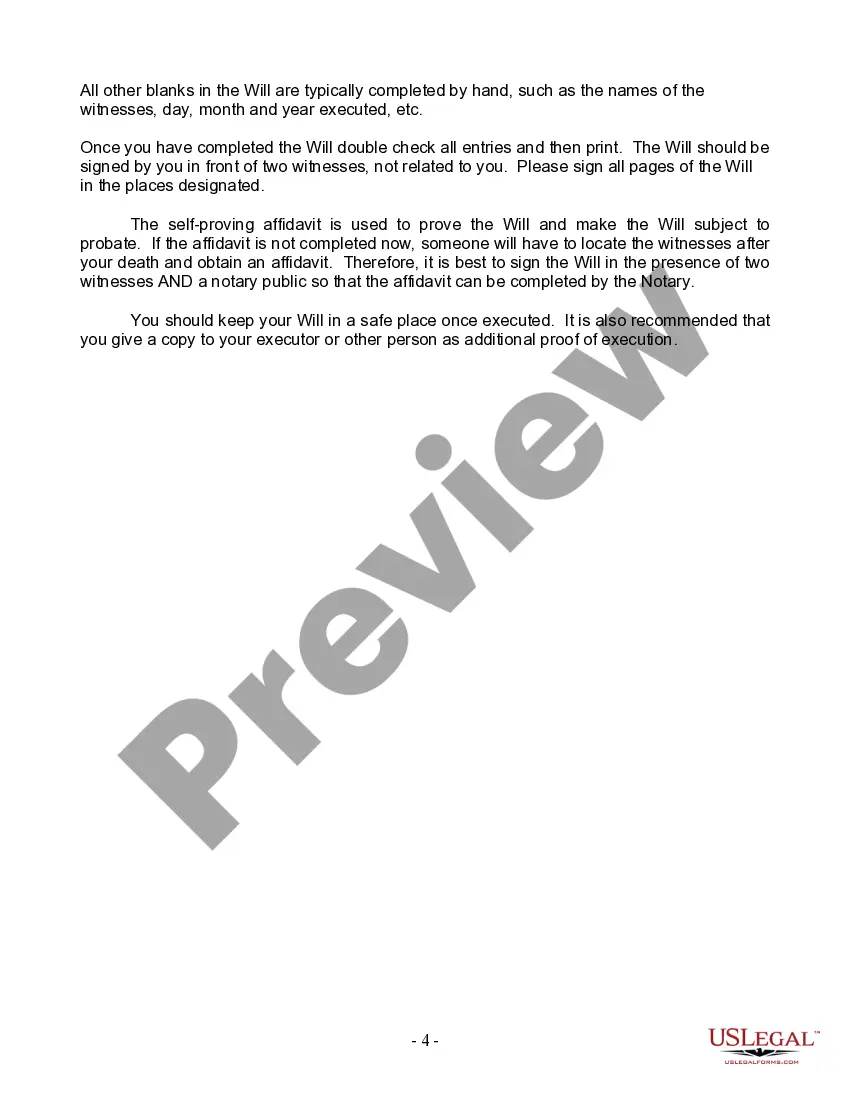
- Sign the will in the presence of two uninterested witnesses and ensure it is notarized if necessary.
Does this form need to be notarized?
To make this form legally binding, it must be notarized. Our online notarization service, powered by Notarize, lets you verify and sign documents remotely through an encrypted video session.
Get your form ready online
Our built-in tools help you complete, sign, share, and store your documents in one place.
Make edits, fill in missing information, and update formatting in US Legal Forms—just like you would in MS Word.
Download a copy, print it, send it by email, or mail it via USPS—whatever works best for your next step.
Sign and collect signatures with our SignNow integration. Send to multiple recipients, set reminders, and more. Go Premium to unlock E-Sign.
If this form requires notarization, complete it online through a secure video call—no need to meet a notary in person or wait for an appointment.
We protect your documents and personal data by following strict security and privacy standards.

Make edits, fill in missing information, and update formatting in US Legal Forms—just like you would in MS Word.

Download a copy, print it, send it by email, or mail it via USPS—whatever works best for your next step.

Sign and collect signatures with our SignNow integration. Send to multiple recipients, set reminders, and more. Go Premium to unlock E-Sign.

If this form requires notarization, complete it online through a secure video call—no need to meet a notary in person or wait for an appointment.

We protect your documents and personal data by following strict security and privacy standards.
Mistakes to watch out for
- Failing to sign the will in front of the required witnesses.
- Not properly designating beneficiaries for all assets.
- Omitting details about specific bequests, potentially causing confusion.
- Not updating the will after significant life events (e.g., marriage, divorce, or birth of children).
- Forgetting to store the will in a safe but accessible location for the personal representative.
Benefits of using this form online
- Convenience of completing the form from home at your own pace.
- Editability allows for easy updates without needing to start over.
- Access to attorney-drafted templates ensures legal completeness.
- Immediate availability means you can create your will without delay.
- Reduction of errors with step-by-step guidance provided throughout the process.
Looking for another form?


Form popularity
FAQ
A will doesn't have to be notarized to be valid. But in most states, you'll want to add a self-proving affidavit to your will, which must be signed by your witnesses and notarized.If you sign your will in a lawyer's office, the lawyer will provide a notary public.
You can legally prepare your own will, it can even be handwritten. This type of will is known as a "holographic will." In Montana, your handwritten will must be signed by you. Your signature must also be located on any material provisions, and no witnesses will need to be present for the signing of your will.
The will of a decedent must be filed with the Clerk of Court so the personal representative may proceed with the administration of the estate. Montana has both formal (court-directed) and informal probate as well as a simplified probate process for small estates.
If you are unmarried and die without a valid will and last testament in Montana, then your entire estate goes to any surviving children in equal shares, or grandchildren if you don't have any surviving children. If you die intestate unmarried and with no children, then by law, your parents inherit your entire estate.
A notarized will does not need to be probated.When a person dies leaving behind a will that is not notarized, the law requires that its validity be ascertained by a notary or by a court. Similarly, any non-notarized modification made to a will must be probated, whether the will is notarized or not.
No, in Montana, you do not need to notarize your will to make it legal. However, Montana allows you to make your will "self-proving" and you'll need to go to a notary if you want to do that. A self-proving will speeds up probate because the court can accept the will without contacting the witnesses who signed it.
Yes, a person can make his or her own will, but it must be in the testator's own handwriting. This type of will is called a holographic will. Such a will is valid if the signature and the material provisions are in the handwriting of the testator.
You can legally prepare your own will, it can even be handwritten. This type of will is known as a "holographic will." In Montana, your handwritten will must be signed by you. Your signature must also be located on any material provisions, and no witnesses will need to be present for the signing of your will.