Montana Mutual Wills Package for Married Couple with No Children
What is this form?
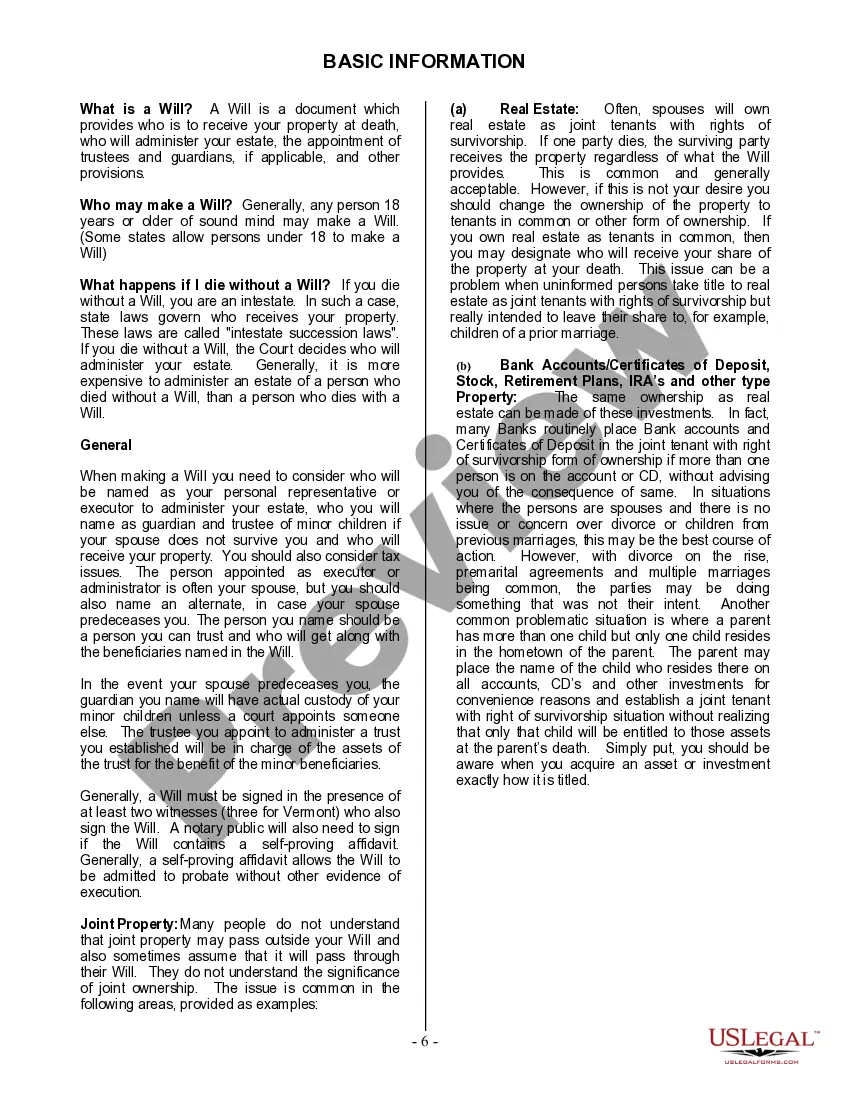
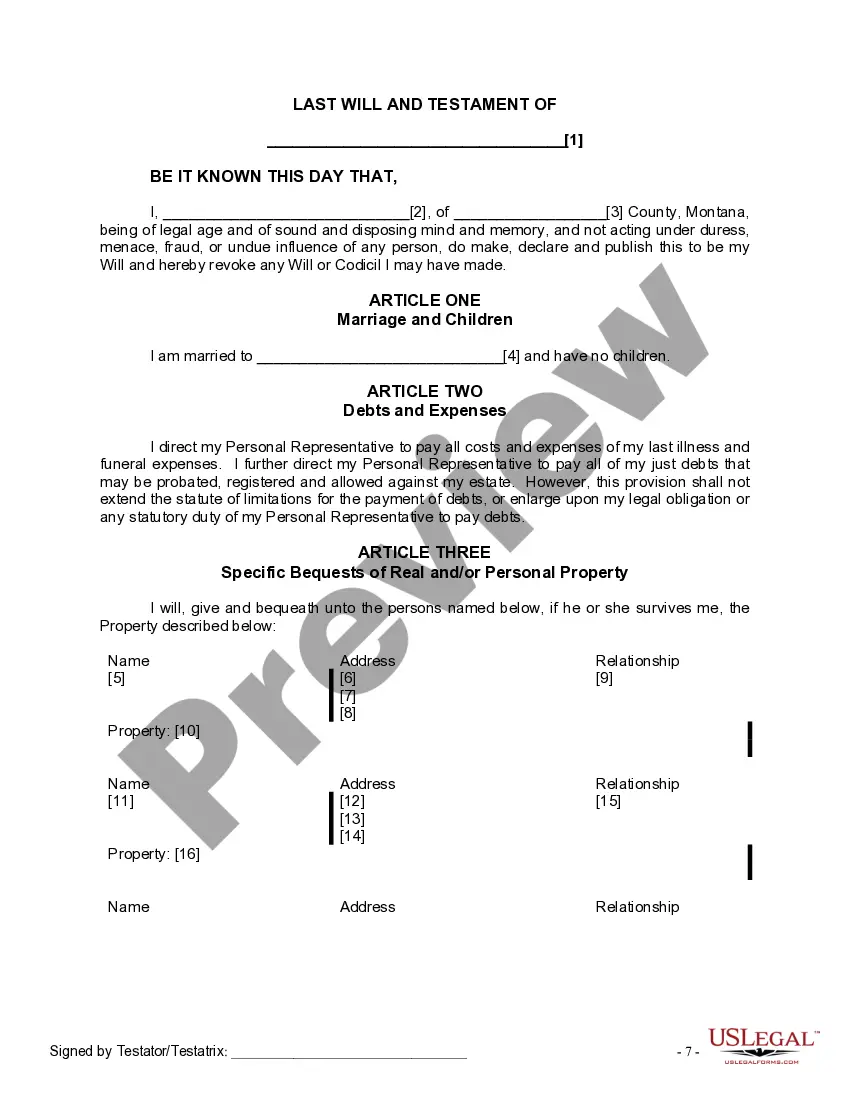
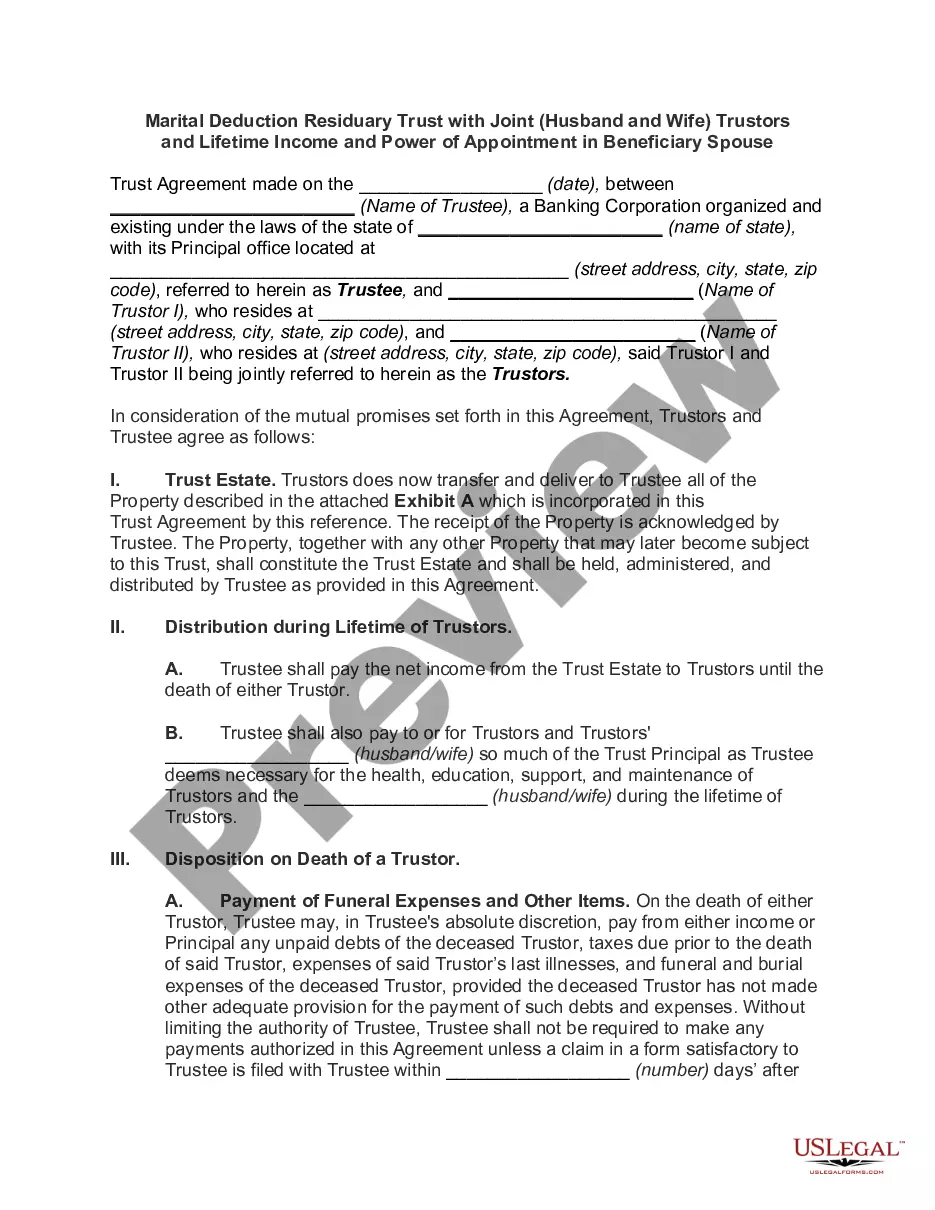
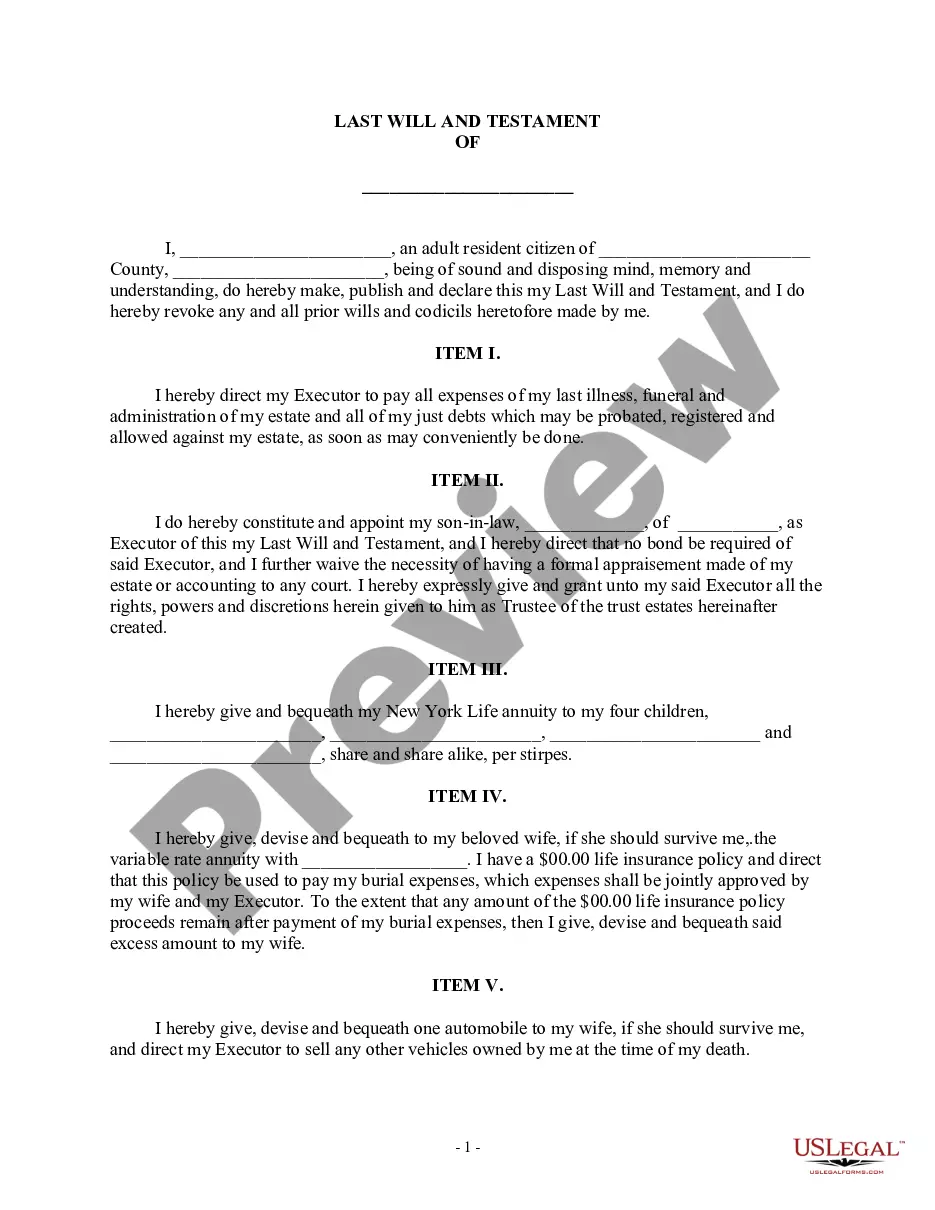
The Mutual Wills Package for Married Couples with No Children is a legal document that allows a married couple to create reciprocal last wills. This form includes two individual wills, one for each spouse, ensuring that both spouses are represented in their estate planning. Unlike standard wills, mutual wills create a binding agreement that certain provisions of the will must be honored after the death of one spouse, particularly concerning the distribution of property to the surviving spouse. This ensures that both partners' wishes are respected and they can provide for each other without complications.
Main sections of this form
- Personal information sections for each spouse including names and county of residence.
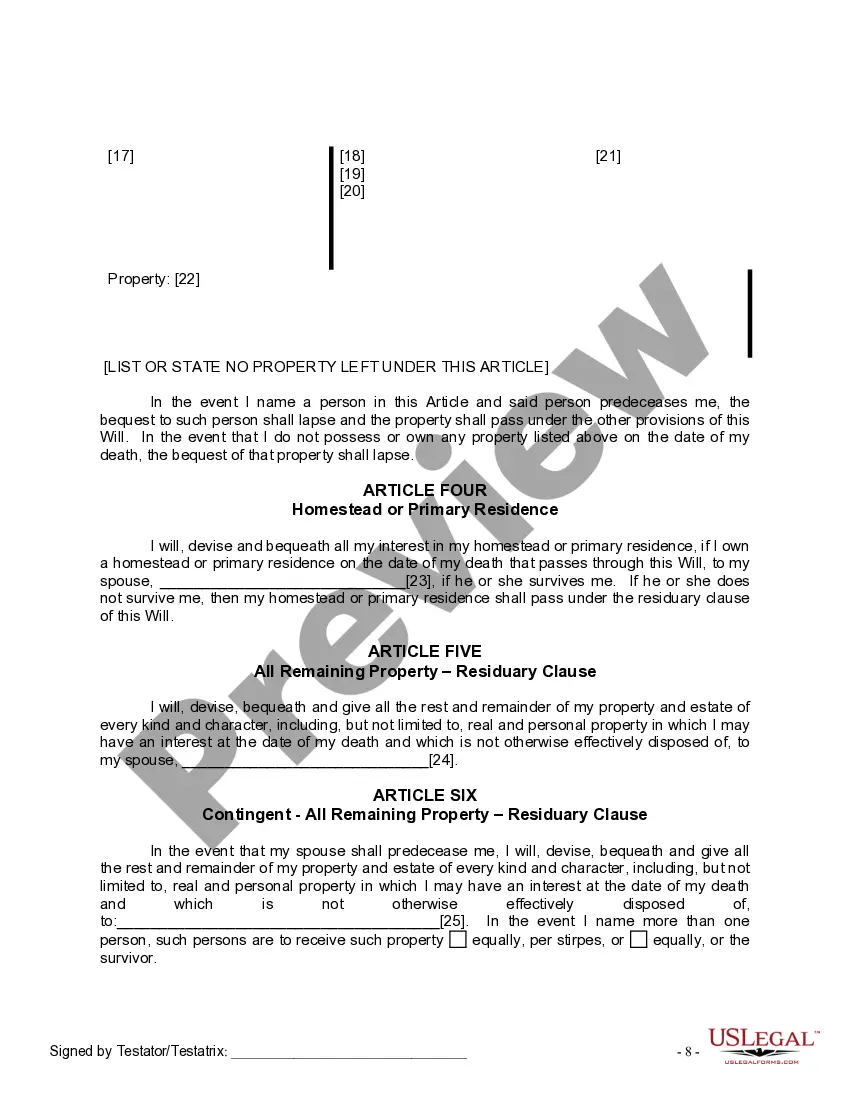
- Provisions for specific bequests of property to designated individuals.
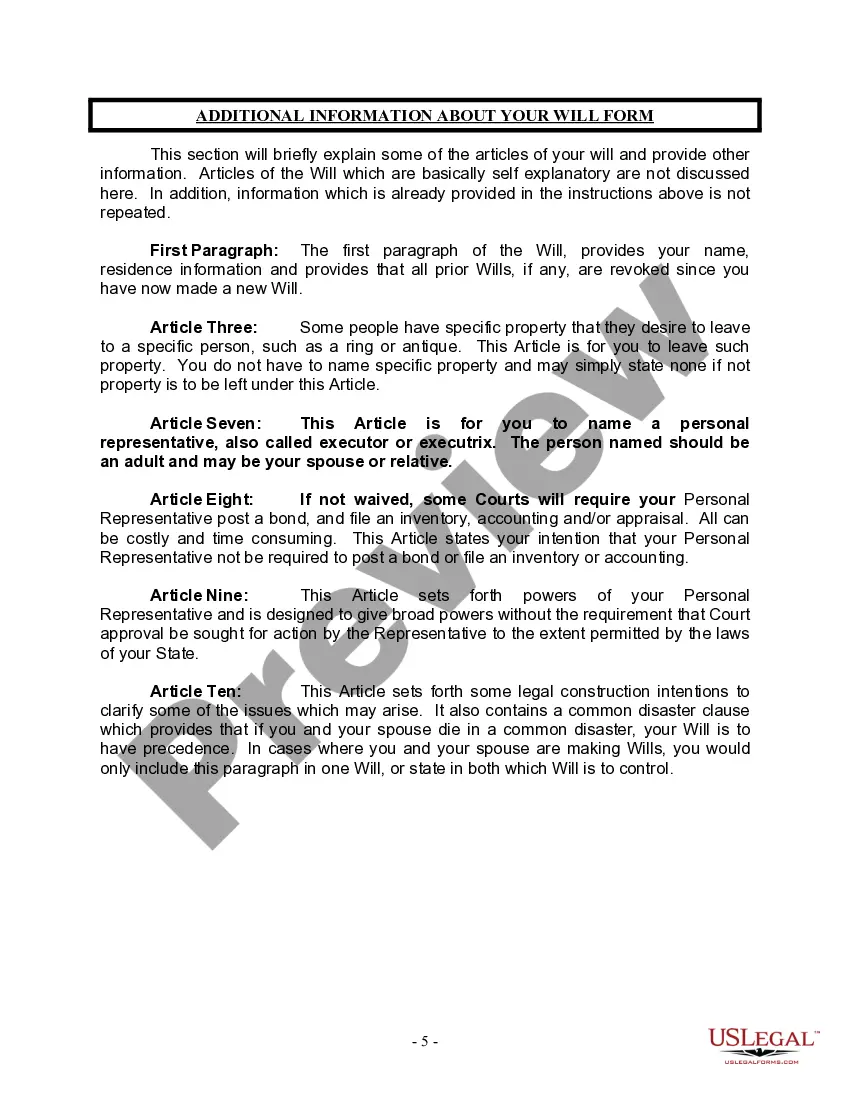
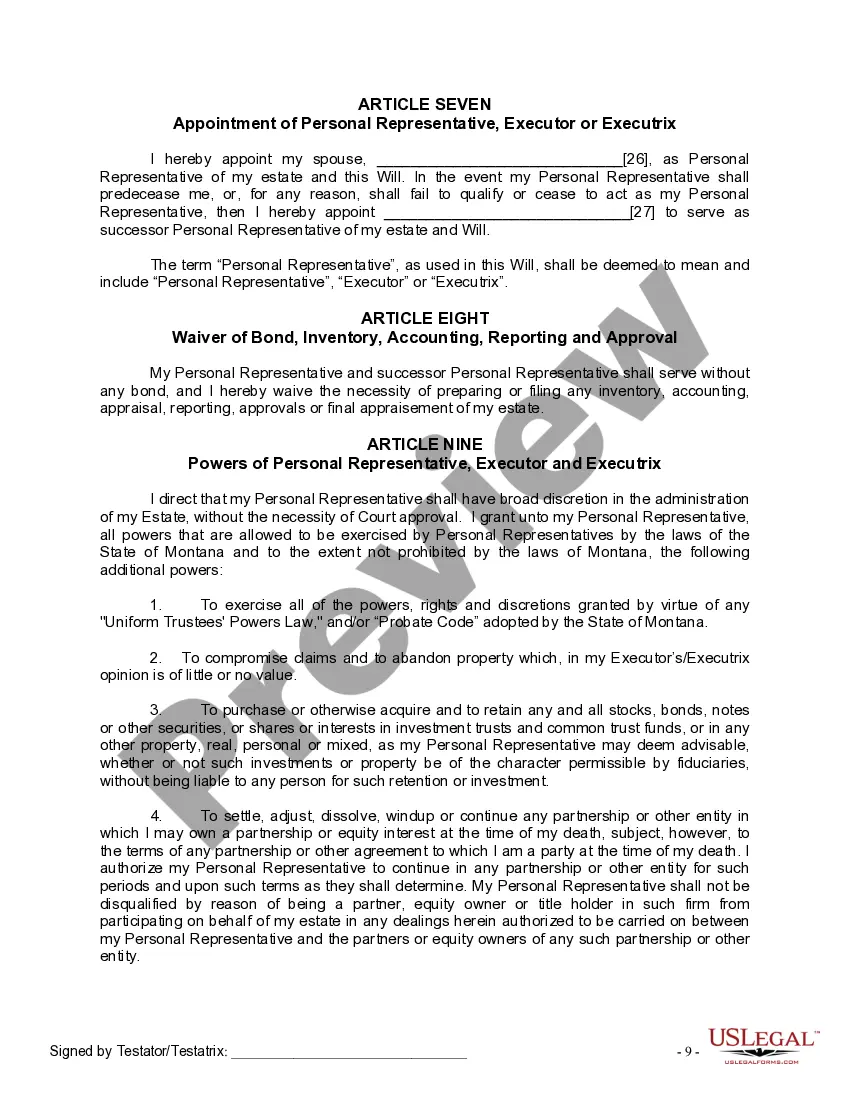
- Instructions regarding the appointment of a personal representative or executor.
- Clauses addressing debts and estate expenses.
- Provisions for homestead or primary residence distribution.
- Self-proving affidavit, if applicable, for simplifying probate proceedings.



Situations where this form applies
This form is ideal for married couples without children who wish to outline their estate plans clearly and mutually. You should consider using this package if you want to ensure that your partner receives your assets in accordance with your wishes and if you are looking for an efficient way to manage estate division with provisions that are binding on both parties. It is especially useful if you both want to leave your properties to each other and have clarity on how your assets should be distributed in the event of simultaneous deaths or unexpected events.
Who can use this document
- Married couples who have no children.
- Spouses who wish to ensure their property is distributed according to their mutual wishes.
- Couples looking for an efficient way to manage their estate planning without conflict.
- Individuals seeking a straightforward solution to create legally binding wills with minimal legal jargon.
How to prepare this document
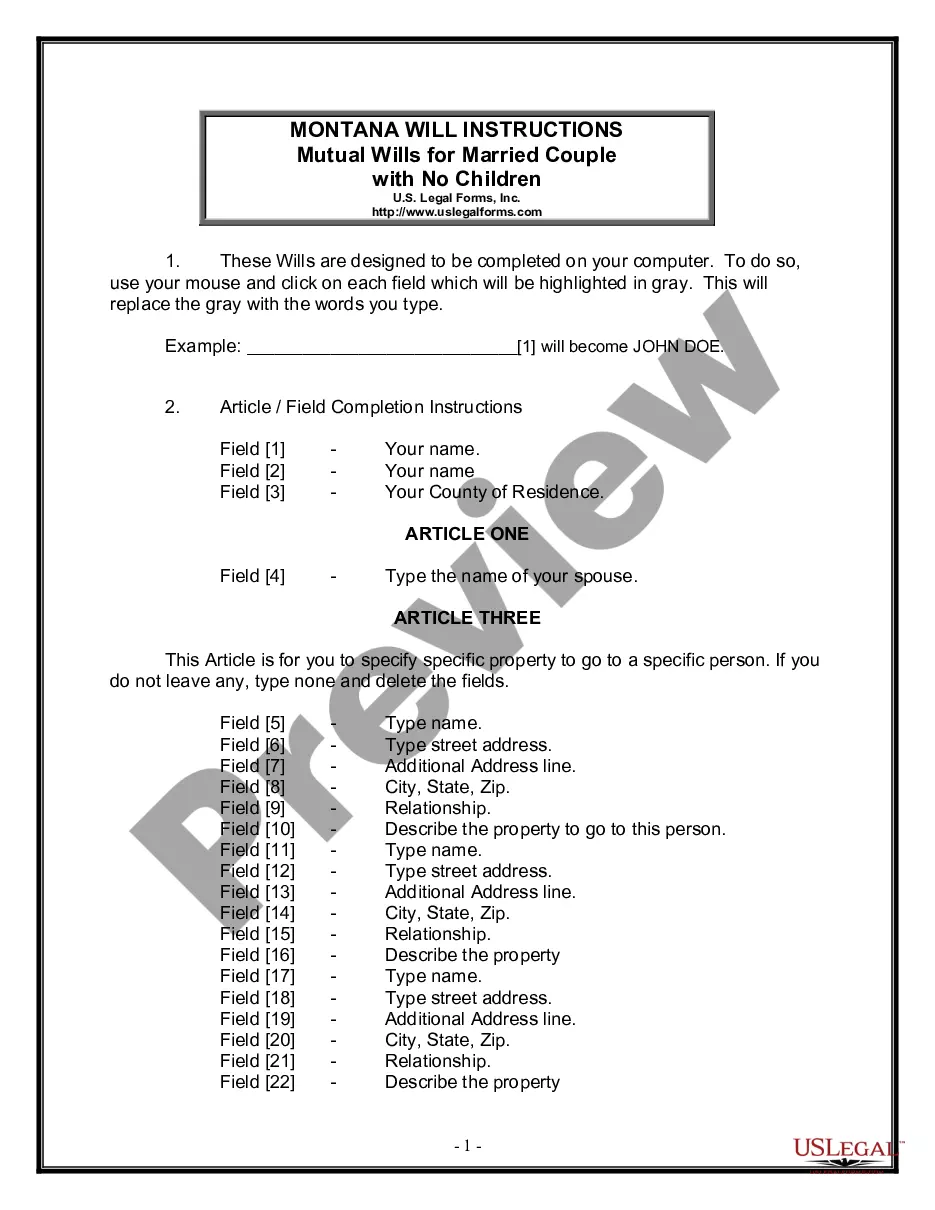
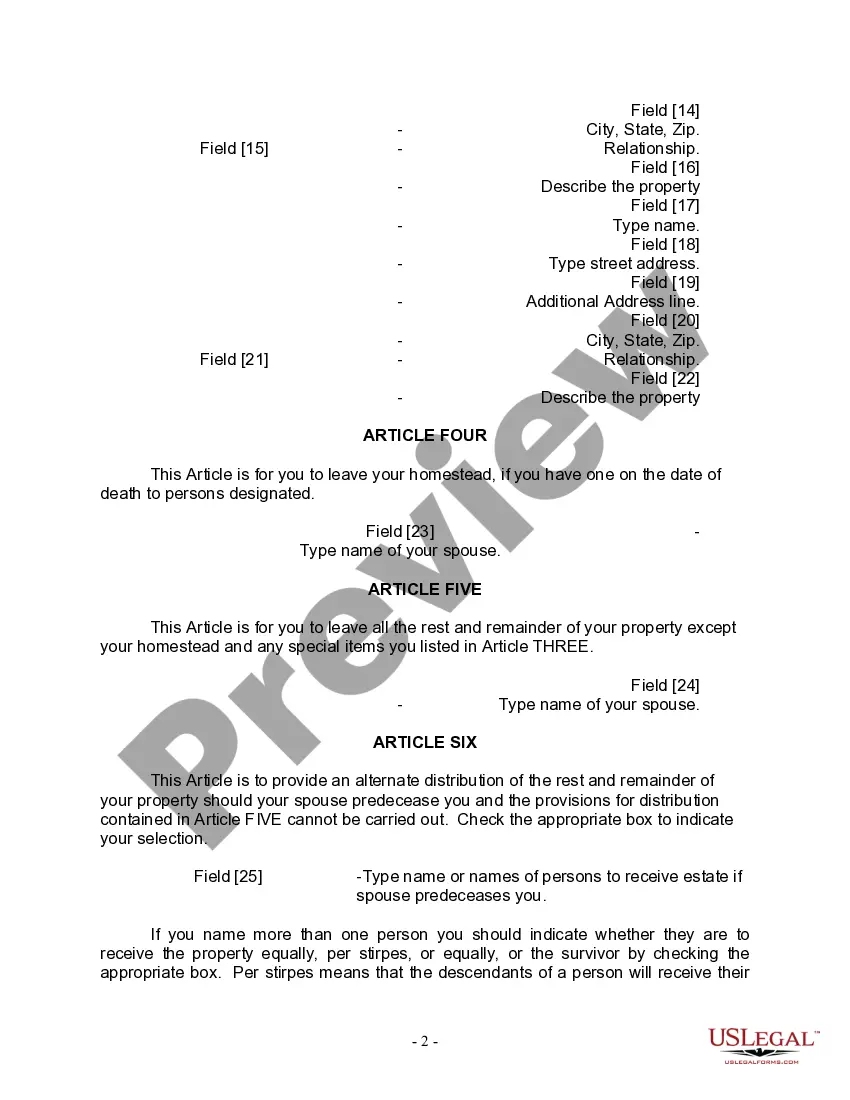
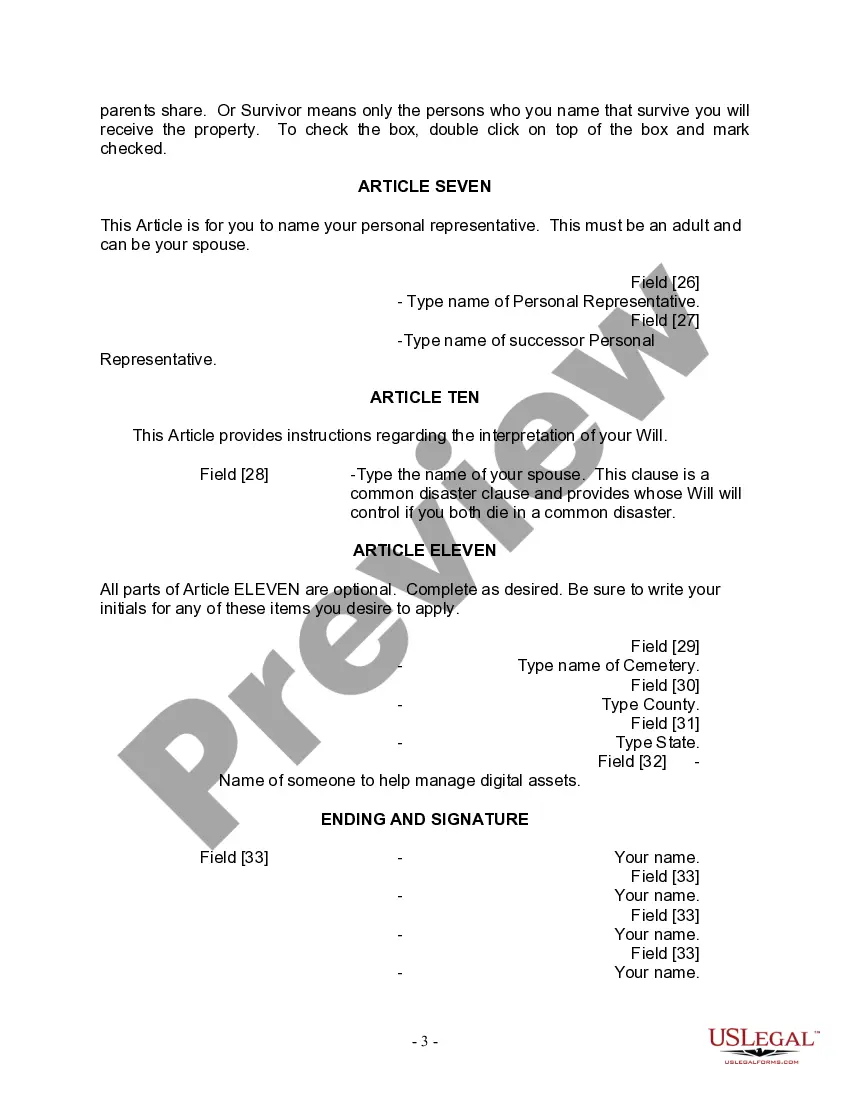
- Enter your and your spouseâs full names and county of residence at the beginning of the will.
- Specify any specific property you wish to bequeath to individuals other than your spouse.
- Designate a personal representative to manage the estate and fill in their details.
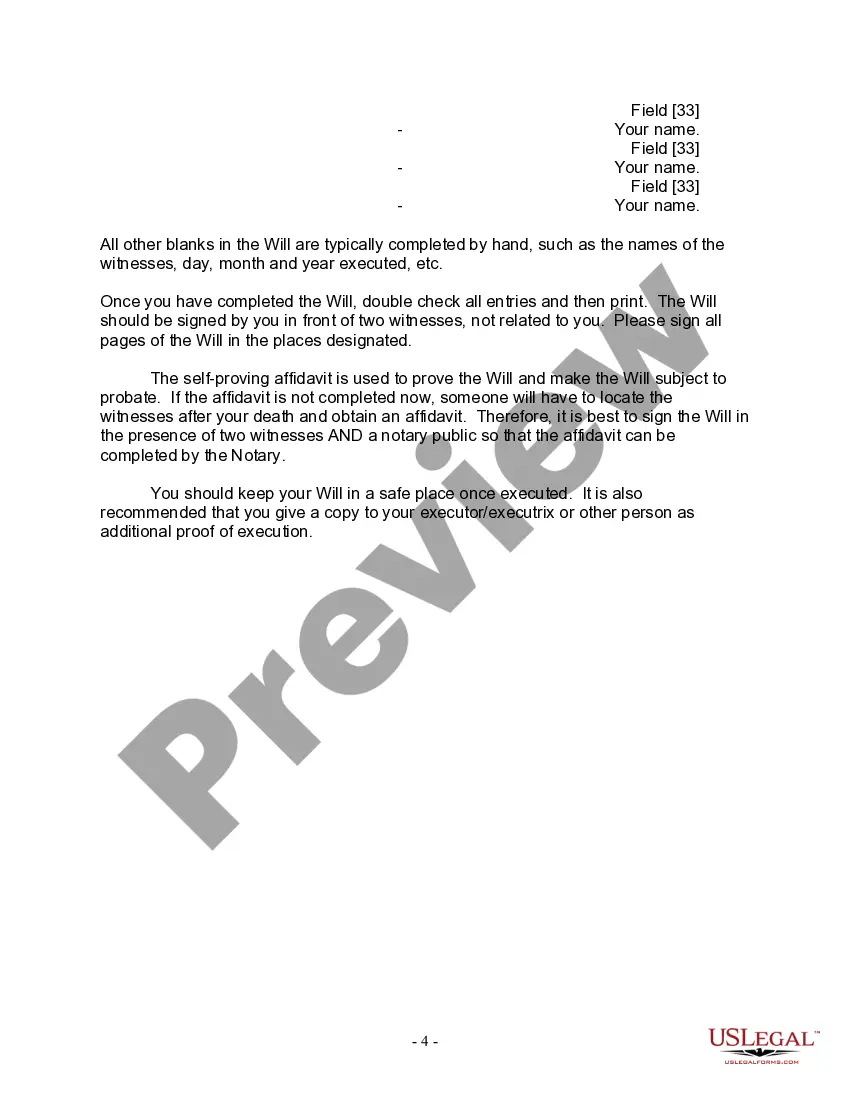
- Ensure that both wills are signed in the presence of two witnesses who are not related to you.
- If applicable, complete the self-proving affidavit and secure notarization.
Notarization requirements for this form
Yes, this form must be notarized to be legally valid. The package includes a self-proving affidavit, which facilitates the probate process by affirming the authenticity of the wills and the signatures. You can use US Legal Forms' integrated online notarization service that is available 24/7, ensuring security and compliance without the need for travel.
Get your form ready online
Our built-in tools help you complete, sign, share, and store your documents in one place.
Make edits, fill in missing information, and update formatting in US Legal Forms—just like you would in MS Word.
Download a copy, print it, send it by email, or mail it via USPS—whatever works best for your next step.
Sign and collect signatures with our SignNow integration. Send to multiple recipients, set reminders, and more. Go Premium to unlock E-Sign.
If this form requires notarization, complete it online through a secure video call—no need to meet a notary in person or wait for an appointment.
We protect your documents and personal data by following strict security and privacy standards.

Make edits, fill in missing information, and update formatting in US Legal Forms—just like you would in MS Word.

Download a copy, print it, send it by email, or mail it via USPS—whatever works best for your next step.

Sign and collect signatures with our SignNow integration. Send to multiple recipients, set reminders, and more. Go Premium to unlock E-Sign.

If this form requires notarization, complete it online through a secure video call—no need to meet a notary in person or wait for an appointment.

We protect your documents and personal data by following strict security and privacy standards.
Avoid these common issues
- Failing to sign the wills in front of the required number of witnesses.
- Not notarizing the wills when required, leading to potential issues in probate.
- Leaving sections blank or incomplete, which can cause confusion regarding asset distribution.
- Assuming mutual wills are not legally binding, without understanding their implications.
Benefits of using this form online
- Convenient access to legal documents from the comfort of your home.
- Editable templates that allow you to customize your wills according to personal preferences.
- Peace of mind knowing that documents are drafted with legal expertise.
- Clear instructions that guide you through the completion of your wills effectively.
Legal use & context
- Mutual wills are designed to protect the interests of married couples.
- These documents can streamline probate processes and honor both spousesâ wishes.
- Acknowledging the legal status of mutual wills can help prevent disputes among family members regarding asset distribution.
Summary of main points
- The Mutual Wills Package ensures clear estate planning for married couples without children.
- Proper completion and notarization of these wills are vital for their validity and enforceability.
- Understanding the nuances of mutual wills can help couples safeguard each other's interests effectively.
Looking for another form?

Form popularity
FAQ
The will of a decedent must be filed with the Clerk of Court so the personal representative may proceed with the administration of the estate. Montana has both formal (court-directed) and informal probate as well as a simplified probate process for small estates.
No, in Montana, you do not need to notarize your will to make it legal. However, Montana allows you to make your will "self-proving" and you'll need to go to a notary if you want to do that. A self-proving will speeds up probate because the court can accept the will without contacting the witnesses who signed it.
A joint will is a legal document executed by two (or more) people, which merges their individual wills into a single, combined last will and testament. Like most wills, a joint will lets the will-makers name who will get their property and assets after they die. Joint wills are usually created by married couples.
Contrary to popular belief, you do not need to have an attorney draft a will for you. Anyone can write this document on their own, and as long as it meets all of the legal requirements of the state, courts will recognize one you wrote yourself.
Yes, a person can make his or her own will, but it must be in the testator's own handwriting. This type of will is called a holographic will. Such a will is valid if the signature and the material provisions are in the handwriting of the testator.
Self-written wills are typically valid, even when handwritten, as long as they're properly witnessed and notarized, or proven in court. A handwritten will that is not witnessed or notarized is considered a holographic will. Not all states accept holographic wills .
You can legally prepare your own will, it can even be handwritten. This type of will is known as a "holographic will." In Montana, your handwritten will must be signed by you. Your signature must also be located on any material provisions, and no witnesses will need to be present for the signing of your will.