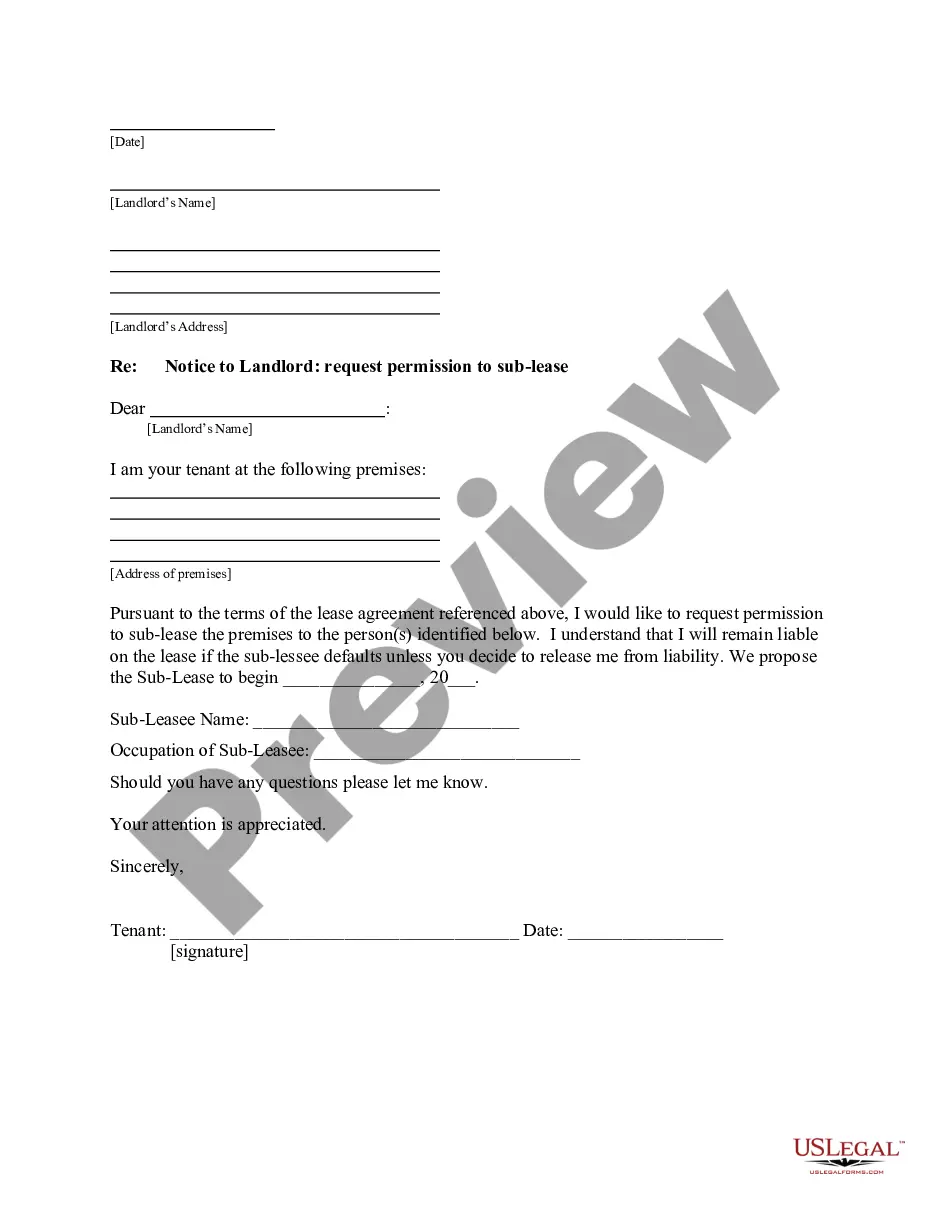
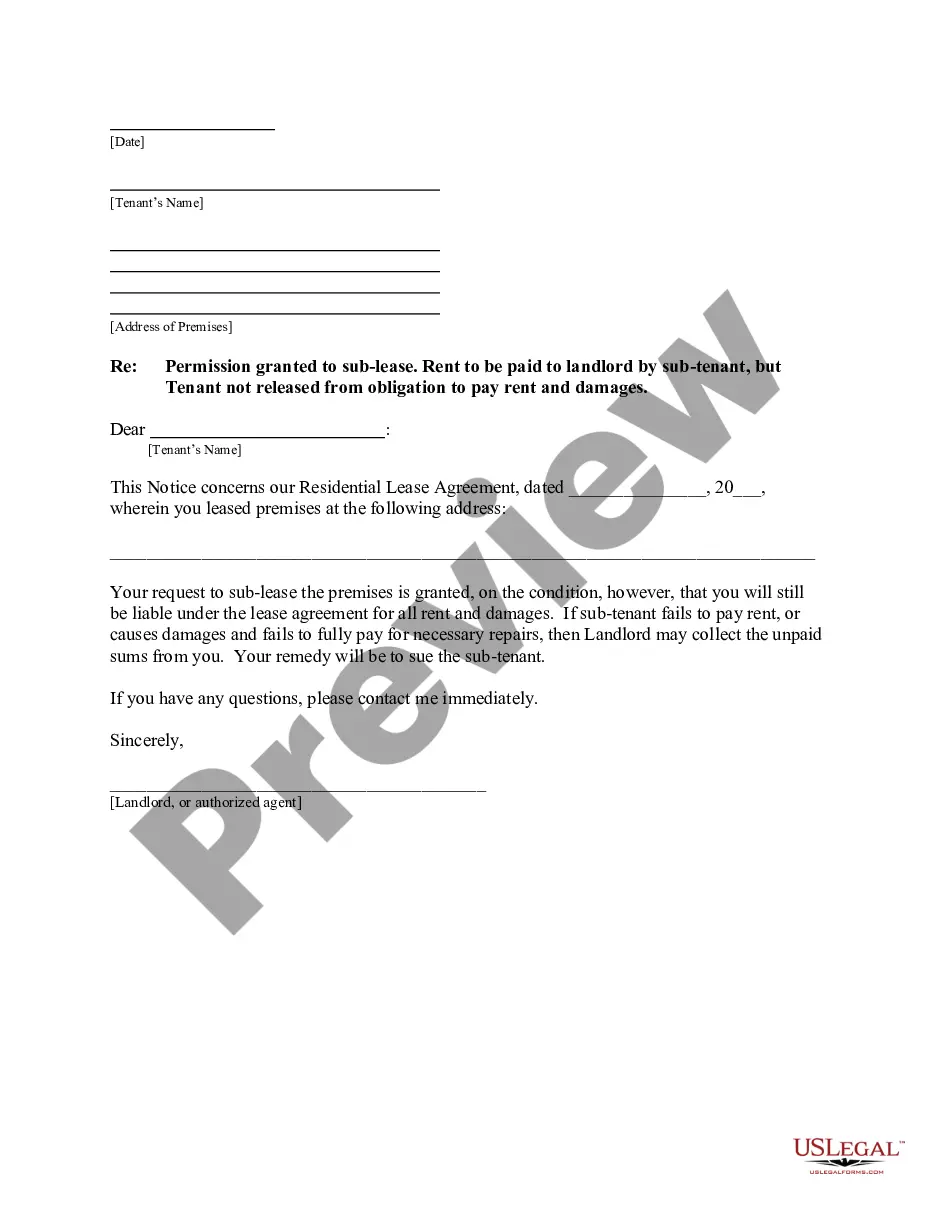
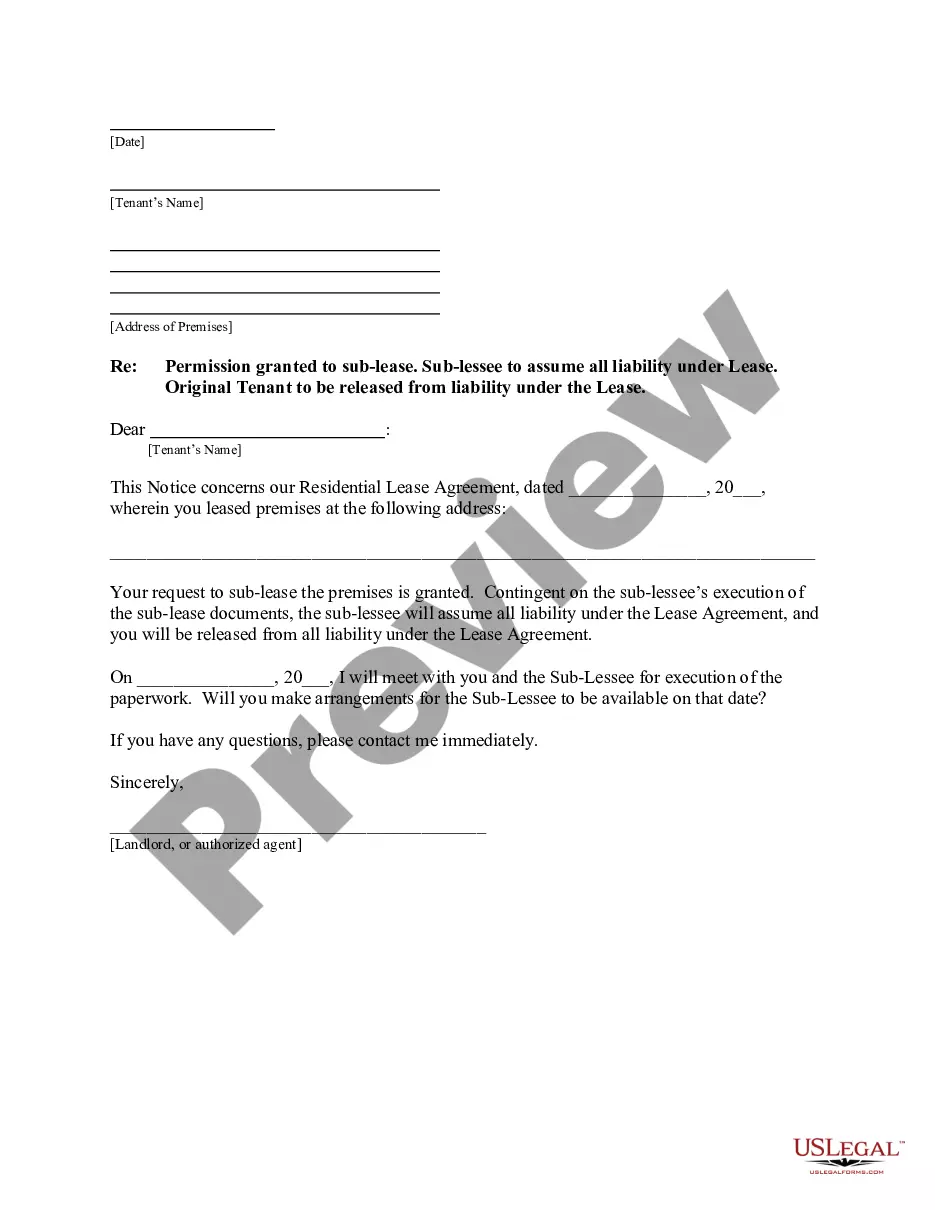
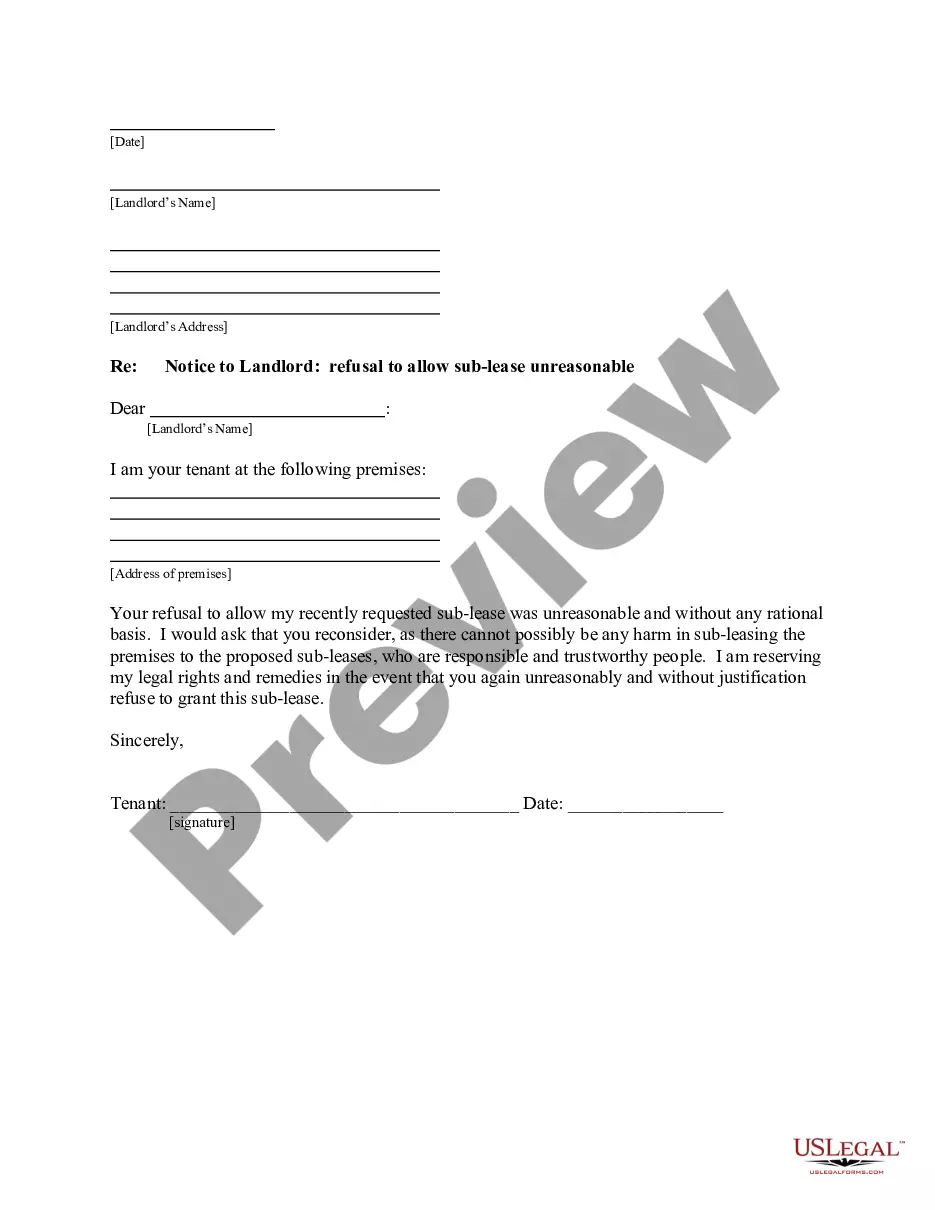
Montana Notice of Default on Residential Lease
What this document covers
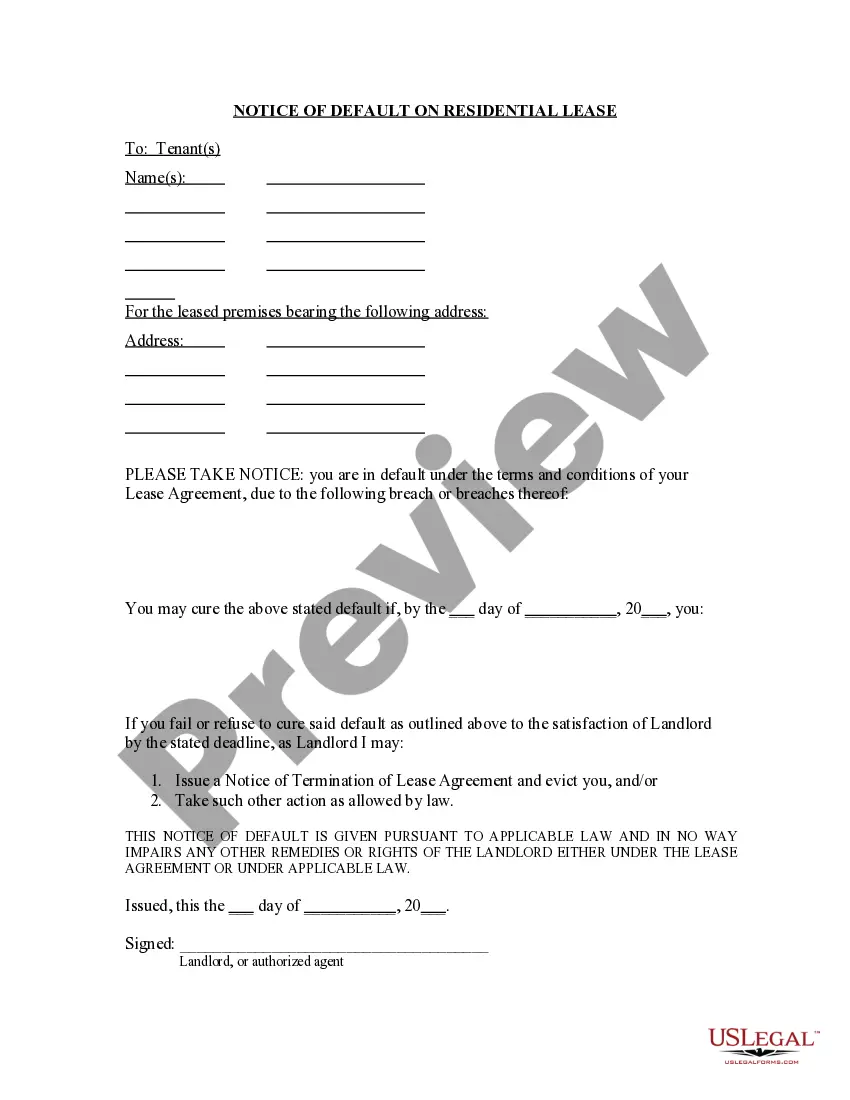
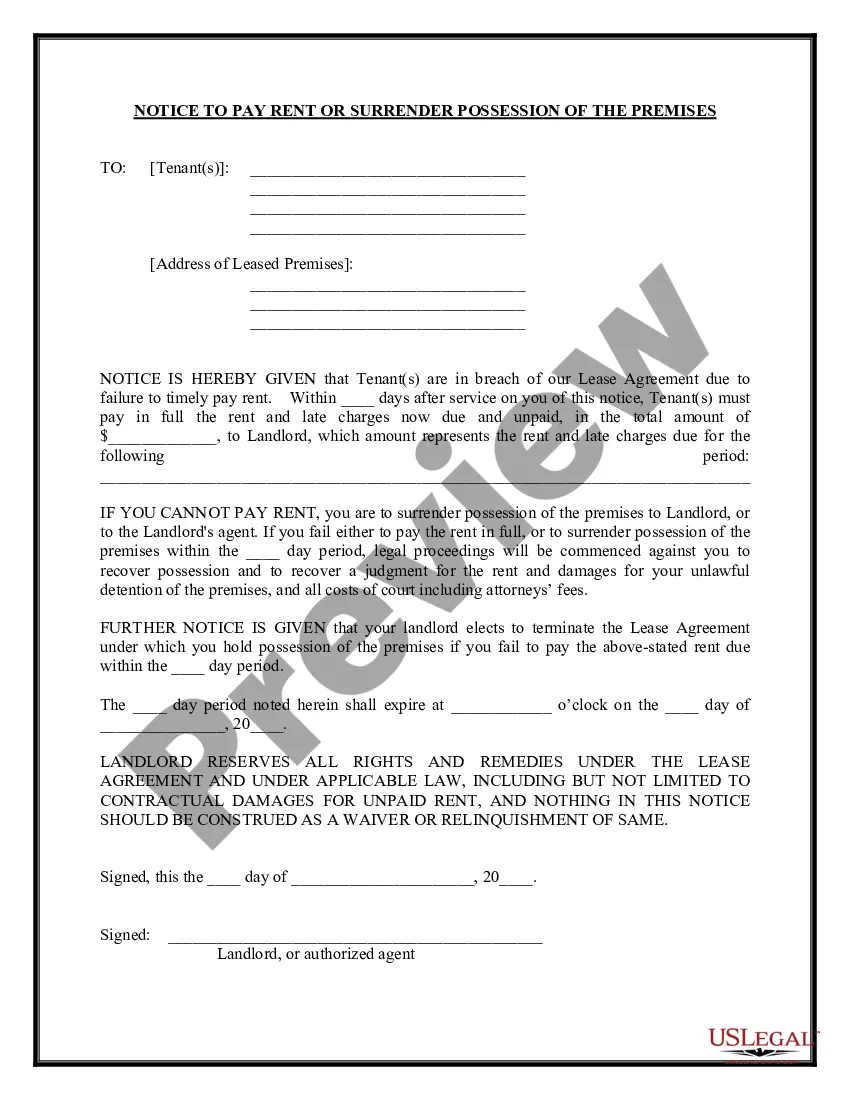
The Notice of Default on Residential Lease is a legal document used by landlords to formally notify a tenant of a breach of their lease agreement, typically related to late or non-payment of rent. This notice specifies the reasons for the default and provides a deadline for the tenant to rectify the issue. It is important to use the Notice of Default to ensure compliance with landlord-tenant laws before proceeding with eviction or other legal actions.
What’s included in this form
- Statement of default, detailing specific reasons for the notice.
- Deadline date for the tenant to cure the default.
- Legal notice, indicating that the document is provided per applicable law.
- Signature line for the landlord or authorized agent.
- Date of issuance to establish the timeline of the notice.


When to use this document
Use the Notice of Default on Residential Lease when a tenant has failed to pay rent on time or has violated other terms of the lease agreement. This notice serves as a preliminary step before taking more severe actions, such as eviction. It is crucial to provide tenants with an opportunity to rectify the situation in accordance with legal requirements.
Who should use this form
- Landlords who manage residential rental properties.
- Property managers acting on behalf of the landlords.
- Real estate professionals involved in residential leasing agreements.
Completing this form step by step
- Identify and enter the names of the parties involved (landlord and tenant).
- Specify the property address where the lease is in effect.
- Fill in the specific reasons for the default.
- Enter the deadline date by which the tenant must cure the default.
- Sign and date the notice as the landlord or authorized agent.
Is notarization required?
This form does not typically require notarization unless specified by local law. However, ensuring that all parties have signed and dated the document can help strengthen its enforceability.
Get your form ready online
Our built-in tools help you complete, sign, share, and store your documents in one place.
Make edits, fill in missing information, and update formatting in US Legal Forms—just like you would in MS Word.
Download a copy, print it, send it by email, or mail it via USPS—whatever works best for your next step.
Sign and collect signatures with our SignNow integration. Send to multiple recipients, set reminders, and more. Go Premium to unlock E-Sign.
If this form requires notarization, complete it online through a secure video call—no need to meet a notary in person or wait for an appointment.
We protect your documents and personal data by following strict security and privacy standards.

Make edits, fill in missing information, and update formatting in US Legal Forms—just like you would in MS Word.

Download a copy, print it, send it by email, or mail it via USPS—whatever works best for your next step.

Sign and collect signatures with our SignNow integration. Send to multiple recipients, set reminders, and more. Go Premium to unlock E-Sign.

If this form requires notarization, complete it online through a secure video call—no need to meet a notary in person or wait for an appointment.

We protect your documents and personal data by following strict security and privacy standards.
Mistakes to watch out for
- Failing to specify the exact reasons for the default.
- Not providing a reasonable deadline for the tenant to respond.
- Ignoring state-specific requirements for notice formatting or content.
Why complete this form online
- Convenience of immediate access and easy downloading.
- Editable templates that can be customized to fit individual situations.
- Peace of mind knowing the form complies with legal standards.
Legal use & context
- The Notice of Default is a vital document in the eviction process.
- It establishes a legal record of communication regarding lease violations.
- Using this notice protects the landlord's rights and compliance with rental law.
Key takeaways
- The Notice of Default on Residential Lease informs tenants of breaches in their lease agreement.
- It provides an opportunity for tenants to remedy the situation before eviction procedures begin.
- Understanding and complying with local regulations is critical when using this form.
Looking for another form?



Form popularity
FAQ
In landlord-tenant law, default refers to the failure of a tenant to timely pay rent due.In general, the landlord is required to give the tenant notice of the default before bringing eviction proceedings or applying security deposit proceeds to the payment in default.
While some jurisdictions may have provisions that allow consumers to change their minds with no consequences, generally there is no cooling-off period for leasing real property. Once the landlord and tenant sign a lease and a copy is delivered to the both parties, it becomes a valid contract.
There's no legal limit on how many monthly or weekly advance payments you can be charged. Some landlords will ask for 6 months' rent in advance or more. It is illegal for landlords to disguise extra fees in rent in advance payments. You can't be charged more than what your rent would be for that period.
Generally, you have all the rights of a month-to-month tenant. Your landlord must give you 30 days' notice to terminate your rental agreement, unless the landlord alleges some violation that allows for shorter notice. For example, if you are behind on rent, the landlord could give you a 3 day notice to pay or vacate.
If you've been given notice since 29 August 2020, your landlord must give you 6 months to leave. You might have to leave much sooner if you're evicted using a section 8 notice, depending on the reason for eviction.at least 6 months for any notice given on or after 24 July 2020.
A landlord can't force you to move out before the lease ends, unless you fail to pay the rent or violate another significant term, such as repeatedly throwing large and noisy parties. In these cases, landlords in California must follow specific procedures to end the tenancy.
If you leave your apartment without notice, you could be sued in small claims or housing court for the unpaid rent and any other damages. If you want to leave right away and don't want to pay a breakage fee, you can forfeit your security deposit and leave without notice. The legal term for this is abandonment.
In some circumstances, a tenant can break a fixed-term agreement early without penalty. A tenant can give 14 days' written notice to end an agreement early without penalty if: they have accepted an offer of social housing (e.g. from DCJ Housing)
Unless your lease says otherwise simply breaking it is not an option. This is known as "unilateral breach" and typical penalties can include: Paying the rent - One way or another, if you walk away from your lease and no one else rents the apartment then you will owe the landlord this money.